Buying Wine Online Tips: Shipping, Heat and Scam Checks

By the Sommy Team — AI-assisted, human-edited.
Updated Sep 24, 2026
Contents (11)
- Buying Wine Online Tips, in One Paragraph
- Is It Legal to Buy Wine Online?
- Will Hot or Cold Weather Ruin Wine in Transit?
- How Does Age Verification Work at Delivery?
- Can Wine Be Shipped by USPS?
- How Can You Tell If a Bottle Arrived Heat-Damaged?
- How Long Should Wine Rest After Shipping?
- How Do You Spot a Scam Wine Seller?
- Are Wine Clubs Worth It?
- Is Buying Wine Online Cheaper Than a Store?
- What Should You Do When the Box Arrives?
TL;DR
Buying wine online is legal in 48 US states; only Utah and Delaware ban direct shipping. An adult 21 or older must show ID and sign at delivery, and USPS cannot carry wine at all. The two real risks are heat above about 80°F in transit and unlicensed sellers, so check both before paying.
Buying wine online in the US is legal in 48 states, and the ID check at the door is routine. The two things that actually go wrong are heat in the delivery truck and sellers with no licence to ship. A five-minute check before you pay handles both, and the buying wine online tips below turn that check into a short list you can run at any checkout.
Buying Wine Online Tips, in One Paragraph
Only Utah and Delaware fully ban wineries from shipping wine direct to your door; seven more states add real limits. Wine never travels by US mail, because federal law makes alcohol nonmailable, so it comes by FedEx or UPS and an adult 21 or older must show ID and sign. Heat is the main threat in transit: over about 70°F for a long stretch, flavour can change for good, and above about 80°F the wine starts to cook.
If the forecast along the route passes 80°F, ask the seller to hold the order. A real seller names its licence, lists an address and takes cards. Give shipped bottles one week to a month of rest before opening, depending on how far they travelled.
Is It Legal to Buy Wine Online?
Yes, in 48 states. Only Utah and Delaware fully ban wine shipped direct to consumer (DTC, meaning from the seller straight to your home). Free The Grapes and the Wine Institute's compliance table both confirm that count. Everywhere else, some form of home delivery is allowed.
"Allowed" still comes with local rules. Free The Grapes lists seven more states with major restrictions. New Jersey caps the size of winery that may ship. Rhode Island requires an on-site purchase at the winery. Oklahoma bars the third-party warehouses many wineries use to ship. Indiana, Mississippi, Wyoming and Louisiana limit which wines can ship based on whether a local distributor already carries them.
The two-state ban count covers wineries. Out-of-state wine shops face tighter rules in many states, which is why one site accepts your order and another refuses it.
If the checkout refuses your zip code, the seller is following your state's law. Order from the winery itself, or from a shop licensed in your own state.
Will Hot or Cold Weather Ruin Wine in Transit?
Heat is the danger. Over about 70°F for a long stretch, a wine's flavour can change for good, and above about 80°F the wine starts to cook, according to Wine Folly. Cooked wine (wine damaged by heat) tastes flat and stewed, and resting it will not bring the freshness back.
There is no exact number of hours that does the damage. A box can sit in a van, a depot and a truck for days, and the air inside a parked vehicle runs far hotter than the forecast. So the forecast along the route is the best guide to what the box will face.
| Weather along the route | Risk to the wine | What to do |
|---|---|---|
| Cool, under 70°F all the way | Low | Order as normal; ground shipping is fine |
| Around 70°F for several days | Moderate: flavour can dull | Pay for faster shipping and avoid weekend layovers |
| Above 80°F, heat wave | High: the wine can cook | Ask the seller to hold the order until it cools |
| Hard freeze | Moderate: a cork can be pushed out | Choose fast shipping and bring the box inside at once |
Cold is the smaller risk, not an equal one. Freezing wine expands and can push a cork up, but short spells of cool weather do not change flavour the way heat does.
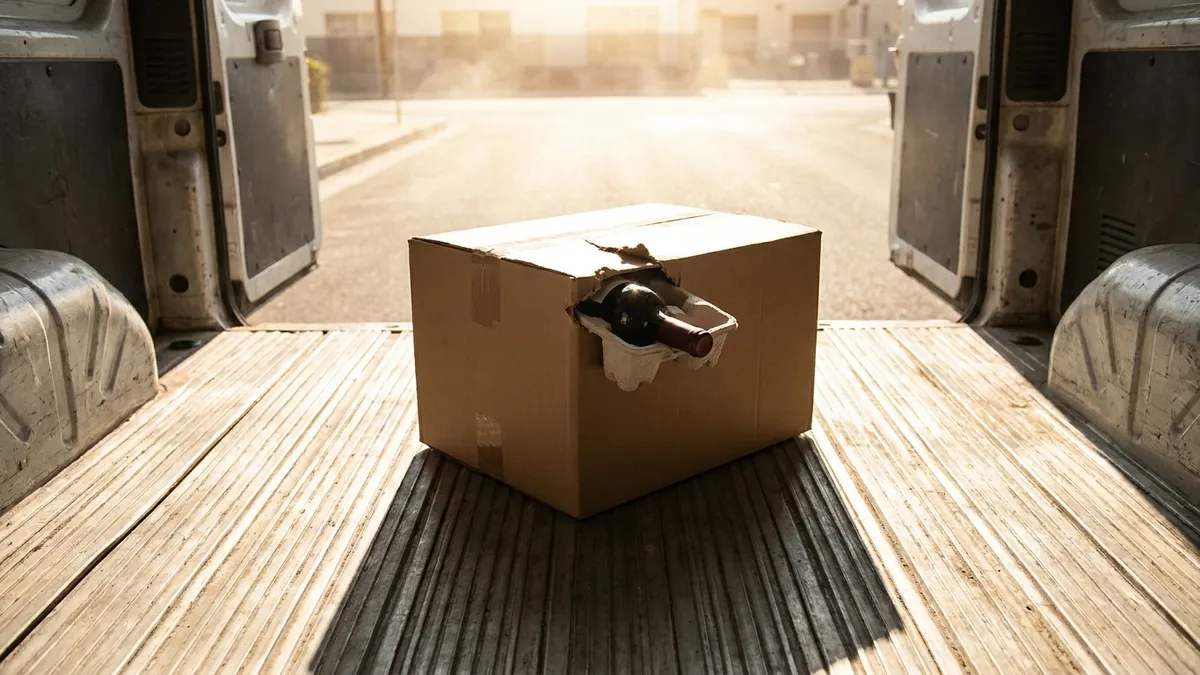
If the forecast along the route tops 80°F, ask the seller to hold your order.
How Does Age Verification Work at Delivery?
Every state that allows wine shipping requires the box to be handed to someone 21 or older, in person, who shows a valid government-issued ID and signs. Free The Grapes spells out the rule: the recipient must be physically present, and the package cannot be left unattended.
That means no doorstep drop and no mailbox. Carriers use an adult signature service (a delivery that cannot be completed without an ID check and a signature from someone of drinking age). If nobody meets the driver, the box goes back to the depot, and every extra day there is another day in a warm warehouse.
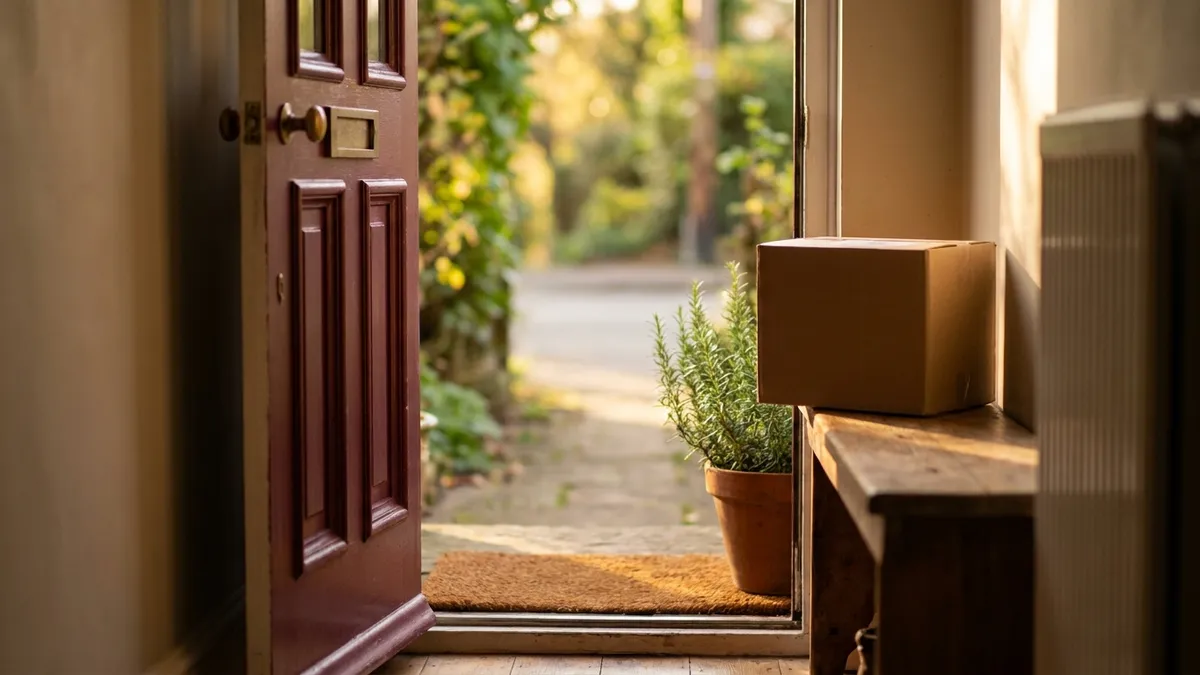
If nobody 21 or older is home on weekdays, ship to a workplace that accepts parcels, and tell the person at the front desk it needs an adult signature.
Can Wine Be Shipped by USPS?
No. Federal law, 18 U.S.C. §1716, states that "all spirituous, vinous, malted, fermented, or other intoxicating liquors of any kind are nonmailable." Wine is the "vinous" in that list, so it never goes through the Postal Service. Licensed sellers ship through private carriers such as FedEx and UPS instead.
Many shipping guides blame this ban on the PACT Act. The rule against mailing wine is the statute above, not the PACT Act. That law targets cigarettes and other tobacco products, according to the ATF.
The same logic covers you as a sender. Posting a bottle to a friend through the mail breaks federal law, even as a gift. Use a licensed shop or winery that ships to their state instead.
If a seller offers standard mail or a plain parcel service for wine, do not buy.
How Can You Tell If a Bottle Arrived Heat-Damaged?
Look at the cork before you pull it. Heat makes wine expand, and Wine Folly notes it can compromise the bottle's seal. A cork pushed up above the rim, a sticky drip under the capsule or a wine stain climbing the side of the cork all mean the bottle got hot.
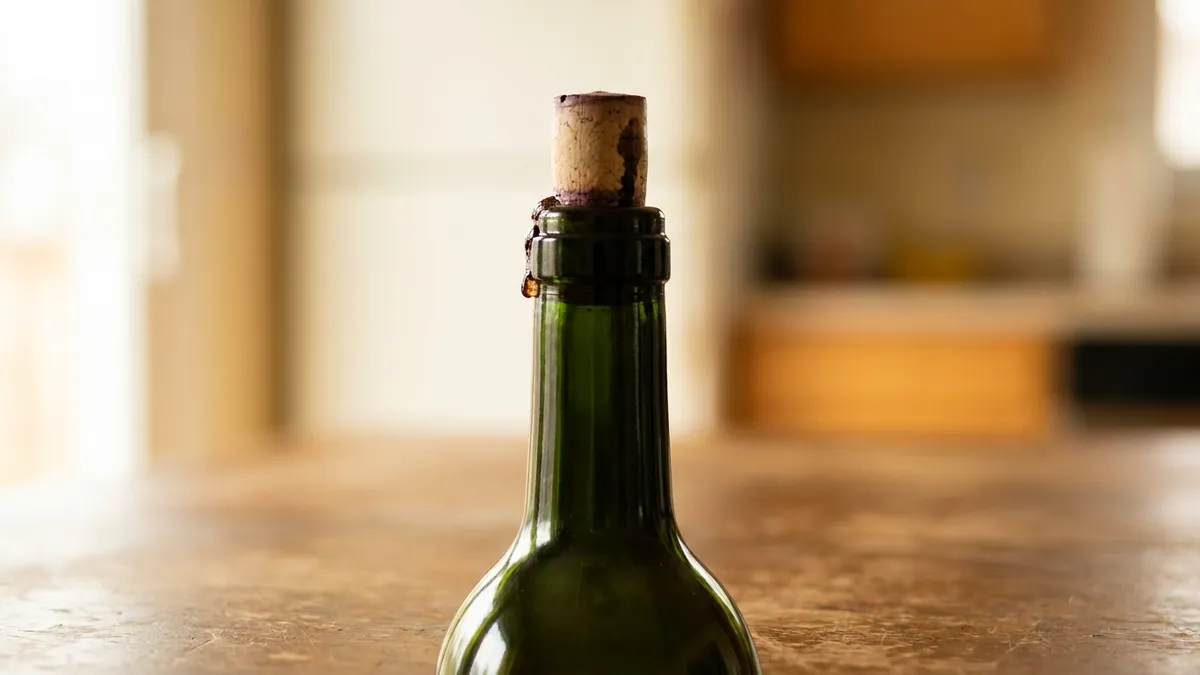
Taste confirms it. Wine Folly describes heat damage as "unpleasantly sour and jammy," like canned prunes. The fresh fruit is gone, and the wine feels flat. The cooked wine guide walks through every sign, and how to identify wine faults by smell separates heat damage from other problems. A musty, wet-cardboard smell is a different fault with a different cause; how to tell if wine is corked covers that one.
If the cork is pushed up or the capsule is sticky, photograph it and contact the seller the same day, before you open the bottle. Most damage policies need the evidence.
How Long Should Wine Rest After Shipping?
Give it about a week after air freight, a few weeks after cross-country ground shipping, and up to a month after a sea crossing. That is the guidance Master Sommelier Dana Gaiser gave VinePair. The shaking in transit is thought to cause bottle shock (also called travel shock), which leaves a wine's smell and taste muted for a while.
The rest matters most for older wines and for any red with sediment (the fine solids that settle in an aged bottle), because shaking stirs those solids through the wine. A young, simple white or rosé usually bounces back fastest.
If the bottle is older or delicate, wait the full rest before opening. A young everyday wine can be opened after a few days without much loss.
How Do You Spot a Scam Wine Seller?
A real seller tells you which licence lets it ship to your state, lists a street address and phone number, and takes a credit card. Fake shops copy the look of real ones well, with stock photos and famous wine names, so run these five checks before you pay:
- Licence. The site names the permit that allows it to sell and ship alcohol, and says which states it ships to.
- Contact details. A street address and a phone number that a person answers.
- Damage policy. A written promise covering broken or heat-damaged bottles.
- Payment. Card payment at checkout. A request for a wire transfer or cryptocurrency is the loudest warning sign.
- Price. In line with other shops. A rare wine at half the usual price is the bait.
For rare and older bottles, add provenance (the record of where a bottle has been stored since it left the winery). A seller who cannot say where an old bottle has spent the last decade cannot tell you whether it was kept cool. The wine investment guide covers provenance in more depth.
If a seller asks for wire transfer or crypto, walk away, whatever the price.
Are Wine Clubs Worth It?
They are worth it only when each shipment can be seen and skipped before the card is charged. A wine club is a subscription: the seller chooses the wines and ships them on a schedule. Buying bottle by bottle means choosing every wine yourself, one order at a time.
A club works well once the person choosing has earned trust. It is a cheap way to meet grapes and regions that rarely make a first shopping list. Some clubs, though, charge first and reveal the wines after. That is how a rack fills with bottles nobody wanted.
If the club will not let you skip or swap a shipment, buy bottle by bottle instead. The wine shop guide shows how to build a mixed six of different grapes, which covers as much ground as a club box.
Is Buying Wine Online Cheaper Than a Store?
Sometimes, once shipping is spread across the box. The shelf price online is often lower, but shipping on a single bottle can wipe out the saving. The fair comparison is the delivered price per bottle: the bottle price plus the shipping cost divided by the number of bottles.
That is why online shops push six- and twelve-bottle orders. The same shipping cost spread over twelve bottles adds very little to each one. For a single everyday bottle, a local shop usually wins.
Price also says less about quality than most buyers assume; wine price vs quality looks at what each extra dollar actually buys. Scores on product pages carry their own biases, covered in wine ratings explained.
If shipping divided by the number of bottles is bigger than the price gap with your local shop, buy locally.
What Should You Do When the Box Arrives?
Unpack it the same day, check each cork, then store the bottles on their sides somewhere dark and cool. A closet on an inside wall beats a kitchen counter or the top of the fridge. The guide to storing wine at home covers the setup, and the buying wine hub collects the rest of the shopping basics.
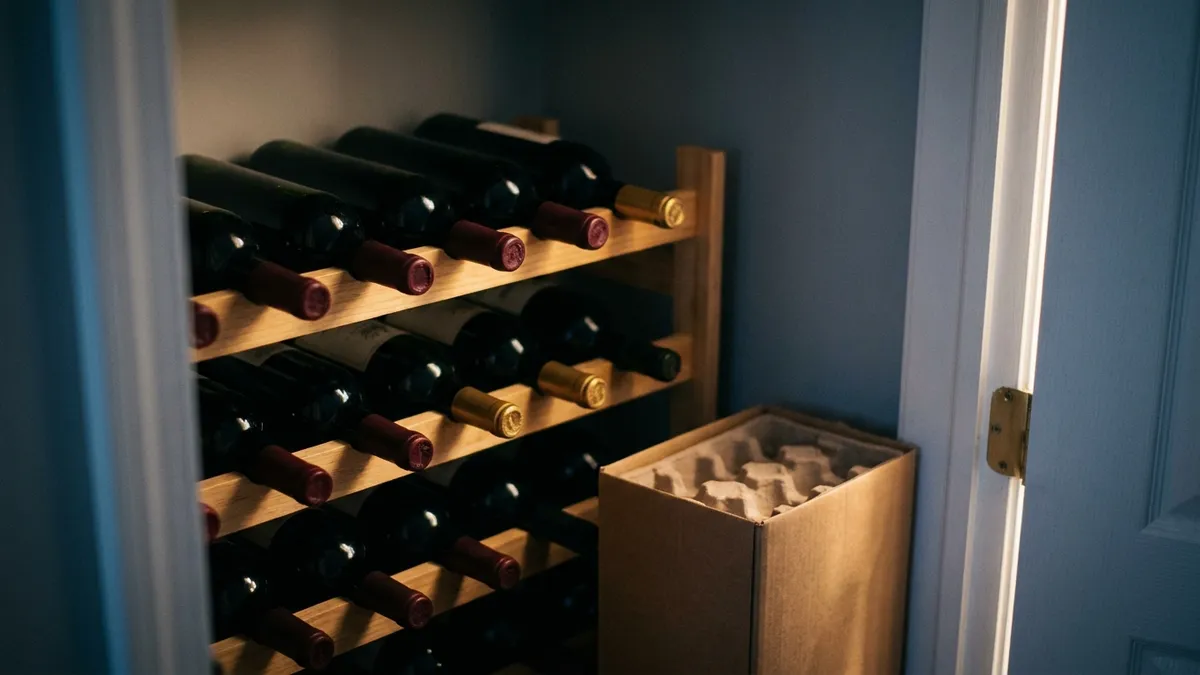
Then write down what came in the box and when, so you know when each bottle has finished its rest. The Sommy app at sommy.wine keeps those notes in your tasting journal once you open each one.
Check the route forecast tonight for any box still on its way, and email the seller if it passes 80°F. Pour a glass from a box that has already rested, and taste it for stewed prune before you order again.
Sources
Frequently Asked Questions
Is it legal to buy wine online in the US?
Yes, in most places. As of 2026 only Utah and Delaware fully ban wineries from shipping wine direct to consumers, according to Free The Grapes and the Wine Institute. Several other states add limits, such as caps on the size of winery allowed to ship, and out-of-state shops face tighter rules than wineries. Entering your zip code at checkout is the fastest test.
Can you ship wine through USPS?
No. Federal law, 18 U.S.C. §1716, makes all wine and other alcohol nonmailable, so it cannot go through the US Postal Service. Licensed sellers ship through private carriers such as FedEx and UPS instead, using an adult signature service. The PACT Act, often blamed for this rule online, is a tobacco law and has nothing to do with wine.
Do you have to be home to receive a wine delivery?
Yes, or someone else aged 21 or older must be. Every state that allows wine shipping requires the recipient to be physically present, show a valid government-issued ID and sign for the box. The driver cannot leave it on the doorstep or in a mailbox. If nobody will be home, ship to a workplace that accepts parcels.
Can wine be ruined by shipping in hot weather?
Yes. Wine Folly notes that temperatures over about 70°F for a long stretch can permanently taint a wine's flavour, and above about 80°F the wine starts to cook. There is no fixed number of hours that does the damage, so the safest move is to avoid shipping in heat waves or pay for faster, insulated shipping.
How long should wine rest after being shipped?
Master Sommelier Dana Gaiser, speaking to VinePair, suggests about one week after air travel, a few weeks after ground shipping across the country, and up to a month after a sea crossing. The shaking in transit can leave a wine muted for a while, a state called bottle shock. Young, simple wines usually recover fastest; older bottles need the full rest.
How do you know an online wine store is legitimate?
A real seller states which licence lets it sell and ship wine, gives a street address and phone number, publishes a policy for damaged or heat-affected bottles, and takes credit cards. Walk away from any site that wants a wire transfer or cryptocurrency, or that lists wines far below the price every other shop charges.
Sommy Team
LinkedInFounder & Wine Educator
The Sommy Team is building the world's most approachable wine education app, helping beginners develop real tasting skills through structured courses and AI-guided practice.