Same Grape, Different Wine: How Region Changes Everything

By the Sommy Team — AI-assisted, human-edited.
Updated Jun 16, 2026
Contents (7)
- What "Same Grape, Different Wine" Really Means
- Climate: The Biggest Reason the Same Grape Changes
- Cool-Climate vs Warm-Climate: Five Grape Contrasts
- Beyond Climate: Soil, Winemaking, Yields, and Timing
- Old World vs New World: The Same Grape in Two Modes
- How to Predict a Wine's Style Before You Taste It
- Putting It All Together
TL;DR
The same grape tastes different across regions because climate, soil, and winemaking reshape it. Cool climates give higher acid, lower alcohol, and tart fruit; warm climates give riper fruit, more alcohol, and softer acid. Once you know a region's climate, you can predict the wine's style before tasting it.
What "Same Grape, Different Wine" Really Means
Pour a glass of Chablis next to a glass of California Chardonnay and you would swear they were two different grapes. They are not. Both are 100% Chardonnay. The difference is everything that happened to the grape before it reached the bottle — and most of all, the climate it grew in.
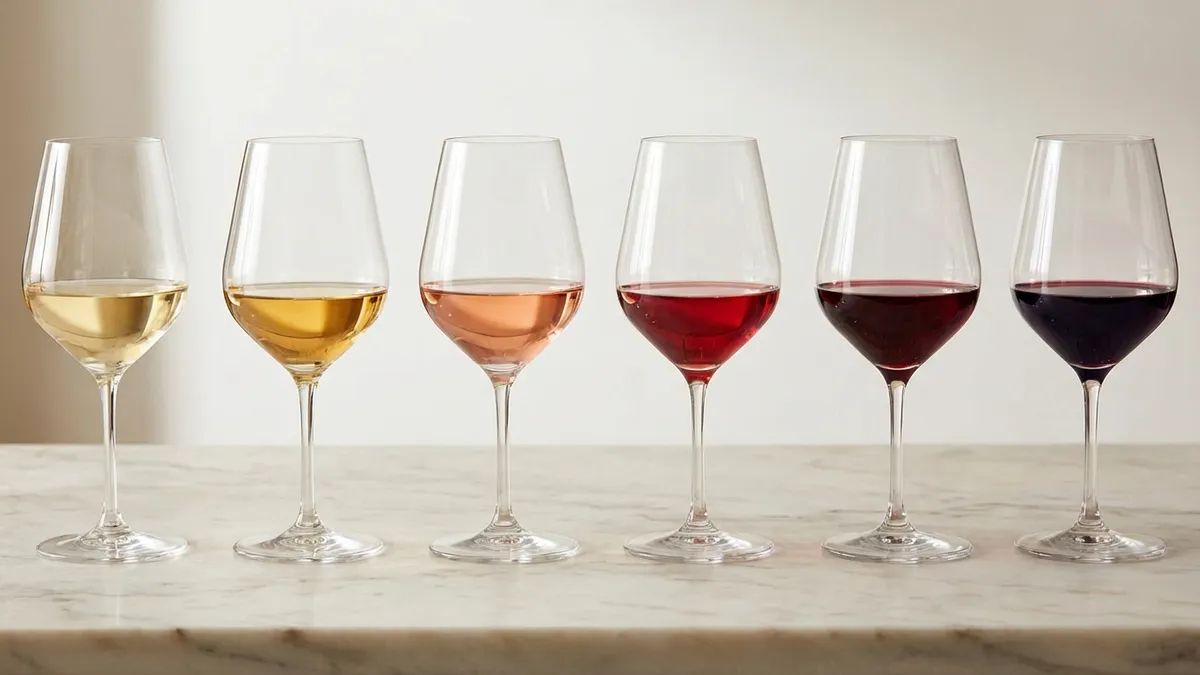
This is the single most useful idea in wine: same grape, different wine. One variety can taste lean, tart, and mineral in a cool place, then rich, ripe, and full in a warm one. Cool climates preserve acidity (the tart, mouth-watering freshness in wine) and keep alcohol lower; warm climates ripen the fruit fully, pushing up sugar — and therefore alcohol — while softening that acidity. Add soil, yields (how much fruit each vine carries), picking time, and winemaking, and the same grape spreads across a huge stylistic range. Learn the pattern and you can predict a wine's style from the region alone.
Climate: The Biggest Reason the Same Grape Changes
If you only learn one thing about why a grape changes from place to place, learn this: climate sets the rules. Everything else fine-tunes.
As grapes ripen, two things move in opposite directions. Sugar climbs, and acid falls. Warmth speeds that process up; cool slows it down. Because fermentation (the process where yeast turns grape sugar into alcohol) converts sugar into alcohol, riper grapes make stronger wine. So the climate a grape grows in quietly decides four of the most important things you taste.
Acidity, Sugar, and Alcohol
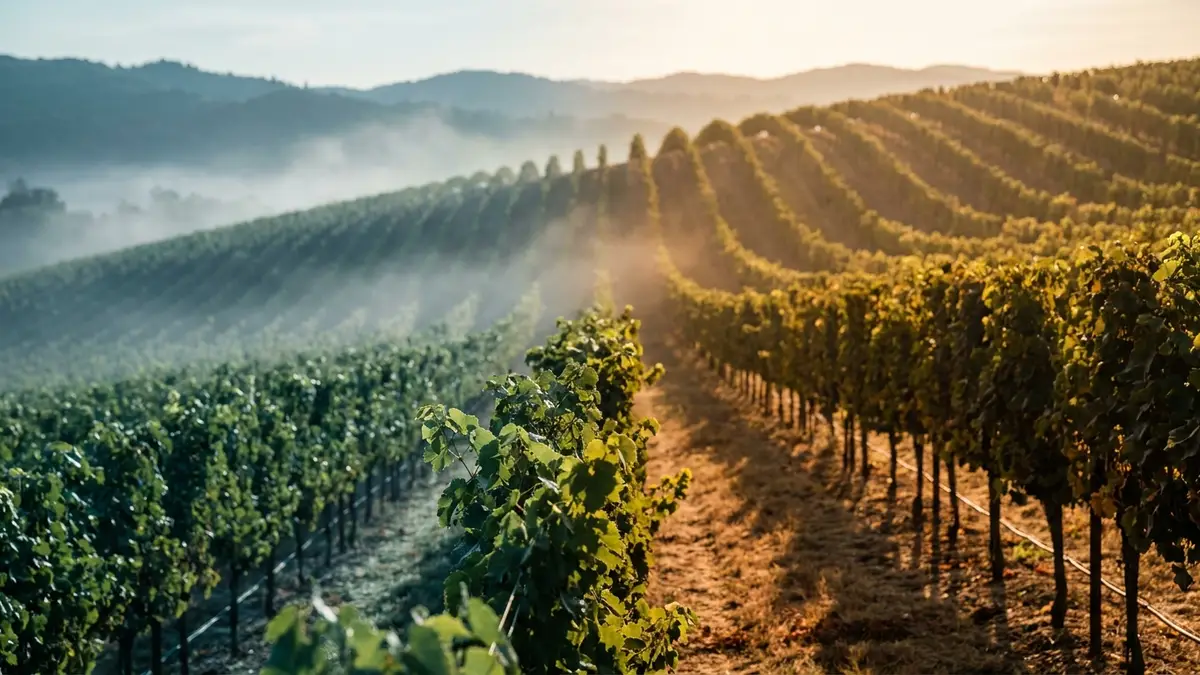
In a cool region, grapes ripen slowly and often get picked before sugar runs away. The result is wine with high acidity, lower alcohol (often 11–12.5%), and tart, precise fruit — think lemon, green apple, or sour red cherry.
In a warm region, the same grape reaches full ripeness and keeps going. Sugar rises, so alcohol climbs (often 14% or more), while natural acidity drops. The fruit tastes riper and rounder — baked apple, peach, blackberry, or jam.
This is why a cool-climate wine feels crisp and lifted while a warm-climate version of the same grape feels broad and mellow. Neither is better; they are different tools for different moments. If the words acidity, body, and alcohol feel slippery, the guide to tannins, acidity, and body breaks down each one.
Flavor Ripeness: Green, Fresh, or Jammy
Climate also moves flavors along a ripeness ladder. The same variety can show:
- Underripe / cool edge — herbal, green, citrusy, tart red fruit
- Balanced / moderate — fresh stone fruit, red and black berries, clean lines
- Very ripe / warm — baked, jammy, dried-fruit, raisined, sometimes a touch of sweetness in the impression
Sauvignon Blanc is the clearest example. In cool conditions it leans grassy, flinty, and grapefruit-sharp. Push it into warmth and it tips toward passion fruit and guava. Same grape, different rung on the ladder. The full range lives in the Sauvignon Blanc guide.
Cool-Climate vs Warm-Climate: Five Grape Contrasts
The fastest way to feel "same grape, different wine" is to put two regions side by side for one variety. Here are five of the most instructive pairings.
Chardonnay: Chablis vs California
Chardonnay is a near-neutral grape, which makes it a perfect mirror for place. In Chablis, in cool northern Burgundy, it gives taut, high-acid wine tasting of lemon, green apple, oyster shell, and chalk, usually with little or no oak. In much of warm California, the same grape ripens to apple, pineapple, and peach, with fuller body, lower acid, and often noticeable oak plus a creamy texture from malolactic fermentation (a secondary process that converts sharp malic acid into softer lactic acid). One grape, two opposite drinking experiences — and the full spectrum is laid out in the Chardonnay guide.
Syrah / Shiraz: Northern Rhone vs Barossa
It is even the same grape under two names. In France's cool, steep Northern Rhone, Syrah turns out medium-bodied, peppery, savory wine with black olive, smoked meat, and violet. In the hot Barossa Valley of Australia, the same grape — labeled Shiraz — becomes a dark, plush, full-bodied wine of blackberry jam, chocolate, and sweet spice. The grape did not change. The latitude did.
Pinot Noir: Burgundy vs Central Otago
Pinot Noir is thin-skinned and famously transparent to its surroundings. In Burgundy's cool continental climate it gives pale, high-acid, earthy wine of red cherry, forest floor, and mushroom. In Central Otago, New Zealand, a warmer and very sunny region, the same grape shows darker plum and black cherry, riper fruit, and a fuller, more generous body. Both are unmistakably Pinot, yet they sit far apart on the ripeness ladder. The Pinot Noir guide follows the grape across more regions.
Sauvignon Blanc: Loire vs Marlborough
In the Loire Valley's Sancerre, cool conditions produce flinty, restrained Sauvignon Blanc with grapefruit, gooseberry, and a smoky mineral edge. In sunnier Marlborough, New Zealand, the same grape explodes with passion fruit, lime zest, and cut grass at a higher pitch of ripeness. This pairing is one of the easiest at-home experiments, because both styles are widely sold and the contrast is dramatic.
Riesling: Mosel vs Clare Valley
Riesling holds its acid better than almost any grape, so climate shows up vividly. In Germany's cold, slate-soiled Mosel, it makes feather-light, low-alcohol, sometimes off-dry wine of lime, green apple, and wet stone. In Australia's warmer Clare Valley, the same grape produces bone-dry, fuller wine with lime, grapefruit, and a faint toasty note. Same grape, same searing acid backbone, but a different weight and ripeness. The Riesling guide covers its full sweetness spectrum too.
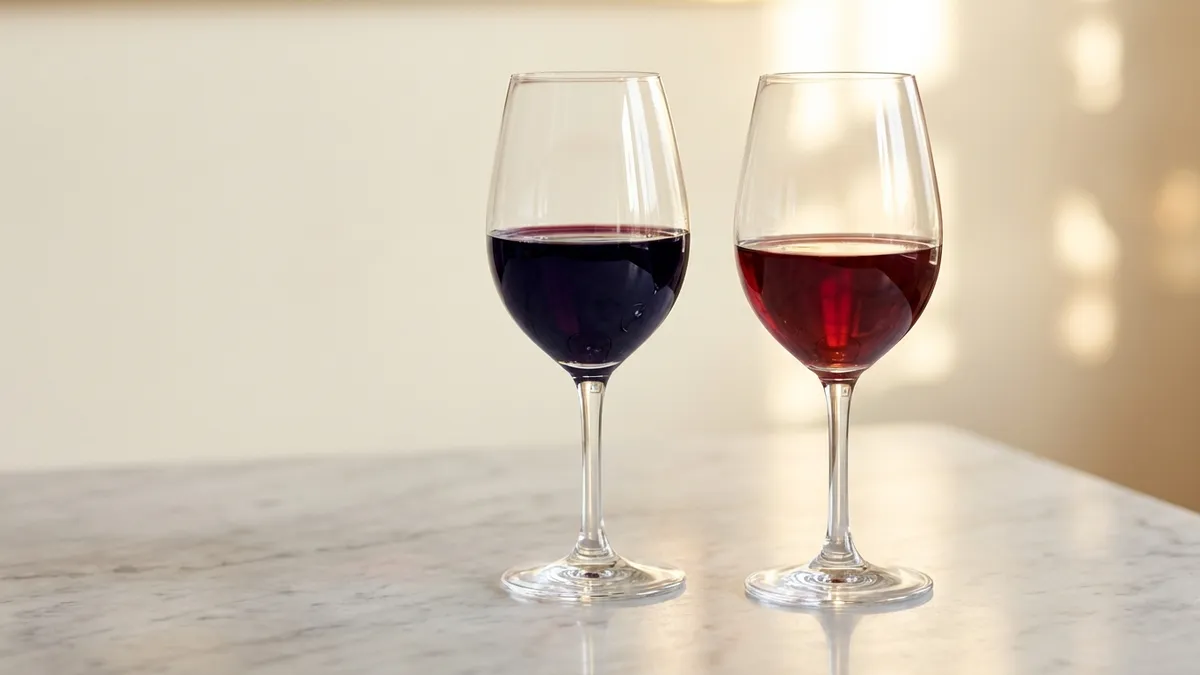
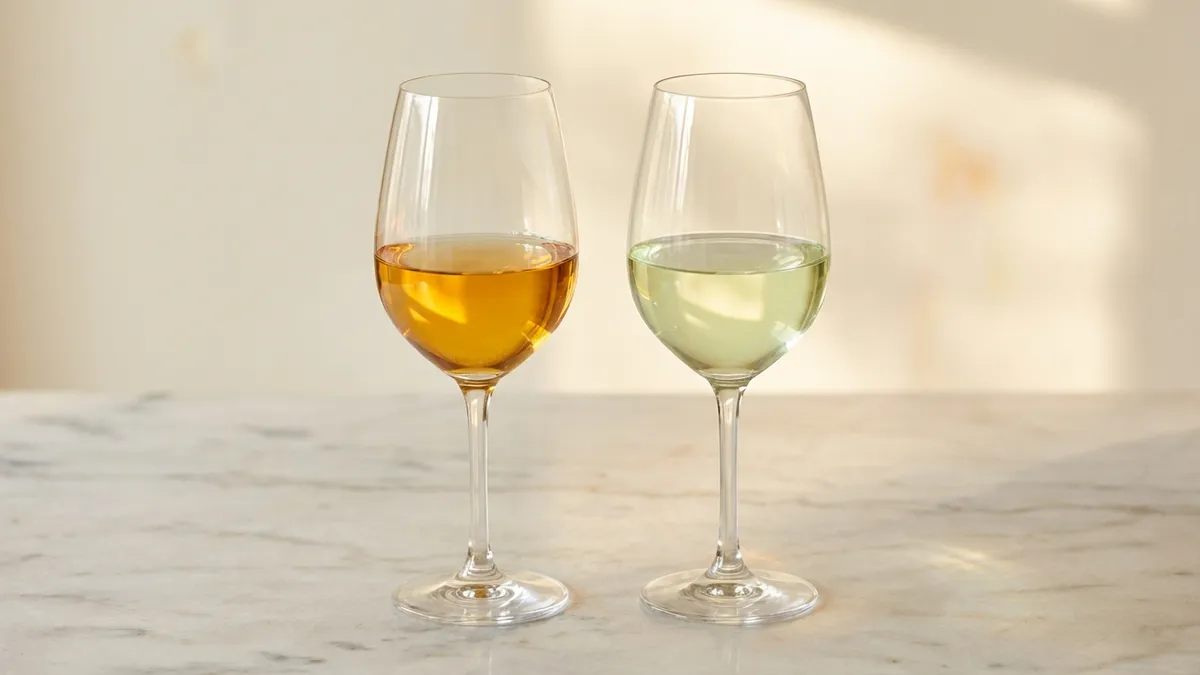
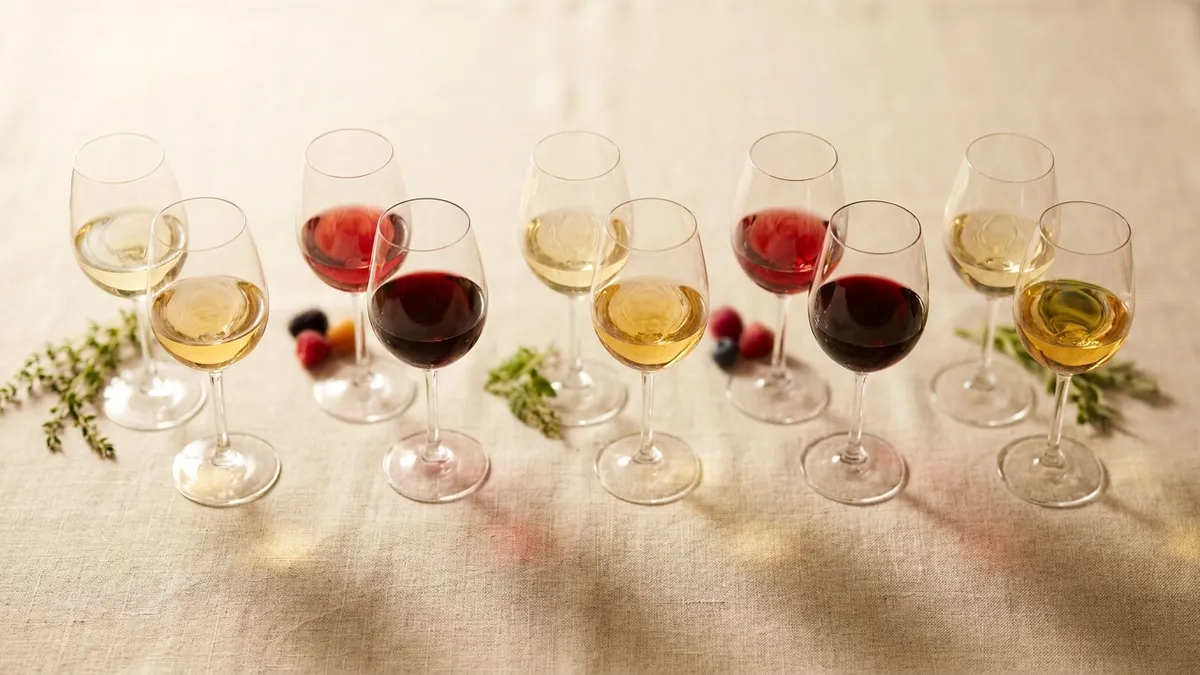
One grape, two climates: how cool and warm regions pull the same variety in opposite directions.
- Chardonnay — Cool-climate style: Chablis: lean, high-acid, lemon, chalk, little oak · Warm-climate style: California: ripe apple & pineapple, fuller body, oak, creamy
- Syrah / Shiraz — Cool-climate style: Northern Rhone: peppery, savory, olive, medium body · Warm-climate style: Barossa: blackberry jam, chocolate, plush, full body
- Pinot Noir — Cool-climate style: Burgundy: pale, red cherry, earthy, high acid · Warm-climate style: Central Otago: dark plum, riper fruit, fuller body
- Sauvignon Blanc — Cool-climate style: Loire: flinty, grapefruit, gooseberry, mineral · Warm-climate style: Marlborough: passion fruit, lime, cut grass, exuberant
- Riesling — Cool-climate style: Mosel: light, low-alcohol, lime, wet stone · Warm-climate style: Clare Valley: bone-dry, fuller, lime & grapefruit, toasty
Beyond Climate: Soil, Winemaking, Yields, and Timing
Climate sets the broad style, but four more levers explain why two wineries down the road from each other can still taste different with the same grape.
Soil and Terroir
Terroir (the full natural setting where grapes grow — soil, climate, slope, and altitude) is more than a buzzword. Soil mostly works through physics, not flavor. Free-draining slate and limestone stress the vine and tend to give taut, mineral-feeling wines; water-holding clay gives fuller, rounder body; stony soils store daytime heat and release it at night, nudging ripeness up. Altitude cools things by night and widens the day-to-night temperature swing, which preserves acidity and aroma. For the deeper version, see what terroir actually is and how climate shapes wine flavor.
Winemaking: Oak, Lees, and Malolactic
After the grapes are picked, the winemaker still has enormous influence.
- Oak — aging in barrels adds vanilla, toast, spice, and texture; stainless steel keeps the wine pure and fruit-driven.
- Lees aging — leaving the wine on its spent yeast (the lees) builds a creamy, bready, savory texture.
- Malolactic fermentation — softens sharp acidity into a rounder, sometimes buttery feel; skipping it keeps the wine crisp.
- Picking time — harvesting early protects acidity and freshness; picking later chases riper, fuller flavor and more alcohol.
Two winemakers can take identical cool-climate Chardonnay and, through these choices alone, produce one lean unoaked wine and one rich, creamy one.
Yields and Vine Age
Yields matter too. A vine carrying a heavy crop spreads its energy thin, giving diluted, simpler flavor. A vine pruned to a small crop concentrates sugar, color, and aroma into fewer grapes. Old vines naturally crop low, which is one reason "old vine" wines often taste more intense. None of this changes the grape's identity — it changes the volume knob on everything the grape can express.
Sommelier tip: When two bottles of the same grape taste worlds apart, ask three questions in order — was it cool or warm, was it picked early or late, and did it see oak? Those three answers explain most of the gap.
Old World vs New World: The Same Grape in Two Modes
You will hear wine split into Old World (traditional European regions) and New World (newer regions like the Americas, Australia, New Zealand, and South Africa). It is a rough shorthand, not a law, but it captures a real tendency.
Old World regions are often cooler and lean toward restrained, savory, lower-alcohol, food-friendly wines that name the place on the label (Chablis, Sancerre, Mosel). New World regions are often warmer and lean toward riper, fruit-forward, fuller, higher-alcohol wines that name the grape on the label (California Chardonnay, Marlborough Sauvignon Blanc, Barossa Shiraz).
The same grape simply gets expressed in two different idioms. Knowing which idiom you are holding tells you a lot before the cork is out — and once you can taste systematically, you can confirm your guess glass by glass.
How to Predict a Wine's Style Before You Taste It
Here is the payoff. Once you internalize the levers above, you can stand in a wine shop, read a label, and forecast the wine in your head. Run this quick mental checklist.
- Name the grape. Start with its baseline — is it naturally high-acid (Riesling, Pinot Noir), tannic (Syrah, Cabernet), or near-neutral (Chardonnay)?
- Locate the region and judge the climate. Cool and northern, or high-altitude? Expect leaner, crisper, more savory. Warm and southern, or low and inland? Expect riper, fuller, fruitier.
- Old World or New World? Old World nudges toward restraint and savory complexity; New World nudges toward ripe fruit and body.
- Scan for winemaking clues. Words like "barrel-aged," "reserve," or a higher stated alcohol hint at a richer, oakier style; "unoaked" or low alcohol hints at crisp and fresh.
Stack those four answers and you have a confident prediction. Cool-climate Pinot Noir from a northern region? Light, red-fruited, earthy, high acid. Warm-climate Shiraz from a southern valley? Dark, jammy, full, soft. You are no longer guessing — you are reading.
This skill compounds. The more grapes you anchor to a baseline and the more regions you map to a climate, the faster your predictions get. The Sommy app builds exactly this muscle, walking you through guided side-by-side tastings so you put words to the difference between cool and warm, restrained and ripe. The noble grapes guide is a good next step for locking in each variety's baseline before you start comparing regions.
Putting It All Together
"Same grape, different wine" is not a trick of marketing — it is the natural result of where and how a grape is grown. Climate does most of the work, setting acidity, alcohol, body, and flavor ripeness. Soil, yields, picking time, and winemaking handle the fine detail. Old World and New World give you a quick read on the overall idiom.
The reward for learning this is real confidence. Instead of memorizing thousands of bottles, you learn a handful of grapes and a handful of climate patterns, then combine them. Find the grape, find the climate, picture the style. With a little practice, you will predict a wine before the first sip — and be right far more often than not.
Sources
- The Oxford Companion to Wine — Jancis Robinson (ed.), Oxford University Press, 2023
- Wine Grapes: A Complete Guide to 1,368 Vine Varieties — Jancis Robinson, Julia Harding, José Vouillamoz, Allen Lane, 2012
- WSET Level 2 Award in Wines: Study Guide — Wine & Spirit Education Trust, 2023
Frequently Asked Questions
Why does the same grape taste so different in different regions?
Climate is the biggest factor. A grape grown in a cool place keeps higher acidity, lower sugar, and tarter fruit flavors. The same grape in a warm place ripens more fully, gaining riper fruit, higher alcohol, and softer acidity. Soil, winemaking choices, vineyard yields, and picking time all add further variation on top of climate.
What is the difference between cool-climate and warm-climate wine?
Cool-climate wines tend to have higher acidity, lower alcohol, lighter body, and tart, citrusy or red-fruit flavors. Warm-climate wines have lower acidity, higher alcohol, fuller body, and riper, jammier, darker-fruit flavors. The same grape sits at opposite ends of this spectrum depending on where it grows.
What does Old World versus New World mean for the same grape?
Old World refers to traditional European regions, which are often cooler and favor restrained, savory, food-friendly styles. New World refers to newer regions like Australia, California, and New Zealand, often warmer and favoring riper, fruit-forward, fuller styles. Syrah from the Rhone and Shiraz from Barossa are the same grape in these two modes.
How does climate change acidity and alcohol in wine?
Warmth ripens grapes faster, raising sugar (which ferments into alcohol) and lowering natural acidity. Cool conditions slow ripening, so grapes hold their acid and accumulate less sugar. That is why a cool-climate wine often feels crisp and lower in alcohol while a warm-climate version feels richer and stronger.
Does soil really change how wine tastes?
Soil shapes wine mostly through drainage, heat retention, and how it stresses the vine, rather than by adding literal flavors. Limestone and slate sites often produce taut, mineral-feeling wines; clay holds water and gives fuller body. Soil works alongside climate and winemaking, so it rarely acts alone.
How can I predict a wine's style from the region?
Find the region on a map and ask whether it is cool or warm, coastal or continental, high-altitude or low. Cooler and higher usually means leaner, crisper, more savory. Warmer and lower usually means riper, fuller, fruitier. Combine that with the grape's baseline character and you can guess the style before pouring.
Why is Chablis so different from California Chardonnay?
Both are Chardonnay, but Chablis is a cool northern region that produces lean, high-acid, citrus-and-mineral wines, usually with little oak. Much of California is warmer, giving riper tropical fruit, fuller body, lower acidity, and often noticeable oak and a creamy texture from malolactic fermentation. Same grape, opposite styles.
Sommy Team
LinkedInFounder & Wine Educator
The Sommy Team is building the world's most approachable wine education app, helping beginners develop real tasting skills through structured courses and AI-guided practice.