Melon de Bourgogne: The Grape That Makes Muscadet

By the Sommy Team — AI-assisted, human-edited.
Updated Jun 17, 2026
Contents (7)
TL;DR
Melon de Bourgogne is the white grape behind Muscadet, the Loire Valley's crisp, light, high-acid white wine from the Pays Nantais near the Atlantic. Despite its Burgundian name, it now belongs to the Loire, where sur lie aging adds yeasty texture and saline depth, making it France's classic oyster wine and a remarkable value.
What Is Melon de Bourgogne?
Melon de Bourgogne is the white grape behind Muscadet, the crisp, light, high-acid white wine of the Loire Valley's western edge. Despite its name pointing to Burgundy, melon de bourgogne muscadet is now inseparable from the Loire's Pays Nantais, the cool, Atlantic-facing region around the city of Nantes. The grape produces a bone-dry wine of lemon, green apple, and sea-spray salinity, almost always at a modest 11 to 12 percent alcohol. Its hallmark technique, sur lie aging, rests the wine on its spent yeast through winter, layering in a yeasty, bready texture. The result is France's classic oyster wine and, glass for glass, one of its great values.
Melon de Bourgogne and Muscadet: One Grape, Two Names
The first thing to untangle is the name. Melon de Bourgogne is the grape variety. Muscadet is the wine and the appellation made from it in the Pays Nantais. In nearly every bottle, they are the same thing: Muscadet is almost always 100 percent Melon de Bourgogne.
A second, even more common confusion: Muscadet is not Muscat. They sound alike and both start their lives in a vineyard, but they are unrelated. Muscat is a family of intensely aromatic, often grapey, sometimes sweet grapes. Melon de Bourgogne is neutral, citrus-driven, and dry. The names are a historical accident, not a clue to flavor.
The "Bourgogne" in the grape's name is real history, though. Melon de Bourgogne genuinely originated in Burgundy, where DNA analysis confirms it is a natural cross of Pinot Noir and the ancient Gouais Blanc — making it a half-sibling of Chardonnay, which shares the same parentage. Burgundy's authorities repeatedly banned the grape over the centuries, favoring Pinot Noir and Chardonnay, until it found a permanent home downriver in the Loire.
How It Reached the Loire
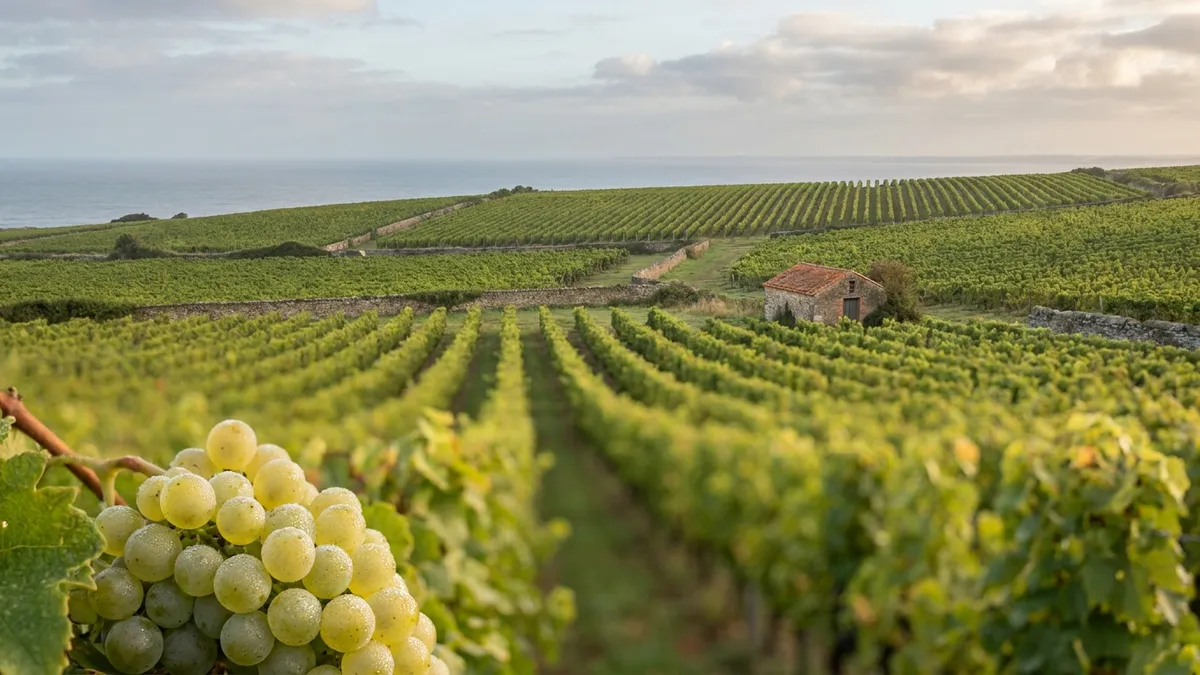
Melon de Bourgogne earned its place in the Pays Nantais by surviving disaster. The brutal winter of 1709 froze and killed most of the region's vines. Growers replanted with Melon de Bourgogne because it ripens early and tolerates cold — qualities that matter enormously this far north, where the Atlantic keeps the climate cool and damp. The grape's resilience, not its prestige, made it the Loire's western workhorse.
What Does Melon de Bourgogne Taste Like?
If you want a single word for Melon de Bourgogne, it is fresh. This is a wine of nervy acidity and quiet, mineral fruit rather than showy aromatics. It does not announce itself; it refreshes.
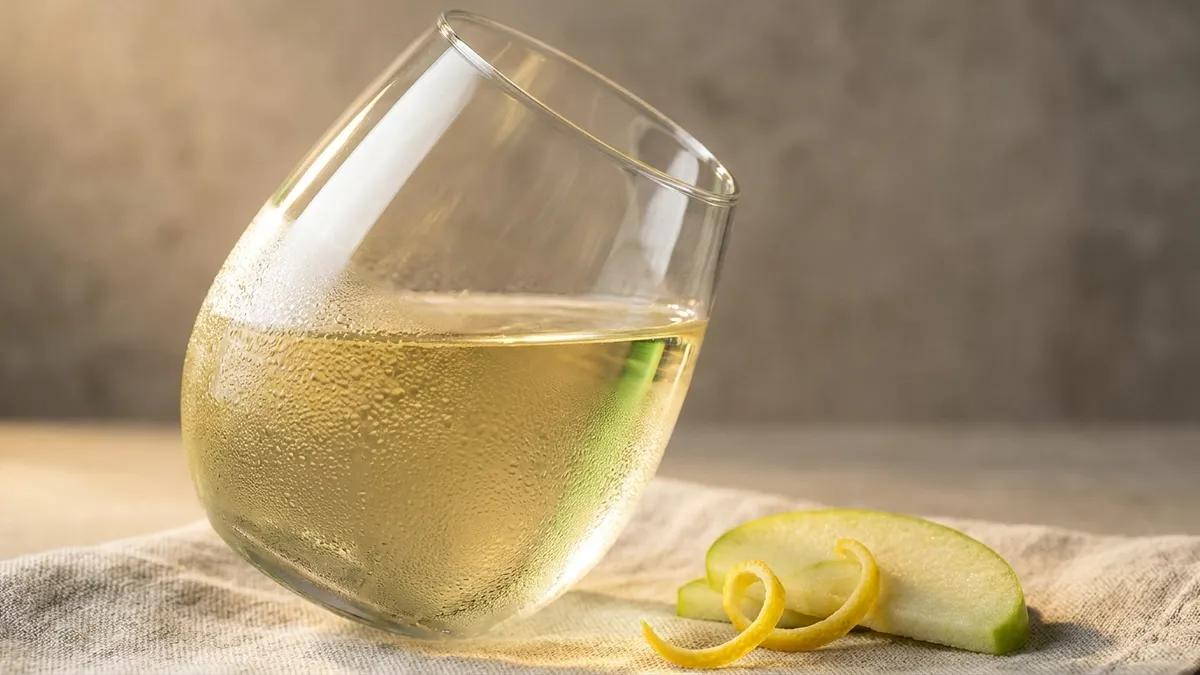
Typical aromas: fresh lemon, green apple, white pear, lime zest, wet stone, and a clear saline, briny note that recalls sea air.
Here is how its structure breaks down on the palate, using the same one-to-five scale you would meet in the Sommy app tasting exercises:
- Sweetness: bone-dry (1/5) — no perceptible residual sugar
- Acidity: very high (5/5) — the wine's defining trait
- Body: light (2/5) — delicate and lean, never weighty
- Alcohol: low (often 11 to 12 percent) — easy and refreshing
That profile is unusual. Few quality whites combine such piercing acidity with such low alcohol and such restrained fruit. The closest reference points are lean, coastal seafood whites such as Picpoul and unoaked Atlantic styles — but Melon de Bourgogne is leaner and more mineral than almost any of them.
The Role of Sur Lie Aging
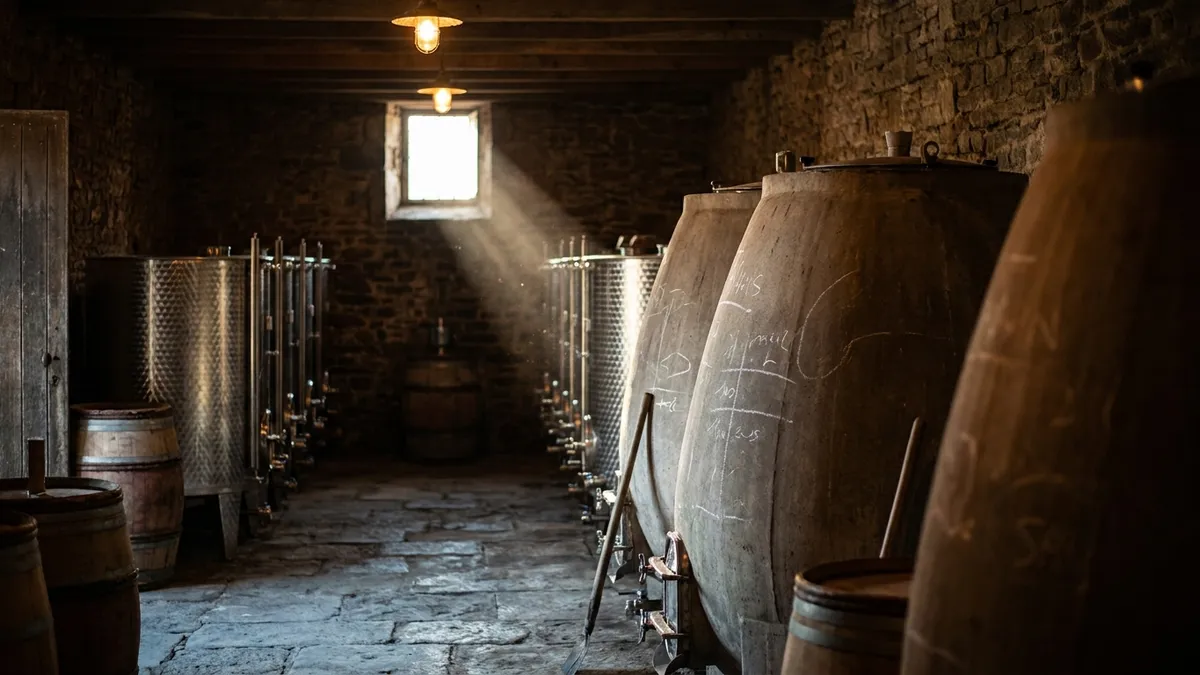
The single technique that elevates Melon de Bourgogne from simple to serious is sur lie — French for "on the lees." After fermentation, the wine is left to rest over its lees (the spent yeast cells that settle to the bottom of the tank) without being racked off, usually through the winter until spring bottling.
What does that contact do? Three things:
- Texture — the lees release compounds that give the wine a rounder, faintly creamy mouthfeel, softening its sharp citrus edge without adding any sweetness
- Yeasty depth — a subtle bready, leesy, almost biscuit-like complexity layers over the fruit
- A light spritz — many sur lie wines retain a faint prickle of carbon dioxide on the tongue, which heightens the sense of freshness
A wine labeled Muscadet Sèvre et Maine Sur Lie has met legal rules governing this process, including a minimum time on the lees and bottling within a set window. It is the surest signal of a quality, characterful bottle. Learning to feel that leesy texture is a great exercise in how to taste wine — it teaches your palate to read mouthfeel, not just flavor.
Sommelier tip: When a Muscadet shows a faint creaminess and a whisper of fizz alongside its lemon-and-stone freshness, that is sur lie aging at work. It is the texture, not the fruit, that separates a great Muscadet from a forgettable one.
Muscadet's Appellations and Where the Grape Grows
Almost all of the world's Melon de Bourgogne grows in the Pays Nantais, the westernmost stretch of the Loire Valley where the river meets the Atlantic. The cool maritime climate and varied soils — granite, gneiss, schist, and volcanic gabbro — give the wines their tension and minerality. To see how this corner fits the larger picture, the guide to French wine regions maps the Loire against Bordeaux, Burgundy, and the Rhône.
The Muscadet name covers four appellations, which differ in scale and quality:
- Muscadet Sèvre et Maine — Subject: the heart of the region · Named for: two rivers, the Sèvre and the Maine · Quality: the largest and most respected zone, source of the most concentrated, age-worthy wines
- Muscadet Côtes de Grandlieu — Subject: a lake-influenced zone · Style: rounder, slightly softer wines · Note: warmed by the nearby Lac de Grand-Lieu
- Muscadet Coteaux de la Loire — Subject: river-valley slopes upstream · Style: firmer, more structured · Note: a cooler, more continental pocket
- Muscadet (regional) — Subject: the basic appellation · Style: simplest, most everyday · Note: lighter wines for early drinking
Muscadet Sèvre et Maine — The One to Know
Muscadet Sèvre et Maine is where Melon de Bourgogne reaches its peak. It accounts for the large majority of quality production, and the best examples come from named cru communal villages — Clisson, Gorges, Le Pallet, and others — where the wines spend extended time on the lees and gain real depth and aging potential. If you taste only one Muscadet to understand the grape, make it a Sèvre et Maine Sur Lie.
Beyond the Loire
Small plantings of Melon de Bourgogne exist outside France — Oregon's Willamette Valley has a handful of producers, and a few experimental sites dot other cool regions. But these are footnotes. The Loire holds the overwhelming majority of the world's vines, and no other region has made the grape its own. Unlike widely traveled white grapes such as Sauvignon Blanc or Chardonnay, Melon de Bourgogne is, for all practical purposes, a one-region grape.
How to Pair Muscadet with Food
Muscadet is one of the most reliable food wines a beginner can reach for, precisely because its profile is so clear: very high acidity, low alcohol, light body, and a saline finish. Those traits make it a scalpel for cutting through salt, fat, and the brine of the sea.
The Oyster Pairing
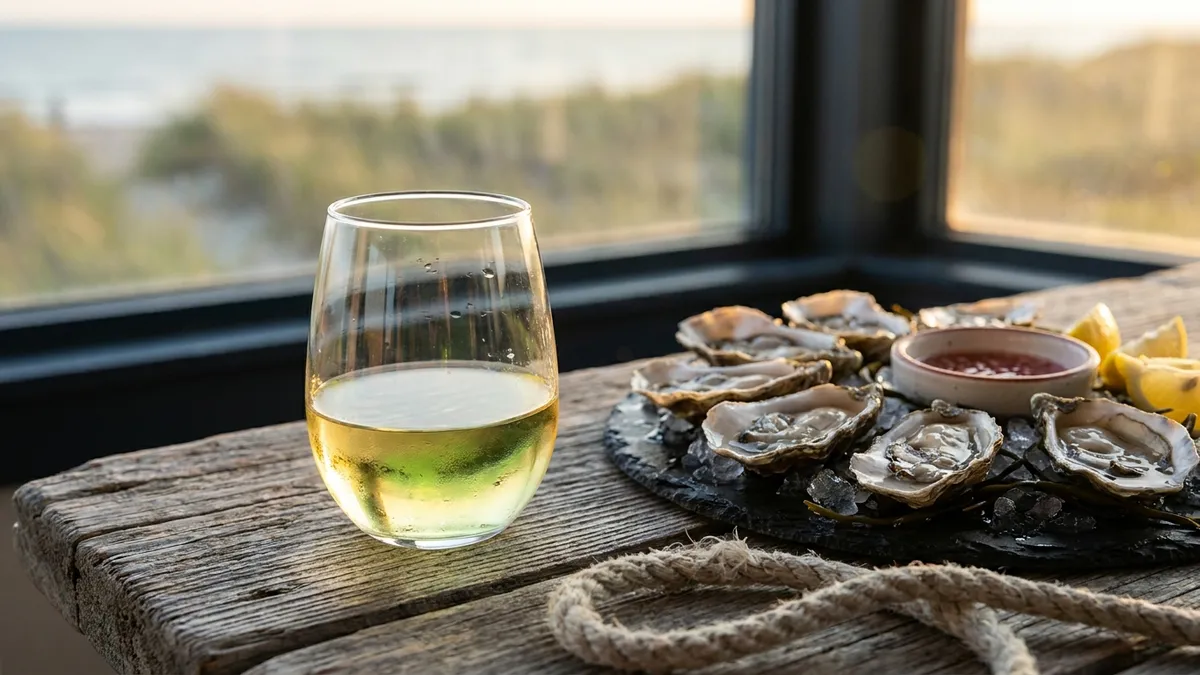
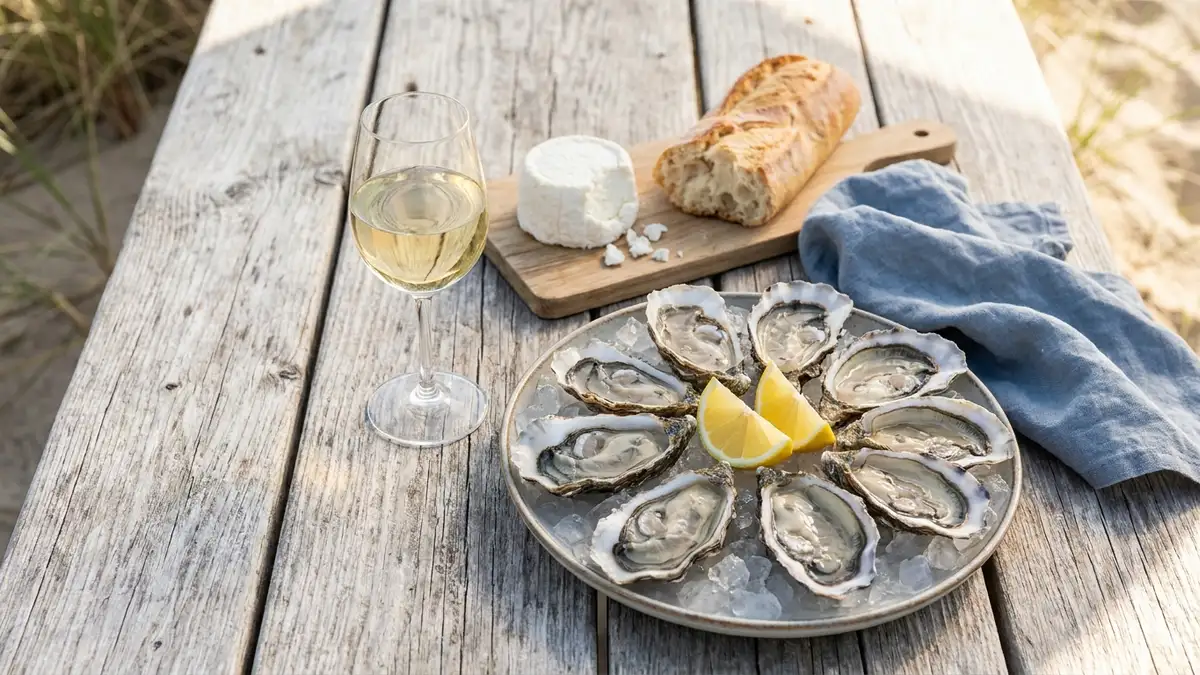
The pairing Muscadet is famous for is raw oysters, and the match is close to perfect. The wine's searing acidity and saline minerality echo the oyster's briny liquor, while its light body and low alcohol keep the whole experience clean and refreshing rather than heavy. This is the old principle of what grows together goes together: Melon de Bourgogne ripens in vineyards within sight of the Atlantic shellfish beds. For a wider look at matching wine to the sea, see the guide to wine with seafood.
Beyond Oysters
- Shellfish and crustaceans — mussels, clams, shrimp, crab, and especially the Loire's own beurre blanc-dressed dishes
- Other raw bar — ceviche, crudo, and chilled prawns, where the acidity stands in for a squeeze of lemon
- Fried seafood — fish and chips, calamari, tempura; the high acid slices through the fat
- Fresh goat cheese — the Loire is goat-cheese country, and the wine's brightness lifts the cheese's tang
- Lighter Asian dishes — sushi, lighter Thai and Vietnamese plates where salt and freshness dominate
What to Avoid
Muscadet's delicacy is also its limit. Big, rich, heavily spiced, or sweet dishes will simply flatten it. Reach for something fuller-bodied with roast meats or creamy sauces, and save the Muscadet for when freshness is the point.
Melon de Bourgogne vs Other Crisp Whites
It helps to place Melon de Bourgogne next to the other lean, high-acid whites a beginner is likely to meet. The differences come down to fruit intensity, body, and texture. Acidity is high across this whole family, but everything else shifts. (For a deeper read on how these structural elements interact, see the guide to tannins, acidity, and body.)
- Melon de Bourgogne (Muscadet) — Fruit: subtle lemon and green apple · Body: light · Signature: saline minerality and sur lie texture · Aromatics: low, neutral
- Sauvignon Blanc — Fruit: pronounced gooseberry, grapefruit, herb · Body: light to medium · Signature: zesty, aromatic intensity · Aromatics: high
- Albariño — Fruit: stone fruit, citrus, salinity · Body: light to medium · Signature: more peachy fruit, also a coastal grape · Aromatics: medium
- Godello — Fruit: pear, apple, citrus · Body: medium · Signature: rounder, sometimes textured by lees too · Aromatics: medium
- Chardonnay (unoaked) — Fruit: apple, citrus, melon · Body: medium · Signature: broader, riper, less mineral · Aromatics: low to medium
If you love Muscadet's salty precision, Albariño from Spain's Atlantic coast is the natural next step, while Godello offers a slightly rounder cousin. To see where all of these sit in the larger family, the white grapes overview is a good map. And for the headline varieties every drinker should anchor on, the noble grapes primer sets the baseline.
Why Melon de Bourgogne Is a Great Value
Few wine categories deliver as much pleasure per euro as good Muscadet. Because the grape lacks the prestige of its Burgundian half-siblings and the appellation flies under the radar, prices stay low even for serious, age-worthy sur lie bottlings. A cru-level Sèvre et Maine can cost a fraction of a comparable village Burgundy while offering genuine complexity and the ability to age for years.
For someone building a palate, that value is a gift. Melon de Bourgogne is an ideal teaching grape: its acidity is unmistakable, its body is light enough to read clearly, and its sur lie texture gives you something concrete to feel. Tasting a basic Muscadet next to a cru Sèvre et Maine Sur Lie is one of the clearest lessons in what lees contact and concentration actually do to a wine.
The Sommy app's guided tastings walk you through exactly this kind of comparison, helping you put words to the lemon, the salinity, and the bready texture one sip at a time — so the next time you order Muscadet with a dozen oysters, you taste it like someone who knows why the match works.
Sources
Frequently Asked Questions
What does Melon de Bourgogne taste like?
Melon de Bourgogne tastes of fresh lemon, green apple, pear, and a distinct saline, briny minerality. It is light-bodied, very high in acidity, and usually low in alcohol. Wines aged sur lie gain a subtle bready, leesy texture and a faint creaminess that softens the grape's sharp citrus edge without adding sweetness.
Is Melon de Bourgogne the same grape as Muscadet?
Yes, in practice. Melon de Bourgogne is the grape variety, and Muscadet is the wine and appellation it makes in the Loire Valley's Pays Nantais. Almost all Muscadet is 100 percent Melon de Bourgogne. Confusingly, Muscadet is unrelated to Muscat, an entirely different aromatic grape family.
What does sur lie mean on a Muscadet label?
Sur lie is French for "on the lees." It means the wine rested over its spent yeast cells through the winter after fermentation, without racking, until bottling. This contact adds yeasty, bready texture, a faint creaminess, and sometimes a light spritz. Sur lie aging is the technique that gives quality Muscadet its depth and character.
Why does Muscadet pair so well with oysters?
Muscadet's very high acidity, light body, and saline minerality mirror the briny, mineral taste of raw oysters while cutting through their soft texture. The wine's low alcohol keeps the pairing refreshing rather than heavy. It grows beside the Atlantic, so the classic rule of regional pairing applies: what grows together goes together.
What is Muscadet Sèvre et Maine?
Muscadet Sèvre et Maine is the largest and most respected sub-appellation, named for two rivers that flow through the heart of the Pays Nantais. It produces the most concentrated, age-worthy Muscadet, and most quality examples are aged sur lie. If you want to taste Melon de Bourgogne at its best, start with this appellation.
Is Melon de Bourgogne a sweet or dry wine?
Melon de Bourgogne makes a bone-dry wine. It has no perceptible residual sugar. Its bright citrus fruit can read as fresh and lively, but the finish is clean and dry. The combination of very high acidity, low alcohol, and zero sweetness is exactly what makes it such a precise, refreshing partner for seafood.
Can Muscadet age, or should you drink it young?
Most Muscadet is made to drink young and fresh, within one to three years. However, top sur lie wines from Sèvre et Maine, especially single-vineyard cru bottlings, can age beautifully for five to ten years or more. With age the citrus deepens, the minerality becomes more pronounced, and the texture grows richer and more complex.
Where does Melon de Bourgogne grow?
Melon de Bourgogne originated in Burgundy but was banished there centuries ago. Today it is grown almost entirely in the Loire Valley's Pays Nantais, around the city of Nantes near the Atlantic coast. Small plantings exist in Oregon and elsewhere, but the Loire remains the grape's true and overwhelming home.
Sommy Team
LinkedInFounder & Wine Educator
The Sommy Team is building the world's most approachable wine education app, helping beginners develop real tasting skills through structured courses and AI-guided practice.