Grüner Veltliner: Austria's Signature White Grape

By the Sommy Team — AI-assisted, human-edited.
Updated Apr 29, 2026
Contents (10)
- What Is Grüner Veltliner, in 100 Words
- A Short History of Austria's Flagship Grape
- The Distinctive White Pepper Note
- The Three Ripeness Tiers: Steinfeder, Federspiel, Smaragd
- The Star Regions
- Food Pairing: The Vegetable Champion
- Grüner Veltliner vs. Riesling vs. Sauvignon Blanc
- How to Taste a Grüner Veltliner Like a Pro
- Aging Potential
- Getting Started with Grüner Veltliner
TL;DR
Grüner Veltliner is Austria's signature white grape, accounting for roughly 30 percent of national plantings. It shows pale lemon-green color, a distinctive white pepper note, citrus and green apple, and lively acidity. Styles run from light Steinfeder to concentrated Smaragd. The grape pairs with notoriously tricky vegetables, schnitzel, and Asian spice.
Grüner Veltliner wine is Austria's calling card and one of the most distinctive white grape varieties in the world. While Riesling gets most of the attention among Germanic-style whites, Grüner Veltliner offers something no other grape delivers: a vivid white pepper note layered over crisp citrus and green apple, all wrapped in lively acidity. The grape is so closely tied to Austria that locals simply call it "Grüner" — and with roughly 14,000 hectares planted, it accounts for about 30 percent of the country's total vineyard area.
For most of the twentieth century, Grüner Veltliner was almost unknown outside Austria. That changed dramatically after a 2002 blind tasting in London where top Austrian Grüners outperformed white Burgundies and Chardonnays from California. Sommeliers around the world took notice, and the grape's reputation has only grown since.
What Is Grüner Veltliner, in 100 Words
Grüner Veltliner is Austria's signature dry white grape, planted on roughly 30 percent of the country's vineyard land. Expect pale lemon-green color, a distinctive white pepper spice from the compound rotundone, grapefruit zest, green apple, and a savory lentil or legume note. The wine is high in acidity and ranges from light, early-drinking Steinfeder to concentrated, age-worthy Smaragd. Star regions include the Wachau, Kremstal, Kamptal, and Wagram along the Danube. Grüner Veltliner pairs phenomenally with vegetables that defeat most wines (asparagus, artichoke), Wiener schnitzel, sushi, and Asian spice — making it one of the most food-versatile whites on Earth.
A Short History of Austria's Flagship Grape
Grüner Veltliner has been grown in what is now Austria for centuries, but it only became the country's dominant white variety in the mid-twentieth century. DNA research published in 1996 identified its parents as Traminer (an aromatic Alpine grape, parent of Gewürztraminer) and a long-lost variety later named St. Georgener-Rebe, found growing as a single vine in Burgenland. The Traminer parentage explains the grape's slightly spicy, aromatic character.
The variety's modern reputation was cemented in November 2002, when Master of Wine Jamie Goode and the British wine writer Tim Atkin organized a blind tasting in London. Top Austrian Grüner Veltliners were poured alongside celebrated Chardonnays from Burgundy and California. The Austrian wines placed at the top, and the international wine trade suddenly understood that this obscure grape could rival the world's most famous whites.
Before 2002, very little Grüner Veltliner left Austria. After 2002, it became a fixture on serious wine lists in London, New York, and Tokyo. The grape's reputation now rests on consistent quality from a small group of producers concentrated in four key regions along the Danube.
The Distinctive White Pepper Note
The single most recognizable feature of Grüner Veltliner is the white pepper aroma. Trained tasters can often identify the grape blind on this character alone — no other white variety produces it in the same way.
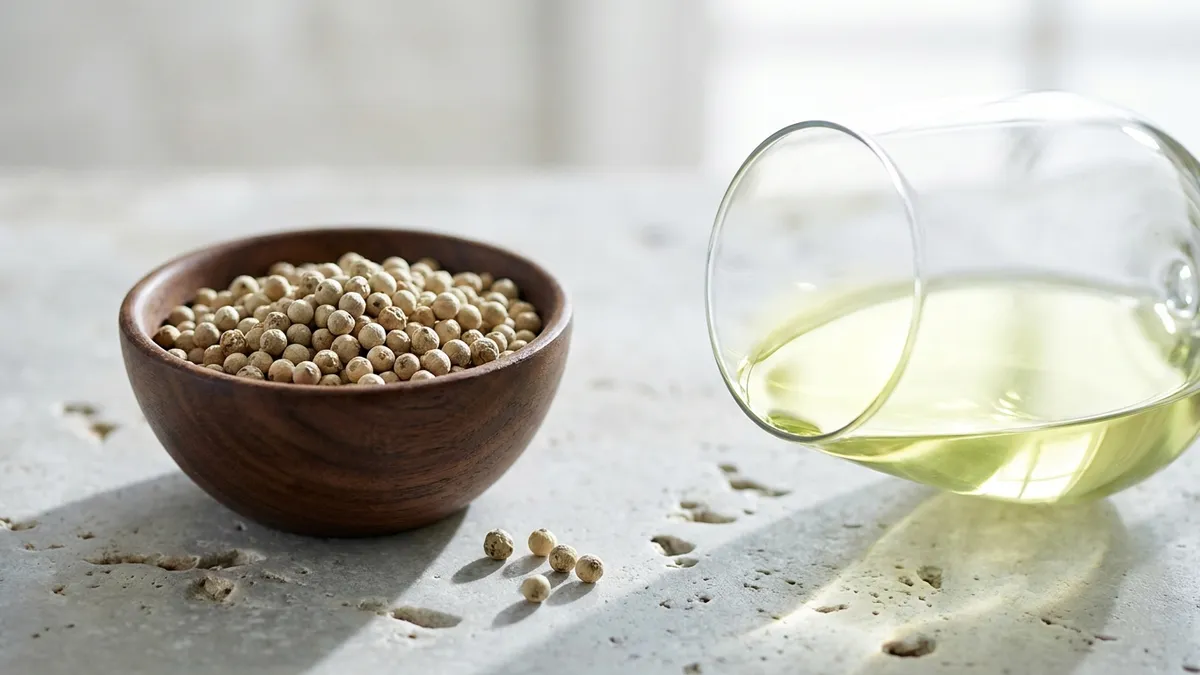
The compound responsible is rotundone (a sesquiterpene that triggers the same olfactory receptors as ground black pepper). Rotundone forms in the grape skin during ripening and is concentrated in cooler-climate examples. The same compound is responsible for the peppery note in Syrah, certain Mourvèdre wines, and a few aromatic herbs like marjoram.
What is fascinating about rotundone is that roughly 20 percent of the population cannot perceive it at all due to genetic variation. If you cannot smell the pepper in a Grüner that other people are raving about, that is not a tasting failure — your nose is simply tuned differently. For everyone else, the pepper note ranges from a faint dusting on light-bodied wines to an unmistakable spice on certain cooler-vintage Federspiel bottlings.
Beyond the pepper, Grüner Veltliner shows a consistent set of supporting aromas:
- Grapefruit and lime zest — the dominant citrus notes
- Green apple and pear — clean, cool-climate orchard fruit
- Lentil or fresh peas — a savory vegetal note unique to this grape
- White flowers — light blossom, mainly on younger wines
- Wet stone or flint — mineral character on top sites
The aromatic intensity is moderate — Grüner is more subtle than Sauvignon Blanc's grassy explosion or Gewürztraminer's lychee perfume. Pay attention and the pepper appears. Learning to spot it is a satisfying milestone for anyone building a wine flavor library.
The Three Ripeness Tiers: Steinfeder, Federspiel, Smaragd
The Wachau, Austria's most prestigious Grüner region, classifies its dry wines by ripeness rather than by vineyard prestige. The system was created by the Vinea Wachau producers' association in 1986 and uses three poetic categories named after local nature:
Steinfeder is the lightest tier, named for a feathery grass that grows wild on the terraces. The wines reach a maximum of 11.5 percent alcohol and are designed for early drinking — fresh, light, citrus-driven, and built for the warm-weather table. Most Steinfeders peak within two years of release.
Federspiel sits in the middle, named for a falconer's lure. Alcohol falls between 11.5 and 12.5 percent. These wines have more body and concentration, often showing the white pepper character at its clearest. Federspiel ages well for three to seven years and is the workhorse style most commonly exported.
Smaragd is the top tier, named for an emerald-green lizard that suns itself on the warmest stones in the vineyard. Alcohol exceeds 12.5 percent and often reaches 13.5 to 14 percent. These are the powerful, concentrated, late-harvest dry Grüners that compete with Grand Cru Alsatian Riesling and top white Burgundy. Smaragd-level wines from leading sites can age 10 to 15 years, developing honey, lanolin, and a toasty mineral complexity.
The Wachau's three-tier system applies only inside the Wachau itself. Other Austrian regions use the broader Klassik and Reserve categories under the DAC (Districtus Austriae Controllatus) appellation framework, where Klassik is the everyday style and Reserve is the riper, more concentrated bottling.
The Star Regions
Four regions along or near the Danube produce the world's benchmark Grüner Veltliner. Each has its own personality, shaped by terroir and microclimate.
Wachau
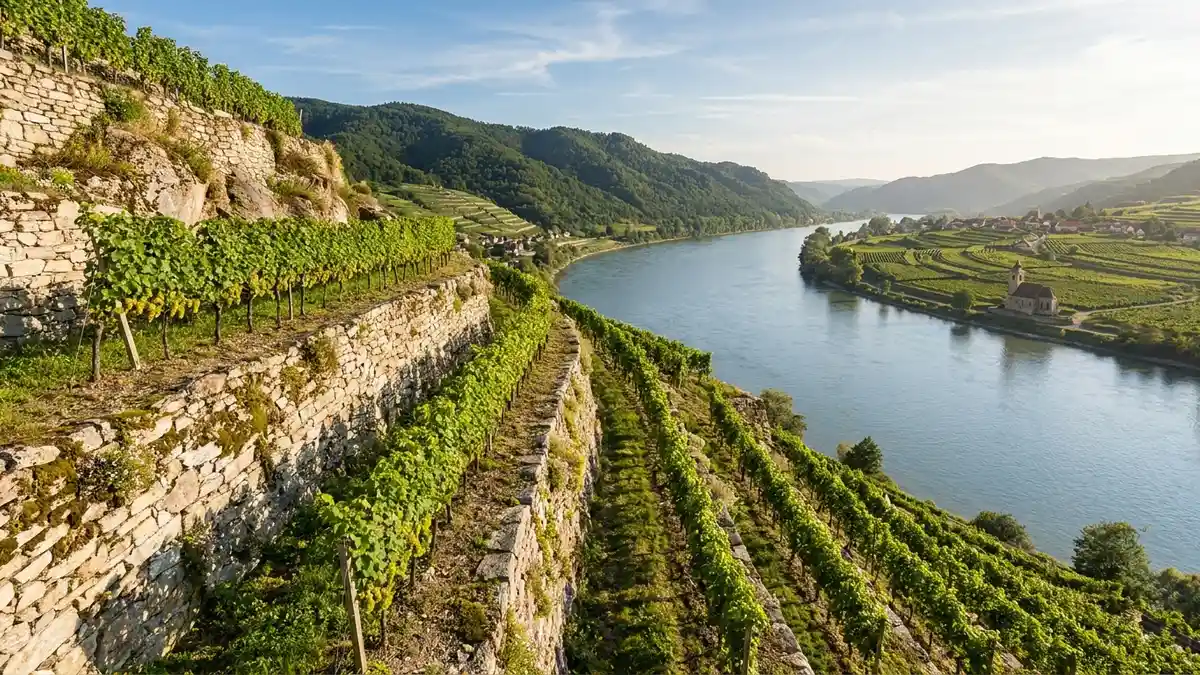
The Wachau is a narrow stretch of the Danube valley about 80 kilometers west of Vienna, where the river cuts through ancient gneiss and granite bedrock. Steep terraced vineyards climb the slopes above the water, catching the sun's reflection off the river below. The result is intensely concentrated Grüner Veltliner with pronounced minerality and a structured, age-worthy profile, especially at Smaragd level.
Kremstal
Just east of the Wachau, the Kremstal sits on a mix of loess (wind-blown silt soil) and gneiss. Loess-grown Grüners are richer, broader, and softer than their Wachau counterparts, with more pronounced stone fruit and less aggressive minerality. This is often the easiest entry point for tasters new to the grape.
Kamptal
The Kamptal lies along the Kamp River north of the Danube, with cooler nighttime temperatures than the Wachau or Kremstal. The wines tend toward racy acidity, vivid pepper, and a flintier mineral edge. Top Kamptal Grüners are some of the most age-worthy in Austria, frequently pulling ahead of Wachau bottlings in long-term cellar tastings.
Wagram
East of the Kamptal and north of Vienna, the Wagram is dominated by deep loess soils. The wines here are riper, fruitier, and more accessible than those from the granitic Wachau, often showing peach and yellow apple alongside the pepper. Wagram is the largest of the four key regions in volume terms.
Food Pairing: The Vegetable Champion
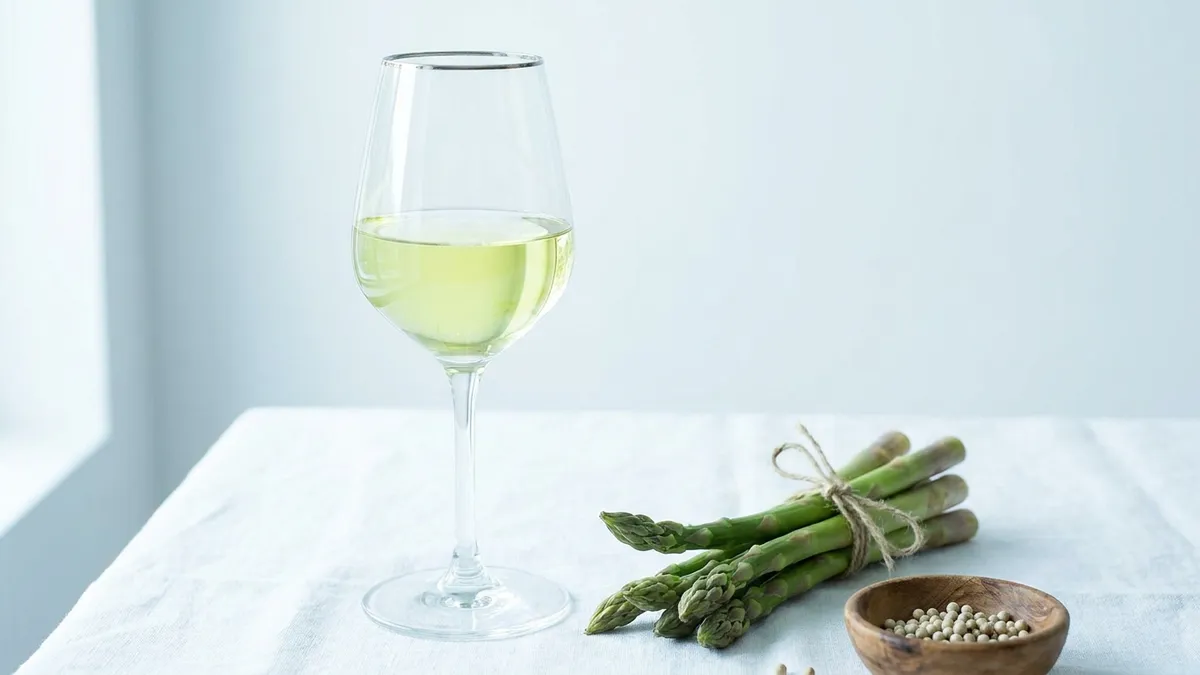
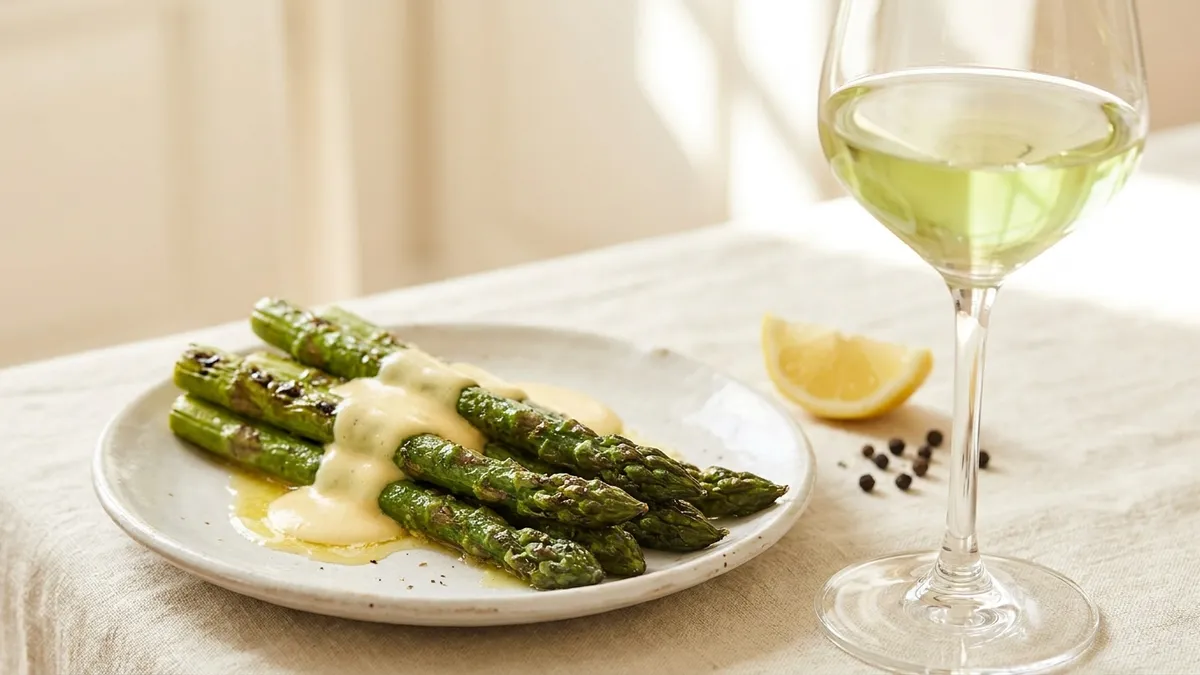
Grüner Veltliner is one of the most food-versatile white wines in the world, but it earns its reputation specifically against the foods that defeat most other wines. Two are notorious: asparagus and artichoke.
Asparagus contains compounds that make most wines taste metallic or bitter. Artichokes contain cynarin, a chemical that makes everything you drink afterward taste sweeter than it actually is — wreaking havoc on wine balance. Grüner Veltliner's herbal-savory character and high acidity bridge to both vegetables instead of clashing with them.
Beyond the green-vegetable challenge, Grüner pairs brilliantly with:
- Wiener schnitzel and breaded cutlets — the classic Austrian pairing, where acidity cuts through fried richness
- Sushi and sashimi — clean, oak-free, high-acid whites are ideal partners for raw fish
- Roast pork and pork schnitzel — a regional staple that works at every Grüner tier
- Asian cuisine with ginger, scallion, lemongrass, or coriander
- Goat cheese, feta, and fresh cheeses — acidity matches acidity
- Salads with tart vinaigrettes — high-acid wines refuse to be flattened by vinegar
For a more systematic look at how to match wines and food across cuisines, see the wine and food pairing guide and the dedicated piece on wine with spicy food.
The Sommy app walks through these matching principles step by step, including practice exercises that help you taste how acidity and savory notes interact with different dishes. You can find the courses at sommy.wine.
Grüner Veltliner vs. Riesling vs. Sauvignon Blanc
For tasters new to aromatic dry whites, Grüner Veltliner sits in a triangle alongside Riesling and Sauvignon Blanc. All three are high-acid, cool-climate whites, but they taste meaningfully different.
Grüner Veltliner is defined by white pepper, lentil or pea, grapefruit zest, and a savory herbal edge. The fruit is restrained, almost in the background, and the wines are nearly always dry. Body ranges from lean (Steinfeder) to medium-rich (Smaragd).
Riesling is purer fruit and floral — lime, peach, jasmine — with a sharper mineral edge and a much wider range of sweetness levels, from bone dry to dessert-sweet. The pepper note is absent. For a deeper look, see the Riesling wine guide.
Sauvignon Blanc explodes with grassy, herbaceous notes (cut grass, gooseberry, passion fruit) and a more aggressive acidity. It lacks Grüner's pepper and lacks Riesling's stone fruit purity. The full comparison sits in the Chardonnay vs. Sauvignon Blanc guide, and the related Pinot Grigio vs. Pinot Gris piece is useful for understanding how style varies even within a single grape.
If you taste the three side by side, the differences become obvious within a sniff or two. This kind of comparative work is one of the fastest ways to develop your wine palate.
How to Taste a Grüner Veltliner Like a Pro
A blind tasting approach helps the white pepper note announce itself rather than blend in. Pour a chilled glass at around 8 to 10 degrees Celsius — too cold and the rotundone goes silent.
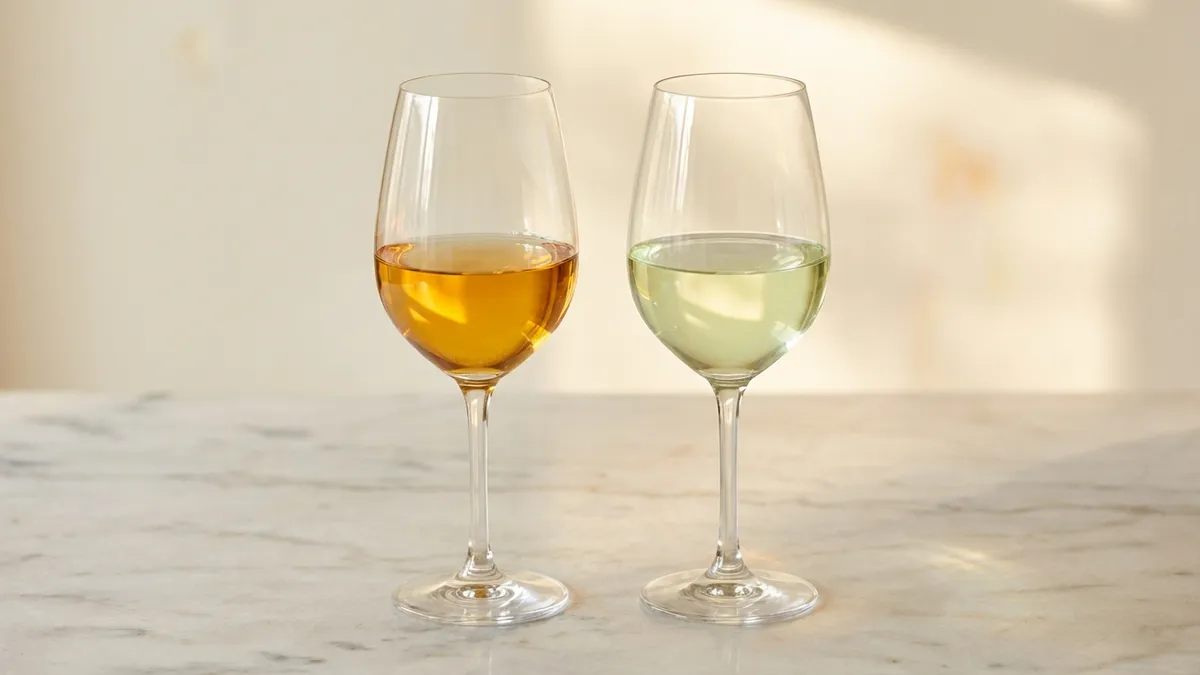
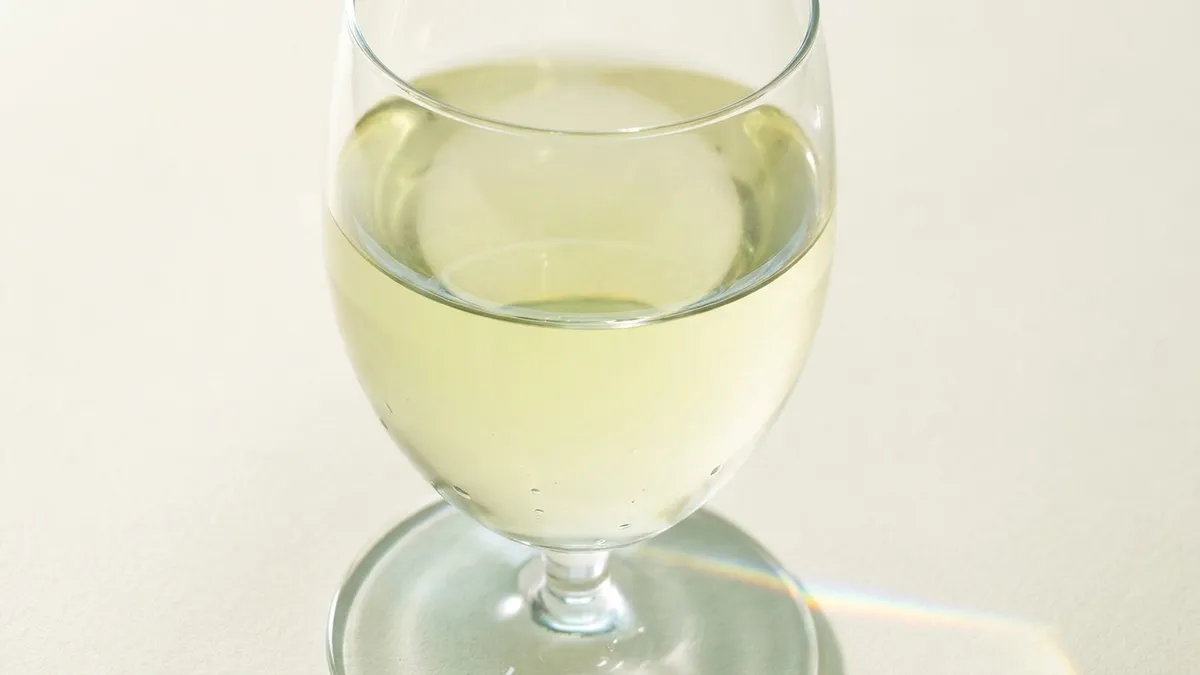
Start with sight: Grüner Veltliner's pale lemon-green color is itself a clue. Move to the nose without swirling first, then swirl and re-smell. The pepper often emerges only on the second pass. On the palate, look for the savory lentil note alongside grapefruit and green apple. Acidity should feel mouth-watering rather than sharp.
For a structured walkthrough, see the how to taste white wine guide and the WSET systematic tasting approach — both apply directly to Grüner. If you want to push further, blind-tasting two Grüners from different regions (a Wachau Smaragd against a Kamptal Federspiel) is one of the most informative exercises available for the grape.
The Sommy app's tasting modules use the same step-by-step structure, so you can practice the deductive workflow without needing a study group.
Aging Potential
Most Grüner Veltliner is built for early drinking. A simple DAC Klassik or Federspiel is at its best within two to four years of the vintage, when its fruit and pepper character is freshest.
Smaragd-tier wines and top single-vineyard Reserves are different. The combination of concentrated extract, high acidity, and naturally low pH gives them serious aging credentials. Top Wachau, Kamptal, and Kremstal Smaragds can age 10 to 15 years. With time they shed some primary fruit and develop honey, lanolin, beeswax, and a flinty mineral concentration that closely mirrors a mature Grand Cru Alsatian Riesling. The pepper note often softens but rarely disappears.
If you cellar Grüner, store it cool and dark. The grape keeps its acidic backbone for decades, but oxidation is the real risk for any white wine in long-term storage.
Getting Started with Grüner Veltliner
For a first taste, choose a basic Federspiel or a Niederösterreich DAC Klassik bottling. These are typically affordable, dry, and clearly show the pepper signature without overwhelming a beginner's palate. Drink the wine cold but not ice-cold — around 9 degrees Celsius lets the aromatics open up.
From there, the natural progression is to taste a Wachau Smaragd alongside a Federspiel from the same producer. The contrast between the two ripeness tiers is one of the clearest demonstrations available of how concentration and alcohol change a wine's profile.
Grüner Veltliner rewards attention. Once you have learned to identify the white pepper, you will start spotting the grape on wine lists everywhere — and you will have found a white that handles everything from artichoke salad to schnitzel without breaking a sweat.
Frequently Asked Questions
What does Grüner Veltliner taste like?
Grüner Veltliner shows pale lemon-green color and a distinctive white pepper spice note that no other white grape produces in the same way. Beyond the pepper, expect grapefruit zest, green apple, and a savory lentil or legume note. The palate is high in acidity with a lean to medium body, making the wine refreshing and food-friendly.
Where does the white pepper note in Grüner Veltliner come from?
The white pepper aroma comes from rotundone, the same compound responsible for the peppery note in Syrah. It builds in the grape skin during ripening, and cooler sites tend to show more of it. The pepper character is most pronounced in light to medium-bodied Grüners and softens as wines move toward the richer Smaragd category.
What are Steinfeder, Federspiel, and Smaragd?
These are three ripeness categories used by the Vinea Wachau producers' association in Austria's Wachau region. Steinfeder is the lightest, with up to 11.5 percent alcohol and an early-drinking style. Federspiel sits in the middle at 11.5 to 12.5 percent. Smaragd is the ripest and most concentrated, often above 12.5 percent and capable of long aging.
What food pairs best with Grüner Veltliner?
Grüner Veltliner is one of the few wines that handles notoriously tricky vegetables like asparagus and artichoke. It also pairs beautifully with Wiener schnitzel, sushi, sashimi, dishes with fresh herbs, and Asian cuisine that uses ginger or scallion. The combination of high acidity, white pepper, and a savory edge makes it remarkably food-versatile across cuisines.
How is Grüner Veltliner different from Riesling?
Both grapes thrive in cool climates and produce high-acid whites, but they taste different. Riesling leans into citrus, stone fruit, and floral notes with a mineral edge, and ranges from bone dry to lusciously sweet. Grüner Veltliner is almost always dry, shows white pepper and savory legume notes, and has a leaner, more herbal-savory character than Riesling's purer fruit profile.
How long can Grüner Veltliner age?
Most Grüner Veltliner is built for early drinking within two to four years of the vintage. Smaragd-tier wines from top Wachau, Kremstal, or Kamptal sites are different. These richer, dry, concentrated bottlings can age 10 to 15 years, developing honey, lanolin, and toasty notes while keeping their racy acidity intact. The style closely mirrors Grand Cru Alsatian Riesling at maturity.
Is Grüner Veltliner only made in Austria?
Austria grows roughly 90 percent of the world's Grüner Veltliner, with about 14,000 hectares planted, but the grape now appears in Slovakia, the Czech Republic, Hungary, and small experimental plantings in Australia, New Zealand, California, Oregon, and New York. Austrian examples remain the benchmark, particularly from the Wachau, Kremstal, Kamptal, and Wagram DACs along the Danube.
Is Grüner Veltliner a beginner-friendly wine?
Yes. Entry-level Grüner Veltliner is typically affordable, low to moderate in alcohol, dry, and easy to drink without any special wine knowledge. The white pepper note is unusual enough to be memorable, which makes the grape an excellent training tool for building a flavor vocabulary. A simple Federspiel or basic DAC bottling is the ideal starting point.
Sommy Team
LinkedInFounder & Wine Educator
The Sommy Team is building the world's most approachable wine education app, helping beginners develop real tasting skills through structured courses and AI-guided practice.