Building Your Personal Wine Flavor Library

By the Sommy Team — AI-assisted, human-edited.
Updated Apr 29, 2026
Contents (13)
- TLDR
- What a Wine Flavor Library Is, in 100 Words
- Why a Flavor Library Beats Reading Tasting Notes
- The Dual Library System
- What to Stock: A 30-50 Note Starter Library
- How to Refresh Your Library Weekly
- The Daily Five-Minute Sniff Routine
- Training Drills for Your Wine Flavor Library
- How the Library Transfers to Real Wine
- Mistakes That Slow Library Building
- When the Library Starts to Feel Effortless
- FAQ
- The Bottom Line
TL;DR
A personal wine flavor library is a curated set of reference flavors you can recognize instantly. Build it two ways: a physical library of fresh ingredients refreshed weekly, and a mental library of reference wines that exemplify each note. Focus on thirty to fifty notes, sniff daily for five minutes, and the brain rewires within four to six weeks.
TLDR
A personal wine flavor library is a curated set of reference flavors you have trained your brain to recognize on first sniff. Build it two ways at once: jars of fresh ingredients refreshed weekly, and reference wines tasted attentively. Five minutes a day for four to six weeks rewires recall and turns vague impressions into specific words.
What a Wine Flavor Library Is, in 100 Words
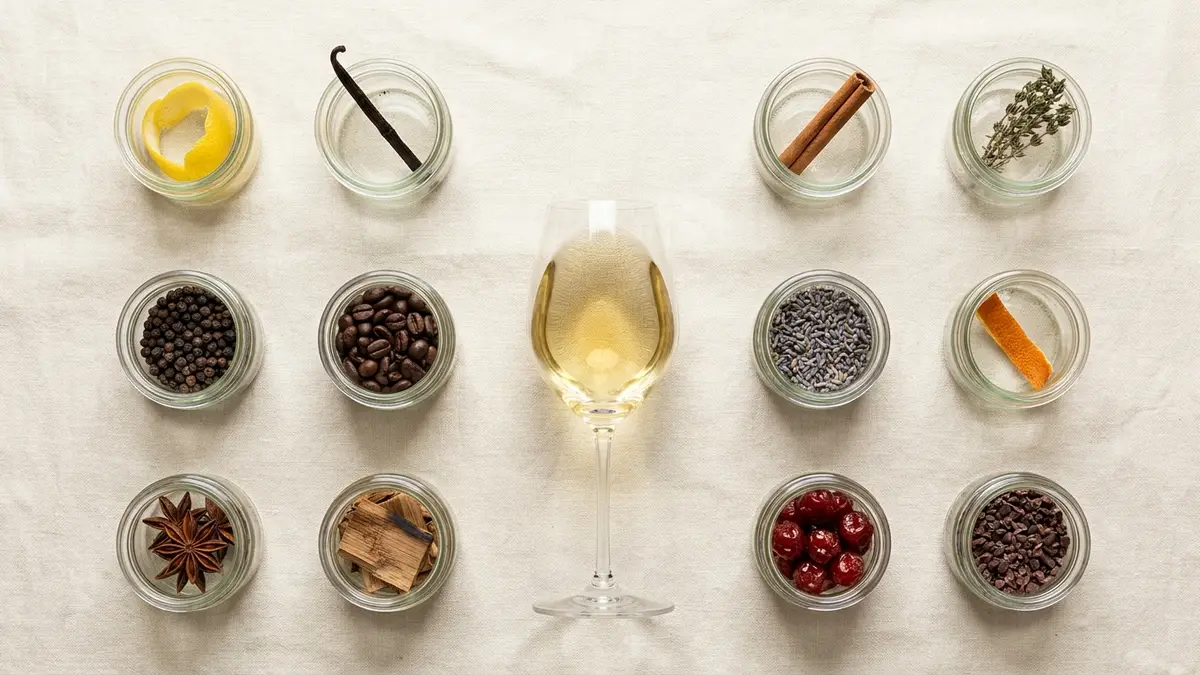
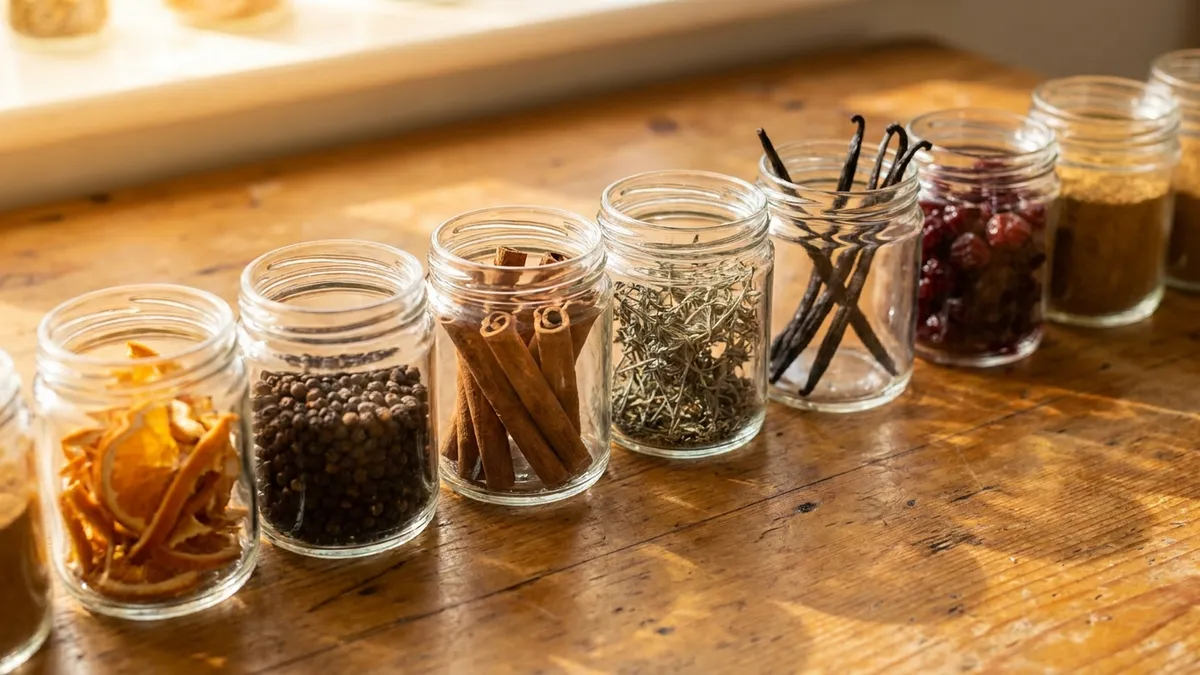
A personal flavor library is a curated bank of smells and tastes you have practiced enough to recognize instantly when they appear in a glass of wine. It is built two ways: a physical library of fresh ingredients in small jars — lemon zest, blackberry, cinnamon stick, oak chip, fresh herb sprigs — refreshed weekly and sniffed daily; and a mental library formed by tasting real wines that exemplify each note, like Sancerre for elderflower, Mosel Riesling for petrol, or classic Burgundy Pinot for forest floor. Focus on thirty to fifty references before scaling. Daily five-minute sessions for four to six weeks build real retrieval speed.
Why a Flavor Library Beats Reading Tasting Notes
Reading that a wine "smells like cassis with a hint of cedar" does almost nothing for your nose. The words sit on the page. Your brain has no anchor for them unless you have smelled real cassis and real cedar, recently and repeatedly.
A wine flavor library fixes that gap. It turns abstract vocabulary into something your brain actually has on file. The shift happens fast — most learners notice it within a month — and it changes the entire experience of drinking wine. Suddenly the words you read on the back label match what your nose is doing.
Three benefits show up almost immediately:
- Recall becomes specific. "Black fruit" sharpens into "blackcurrant" or "ripe plum."
- Memory between bottles improves. A wine you tasted last month is still retrievable next month.
- Communication clears up. You can describe what you like in language a sommelier or friend can act on.
For more on the underlying memory mechanism, our wine memory training guide breaks down the cognitive science. This article focuses on the practical setup.
The Dual Library System
Every effective wine flavor library has two parts, and the two reinforce each other. Skip either side and progress stalls.
The Physical Library
Small jars, bowls, or shot glasses with fresh references. The point is the smell, not the look. Each container holds one specific aroma that reliably appears in wines.
A starter physical library covers seven categories:
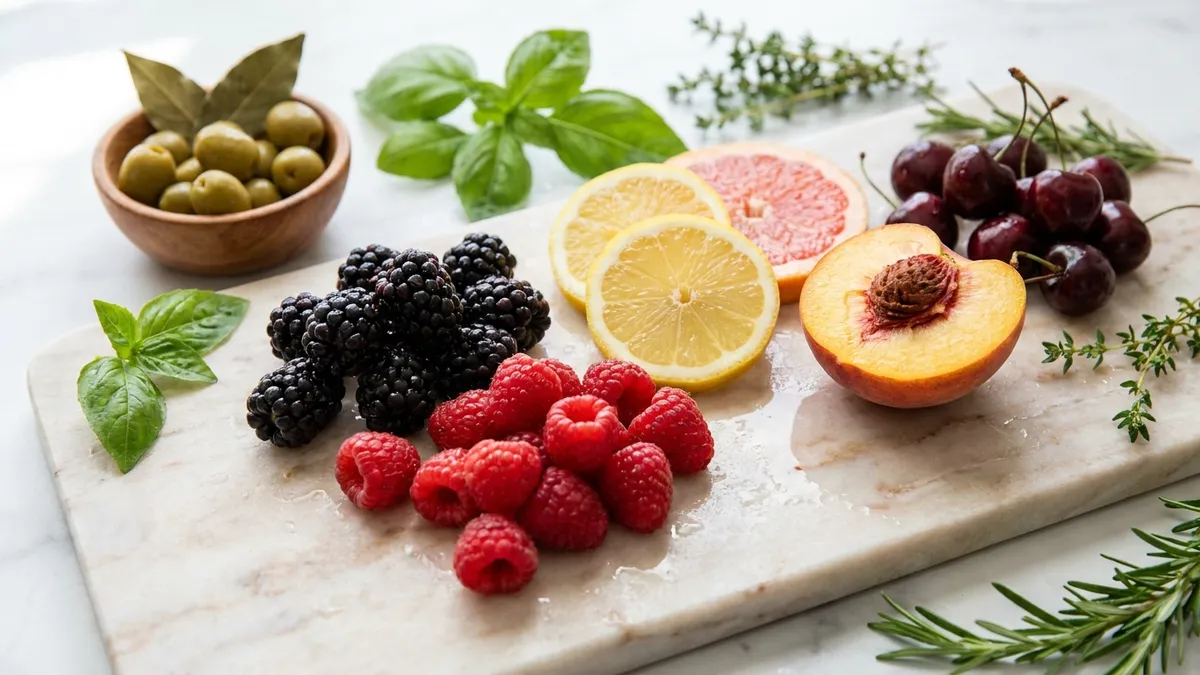
- Red fruit — strawberry, cherry, raspberry, cranberry
- Black fruit — blackberry, blackcurrant, ripe plum
- Citrus — lemon zest, lime peel, grapefruit
- Stone and tropical — peach, apricot, pineapple, mango
- Fresh herbs — mint, thyme, rosemary, sage
- Spices — black peppercorns, clove, cinnamon stick, vanilla pod
- Other — oak chip, wet stone, mushroom, tobacco leaf, dried tea
You do not need every item at once. Five to seven jars is plenty to start. Rotate new entries in as the originals stabilize in memory.
The Mental Library
This is where the wine flavor library gets its second half. Pair each physical reference with a real wine that exemplifies it.
Examples that work as mental anchors:
- Sancerre — Sauvignon Blanc that reliably shows elderflower, gooseberry, lemon
- Mosel Riesling — pale, low-alcohol, lime and slate, petrol with age
- Classic Burgundy Pinot Noir — red cherry, forest floor, sometimes mushroom
- Northern Rhone Syrah — black pepper, blackberry, smoked meat
- Mendoza Malbec — ripe plum, cocoa, violet
- Sauternes — honey, apricot, candied citrus
- Mature Bordeaux blend — cassis, cedar, graphite, pencil shavings
- Aged Champagne — toast, brioche, hazelnut, lemon curd
- Soave — almond, white peach, white flowers
- Vintage Port — black plum, fig, baking spice, dark chocolate
These are styles, not specific producers. Pick one bottle from any reputable example and use it as the reference. Tasting the same style three or four times beats tasting twelve different styles once each.
The mental library trains a different muscle than the physical one. Physical jars teach the smell. Reference wines teach the smell-in-wine — which is the pattern your brain actually retrieves when blind tasting.
What to Stock: A 30-50 Note Starter Library
Resist the urge to build a hundred entries on day one. The best wine flavor library starts narrow, deepens, then widens.
A working starter list, mapped to wine styles you will actually taste:
- 5-7 fruit categories — red berry, black berry, citrus, stone fruit, tropical, dried fruit, candied fruit
- 3-4 herbs — mint, thyme, basil, rosemary
- 3-4 spices — black pepper, white pepper, clove, cinnamon, vanilla
- 1-2 mineral notes — wet stone, flint
- 2-3 oak references — fresh oak chip, toasted oak, cedar
- 3-4 savory or earthy — mushroom, forest floor, leather, tobacco
- 2-3 floral — rose petal, violet, honeysuckle
- 2-3 development notes — honey, dried apricot, brioche
Total: thirty to forty references. Memorable and learnable in six to eight weeks of consistent practice.
For deeper coverage of the categories themselves, our primary, secondary, tertiary aromas guide explains where each note comes from. The floral notes in wine and earthy flavors in wine breakdowns add specifics within those categories.
How to Refresh Your Library Weekly
Fresh references lose punch fast. A blackberry that smelled vivid on Monday is muted by Friday. A library of stale jars trains your nose to expect weak signals, which transfers as poor recall in real wine.
A working refresh schedule:
- Daily — sniff each jar for thirty seconds with eyes closed, name the aroma aloud
- Every 3 days — replace cut fruit and bruised berries
- Weekly — replace fresh herbs, citrus zest, and any soft fruit
- Monthly — replace dried spices, oak chips, vanilla pods, dried herbs
- Quarterly — review the full list; rotate notes you have mastered out and bring new ones in
The refresh ritual is also a mental check. As you replace a jar, ask: does this still register on first sniff? Can you name three wines that show this note? If either answer is no, the entry stays in active rotation another week.
The Daily Five-Minute Sniff Routine
This is the core habit. Five minutes a day, no more. Long sessions backfire — smell fatigue sets in within fifteen minutes and recall accuracy degrades.
The routine:
- Sit at a clean surface with no competing smells. No coffee, no candles, no perfume.
- Open one jar. Sniff briefly, eyes closed. Say the aroma aloud.
- Sniff a second time. Note one specific quality — sweet, sharp, dusty, green, dried.
- Move to the next jar. Repeat.
- Stop at five jars or five minutes, whichever comes first.
Once a week, replace one of the five-jar rotations with a glass of a reference wine. Smell the jar. Smell the wine. Compare. The pairing locks the smell-in-wine memory in a way no jar alone can.
For the broader smelling technique, our how to smell wine guide covers the mechanics — short sniffs, pause-and-process, retronasal pickup. Combine that technique with this daily library routine and progress compounds.
Training Drills for Your Wine Flavor Library
Daily sniffing builds the foundation. These drills layer on top to push recall under pressure.
Drill 1: Blind Jar ID
Have a friend or partner pour three jars from your library into identical opaque cups, no labels visible. Smell each. Name each. Reveal.
Aim for two correct out of three within four weeks. Mistakes are the most useful data — they show exactly which entries need more rotation.
Drill 2: Wine-First, Jar-Second
Pour a known reference wine. Smell. Name three aromas. Then sniff the matching jars and check your call.
This drill mimics real tasting, where the wine comes first and the library has to be retrieved on demand.
Drill 3: Build a Story
For each grape-region pairing in the mental library, write one sentence linking three flavor anchors. Example: "Northern Rhone Syrah — black pepper, blackberry, smoked meat — peppery hillside, dark fruit, charred wood."
Stories carry more weight in memory than lists. The Sommy app uses this technique throughout its tasting lessons, weaving aroma anchors into short narratives that stick. Stories also help when you taste a wine that does not match — the deviation from the expected story is itself information.
Drill 4: Two-Wine Compare
Pour two wines of the same grape from different regions or producers. Smell both. Note three differences using library vocabulary. The contrast forces precision.
For a structured version, see how to compare two wines. The comparison habit teaches your brain to store wine as relationship, not as absolute.
Drill 5: The Monthly Audit
Once a month, sit down with your library list and the tasting notes you have written that month. Look for:
- Anchors you used confidently — these are stable in memory
- Anchors you reached for and could not name — these need more rotation
- New anchors that wines kept hinting at — candidates to add to the library
- Anchors you used but cannot quite recall the smell of — refresh the jar
The audit is what keeps the library alive. Without it the library becomes a museum, and museum exhibits do not train recall.
How the Library Transfers to Real Wine
The payoff of a wine flavor library is not the library itself — it is what happens when you pick up a glass at dinner without any of the jars in front of you.
By week four of consistent practice, three things shift:
- First-sniff calls become specific. Where you used to say "fruity," you now say "ripe plum and a touch of clove."
- Notes evolve as the wine opens. A second sniff ten minutes later reveals notes the first one missed, and you have words for the changes.
- Style recognition emerges. You start recognizing the shape of a Burgundy or a Mendoza Malbec from the first nose.
The transfer is the whole point. Library practice is the gym; real wine is the match. Train in the gym and the match feels easier — not because you are smarter, but because the references your brain reaches for now actually exist.
The Sommy app builds aroma identification through short, structured exercises that mirror this library approach: a focused anchor, a pairing wine, a quick recall check, then move on. Over weeks the anchors compound into the kind of vocabulary that turns wine into something you can describe rather than just react to.
For the broader tasting context, the how to taste wine guide covers the full sight-smell-palate sequence the library plugs into. The library is the smelling stage — the most important and most teachable of the three.
Mistakes That Slow Library Building
A few common errors stall progress for months.
- Building too big, too fast. A hundred jars is not a library, it is a hoarding. Start with thirty.
- Skipping the refresh ritual. Stale jars train your nose to expect weak signals.
- Sniffing without pairing wines. The mental half is what makes recall stick — jars alone get you halfway.
- Long sessions instead of short daily ones. Fifteen minutes once a week is worse than two minutes a day.
- Reading instead of sniffing. No amount of vocabulary study replaces real smell exposure.
- Always sniffing in the same order. Rotate the order so your brain is forced to retrieve, not predict.
Avoiding these traps is the difference between a library that trains real recall and one that decorates a kitchen counter.
When the Library Starts to Feel Effortless
Most learners notice a turning point between weeks six and ten. The jars stop feeling like homework. Sniffing becomes automatic, and recall in real wine starts to feel like a single step instead of a search.
That is the moment to expand. Add a second tier of anchors: more specific fruits (sour cherry vs. ripe cherry), more developed notes (truffle, balsamic, dried fig), more savory references (olive brine, soy sauce, charcuterie). The base library makes the second tier easier to install because the categories are already in place.
By month three, a working library hits sixty to eighty stable anchors, with another thirty in active rotation. That is enough to describe almost any wine you encounter at a tasting, dinner, or bottle shop with specific, useful vocabulary.
Sommelier note: A flavor library is never finished. Even Master Sommeliers keep refreshing references decades into their careers, because aromas drift in memory the moment they stop being practiced. Treat the library as a living habit, not a one-time project.
FAQ
What is a personal wine flavor library?
A personal wine flavor library is a curated set of reference flavors and aromas you have practiced enough to recognize instantly in wine. It exists as a physical library of jars (lemon, blackberry, cinnamon, oak) refreshed weekly, and a mental library of reference wines that exemplify each note. The two halves train recall together.
How many flavors should a beginner library contain?
Start with thirty to fifty references. A useful spread covers five to seven fruit categories, three to four herbs, three to four spices, one or two mineral notes, oak, and several savory aromas. That breadth describes most wines while staying shallow enough to memorize. Scale to a hundred only after the first batch is reliable.
How often should I refresh the jars?
Refresh fruit and herbs weekly, dried spices and oak chips monthly. Replace anything that smells dull before its scheduled refresh. A library of stale references trains the nose to expect weak signals, which transfers as poor recall in actual wine.
How long does it take to see real recall improvement?
Most learners see clear gains between weeks four and six of daily five-minute sniff sessions. The brain rewires fast when given consistent, short, focused exposure. By week eight, recall feels close to instant for practiced anchors. Skipping more than two days in a row resets some of that progress.
Can I build a flavor library without a kit?
Yes. A pantry, fruit bowl, spice rack, and small jars cover almost every reference. Pre-made aroma kits exist for advanced students and offer isolated, consistent compounds, but real fruits and herbs match them in training power for most learners and cost a fraction.
Why pair physical references with real wines?
The pairing is what locks the memory. A jar teaches a smell; a jar plus a matching wine teaches a smell-in-wine. The second pattern is the one your brain retrieves when tasting blind. The library only works when both halves are practiced together.
The Bottom Line
A personal wine flavor library turns abstract vocabulary into trained recall. Thirty to fifty fresh references, five minutes a day, and a handful of carefully chosen reference wines is enough to rewire how you taste in four to six weeks. The library is not a shortcut around tasting more — it is the structure that makes tasting more actually compound into skill.
Start small. Refresh weekly. Pair every jar with a wine. Within a month, what used to be "smells nice" becomes "blackcurrant, cedar, and a touch of graphite," and the words start matching what your nose is doing.
Frequently Asked Questions
What is a personal wine flavor library?
A personal wine flavor library is a curated set of reference flavors and aromas you have practiced enough to recognize instantly in a glass of wine. It exists in two parallel forms: a physical library of fresh ingredients in jars (lemon zest, blackberry, cinnamon, oak chip), and a mental library of reference wines that exemplify specific notes. The two reinforce each other and train recall.
How many flavors should a beginner library contain?
Start with thirty to fifty reference flavors, not hundreds. A beginner library covers five to seven fruit categories, three to four herbs, three to four spices, one or two mineral notes, oak, and a few savory aromas. That is enough breadth to describe most wines while still being shallow enough to memorize. Scale to a hundred plus only after the first batch is reliable.
How often should I refresh the jars in a flavor library?
Fresh ingredients lose aromatic punch in three to seven days, so refresh weekly for fruit and herbs and monthly for dried spices and oak chips. Replace anything that smells dull or muted before its scheduled refresh. A library full of stale references trains your nose to expect weak signals, which transfers as poor recall in actual wine.
Do I need a wine cellar to build a mental flavor library?
No. The mental side of a wine flavor library needs only six to twelve well-chosen reference wines, tasted attentively over a few months. Each reference wine should be a textbook example of one or two specific notes, like a Mosel Riesling for petrol or a classic Burgundy Pinot for forest floor. Repeat tastings of the same reference matter more than variety.
How long does it take to see real recall improvement?
Most learners notice clear gains between weeks four and six of daily five-minute sniff sessions. The olfactory system rewires fast when given consistent, short, focused exposure. By week eight, recall feels close to instant for the practiced anchors. Skipping more than two days in a row resets some of that progress, so consistency matters more than session length.
Can I build a flavor library without buying a kit?
Yes. A pantry, a fruit bowl, a spice rack, and a few small jars cover almost every reference a beginner needs. Pre-made aroma kits exist for serious students and accelerate training because the compounds are isolated and consistent, but they are not required. Real fruit and real herbs are equal in training power for most palates and far cheaper.
Why match physical references to actual wines?
The pairing is what locks the memory. Smelling a jar of lemon teaches your brain a smell, but smelling the lemon next to a Sauvignon Blanc that shows lemon teaches your brain a smell-in-wine. That second pattern is what you actually retrieve when blind tasting. The wine flavor library only works if both halves are practiced together.
Sommy Team
LinkedInFounder & Wine Educator
The Sommy Team is building the world's most approachable wine education app, helping beginners develop real tasting skills through structured courses and AI-guided practice.