Floral Notes in Wine: How to Detect Rose, Violet, and Jasmine

By the Sommy Team — AI-assisted, human-edited.
Updated Apr 29, 2026
Contents (10)
- What Floral Notes in Wine Actually Are
- Floral Notes in Wine, in 100 Words
- The Chemistry of Floral Aromas
- The Most Common Floral Descriptors
- Floral Notes by Grape Variety
- Why Climate Matters
- How to Train Your Nose for Floral Aromas
- Common Confusions Between Floral Descriptors
- How Floral Notes Evolve With Age
- Where to Practice Next
TL;DR
Floral notes in wine come from real aromatic molecules — terpenes, rose oxide, beta-ionone — shared with the flowers themselves. Rose appears in Pinot Noir, Nebbiolo, and Gewürztraminer. Violet shows in Malbec and Syrah. Jasmine and orange blossom mark Viognier and Riesling. Cool climates intensify floral character; warmth tends to dull it.
What Floral Notes in Wine Actually Are
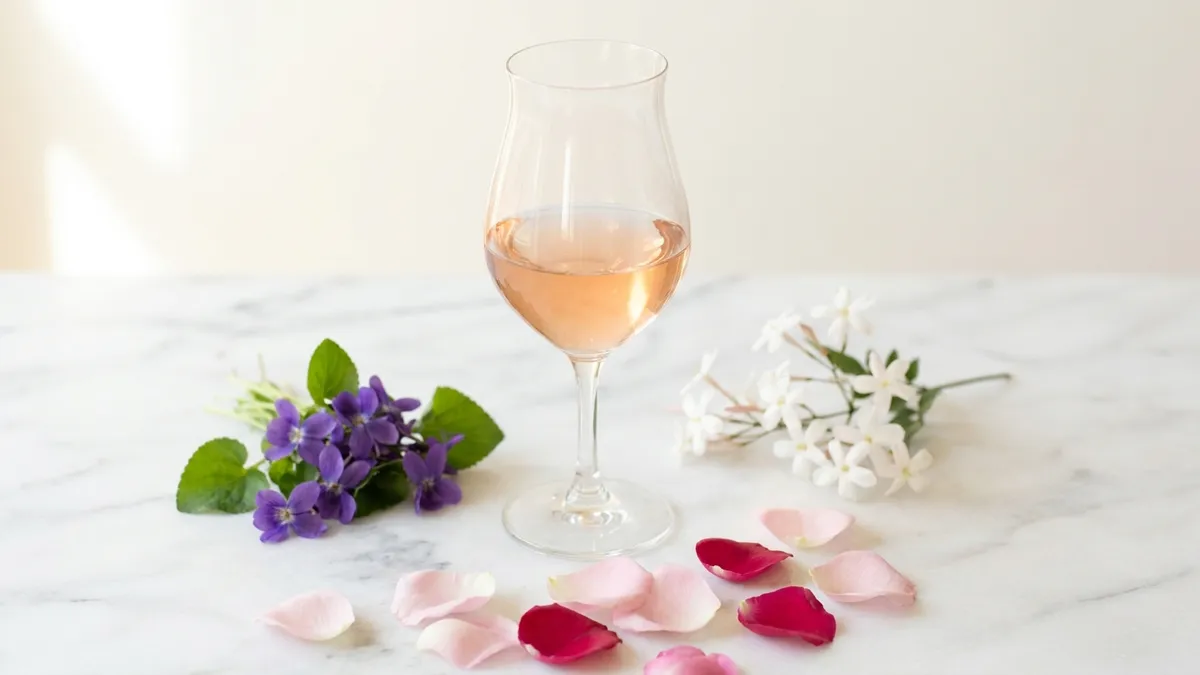
Floral notes in wine are the perfumed aromas that smell like real flowers — rose, violet, jasmine, elderflower, orange blossom, lilac, honeysuckle, and lavender. They are not metaphor or marketing language. They come from specific aromatic molecules the grape produces during ripening, and many of those molecules are chemically identical to the ones that make actual flowers smell the way they do.
Floral aromas are some of the most evocative and most difficult notes in wine. Evocative because flowers are tied tightly to memory and emotion. Difficult because they sit on the lighter end of the aromatic spectrum and disappear quickly under big fruit, oak, or warm temperatures. Once your nose learns to find them, though, they unlock a whole tier of varietal recognition that beginners usually miss.
This guide explains where floral aromas come from, which grapes show them most clearly, and how to train your nose to find rose, violet, jasmine, and the rest with reliable consistency.
Floral Notes in Wine, in 100 Words
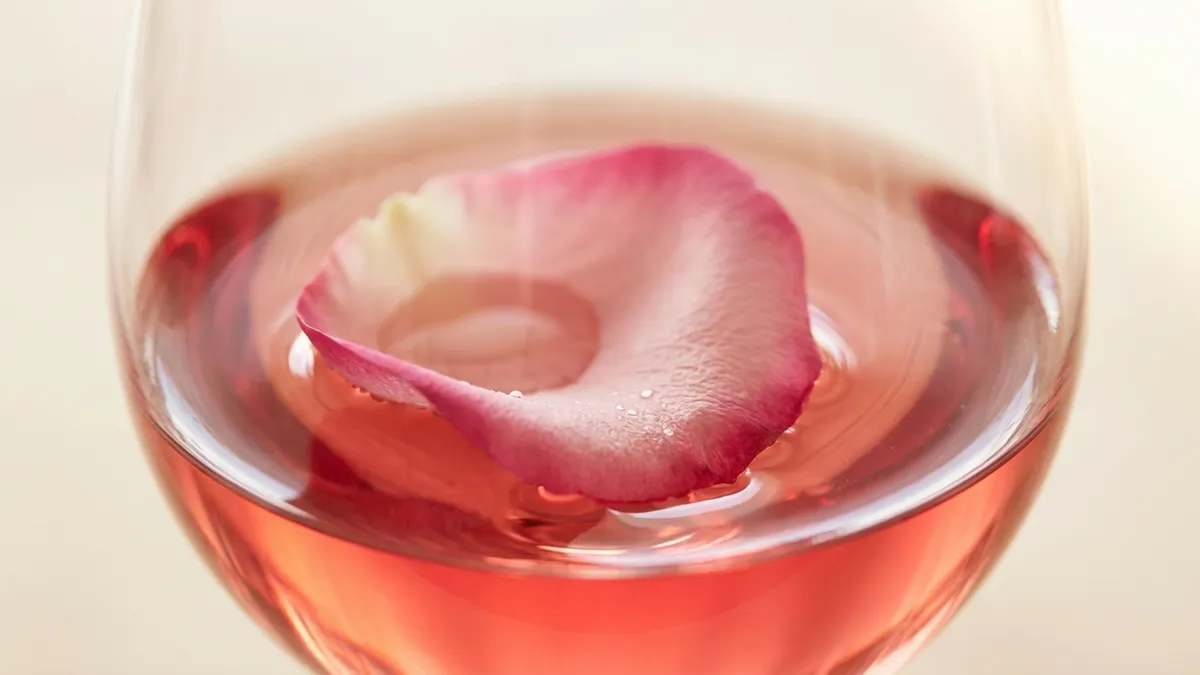
Floral aromas in wine come from real aromatic compounds the grape produces. Terpenes like linalool and geraniol drive rose, orange blossom, and jasmine in Muscat, Gewürztraminer, Riesling, and Viognier. Beta-ionone and related compounds create violet in Pinot Noir, Malbec, and Syrah. Rotundone-adjacent chemistry contributes to the rose-and-tar signature of Nebbiolo. Common floral descriptors are rose, violet, jasmine, elderflower, orange blossom, lavender, lilac, and honeysuckle. Cool climates preserve and intensify these compounds; warm climates and heavy oak mute them. To detect floral notes, serve at the right temperature, swirl gently, and sniff in short bursts.
The Chemistry of Floral Aromas
Terpenes — The Big Family
The single most important class of floral compounds in wine is the terpenes — a large group of aromatic molecules that the grape itself produces in the skin during ripening. The two best-studied terpenes in wine are linalool (the molecule that makes lavender smell like lavender) and geraniol (the molecule named for and found in geraniums and roses).
Terpenes are why a glass of Gewürztraminer can smell like an entire flower shop. Aromatic varieties — Muscat, Gewürztraminer, Riesling, Viognier, Torrontés — produce terpenes at much higher concentrations than non-aromatic varieties like Chardonnay or Cabernet Sauvignon. The same compound that makes a real rose smell like a rose is sitting in your wine glass.
Norisoprenoids — Where Violet Lives
A second class of compounds, the norisoprenoids, drives the violet-family aromas. The key player is beta-ionone, the molecule responsible for the smell of fresh violets. Beta-ionone is produced as a breakdown product of carotenoids during ripening and aging.
Beta-ionone is why Pinot Noir, Malbec, and cool-climate Syrah can smell distinctly violet. The compound is detectable at extraordinarily low thresholds — your nose can pick up beta-ionone at parts per trillion, which is why a wine can smell powerfully of violets even when the molecule is barely present in measurable terms.
Cis-Rose Oxide and the Lychee Connection
A third compound worth knowing is cis-rose oxide — the molecule responsible for the signature lychee-and-rose nose of Gewürztraminer. The same compound is found in lychee fruit, which is why the two associations always show up together. When tasting an aromatic Gewürztraminer, the rose and the lychee are not two separate aromas. They are the same molecule.
For a deeper look at how these aroma families fit into the bigger picture, our wine aroma wheel guide maps the floral category against fruit, spice, and earthy notes on the standard tasting wheel.
The Most Common Floral Descriptors
There are eight floral notes that come up repeatedly in tasting notes. Learning to recognize these gives you most of the floral vocabulary you will ever need.
Rose
Rose is the most common floral note in red wine. It appears as fresh rose petal in young Pinot Noir and Gewürztraminer, and as a darker, drier rose-hip or potpourri character in older Nebbiolo. Look for rose any time the wine smells perfumed and slightly sweet without being sugary.
Violet
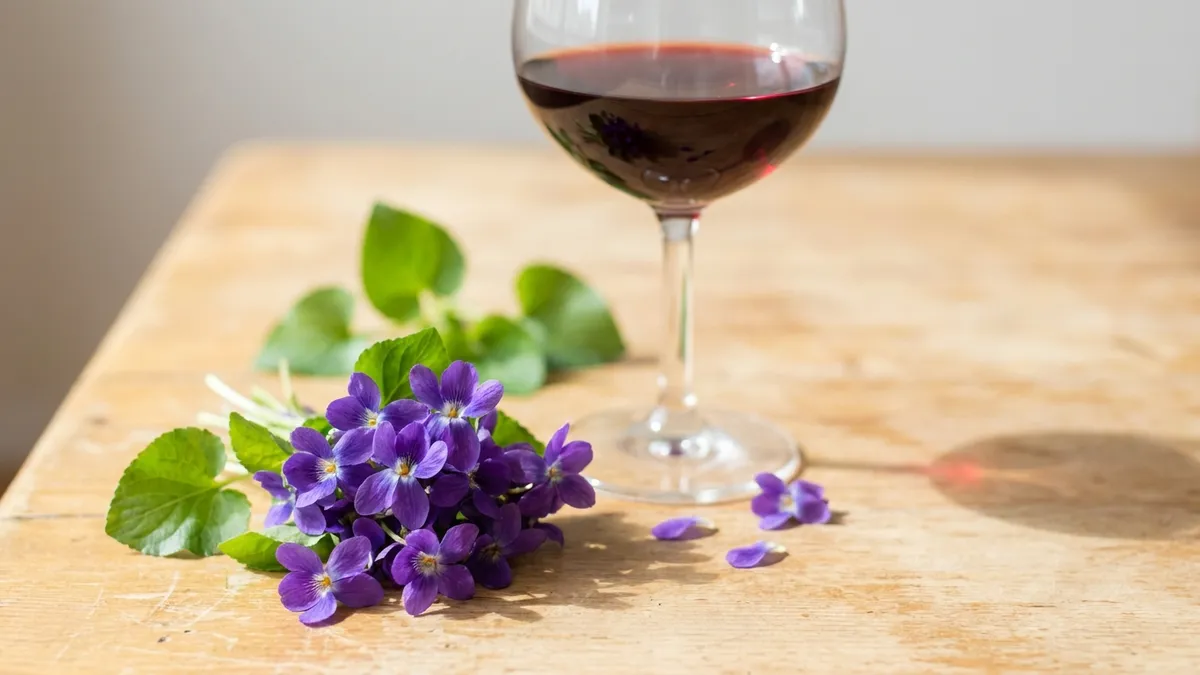
Violet is a cooler, bluer floral note tied to beta-ionone. It is the signature of Malbec from Mendoza, Syrah from cool-climate sites, and quality Pinot Noir from Burgundy. Violet sits behind dark fruit, lifting the nose without dominating it. If a red wine smells "lifted" or "perfumed" in a way that is hard to name, it is usually violet.
Jasmine
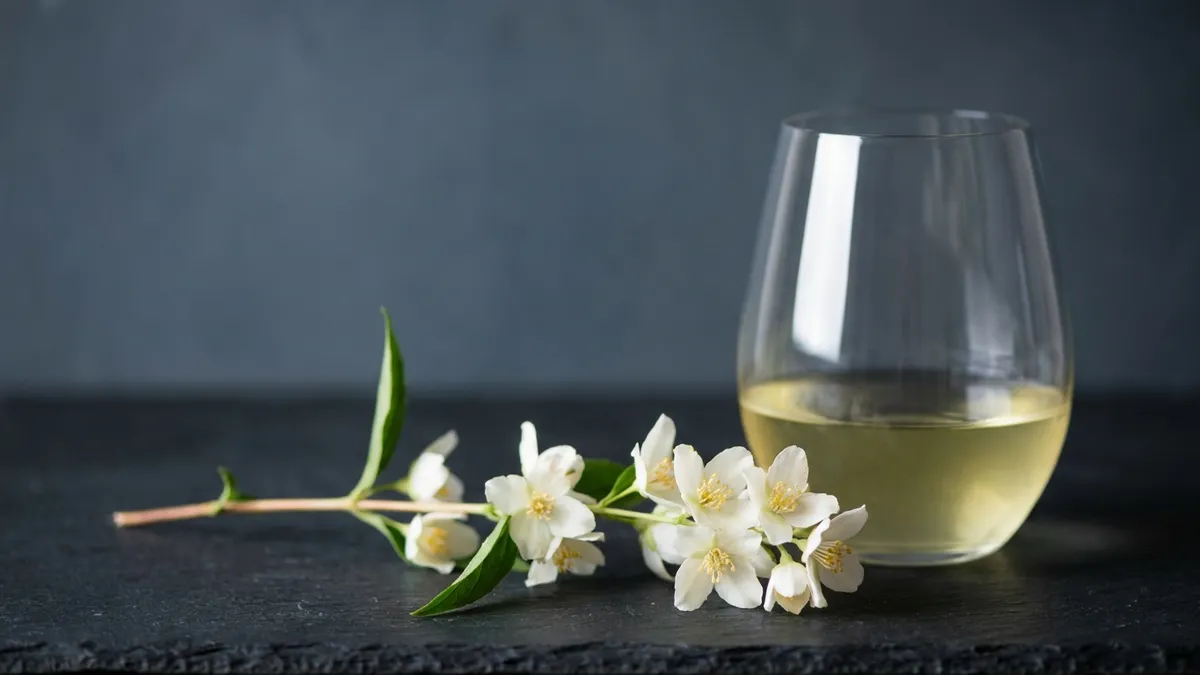
Jasmine is rich, slightly heady, and unmistakably tropical-leaning. It shows in Viognier, full-bodied Riesling, and some Albariño. Jasmine is a more luxurious cousin of orange blossom — same family, more weight.
Elderflower
Elderflower is delicate, slightly green, and almost herbal. It is the calling card of Sauvignon Blanc, especially from Loire and Marlborough, and dry Riesling from Mosel and Alsace. Elderflower sits where floral meets herbal, which is why it pairs naturally with the gooseberry and grass of cool-climate whites.
Orange Blossom
Orange blossom is sweet, bright, and citrus-adjacent. Find it in Albariño, Verdejo, Viognier, and the lighter end of Muscat. Orange blossom water — sold in any Middle Eastern grocery — is the cleanest reference smell available.
Lavender
Lavender is herbal-floral and warm. It shows up most reliably in southern Rhône reds — Grenache-based blends, Châteauneuf-du-Pape — and in some warmer Syrah. Dried lavender is almost the same molecule as fresh lavender, so a sachet from a market is a perfect reference.
Honeysuckle
Honeysuckle is sweet and golden, somewhere between rose and orange blossom. It is most common in Sémillon, oaked Chardonnay, and off-dry Riesling. Honeysuckle often shades into honey as the wine ages.
Lilac
Lilac is rarer in wine than the others — it shows up in some Riesling and occasionally in Grüner Veltliner. Lilac is more delicate than rose and more powdery than jasmine, sitting at the edge of perception in most wines that show it.
Floral Notes by Grape Variety
Certain grapes are famous for their floral signatures. Learning these associations gives your nose a head start when you encounter a new bottle.
Aromatic White Grapes
- Gewürztraminer — rose, lychee, orange blossom, ginger
- Muscat — orange blossom, rose, jasmine, grape blossom
- Viognier — jasmine, honeysuckle, orange blossom, peach
- Torrontés — rose, orange blossom, geranium, jasmine
- Riesling (dry) — elderflower, lime blossom, lilac, honeysuckle (with age)
Other White Grapes
- Sauvignon Blanc — elderflower, white flowers
- Albariño — orange blossom, lemon flower, jasmine
- Verdejo — orange blossom, white flowers
- Chardonnay (cool-climate, unoaked) — acacia blossom, white flowers
- Sémillon — honeysuckle, beeswax (with age)
Red Grapes
- Pinot Noir — rose petal, violet, dried flowers (with age)
- Nebbiolo — rose, dried rose, tar-and-roses
- Malbec — violet, blueberry blossom, lavender
- Syrah (cool-climate) — violet, lavender, dried herb
- Grenache — lavender, dried rose, garrigue
- Cabernet Franc — violet, lifted floral character
Notice the pattern: cool-climate sites and aromatic varieties show floral character most clearly. Warm climates push the grape toward riper fruit, alcohol, and softer tannin, which crowds out the lighter floral compounds. This is why a Mendoza Malbec from a high-altitude vineyard often shows more violet than the same grape from a hot lowland site.
For a deeper comparison of how grape-driven aromas split between fruit and floral, our primary, secondary, and tertiary aromas guide breaks down the timeline.
Why Climate Matters
Floral aromas are some of the most temperature-sensitive notes in the entire aromatic profile. Three factors decide whether a wine shows them clearly.
Cool Nights
Aromatic compounds — terpenes, norisoprenoids, methyl anthranilate — accumulate and stay stable at lower temperatures. Vineyards with significant diurnal shift (warm days, cool nights) preserve these molecules through ripening. Hot, even climates burn through them.
Slow Ripening
Floral compounds develop late in the ripening curve. Grapes that hang for an extended cool autumn build complex aromatic profiles that fast-ripening, high-sugar fruit never reaches. This is why a marginal cool-climate vintage often produces the most fragrant wines of a decade.
Gentle Winemaking
Heavy oak, long maceration, and high-temperature fermentation all mute floral character. Aromatic whites are typically fermented cool, in stainless steel or neutral vessels, to preserve the volatile compounds the grape produced. Reds destined for floral expression — Pinot Noir, Nebbiolo — see lighter extraction and shorter time in oak than fuller-bodied counterparts.
The practical takeaway: if you want to taste floral notes, look for cool-climate wines made with restraint. Mosel Riesling, Burgundy Pinot Noir, Alsace Gewürztraminer, Loire Sauvignon Blanc, Piemonte Nebbiolo. The same grapes from hot climates will give you something different — riper, fruitier, less floral.
How to Train Your Nose for Floral Aromas
The single biggest barrier to detecting floral notes is reference memory. If you have not consciously smelled a real rose in the last two years, your brain has nothing to match the wine against. Building a floral library takes about three weeks of deliberate practice.
Build a Reference Kit
Buy or gather:
- A fresh rose (or rosewater from a Middle Eastern grocery)
- Fresh or dried violets (or a small jar of crème de violette)
- Dried jasmine tea or jasmine essential oil
- Elderflower cordial (a few drops on a tasting strip)
- Orange blossom water
- Dried lavender from a market
- Honeysuckle (fresh in season, or honeysuckle tea)
Smell each one deliberately. Close your eyes. Say the name out loud. Store the memory. The Sommy app's olfactory training modules use the same structured pairing method to build floral reference memory faster than self-guided study.
Use Side-by-Side Tastings
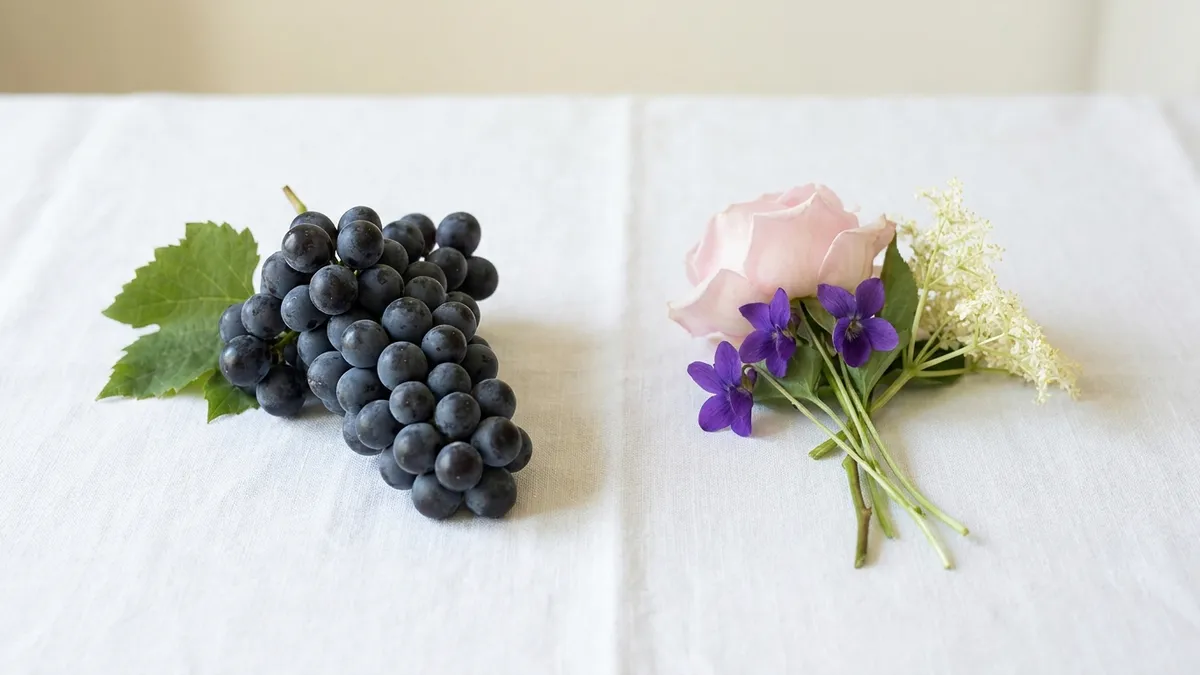
Pour two wines from different grape families — say, a Mendoza Malbec and a Burgundy Pinot Noir. Both should show floral character, but the Malbec leans violet and the Pinot leans rose. Smelling them side by side teaches your nose to distinguish between the two flowers in a way that no single-wine tasting ever can.
Our guide to how to compare two wines walks through the technique of contrasting bottles to sharpen recognition.
Practice Retronasal Smelling
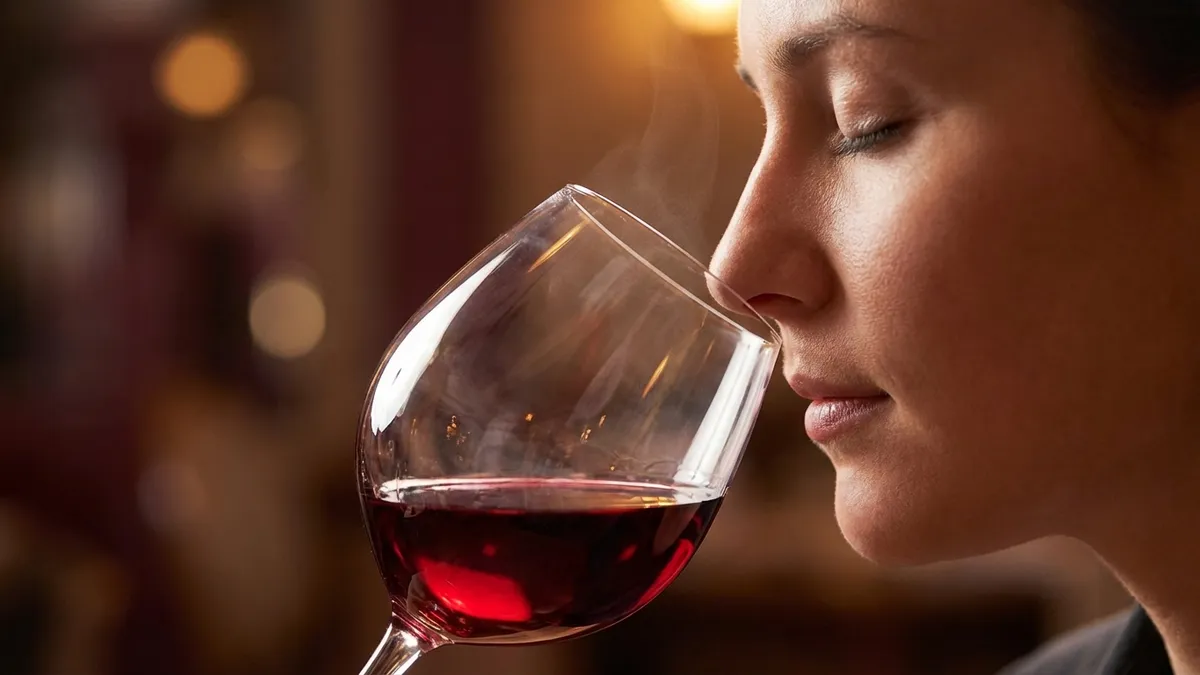
Floral notes often show stronger in the mouth than in the glass — they reach your olfactory receptors from behind, through the back of your throat, after you sip. Hold a sip of an aromatic white on your palate for five seconds before swallowing, then exhale gently through your nose. The retronasal floral hit is often two or three times stronger than the orthonasal one. The technique is covered in detail in how to smell wine.
Match to Known References
Once you have a kit, taste wines with strong known floral profiles and match what you smell to the reference. A young Gewürztraminer should show rose and lychee — open the rose and the rosewater, sniff each, then sniff the wine. The match is unmistakable when your reference is fresh.
Common Confusions Between Floral Descriptors
A few floral descriptors get confused frequently. Sorting them out sharpens your vocabulary fast.
Rose Petal vs Rose Hip vs Turkish Delight
- Rose petal — fresh, perfumed, almost dewy. Young Gewürztraminer, young Nebbiolo, young Pinot Noir.
- Rose hip — dry, slightly tea-like, darker. Aged Nebbiolo, mature Pinot Noir.
- Turkish delight — rose plus sugar, slightly sticky. Off-dry aromatic whites where rose oxide is high.
Violet vs Lilac vs Iris
- Violet — cool, slightly powdery, blue-purple in feel. Pinot Noir, Malbec, Syrah.
- Lilac — sweeter, slightly green, more delicate. Some Rieslings, Grüner Veltliner.
- Iris — earthy-floral, almost root-like. Rare in wine; sometimes in mature white Burgundy.
Jasmine vs Honeysuckle vs Orange Blossom
- Jasmine — heady, tropical-leaning, slightly green. Viognier, full-bodied Riesling.
- Honeysuckle — sweet, golden, honey-adjacent. Sémillon, oaked Chardonnay.
- Orange blossom — bright, citrusy, lighter than jasmine. Albariño, Verdejo, Muscat.
Sommelier tip: When you cannot decide between two floral descriptors, smell both flowers (or their distillates) back to back. The wine will tell you which it matches. Trust the comparison, not the guess.
For a wider toolkit of words to use once you have identified a floral note, see our wine tasting vocabulary cheat sheet.
How Floral Notes Evolve With Age
Floral aromas do not stay still. They transform as the wine ages, and the direction of that transformation is part of how sommeliers identify a wine's age in blind tasting.
Young Wines
Bright, fresh, primary-fruit-dominated wines show rose petal, fresh violet, jasmine, and elderflower in their most lifted form. The compounds are intact, volatile, and immediately recognizable.
Mid-Aged Wines
Three to seven years in, fresh floral aromas start to soften. Rose petal becomes dried rose. Violet recedes behind developing earthy and savoury notes. The wine smells less like a flower shop and more like a flower shop a week later — still floral, but drier and more complex.
Aged Wines
In aged wines — Nebbiolo at fifteen years, Riesling at twenty, Pinot Noir at ten — floral notes become potpourri, tobacco-leaf, and tea-rose. They blend with tertiary aromas like leather, mushroom, and forest floor. The fresh perfumed lift is gone, replaced by a darker, more layered character.
This evolution is part of why sommeliers prize floral character. A wine that shows florals when young and dried-floral character when mature has the aromatic depth that defines collectible bottles.
Where to Practice Next
Floral identification is one of the highest-leverage skills in wine tasting. Once you can reliably name rose, violet, and jasmine, your descriptions of every wine improve overnight. Pairing the right grape with the right reference flower is the entire game.
A structured practice path looks like this:
- Build a floral kit — six to eight reference smells from the list above
- Taste one floral-forward wine per week — Gewürztraminer, Pinot Noir, Malbec, Viognier, Riesling, Nebbiolo
- Match nose to reference — sniff the flower, sniff the wine, name the match
- Log results in a journal — what flower, which grape, which climate
The Sommy app guides this process directly through aroma identification modules that pair real wines with named reference smells, with feedback that calibrates your nose against expert tasters. Visit sommy.wine to start training. Combined with our broader guides on how to taste wine and how to develop your wine palate, the floral category becomes one of the easiest wins in your tasting vocabulary.
Floral notes are where wine stops being a drink and starts being a perfume. The molecules are there in the glass — your nose just needs the words.
Frequently Asked Questions
What causes floral notes in wine?
Floral aromas come from specific aromatic compounds the grape produces during ripening. Terpenes like linalool and geraniol drive rose and orange-blossom notes in Muscat, Gewürztraminer, and Riesling. Beta-ionone and related compounds create violet character in Pinot Noir, Malbec, and Syrah. These molecules are chemically identical or near-identical to the ones in real flowers, which is why your nose recognizes the match.
Which wines smell most floral?
The most reliably floral wines are aromatic whites — Gewürztraminer, Muscat, Viognier, Torrontés, and dry Riesling — where terpenes dominate the nose. Among reds, Pinot Noir and Nebbiolo show rose, while Malbec and cool-climate Syrah show violet. Floral character is strongest in cool climates and gentle winemaking; warm regions and heavy oak tend to mask it under riper fruit and toast.
What is the difference between rose petal and rose hip in wine?
Rose petal is a delicate, fresh, almost perfumed note tied to active aromatic compounds in young wines like Gewürztraminer or young Nebbiolo. Rose hip is darker, drier, and slightly tea-like — it appears in older Nebbiolo and aged Pinot Noir as the floral compounds oxidize. Turkish delight is a related descriptor that suggests rose plus sweetness, common in off-dry aromatic whites.
Why can't I smell flowers in my wine?
Three common reasons. The wine is too cold, which suppresses volatile aromatics — let it warm to roughly 12-18°C. The grape variety simply does not produce strong floral compounds, like most Cabernet Sauvignon. Or your nose lacks a stored reference for that specific flower. Smell real roses, violets, and jasmine deliberately for a week and the same notes will start jumping out of the glass.
Do red wines have floral notes too?
Yes, though they are subtler than in aromatic whites. Pinot Noir frequently shows rose petal and dried rose. Nebbiolo from Barolo and Barbaresco is famous for its tar-and-roses signature. Malbec and Syrah show blue-violet aromas tied to beta-ionone. Even Cabernet Franc and Grenache can show floral lift in cooler vintages. Floral character in reds usually sits alongside the fruit rather than dominating it.
Are floral notes a sign of quality?
Floral character is a sign of complexity and varietal expression rather than quality on its own. A fragrant Gewürztraminer or Pinot Noir is often considered more interesting than the same grape grown in a hot climate where florals collapse into generic ripeness. But florals do not guarantee a great wine — balance, length, and structure still matter. Floral is one ingredient in the larger picture of a wine's quality.
How do I train my nose to recognize floral aromas?
Build a personal reference library. Buy a fresh rose, a small bunch of violets, dried jasmine tea, an elderflower cordial, and an orange blossom water. Smell each one deliberately, name it out loud, and store the memory. Then taste a wine known for that flower — Gewürztraminer for rose, Viognier for jasmine, Sauvignon Blanc for elderflower — and compare. A few sessions cement the link permanently.
Sommy Team
LinkedInFounder & Wine Educator
The Sommy Team is building the world's most approachable wine education app, helping beginners develop real tasting skills through structured courses and AI-guided practice.