Wine with Parmesan: Italy's Greatest Cheese Pairing

By the Sommy Team — AI-assisted, human-edited.
Updated Oct 1, 2026
Contents (8)
- What Wine Goes Best With Parmesan, in One Paragraph?
- Which Wine Matches Which Age of Parmesan?
- Why Does Lambrusco Work So Well With Parmesan?
- Red or White Wine With Parmesan?
- Does Sparkling or Sweet Wine Work With Parmesan?
- What Wine Goes With Parmesan in a Dish?
- Parmesan vs Parmigiano Reggiano: What Changes in the Glass?
- How Do You Set Up a Parmesan and Wine Tasting at Home?
TL;DR
Dry Lambrusco is the best all-round wine with Parmesan, because its bubbles and acidity cut salt and fat, and both come from the same Emilian plain. Young wedges suit fizz and crisp whites. At about 24 months pour Sangiovese. Crystalline wedges past 30 months want Nebbiolo or a nutty dry sherry.
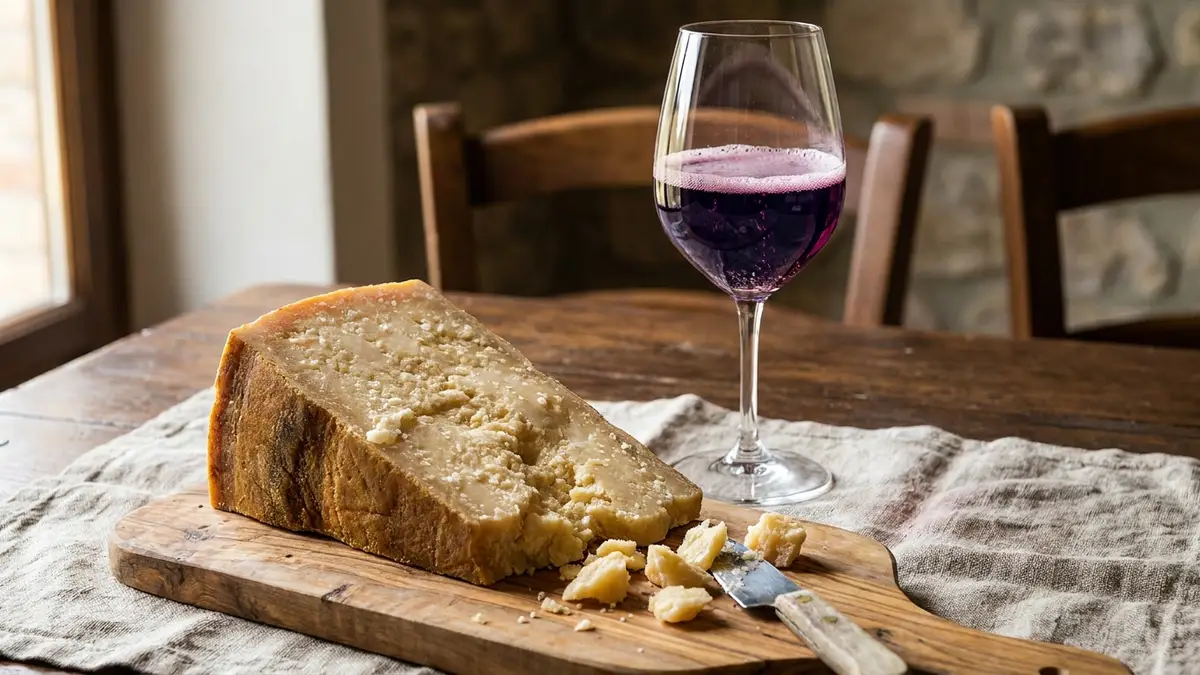
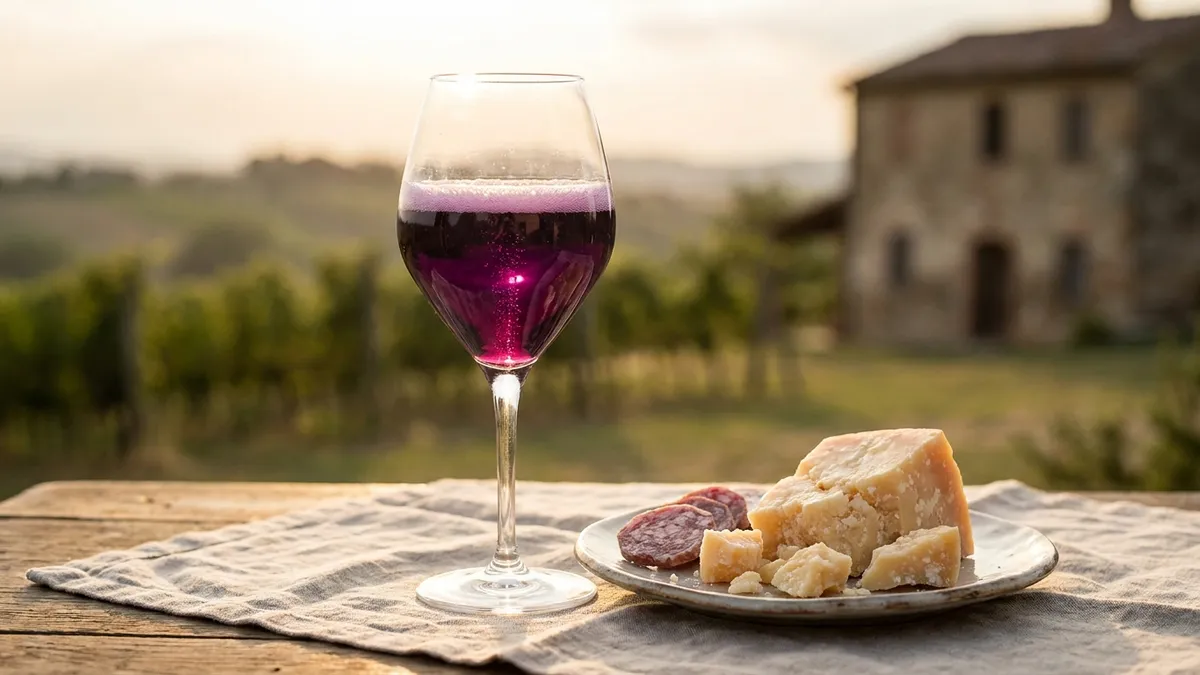
The best wine with Parmesan is a dry, lightly fizzy Lambrusco, a red made on the same Emilian plain as the cheese. Its bubbles and tart edge clear the salt and fat from your mouth between bites. As the wedge gets older and drier, the wine needs more structure, so a crumbly, crystal-studded piece moves you toward Sangiovese, Nebbiolo or a nutty dry sherry.
What Wine Goes Best With Parmesan, in One Paragraph?
The best wine with Parmesan is a dry Lambrusco, labelled secco, a red from the same corner of northern Italy as the cheese. It works because of acidity (the tartness that makes your mouth water) and bubbles, which cut through a cheese that is salty, fatty and loaded with savoury glutamate. Parmigiano Reggiano ages at least 12 months, and the age changes the best wine. Fizz and crisp whites suit 12 to 18 months. A medium-bodied Sangiovese suits about 24 months. Nebbiolo or a dry Amontillado sherry suits wedges past 30 months. Pick by the age printed on the label, then by the dish.
Which Wine Matches Which Age of Parmesan?
Match the wine's structure to the cheese's age: the older and drier the wedge, the more acidity, grip or nuttiness the wine needs. Parmigiano Reggiano must age at least 12 months before sale. Shops often sell older wedges as Vecchio (18 to 24 months) or Stravecchio (24 to 36 months).
| Cheese age | Texture | Wine | Why | Serve it with |
|---|---|---|---|---|
| 12 to 18 months | Moist, springy, milky | Lambrusco secco, Prosecco, crisp Italian white | Light cheese, light wine; acidity refreshes | Aperitivo cubes, salads, shaved over carpaccio |
| 18 to 24 months (Vecchio) | Firmer, flaking, first crystals | Lambrusco secco, Barbera, dry traditional-method sparkling | More salt; acid and bubbles still cut it | Pasta in butter, tortellini, a cheese board |
| 24 to 30 months | Crumbly, savoury, crystals throughout | Sangiovese (Chianti Classico), Barbera | Fat and protein soften moderate tannin | Tomato pasta, roast meat, after the main course |
| 30 to 36 months and older (Stravecchio) | Dry, gritty, intense | Nebbiolo, Amontillado or Oloroso sherry, Vin Santo | Structure or nuttiness to meet concentrated savouriness | Chunks on their own, with walnuts or dried figs |
The texture column is the shortcut when there is no label. If a piece bends before it breaks, treat it as young. If it shatters into gravel, treat it as old.
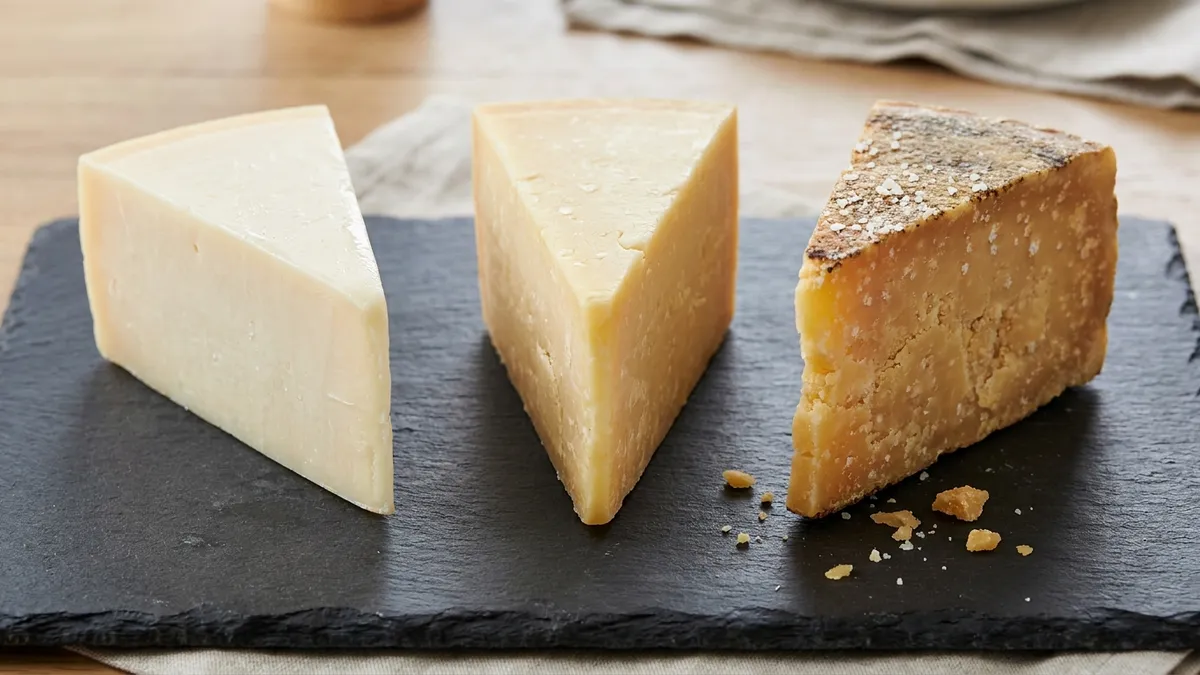
Those crunchy white specks in older wedges are amino acids, mostly tyrosine, sometimes with leucine. They form as the cheese dries out during ageing and its proteins break down. People often call them salt crystals, but they are protein fragments, and their crunch tells you the wedge is old enough for a structured wine.
Why Does Lambrusco Work So Well With Parmesan?
Three things line up: bubbles and acidity cut fat and salt, low tannin avoids a clash, and the two come from the same provinces. Parmigiano Reggiano is made in Parma, Reggio Emilia, Modena, Bologna west of the Reno and Mantua south of the Po.
Lambrusco comes from Emilia-Romagna and neighbouring Lombardy, centred on Modena, Parma, Reggio Emilia and Mantua.
Lambrusco is usually frizzante (gently fizzy, softer than Champagne). Its sweetness levels run secco (dry), amabile (off-dry) and dolce (sweet). If the label says secco, it is built for cheese and cured meat. If it says amabile or dolce, save it for chilli heat or dessert, because sugar fights the savouriness of the cheese.
The mechanism is simple. Acidity in wine cuts through fatty, salty food and leaves your mouth refreshed. The bubbles add a physical scrub. Lambrusco also has little tannin (the drying grip on your gums), so there is nothing in it for the salt and savouriness to sharpen into bitterness. The grape families and styles are mapped in our Lambrusco wine guide.
Red or White Wine With Parmesan?
Red, if it has fresh acidity and moderate tannin; white, if it is crisp or nutty rather than oaky and delicate. Parmesan is rich in umami (the savoury taste of glutamate), holding as much as 1.2 g of glutamate per 100 g of cheese. That savouriness flattens fruity, low-acid wines.
Reds from central and northern Italy suit it best. Sangiovese, the grape of Chianti Classico, brings sour-cherry acidity and medium to firm tannin. The proteins and fats in cheese soften the perception of tannin, so a firm young Sangiovese tastes rounder beside a 24-month wedge. Barbera has even more acidity and less tannin, which makes it the safer red for younger cheese. See the Sangiovese guide and Barbera guide for their styles.
For the oldest wedges, a structured red such as Nebbiolo from Barolo works, because the cheese is concentrated enough to stand up to its grip. The Nebbiolo guide explains how its high tannin and acidity hold up to rich, savoury food.
Salt makes alcohol feel hotter. If a red sits above 14% alcohol, put it in the fridge for 15 minutes before serving it with a strong wedge.
For white, choose crisp and unoaked: Verdicchio, a dry Soave or a Trebbiano-based wine. Heavily oaked whites taste of vanilla and butter that compete with the cheese. The exception is nutty and dry: Amontillado sherry, covered in the sherry wine guide, echoes the toasted, brothy side of an old wedge.
Does Sparkling or Sweet Wine Work With Parmesan?
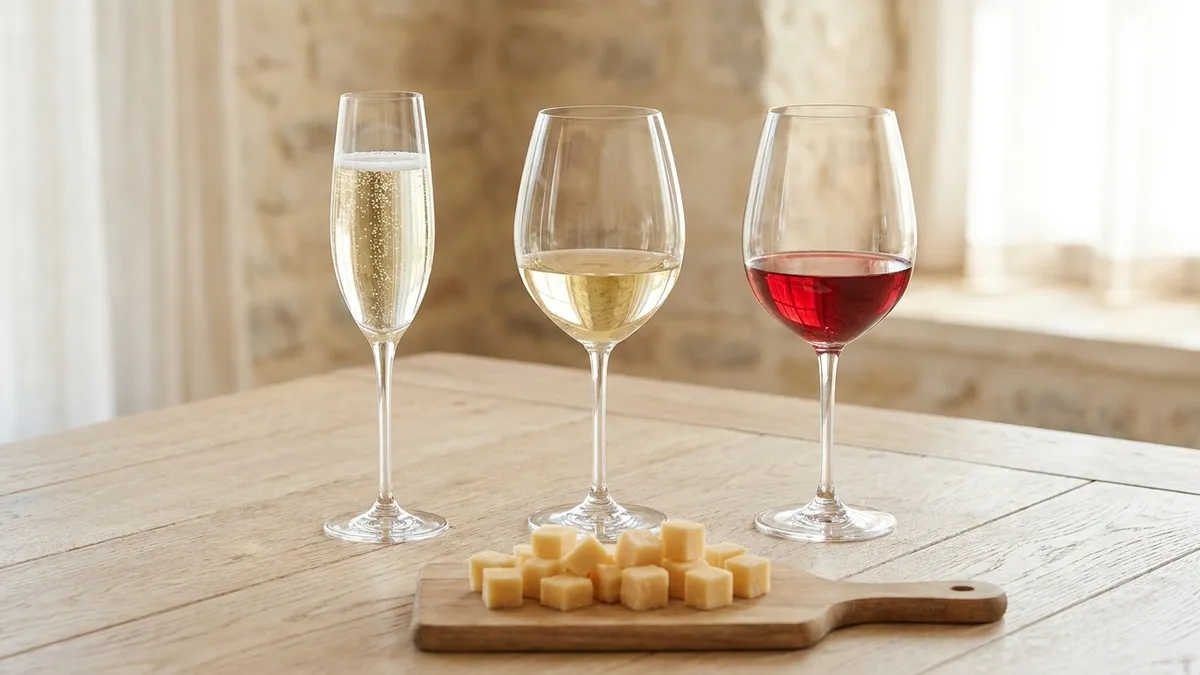
Yes to both: dry sparkling is the safest wine for young Parmesan, and sweet wine works by contrast against the salt. Prosecco or a traditional-method Italian sparkling wine does what Lambrusco does without the strawberry and plum flavours, which makes it the better choice with Parmesan shaved over a salad or raw beef.
Sweet wine follows the logic of salty Stilton with sweet Port. Sugar softens salt, and salt makes sugar taste less cloying. With a 36-month wedge served at the end of a meal, pour a small glass of Vin Santo or another passito (wine from grapes dried after harvest to concentrate sugar). Our Vin Santo guide covers the dry and sweet styles.
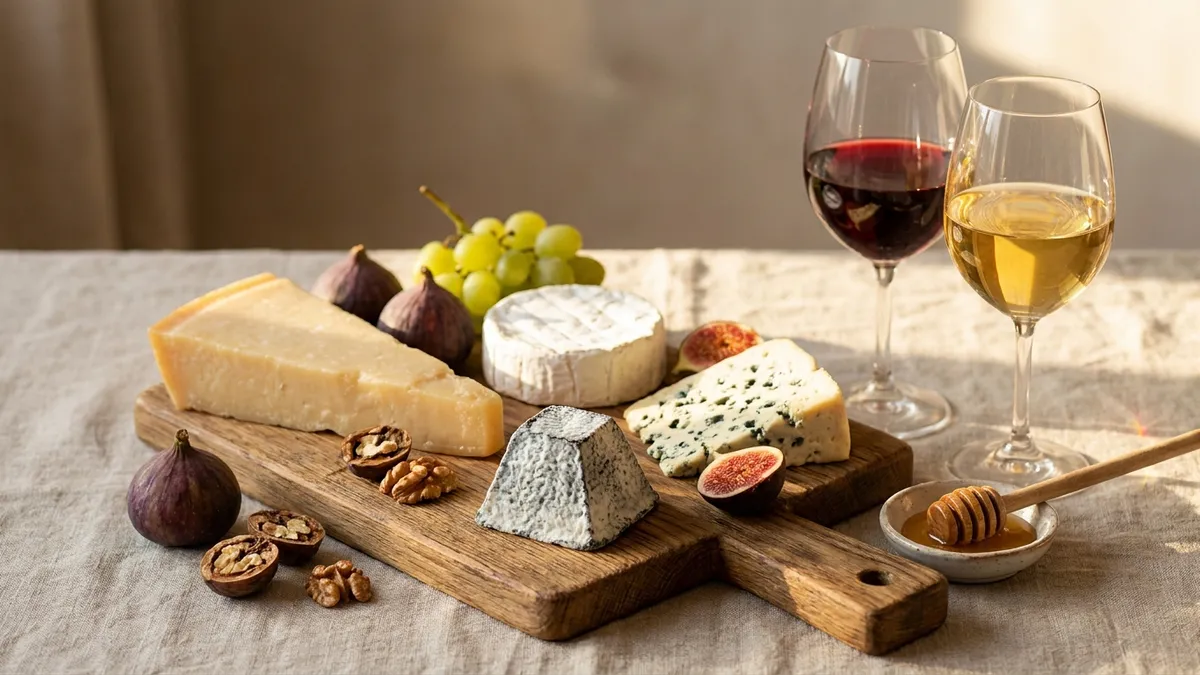
If the cheese arrives with honey, figs or walnuts, pour the sweet wine. If it arrives on a savoury plate, keep the wine dry.
What Wine Goes With Parmesan in a Dish?
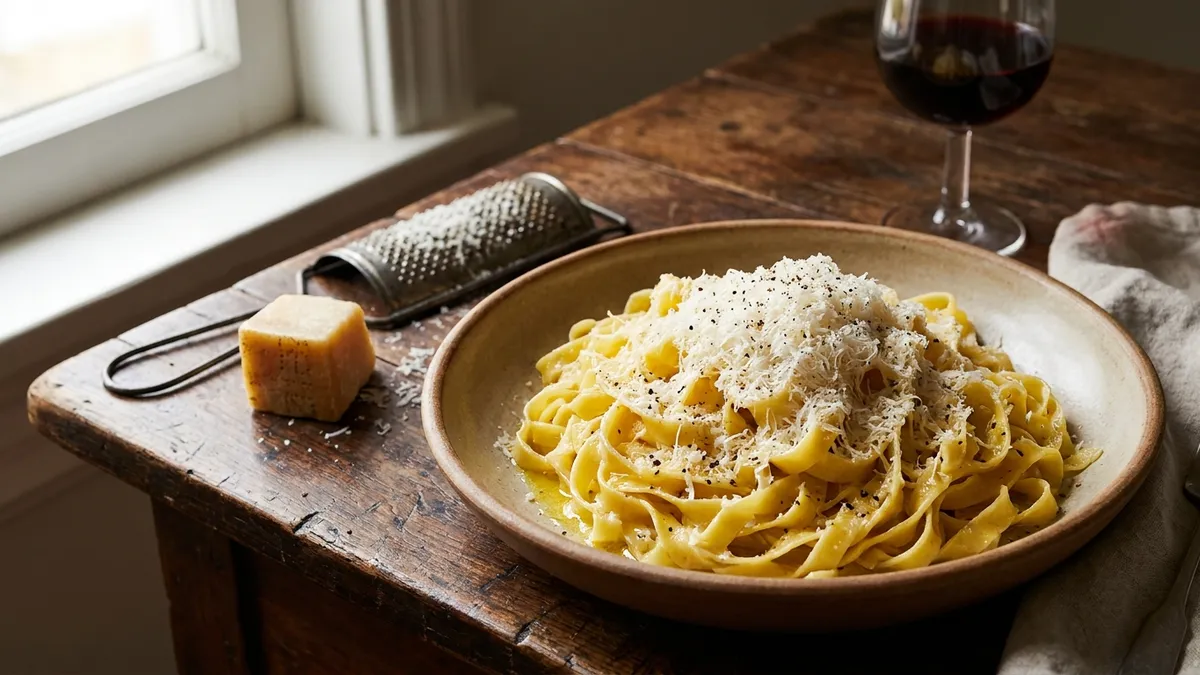
Pair the sauce first and the cheese second, because a spoonful of grated Parmesan seasons the dish without changing its weight. The sauce sets the acidity and body the wine has to meet. Our wine with pasta guide works through sauces one by one. These are the common Parmesan dishes:
- Tomato pasta or lasagne: Sangiovese or Barbera, whose acidity matches the tomato's.
- Pasta with butter and Parmesan, or cacio-style sauces: dry Lambrusco or a crisp white to cut the fat.
- Parmesan risotto: a dry, unoaked Italian white such as Verdicchio or Soave, which matches the rice's gentle weight.
- Parmesan crisps and aperitivo cubes: dry sparkling wine, because fried, salty snacks want bubbles.
- Aubergine parmigiana: a medium-bodied red with fresh acidity, the same as tomato pasta.
Parmesan vs Parmigiano Reggiano: What Changes in the Glass?
Inside the EU, Parmesan means Parmigiano Reggiano; elsewhere it can be any hard Italian-style grating cheese. Parmigiano Reggiano is a PDO (Protected Designation of Origin, a legally protected place name), and Italy first protected it in 1955. The name on the label tells you how old the cheese is likely to be.
That changes the pairing. A wedge labelled Parmigiano Reggiano is at least 12 months old and made in the provinces listed above, so the table holds. A shaker of generic "parmesan" may be younger, drier from processing or mixed with other cheeses. If the label gives no age and no PDO name, pair it like a young wedge: dry Lambrusco or a crisp white.
The real cheese is made at scale but slowly. Each vat takes about 1,100 litres of milk and makes two wheels, each weighing around 38 kg.
How Do You Set Up a Parmesan and Wine Tasting at Home?
Cut two ages of the same cheese, open two wines, and taste each cheese with each wine. A 12 to 18-month wedge and a 30-month wedge show the change most clearly. For wines, open a dry Lambrusco and a Sangiovese, both at cellar temperature, and set out water and plain bread.
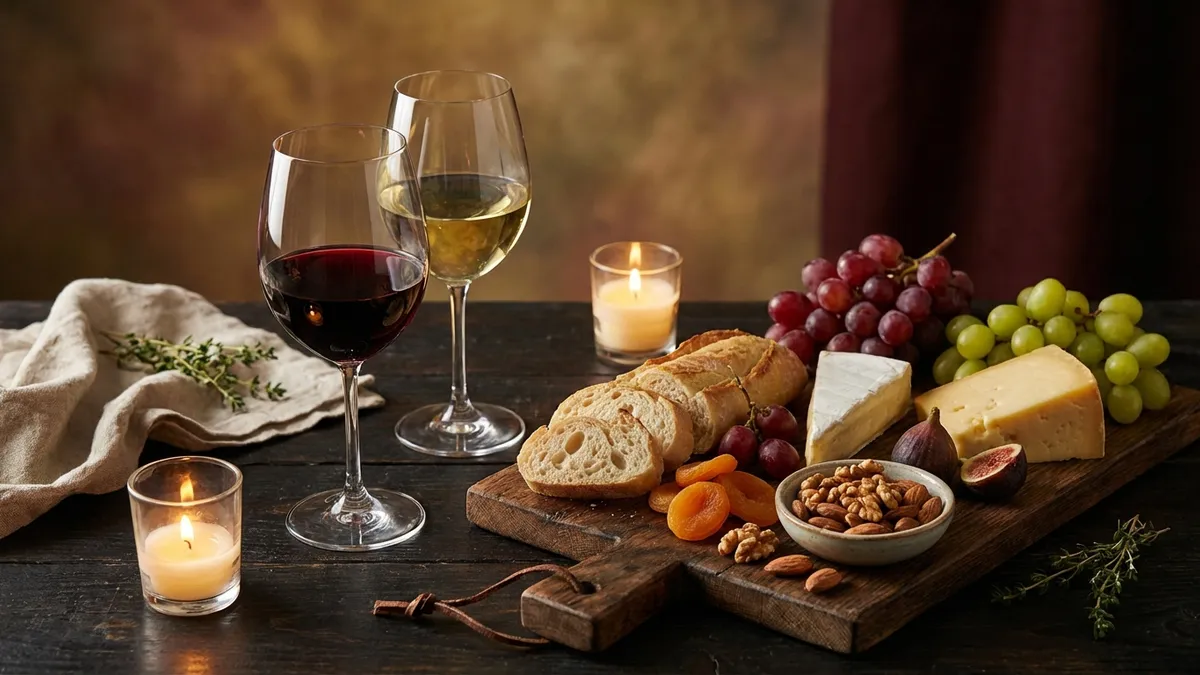
Cut thumb-sized chunks rather than slices, so you can feel the texture. Taste the cheese, then the wine, then the cheese again. Notice which pairing makes the wine taste fruitier and which makes it taste thin or bitter. The broader rules for building a board are in our wine and cheese pairing guide, and the food pairing hub collects every pairing article. For the umami side of the effect, read savoury and umami flavours in wine.
Italy's other cheese regions, and the wines grown beside them, are mapped in the Italian wine guide. The Sommy app has a bite-sized Italy course covering Sangiovese, Barbera and Nebbiolo. Tonight, pick up a dry Lambrusco and a wedge with its age on the label. Pour a glass and taste a crystal-studded chunk between sips.
Sources
Frequently Asked Questions
What wine goes best with Parmesan?
Dry Lambrusco, labelled secco, is the best all-round choice. It is a lightly fizzy red from the same provinces of Emilia-Romagna and Lombardy that make Parmigiano Reggiano. The bubbles and acidity scrub away the cheese's fat and salt, and its low tannin cannot turn bitter against the savoury crumbs. It suits wedges of every age, from 12 months up.
Is red or white wine better with Parmesan?
Both work if the wine has fresh acidity. Reds with moderate tannin, like Sangiovese or Barbera, handle 24-month cheese well, because the cheese's fat and protein soften tannin. Crisp, unoaked whites suit younger, moister wedges. Avoid very oaky whites and reds above 14% alcohol served warm, since salt makes alcohol feel hotter.
Does aged Parmesan need a different wine from young Parmesan?
Yes. Parmigiano Reggiano ages at least 12 months, and wedges sold as Stravecchio reach 24 to 36 months. As the cheese dries it turns crumblier and more savoury, and grows crunchy amino acid crystals. Young wedges want fizz or crisp white; old ones want more structure, such as Nebbiolo, or a nutty dry sherry like Amontillado.
What are the crunchy bits in Parmesan?
They are crystals of amino acids, mainly tyrosine, sometimes with leucine. They form as the cheese loses water during long ageing and the proteins break down, so they are a sign of an older wedge. They are not salt or sugar. A wedge full of them tastes more savoury and needs a wine with more acidity or nuttiness.
What wine goes with pasta topped with Parmesan?
Pair the sauce, not the cheese. A spoonful of grated Parmesan seasons the dish but rarely changes its weight. Tomato sauces want a high-acid red like Sangiovese or Barbera. Butter and cream sauces want a crisp white or a dry Lambrusco. Parmesan risotto, which is mostly rice, butter and cheese, suits a dry, unoaked Italian white.
Can you drink sweet wine with Parmesan?
Yes, by contrast. Sugar against salt works the same way Stilton and Port do. A sweet Italian wine such as Vin Santo or a passito suits a very old wedge served at the end of a meal, especially with dried fruit or nuts. Keep sweet wine away from Parmesan on savoury pasta, where the sugar clashes with the sauce.
Is Parmesan the same as Parmigiano Reggiano?
Inside the European Union, yes: Parmesan is treated as the same protected cheese. In many countries outside the EU, the name has become generic and can mean any hard Italian-style grating cheese. Parmigiano Reggiano is made only in the provinces of Parma, Reggio Emilia and Modena, plus parts of Bologna and Mantua, and ages at least 12 months.
Sommy Team
LinkedInFounder & Wine Educator
The Sommy Team is building the world's most approachable wine education app, helping beginners develop real tasting skills through structured courses and AI-guided practice.