Vin Santo Wine: Tuscany's Holy Sweet Wine, Explained

By the Sommy Team — AI-assisted, human-edited.
Updated Sep 25, 2026
Contents (10)
- What Is Vin Santo Wine, in One Paragraph?
- How Sweet Is Vin Santo, and What Does It Taste Like?
- How Do the Vin Santo DOCs Compare?
- How Is Vin Santo Made?
- What Food Goes With Vin Santo?
- How Should You Serve and Store Vin Santo?
- What Is Occhio di Pernice?
- Is Trentino's Vino Santo the Same as Tuscan Vin Santo?
- Why Is Vin Santo Called "Holy Wine"?
- How to Taste Vin Santo Tonight
TL;DR
Vin Santo is Tuscany's dried-grape wine, pressed after weeks or months of drying and aged for years in small sealed barrels that are never topped up. It is not fortified. Styles run from bone dry to very sweet, the main DOCs set different rules, and almond biscuits remain its classic match.
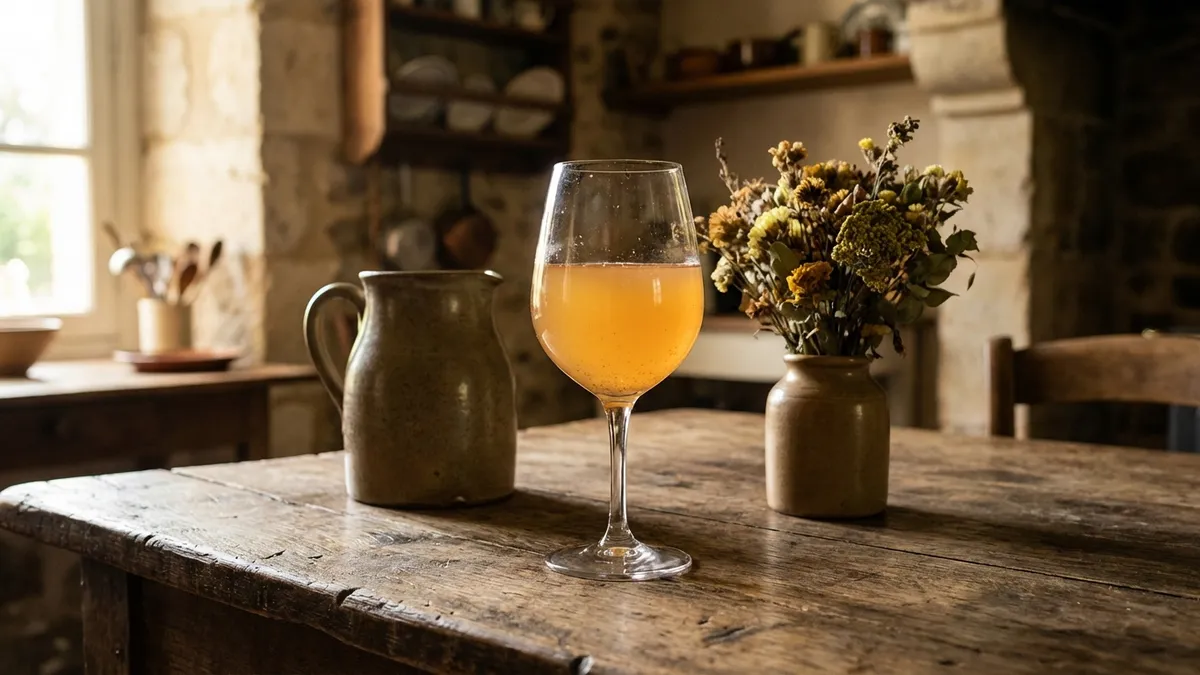
Vin Santo is Tuscany's dried-grape wine, aged for years in small sealed barrels, and that slow contact with air is why a glass of vin santo wine smells of toasted nuts, honey and dried apricot. It can be dry or syrupy, so the label word on sweetness matters more than the name.
What Is Vin Santo Wine, in One Paragraph?
Vin Santo ("holy wine") is an Italian wine made mostly in Tuscany from white Trebbiano Toscano and Malvasia grapes, with a rosé version from Sangiovese called Occhio di Pernice. The grapes dry on straw mats or hang under the rafters until they shrivel.
They are pressed weeks or months after harvest, often fermented with a starter of older Vin Santo, and usually aged for at least three years in small barrels that are sealed and never topped up. No spirit is added: alcohol usually lands between 11 and 17%. Sweetness runs from bone dry to extremely sweet. Several DOCs set the rules, and the classic way to drink it is with dry almond biscuits dipped into the glass.
How Sweet Is Vin Santo, and What Does It Taste Like?
Anywhere from bone dry, close to a nutty Sherry, to extremely sweet, so the label word tells you more than the name does. Most bottles are made as dessert wines, yet a dry one sits on some shelves beside them.
Start with structure. Sweet Vin Santo is full-bodied and thick on the tongue, with warmth from alcohol at the back of the throat. What stops it from tasting like syrup is acidity (the tartness that makes your mouth water). Trebbiano, the main grape, is a tough-skinned, high-acid variety, and drying concentrates that acid along with the sugar. A good sweet Vin Santo finishes clean because your mouth is still watering after you swallow. A dry one feels lighter and more savoury, with the same nutty edge.
Then the aromas. The colour runs from pale gold to deep amber and even bright orange. Expect three smells above all:
- Toasted nuts, from years of slow oxidation in the barrel.
- Raisin and dried apricot, because the grapes shrivelled before they were ever pressed.
- Honey, from the concentrated sugar of the dried berries.
If the label, the back label or the wine list says secco or asciutto, expect a dry, nutty wine for cheese and salty snacks. If it says dolce, amabile or dessert, expect the sweet style for the end of the meal. If nothing says either, ask. For how sweetness words map to what you taste, the wine sweetness scale lays out the steps.
How Do the Vin Santo DOCs Compare?
Three Tuscan DOCs (legally protected Italian place names with their own production rules) carry the name, Trentino adds a fourth, and many other Tuscan DOCs allow a Vin Santo too. These four set different grapes, alcohol levels, drying targets and barrel times. Across most of Tuscany the floor is about three years of aging, and five to ten years is common.
| DOC | Main grapes (white) | Min. alcohol | Min. aging | Min. sugar after drying | Choose it when |
|---|---|---|---|---|---|
| Vin Santo del Chianti Classico | Malvasia Bianca di Candia, Malvasia Bianca Lunga, Trebbiano Toscano | 10.5% | About 3 years, incl. 24 months in caratelli | 270 g/l | You want the Chianti heartland version and the lowest Tuscan alcohol minimum |
| Vin Santo del Chianti | At least 70% Malvasia Bianca Lunga and/or Trebbiano Toscano | 13% | About 3 years (Riserva about 4) | 260 g/l | You want the easiest DOC to find on a shelf |
| Vin Santo di Montepulciano | Grechetto, Malvasia and/or Trebbiano Toscano | 12% | 3 years (Riserva 5) | 280 g/l | You want the most concentrated must by law and can hunt a rare bottle |
| Trentino Vino Santo | At least 85% Nosiola | 10% | About 3 years (Superiore 48 months) | No g/l rule: 16% potential alcohol and a late pressing date | You want a different grape from the Alpine north |
Size explains what you will actually see in shops. Vin Santo del Chianti is the largest zone, with 100 hectares across seven subzones including Rufina and Colli Aretini in 2021, and has been a DOC since 1997. Chianti Classico's version covers 33 hectares, with vineyards up to 700 m, and dates from 1995. Montepulciano's covered just 5 hectares in 2021, planted between 250 and 600 m, and became a DOC in 1996.
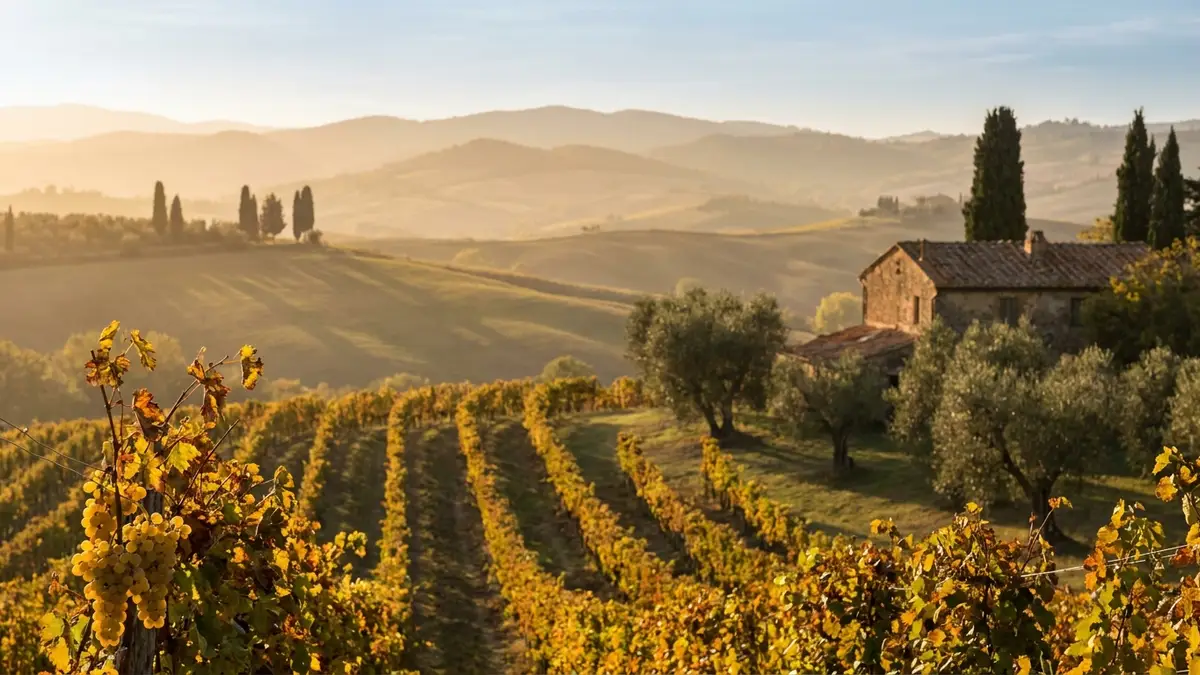
If you want the bottle most likely to be in stock, pick Vin Santo del Chianti. If you want the richest style the law allows and see a Vin Santo di Montepulciano, buy it, because the next one may be a long wait. The Tuscany wine guide places each of these zones on the map.
How Is Vin Santo Made?
Ripe white grapes are dried for weeks or months, pressed, often fermented with a starter from older wine, then sealed for years in small barrels that are never topped up. Each of those three steps leaves a mark you can taste.
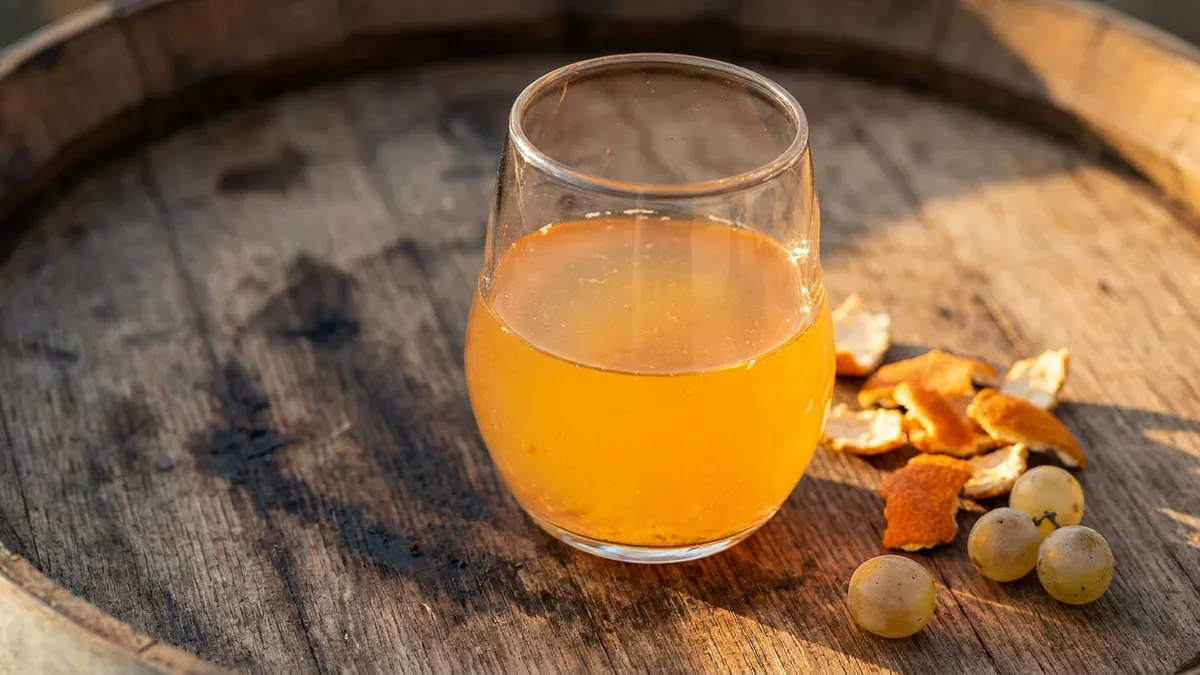
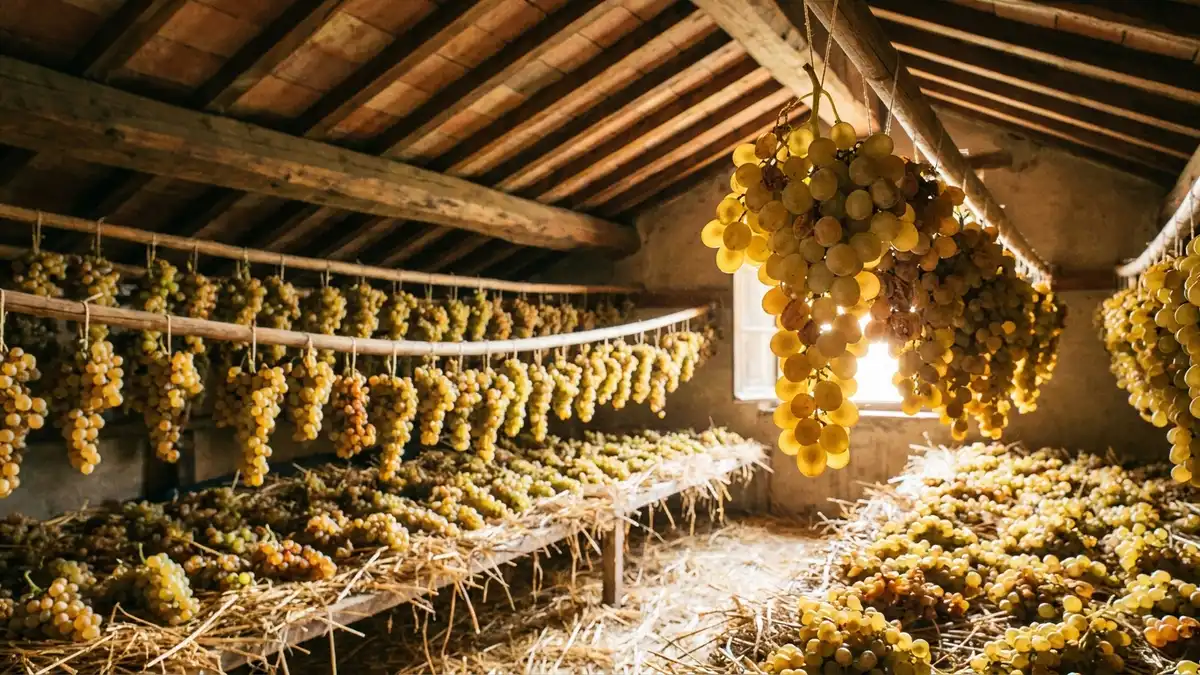
The drying comes first. After the September or October harvest, bunches are laid on straw mats or hung from poles, often under the rafters or staircases of warm, well-ventilated rooms. This is appassimento, Italian for drying grapes to shrivel them. Water leaves the berries and sugar stays behind. Some producers press after a few weeks; others wait until late March. The longer wait gives a sweeter, more concentrated juice. The straw wine and passito explainer shows how the same method works in other regions.
Many producers start the fermentation with a madre ("mother"): a starter culture of yeast that includes a little finished Vin Santo from earlier years. It links each new batch to the old ones, much as a sourdough starter carries a bakery's flavour from loaf to loaf.
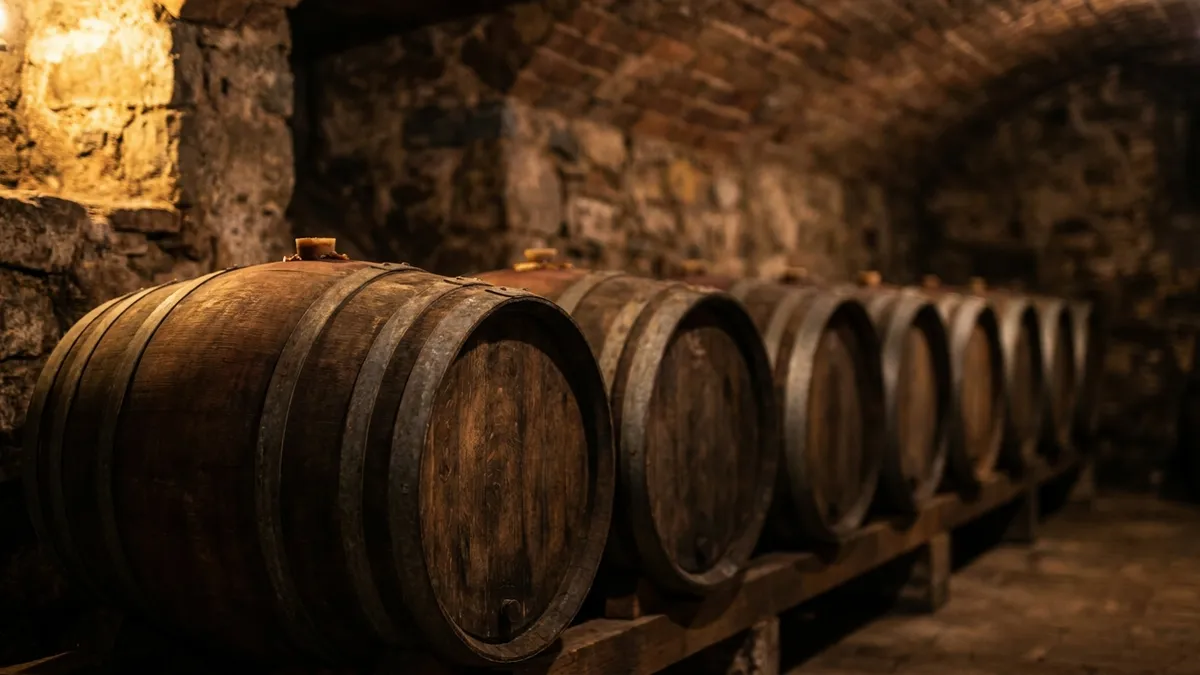
Then the barrels. The juice goes into caratelli, small barrels traditionally made of chestnut, today often oak, and sometimes cherry or juniper. They are sealed and not topped up as the wine evaporates, so a pocket of air sits above it for years. That space allows slow oxidation (the change oxygen causes in wine), and here it is intended. The same process that turns an open table white flat and bruised gives Vin Santo its caramel, walnut and dried-fruit flavours. The oxidized wine explainer describes the accidental version.
A common myth says Vin Santo is fortified (spirit added, about 15 to 22% alcohol), like Port. It is not: no spirit goes in, and its strength comes only from the dried grapes' sugar. Yeast turns that sugar into alcohol until the mix of alcohol and leftover sugar becomes too much for it. Fermentation then slows to a stop, usually between 11 and 17% alcohol, with sugar still in the wine.
What Food Goes With Vin Santo?
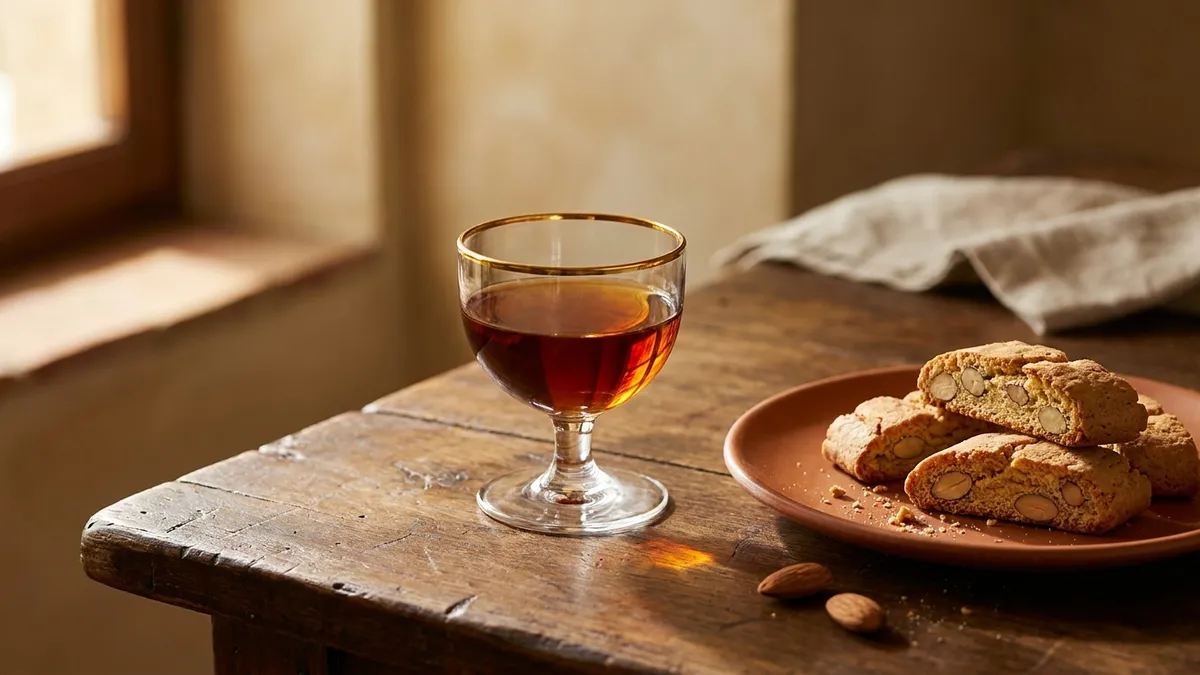
Dry almond biscuits first, then blue or aged sheep's milk cheese and nut desserts, and every one of them should taste less sweet than the wine in your glass. The classic Tuscan habit is to dunk cantucci (also called cantuccini), hard twice-baked almond biscuits, straight into the glass.
The biscuit works because it is barely sweet and very dry. It soaks up wine and adds toasted almond to a wine that already smells of nuts, and it leaves the wine tasting sweeter by comparison. Beyond biscuits, three directions hold up:
- Blue cheese and aged pecorino, because salt and fat make the sugar taste brighter and less heavy.
- Nut tarts, panforte and dried figs, because they repeat the wine's own nut and dried-fruit flavours without piling on more sugar.
- Salted almonds or aged hard cheese with a dry Vin Santo, because a secco style has little sugar to balance and tastes fuller next to salt.
If the dessert is sweeter than the wine, swap it for biscuits or cheese. A sugary cake or a chocolate mousse strips the sweetness out of the glass and leaves it tasting thin and sour. The wine and cheese pairing guide covers the salt-and-sugar match in more depth.
How Should You Serve and Store Vin Santo?
Cool, in a small glass, in small pours, then stopper the bottle and keep it in the fridge. A sweet wine this concentrated goes a long way, and the smaller glass keeps the honey and nut aromas close to your nose.
Serve it cellar-cool, a little below room temperature. Too warm and the alcohol burns; too cold and the aromas disappear. The wine serving temperature chart gives exact ranges for sweet wines. A small tulip-shaped or dessert glass is ideal. A normal white wine glass works too, with a short pour.
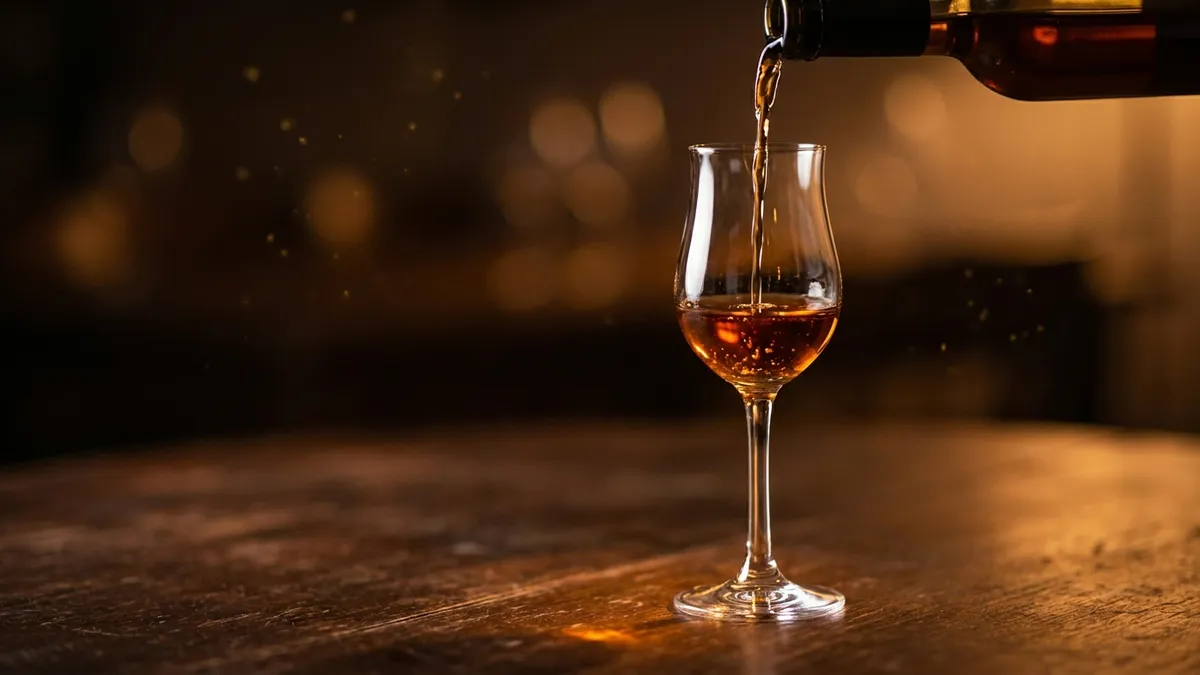
If the bottle is open, stopper it and keep it in the fridge. The wine has already spent years with air in the barrel, so it keeps far longer than an open table wine. Cold still slows any further change. For how it compares with other styles once opened, see how long wine lasts after opening.
What Is Occhio di Pernice?
Occhio di Pernice, "eye of the partridge", is the rosé or red version of Vin Santo, made mostly from Sangiovese, and the law asks more of it than of the white. It follows the same drying, madre and small-barrel steps, with stricter numbers at each one.
The rules show the difference. In Chianti Classico it needs at least 80% Sangiovese; in the wider Chianti zone, at least 50%. The wider Chianti zone also sets its minimum alcohol at 14%, against 13% for the white, and asks for grapes dried to 270 g/l of sugar instead of 260. Montepulciano goes furthest: grapes must reach 330 g/l of sugar, the highest target of the four DOCs here, and the wine spends six years in barrel, double the white's three.
If you see Occhio di Pernice on a list, expect a more concentrated wine than the white from the same zone, made under stricter rules. The red grape behind it is covered in the Sangiovese wine guide.
Is Trentino's Vino Santo the Same as Tuscan Vin Santo?
No. Vino Santo from Trentino, in the Alpine north, is made under a separate DOC, Trentino, from a different grape, Nosiola, with its own drying rule. The shared name covers two different wines from two different regions, and the grape is the quickest way to tell them apart.
Trentino's version needs at least 85% Nosiola. Its grapes cannot be pressed before 1 February of the year after harvest, or 1 March for the Superiore. That makes a long winter of drying the legal minimum. The base wine needs 10% alcohol; the Superiore needs 11% and at least 48 months of aging. The Trentino DOC dates from 1971, older than the three Tuscan DOCs named for Vin Santo.
If the label reads "Vino Santo" with Trentino on it, expect Nosiola from the mountains. If it reads "Vin Santo" with Chianti or Montepulciano, expect Trebbiano and Malvasia from Tuscany.
Why Is Vin Santo Called "Holy Wine"?
Nobody knows for sure, and several stories compete. The most probable reason is its long use at Catholic Mass, where sweet wine was often preferred over dry. That church use is the likeliest source of the word santo on every label.
The other stories are colourful but harder to prove:
- Santorini: Venetian merchants may have sold a sweet wine from the Greek island, and the name drifted into "santo".
- A friar: a 14th-century friar is said to have healed the sick with the wine.
- Bessarion: in 1439 the Greek scholar John Bessarion is said to have compared it with the wine of Xanthos, and listeners heard "santo".
- The calendar: fermentation around All Saints' Day and bottling in Easter week.
The name tells you nothing about how a bottle tastes. The DOC, the grape and the sweetness word do. For the wider family of Italian sweet wines, the Italian wine guide maps each style to its region.
How to Taste Vin Santo Tonight
Buy one bottle, pour two small glasses, and taste one alone and one after a bite of almond biscuit.
Look first: hold the glass against something white and name the shade, gold, amber or orange. Then smell for the three markers from the taste section: toasted nut, raisin or apricot, honey. Finally sip and wait for the acidity to make your mouth water after you swallow. The method in tasting dessert wines properly applies step by step.
Sommy's bite-sized courses include a regional course on Italy, and the app at sommy.wine walks you through each glass in its AI-guided tasting mode. More dried-grape and oxidative styles sit in the wine styles hub. Pour two small glasses tonight, put a plate of dry almond biscuits beside them, and taste one glass before the first dunk and one after.
Sources
Frequently Asked Questions
What is vin santo wine made from?
White Vin Santo is made mainly from Trebbiano Toscano and Malvasia grapes, with Grechetto allowed in Montepulciano. The rosé or red style, Occhio di Pernice, is made mostly from Sangiovese. The grapes are dried on straw mats or hung under the rafters until they shrivel, then pressed, fermented and aged for years in small barrels.
Is vin santo a dessert wine?
Usually, but not always. Most bottles are sweet and served at the end of a meal with almond biscuits or cheese. Yet the style ranges from bone dry, closer to a nutty Sherry, to extremely sweet. Check the label or ask the shop whether the bottle is dry (secco) or sweet (dolce) before you plan the food around it.
Is vin santo a fortified wine?
No. No spirit is added to Vin Santo. Its strength, usually around 11 to 17% alcohol, comes from grapes dried until their sugar is highly concentrated. The nutty, caramel side of its flavour comes from years in small barrels that are sealed but never topped up, so a pocket of air slowly works on the wine.
How long is vin santo aged?
At least three years in most of Tuscany, and five to ten years is common. Vin Santo del Chianti Classico needs about three years, including 24 months in small barrels called caratelli. Montepulciano asks for three years, five for Riserva and six for its Occhio di Pernice. Trentino's Vino Santo Superiore needs at least 48 months.
What food goes with vin santo?
Dry almond biscuits called cantucci or cantuccini are the classic match, dipped into the glass. Blue cheese and aged sheep's milk cheese work too, because their salt sets off the sugar. Nut tarts and dried fruit follow the wine's own flavours. Avoid desserts sweeter than the wine, which make it taste thin and sour.
What is occhio di pernice wine?
Occhio di Pernice, 'eye of the partridge', is the rosé or red version of Vin Santo, made mostly from Sangiovese. The rules ask more of it than the white: at least 80% Sangiovese in Chianti Classico, grapes dried further in Chianti and Montepulciano, and in Montepulciano grapes dried to 330 g/l of sugar and six years in barrel.
Should you refrigerate vin santo after opening?
Yes. Put the stopper back in and keep the bottle in the fridge. Vin Santo has already spent years in contact with a little air, so it keeps far longer than an open table wine, but cold still slows any further change. Take it out a short while before pouring so the aromas come back.
Sommy Team
LinkedInFounder & Wine Educator
The Sommy Team is building the world's most approachable wine education app, helping beginners develop real tasting skills through structured courses and AI-guided practice.