Trebbiano Wine: Taste, Types and the Ugni Blanc Link

By the Sommy Team — AI-assisted, human-edited.
Updated Oct 2, 2026
Contents (7)
TL;DR
Trebbiano wine is a dry, pale white with high acidity and a light smell of green apple, lemon and fresh almond. The Trebbiano family makes about a third of Italy's white wine. Its main grape, Trebbiano Toscano, is called Ugni Blanc in France, where it is the leading grape of Cognac and Armagnac.
Trebbiano wine is a dry, pale white with high acidity (the tartness that makes your mouth water), a light body and a faint smell of green apple, lemon and fresh almond. The Trebbiano family of grapes makes about a third of Italy's white wine. In France its main member is called Ugni Blanc, the grape behind Cognac.
What Does "Trebbiano" on a Label Mean?
The words after "Trebbiano" decide which grape is in the bottle. Plain Trebbiano and Ugni Blanc almost always mean Trebbiano Toscano, the high-yield workhorse. Trebbiano d'Abruzzo is a protected wine name with its own rules. Trebbiano di Soave and Trebbiano di Lugana sit close to Verdicchio, a different grape.
| Label says | Where | What the grape is | In the glass | Buy it when |
|---|---|---|---|---|
| Trebbiano, Trebbiano Toscano, Ugni Blanc | Tuscany, central Italy, Cognac and Armagnac | The workhorse: one grape under an Italian and a French name | Lean and neutral: lemon, green apple, almond | You want a cheap, crisp white for fried food |
| Procanico | Umbria, mainly Orvieto | The local name for a Trebbiano Toscano clone | Light and fresh, usually blended with Grechetto | You want a light Orvieto with lunch |
| Trebbiano d'Abruzzo | Abruzzo | At least 85% Trebbiano Abruzzese and/or Toscano; the local grape may be Bombino Bianco under another name | Lean to round and waxy; Superiore and Riserva are fuller | You want the most serious Trebbiano on the shelf |
| Trebbiano di Soave, Trebbiano di Lugana (Turbiana) | Soave in Veneto; Lugana on Lake Garda | Very close to Verdicchio and listed among its synonyms | Fuller and fruitier than Toscano | You want more flavour than plain Trebbiano gives |
| Trebbiano Spoletino | Umbria | A local grape now bottled on its own again | Textured, with more weight than Toscano | You see it on an Umbrian list and want something rare |
If the label says Trebbiano d'Abruzzo Superiore or Riserva, expect more weight than the basic wine. According to Italian Wine Central's summary of the DOC rules, those versions need at least 90% Trebbiano and 12 or 12.5% alcohol. Superiore ages at least four months and Riserva twelve. The basic DOC asks for 85% Trebbiano, 11.5% alcohol and about three months, so its label alone says little about style.
What Does Trebbiano Taste Like?
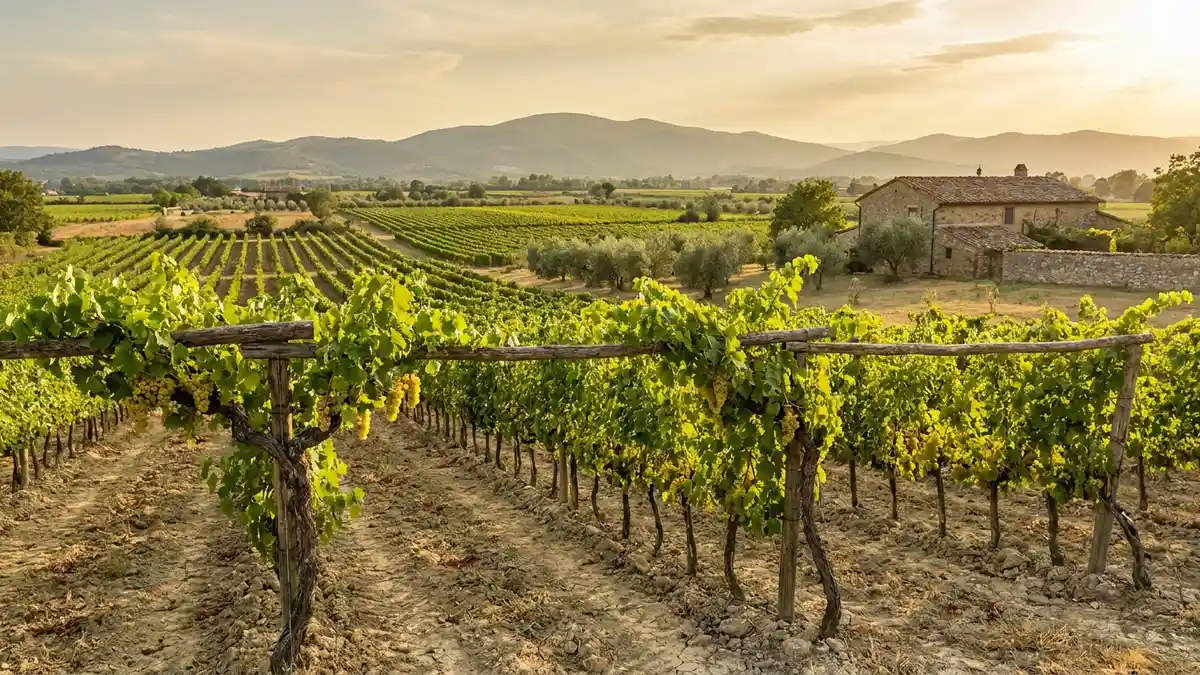
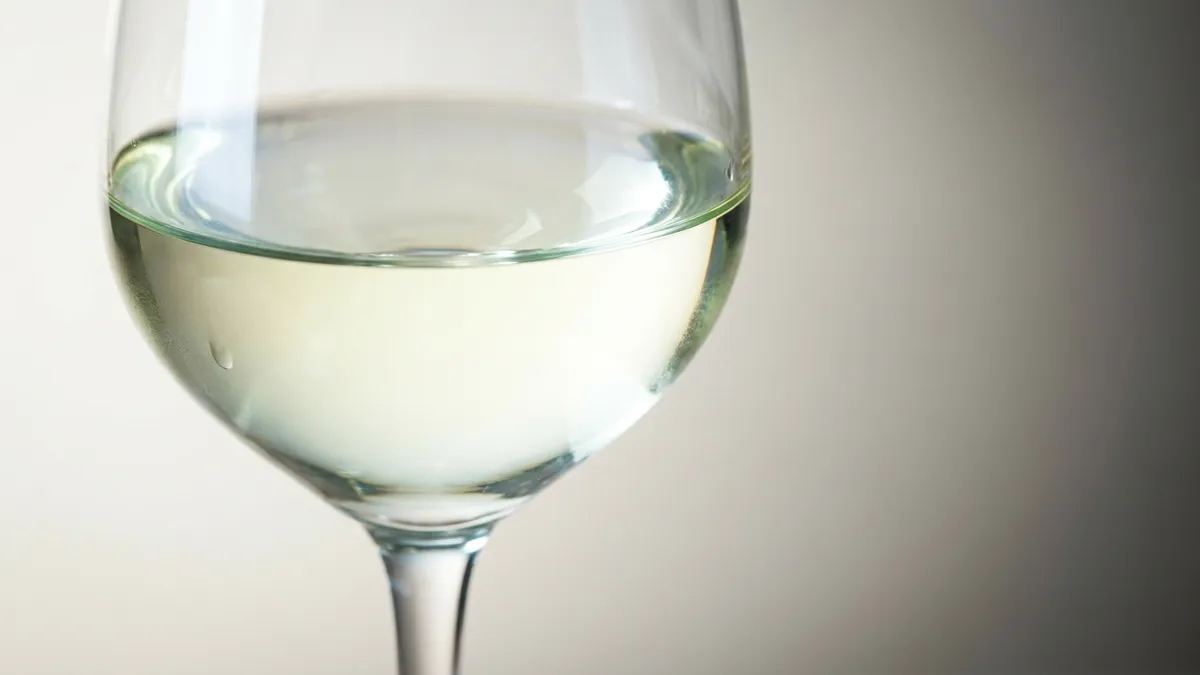
Trebbiano tastes tart, light and dry, with green apple, lemon zest and fresh almond instead of ripe tropical fruit. It looks pale lemon-green and usually carries 11 to 12.5% alcohol. The aroma stays faint because Trebbiano is a neutral grape, one with few perfumed compounds of its own, so the acid is what you notice first.
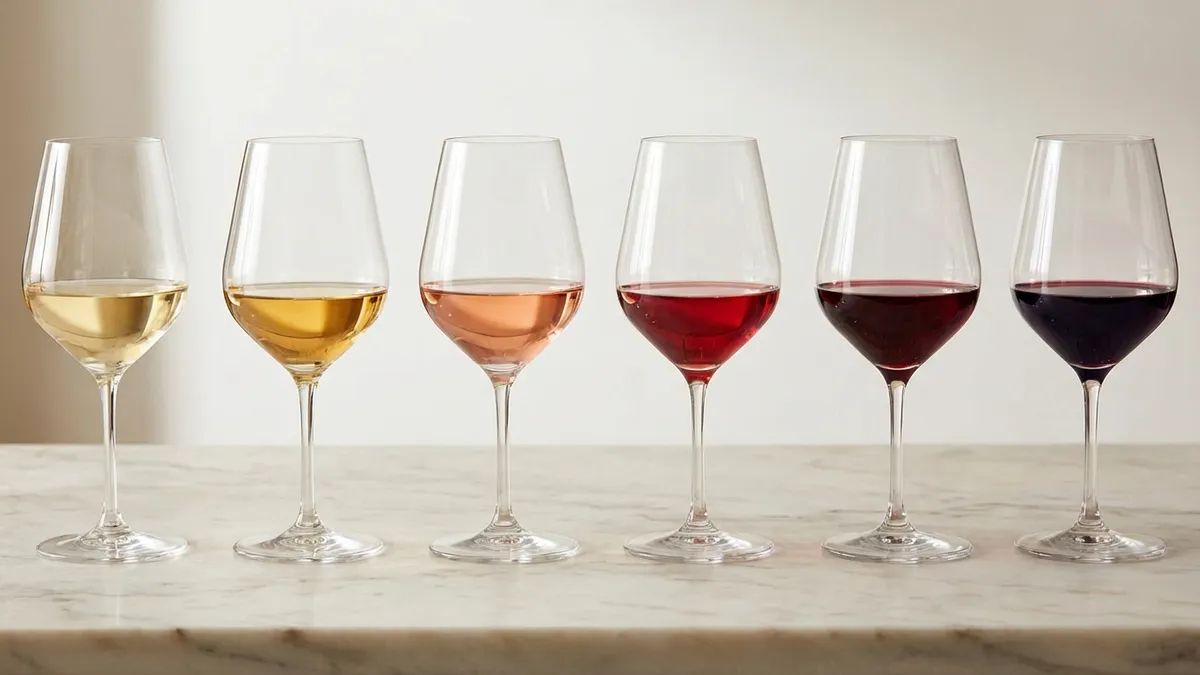
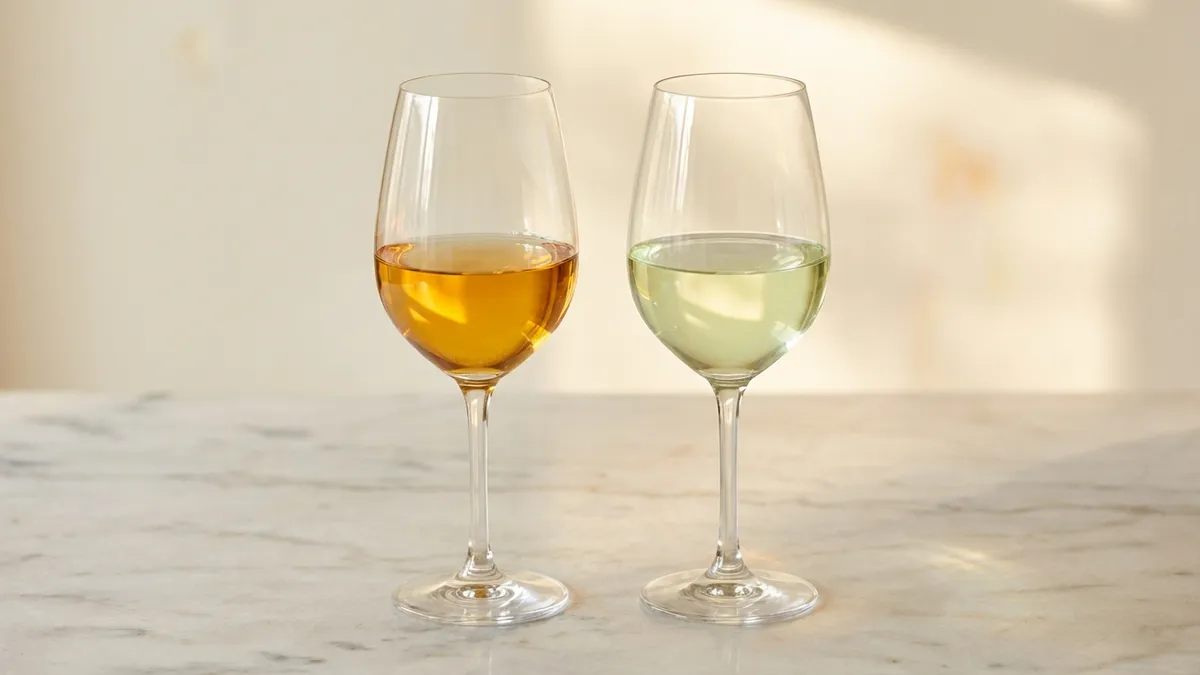
- Sight: pale lemon-green when young; straw-yellow with a gold edge in older or oak-aged bottles.
- Nose: green apple, lemon and white pear, fresh almond and a faint smell of hay. Aged Trebbiano d'Abruzzo can add honey, beeswax and hazelnut.
- Palate: high acid, light to medium body, sometimes a waxy feel, bone dry, with an almond-skin finish.
Most Trebbiano is best within one to two years of the vintage, while the citrus is still fresh. Some Abruzzo producers make versions that keep five years or more and turn nutty. The step-by-step method for tasting white wine shows how to work through sight, nose and palate.
Same Trebbiano, two tasting notes
A beginner tasting a young Trebbiano Toscano might write: "Light, a bit sour, faint smell. Like water with lemon in it."
A trained taster might write about the same glass: "Pale lemon-green. Faint green apple, lemon zest, fresh almond. Dry, high acid, light body, short almond-skin finish. About 12% alcohol."
The beginner noticed the right things. "Faint smell" is the neutrality that defines the grape, and "sour" is its acid. The trained note adds the almond on the finish, which is the clue that separates Trebbiano from an equally light Pinot Grigio. If a light white smells of almost nothing but finishes on almond skin, guess Trebbiano.
Trebbiano vs Chardonnay: What Is the Difference?
Chardonnay is fuller and usually shaped in the cellar; Trebbiano is lighter, tarter and left plain. Chardonnay often goes through malolactic conversion (a second fermentation that softens acid and can smell of butter) and time in oak (barrels adding vanilla, toast or spice). Trebbiano is grown for acid and big crops and rarely sees new oak.
| Grape | Body | Acidity | Smells of | Oak | Pick it for |
|---|---|---|---|---|---|
| Trebbiano | Light | High | Green apple, lemon, fresh almond | Rare | Fried seafood, antipasti, a hot afternoon |
| Chardonnay | Medium to full | Medium to high | Apple and lemon when cool-grown; peach and pineapple when warm-grown | Common: vanilla, toast, butter | Roast chicken, creamy sauces, lobster |
| Pinot Grigio | Light | Medium to high | Pear, lemon pith | Rare | A light aperitivo |
| Garganega (Soave) | Light to medium | Medium to high | White peach, chamomile, bitter almond | Occasional | Risotto, white fish with herbs |
| Vermentino | Light to medium | Medium to high | Lime, green herbs, a salty edge | Rare | Grilled fish, pesto |
If a buttery, oaked Chardonnay is your usual white, Trebbiano will taste thin beside it; switch to Trebbiano when the food is salty, oily or fried. The Chardonnay grape guide covers its oaked and unoaked styles. Because Trebbiano adds acid without much aroma, it works more often as a blending grape than a single varietal, with Malvasia or Grechetto supplying the perfume. Its neighbours, from Garganega in Soave to Vermentino, sit in the grape varieties hub.
Where Is Trebbiano Grown in Italy?
Trebbiano grows almost everywhere in Italy. Wikipedia's Trebbiano entry counts it in more than 80 Italian DOCs, yet only seven are named for it. Abruzzo takes it most seriously, while Tuscany, Umbria, Lazio and Emilia-Romagna use it mainly for fresh blends. The wider map of Italian wine places these regions side by side.
- Abruzzo: the Trebbiano d'Abruzzo DOC dates from 1972 and covered 2,034 hectares in 2021, per Italian Wine Central. The fullest versions come from hillside vineyards in the Apennine foothills, picked late for more texture.
- Tuscany: the 1967 Chianti rules required 10 to 30% white grapes, Trebbiano and Malvasia, which lightened the red. Chianti Classico has banned white grapes since 2006. Trebbiano Toscano still makes bulk whites and is a main grape of Vin Santo, the dried-grape dessert wine.
- Umbria and Lazio: Orvieto blends Procanico with Grechetto, and the Umbria wine guide explains its dry and sweet styles. Frascati, outside Rome, is mostly Malvasia, with some Trebbiano allowed.
- Emilia-Romagna: Trebbiano di Romagna is mostly a simple everyday white, and the grape is also used to make balsamic vinegar.
Why Is Ugni Blanc Used for Cognac?
Ugni Blanc makes the thin, tart base wine that brandy needs. Wikipedia's Ugni Blanc entry calls it the most widely planted white grape in France and the most common grape in Cognac and Armagnac. It may have crossed from Italy in the 14th century, during the papacy's stay in Avignon. Both brandy regions appear among France's wine regions.
- High acidity keeps the base wine fresh until it is distilled.
- Low alcohol, about 7 to 8%, means more water to remove and more flavour concentrated in the spirit.
- A neutral aroma leaves room for the vanilla and spice that oak adds later.
- High yields matter because it takes several litres of wine to make one litre of brandy.
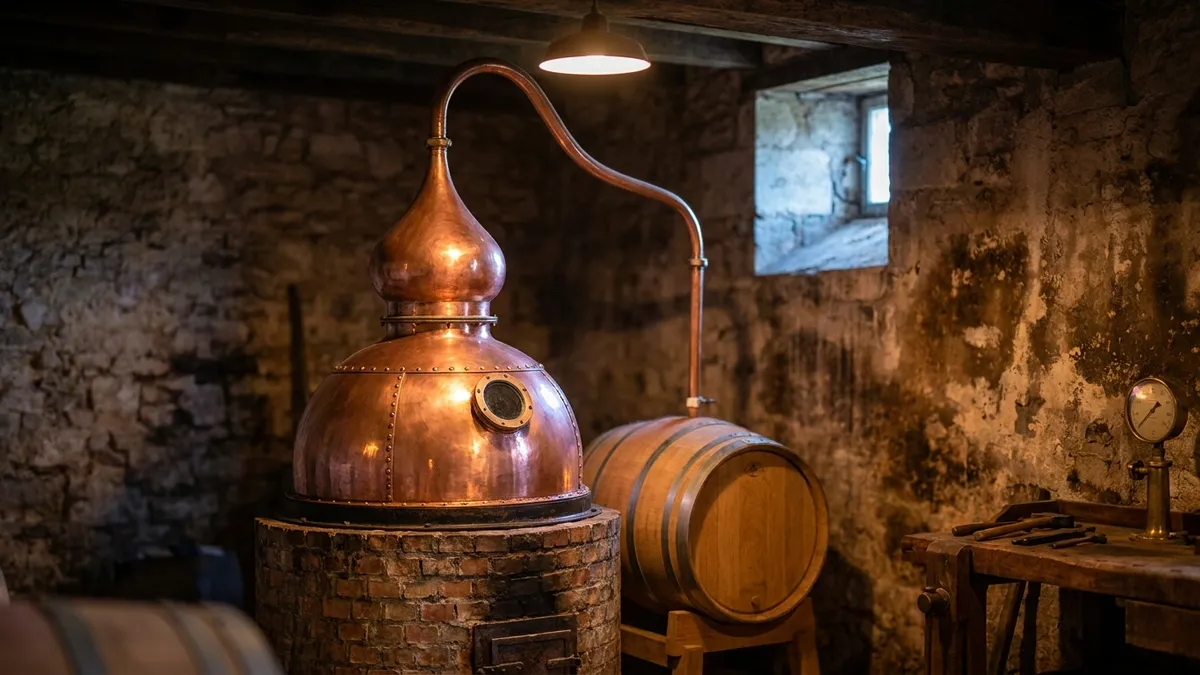
Cognac's base wine is very dry, acidic and thin. It is distilled twice in copper Charentais stills to a clear spirit of about 70% alcohol. It then ages at least two years in oak before sale.
What Food Goes With Trebbiano?
Trebbiano goes with light, salty, oily or fried Mediterranean food. High acid cuts through olive oil and batter, and the faint aroma never covers a delicate dish. If the plate is fried, oily or salty, pour Trebbiano. If it is creamy or buttery, pour an oaked Chardonnay instead.
- Fritto misto and fried vegetables: the acid cuts the batter and clears the mouth between bites.
- Grilled white fish and seafood pasta: sea bass or spaghetti alle vongole, where acid lifts the lemon and garlic. More matches are in the seafood pairing guide.
- Antipasti: olives, cured meats and fresh mozzarella, whose salt and fat the acid cuts.
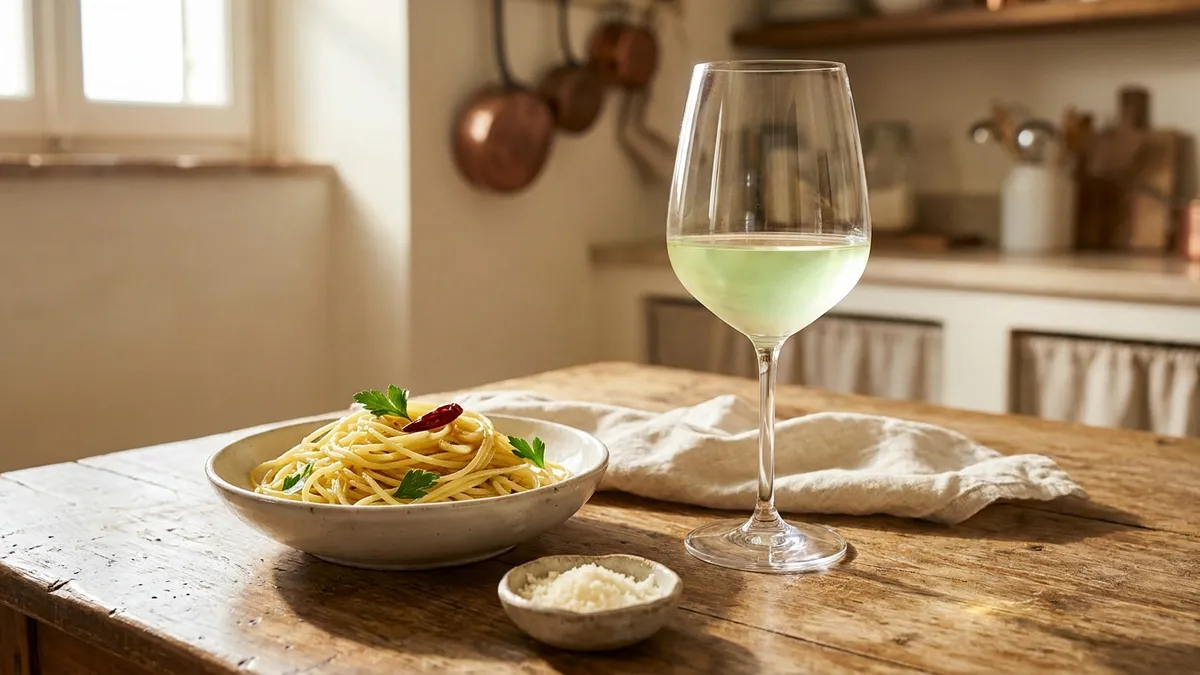
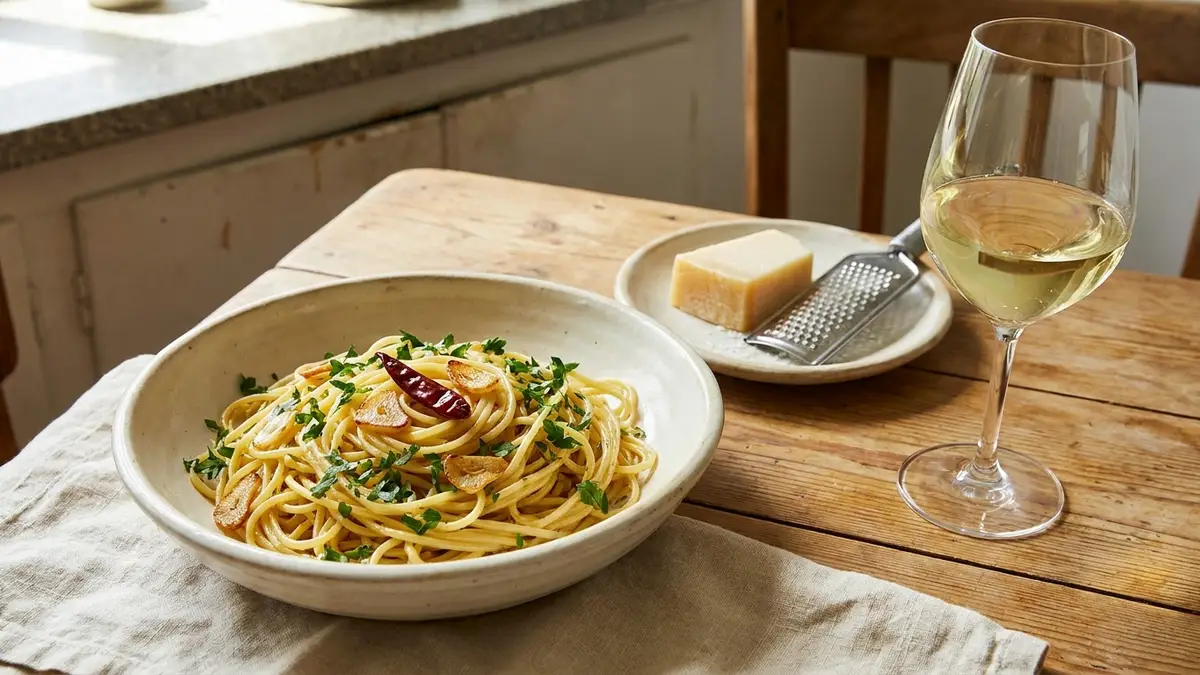
- Light pasta: pasta al limone or aglio e olio. See wine with pasta for heavier sauces.
- Roast chicken or pork with herbs: rosemary and sage suit a wine with little aroma of its own, and the acid cuts the skin's fat.
How to Buy Trebbiano
- If you want depth, buy Trebbiano d'Abruzzo Superiore or Riserva. Both need more Trebbiano, more alcohol and longer aging than the basic DOC.
- If the vintage is more than two years old, pick another bottle. The exception is an Abruzzo Riserva, which is built to last longer.
- If price matters, Trebbiano is a value pick. Its plain reputation keeps prices low, and good Abruzzo bottles often cost no more than a mid-range Pinot Grigio.
Sommy's AI-guided tasting mode can walk you through a bottle: photograph the label, then log look, smell and taste in your tasting journal. Tonight, chill a young Trebbiano to fridge-cold and pour it beside fried or grilled fish. Notice the acid first, then taste for the almond on the finish.
Sources
Frequently Asked Questions
What is Trebbiano wine?
Trebbiano wine is a dry white made from the Trebbiano family of Italian grapes, which together produce about a third of Italy's white wine. It is pale lemon-green, high in acid and light in body, with green apple, lemon and fresh almond aromas. Most of it goes into simple blends, while Trebbiano d'Abruzzo is the main style bottled on its own.
Is Trebbiano the same as Ugni Blanc?
Yes. Ugni Blanc is the French name for Trebbiano Toscano, the most widely planted member of the Trebbiano family. The grape may have reached France in the 14th century, during the papacy's stay in Avignon. Today it is France's most widely planted white grape and the most common grape in Cognac and Armagnac.
What does Trebbiano taste like?
Trebbiano tastes tart, light and bone dry. Expect green apple, lemon zest, white pear and fresh almond, with a faint smell of hay and a clean almond-skin finish. Alcohol usually sits between 11 and 12.5 percent. Aged Trebbiano d'Abruzzo can add honey, beeswax and hazelnut, but most bottles are best within two years of the vintage.
Is Trebbiano like Chardonnay?
Only loosely. Both are dry whites, but Trebbiano is lighter, tarter and rarely oaked, with green apple and almond. Chardonnay is medium to full bodied and often shaped by oak barrels and malolactic conversion, which add vanilla, toast or butter. Pick Trebbiano for fried or salty food and Chardonnay for creamy sauces and roast chicken.
What is the difference between Trebbiano Toscano and Trebbiano d'Abruzzo?
Trebbiano Toscano is the high-yield workhorse used in blends and, as Ugni Blanc, in Cognac. Trebbiano d'Abruzzo is both a grape name and a protected wine name. The DOC needs at least 85 percent Trebbiano Abruzzese and/or Toscano, and the local grape may be Bombino Bianco under another name. The Superiore and Riserva versions are fuller.
Is Trebbiano used for Cognac?
Yes. Under its French name, Ugni Blanc, Trebbiano Toscano is the most common grape in Cognac and Armagnac. Its base wine is very dry, acidic and thin, at about 7 to 8 percent alcohol. Cognac distils it twice in copper stills to a spirit of about 70 percent, then ages it at least two years in oak.
What food pairs well with Trebbiano?
Trebbiano goes best with light, salty, oily or fried Mediterranean food. Try fritto misto, grilled white fish, spaghetti alle vongole, antipasti with olives and cured meats, fresh mozzarella, or pasta al limone. The high acid cuts through olive oil and batter, and the quiet aroma never covers a delicate dish. Creamy, buttery sauces suit an oaked Chardonnay better.
Why is Trebbiano so widely planted?
Trebbiano is vigorous and high yielding, ripens late and has tough-skinned berries with acidic juice. Growers get large crops of clean, neutral wine that blends easily and distils well. Those traits explain why it appears in more than 80 Italian DOCs and why France plants more Ugni Blanc than any other white grape.
Sommy Team
LinkedInFounder & Wine Educator
The Sommy Team is building the world's most approachable wine education app, helping beginners develop real tasting skills through structured courses and AI-guided practice.