Frizzante Wine vs Spumante: Fizz Levels Side by Side

By the Sommy Team — AI-assisted, human-edited.
Updated Nov 3, 2026
Contents (10)
- Frizzante vs Spumante, in One Paragraph
- How Do You Read the Fizz Level on an Italian Label?
- How Much Pressure Is in a Bottle of Frizzante?
- Why Does the Closure Give the Fizz Level Away?
- Does Secco Mean Dry on Both?
- Is Prosecco Frizzante or Spumante?
- Where Do Lambrusco and Moscato d'Asti Fit?
- How Should You Serve Frizzante and Spumante?
- Which One Should You Pick?
- Is Frizzante Lower Quality Than Spumante?
TL;DR
Frizzante is Italian semi-sparkling wine: EU law puts it at 1 to 2.5 bar of pressure at 20°C. Spumante needs at least 3 bar and must wear a mushroom cork under a wire cage. The sweetness words differ too: secco on a spumante allows 17 to 32 grams of sugar per litre.
Frizzante wine is Italian semi-sparkling wine, and EU law draws its border with numbers: 1 to 2.5 bar of gas pressure for frizzante, at least 3 bar for spumante. That line decides more than the bubbles. It sets which closure the bottle may wear and which scale its sweetness words follow, so "secco" on a frizzante and "secco" on a spumante are different amounts of sugar.
Frizzante vs Spumante, in One Paragraph
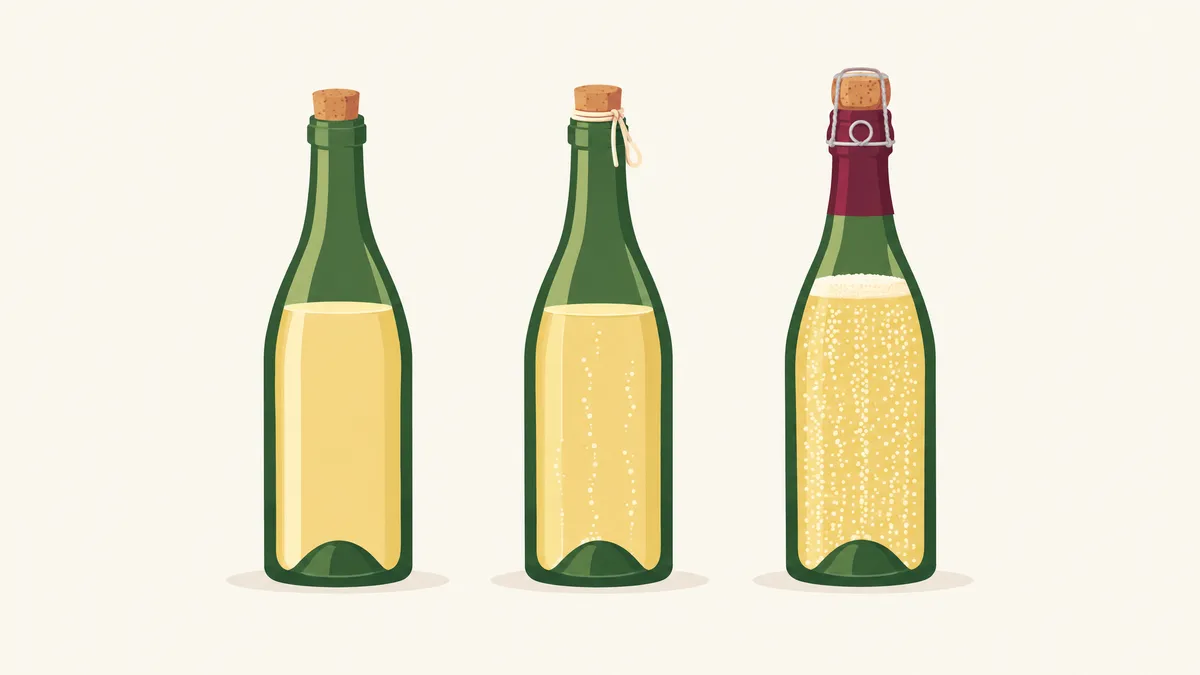
Frizzante means gently sparkling and spumante means fully sparkling; tranquillo means still. In EU wine law a semi-sparkling wine has 1 to 2.5 bar of carbon dioxide pressure at 20°C, a sparkling wine at least 3 bar, and a quality sparkling wine at least 3.5 bar. Spumante in bottles over 0.2 litres must wear a mushroom cork held by a wire cage. Frizzante usually wears a flush cork, a string-tied cork, a screw cap or a crown cap. Prosecco and Lambrusco come in both styles, and Moscato d'Asti is the frizzante sister of Asti. Neither word is a quality grade.
How Do You Read the Fizz Level on an Italian Label?
Read the style word first, then check the closure. Tranquillo, frizzante and spumante each match a legal pressure band, and each band has its own closures. The two clues almost always agree, so together they tell you how much gas is in the bottle before you buy it or pull the cork.
| Label word | Pressure at 20°C | Closure you will see | In the glass | Do this |
|---|---|---|---|---|
| Tranquillo | Under 1 bar | Ordinary cork or screw cap | No bubbles | Treat it as any still wine |
| Frizzante | 1 to 2.5 bar | Flush cork, string-tied cork, screw cap or crown cap | A light prickle and slow bubbles; any froth fades in seconds | Open it like a still wine, pour into a white wine glass, serve with lunch or salumi |
| Spumante | At least 3 bar | Mushroom cork under a wire cage and foil | Steady streams of bubbles and a ring of foam | Keep a thumb on the cork while you loosen the cage |
| Spumante di qualità | At least 3.5 bar | Mushroom cork under a wire cage and foil | Steady streams, with a little more push than plain spumante | Chill it well and pour slowly down the side of the glass |
| Champagne-style, for comparison | Usually 5 to 6 atmospheres | Mushroom cork under a wire cage and foil | Dense bubbles and a creamy foam | Open as gently as any full sparkler |
Quality sparkling wine from listed aromatic grapes, such as Moscato, has its own class with a 3 bar floor.
If a full-size bottle has no wire cage, it is not a spumante. Some traditional frizzante wines, Lambrusco among them, may use a caged cork, so a cage plus the word frizzante still means gentle fizz.

Quick check
One question on what you just read
Two Italian bottles both say secco: a frizzante and a spumante. Which one has less sugar?
Tap an answer to see how you did.
How Much Pressure Is in a Bottle of Frizzante?
Between 1 and 2.5 bar at 20°C, which is at most about half of a Champagne-style wine's usual 5 to 6 atmospheres. The law measures excess pressure (the push of dissolved carbon dioxide above the air outside the bottle) in a closed bottle at that temperature.
A bar is a unit of pressure almost equal to one atmosphere: one atmosphere is 1.013 bar.

Some websites put frizzante at 2.5 to 3.5 bar and spumante at 5 to 6. Neither figure matches the EU definitions in Regulation 1308/2013, which Italian labels follow. A wine at 3 bar is already spumante by law, and Champagne's 5 to 6 atmospheres sits well above that floor.
The law leaves a gap between 2.5 and 3 bar, with no fizz category inside it. Producers aim for one side or the other, because the side decides the bottle, the closure and the sweetness words. In the mouth, the step feels like going from lightly sparkling water to a fully carbonated soda.
Why Does the Closure Give the Fizz Level Away?
Because EU law makes spumante wear a mushroom cork under a wire fastening, and largely keeps that closure off other wines. The rule covers every spumante class in bottles over 0.2 litres, and the stopper must be held by a fastening and sheathed in foil.
Other drinks may not use that bottle and closure unless a member state allows it for a drink traditionally bottled that way, and only if it does not mislead buyers. That exception is why some frizzante wines, including many Lambruscos, wear a cage.
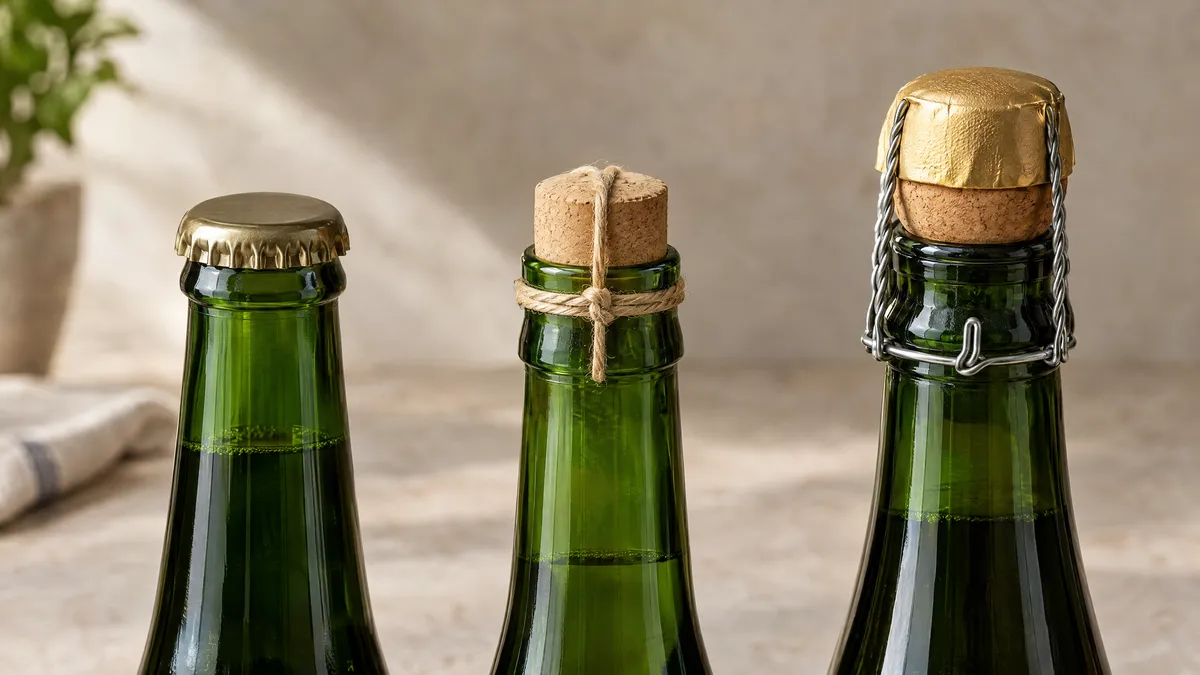
The Prosecco rules list the frizzante options. Prosecco frizzante may use a flush cork, natural or synthetic, a screw cap, or a cylindrical cork tied down with the traditional string. A crown cap, the metal top of a beer bottle, is allowed for wine refermented in its bottle, and in a few other cases.
If the cork is tied with string, untie it and pull it like a still-wine cork. If it sits under a cage, treat it as a full sparkler unless the label says frizzante.
Does Secco Mean Dry on Both?
No. On a spumante, secco allows 17 to 32 grams of sugar per litre; on a frizzante it allows at most 4, or 9 if the wine has enough acidity. Spumante follows the EU sparkling-wine sweetness scale and frizzante follows the still-wine scale, so one Italian word names two different amounts of sugar.
| Label word | On a spumante (g/l sugar) | On a frizzante or still wine (g/l sugar) |
|---|---|---|
| Brut nature / dosaggio zero | Under 3 | Not used |
| Extra brut | 0 to 6 | Not used |
| Brut | Under 12 | Not used |
| Extra dry | 12 to 17 | Not used |
| Secco | 17 to 32 | Up to 4, or up to 9 with enough acidity |
| Abboccato | 32 to 50 | Up to 12, or up to 18 with enough acidity |
| Amabile | Not used | Up to 45 |
| Dolce | Over 50 | At least 45 |
Residual sugar (grape sugar left unfermented, measured in grams per litre) tastes less sweet in sparkling wine, because the acidity and the bite of the gas cut it. That is why the sparkling scale sits higher, though a secco spumante still tastes off-dry to most people. The wine sweetness scale places these terms next to French and German ones.
Is Prosecco Frizzante or Spumante?
Both, and a still version too. The Prosecco DOC rules list plain Prosecco, Prosecco spumante, Prosecco spumante rosé and Prosecco frizzante, each with its own method and sweetness range. Spumante runs from brut nature to demi-sec, frizzante from dry to sweet. Most bottles sold abroad are spumante under a caged cork.
The method differs by style. Prosecco spumante must be made by fermentation in an autoclave (a sealed pressure tank, also called the tank method), which keeps the fruit of the Glera grape fresh. Prosecco frizzante may be made in a tank or by a second fermentation in its own bottle.
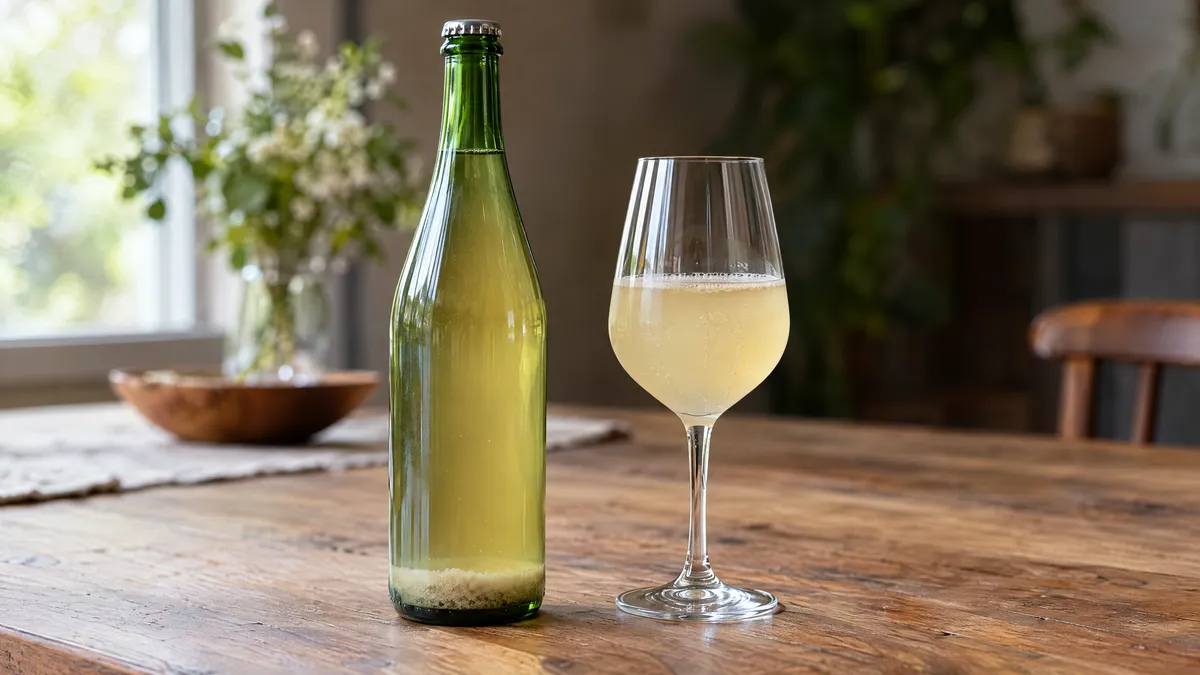
The bottle-fermented frizzante is the old farmhouse style. The rules accept that it may be hazy and require the label to say "rifermentazione in bottiglia" (refermented in the bottle). Its smell may carry bread crust and yeast, and its taste is dry.
If a Prosecco has a crown cap and the label says rifermentazione in bottiglia, expect a cloudy, dry, gently fizzy wine with yeast at the bottom. Stand it upright for a few hours and pour it clear, or roll it to mix the haze in.
The Champagne vs Prosecco vs Cava comparison sets the spumante against the other big sparklers.
Where Do Lambrusco and Moscato d'Asti Fit?
Most Lambrusco is frizzante, and Moscato d'Asti is the frizzante version of Asti, the fully sparkling wine from the same grape and hills. Both show the gentle style as a tradition in its own right, with its own sweetness words and its own food.
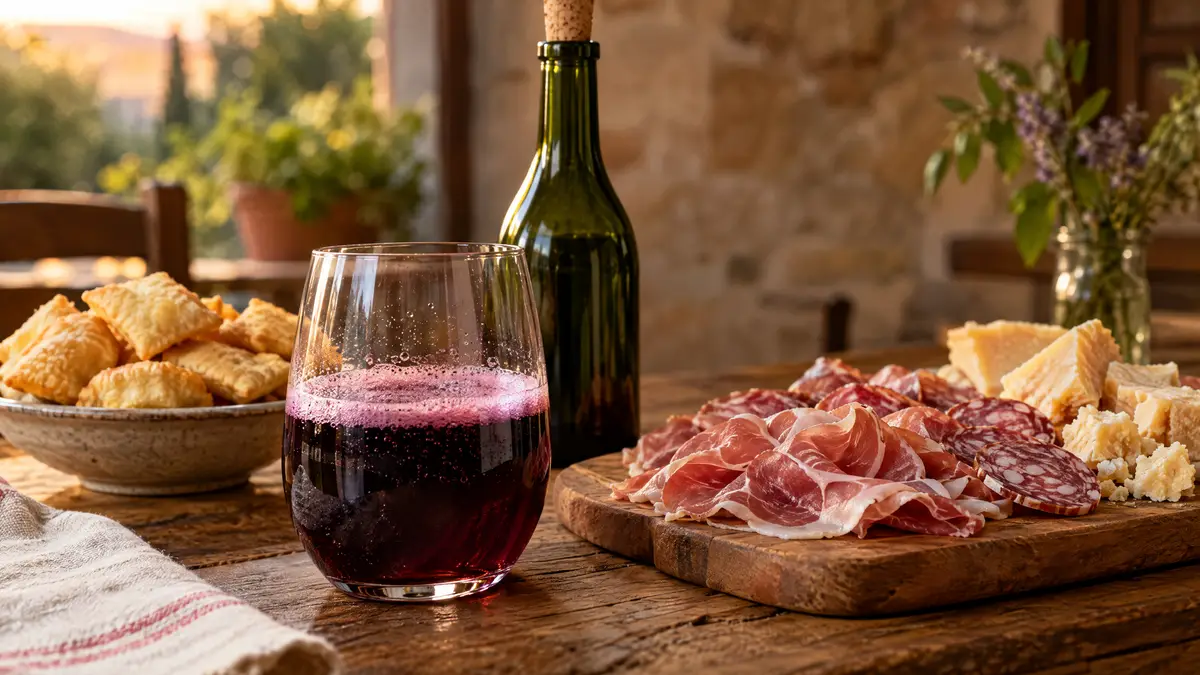
Lambrusco is a red, mainly from Emilia-Romagna, usually frizzante, with a violet froth that collapses within seconds. It comes from dry secco to sweet dolce, on the still-wine scale. The few Lambrusco spumanti use the sparkling scale, with Brut as the dry word. The Lambrusco wine guide sorts its grapes and zones.
Moscato d'Asti is the frizzante made from Moscato Bianco in Piedmont: low in alcohol, sweet, and lightly fizzy. Asti is its fully sparkling sibling. The Moscato wine guide covers both, with their alcohol levels.
If the meal is salty cured meat or hard cheese, a dry Lambrusco frizzante works, because the bubbles and acidity scrub the fat. If it is fruit or a light cake, Moscato d'Asti fits, because its sugar matches the dessert's.
How Should You Serve Frizzante and Spumante?
Cold, in a tulip or white wine glass, and opened gently. Both styles taste flat and sweet when warm, so give them time in the fridge; the wine serving temperature chart gives the range for sparkling wine and light whites.
The opening differs. A frizzante with a flush or string-tied cork comes out with a corkscrew or by hand, with a soft sigh. A spumante needs a hand on the cork from the moment the cage is loosened; how to open sparkling wine walks through the safe twist.
A narrow flute hides the smell of both styles. A white wine glass or tulip leaves room for the aromas and keeps the bubbles longer than a wide coupe.
If it is frizzante, pour straight into the glass at a normal speed. If it is spumante, tilt the glass and pour down the side, or the foam will overflow.
Which One Should You Pick?
Pick by the meal and by how much fizz you want, then check the closure to confirm. Frizzante suits food and long lunches, spumante suits the aperitivo and fried snacks, and the sweetness word decides how dry the glass tastes.
- Pick a dry frizzante for a weekday lunch, pizza or a board of salumi, when you want freshness without a toast.
- Pick a brut spumante for an aperitivo or fried food, when you want firm bubbles to cut oil.
- Pick an extra dry Prosecco spumante when you want a touch of sweetness with fruit or spicy snacks.
- Pick Moscato d'Asti for fruit, pastries or a low-alcohol glass after dinner.
- Pick a bottle-refermented frizzante when you want a dry, yeasty, cloudy wine with character.
If the shop shelf shows only place names, the closure is the tiebreaker: string or crown cap means frizzante, cage means spumante unless the label says otherwise. The guide to reading a wine label covers the other words on the same bottle.
Is Frizzante Lower Quality Than Spumante?
No. Frizzante is a pressure class, not a quality grade. Moscato d'Asti, most Lambrusco and the old bottle-fermented Prosecco are all frizzante by design, and each has its own protected name with strict rules on grapes, zone and method.
The law protects the gentle style in a second way. A semi-sparkling wine must get its gas from fermentation; wine fizzed by adding carbon dioxide belongs to separate aerated categories. Within frizzante, method still varies: tank, bottle or, for many a pet-nat, a single fermentation finished in the bottle.
Quality shows in the DOC or DOCG name, the grape and the method. The types of sparkling wine map shows where each Italian fizz sits among the world's methods, and the wine styles hub collects the rest of the family.
The Sommy app at sommy.wine has a bite-sized Italy course alongside its AI-guided tasting mode. Tonight, take the bottle of fizz from your fridge, read its style word and closure, guess its pressure class, then pour a glass and taste to check.
Sources
- Regulation (EU) No 1308/2013, Annex VII Part II: categories of grapevine products (sparkling, quality sparkling, semi-sparkling wine)
- Delegated Regulation (EU) 2019/33, Article 57: closures for sparkling wine
- Delegated Regulation (EU) 2019/33, Annex III: sugar content terms
- Prosecco PDO product specification (English translation)
- Wikipedia: Sparkling wine
Frequently Asked Questions
What is the difference between frizzante and spumante?
Pressure. Under EU law a frizzante, or semi-sparkling wine, holds 1 to 2.5 bar of carbon dioxide pressure at 20°C, while a spumante holds at least 3 bar, and quality spumante at least 3.5. That difference shows in the glass as a light prickle versus steady streams of bubbles, and on the shelf as a simple cork, string or crown cap versus a mushroom cork under a wire cage.
Is frizzante the same as sparkling wine?
Not in law. EU rules treat frizzante as a separate class called semi-sparkling wine, with 1 to 2.5 bar of pressure. Sparkling wine, spumante in Italian, starts at 3 bar. In everyday speech people call both sparkling, but the label term tells you which class the bottle is in, and it also decides which closure and which sweetness words the producer may use.
Is Prosecco frizzante or spumante?
Both, plus a rare still version. The Prosecco DOC rules allow spumante, which must be made in a sealed tank, and frizzante, made in a tank or refermented in its own bottle. Most Prosecco sold abroad is spumante under a caged cork. A full-size Prosecco with a string-tied cork, a screw cap or a crown cap is the frizzante, and a cloudy one says it was refermented in the bottle.
Is frizzante sweeter than spumante?
Not by definition. Frizzante and spumante describe pressure, and both come dry or sweet. The catch is the vocabulary: spumante uses the sparkling-wine scale, where secco means 17 to 32 grams of sugar per litre, while frizzante uses the still-wine scale, where secco means at most 4 grams, or 9 with enough acidity. A secco frizzante is usually drier than a secco spumante.
How many bars of pressure does frizzante have?
Between 1 and 2.5 bar at 20°C, measured as the excess pressure of dissolved carbon dioxide in a closed bottle. A bar is almost the same as an atmosphere, so some sources write 1 to 2.5 atmospheres. Figures of 2.5 to 3.5 bar for frizzante, seen on some websites, do not match the EU definition. Champagne-style wines usually carry 5 to 6 atmospheres.
Is Lambrusco frizzante or spumante?
Mostly frizzante. Lambrusco from Emilia-Romagna is usually a gently fizzy red with a froth that fades within seconds, sold in dry secco to sweet dolce versions. A smaller number of Lambruscos are made fully sparkling and labelled spumante, which means at least 3 bar of pressure, a caged mushroom cork and the sparkling sweetness scale, where Brut is the usual dry word.
Why does frizzante have a string or crown cap instead of a wire cage?
Because EU rules reserve the caged mushroom cork for sparkling wine. Spumante in bottles over 0.2 litres must wear a mushroom stopper held by a fastening, and other drinks are kept off that closure unless a country allows it for a traditional style. The Prosecco rules, for example, let frizzante use a flush cork, a screw cap, a string-tied cork, or a crown cap for bottle-refermented wine.
Sommy Team
LinkedInFounder & Wine Educator
The Sommy Team is building the world's most approachable wine education app, helping beginners develop real tasting skills through structured courses and AI-guided practice.