How to Open Sparkling Wine Safely: Sabering Not Required

By the Sommy Team — AI-assisted, human-edited.
Updated Oct 1, 2026
Contents (9)
- How to Open Sparkling Wine, in One Paragraph
- How Do You Open Sparkling Wine Step by Step?
- How Cold Should the Bottle Be Before You Open It?
- Why Turn the Bottle and Not the Cork?
- What If the Cork Is Stuck, Snaps or the Wine Gushes?
- How Dangerous Is a Flying Cork?
- How Do You Open Pet-Nat, Screwcap and Plastic-Stopper Bottles?
- Should You Saber a Bottle?
- How Do You Keep Leftover Sparkling Wine Fizzy?
TL;DR
Open sparkling wine cold, at 7°C (45°F) or below. Keep a palm on the cork, loosen the wire cage but leave it on, cover the top with a towel, tilt the bottle to 45 degrees away from people, and turn the bottle, not the cork. The cork should leave with a soft hiss.
How to open sparkling wine comes down to one fact: the cork can sit on gas at up to two to three times the pressure of a car tyre. So the safe way to open it is a cold bottle, a hand on the cork and a slow turn of the bottle, until the gas leaves with a soft hiss.
How to Open Sparkling Wine, in One Paragraph
Chill the bottle to 7°C (45°F) or colder and do not shake it. Remove the foil, put your palm on the cork, and untwist the wire cage about six half-turns. Leave the cage on. Drape a towel over the top and tilt the bottle to 45 degrees, pointed at a wall rather than a person. Hold the cork and cage firmly with one hand and turn the base of the bottle with the other. When you feel the cork push back, hold it harder and let it ease out. Keep the bottle tilted for a second or two, then pour.
If the bottle has a cork and a wire cage, this method opens it, whether it holds Champagne, Prosecco or Cava. The types of sparkling wine differ in taste and pressure, and every one of them opens the same way.
How Do You Open Sparkling Wine Step by Step?
Chill the bottle, loosen the cage without removing it, cover the cork with a towel and your palm, tilt the bottle to 45 degrees, and turn the bottle until the cork eases out. Done this way, the cork leaves your hand with a soft hiss after a few slow turns, and almost no wine is lost.
| Step | What to do | Why it matters |
|---|---|---|
| 1. Chill | Bring the bottle to 7°C (45°F) or colder; never shake it | Less gas waits under the cork, so it leaves slower |
| 2. Foil off | Peel or cut the foil below the cage | Your fingers can feel the cage and cork clearly |
| 3. Palm on top | Press a palm on the cork before touching the wire | A loosened cork can move on its own |
| 4. Loosen the cage | Untwist the wire loop about six half-turns; leave the cage on | The cage becomes a grip and a last restraint |
| 5. Towel and tilt | Drape a towel over the top; tilt to 45 degrees, away from people | The towel catches the cork; the angle gives the gas a wide surface |
| 6. Turn the bottle | Hold cork and cage still, turn the base slowly | Your grip on the cork stays steady while the seal breaks |
| 7. Hold the angle | Keep the bottle tilted for a second or two, then pour | The gas escapes without pushing wine out |
The wire cage has a name: the muselet, from the French for "muzzle". Its loop is twisted shut, and about six half-turns loosen it enough to lift over the lip of the bottle.
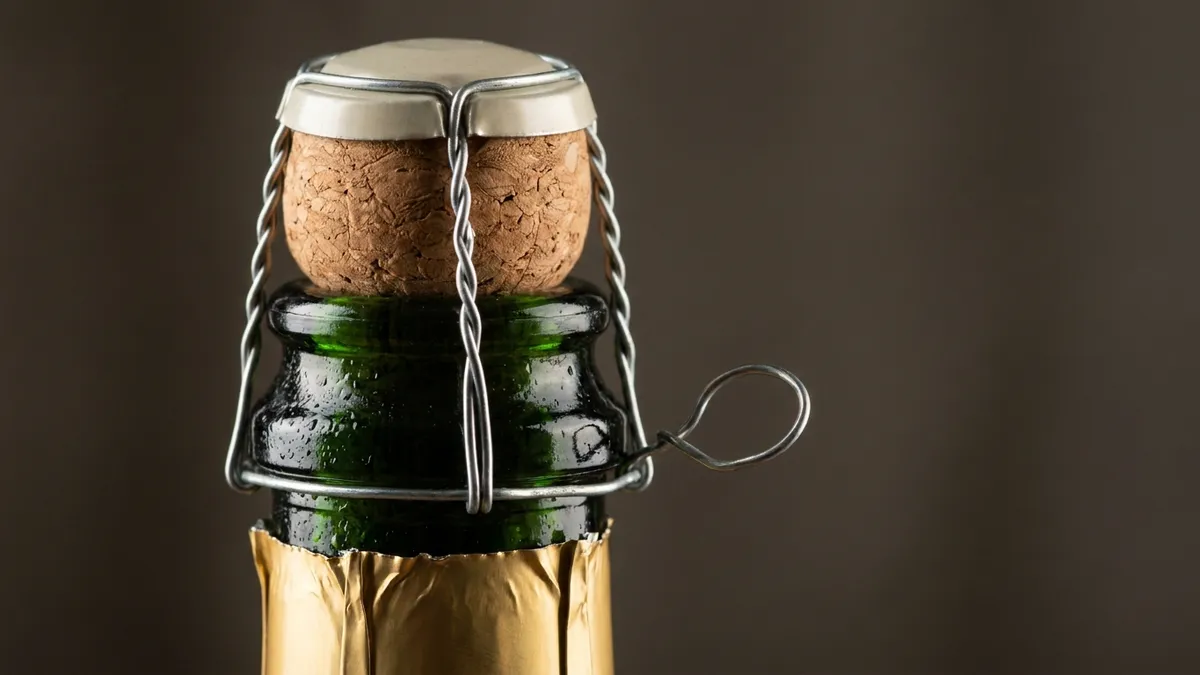
If anyone is sitting in front of the neck, turn your body until the bottle points at a wall or an empty corner before you start step 6. The corkscrew guide covers still wine; none of its tools are needed here.
How Cold Should the Bottle Be Before You Open It?
Chill it to 7°C (45°F) or colder, the threshold the American Academy of Ophthalmology gives in its cork-safety advice. Most sparkling wine is served around that temperature anyway, as the serving temperature chart shows, so a bottle that tastes right is also one that opens calmly.
Temperature works through the gas. Cold wine holds more carbon dioxide dissolved in the liquid, so less of it sits as pressure under the cork. Researchers at the University of Reims filmed corks leaving bottles stored at 4, 12 and 18°C and found cork speed rose with the temperature of the wine.
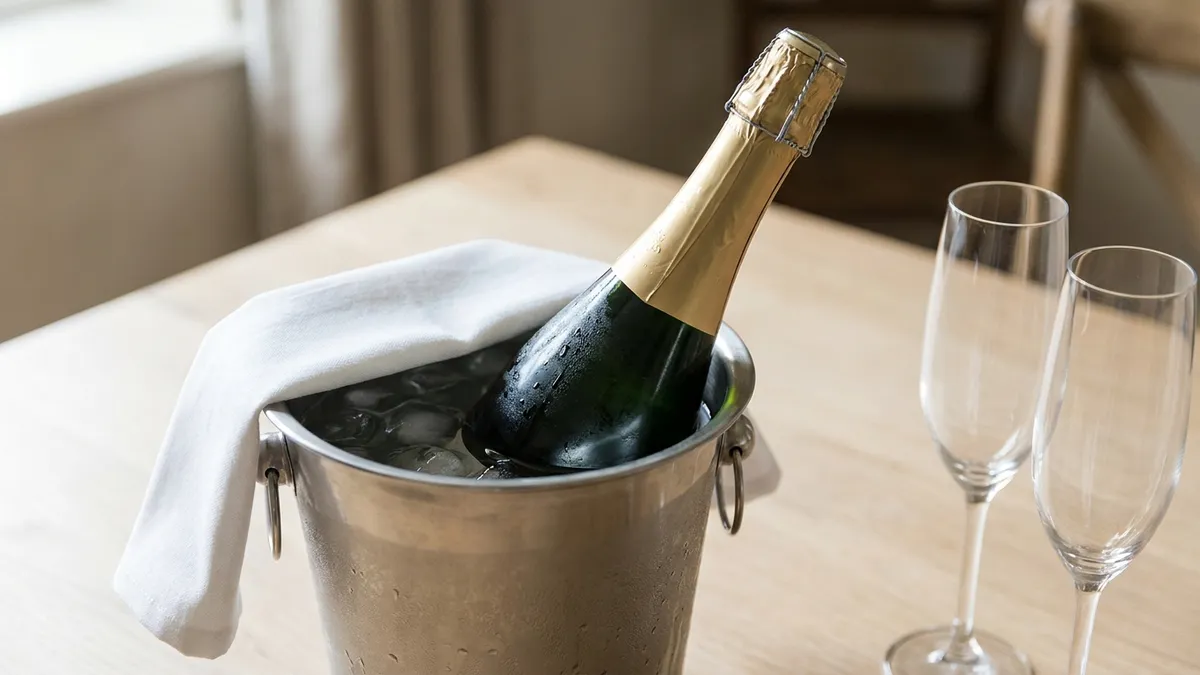
If the bottle has been at room temperature, put it in a bucket of ice and water. Water touches every part of the glass, so it chills far faster than freezer air, and a bottle forgotten in the freezer can freeze, push its cork or crack. Fill the bucket up to the neck so the top of the bottle chills along with the base.
Why Turn the Bottle and Not the Cork?
Because the bottle gives you a big, steady grip, while the hand on the cork stays free to hold it back. Twisting the cork keeps that hand busy turning. When the seal breaks, nothing is pressing down, and the cork shoots out of your fingers.

The goal is a sigh, not a pop. A loud pop is festive, but it is also the sound of gas leaving all at once, carrying foam and some of the bubbles you paid for. Easing the cork out lets the pressure drop slowly, and the 45-degree tilt gives that gas a wide wine surface to leave from instead of a narrow column of liquid.
What If the Cork Is Stuck, Snaps or the Wine Gushes?
Most problems come from a warm or shaken bottle, or a cork that has dried or swollen tight in the neck, and each has a calm fix. Keep the neck pointed away from people through every one of them, and keep the cage on until the cork is out of the bottle.
| Problem | Likely cause | What to do |
|---|---|---|
| Cork will not move | Old or dry cork, gripped tight in the neck | Wrap it in a towel and rock it gently side to side while turning the bottle |
| Mushroom top snaps off | Brittle cork; the stub stays in the neck | Towel over the top, work a corkscrew in slowly, hold the handle firmly as pressure pushes up |
| Wine gushes out | Bottle too warm or recently shaken | Hold at 45 degrees with a glass ready; next time chill longer |
| Cork starts rising early | Pressure pushing it once the cage loosens | Press your palm down hard and finish the opening slowly |
| Bottle was dropped or shaken | Gas has come out of the wine | Rest it still in ice water until it is cold again before opening |
If the cork has not moved after a few firm turns, do not reach for a knife or your teeth. A towel for grip and patience open nearly every stuck cork.
How Dangerous Is a Flying Cork?
Dangerous enough to blind, because a cork carries the force of a lot of compressed gas. A bottle of Champagne typically holds 70 to 90 psi, roughly 5 to 6 atmospheres, which is two to three times the pressure in a car tyre.
A standard 75 cl bottle holds about 9 grams of carbon dioxide, close to 5 litres of gas once it is released. The Reims team measured corks leaving bottles at roughly 10 to 15 metres per second, about 36 to 54 km/h. The American Academy of Ophthalmology puts it at up to 50 miles per hour, fast enough to shatter glass. Its list of injuries from flying corks includes rupture of the eye wall, acute glaucoma, retinal detachment, bleeding inside the eye and a dislocated lens. Some need urgent surgery, and some cause blindness.
How Do You Open Pet-Nat, Screwcap and Plastic-Stopper Bottles?
Treat a crown cap like a beer bottle, a screwcap like any still wine, and a plastic stopper exactly like a cork. The pressure differs between styles, but the safety rules do not: chill the bottle first and keep the opening pointed away from people.
- Crown cap. Many pet-nats are sealed with a crown cap, the metal beer-bottle cap. Use a bottle opener, and lift the cap a little at a time to let gas escape before it comes free. The pet-nat guide explains why these bottles carry more gas surprises.
- Screwcap. Some lighter sparkling wines use one. Twist slowly, and pause when you hear gas so it leaves before the cap does.
- Plastic stopper. Common on inexpensive sparkling wine, under the same wire cage. It sits under the same pressure as a cork, so use the full method above.
If the cap is a crown cap, open it over the sink. Pet-nat often carries lees (spent yeast left in the bottle), and the particles give bubbles places to form, so these bottles foam over more readily than most. The screw cap vs cork comparison covers what each closure does to still wine.
Should You Saber a Bottle?
No. Sabrage (opening a bottle by striking the neck with a blade) is a party trick with a glass-shard risk, and the wine tastes no different. The popular story credits Napoleon's hussars, who opened Champagne on horseback, but no one has confirmed it.
The trick works on a weak point. The lip of the bottle and the faint vertical seam in the glass both concentrate stress, and where they meet, the strength of the glass falls by more than half. A blade striking that spot snaps the neck clean off, cork and all.
The cost is broken glass. Small shards can cling to the neck, so the bottle is poured briefly to rinse them away and the first glass should be checked. A towel and a firm hand open the same bottle with no glass and less wine on the floor.
How Do You Keep Leftover Sparkling Wine Fizzy?
Clamp a proper sparkling wine stopper on it and keep it in the fridge. The spoon trick is a myth: a metal spoon hanging in the neck seals nothing, so the gas keeps leaving. Cold helps for the same reason it helps at opening: chilled wine keeps more of its gas dissolved.
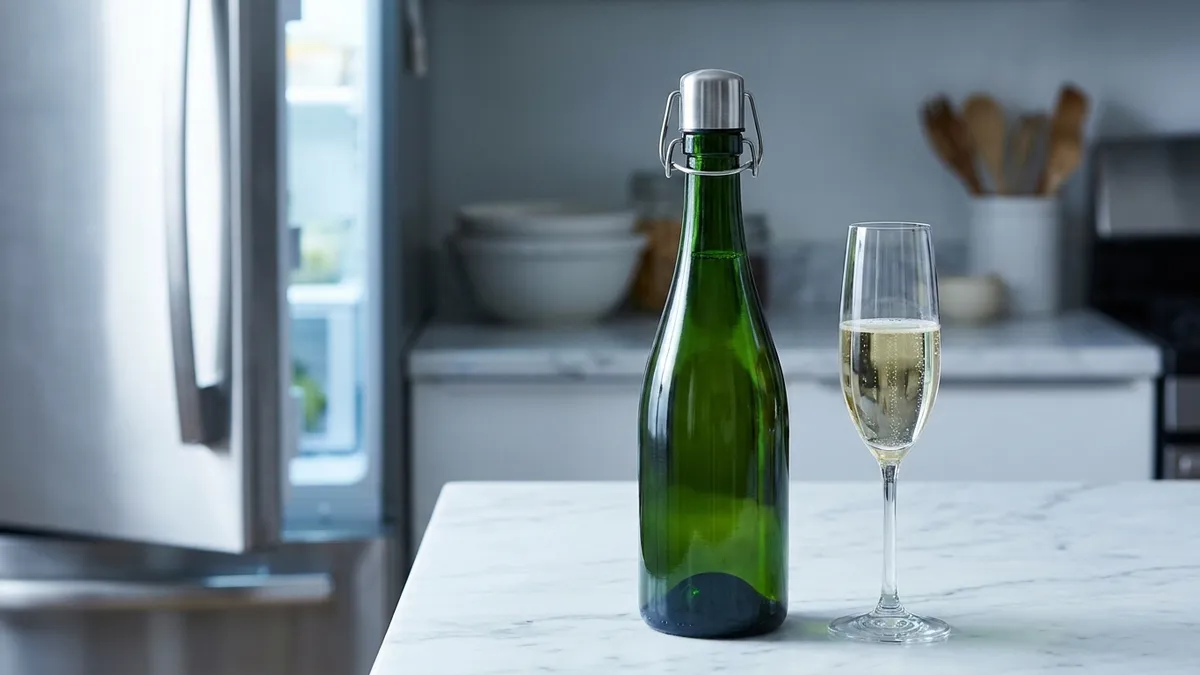
A sparkling stopper hooks under the lip of the neck, so the pressure cannot push it off. If you have no stopper, plan to finish the bottle the same evening. The wine preservation tools guide compares stoppers and other gear, and how long wine lasts after opening gives timings by style.
The bubbles you saved deserve a good glass and a proper look; the sparkling wine tasting guide shows what to watch for, and the serving storage hub gathers the rest of the serving basics. The Sommy app has a Wine 101 course with bite-sized lessons on serving and tasting. Tonight, put a bottle in ice water up to the neck, then open it with a towel over the cork and listen for the hiss.
Sources
- American Academy of Ophthalmology via ScienceDaily: Flying champagne corks cause serious, blinding eye injuries
- Liger-Belair et al., Champagne cork popping revisited through high-speed infrared imaging: the role of temperature, Journal of Food Engineering (2013)
- Wine Folly: How to Open Champagne Safely
- The Physics Factbook: Pressure in a Champagne Bottle
- Wikipedia: Sabrage
Frequently Asked Questions
How do you open sparkling wine without it exploding?
Start with a cold, still bottle: 7°C (45°F) or colder and never shaken. Keep a palm on the cork while you loosen the cage, cover the top with a towel, tilt the bottle to 45 degrees away from anyone, and turn the bottle slowly while holding the cork back. The cork should ease out with a hiss, and the gas escapes without dragging wine with it.
Should you take the wire cage off a sparkling wine bottle?
No. Loosen it, about six half-turns of the wire loop, and leave it on the cork. The cage gives your hand something solid to grip and stops the cork escaping if it starts moving before you are ready. Once the cage is loose, your palm should not leave the top of the bottle until the cork is out.
How fast does a champagne cork fly?
Fast enough to injure an eye. Measurements at the University of Reims put cork speeds at roughly 10 to 15 metres per second, about 36 to 54 km/h, rising as the wine gets warmer. The American Academy of Ophthalmology says a cork can leave the bottle at 50 miles per hour, fast enough to shatter glass.
What do you do if a sparkling wine cork is stuck?
Keep the bottle pointed away from people and the cage loosened but on. Wrap a towel around the cork for grip, then rock it gently side to side while turning the bottle. A stuck cork is usually old, dry or swollen tight in the neck. Never point the neck at your face to see what is happening.
Why does my sparkling wine foam over when I open it?
Because the bottle was too warm or was shaken. Warm wine holds less dissolved carbon dioxide, so more gas waits under the cork, and shaking gives bubbles places to form. Chill the bottle well, let a jostled one rest still in ice water, and hold the bottle at 45 degrees for a second or two after the cork comes out.
Is sabering a champagne bottle safe?
It is risky and adds nothing to the wine. Sabering breaks the glass neck where the seam meets the lip, so tiny shards can stay in the bottle; the first glass poured should be checked for them. A towel and a firm hand open the same bottle with no broken glass and less wine lost.
Does a spoon in the neck keep sparkling wine fizzy?
No. The spoon trick is a myth: a metal spoon does not seal the bottle, so gas keeps escaping. A proper sparkling wine stopper that clamps under the lip of the neck works much better, especially kept in the fridge, where cold wine holds on to its dissolved gas.
Sommy Team
LinkedInFounder & Wine Educator
The Sommy Team is building the world's most approachable wine education app, helping beginners develop real tasting skills through structured courses and AI-guided practice.