How Many Glasses in a Bottle of Wine? A Pour-Size Guide

By the Sommy Team — AI-assisted, human-edited.
Updated Sep 24, 2026
Contents (11)
- How Many Glasses in a Bottle of Wine, in One Paragraph
- How Many Glasses Does a 750 ml Bottle Pour at Each Size?
- Is a Glass of Wine 5 oz or 6 oz?
- How Do You Pour a Consistent Glass at Home?
- How Many Glasses Are in a Bottle of Champagne?
- How Many Glasses Are in a Bottle of Dessert or Fortified Wine?
- How Many Glasses Are in a Magnum or Larger Bottle?
- How Many Bottles of Wine Do You Need for a Party?
- Is a Glass of Wine the Same as a Standard Drink?
- Why Is a Wine Bottle 750 ml?
- Pour One Measured Glass Tonight
TL;DR
A standard 750 ml bottle of wine pours five glasses at the 150 ml (5 oz) US restaurant measure and six at the 125 ml pour. A 175 ml UK glass gets about four. Sparkling wine follows the same math, dessert wine stretches further, and a magnum doubles every count.
How many glasses in a bottle of wine comes down to one number: the size of the pour. A standard bottle always holds 750 ml. At 150 ml a glass, the usual US restaurant pour, it fills five glasses. At 125 ml it fills six. A big 175 ml UK-style glass gets about four.
Once the pour size is fixed, every other count becomes simple division. That includes champagne, dessert wine, magnums and how many bottles to buy for a party.
How Many Glasses in a Bottle of Wine, in One Paragraph
A standard wine bottle holds 750 ml, or 25.36 US fluid ounces. At the 150 ml (5 oz) pour typical of US restaurants, that bottle gives five glasses. At the 125 ml pour, one sixth of a bottle, it gives six. A UK medium glass of 175 ml gets four with a little left, a large 250 ml glass gets three, and a tasting pour of about 75 ml stretches a bottle to ten.
Sparkling wine follows the same math, because the bottle is the same size. Dessert and fortified wines go further, since they are poured smaller. A magnum holds two bottles, so it doubles every count. For planning, divide the total millilitres you need by 750 and round up.
How Many Glasses Does a 750 ml Bottle Pour at Each Size?
Five glasses at 150 ml, six at 125 ml, about four at 175 ml and three at 250 ml. The bottle never changes. The count moves because pour sizes differ between countries, venues and occasions, from a 50 ml tasting-glass measure to a 250 ml pub glass.
| Pour | Size | Glasses per 750 ml bottle | Where you meet it | Use it when |
|---|---|---|---|---|
| ISO tasting pour | 50 ml | 15 | Formal tasting panels | Comparing many wines side by side |
| Tasting pour | About 75 ml (2.5 oz) | 10 | Winery and shop tastings | Hosting a tasting flight at home |
| Small / modern standard | 125 ml (4.2 oz) | 6 | UK small glass, sparkling flutes | Pouring for a toast or a long dinner |
| US standard | 150 ml (5 oz) | 5 | US restaurants, NIAAA standard drink | Planning bottles for any dinner |
| UK medium | 175 ml (5.9 oz) | About 4 | UK pubs and bars | Checking what a bar glass really holds |
| UK large | 250 ml (8.5 oz) | 3 | UK pubs and bars | Knowing a third of the bottle is gone |
For most home planning the 150 ml row is the one to remember. It is the pour a US restaurant sets, the pour US drink guidance uses, and it divides the bottle into clean fifths.
Is a Glass of Wine 5 oz or 6 oz?
Five ounces is the US standard: 150 ml, one fifth of the bottle. It is the typical restaurant pour and the volume the US National Institute on Alcohol Abuse and Alcoholism (NIAAA) uses for one standard drink of wine. A 6 oz glass is closer to the UK medium pour of 175 ml, which is 5.9 US fluid ounces.
The popular line that a bottle holds "six glasses" is a pour convention, not a fixed law. It comes from the 125 ml pour, which is one sixth of a bottle and about 4.2 US fluid ounces. Wine-glass references describe it as the modern standard pour.
The three sizes line up like this:
- 125 ml (4.2 oz): six per bottle, the UK small glass and a typical sparkling pour.
- 150 ml (5 oz): five per bottle, the US restaurant and standard-drink pour.
- 175 ml (5.9 oz): about four per bottle, the UK medium glass.
Pick 150 ml as your planning number. It matches US restaurant service and US drink guidance, and a guest who expects a "normal glass" in North America expects roughly that much. If you pour 125 ml, count six and top up more often.
How Do You Pour a Consistent Glass at Home?
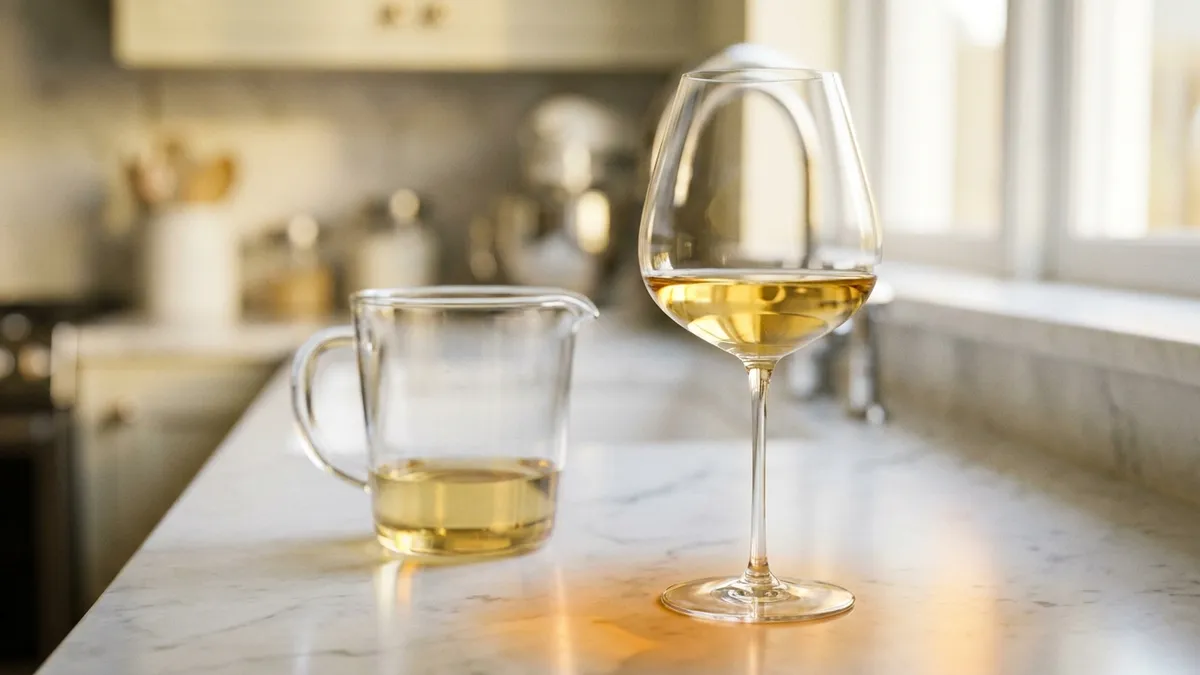
Measure 150 ml of water once, pour it into your usual glass and note where it reaches. That line is your five-glass pour for life. Pouring by eye fails because modern glasses are large, and a correct pour fills only the lower part of the bowl.
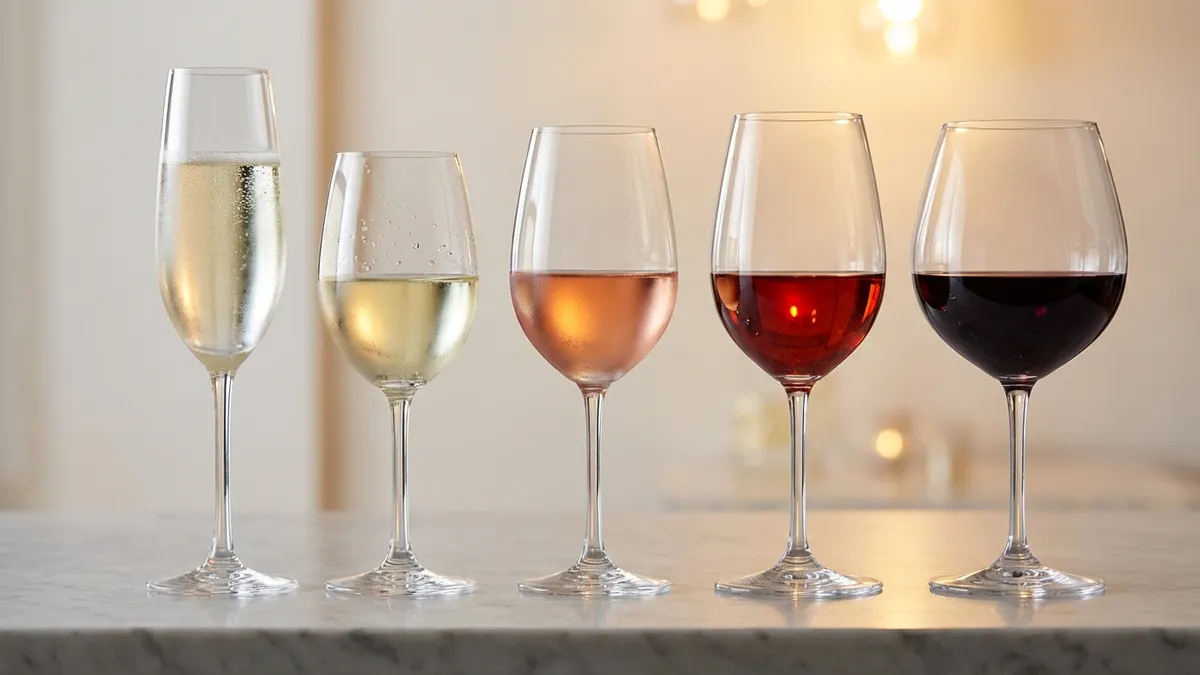
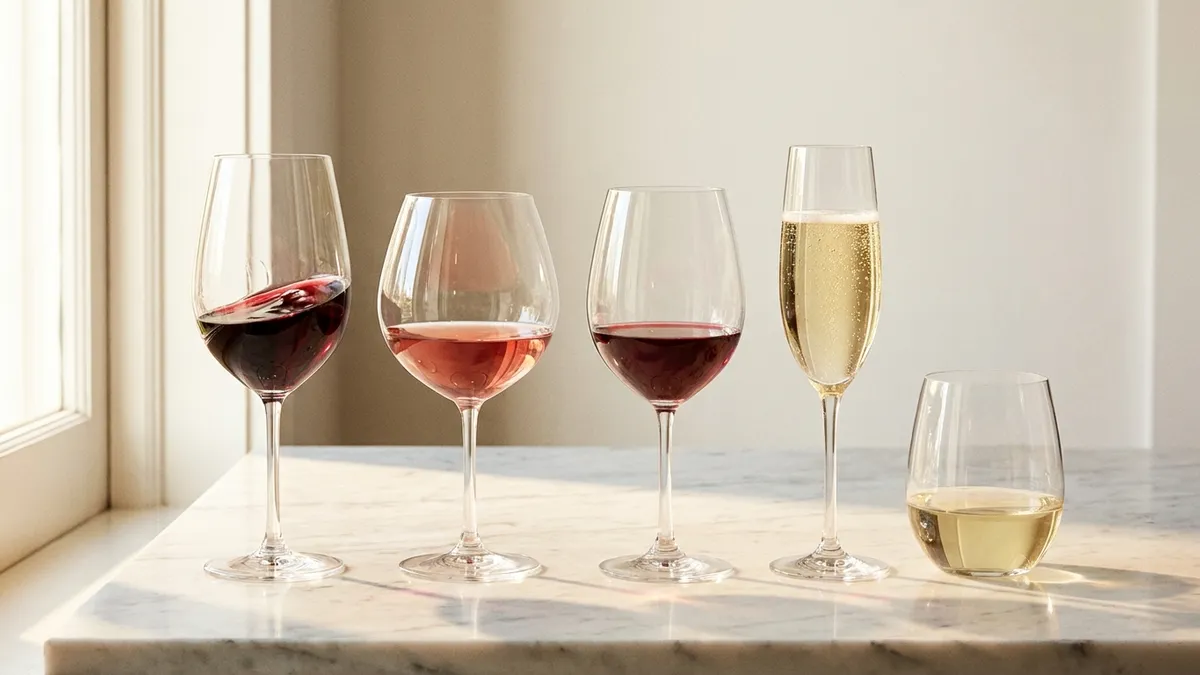
The mismatch is built into glass design. The ISO tasting glass, the standard used by tasting panels, holds 210 to 225 ml in total, yet it is meant for a 50 ml pour. Everyday red-wine glasses are often far bigger. The empty space above the wine is where aroma gathers when you swirl, so a half-full bowl holds far more than one pour. The wine glass guide covers which shapes suit which wines.
If your glasses are large, measure with water once rather than trusting the fill. If you pour for guests, pour the first glass against your marked line and match the rest to it by eye, standing the glasses side by side.
How Many Glasses Are in a Bottle of Champagne?
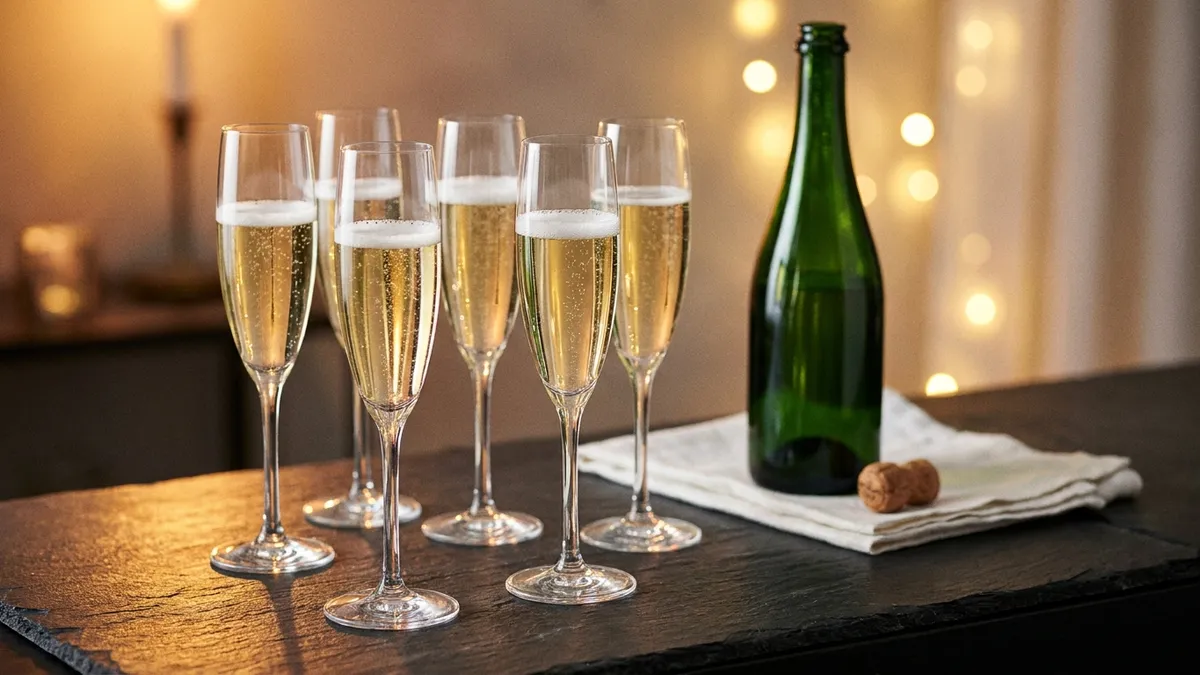
Six flutes, if each gets 125 ml, because a sparkling bottle holds the same 750 ml as still wine. Champagne is fermented mostly in two sizes, standard 750 ml bottles and 1.5 litre magnums, so the same division works for both.
Sparkling pours tend to be smaller than still-wine pours for a practical reason. A flute is narrow, and the foam rises fast, so a 150 ml pour is hard to fit without overflow. Pour a third of the glass, wait for the foam to settle, then top up. Two stages give each guest a full measure of wine instead of froth. The sparkling wine types guide explains how Champagne, Prosecco and Cava differ in the glass.
If the bottle is for a single toast, one bottle covers six guests. If the toast runs into dinner, count at the 150 ml rate instead.
How Many Glasses Are in a Bottle of Dessert or Fortified Wine?
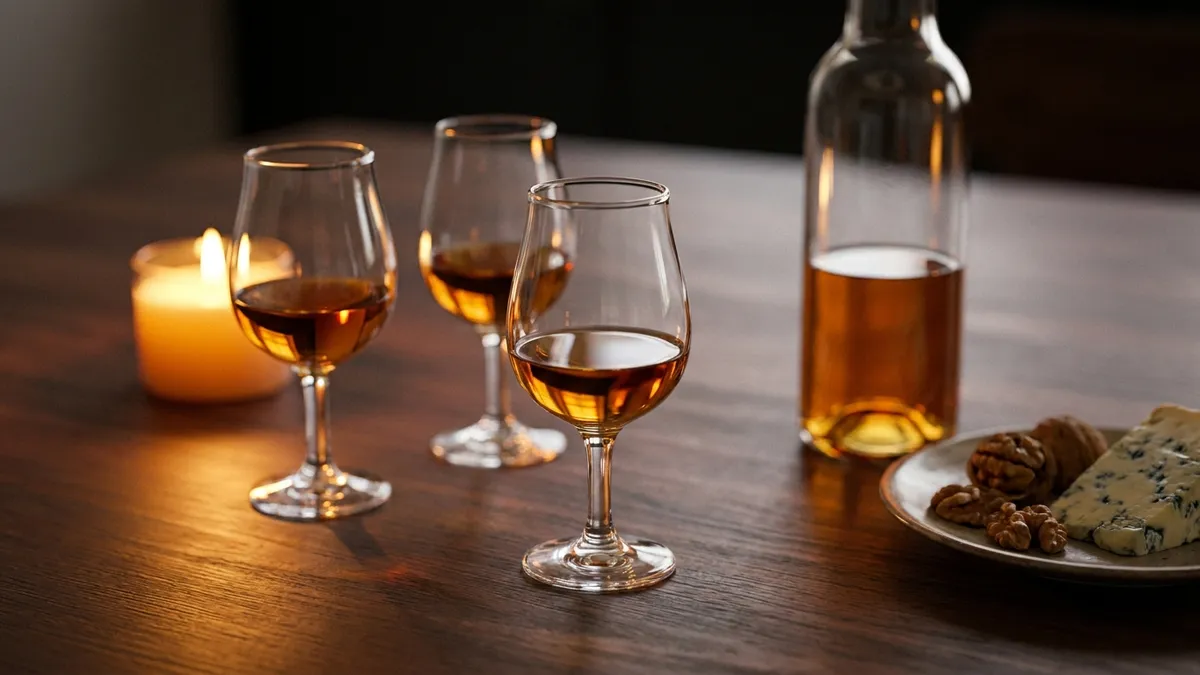
More than a table wine, because these rich, often stronger wines are traditionally poured in smaller measures. ABV (alcohol by volume, printed on the label) explains why. Table wine is most often 12.5 to 14.5% ABV. Many dessert wines run from 14 to 25%, though some ice wines sit below 10%. Fortified wines, such as Port and Sherry, have grape spirit added and usually sit between 15 and 22%.
For the stronger styles, a smaller glass keeps the alcohol in each serving closer to a table-wine glass. Many sweet wines also come in the half bottle, which holds 375 ml. Half bottles are common for ice wine. At a tasting-size pour of about 75 ml, a half bottle serves five small glasses.
If you serve a sweet wine after dinner, a half bottle covers a table of four or five. If you open a full bottle of Port or Madeira, expect to finish it over several evenings. The dessert wine guide and the Port wine guide cover the styles, and how long wine lasts after opening explains why fortified bottles keep far longer.
How Many Glasses Are in a Magnum or Larger Bottle?
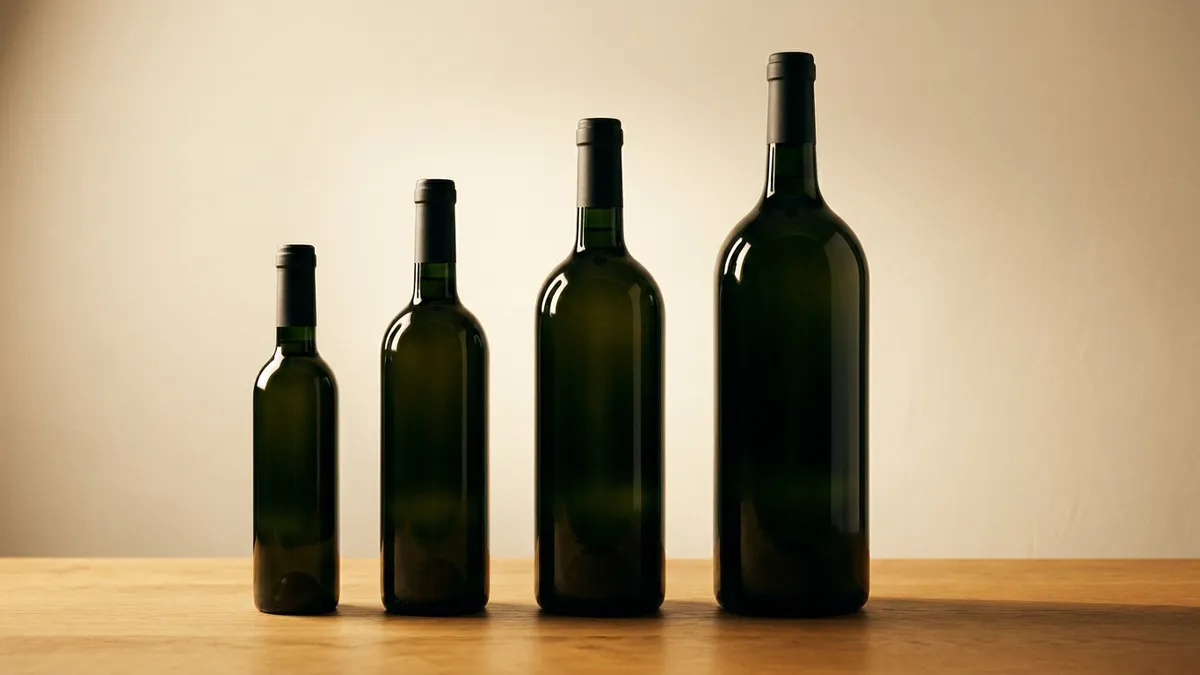
Ten glasses at 150 ml, or twelve at 125 ml, because a magnum holds 1.5 litres, exactly two standard bottles. Every large-format bottle is a multiple of 750 ml, so its glass count is the standard count times that multiple.
| Bottle | Volume | Standard bottles | Glasses at 150 ml | Glasses at 125 ml |
|---|---|---|---|---|
| Split (piccolo) | 187.5 ml | ¼ | 1 | 1 |
| Half bottle | 375 ml | ½ | 2 | 3 |
| Standard | 750 ml | 1 | 5 | 6 |
| Magnum | 1.5 L | 2 | 10 | 12 |
| Double magnum | 3 L | 4 | 20 | 24 |
| Rehoboam | 4.5 L | 6 | 30 | 36 |
| Methuselah | 6 L | 8 | 40 | 48 |
| Salmanazar | 9 L | 12 | 60 | 72 |
| Balthazar | 12 L | 16 | 80 | 96 |
| Nebuchadnezzar | 15 L | 20 | 100 | 120 |
One name causes confusion on wine lists. A Jeroboam means 3 litres in Champagne but 4.5 litres in Bordeaux, so check the volume printed on the label rather than the name.
If you have eight or more at the table, a magnum replaces two bottles and saves a trip to the rack. The biggest formats are mostly show pieces for weddings and large events, where a single bottle serves dozens of guests.
How Many Bottles of Wine Do You Need for a Party?
Multiply guests by glasses each by pour size, then divide by 750. Ten guests who each drink three 150 ml glasses need 4,500 ml, which is six bottles. Serve the same evening in 125 ml pours and you need 3,750 ml, or five bottles.
The number of glasses each guest drinks is the part you have to judge. A short drinks party with snacks needs fewer rounds than a long dinner. Decide the rounds first, then do the sum:
- Toast only: one 125 ml glass each, so one bottle per six guests.
- Dinner party: two or three 150 ml glasses each, so roughly one bottle per two guests.
- Tasting flight: four wines at 75 ml each, so one bottle of each wine covers ten guests.
If the sum ends in a fraction, round up a bottle. An unopened bottle keeps for the next dinner, while running out ends the evening early. If you pour more than one wine, split the total between them rather than buying the full count of each. For a tasting night, how to host a wine tasting at home covers the flight order and setup, and the wine serving temperature chart helps you chill the right bottles in time.
Is a Glass of Wine the Same as a Standard Drink?
Only when the pour is 5 oz and the wine is 12% ABV. That is the NIAAA definition of one US standard drink: a fixed amount of pure alcohol, about 14 grams. Pour more, or pour a stronger wine, and the same glass holds more than one drink.
A glass count measures volume, not alcohol. That matters because much of the wine on the shelf sits above 12%. The UK counts in units of 8 grams of alcohol instead. On the NHS's figures, a 125 ml glass at 12% is 1.5 units, a 175 ml glass is 2.1 units and a 250 ml glass is 3 units. A full 750 ml bottle at 13.5% is 10 units.
So five glasses per bottle tells you how to pour, while the ABV on the label tells you what each glass carries. The standard drink of wine guide works through the alcohol math by country, and alcohol in wine by type shows which styles run high. If the label reads 14% or more, count each 150 ml glass as more than one US standard drink.
Why Is a Wine Bottle 750 ml?
In the United States, because the country adopted the metric system for wine bottles in 1979 and set the basic bottle at 750 ml, matching Europe. The "750 mL" printed on US labels dates from that switch, and it is why an imported bottle and a domestic one pour the same number of glasses.
A popular story says 750 ml was the most a glassblower could blow in one breath. No authoritative source confirms it, so treat it as folklore.
Pour One Measured Glass Tonight
Every count above starts from one habit: knowing what your own glass holds. Measure it once and you can split a bottle evenly, plan a party and read a bar glass for what it holds. If you own two glass shapes, such as a wide bowl and a flute, measure each one, because the same 150 ml sits at a different height in each.
Tonight, fill a measuring jug with 150 ml of water, pour it into the glass you use most and remember the line. Open the next bottle and pour to that height, and you will get five even glasses. When you want to learn what is in those glasses, Sommy has bite-sized courses, from Wine 101 to regions like France and Italy, and more on serving in the serving and storage hub.
Sources
Frequently Asked Questions
How many 5 oz glasses of wine are in a bottle?
Five. A standard bottle holds 750 ml, which is 25.36 US fluid ounces, and a 5 oz glass is 150 ml. Five of those pours empty the bottle with a splash to spare. This is the typical US restaurant pour and the same volume the NIAAA uses for one standard drink of 12% wine, so it is the easiest number to plan around.
How many glasses of wine are in a bottle for two people?
At a 150 ml pour, a bottle gives each of two people two full glasses plus a small top-up. At a 125 ml pour, each person gets three glasses. If you want the second glass to be generous, open a half bottle alongside rather than a second full one.
How many glasses are in a bottle of champagne?
A 750 ml bottle of champagne or other sparkling wine fills six flutes at a 125 ml pour. The bottle holds the same volume as still wine, and Champagne itself is mostly fermented in 750 ml bottles and 1.5 litre magnums. Pour in two stages, letting the foam settle in between, so each flute gets a full measure of wine rather than froth.
How many glasses are in a magnum of wine?
Ten glasses at a 150 ml pour, or twelve at 125 ml. A magnum holds 1.5 litres, exactly two standard bottles, so every glass count simply doubles. A double magnum holds 3 litres and pours twenty 150 ml glasses. Large bottles are worth it for tables of eight or more, since one bottle replaces two or four.
Is a glass of wine the same as a standard drink?
Only when the pour is 5 oz (150 ml) and the wine is 12% alcohol, which is the NIAAA definition of one US standard drink. A bigger pour, or a wine at 14% or more, puts more alcohol in the glass. In the UK, a 175 ml glass at 12% carries 2.1 units and a 250 ml glass carries 3 units.
How many bottles of wine do I need for 10 guests?
Multiply guests by glasses each by pour size, then divide by 750. Ten guests drinking three 150 ml glasses each need 4,500 ml, which is six bottles. At 125 ml pours the same evening needs five bottles. Round up by one bottle whenever the sum ends in a fraction, because an unopened bottle keeps and an empty table ends the party early.
Sommy Team
LinkedInFounder & Wine Educator
The Sommy Team is building the world's most approachable wine education app, helping beginners develop real tasting skills through structured courses and AI-guided practice.