Madeira Wine Guide: The Indestructible Fortified Wine

By the Sommy Team — AI-assisted, human-edited.
Updated Sep 23, 2026
Contents (9)
- What Is Madeira Wine, Exactly?
- What Grapes Is Madeira Made From?
- How Is Madeira Made? Estufagem vs Canteiro
- Is Madeira Sweet or Dry?
- What Do the Age Categories on a Madeira Label Mean?
- Why Doesn't Madeira Go Bad After You Open It?
- Did the Founding Fathers Really Toast the Declaration of Independence With Madeira?
- How Is Madeira Different From Port and Sherry?
- How Do You Serve and Start Tasting Madeira?
TL;DR
Madeira is a fortified wine from a Portuguese Atlantic island, deliberately heated and oxidised during aging so it survives for months after opening. This Madeira wine guide covers the four noble grapes and their sweetness ladder, the workhorse Tinta Negra, estufagem versus canteiro aging, label age categories, and the myth-checked Founding Fathers history.
What Is Madeira Wine, Exactly?
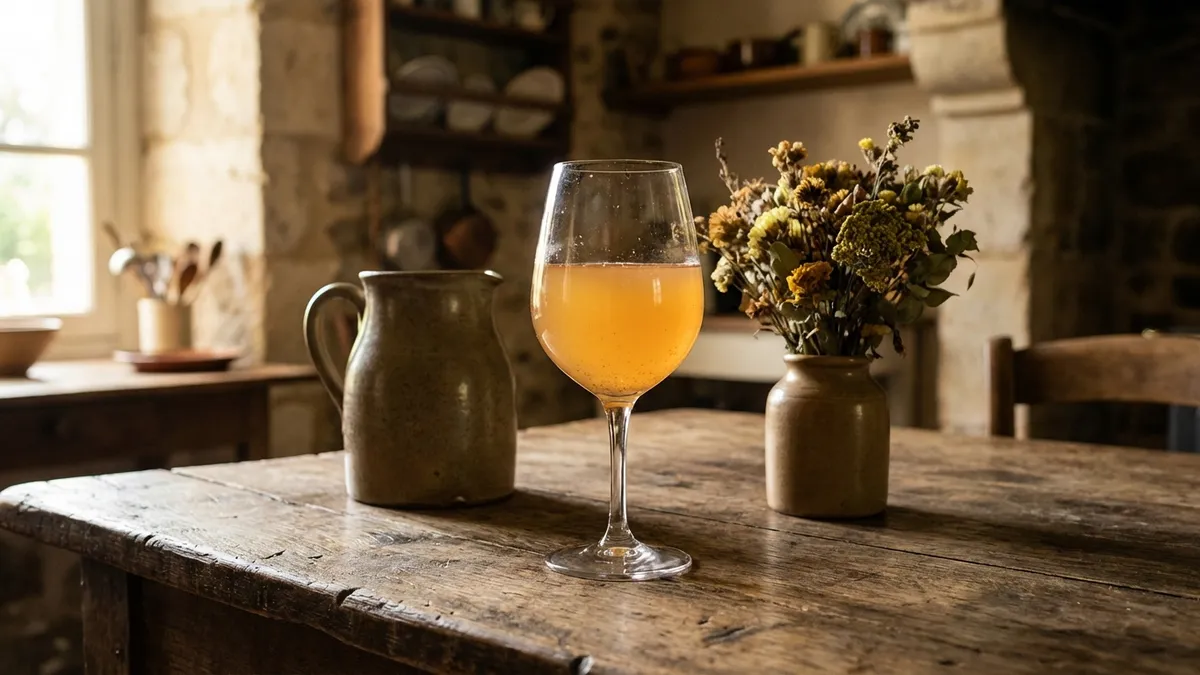
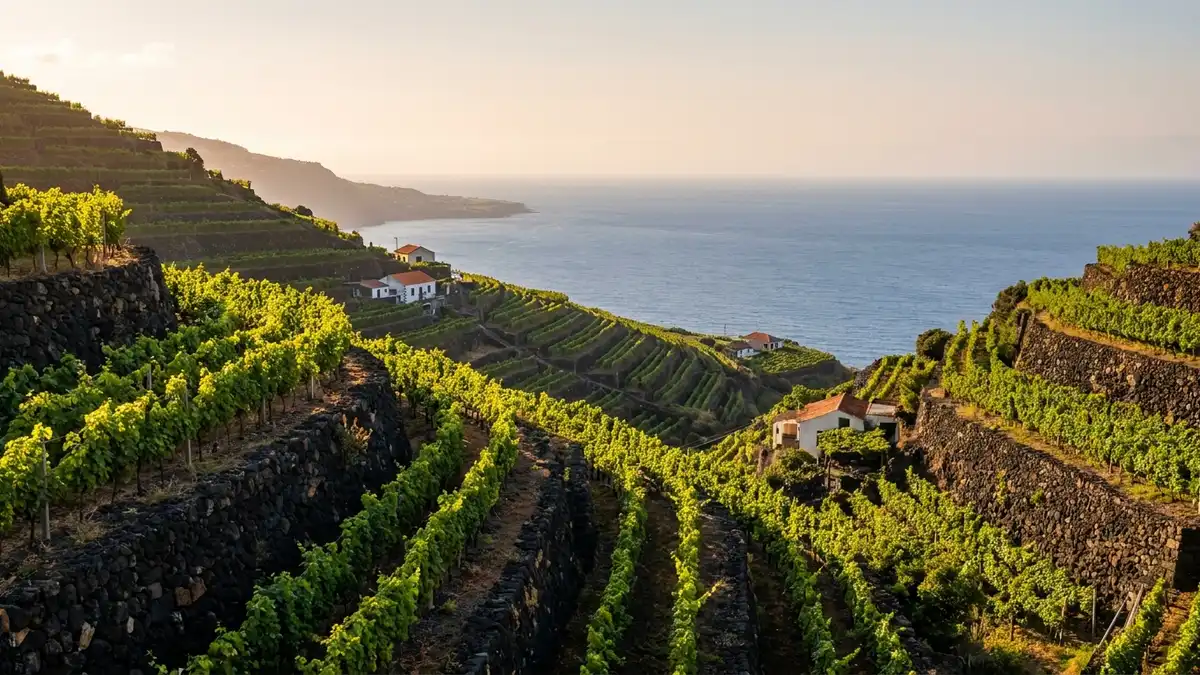
This Madeira wine guide starts with the one fact that explains everything else. Madeira is a fortified wine (a wine with grape spirit added to raise its alcohol) from the Portuguese island of Madeira in the Atlantic, and it is made by doing to the wine on purpose the two things that ruin every other bottle: heating it and exposing it to air. That treatment gives Madeira its signature taste of caramel, dried fruit, smoke and nuts, held up by acidity so sharp it stays fresh even in the sweetest styles. It is made in every sweetness level from bone dry to dessert-rich, carries Protected Designation of Origin status (a legally protected regional name), and is overseen by the island's regulator, IVBAM. Because it has already survived heat and oxygen, an opened bottle lasts for months rather than days.
What Grapes Is Madeira Made From?
Four white grapes, known as the noble grapes of Madeira, give the classic named styles, listed from driest to sweetest: Sercial, Verdelho, Boal (also spelled Bual) and Malvasia (sold as Malmsey in English-speaking markets). Yet the grape behind the large majority of bottles on the shelf is a red one, Tinta Negra, which was only added to the noble list in 2015.
Each of the four traditional grapes maps to one rung on the sweetness ladder:
- Sercial is the brightest and driest, with citrus peel and almond, and the highest acidity of the group.
- Verdelho is medium-dry: smokier, a touch richer and more concentrated than Sercial.
- Boal (Bual) is medium-sweet, with toffee and dried apricot filling out the middle.
- Malvasia (Malmsey) is the richest and sweetest, all caramel, raisin and coffee.
Then there is Tinta Negra, the island's workhorse. It is planted far more widely than any of the four, ripens reliably, and can be made at every sweetness level. It forms the backbone of most 3-year and 5-year blends and many Rainwater bottlings. A useful label rule: if the front label names one of the four noble grapes, you are getting that grape's style; if it names no grape and gives only a sweetness word (dry, medium-dry, medium-sweet, sweet), it is usually Tinta Negra.
Neither route is better. A well-aged Tinta Negra can be delicious. The point is to know which wine you are actually drinking, because most competitor guides present the four noble grapes as the everyday pour when they are, in practice, the premium tier. For the wider story of the country's grapes, see the Portuguese wine guide.
How Is Madeira Made? Estufagem vs Canteiro
Every Madeira is fortified, then aged with heat and oxygen by one of two methods. Estufagem warms the wine in heated tanks called estufas at roughly 45 to 50°C for at least three months. Canteiro uses no artificial heat at all: casks rest in the warm upper floors of the producers' lodges for years, and often decades, warmed only by the island's climate.
Estufagem is the fast, economical route, and it is how most young 3-year and 5-year wines are made. The heat mimics in months what a long sea voyage or a long attic rest would do in years. Canteiro is slower, costlier and used for the premium tiers: the older age categories, most Colheitas, and Frasqueira, which must be canteiro-aged. Because a canteiro cask breathes gently for so long, the wine gains a finer, more layered version of the same cooked character.
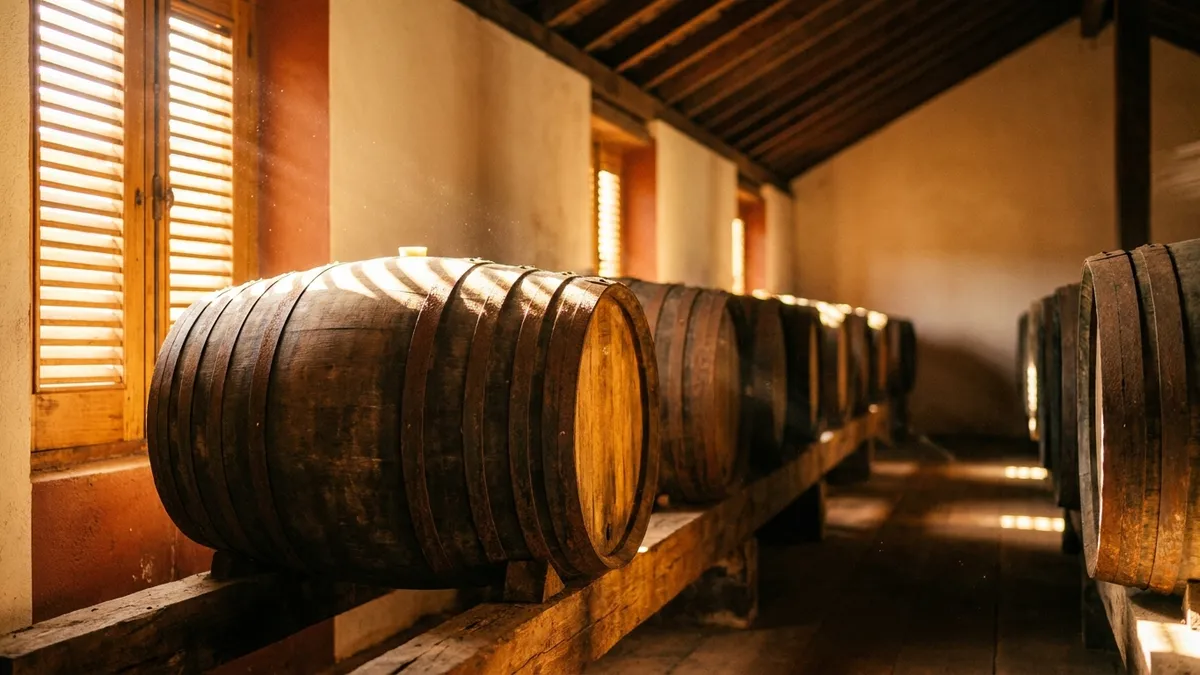
Both methods aim for what the trade calls madeirisation: heat and slow oxidation together produce flavours of dried and cooked fruit, caramel, smoke and rancio (the savoury, nutty, slightly leathery note found in long-aged fortified wines). In any other bottle, those same notes would be a fault. Our explainers on cooked wine and heat damage and oxidized wine describe the accidental version; Madeira is the controlled one.
Is Madeira Sweet or Dry?
Both, and everything in between. Madeira is made along a fixed ladder: Sercial is dry, Verdelho medium-dry, Boal medium-sweet and Malvasia sweet, with Tinta Negra produced at all four levels. As with Port, the sweetness is set by when the spirit goes in: add it early and fermentation stops with plenty of grape sugar left; add it late and the wine finishes drier.
That ladder is also the fastest way to choose a bottle, because sweetness decides how you serve it and what you eat with it. The dry and medium-dry styles behave like a savoury aperitif and want a light chill, around 12 to 14°C. The medium-sweet and sweet styles behave like a dessert wine and show best a little warmer, around 16 to 18°C, where the dried fruit and toffee open up.
| Style | Sweetness | Tastes like | Food match | Serve at |
|---|---|---|---|---|
| Sercial | Dry | Citrus peel, almond, bright and racy | Salted almonds, olives, consommé, sushi | 12–14°C, lightly chilled |
| Verdelho | Medium-dry | Smoke, dried orange, richer than Sercial | Hard cheeses, smoked fish, mushroom dishes | 12–14°C, lightly chilled |
| Rainwater | Medium-dry, light | Soft, gentle, pale | Aperitif, nuts, light starters | 12–14°C, lightly chilled |
| Boal (Bual) | Medium-sweet | Toffee, dried apricot, walnut | Blue cheese, fruit tarts, nut cakes | 16–18°C, cool room |
| Malvasia (Malmsey) | Sweet | Caramel, raisin, coffee, richest of all | Chocolate desserts, aged cheese, or on its own | 16–18°C, cool room |
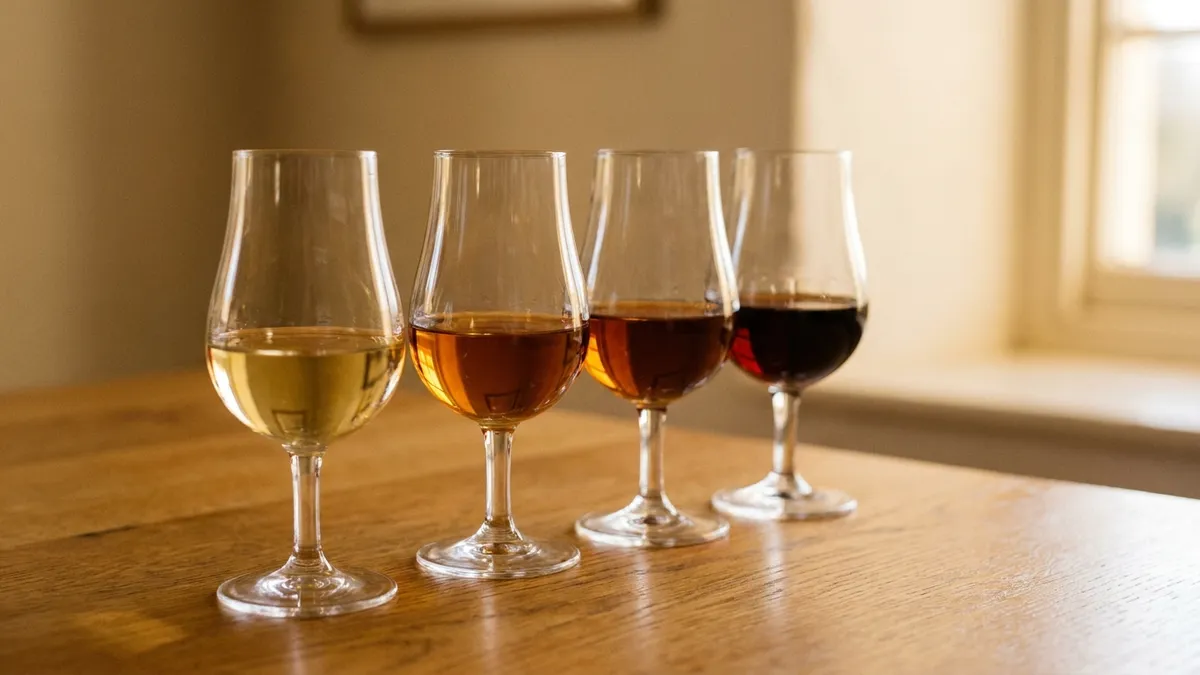
If sweetness words on labels still feel slippery, the wine sweetness scale explains what dry, off-dry and sweet actually mean on the palate, and the wine and cheese pairing guide has more on why sweet fortified wine and salty cheese work so well together.
What Do the Age Categories on a Madeira Label Mean?
A Madeira label tells you the wine's age tier as well as its grape or sweetness. The youngest wines, around three years old, carry no official age statement; the legal tiers are 5, 10, 15, 20, 30, 40 and 50 years, each number describing the character of the blend (checked by a tasting panel) rather than a strict average. Colheita is a single-vintage wine aged at least five years in cask. Frasqueira (also called Garrafeira) is a single vintage from a single grape aged at least 20 years in cask.
Here is the ladder from youngest to oldest:
- Rainwater: a light, pale, medium-dry style, historically tied to Tinta Negra and Verdelho, sold young. The rules set no special minimum age for it, only a cap of 10 years on any age statement, so treat it as an entry-level style rather than a number.
- 3-year: the entry level, with no official age statement, almost always Tinta Negra and estufagem-aged, sold by sweetness word. Also the style most often used in cooking.
- 5-year: still mostly Tinta Negra, with noticeably more depth. The best-value starting point for drinking.
- 10-year, 15-year, 20-year: where the noble grapes take over and canteiro aging becomes common. The number signals style and complexity, and 30, 40 and 50-year tiers exist too.
- Colheita: one harvest year on the label, at least five years in cask, released younger than a full Frasqueira. A more affordable way to taste a single vintage.
- Frasqueira / Garrafeira: single vintage, single noble grape, at least 20 years in cask by the canteiro method, bottled only when the producer decides it is ready. These are the wines that make Madeira's reputation for living a century or more.
One quirk worth knowing: Madeira does not use the word "Vintage" as a legal label term the way Port does. The harvest year appears on a Frasqueira or Colheita, but the category name is what tells you how the wine was made. Our guides to vintage vs non-vintage wine and how to read a wine label cover the general rules that Madeira bends.
Why Doesn't Madeira Go Bad After You Open It?
Because the three things that spoil an open bottle of table wine, oxygen, warmth and time, have already been applied to Madeira on purpose during production. It is fortified to a higher alcohol, it is unusually high in acidity, and it is made in an oxidative style, so there is very little left for the air in a half-empty bottle to change.
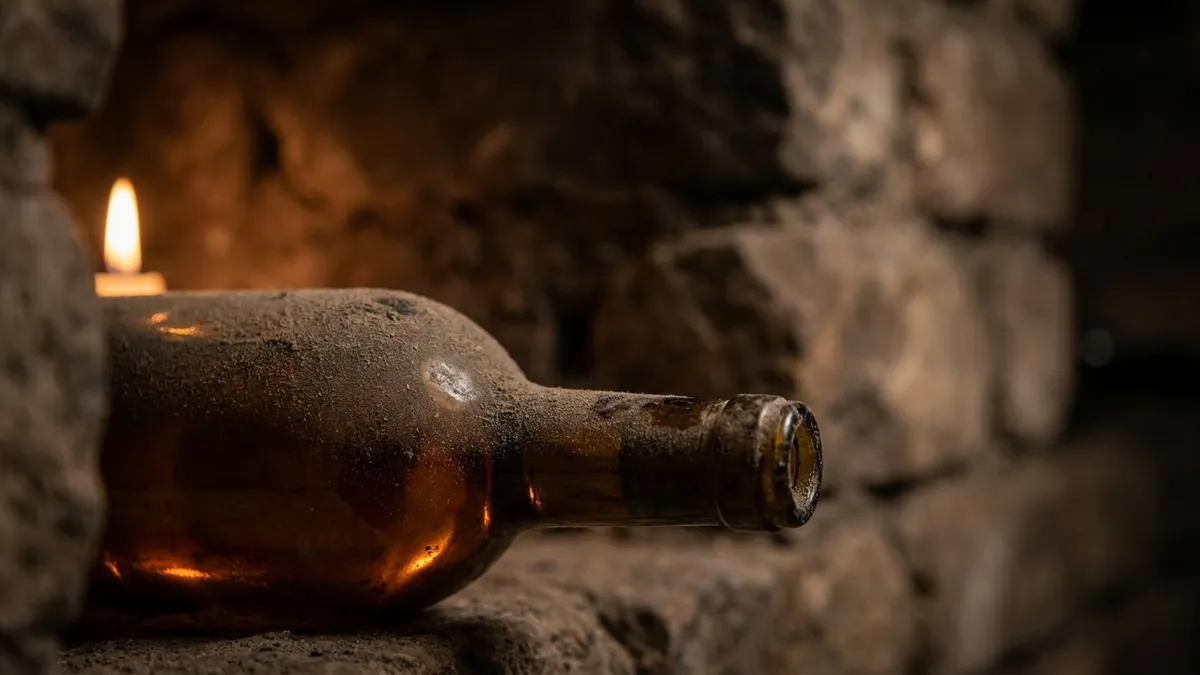
Think about what happens to an ordinary white after a few days on the counter: the fresh fruit fades into bruised apple, then the wine turns flat and sour. Madeira has already been through the bruised-apple stage and out the other side into caramel, dried fruit and nuts. The deliberate oxidation and heat stabilise the wine and stop it from spoiling. That is why it earns the "indestructible" nickname, and why a bottle opened for a holiday can often still be poured the following year.
Two honest caveats. First, "indestructible" is relative: a young, estufagem-aged 3-year wine is the most delicate member of the family and is best finished within a few months, while a canteiro-aged Frasqueira can hold for years. Second, the bottle still needs basic care: stopper it, stand it upright, and keep it away from direct sun. For where Madeira sits against every other style, see how long wine lasts after opening.
Did the Founding Fathers Really Toast the Declaration of Independence With Madeira?
Nobody knows, because no record says so. The story that the signers raised glasses of Madeira on 4 July 1776 is repeated across wine blogs and shop shelves, but no record of what the signers drank that day has turned up, and even one of Madeira's best-known American importers has called the story "surely apocryphal". Treat it as a well-loved legend.
What is documented is nearly as good. Madeira was the fashionable wine of colonial America, and on 14 September 1787, as the Constitutional Convention was finishing its work in Philadelphia, a farewell dinner for George Washington at City Tavern ran up a bill for 55 gentlemen that included 54 bottles of Madeira. That is a real receipt, and it says more about the wine's place in early American life than any legend.
The island's rise as a wine exporter came from geography. Madeira sat on the shipping routes to the Americas and the East Indies, and the casks loaded as ballast and drink for the crews went through tropical heat and constant motion. When the wine came back unsold, merchants found it had improved rather than spoiled. So they began sending casks on the round trip deliberately, a style known as vinho da roda (roughly "wine of the round trip"). Estufagem and canteiro are simply ways of reproducing that hot, slow journey on land.
Today the island's wine, embroidery and crafts are all overseen by IVBAM, the Instituto do Vinho, do Bordado e do Artesanato da Madeira, created in 2006 by merging the island's wine institute (founded 1979) with its embroidery and crafts institute, and the body that regulates how Madeira is made and labelled. The broader family of fortified and sweet wines it belongs to is mapped in our wine styles hub.
How Is Madeira Different From Port and Sherry?
All three are fortified, but each gets its character from a different trick. Port, from the Douro Valley on the Portuguese mainland, is mostly red, mostly sweet, and aged without heat. Sherry, from Jerez in southern Spain, is white and mostly dry, aged under a film of yeast or in open contact with air, but never heated. Of the three, Madeira alone is deliberately heat-aged, and alone runs from dry to sweet on a fixed grape ladder.
The practical differences follow from that. Port fortifies mid-fermentation, so its sweetness comes from stopped grape sugar and its flavours stay in the red-fruit and spice family; the Port wine guide and the Douro Valley guide cover it in depth. Most Sherry fortifies after fermentation finishes, which is why Fino and Manzanilla are bone dry; the Sherry wine guide walks the full range. Madeira's acidity is famously high, which is why its sweet styles taste less heavy than a sweet Port and why it outlives both once opened.
If you want a tasting method that works across the whole category, how to taste fortified wine is the companion to this article, and the dessert wine guide places Malmsey next to Sauternes, Tokaji and other sweet wines.
How Do You Serve and Start Tasting Madeira?
Serve Madeira in small pours, in a small tulip-shaped glass that funnels the aromas, at the temperature its sweetness calls for: 12 to 14°C for Sercial, Verdelho and Rainwater, 16 to 18°C for Boal and Malvasia. Store the bottle upright once opened. There is no rush to finish it.
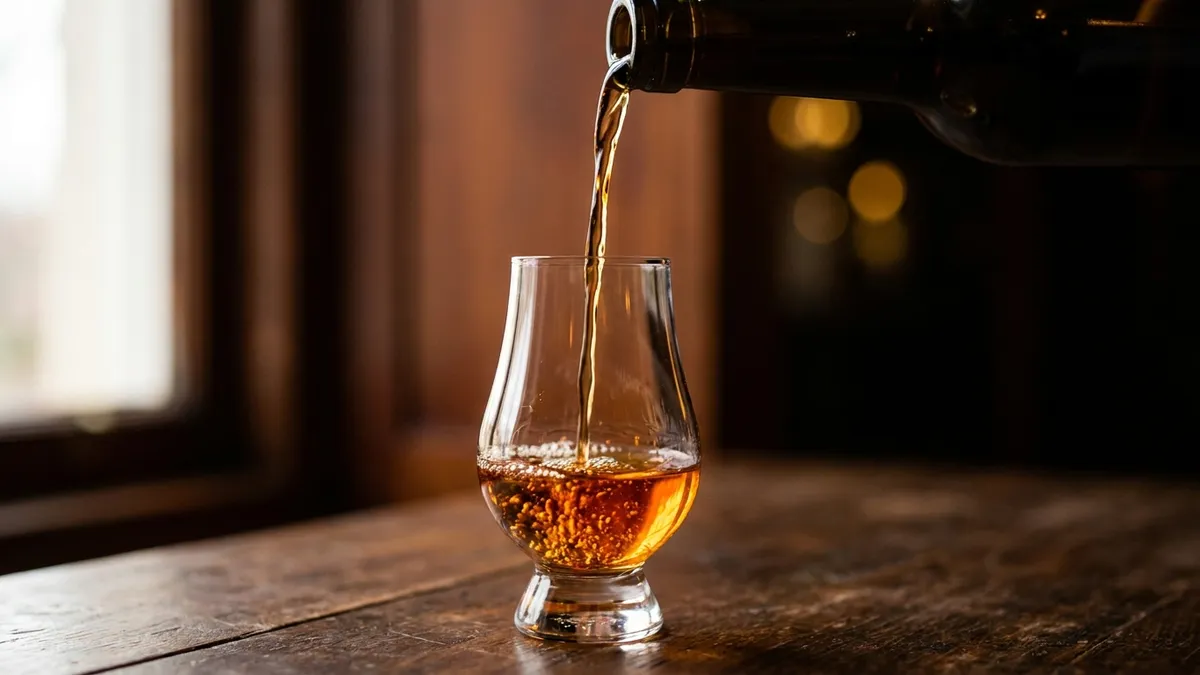
The smartest first bottle is a 5-year wine in a medium-dry or medium-sweet style: affordable, representative, and forgiving. The smartest first lesson is a pair. Pour a Sercial next to a Malvasia and taste them side by side. You will feel the same acidity, the same caramel and smoke, and a completely different level of sweetness, which is the entire grape ladder learned in two sips. Our wine serving temperature chart helps you get both glasses to the right temperature.
Madeira rewards this kind of slow, structured attention more than almost any other wine, because so much is happening in a small pour. If you would like a guide while you learn, the Sommy app at sommy.wine walks you through each glass step by step and builds the tasting vocabulary that turns "sweet and nutty" into Sercial, Boal or Malmsey. Once the ladder is in your palate, every bottle on the shelf becomes readable.
Sources
- The Wine Society: Madeira, the ultimate guide
- Madeira wine labelling rules, Ordinance 39/2015 (English translation)
- Wine Anorak (Jamie Goode): The story of Madeira
- World of Fine Wine: A tasting trip to a time when Madeira was America's wine
- American Battlefield Trust: Philadelphia in 1787 (City Tavern bill)
- IVBAM: Instituto do Vinho, do Bordado e do Artesanato da Madeira (history)
Frequently Asked Questions
What is Madeira wine made from?
Madeira is made from grapes grown on the Portuguese island of Madeira, fortified with grape spirit, then aged with heat and oxygen. Four white grapes give the classic named styles, from dry to sweet: Sercial, Verdelho, Boal (Bual) and Malvasia (Malmsey). The red grape Tinta Negra, added to the noble list in 2015, is behind the large majority of bottles sold today.
Is Madeira wine sweet or dry?
Both. Madeira spans the whole range. Sercial is dry, Verdelho is medium-dry, Boal is medium-sweet and Malvasia is sweet, and Tinta Negra is made in every one of those levels. Even the sweetest Madeira keeps a sharp streak of acidity, so it tastes lifted rather than syrupy. Check the grape name or the sweetness word on the label before you buy.
What is the difference between Port and Madeira?
Both are Portuguese fortified wines, but Port comes from the Douro Valley on the mainland and is mostly red and sweet, aged without heat. Madeira comes from an Atlantic island, is made mainly from white grapes, runs from dry to sweet, and, unlike Port, is deliberately heat-aged, which gives it caramel, dried-fruit and smoky notes and a far longer life after opening.
How long does Madeira last after opening?
Months at minimum, and far longer for the best bottles. Madeira is fortified, high in acidity and made in an oxidative style, so the oxygen and warmth that spoil a table wine within days have already been built into it. Keep the bottle stoppered and upright in a cool spot. Young estufagem-aged Madeira is the most delicate of the family; long canteiro-aged wines can hold for years.
What is Rainwater Madeira?
Rainwater is a light, medium-dry style of Madeira, historically linked to the Tinta Negra and Verdelho grapes. It is gentler and paler than the classic named styles and is usually a young wine, which makes it an easy, affordable first bottle and a good aperitif served lightly chilled. The name is a piece of trade folklore rather than a description of how the wine is made.
How should you serve Madeira wine?
Serve dry styles such as Sercial and Verdelho lightly chilled at around 12 to 14°C, and sweeter Boal and Malvasia a little warmer at around 16 to 18°C, where their caramel and dried-fruit character opens up. Use a small tulip-shaped glass and pour a small measure. Dry Madeira works as an aperitif or with savoury food; sweet Madeira pairs with cheese, nuts and desserts.
Sommy Team
LinkedInFounder & Wine Educator
The Sommy Team is building the world's most approachable wine education app, helping beginners develop real tasting skills through structured courses and AI-guided practice.