Solera System Wine: How Sherry and Madeira Are Aged

By the Sommy Team — AI-assisted, human-edited.
Updated Oct 1, 2026
Contents (8)
TL;DR
A solera is a stack of barrel rows. Wine is bottled only from the bottom row, which is never emptied, and each row is topped up from the younger row above. Every bottle is a blend of many harvests, so a VORS 30-year sherry has an average age of 30 or more, not 30-year-old wine in every drop.
Solera system wine is a blend of many harvests, built by drawing a little from the oldest barrels and topping them up with younger wine. No barrel is ever emptied, so the age on the label is an average worked out from barrel arithmetic. Sherry is the classic solera wine; Madeira uses one only rarely.
What Is the Solera System in Wine?
The solera system is a way of ageing wine by fractional blending (moving part of a barrel, never all of it, so wines of different ages mix). Barrels sit in rows by age. Wine is bottled only from the oldest row, and only a share of each barrel leaves at a time. The gap is refilled from the next-younger row, which is refilled from the row above it, up to the newest wine at the top.
The wine involved is usually fortified (spirit added, about 15 to 22% alcohol), and the rules for sherry require at least two years in the system. Each bottle is a mix of many years, and the house style barely changes from one bottling to the next.
How Do the Criaderas and the Solera Row Work?
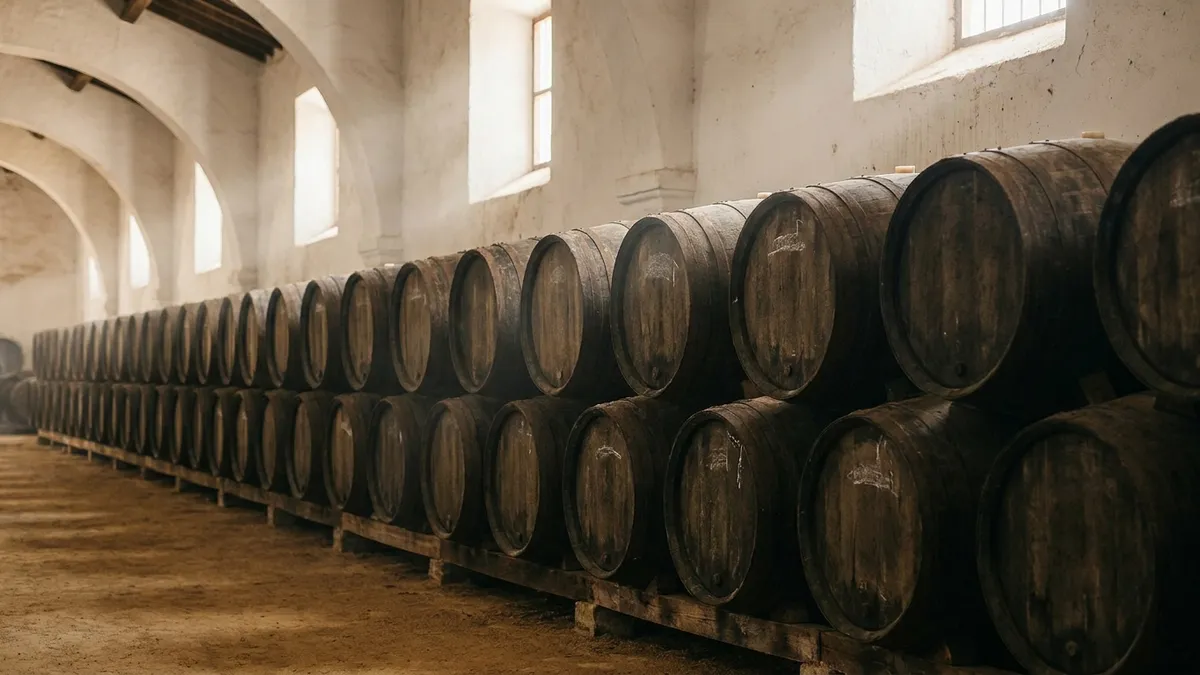
Barrels sit in tiers, with the oldest wine in the bottom row and progressively younger wine in each row above. The bottom row is the solera, from suelo, Spanish for floor. The rows above are the criaderas, or nurseries. A system usually has between three and nine tiers.
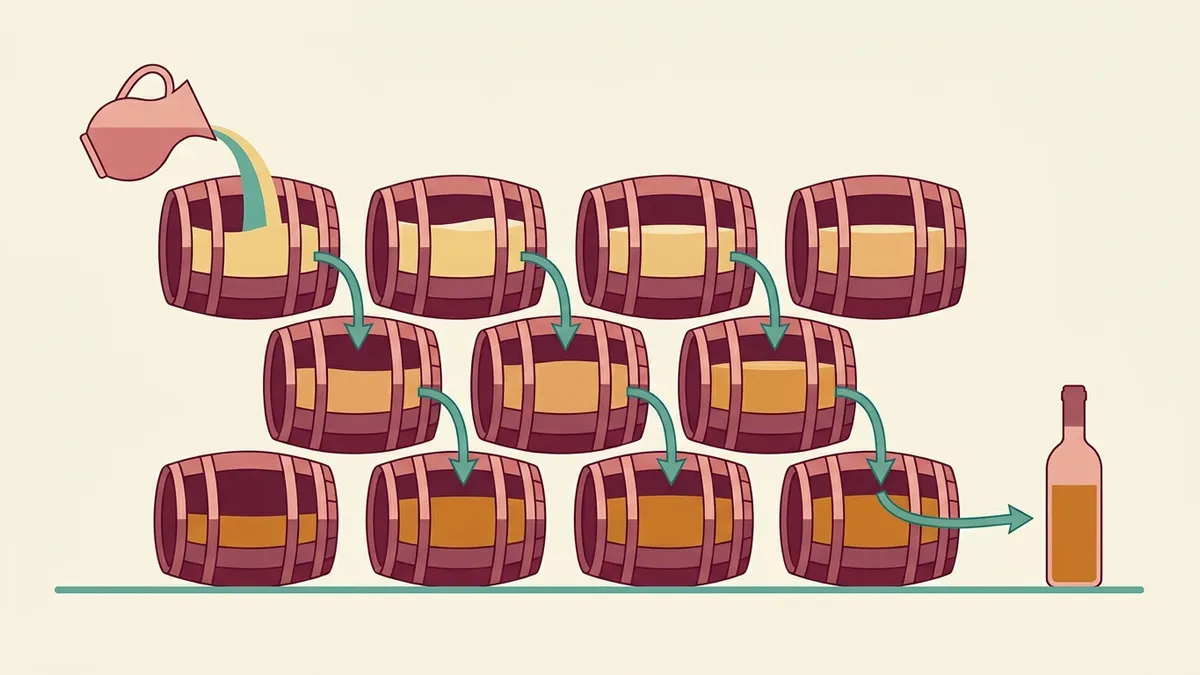
Two moves keep it running. The saca (taking out) draws part of the wine from every barrel in the bottom row for bottling. The rocío (sprinkling) refills that space with the same volume from the first criadera. That row is then topped up from the second criadera, and so on. New wine from the latest harvest goes into the top row.
Style sets how much moves: between 5 and 30% of each barrel. About a third a year is a figure often quoted for Spanish soleras. The barrels always stay partly full, which is why a solera that started decades ago still holds a trace of its first wine. The Jerez sherry region guide shows where these bodegas sit in the Sherry Triangle.
How Do You Read a Solera-Aged Label?
Read the age words first. A plain style name such as Fino or Oloroso means a blend from a solera with no stated age. VOS or VORS means a certified average age. A single harvest year on sherry means the wine skipped the solera. On Madeira, most numbers have nothing to do with a solera at all.
| Label word | How it was aged | What the age means | Buy it for |
|---|---|---|---|
| Fino, Manzanilla, Amontillado, Oloroso (no age) | Solera, at least two years | No stated age; the blend meets the two-year minimum | Everyday drinking, tapas, cooking |
| En rama | Solera, drawn from chosen barrels | No stated age; only light filtration before bottling | Tasting what the barrel tastes like |
| VOS | Solera | Average age of at least 20 years | A special bottle to share after dinner |
| VORS | Solera | Average age of at least 30 years | The oldest certified sherry style |
| Single harvest year on sherry | Static: one harvest, no blending | The year the grapes were picked | Comparing one year with a solera blend |
| Madeira 'Solera' plus a year | Solera | The year the solera started; often little of that wine remains | Curiosity; check the bottling details |
| Madeira 5, 10, 15 years and older | Casks heated or warmed, then blended | An age tier judged by a tasting panel, no solera | Learning the Madeira style ladder |
En rama means "raw": the wine is bottled with only a light filtration, straight from selected barrels. If the label shows VOS or VORS, the blend averages at least 20 or 30 years. If it shows a single year, the wine was aged on its own and is a vintage wine, a different idea covered in vintage vs non-vintage wine. The general rules for any label are in how to read a wine label.
Why Is the Age on the Label an Average, Not a Minimum?
Because the sherry regulator assigns an age by dividing all the wine in the system by the wine drawn out each year. That ratio must be above two, which is where the two-year minimum comes from. A 30-year sherry has an average age of 30, not 30-year-old wine in every drop.
Take a small solera of three rows with ten barrels each. Each year a third of every bottom barrel is bottled. That draw equals 3.3 barrels out of 30, about one ninth of the system, so the wine is assigned an average age of nine years. For a VORS, a producer would need to hold 30 times what it bottles each year. If a bottle states an age, read it as the middle of a range: younger wine and a little older wine sit on either side.
The first wine never fully leaves, but it fades fast. In a barrel where a third is replaced every year, the share of the original wine falls by a third each time.
| Years of drawing a third | Original wine left in the barrel | What that means in the glass |
|---|---|---|
| 1 | 67% | Mostly the starting wine |
| 3 | 30% | Younger wine now dominates |
| 5 | 13% | A minority share |
| 10 | 1.7% | A trace |
| 20 | 0.03% | Chemically present, impossible to taste |
A solera started a century ago is a century old in its barrels, while its first-year wine is now far below a millionth of each glass.
How Do You Taste the Solera in a Glass?
Pour a Fino and an Oloroso side by side. Both come from Palomino grapes and both age in a solera, but under opposite conditions. The Fino ages under a film of yeast and stays pale. The Oloroso is oxidative (aged with air reaching the wine) and turns brown.
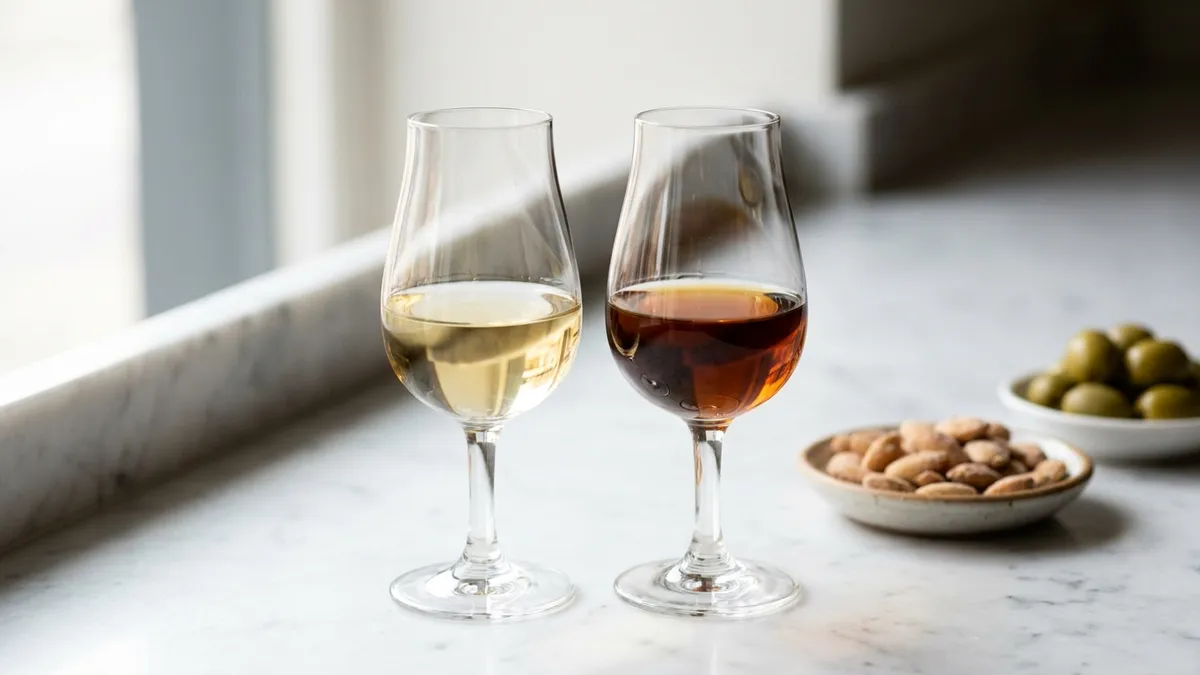
If the glass is pale and smells of bread dough and almonds, the yeast did the ageing. If it is brown and smells of walnut and toffee, air did. The neutral grape behind both is explained in the Palomino Fino guide, and the method for small fortified pours is in how to taste fortified wine.
Why Does Sherry Age in a Solera?
Because younger wine moving down the rows keeps the flor yeast fed and keeps the house style steady year after year. Flor is a living film of yeast that floats on wine fortified to about 15% alcohol and seals it from air. Each top-up brings in the compounds the yeast needs; without fresh wine, the flor starves.
Wine meant for Oloroso is fortified to at least 17%. At that strength flor cannot survive, so the wine ages with oxygen and darkens. The rules allow air-aged wines to age statically, one harvest in its own barrels, which is how a vintage-dated sherry is possible. Flor wines need the solera. The taste difference between air-aged and protected wine is set out in oxidative vs reductive winemaking.
Consistency is the second reason. A hot or wet harvest makes up only a small share of any bottling, diluted by every year already in the barrels. A buyer of a Fino in March gets the same wine as one in October. The full range of styles this produces, from Manzanilla to sweet Pedro Ximénez, is in the sherry wine guide.
Does Madeira Use a Solera?
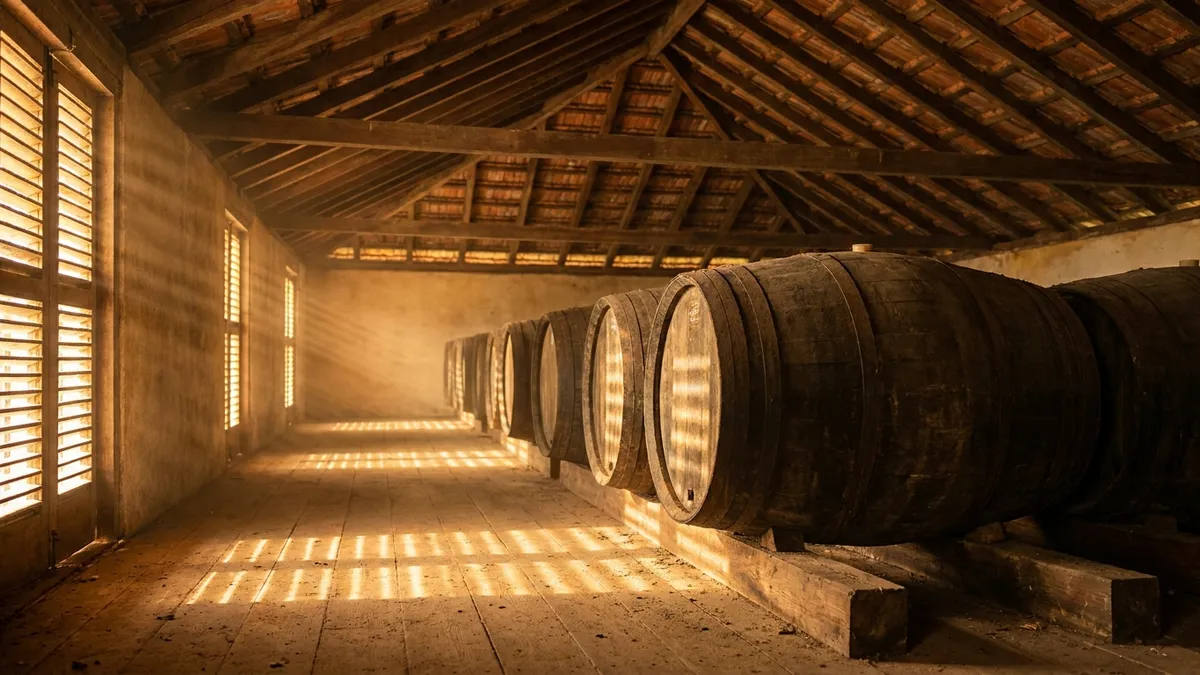
Rarely. Most Madeira skips the solera: it is either heated in tanks, called estufagem, or warmed for years in casks in the upper floors of lodges, called canteiro. It is then blended to an age tier or bottled from one harvest. The Madeira wine guide explains both methods and the age tiers.
Solera Madeira is a small, historic category. Producers started it to stretch old vintages after phylloxera, the vine pest, stopped vineyards producing. The early rules let a solera give up at most 10% of its wine a year, and only ten times before it had to be emptied. So a good share of each bottle came from the year on the label. The rules were later loosened to let soleras run indefinitely, as in Jerez, and some later bottles hold only tiny amounts of the stated year.
If a Madeira says Solera plus an old year, that year is when the solera started, not the age of the wine. Treat a low price on an old-dated solera as a sign of the looser rules.
What Else Is Aged in a Solera?
Brandy de Jerez, sherry vinegar and some balsamic vinegar use solera blending, and some rums and whiskies use a looser solera-style version. So do Marsala, Commandaria, Mavrodafni and some vins doux naturels. The aim matches sherry's: the same taste each year, with a share of very old liquid in each batch.
Marsala's version is covered in the Marsala wine guide. Port, by contrast, is blended or vintage-dated without a solera; the port wine guide explains its age categories.
Solera wines sit with the other fortified and long-aged styles in the wine styles hub. The Sommy app at sommy.wine has bite-sized courses, including a Spain course, and an AI-guided tasting mode that saves your notes to a tasting journal. Buy a chilled Fino tonight, pour a small glass, photograph the label and taste it step by step for bread and almond.
Sources
Frequently Asked Questions
What is the solera system in wine?
The solera system is a way of ageing wine by fractional blending. Barrels sit in rows by age. Wine is bottled only from the oldest row, called the solera, and only part of each barrel is drawn. The gap is filled from the next-younger row, called a criadera, and so on up to the newest wine. Every bottle mixes many harvests.
What is the difference between a solera and a criadera?
The solera is the bottom row of barrels, holding the oldest wine, and it is the only row wine is bottled from. The name comes from suelo, Spanish for floor. The criaderas, or nurseries, are the rows above it, each holding progressively younger wine that moves down one row every time the row below is partly emptied.
How much wine is taken from each barrel in a solera?
Between 5 and 30% of each barrel, depending on the sherry style, and about a third a year is a common figure in Spanish soleras. The barrel is never emptied. Each draw from the bottom row, called the saca, is replaced by the same volume from the row above, a top-up called the rocío.
Does a 30-year sherry contain only 30-year-old wine?
No. VORS on a sherry label means the blend has an average age of at least 30 years. The bottle also holds younger wine that entered the system later, plus traces of wine older than 30 years. The age is worked out by dividing all the wine in the system by the amount bottled each year.
Does Madeira use the solera system?
Only a small, historic share of it does. Most Madeira is heated in tanks or warmed for years in casks in lodge lofts, then blended to an age tier or bottled from one harvest. Solera Madeira was first made to stretch old vintages after phylloxera. Early rules capped draws at 10% a year and allowed at most ten draws.
Is solera wine a vintage wine?
No. A solera blends many harvests on purpose, so standard solera sherry carries no harvest year. A vintage-dated sherry has been aged statically, kept in its own barrels with no younger wine added, which the sherry rules allow for oxidatively aged wines. The two methods produce opposite things: a steady house style versus one year's wine.
What else is aged in a solera besides sherry?
Brandy de Jerez, sherry vinegar, some balsamic vinegar, Marsala, Commandaria, some vins doux naturels, rums and whiskies all use solera-style fractional blending. The reason is the same in each case: producers want a product that tastes the same every year and carries some very old liquid into every bottle.
Sommy Team
LinkedInFounder & Wine Educator
The Sommy Team is building the world's most approachable wine education app, helping beginners develop real tasting skills through structured courses and AI-guided practice.