Pedro Ximénez: The Sweetest Wine Grape You Will Ever Taste

By the Sommy Team — AI-assisted, human-edited.
Updated Jun 16, 2026
Contents (10)
- What Is Pedro Ximénez Wine?
- Pedro Ximénez Wine, in 60 Words
- Where Pedro Ximénez Grows
- The Soleo Process: How Grapes Become Raisins
- How Pedro Ximénez Sherry Is Made
- Pedro Ximénez Flavor Profile
- Styles of Pedro Ximénez
- Serving Pedro Ximénez
- How to Pair Pedro Ximénez with Food
- How a Beginner Should Approach Pedro Ximénez
TL;DR
Pedro Ximénez is a white Spanish grape grown mainly in Montilla-Moriles and used for the sweetest sherry on earth. The grapes are sun-dried on mats until they shrivel to raisins, concentrating sugar to as much as 500 grams per litre. The result is an inky, syrupy wine tasting of raisin, fig, molasses, and dark chocolate.
What Is Pedro Ximénez Wine?
Pedro Ximénez — almost always shortened to PX — is a white Spanish grape responsible for the sweetest, darkest wine most people will ever taste. While the grape itself is pale and unremarkable on the vine, the pedro ximenez wine made from it is opaque, syrupy, and packed with up to 500 grams of sugar per litre, several times sweeter than a typical dessert wine.
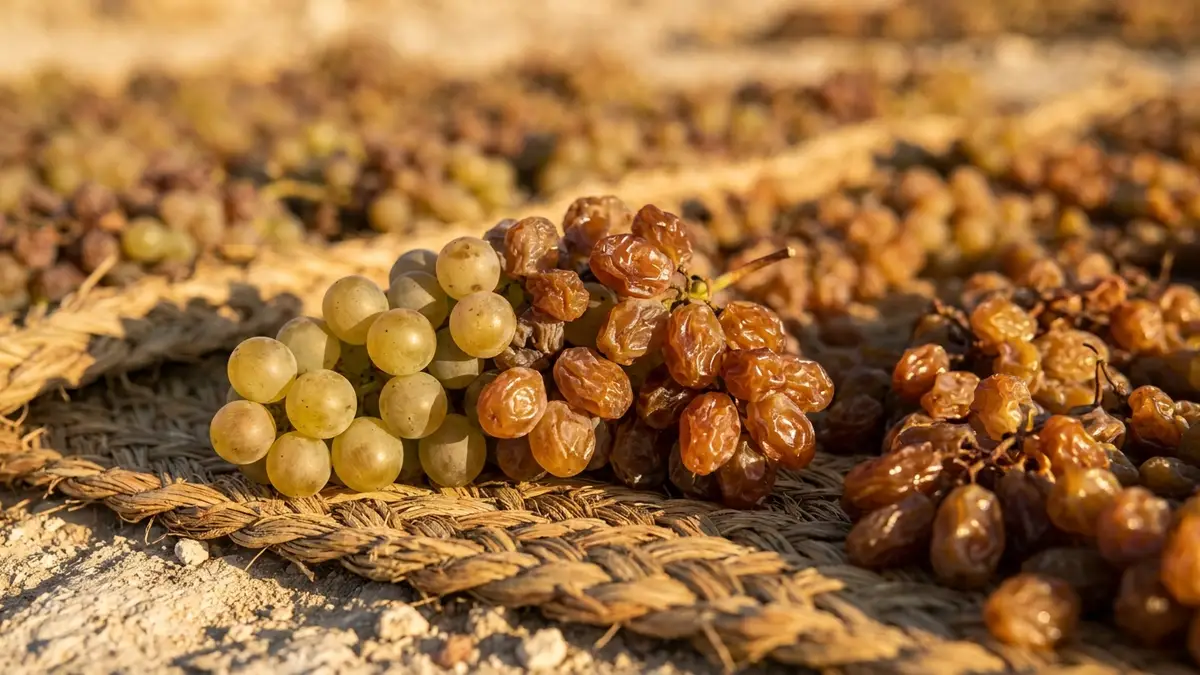
The secret is not the grape but what happens to it after harvest. The bunches are laid out in the Andalusian sun to dry into raisins, a process that drives off water and concentrates the sugar to a level almost no other wine reaches.
The result tastes less like grape juice and more like liquid Christmas pudding: raisin, fig, date, molasses, toffee, and dark chocolate, all bound together in a glossy, near-black liquid. PX is a grape with one extraordinary trick, and it performs it better than any other variety on earth.
Pedro Ximénez Wine, in 60 Words
Pedro Ximénez wine is a Spanish dessert sherry made from sun-dried PX grapes grown mainly in Montilla-Moriles and Jerez. Drying the grapes on mats — the soleo process — shrivels them to raisins and concentrates their sugar to 350–500 grams per litre. After fermentation is stopped by fortifying to 15–17% alcohol, the wine ages for years in oak, emerging inky black with flavors of raisin, fig, molasses, and dark chocolate.
Where Pedro Ximénez Grows
PX needs heat. Lots of it. The grape ripens late and only reaches the sugar levels it is famous for in genuinely hot, sun-drenched climates. That requirement explains why its home is the sun-baked south of Spain rather than the cooler northern regions that produce most Spanish red and white wine.
Montilla-Moriles — the true heartland
The spiritual home of Pedro Ximénez is Montilla-Moriles, a region in Andalusia southeast of Córdoba. Here PX is the dominant grape, planted on chalky white albariza soils that reflect sunlight and hold moisture deep underground.
Montilla-Moriles is so hot that PX ripens to high sugar even before drying, and many of its wines reach 15% alcohol naturally — without the fortification that defines sherry from Jerez. This is the place to look for the most concentrated, purest expressions of the grape.
Jerez — the sherry connection
Most people first meet Pedro Ximénez through sherry, the fortified wine of the Jerez region near the Atlantic coast. While dry sherry is made from the Palomino grape, PX plays two roles in Jerez.
First, it is bottled on its own as sweet PX sherry, the darkest and sweetest entry in the sherry family. Second, a splash of PX is used to sweeten other styles — turning a dry Oloroso into a rich Cream sherry, for example. To understand where PX fits in the wider category, the full sherry wine guide maps out every style from bone-dry to dessert-sweet.
Beyond Spain
PX is overwhelmingly a Spanish story, but small plantings exist elsewhere:
- Australia — a handful of producers in regions like the Riverland make sweet, fortified PX-style wines.
- Chile and Argentina — historic plantings, often used in brandy and fortified blends rather than as a named varietal.
- California — rare, experimental bottlings inspired by the Andalusian model.
None of these rivals Andalusia for volume or reputation. When a bottle says Pedro Ximénez, it almost certainly comes from southern Spain.
The Soleo Process: How Grapes Become Raisins
The single most important thing to understand about Pedro Ximénez is that the wine's character is built before fermentation even begins. It starts in the vineyard, at harvest, with a deceptively simple step.
After the grapes are picked at full ripeness, they are spread out on mats — traditionally esparto grass mats called paseras — in open fields under the relentless Andalusian sun. This sun-drying step is called the soleo (the Spanish word for sunning).
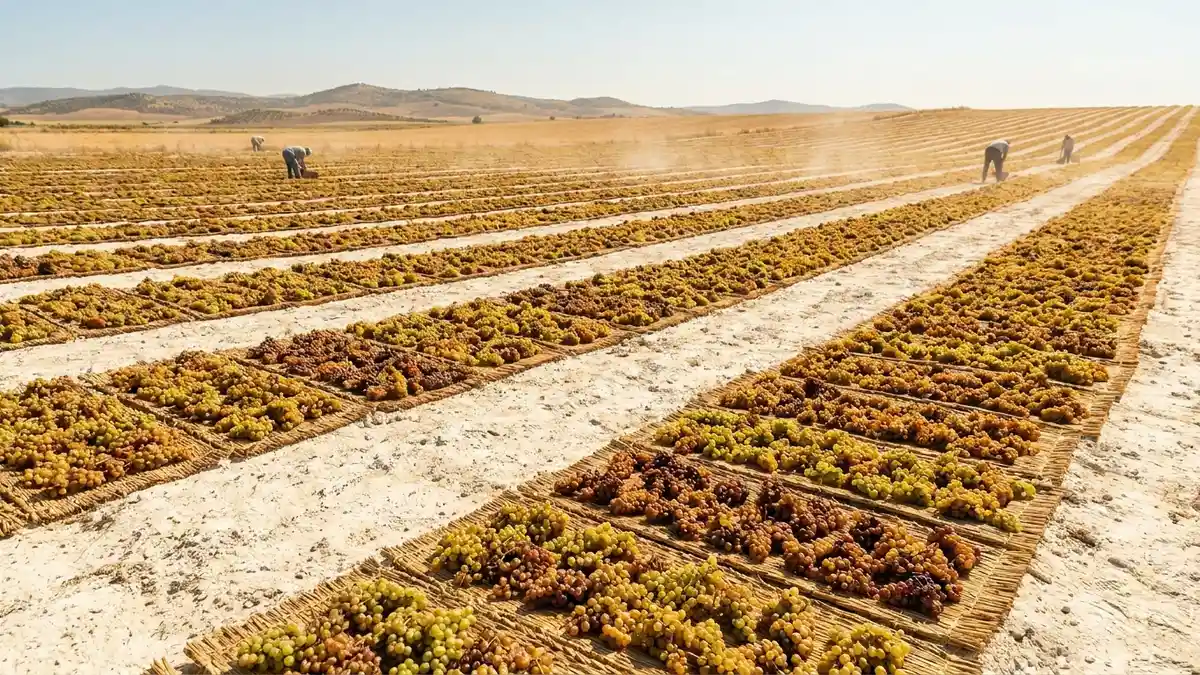
Over roughly one to three weeks, the grapes lose much of their water. They shrivel, darken, and shrink — turning from plump green berries into wrinkled brown raisins. As the water evaporates, the sugar that remains becomes dramatically more concentrated. A grape that started at a normal sugar level can finish the soleo with sugar packed so tight it borders on candy.
The bunches are turned by hand to dry evenly and covered at night to protect them from dew. It is slow, labor-intensive, and entirely dependent on the weather — a few days of rain can ruin a harvest. This is artisanal winemaking at its most patient.
The soleo turns the vineyard into an open-air oven, trading volume for an intensity of sweetness no fresh grape can match.
By the time the raisins are pressed, they yield only a small amount of thick, dark, sugar-saturated juice. That juice is so concentrated that yeast struggles to ferment it — which leads directly to how PX becomes wine.
How Pedro Ximénez Sherry Is Made
Once the sun-dried grapes are pressed, the winemaking follows a path unlike almost any other sweet wine. The goal is to keep nearly all of that hard-won sugar in the bottle.
Pedro Ximénez aroma profile: raisin, dried fig, date, prune, caramel, coffee, dark chocolate, walnut, honey.
Fermentation, fortification, and stopping the sugar
The concentrated juice begins to ferment, but its sky-high sugar makes the process sluggish. Winemakers do not wait for it to finish. Instead, fermentation is halted early by fortification — adding neutral grape spirit to raise the alcohol to roughly 15–17%.
At that strength, the yeast can no longer work, so most of the natural sugar survives unfermented. This is why PX ends up both sweet and moderately alcoholic, with residual sugar (the natural grape sugar left in the finished wine) reaching 350–500 grams per litre.
Sweetness: lusciously sweet (5/5)
For context, a dry table wine has around 5 grams of sugar per litre. PX can have a hundred times more. It sits at the absolute far end of the sweetness scale, beyond even most ice wines and Sauternes.
The solera system
What transforms sweet juice into complex wine is time in oak. PX is aged through the solera system, the fractional-blending method that defines sherry. Barrels are stacked in tiers; wine is drawn for bottling from the oldest tier, which is topped up from the next-oldest, and so on up the stack.
The wine never empties a barrel completely, so every bottle is a blend of many vintages, with traces of very old wine threaded through. Over years — sometimes decades — slow contact with air, called oxidation, deepens the color from amber to mahogany to near-black and builds layers of nutty, toffee, and coffee complexity.
A young PX is sweet and fruity. A solera-aged PX with serious bottle age is something else entirely: dense, bittersweet, and savory enough to balance its own sugar.
Pedro Ximénez Flavor Profile
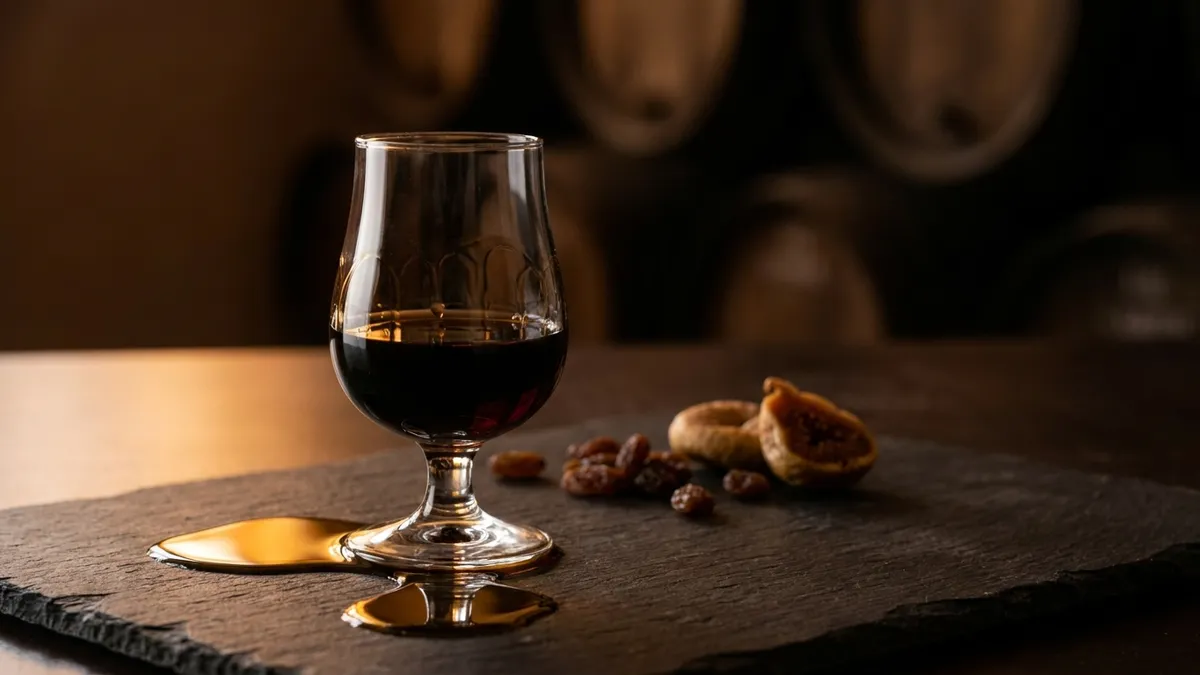
Pour a glass of PX and the first thing you notice is the color — so dark it can look like espresso or molasses, barely letting light through. Tilt the glass and the wine clings to the sides in thick, slow legs, a visual hint at the sugar to come. Reading those cues is a skill worth practicing; the how to taste wine guide walks through the look-smell-taste sequence step by step.
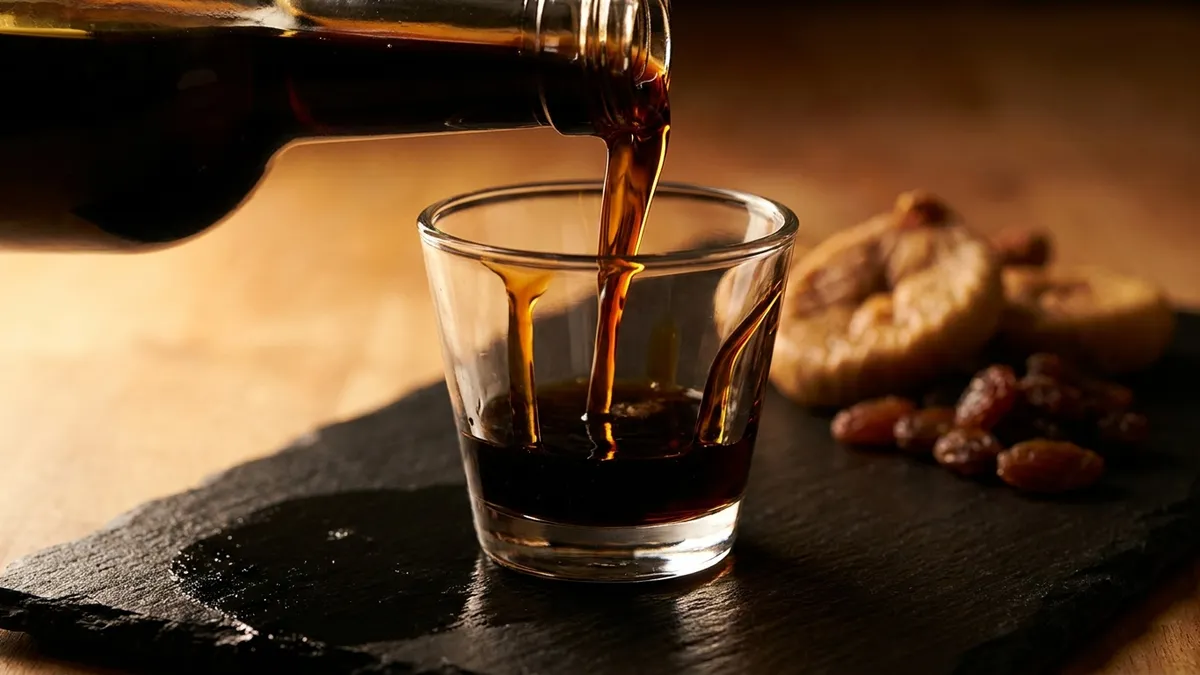
On the nose and palate, PX delivers a cascade of dried-fruit and dessert flavors:
- Dried fruit — raisin, fig, date, prune, and dried apricot lead the way.
- Sweeteners — molasses, treacle, toffee, caramel, and burnt sugar.
- Roasted notes — espresso, dark chocolate, mocha, and toasted walnut.
- Spice and oak — a whisper of vanilla, clove, and old wood from the barrel.
The texture is what surprises beginners most. PX is viscous — thick and slow-moving, coating the mouth like a liqueur. Despite the staggering sugar, the best examples are not cloying, because years of oxidation add a savory, bittersweet edge that keeps everything in balance. It is dense and complex rather than simply sweet.
Styles of Pedro Ximénez
Not all PX is the same. Age and origin create a meaningful range, even within this one intense style.
- Young PX — fewer years in the solera. Bright, grapey, and fruit-forward, with raisin and fig dominating. Lighter in color and the most approachable for newcomers.
- Aged PX (often labeled VOS or VORS) — wines with average ages of 20 or 30-plus years. Darker, denser, and far more savory, with espresso, leather, and bitter chocolate joining the fruit. These are sipping wines for slow evenings.
- Montilla-Moriles PX — frequently un-fortified or only lightly so, since the grapes reach high alcohol naturally. Pure, intense, and often excellent value.
- Sweetening PX — not bottled alone but blended into Oloroso to make Cream sherry, adding richness to an otherwise dry base.
To compare PX against the wider field of sweet and structural wines, it helps to see the numbers side by side.
How Pedro Ximénez compares to other sweet and dry wines.
- Sugar (g/L): Pedro Ximénez 350–500; Sauternes 120–150; Dry Table Wine ~5
- Color: Pedro Ximénez near-black; Sauternes golden amber; Dry Table Wine pale to deep
- Alcohol: Pedro Ximénez 15–17%; Sauternes 13–14%; Dry Table Wine 11–14%
- Texture: Pedro Ximénez syrupy, viscous; Sauternes rich, unctuous; Dry Table Wine light to full
- Drying method: Pedro Ximénez sun-dried raisins; Sauternes noble rot; Dry Table Wine none
- Best served: Pedro Ximénez over ice cream; Sauternes with foie gras; Dry Table Wine with a meal
Serving Pedro Ximénez
PX is concentrated enough that a small pour goes a long way. A 50–75 ml serving in a small glass is plenty — this is a wine to sip, not to drink by the tumbler.
Temperature
Serve PX lightly chilled, around 12–14°C (54–57°F). A gentle chill tightens up the texture and stops the sweetness from feeling heavy. Too warm and it can taste flat and syrupy; too cold and the complex aromas go quiet.
The ice cream trick
The most famous way to serve PX is also the most fun: pour it over vanilla ice cream. The cold, creamy scoop and the dark, syrupy wine create an instant adult dessert. As the ice cream melts, it mingles with the wine into a raisin-and-toffee sauce. It is theatrical, delicious, and the single best entry point for anyone new to serious wine.
Why PX keeps so well
Because PX is already heavily oxidized and very high in sugar and alcohol, an opened bottle lasts for weeks — even months — in the fridge. Unlike a delicate table wine that fades within a day or two, PX is essentially indestructible once opened. That makes it a low-pressure bottle to keep around for an after-dinner pour.
How to Pair Pedro Ximénez with Food
PX is so sweet that the classic rule applies: the wine should be at least as sweet as the dish, or the food will make the wine taste thin. Lean into desserts and bold, salty contrasts rather than trying to match it with a main course.
Best pairings
- Vanilla ice cream — the textbook match, as above.
- Dark chocolate desserts — flourless cake, brownies, chocolate tart. PX echoes the cocoa and stands up to the richness.
- Blue cheese — Roquefort, Stilton, Cabrales. The salt and funk play off the sweetness in a savory-sweet contrast.
- Coffee and toffee desserts — tiramisu, sticky toffee pudding, crème caramel.
- Aged hard cheese — a nutty Manchego or aged Gouda bridges the gap between cheese course and dessert.
What to avoid
Skip PX with light, delicate desserts like lemon sorbet or fresh fruit salad — the wine will steamroll them. And there is no need to pour it during a savory main course; its place is at the end of the meal.
How a Beginner Should Approach Pedro Ximénez
PX can seem intimidating — it is a niche, age-worthy, intensely sweet wine with a foreign name. In practice it is one of the most beginner-friendly wines that exists, because the flavors are immediately likeable and the serving size is tiny.
Start simple. Buy one affordable bottle of young PX and try it three ways on the same evening: a small sip on its own at room-warm, the same wine lightly chilled, and finally a spoonful poured over ice cream. You will learn more about how temperature and context change a wine from that one exercise than from a shelf of theory.
Pay attention to the finish — the flavors that linger after you swallow. With PX, notice how the upfront sweetness gives way to bitter coffee and chocolate. Recognizing that the experience changes over time is a core tasting skill, and PX makes it obvious. Building that vocabulary is exactly what the Sommy app is designed for, with guided exercises that help you name what you are sensing one glass at a time.
If PX hooks you on sweeter styles, the natural next step is to explore the spectrum of sweetness more broadly. A high-acid grape like Riesling shows how a wine can be sweet yet refreshing, while the broader understanding tannins, acidity, and body guide explains why some sweet wines feel heavy and others feel light. PX sits at the extreme end, and knowing where the extremes are helps you place everything in between.
Pedro Ximénez is proof that a grape's reputation can be built on a single, brilliant idea: dry the fruit in the sun, and let time in oak do the rest. Few wines reward curiosity so generously, and almost none make a more delicious introduction to the patient, transformative craft behind a great bottle.
Sources
- Pedro Ximénez (Grape Variety) — Jancis Robinson, Wine Grapes, 2012
- Sherry: Styles and Production — Consejo Regulador del Jerez (Sherry Wines), 2024
- Montilla-Moriles DO — Wine-Searcher Regional Guide, 2023
Frequently Asked Questions
What does Pedro Ximénez wine taste like?
Pedro Ximénez tastes intensely of dried fruit — raisin, fig, date, and prune — wrapped around flavors of molasses, treacle, toffee, espresso, and dark chocolate. It is thick, almost syrupy in texture, with very high sweetness balanced by a savory, bittersweet edge that keeps it from tasting cloying despite the enormous sugar level.
How sweet is Pedro Ximénez?
Extremely. Pedro Ximénez sherry can contain 350 to 500 grams of residual sugar per litre, several times sweeter than most dessert wines and far above the roughly 5 grams per litre in a dry table wine. The sun-drying process concentrates the grape's natural sugars to levels almost no other wine reaches.
Why is Pedro Ximénez so dark?
Two reasons. First, sun-drying the grapes caramelizes their sugars before fermentation, deepening the color. Second, the wine is aged for years in old oak barrels through the solera system, where slow oxidation turns it from amber to deep mahogany and finally to an opaque, near-black brown.
How do you drink Pedro Ximénez?
Serve it lightly chilled, around 12 to 14 degrees Celsius, in a small glass — a little goes a long way. It is a classic dessert wine on its own, but the most famous serving is poured over vanilla ice cream, where the heat melts and the cold sweetness create a dramatic contrast that beginners love.
Where is Pedro Ximénez grown?
The grape's heartland is Montilla-Moriles in Andalusia, southern Spain, where it ripens reliably in the intense heat. It is also grown in the wider Jerez sherry region, where it is often used to sweeten Oloroso and Cream sherries. Small plantings exist in Australia, Chile, and California.
Is Pedro Ximénez the same as sherry?
Not exactly. Sherry is a category of fortified wine from the Jerez region, made in many styles from bone-dry Fino to sweet Cream. Pedro Ximénez is a grape variety that produces one specific, very sweet style of sherry, also labeled PX. Most dry sherry is made from the Palomino grape instead.
Does Pedro Ximénez go bad once opened?
It keeps remarkably well. Because PX is already heavily oxidized and very high in sugar and alcohol — around 15 to 17 percent — an opened bottle stays good for weeks or even months in the fridge. Its flavor is so concentrated that gentle further oxidation makes little noticeable difference.
Is Pedro Ximénez a good wine for beginners?
Yes. Its sweetness and dessert-like flavors of chocolate and raisin are easy to enjoy without any tasting experience, and the small serving size makes it low-commitment. Pouring a spoonful over ice cream is one of the most beginner-friendly ways to experience a serious, age-worthy wine.
Sommy Team
LinkedInFounder & Wine Educator
The Sommy Team is building the world's most approachable wine education app, helping beginners develop real tasting skills through structured courses and AI-guided practice.