Douro Valley Wine Guide: Port Country's Table Wines

By the Sommy Team — AI-assisted, human-edited.
Updated Jun 17, 2026
Contents (9)
- What Is Douro Valley Wine?
- A River Gorge Carved Into Schist
- The Field-Blend Grapes of the Douro
- Port vs Dry Douro: One Valley, Two Wines
- The Three Sub-Zones of the Douro
- The Vineyard Classification System
- What Makes the Douro Distinctive
- How a Beginner Should Start with Douro Wine
- The Reward of Learning the Douro
TL;DR
The Douro Valley in northern Portugal carves dramatic schist terraces along the Douro river. Long famous for Port, it now makes powerful dry reds and fresh whites from a field blend of native grapes like Touriga Nacional and Touriga Franca. This Douro Valley wine guide shows beginners where to start.
What Is Douro Valley Wine?
This Douro Valley wine guide begins where most people first meet the region: with Port. But the Douro Valley, a steep gorge in the far north of Portugal that follows the Douro river inland from Porto, makes far more than the famous fortified wine. The same hillsides now produce some of the country's most serious dry reds and increasingly fine whites. The wines come from a blend of native grapes — Touriga Nacional, Touriga Franca, Tinta Roriz, Tinto Cão, and Tinta Barroca — grown on terraces cut into dark schist rock. Learn the handful of grapes, the three sub-zones, and the simple split between fortified Port and dry table wine, and one of the world's oldest wine regions opens up.
A River Gorge Carved Into Schist
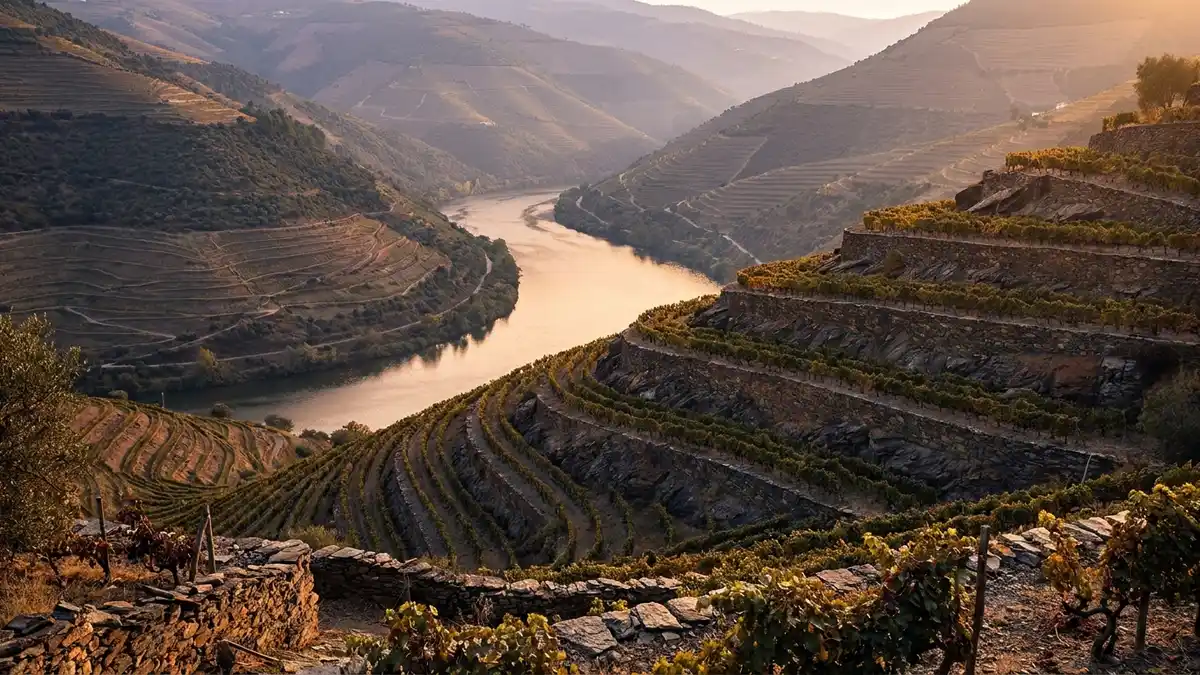
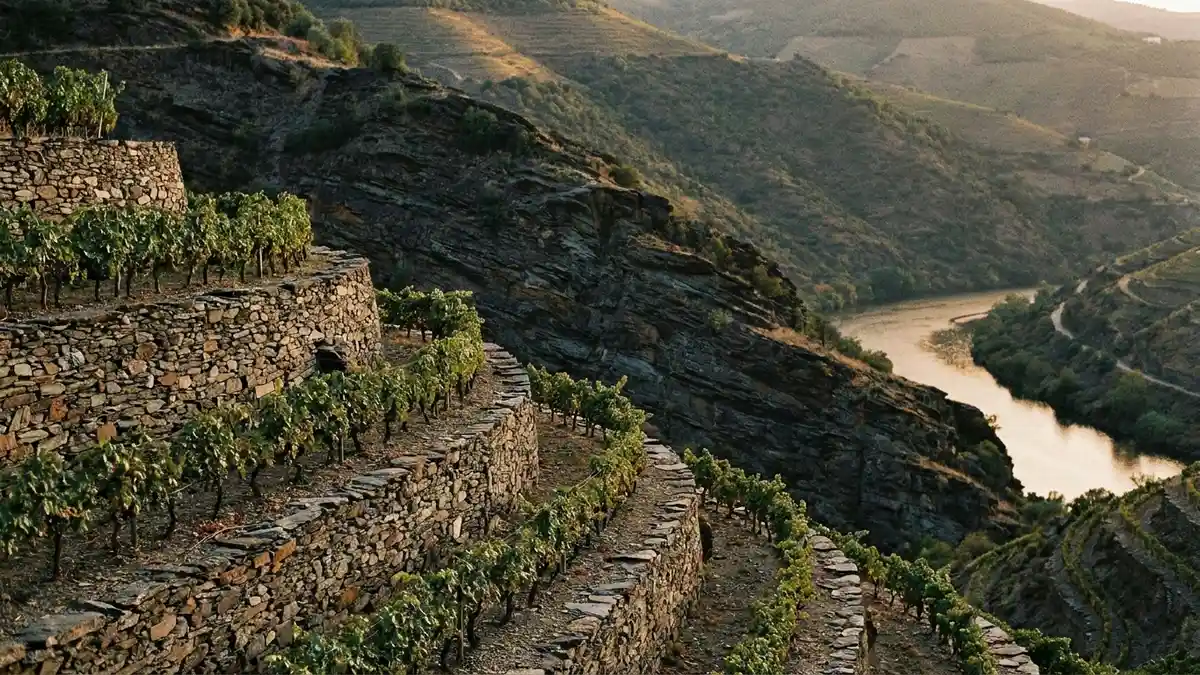
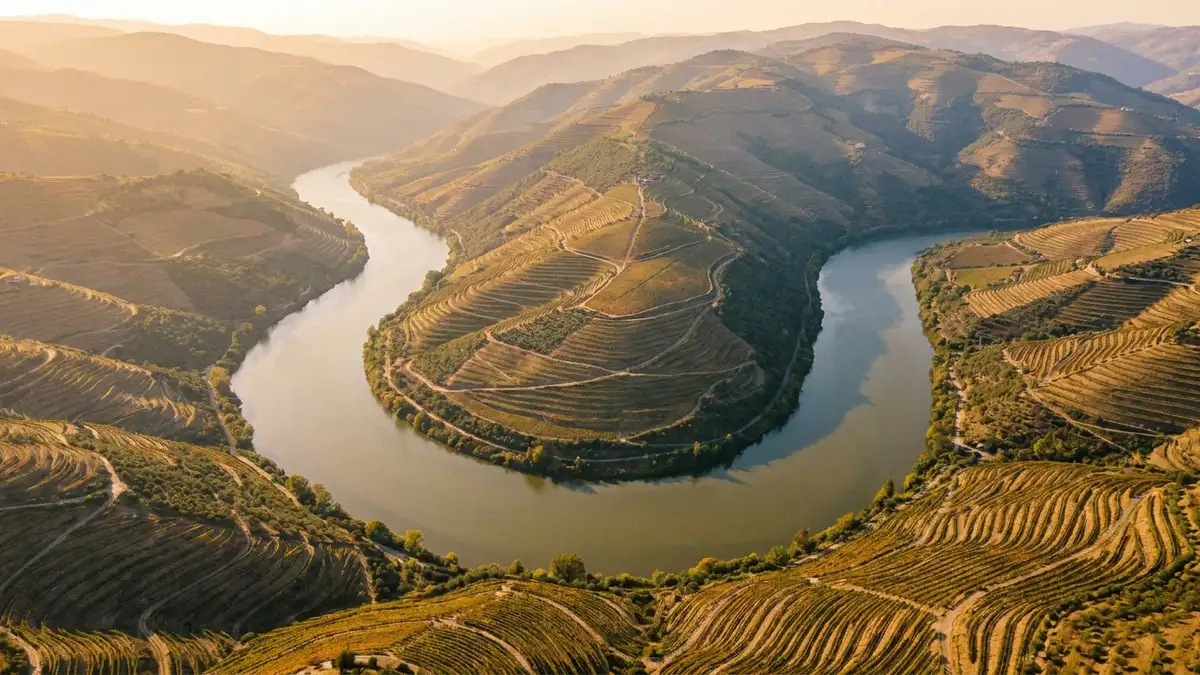
The Douro is one of the most dramatic vineyard sites on earth. The river has cut a deep gorge through northern Portugal, and for centuries growers answered the steep slopes by building stone-walled terraces — narrow benches stacked up the hillside so vines could be planted on land too sheer to farm any other way.
The defining feature underfoot is schist (a layered, slate-like rock that splits into thin sheets). Schist holds little water but lets vine roots burrow deep through its cracks to find moisture far below. In a hot, dry climate, that deep rooting is a survival mechanism, and it gives the wines their stony, mineral signature.
The climate is harsh by wine standards. Summers are scorching and rainfall is scarce, especially as you move east. The combination of heat, drought stress, and brutally steep slopes concentrates the grapes, which is why both Port and dry Douro reds are so deeply colored and powerful. This is terroir in its rawest form — the environment where grapes grow, meaning soil, climate, and slope, written into every glass.
The Field-Blend Grapes of the Douro
Most modern wine regions name a single grape on the label. The Douro does the opposite. Its wines are blends, and many of its oldest vineyards are true field blends — single plots planted with dozens of varieties mixed together, picked all at once, and fermented as one. The vineyard does the blending before the wine ever reaches the cellar.
A short cast of native red grapes carries most of the region's reputation. The same grapes make both Port and dry Douro red.
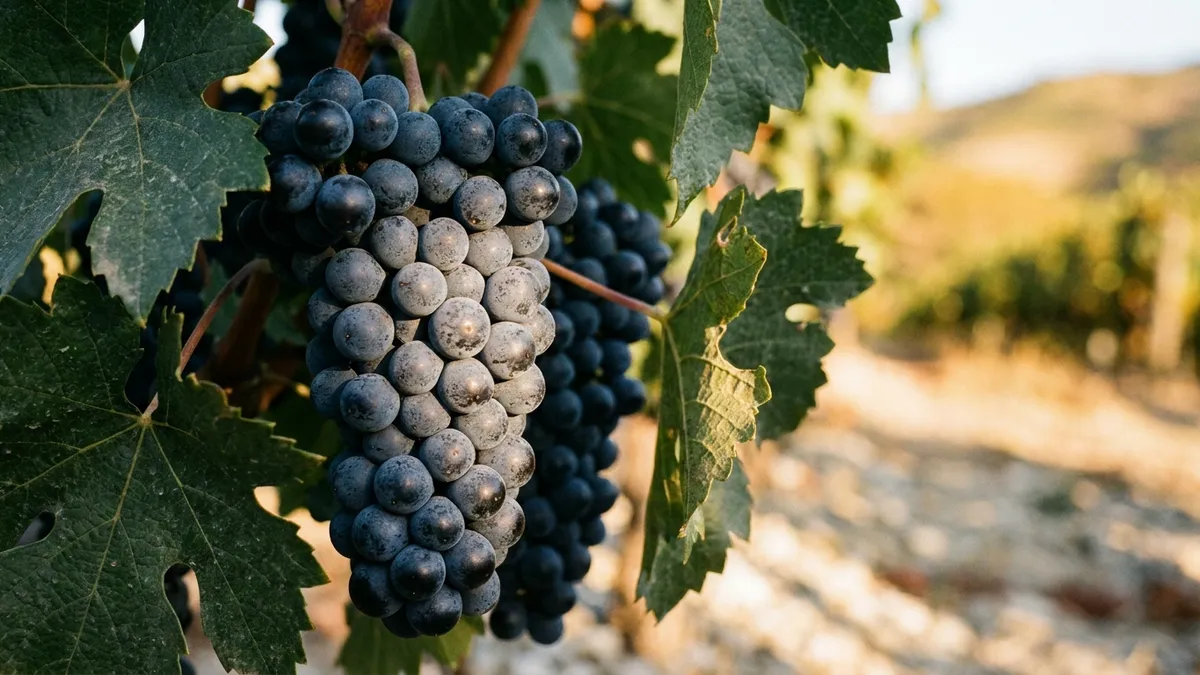
- Touriga Nacional: The most prized red grape, small-berried and intense. It brings deep color, firm tannins (the drying, gripping sensation in red wine), violet and dark-fruit aromas, and the backbone that lets the best wines age. It is widely considered Portugal's finest red variety.
- Touriga Franca: The most widely planted, valued for fragrance, soft fruit, and balance. Where Touriga Nacional supplies power, Touriga Franca supplies perfume and roundness, which is why the two are so often paired.
- Tinta Roriz: The same grape as Spain's Tempranillo, grown across the border under a local name. It adds bright red fruit and structure. Our Tinta Roriz wine guide covers its Portuguese expression, and the Tempranillo wine guide follows the grape across the border.
- Tinto Cão: An old, low-yielding variety prized for elegance, freshness, and aromatic lift. It is a minor partner by volume but a respected one for the finesse it adds to a blend.
- Tinta Barroca: A productive grape that ripens easily and lends sweetness and body, often grown on cooler, higher sites to keep its sugar in check.
White grapes are gaining ground fast. Rabigato, Viosinho, Gouveio, and Códega are the names to know — often field-blended in old vineyards to make fresh, citrus-and-stone-fruit whites with a saline, mineral edge. To see how these natives sit within the country as a whole, our Portuguese wine guide maps the wider picture, and our overview of the noble grapes explains why a beginner learns grapes before regions.
Port vs Dry Douro: One Valley, Two Wines
The single most useful distinction in this region is the split between fortified Port and dry table wine. They share a valley and usually the same grapes, but they are made differently and drink differently. Here is the contrast at a glance:
- Port: Fortified · grape spirit added mid-fermentation to stop it early · sweet · high strength (around 19-20% alcohol) · made in many aged and styled versions · classically a wine to sip after a meal.
- Dry Douro red: Fully fermented · no spirit added · finishes dry · normal strength (around 13-14.5% alcohol) · full-bodied and tannic · a wine for the table, with food.
The thing to remember is fortification — the act of adding neutral grape spirit during fermentation. Stopping fermentation early leaves unfermented sugar behind, so the wine stays sweet and the added spirit pushes the strength up. Let the same grapes ferment all the way to dryness with no spirit, and you get a dry Douro red instead. Two wines, one hillside.
The Douro spent two centuries perfecting a sweet fortified wine, then quietly proved the same grapes could make a great dry one.
A Quick Map of Port Styles
Port deserves its own deep study, and our Port wine guide gives it the full treatment. For orientation, here are the core styles you will meet on a shelf:
- Ruby Port: Young, fruity, and bottled early to keep its bright red color and fresh berry character. The most affordable and approachable style.
- Tawny Port: Aged in barrel until it turns amber, developing flavors of caramel, walnut, dried fig, and toffee. Often sold with an age statement such as 10 or 20 years.
- Vintage Port: Made only in the finest years from a single harvest, bottled young, and aged for decades. The pinnacle of the category and built to last.
- Late Bottled Vintage (LBV): A single-year Port aged longer in barrel before bottling, offering much of the Vintage character at a friendlier price and ready to drink sooner.
- White Port: Made from white grapes, ranging from dry to sweet, and increasingly served chilled with tonic as a long aperitif.
This guide keeps its focus on the dry table wines that have reshaped the Douro's reputation, but knowing the Port styles helps you read any label from the valley.
The Three Sub-Zones of the Douro
The Douro runs east from near Porto toward Spain, growing hotter and drier the further inland you go. The region splits into three official sub-zones, and knowing them turns a long gorge into a story of rising heat and concentration.
- Baixo Corgo (lower, westernmost): The coolest, wettest, and most densely planted zone, closest to the Atlantic influence. It yields lighter, fresher wines and supplies much of the fruit for everyday Ruby and Tawny Port and approachable dry reds.
- Cima Corgo (middle): The historic heart of the region around the town of Pinhão. Warmer and drier than the Baixo Corgo, it is home to many of the most prized vineyards and the source of much of the finest Port and the most serious dry reds.
- Douro Superior (upper, easternmost): The hottest, driest, and least developed zone, stretching toward the Spanish border. Its remote, sparsely planted slopes are a frontier for ambitious dry reds, prized for deep concentration and intensity.
The Vineyard Classification System
The Douro has one of the most distinctive grading systems in the wine world, and it shapes what every vineyard is allowed to produce. Rather than ranking finished wines, it scores the land itself.
Each plot is graded on a points scale that weighs a long list of natural and human factors. The most heavily weighted are usually:
- Altitude and slope: Lower, well-exposed sites score higher, as they ripen grapes more reliably.
- Aspect: The direction the vineyard faces, which controls how much sun and heat it receives.
- Soil and stoniness: Schist-rich, well-drained ground is favored over richer, flatter soils.
- Age of vines and yield: Older, lower-yielding vines that concentrate flavor score better than young, high-cropping ones.
The total score sets a letter grade from A (the best) down to F. Historically the grade governed how much Port a plot could legally make each year — the higher the grade, the larger the permitted share — and it still influences grape prices and which sites are used for top wines. It is a system that prizes the hardest, steepest, stoniest land precisely because that land makes the most concentrated wine. Understanding why the firm tannins and high acidity of these wines matter is easier with our guide to understanding tannins, acidity, and body.
What Makes the Douro Distinctive
A few traits set the Douro apart from almost everywhere else, and they all trace back to the same harsh, beautiful gorge.
The first is native-grape identity. The Douro never converted to international varieties such as Cabernet or Merlot. It bet on its own grapes — Touriga Nacional and its partners — and that gamble now reads as authenticity. There is no other red in the world that tastes quite like a serious Douro blend.
The second is the field-blend tradition. Old mixed-variety vineyards are a living archive of grapes, some so rare they barely have names. Picking and fermenting them together produces a complexity that is almost impossible to copy by blending single varieties in the cellar.
The third is sheer drama and difficulty. Nearly everything is done on slopes too steep for machines, often by hand. That labor is why the valley earned UNESCO World Heritage status and why every bottle carries a real sense of place. For the wider context of how the Douro fits alongside Portugal's other great regions, our Portuguese wine guide is the companion map.
How a Beginner Should Start with Douro Wine
You do not need a Vintage Port or a cult dry red to understand the Douro. The smartest path is to taste deliberately and feel how one valley makes two very different wines. Here is a practical order:
- Begin with a mid-priced dry Douro red. This is the clearest introduction to the region's modern face — dark fruit, firm structure, and a stony depth, without the cost of a flagship bottling.
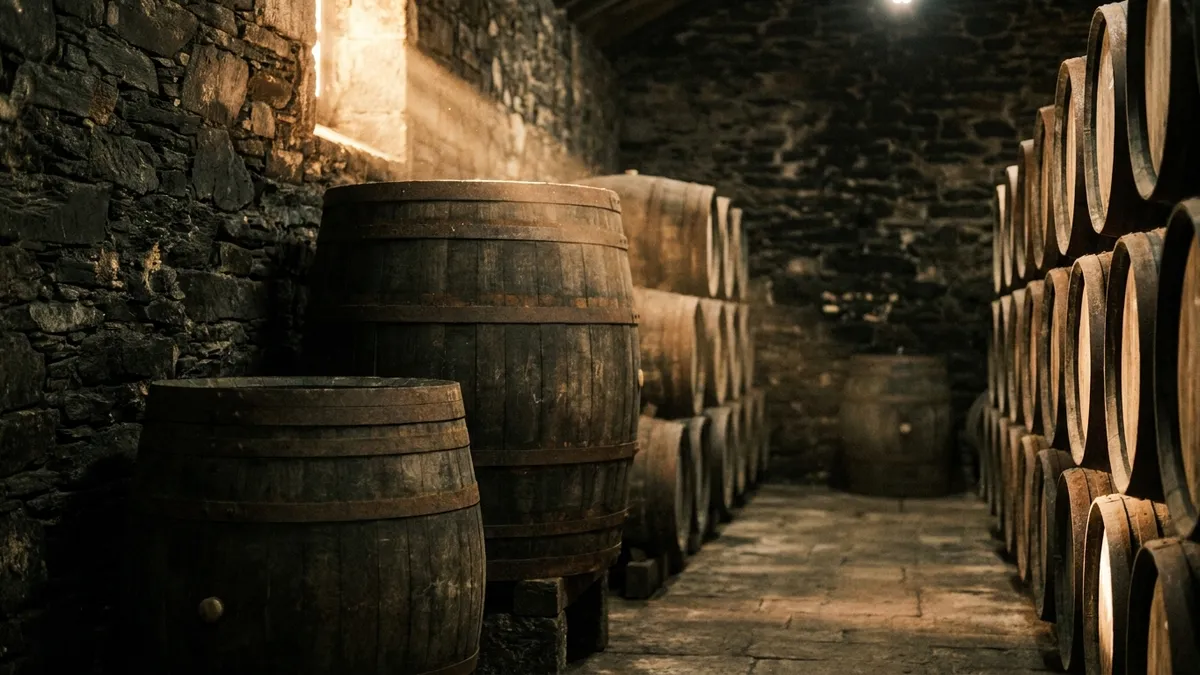
- Set a Tawny Port beside it. Tasting a dry red and an aged Tawny together makes the fortified-versus-dry split obvious in a single sitting. Same valley, same grapes, entirely different wine.
- Add a fresh Douro white. A crisp, mineral white from Rabigato or Viosinho proves the region is far more than big reds, and it resets the palate beautifully between the heavier wines.
- Notice the structure. Pay attention to the grippy tannins, the dark concentrated fruit, and the saline, schist-driven finish that marks these wines. Our guide to how to taste wine gives you the step-by-step method to put words to what you sense.
- Compare across borders later. Once the Douro's style is clear, taste a Tinta Roriz against a Spanish Tempranillo to feel how one grape shifts with place.
The Sommy app turns these comparisons into guided exercises — naming the aromas, scoring the tannins and acidity, and building the vocabulary to describe a wine with confidence. You can start practicing free at sommy.wine, then bring the method to your next bottle from the Douro.
The valley also teaches a wider lesson that pays off across all wine: that a region known for one thing can quietly master another. The Douro built its name on Port, then proved its grapes and its schist could make a dry red worth seeking out.
The Reward of Learning the Douro
The Douro asks you to hold two ideas at once: a centuries-old fortified tradition and a modern dry-wine revolution, both growing from the same dark rock. That double identity is exactly what makes the region rewarding. Once you can tell a Tawny from a dry red and place a wine in its sub-zone, a Douro label stops being unfamiliar and starts telling you precisely what is in the glass.
Start small, taste in pairs, and let the schist and the native grapes reveal themselves one bottle at a time. The Sommy app is built to make that habit stick — turning each wine into a short, guided lesson so the next bottle from the Douro is a little clearer than the last. If Portugal's wider story interests you, our Portuguese wine guide and French wine regions overview show how the Douro's logic compares with the rest of the wine map.
Sources
Frequently Asked Questions
What grapes are used in Douro Valley wine?
The Douro relies on native Portuguese grapes blended together rather than a single variety. The core reds are Touriga Nacional, Touriga Franca, Tinta Roriz, Tinto Cão, and Tinta Barroca. The same grapes make both Port and dry Douro reds. Whites use grapes such as Rabigato, Viosinho, Gouveio, and Códega, often field-blended in old vineyards.
Is Douro wine the same as Port?
They come from the same region and often the same grapes, but they are different wines. Port is fortified, meaning grape spirit is added during fermentation to stop it early, leaving the wine sweet and strong. Dry Douro table wine is fermented fully with no spirit added, so it finishes dry at normal wine strength. Both are made in the Douro Valley.
What does Douro red wine taste like?
Dry Douro reds tend toward dark, concentrated fruit — blackberry, plum, and black cherry — with notes of violet, dried herbs, and a stony, mineral edge from the schist soils. They are typically full-bodied with firm tannins and good acidity. The hot, dry climate and steep slopes give them power, depth, and the structure to age.
What is a field blend in the Douro?
A field blend is an old vineyard planted with many grape varieties mixed together in the same plot, then picked and fermented all at once. Many historic Douro vineyards hold dozens of varieties side by side. Growers trusted the blend over any single grape, so the vineyard itself does the blending rather than the cellar.
How does the Douro vineyard classification work?
The Douro grades each vineyard plot on a points system that scores factors such as altitude, slope, aspect, soil, age of vines, and yield. The score sets a letter grade from A down to F. Higher-graded plots are allowed to make more Port per hectare and command higher prices for their grapes, which shapes what each site is used for.
What are the main Port styles?
Ruby Port is young, fruity, and bottled early to keep its red color. Tawny Port ages in barrel until it turns amber and tastes of caramel, nuts, and dried fruit. Vintage Port comes from a single outstanding year and ages for decades in bottle. Late Bottled Vintage, or LBV, is a more affordable single-year style. White Port is made from white grapes.
Where is the Douro Valley?
The Douro Valley sits in the far north of Portugal, inland from the city of Porto, following the Douro river east toward the Spanish border. It is one of the world's oldest demarcated wine regions, recognized in 1756. The valley is split into three sub-zones — Baixo Corgo, Cima Corgo, and Douro Superior — that grow hotter and drier moving east.
Where should a beginner start with Douro wine?
Start with a mid-priced dry Douro red, which shows the region's dark fruit and firm structure without the cost of a top bottling. Taste it beside a Tawny Port to feel the difference between dry and fortified from the same valley. A fresh Douro white is a useful third stop to show the region makes more than big reds.
Sommy Team
LinkedInFounder & Wine Educator
The Sommy Team is building the world's most approachable wine education app, helping beginners develop real tasting skills through structured courses and AI-guided practice.