Tinta Roriz: Tempranillo's Portuguese Alter Ego

By the Sommy Team — AI-assisted, human-edited.
Updated Jun 17, 2026
Contents (8)
- What Is Tinta Roriz Wine?
- One Grape, Many Names: Tinta Roriz, Aragonez, and Tempranillo
- Tinta Roriz Tasting Notes and Flavor Profile
- How Tinta Roriz Differs from Spanish Tempranillo
- Tinta Roriz in Douro Reds and Port Blends
- Tinta Roriz in the Alentejo, as Aragonez
- How to Taste and Pair Tinta Roriz
- Where Tinta Roriz Fits in the Wider Wine World
TL;DR
Tinta Roriz is the Portuguese name for Tempranillo, Spain's most famous red grape. It anchors Douro reds and Port blends, usually field-blended with Touriga Nacional and Touriga Franca. Expect plum, blackberry, fig, tobacco, and leather, with medium-high tannin and a riper, warmer profile than Spanish versions.
What Is Tinta Roriz Wine?
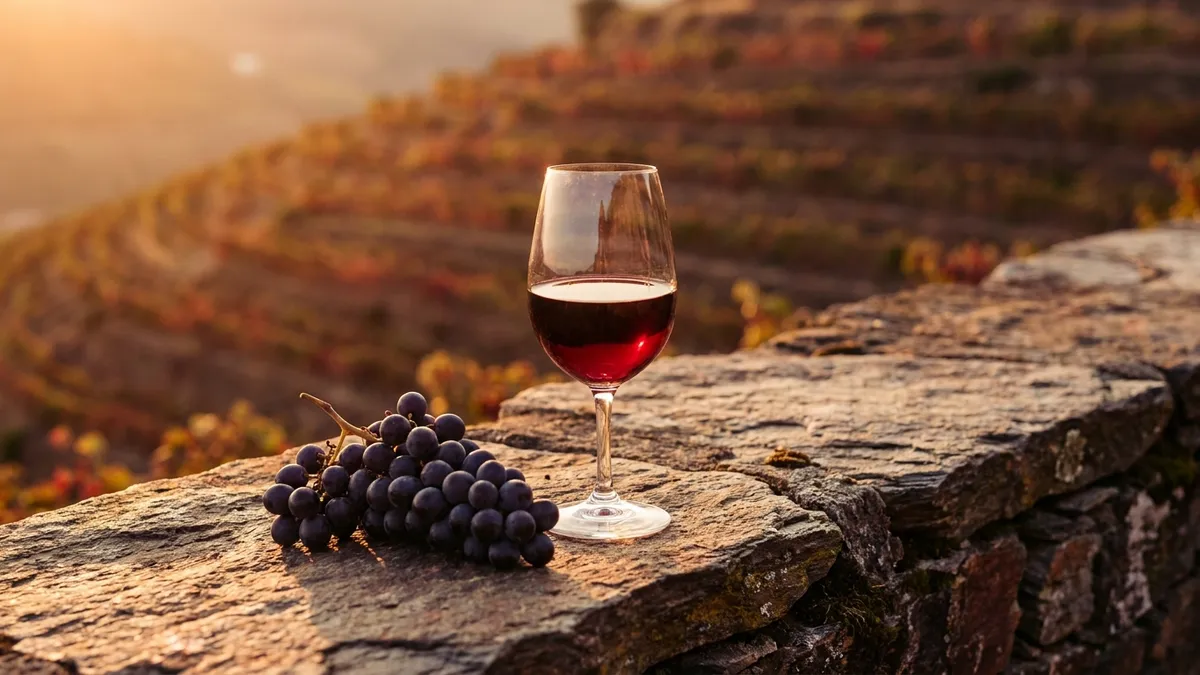
Tinta Roriz is the Portuguese name for Tempranillo, the same red grape behind Spain's most celebrated wines. When you drink tinta roriz wine from Portugal, you are tasting Tempranillo grown in a hotter climate and shaped by a different winemaking tradition. The grape is one of the cornerstones of Douro reds and a prized component in Port blends, where it usually shares the bottle with Touriga Nacional and Touriga Franca. In the southern Alentejo region it goes by yet another name, Aragonez. Across all three names it delivers plum, blackberry, and fig fruit wrapped in savory tobacco and leather, with medium-high tannin and a riper, warmer profile than its Spanish counterpart.
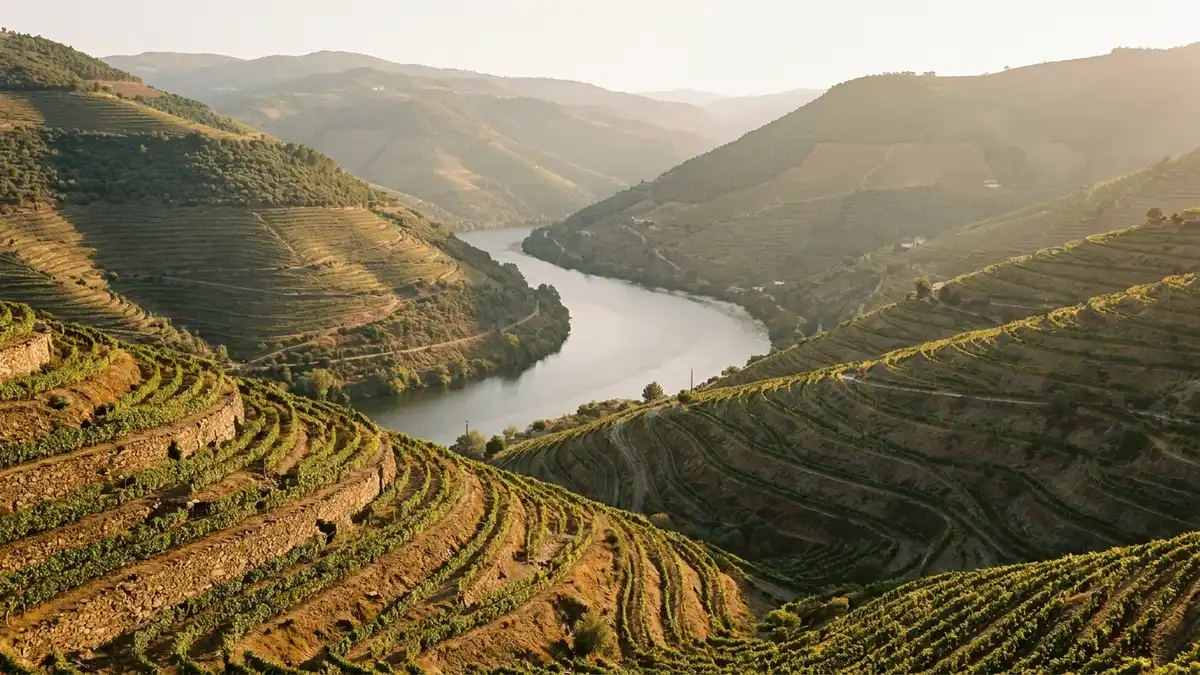
If you already know Tempranillo from Rioja, you have a head start. The grape's identity travels across the border, but its accent changes. Where Spanish Tempranillo can be bright and red-fruited, Portuguese Tinta Roriz tends to read darker and rounder, a product of sun-baked schist terraces and the local habit of growing many grapes together in one vineyard.
One Grape, Many Names: Tinta Roriz, Aragonez, and Tempranillo
Few grapes collect names the way this one does. Understanding the geography of the labels is the fastest way to make sense of a Portuguese wine shelf.
- Tempranillo — The Spanish name and the one used internationally. It comes from the Spanish temprano, meaning "early," because the grape ripens ahead of most of its neighbors.
- Tinta Roriz — The name in the Douro Valley in northern Portugal, home of Port and the country's most structured dry reds.
- Aragonez (also spelled Aragonês) — The name in the Alentejo, the vast, warm region in southern Portugal, where the grape makes softer, fruit-forward wines.
The same vine can therefore appear on three different labels with three different names, and a beginner could be forgiven for thinking they were three different grapes. They are not. This is one of wine's classic synonym traps — the kind of thing that makes a varietal harder to learn than it should be.
Sommelier tip: When a Portuguese label lists Tinta Roriz or Aragonez and you are not sure what to expect, picture Tempranillo with the volume turned up — riper fruit, fuller body, the same savory backbone.
If you enjoy untangling these naming puzzles, the wider story of grapes that look the same but taste different is a rewarding rabbit hole, and Tinta Roriz sits right at its center.
Tinta Roriz Tasting Notes and Flavor Profile
Tinta Roriz keeps Tempranillo's core identity but pushes it toward the dark end of the spectrum. The hot Douro and Alentejo climates ripen the fruit fully, which is why Portuguese versions feel richer and more generous than many Spanish ones.
Typical aromas: ripe plum, blackberry, fig, dried cherry, tobacco, leather, and a note of dried herbs.
On the palate, the grape offers a satisfying balance of fruit and structure:
- Body: medium to full (3.5/5)
- Acidity: medium (3/5) — softer than Spanish Tempranillo because of the warmer climate
- Tannins: medium-high (4/5) — firm but ripe, giving grip without harshness
- Alcohol: medium-high, a consequence of full ripeness in a hot region
The fruit leads when the wine is young — juicy plum and blackberry — and the savory side emerges with age and time in oak, shifting toward tobacco, leather, and dried fig. That fruit-to-savory arc is the same one Tempranillo travels in Spain, only here it starts from a riper, darker baseline.

Tannin is central to how Tinta Roriz feels in the mouth, so it pays to know what you are sensing. Tannins are the drying, gripping compounds that pull at your gums and the insides of your cheeks, and Tinta Roriz carries enough of them to age well and to stand up to rich food. For a fuller breakdown of how grip, brightness, and weight work together, see the guide to understanding tannins, acidity, and body.
How Tinta Roriz Differs from Spanish Tempranillo
The grape is genetically identical on both sides of the border, so every difference comes from place and practice rather than DNA. Two forces drive the gap: climate and blending.
- Spanish Tempranillo — Often grown at higher, cooler sites in Rioja and Ribera del Duero. Tends toward red cherry and strawberry when young, with a savory, leathery, earthy core. Acidity is brighter and the structure can feel more linear and elegant.
- Portuguese Tinta Roriz — Grown on hot schist terraces in the Douro and on warm plains in the Alentejo, and almost always field-blended. Reads riper and darker — plum, blackberry, fig — with fuller body, softer acidity, and a rounder, more generous shape.
The second force, blending, is just as important as climate. In Spain, Tempranillo frequently stars as a single-variety wine. In Portugal it almost never works alone — it is a team player, woven into a blend where each grape covers another's weakness.
This is part of why Portugal rewards curiosity. The country's reliance on its own indigenous grapes worth trying means a Douro red can deliver a flavor you will not find anywhere else, even when one of its components is a grape you already know from Spain.
Tinta Roriz in Douro Reds and Port Blends
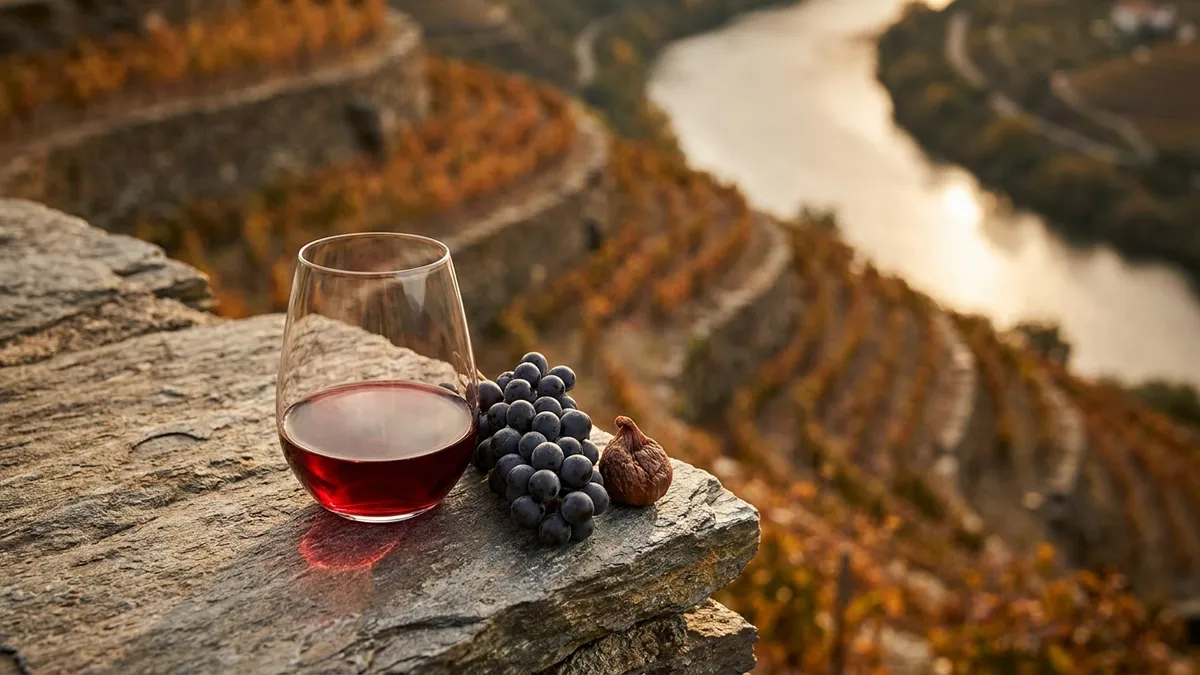
The Douro Valley is where Tinta Roriz earns its reputation. This UNESCO-listed region of steep, terraced vineyards above the Douro River produces two very different wines from the same grapes: dry red table wines and fortified Port.
Dry Douro Reds
Modern Douro reds are some of Portugal's most ambitious wines, and Tinta Roriz is a key building block. Here it brings ripe dark fruit, color, and body to a blend, while its partners supply aromatics and freshness.
The classic Douro field blend leans on three grapes:
- Tinta Roriz — ripe plum and blackberry fruit, structure, and body.
- Touriga Nacional — Portugal's most prized red grape, adding violet and bergamot perfume, deep color, and firm grip.
- Touriga Franca — softer and aromatic, adding red fruit, floral lift, and balance.
The result is a red of real depth — dark-fruited, savory, and built to age — that tastes like nowhere else precisely because of that combination.
A Word on Field Blends
Many of the oldest Douro vineyards are field blends — plots where a dozen or more grape varieties grow interplanted, picked together, and fermented together rather than vinified separately and blended later. Tinta Roriz is one of the most common vines in these old plantings.
The field-blend tradition is a major reason Portuguese Tinta Roriz tastes the way it does. The grape is rarely isolated, so its character is always seasoned by its neighbors. For wine learners, it is a useful reminder that a single grape's "typical" flavor is shaped as much by how it is grown and combined as by the grape itself.
Port Wine
Tinta Roriz is also one of the five grapes most prized for quality Port, the sweet fortified wine the Douro is famous for, alongside Touriga Nacional, Touriga Franca, Tinta Barroca, and Tinto Cao. In Port, fermentation is stopped early by adding grape spirit, which leaves natural sweetness and pushes alcohol up.
Tinta Roriz contributes structure, deep color, and dark fruit that help balance Port's sweetness and strength. Its tannin gives the wine backbone, which is exactly what a rich, sweet, high-alcohol wine needs to avoid tasting flabby. The grape's ability to swing between dry, age-worthy reds and a component of one of the world's great dessert wines is a large part of its value to growers.
Tinta Roriz in the Alentejo, as Aragonez
Travel south to the Alentejo and the grape changes its name to Aragonez and, with it, its personality. The Alentejo is hot, flat, and sunny, a region of cork oaks and broad estates rather than the Douro's vertiginous terraces.
Here the grape ripens early and fully, producing wines that are:
- Softer and rounder than Douro versions, with gentler tannins.
- Fruit-forward, leaning into ripe plum and blackberry.
- Approachable young, made for drinking within a few years rather than long cellaring.
Aragonez is frequently blended with other warm-climate Portuguese grapes such as Trincadeira and Alicante Bouschet, as well as international varieties. The Alentejo style shows how flexible Tempranillo can be: the same grape that builds powerful, structured Douro reds also makes easygoing, crowd-pleasing wines a few hundred kilometers south.
How to Taste and Pair Tinta Roriz
Tinta Roriz is a forgiving grape to learn because its flavors are clear and its food affinities are broad. The savory-meets-ripe-fruit profile makes it one of the most versatile reds at the table.
How to Taste It
Approach a glass of Tinta Roriz the way you would any structured red: look, smell, sip, and pay attention to where the tannin lands. The grape gives you obvious signposts — dark fruit up front, savory tobacco and leather behind, firm grip on the finish. Following a repeatable method like the one in how to taste wine turns those signposts into a vocabulary you can use again on the next glass.
A revealing exercise is to taste a Spanish Tempranillo and a Portuguese Tinta Roriz side by side. The shared backbone — savory depth, medium-high tannin — is the family resemblance. The difference in fruit ripeness and body is the climate and the blend talking. Putting words to that gap is exactly the kind of skill that compounds, and writing it down using how to describe wine makes the contrast stick.
Food Pairing
Tinta Roriz's tannin and savory character make it a natural partner for rich, hearty food:
- Roast and grilled meats — lamb, pork, beef, and game. The protein and fat soften the tannin while the wine's structure handles char and smoke.
- Portuguese classics — slow-cooked stews, bacalhau dishes with bold flavors, and cured sausages echo the wine's savory side.
- Hard, aged cheeses — the salt and umami in aged cheese amplify the grape's leathery depth.
- Mushroom and tomato-based dishes — earthy and acidic foods bridge to Tinta Roriz's savory fruit.
The principles behind these matches — tannin loves fat, savory wine loves savory food — apply far beyond this grape, and the wine and food pairing guide lays out the logic so you can improvise with confidence.
Where Tinta Roriz Fits in the Wider Wine World
Tinta Roriz is a perfect case study in how one grape can wear many faces. It belongs to the global Tempranillo family but expresses itself on Portuguese terms, and it sits comfortably alongside the other workhorse reds worth knowing.
If you are building out your knowledge of dark-skinned varieties, it pairs naturally with the broader survey of red and black grapes, and it makes an interesting contrast with warm-climate blending partners like Grenache, which shares Tinta Roriz's generosity but trades grip for softer, redder fruit. For the full Spanish side of the story, the dedicated Tempranillo wine guide covers the grape's Rioja and Ribera del Duero homelands in depth, and the Portuguese wine guide sets Tinta Roriz in the context of the country's other distinctive varieties.
Tinta Roriz is also a reminder that the noble grapes are only the beginning. Plenty of the most exciting bottles come from regional names and synonyms that reward a little learning, the same lesson behind the broader look at the noble grapes and why the wine world is so much bigger than six famous varieties.
The reward for learning a grape like Tinta Roriz is real range: from a structured Douro red to a sweet Port to an easy Alentejo Aragonez, you can follow a single grape across an entire country and taste how place rewrites it each time. That kind of structured, grape-by-grape exploration is exactly what Sommy is built to guide, turning a confusing shelf of unfamiliar Portuguese names into a map you can read.
Sources
- Wine Grapes: A Complete Guide to 1,368 Vine Varieties — Jancis Robinson, Julia Harding, José Vouillamoz, Allen Lane, 2012
- Tempranillo (Tinta Roriz / Aragonez) variety profile — Wine-Searcher, 2024
- Douro DOC and the grapes of Port — Instituto dos Vinhos do Douro e do Porto (IVDP), 2024
Frequently Asked Questions
Is Tinta Roriz the same as Tempranillo?
Yes. Tinta Roriz is the Portuguese name for Tempranillo, the same grape that drives Rioja and Ribera del Duero in Spain. Portugal also calls it Aragonez in the Alentejo region. The grape is genetically identical, but the warmer Portuguese climate and field-blend tradition give the wines a riper, fuller character.
What does Tinta Roriz taste like?
Tinta Roriz shows ripe plum, blackberry, and fig fruit alongside savory tobacco and leather. Tannins are medium-high and the body sits at medium to full. In the warm Douro and Alentejo, the fruit reads darker and riper than in Spain, where the grape leans toward red cherry and a more savory, earthy edge.
What is the difference between Tinta Roriz and Aragonez?
There is no grape difference — both names describe Tempranillo in Portugal. Tinta Roriz is used in the Douro Valley in the north, where it goes into Port and powerful dry reds. Aragonez is the name in the Alentejo in the south, where warmer, flatter vineyards produce softer, fruit-forward wines for earlier drinking.
Is Tinta Roriz used in Port wine?
Yes. Tinta Roriz is one of the five grapes most prized for quality Port, alongside Touriga Nacional, Touriga Franca, Tinta Barroca, and Tinto Cao. It brings structure, color, and dark fruit to the blend. In fortified Port the grape's tannin and concentration help balance the sweetness and high alcohol.
What grapes is Tinta Roriz blended with?
In the Douro, Tinta Roriz is most often field-blended with Touriga Nacional and Touriga Franca, the two pillars of Douro reds and Port. Touriga Nacional adds floral aromatics and grip, Touriga Franca adds perfume and freshness, and Tinta Roriz contributes ripe dark fruit and body to the blend.
Is Tinta Roriz a dry or sweet wine?
Dry Douro and Alentejo reds made from Tinta Roriz contain no significant residual sugar, so they taste dry despite their ripe fruit. The grape also goes into Port, which is a sweet fortified wine — but the sweetness there comes from stopping fermentation early with grape spirit, not from the grape itself.
How does Portuguese Tinta Roriz differ from Spanish Tempranillo?
Same grape, different expression. Spanish Tempranillo from cooler, higher sites often shows red cherry and a savory, leathery core. Portuguese Tinta Roriz, grown in the hot Douro and Alentejo and usually field-blended, leans riper and darker — plum, blackberry, and fig — with fuller body and softer acidity. Climate and blending drive the gap.
Sommy Team
LinkedInFounder & Wine Educator
The Sommy Team is building the world's most approachable wine education app, helping beginners develop real tasting skills through structured courses and AI-guided practice.