Wine for a Wedding Reception: How to Please Every Guest

By the Sommy Team — AI-assisted, human-edited.
Updated Sep 25, 2026
Contents (10)
- How to Choose Wine for a Wedding Reception, in One Paragraph
- How Much Wine Do You Need for a Wedding Reception?
- Champagne, Prosecco or Cava: Which Sparkling Wine Suits the Toast?
- Why Can't One Wine Suit Every Dish at a Wedding?
- Which White, Rosé and Red Should You Pour at a Wedding?
- What Wine Works for a Buffet Wedding Reception?
- How Should You Serve Wine at a Wedding?
- What About Guests Who Drink Little or No Wine?
- Do Sulfite Labels Matter for Your Wedding Guest List?
- How Do You Test Your Wedding Wine Shortlist?
TL;DR
Three wines cover a wedding reception: a sparkling wine for the toast, a crisp white or dry rosé, and a low-tannin red. Buy by glasses, not guests: a 750 mL bottle pours five 5-ounce glasses or six 125 mL toast pours. Match the red to the main course and the toast wine to the cake.
Three wines cover a wedding reception: a sparkling wine for the toast, a crisp white or dry rosé, and a low-tannin red. No single bottle suits every dish on a wedding menu, and a short list is easier to buy, chill and pour. Planning wine for a wedding reception starts with two numbers. One is the glasses each guest will drink; the other is the glasses a bottle pours.
How to Choose Wine for a Wedding Reception, in One Paragraph
Pick three wines and buy by the glass. A standard 750 mL bottle pours about five 5-ounce glasses, or six 125 mL pours for the toast. Multiply your guests by the glasses you expect each to drink, then divide.
For the toast, choose bottle-fermented Champagne or Cava with salty canapés, or an Extra Dry or Dry Prosecco if the cake is already on the table. For dinner, pour a high-acid unoaked white such as Sauvignon Blanc or Albariño for fish, fried and creamy food, and a low-tannin red such as Pinot Noir or Gamay for everything else. If the main course is beef or lamb, trade up to a firmer red.
How Much Wine Do You Need for a Wedding Reception?
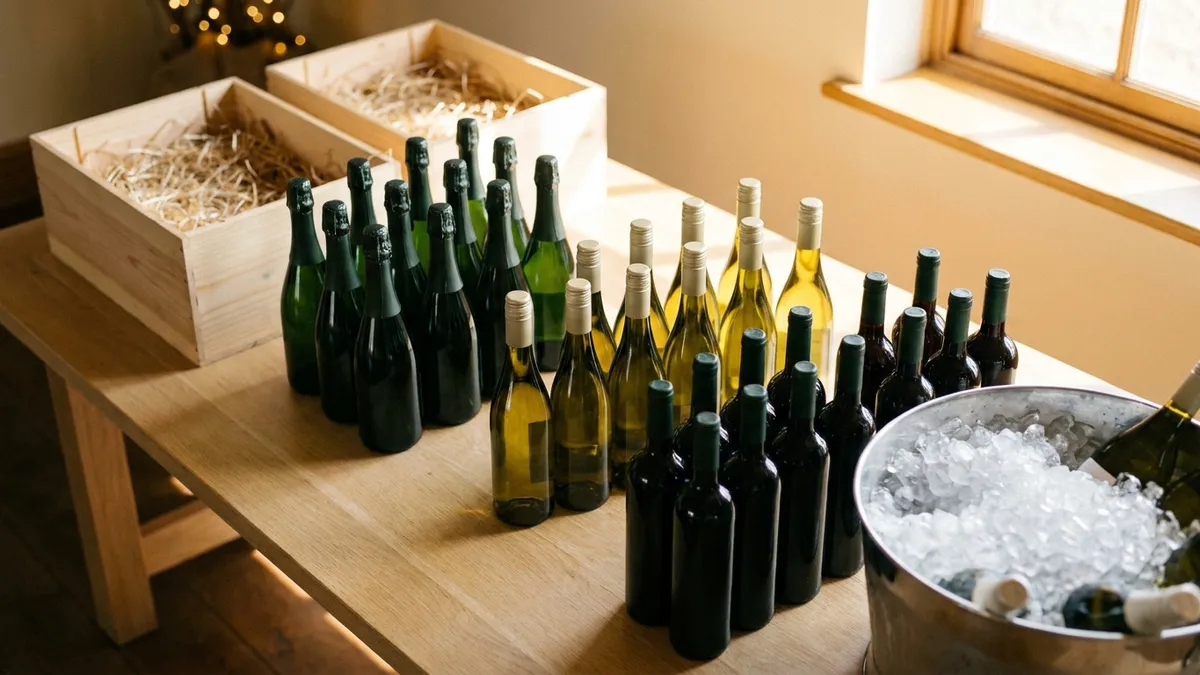
Start from glasses: a standard 750 mL bottle pours about five 5-ounce glasses (148 mL each) or six smaller 125 mL servings. So the order is simple arithmetic: guests multiplied by the glasses each will drink, divided by five for dinner wine or by six for the toast.
The number you have to decide is how many glasses each guest drinks. That comes from the length of the evening, and nobody knows your guests better than you. The table below runs the math for three common set-ups. If wine is poured only with dinner, use the two-glass column. If the bar stays open late into the night, use the four-glass column.
| Guests | Toast: one 125 mL pour each (bottles of sparkling) | Dinner: 2 glasses each (bottles of still wine) | Dinner and dancing: 4 glasses each (bottles of still wine) | Order for dinner plus a toast |
|---|---|---|---|---|
| 50 | 9 | 20 | 40 | 9 sparkling, 10 white or rosé, 10 red |
| 100 | 17 | 40 | 80 | 17 sparkling, 20 white or rosé, 20 red |
| 150 | 25 | 60 | 120 | 25 sparkling, 30 white or rosé, 30 red |
| 200 | 34 | 80 | 160 | 34 sparkling, 40 white or rosé, 40 red |
The last column splits still wine evenly between white and red. Shift the split toward the menu. If the main course is fish, order more white; if it is beef, order more red. Our guide to how many glasses are in a bottle covers other bottle sizes and pour sizes if your caterer uses a different measure.
Champagne, Prosecco or Cava: Which Sparkling Wine Suits the Toast?
Choose by budget and by what is on the table when the glasses go up. Champagne and Cava get their bubbles from a second fermentation inside each bottle. Prosecco usually gets them in a large steel tank. The method changes the taste, and Prosecco's sweetness labels decide whether it can stand next to cake.
Champagne is an appellation (a protected place name). It can only come from the Champagne region of France, made almost entirely from Pinot Noir, Pinot Meunier or Chardonnay. The bubbles form in the bottle, the traditional method, and the wine rests on spent yeast, which adds a smell of bread and toast. It usually costs the most of the three.
Cava is Spain's answer. Spanish rules allow the name only on wines made by the traditional method; anything else must be sold as plain sparkling wine. About 95% of Cava comes from Penedès in Catalonia, mostly from the Macabeo, Parellada and Xarel·lo grapes. It gives you the same bottle-fermented style as Champagne at a lower price.
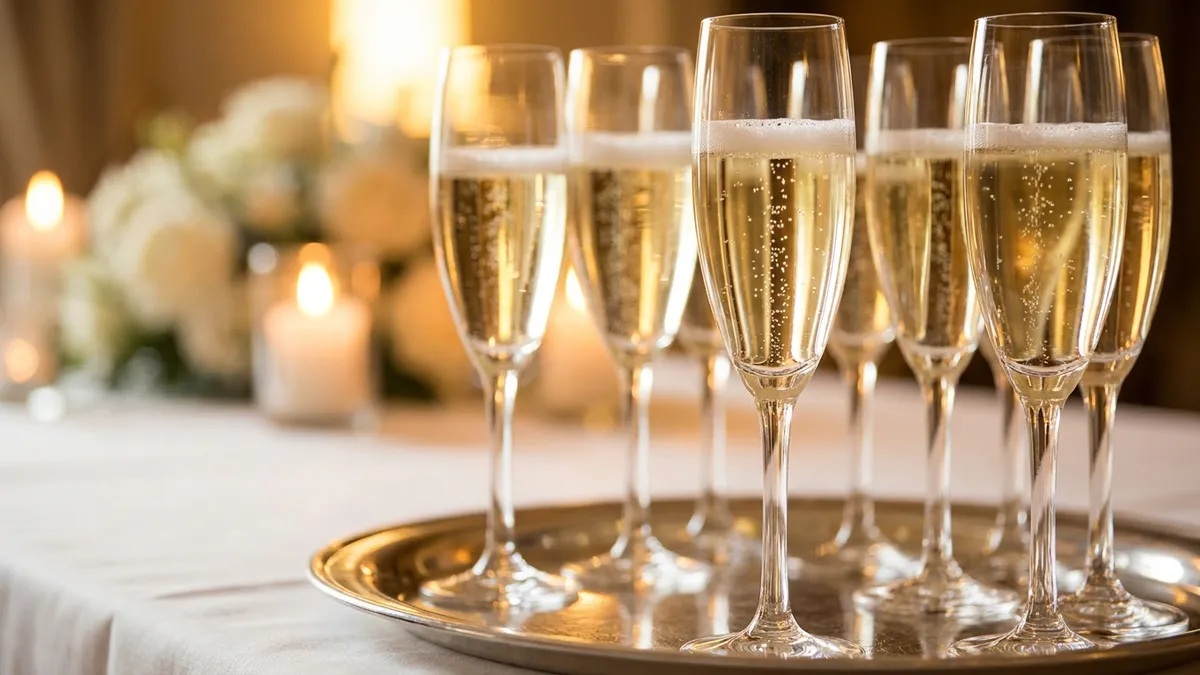
Champagne is not simply expensive Prosecco: the bubbles are made a different way. Prosecco is made mainly from the Glera grape, with up to 15% of other permitted varieties, using the tank method (also called Charmat), where the second fermentation happens in a sealed steel tank. The wine keeps the fresh pear and apple smell of the grape.
Prosecco also carries sweetness words, and the three you will see most often run backwards from what most people expect. Brut holds up to 12 grams of sugar per litre, Extra Dry 12 to 17, and Dry 17 to 32. A wine should taste sweeter than the food beside it, or it turns sour. If cake is served at the toast, pour Extra Dry or Dry Prosecco. If the toast comes with salty canapés, pour a Brut Cava or Champagne.
| Toast wine | Where it comes from | How the bubbles are made | What it tastes like | Pick it when |
|---|---|---|---|---|
| Champagne | Champagne region, France only | Second fermentation in each bottle | Apple and lemon, plus bread and toast from the yeast | The budget allows and the toast comes with salty canapés |
| Cava | Spain, about 95% from Penedès | Second fermentation in each bottle (required by law) | Green apple and citrus, with a lighter bread note | You want the Champagne method at a lower price |
| Prosecco Brut | North-east Italy | Second fermentation in a steel tank | Fresh pear and apple, up to 12 g/L sugar | The toast is before dinner, with savoury bites |
| Prosecco Extra Dry or Dry | North-east Italy | Second fermentation in a steel tank | Pear and apple with a touch of sweetness, 12 to 32 g/L sugar | The cake is on the table when the glasses go up |
For the full family of fizz, from Crémant to Pét-Nat, see our guide to sparkling wine types. The head-to-head comparison of Champagne vs Prosecco vs Cava goes deeper on price and ageing.
Why Can't One Wine Suit Every Dish at a Wedding?
Because tannin, acidity and sweetness each react to a different part of the plate, and a wedding plate holds all of them. A wine that tastes right with the beef can taste harsh with the salmon, and the white that cuts through the fried canapés can taste thin beside the lamb.
Tannin is the drying grip a red wine leaves on your gums. It comes mainly from grape skins and seeds, and it works by binding to proteins, including the ones in your saliva. Give it red meat or hard cheese and the tannin binds to the food's protein instead, so the wine tastes softer. With fish, salad or plain vegetables it has nothing to grab, and the grip stays.
Acidity is the tartness that makes your mouth water. High-acid wines cut through fatty, oily, salty and creamy food, which is why a crisp white tastes fresher next to fried canapés than a soft red does. Body is the weight of the wine in your mouth, like skimmed milk against whole milk. A light-bodied wine disappears beside a heavy braise, and a full-bodied one flattens a delicate starter.
The old colour rule is a rule about structure, not about fish versus meat. A light, low-tannin red works with salmon, and a full white works with roast chicken. Our wine and food pairing guide covers the full set of rules, and how food changes the taste of wine explains why the same glass changes from bite to bite.
Which White, Rosé and Red Should You Pour at a Wedding?
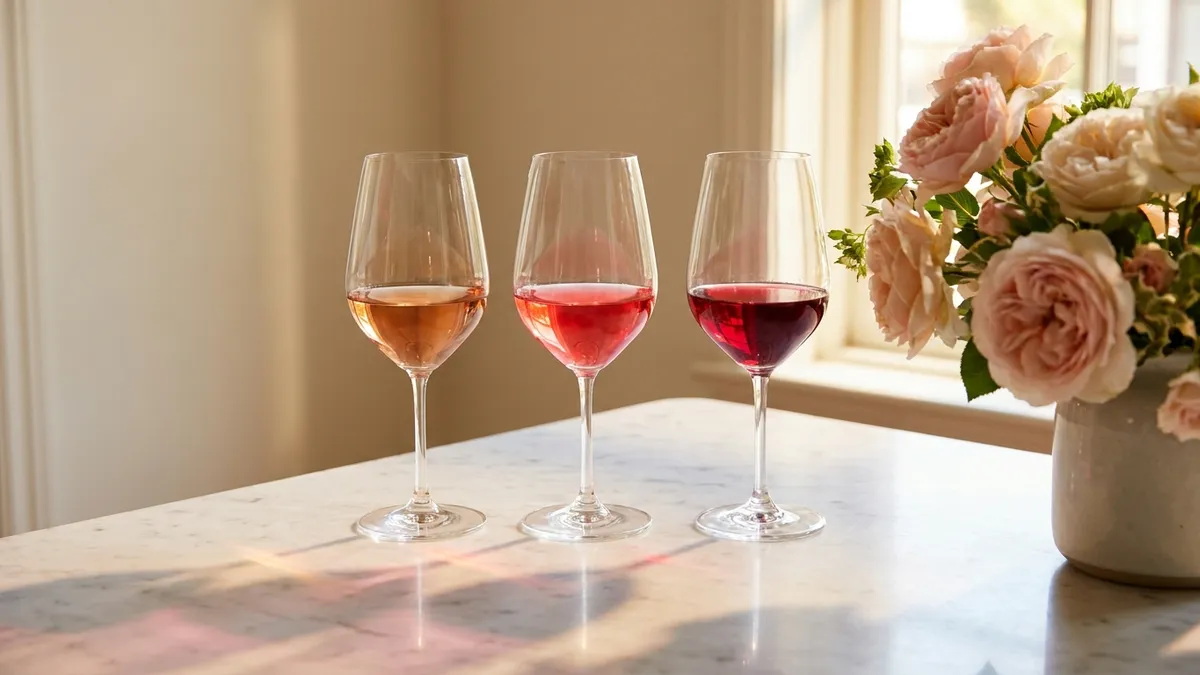
Pour a high-acid unoaked white, a dry rosé if the day is warm, and a low-tannin red, then adjust the red to the main course. Name the style on your order, and the shop or caterer can find it at any price.
- Crisp white: Sauvignon Blanc, Albariño or Pinot Grigio. They are unoaked and high in acidity, so they handle fried canapés, cream sauces, fish and salads. Skip heavily oaked Chardonnay, whose vanilla and toast flavours clash with light starters.
- Dry rosé: a pale, dry Provence-style rosé. In the south of France it is poured with garlicky aioli and bouillabaisse fish stew, which makes it a strong pick for Mediterranean menus. Rosé ranges from pale onionskin orange to near-purple, and the paler styles are usually the lighter ones.
- Low-tannin red: Pinot Noir, Gamay or a Grenache blend. Their light grip means they stay pleasant next to chicken, salmon and vegetable dishes.
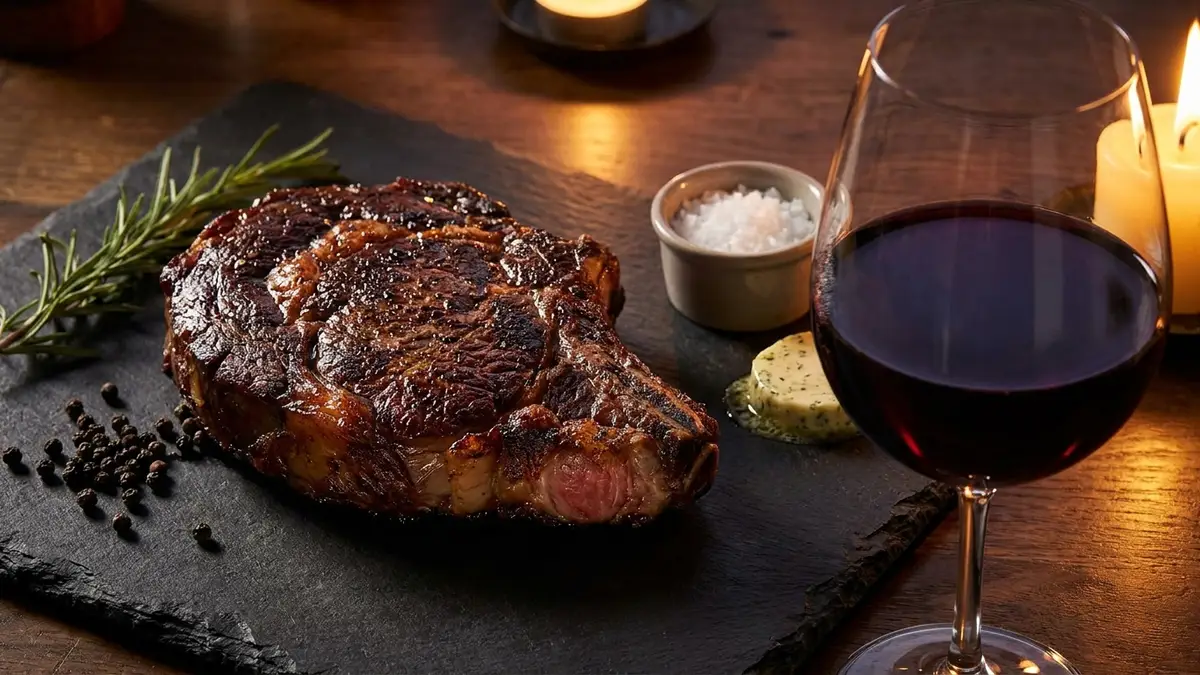
The main course decides the red. If it is beef or lamb, choose a firmer red such as Tempranillo or Cabernet Sauvignon, because the protein softens the extra tannin. If it is chicken, fish or vegetarian, stay with Pinot Noir or Gamay. Our red vs white wine guide explains where those structural differences come from, and the rosé wine guide covers the styles from pale to deep.
What Wine Works for a Buffet Wedding Reception?
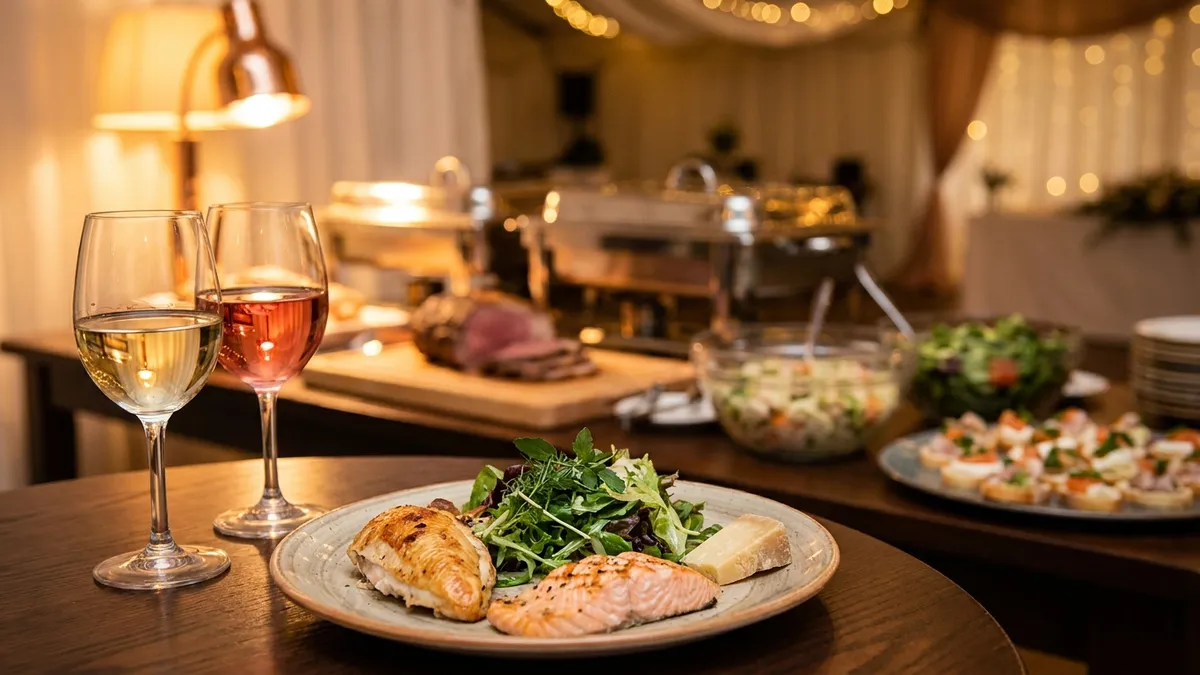
Lean on acidity and soft tannin, because buffet guests stack fish, meat, salad and cheese on one plate. A plated dinner lets you match one wine to one course. A buffet does not, so each wine has to survive every station.
That rules out the extremes. A high-tannin red turns harsh next to the salmon and salad, and an oaky white fights the vinegar in the dressing. The crisp white, dry rosé and light red from the section above cover almost everything. If you can only afford two still wines at a buffet, make them the white and the light red.
Spice needs one extra step. Sweetness balances chilli heat, while alcohol makes it burn hotter. If one station serves chilli-hot food, add an off-dry white (one with a little sugar you can taste), such as Riesling or Chenin Blanc, and keep its alcohol moderate. The guide to wine with spicy food has more pairings by cuisine.
How Should You Serve Wine at a Wedding?
Chill the sparkling, white and rosé well, serve the red slightly cool, and pour the toast only minutes before the speeches. Sparkling wine loses its bubbles in the glass, so a tray poured long before the speeches has lost much of its fizz by the time anyone raises it.
Temperature is where catering tents go wrong. A red that sits in a warm marquee all afternoon tastes of alcohol and stewed fruit. If fridge space is short, chill the sparkling first, then the white and rosé, and give the red a short spell in an ice tub before dinner. Our wine serving temperature chart lists the target for each style, and how to chill wine fast helps on the day.
Pour size decides how far your order stretches. The US National Institute on Alcohol Abuse and Alcoholism defines a standard drink of wine as 5 ounces at 12% alcohol. That is the pour the quantity table above assumes. Ask the bar team to pour to that line and not to the rim.
A magnum holds 1.5 litres, two standard bottles. Magnums on each table look generous and halve the number of corks the staff pull, which speeds up service on a long table.
What About Guests Who Drink Little or No Wine?
Give every guest something to raise at the toast. A non-alcoholic sparkling wine or a sparkling juice poured into the same flute keeps the moment shared. A few bottles per table cost little, and a lower-alcohol wine covers the guests who want wine in the glass with dinner.
For guests who want wine without much alcohol, a lower-alcohol white or a Moscato d'Asti sits well below the usual strength. Our list of low-alcohol wines names the styles to ask for. If you plan a toast, order non-alcoholic sparkling for every table, the top table included, so no one has to ask.
Do Sulfite Labels Matter for Your Wedding Guest List?
Barely, because almost every wine carries the line. In the US, any wine bottled after mid-1987 with more than 10 parts per million of sulfites must say Contains Sulfites on the label. Winemakers add sulfites to stop fermentation at the right moment and to keep the wine from spoiling or oxidising, so nearly all wine clears that bar.
That means the label cannot help you sort bottles for a guest who avoids sulfites. If a guest mentions it, ask what they usually drink and buy that. The guide to sulfites in wine explains what the warning does and does not tell you.
How Do You Test Your Wedding Wine Shortlist?
Buy one bottle of each candidate and taste it with food like the caterer's menu. A wine that tastes fine alone can turn sour with dessert or harsh with fish, and a home test catches that before you order sixty bottles.
Set out the three candidates with three foods: something salty and fried, something with protein, and a slice of cake. Taste each wine with each bite, and note which one holds up. For the toast wine, the cake bite is the one that matters. More pairing principles sit in our food pairing hub.
The Sommy app at sommy.wine also runs short courses, including Wine 101, that teach the tannin, acidity and body vocabulary behind these choices. Pour the candidate white and red side by side with dinner tonight, and write down which one still tastes right with every bite.
Sources
Frequently Asked Questions
How much wine do I need for a wedding of 100 guests?
Count glasses first. A 750 mL bottle pours about five 5-ounce glasses, so 100 guests drinking two glasses each with dinner need 40 bottles of still wine. A toast adds about 17 bottles of sparkling wine at six 125 mL pours per bottle. If the bar stays open for dancing and guests drink four glasses, plan on 80 bottles of still wine.
Is Prosecco or Champagne better for a wedding toast?
Both work, and the deciding factor is the food on the table when glasses go up. Champagne is bottle-fermented and tastes of bread and toast as well as fruit. Prosecco is usually made in a tank from the Glera grape and tastes of fresh pear and apple. With cake, pick an Extra Dry or Dry Prosecco, since a Brut wine tastes sour next to sugar.
Do I need both red and white wine at a wedding?
Yes, in most cases. A wedding menu usually mixes fish, chicken, beef, salad and fried canapés, and no single wine suits all of them. A high-acid white handles the fatty, salty and creamy food. A low-tannin red covers the meat without tasting harsh next to fish or vegetables. A dry rosé can stand in for the white on a warm afternoon.
What is a good budget alternative to Champagne for a toast?
Cava is the closest budget match, because Spanish law requires it to be made the same bottle-fermented way as Champagne, mostly from Macabeo, Parellada and Xarel·lo grapes. Prosecco is the other common choice. It is usually made in a tank, which gives a fruitier, lighter wine, and its sweetness labels help you match the cake.
What wine works for a buffet wedding reception?
Choose wines with high acidity and soft tannin, because buffet guests stack fish, meat, salad and cheese on one plate. An unoaked white such as Sauvignon Blanc or Albariño, a dry rosé and a light red such as Pinot Noir or Gamay cover almost every station. If one station serves chilli-hot food, add an off-dry white such as Riesling.
Do sulfites in wine matter for wedding guests?
The label will not help you sort bottles. In the US, any wine with more than 10 parts per million of sulfites must say Contains Sulfites, and nearly every wine qualifies, because winemakers add sulfites to stop fermentation and prevent spoilage. If a guest tells you they avoid sulfites, ask what they usually drink and have that on hand.
Sommy Team
LinkedInFounder & Wine Educator
The Sommy Team is building the world's most approachable wine education app, helping beginners develop real tasting skills through structured courses and AI-guided practice.