Low-Alcohol Wine Guide: Types, Labels, and Best Styles

By the Sommy Team — AI-assisted, human-edited.
Updated Sep 10, 2026
Contents (11)
- Understanding the Categories
- Naturally Low-Alcohol Wines Worth Knowing
- Which Low-Alcohol Wines Are Best by Color and Origin?
- Same Wine, Two Notes: Kabinett Riesling Next to a Dry Riesling
- What Is the Difference Between Low-Alcohol and Reduced-Alcohol Wine?
- How Dealcoholization Works
- What Non-Alcoholic Wine Tastes Like
- Reading Labels: What the Terms Mean
- How Do You Choose a Low-Alcohol Wine Without a Brand List?
- The Calorie Question
- Food Pairing with Low-Alcohol Wines
TL;DR
Low-alcohol wine is generally any wine under 11-12% ABV, and the lowest-alcohol wines you can buy are naturally light styles like Moscato d'Asti at 5-6%. Dealcoholized wine has alcohol removed after fermentation, and non-alcoholic wine sits under 0.5% ABV under OIV and EU definitions. Naturally low styles taste most like wine.
Low-alcohol wine is any wine under 11-12% ABV, against the 12-15% of a typical bottle. Naturally low styles such as Moscato d'Asti (5-6%), German Riesling Kabinett (7.5-10%) and Vinho Verde (9-11%) were never stronger. Dealcoholized and non-alcoholic wines start at full strength and have alcohol removed afterward, down to as little as 0.5% ABV.
Understanding the Categories
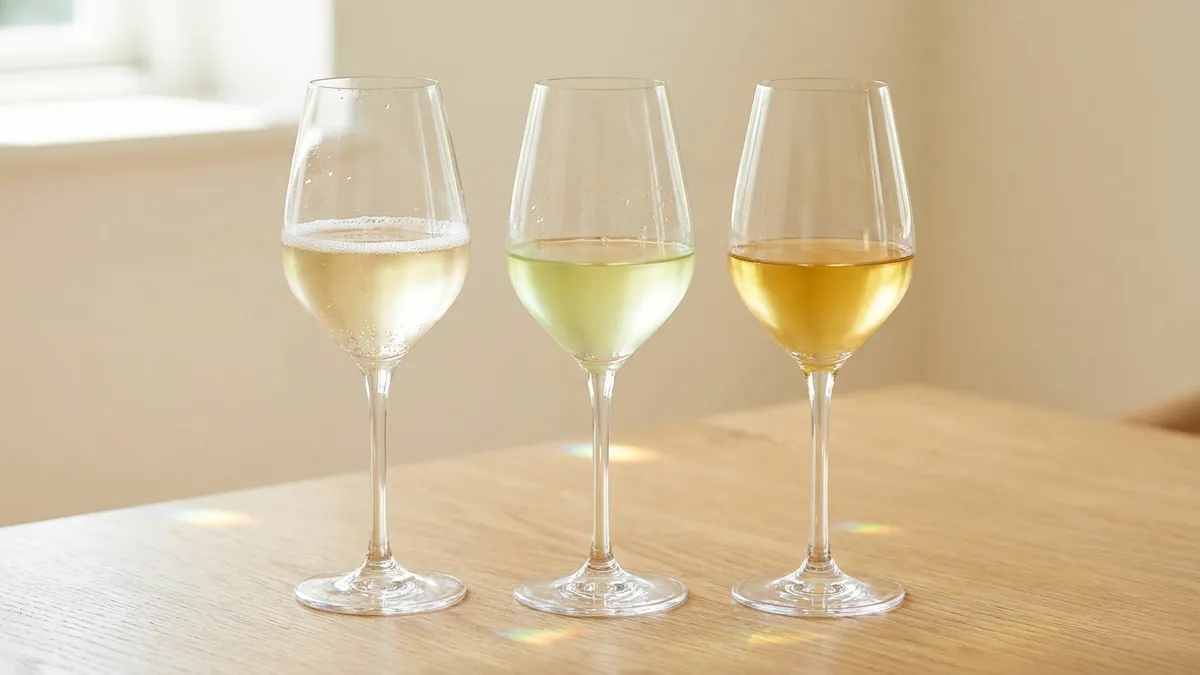
Naturally Low-Alcohol Wine (5-11% ABV)
Less sugar in the grapes means less alcohol after fermentation. Four things keep the sugar down:
- Cool climate: grapes in Germany, northern Portugal or northern Italy build less sugar than grapes in Australia or California
- Early harvest: grapes picked before full ripeness carry less sugar
- Grape variety: Riesling, Muscat and Glera make less sugar than Zinfandel or Grenache
- Stopped fermentation: Moscato d'Asti is halted early, so some sugar never becomes alcohol
Dealcoholized and Non-Alcoholic Wine (0-9% ABV)
Both start as a 12-14% wine and have alcohol removed. The OIV, the intergovernmental wine body most national rules follow, requires them to be made only from wine and sets the non-alcoholic line at 0.5% ABV (Resolution OIV-ECO 432-2012).
| Category | Typical ABV | How it gets there | Flavor and texture |
|---|---|---|---|
| Naturally low-alcohol wine | 5-11% | Cool-climate or early-picked grapes, low-sugar varieties, or fermentation stopped early | Tastes fully like wine; often lighter body, brighter acidity, sometimes noticeable sweetness |
| Partially dealcoholised (reduced-alcohol) wine | 0.5-9% | Full-strength wine, then vacuum distillation, spinning cone, or reverse osmosis removes part of the alcohol | Aromas mostly intact; body thinner and warmth reduced; may have sugar or glycerol added back |
| Non-alcoholic (dealcoholised) wine | Under 0.5% | Same processes taken almost to zero | Fruit and some aroma survive; texture is noticeably thin; flavors can feel disconnected |
Naturally Low-Alcohol Wines Worth Knowing
The best low-alcohol wine to start with is Kabinett Riesling for aroma, Vinho Verde for a dry white, or Moscato d'Asti for the lowest number on the label. Moscato d'Asti and Brachetto d'Acqui, at 5-6.5% ABV, are the lowest-alcohol true wines. Anything under 5% has almost certainly had alcohol removed.
Moscato d'Asti (5-6% ABV)
Piedmont makes this gently sparkling, sweet wine from Muscat grapes. It smells of ripe peach and orange blossom, and acidity keeps the sugar from cloying. Our Moscato wine guide separates it from fully sparkling Asti.
German Riesling Kabinett (7.5-10% ABV)
Kabinett Riesling smells of lime, green apple and white peach, with a touch of sweetness held in check by high acidity. The Prädikat explainer decodes the Kabinett, Spätlese and Auslese tiers.
Vinho Verde (9-11% ABV)
Portugal's Vinho Verde ("green wine") is a light white with high acidity, citrus fruit and a faint spritz.
Txakoli (10-11% ABV)
From Spain's Basque Country, Txakoli (cha-ko-LEE) is a tart, slightly fizzy white. It is poured from height to lift its bubbles (escanciar). Serve it as an aperitif.
Lambrusco (8-11% ABV)
Lambrusco from Emilia-Romagna is a sparkling red or rosé. The best dry ones are fruity and high in acidity. Sweet Lambrusco tends to be lower quality, so look for "secco" (dry) on the label.
Brachetto d'Acqui (5.5-6.5% ABV)
This sweet, gently sparkling Piedmont red from the Brachetto grape smells of crushed roses and ripe strawberries.
Which Low-Alcohol Wines Are Best by Color and Origin?
The best low-alcohol white wines are Kabinett Riesling, Vinho Verde and Txakoli; the best reds are dry Lambrusco and Brachetto d'Acqui. Few still reds ferment naturally below 11% (see alcohol in wine by type), so most "low-alcohol red" on shelves is partially dealcoholised.
| Style | Color | Origin | Typical ABV | Dry or sweet |
|---|---|---|---|---|
| Moscato d'Asti | White, lightly sparkling | Piedmont, Italy | 5-6% | Sweet |
| Brachetto d'Acqui | Red, lightly sparkling | Piedmont, Italy | 5.5-6.5% | Sweet |
| Riesling Kabinett | White | Mosel, Rheingau, and other German regions | 7.5-10% | Off-dry to medium-sweet (dry if labeled trocken) |
| Lambrusco secco | Red or rosé, sparkling | Emilia-Romagna, Italy | 8-11% | Dry |
| Vinho Verde | White, faint spritz | Minho, Portugal | 9-11% | Dry |
| Txakoli | White, faint spritz | Basque Country, Spain | 10-11% | Dry |
The lowest-alcohol styles are the sweet ones, because sugar that was not fermented never became alcohol. Piquette gets low another way: it is fermented from pressed grape skins soaked in water, and usually lands between 4 and 9%.
Same Wine, Two Notes: Kabinett Riesling Next to a Dry Riesling
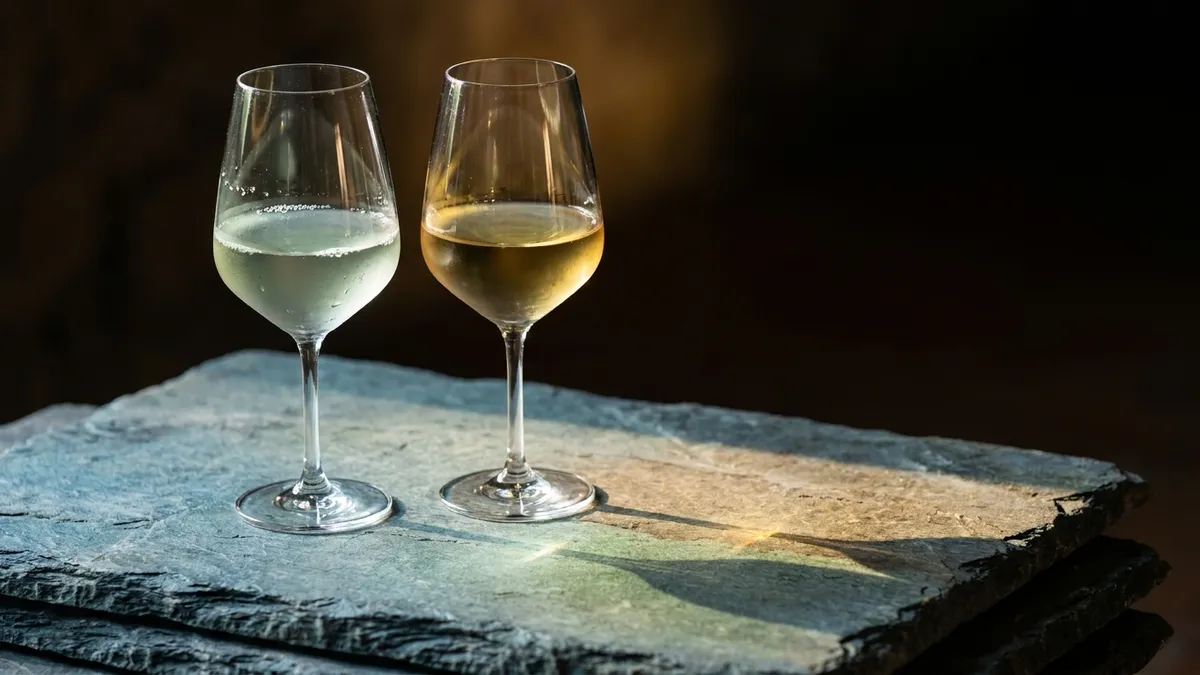
A two-wine comparison of one grape at two strengths shows fastest what alcohol does.
| What you notice | Beginner note | Trained note |
|---|---|---|
| Nose | "The German one smells sweeter and more like fruit. The dry one smells sharper." | "Kabinett: lime, green apple, white peach, slate, a honeyed edge. Alsace: riper yellow apple, quince, a faint petrol note, and more warmth lifting off the glass, which is the higher alcohol carrying aromatics." |
| Palate weight | "The German one is light, almost like a soft drink. The dry one feels bigger." | "Kabinett: light body, the 8% alcohol adds almost no viscosity, so acidity and sugar carry the wine. Alsace: medium body, a rounder texture that is mostly the extra 5 points of alcohol plus dry extract." |
| Sweetness | "The German one is definitely sweet. The dry one is not." | "Kabinett: medium-sweet, roughly 40 g/L residual sugar, but the acidity keeps it from feeling sugary. Alsace: dry, though ripe fruit and alcohol give an impression of softness that beginners sometimes read as sweetness." |
| Finish | "Both end kind of tart." | "Kabinett: long, driven by acidity; the low alcohol leaves no warmth on the finish. Alsace: long too, but with a gentle heat at the back of the throat, which is the clearest tell of the higher ABV." |
What Is the Difference Between Low-Alcohol and Reduced-Alcohol Wine?
Low-alcohol wine ferments to a low strength on its own, because its grapes carried less sugar or fermentation stopped early. Reduced-alcohol wine starts at 12-14% and has part of its alcohol removed afterward. EU Regulation 2021/2117 wrote these terms into wine law for the first time.
Wine is dealcoholised at 0.5% ABV or below, and partially dealcoholised above 0.5% but below its category's normal minimum. On a European shelf, "reduced-alcohol" almost always means partially dealcoholised.
The United States draws its line by strength instead. Wine at 7% ABV or above is regulated by the TTB (the Alcohol and Tobacco Tax and Trade Bureau) under the Federal Alcohol Administration Act. Wine under 7% is treated as a food product under FDA rules, so a 5.5% Moscato d'Asti follows a different rulebook from a 12% bottle.
Wine Spectator's Dr. Vinny column counts any wine under 12% as low-alcohol and warns that a wine leading prominently with its low alcohol is usually engineered.
How Dealcoholization Works
Vacuum Distillation
The most common method heats the wine under vacuum, which drops alcohol's boiling point to around 70-80°F (21-27°C), too low to cook the wine. Some delicate aromas leave with the alcohol, so these wines can taste flat.
Spinning Cone Column
A first pass pulls out the aromas at low temperature and sets them aside. A second pass removes the alcohol at a higher temperature, and the aromas go back in. It keeps more aroma than vacuum distillation but costs more.
Reverse Osmosis
A membrane separates alcohol and water from the wine; the alcohol is distilled out and the water goes back in. With no heat, it keeps the most character, but it is slow and expensive.
What Non-Alcoholic Wine Tastes Like
Without alcohol, wine loses body, warmth and a slight sweetness, so it can taste thin, tart or bitter. Alcohol is the biggest lever on wine body. Some producers add back sugar, glycerol for viscosity, natural flavors, or tannin powder in reds. It still works when you are not drinking alcohol, or in a sauce.
Reading Labels: What the Terms Mean
- Non-alcoholic / Dealcoholized (US): under 0.5% ABV, so not zero
- Alcohol-free (US): FDA policy allows it only when no alcohol is detectable; other markets set their own near-zero cut-offs
- Dealcoholised (EU): alcohol removed, 0.5% ABV or less
- Low-alcohol: typically under 10-12% ABV; no EU or US wine law fixes the term
- Reduced-alcohol / Light: below the standard for that wine type, often 8-10%, usually via partial dealcoholisation
Trust the printed ABV over the marketing term: a "light" wine at 11% is twice the strength of a 5.5% Moscato d'Asti. US rules allow plus or minus one percentage point on stated ABV for wines over 14%, so read the number as a band.
How Do You Choose a Low-Alcohol Wine Without a Brand List?
Shop by style, region and printed ABV. Most bottles of Moscato d'Asti, Kabinett Riesling, Vinho Verde, Txakoli and Lambrusco secco sit at 5-11%, and those regulated names usually signal naturally light wine. A brand name on its own does not.
- Find the ABV. If the bottle is an Alvarinho-labelled Vinho Verde, a Kabinett trocken, or a Txakoli or Lambrusco secco, check it, because some reach 11.5-13%.
- Decide dry or sweet. Secco, trocken and dry point one way; Moscato and Brachetto point the other.
- For dealcoholised wine, read the back label for the removal method and added sugar.
The Calorie Question
According to Coravin, alcohol supplies roughly 7 calories per gram, nearly double the 4 per gram from sugar. Each point of ABV adds roughly 8 calories to a 5 oz (148 ml) glass (1.48 ml of ethanol x 0.79 g/ml x 7 kcal/g). A 5 oz glass of dry 14% wine carries about 115 calories from its 16 g of ethanol alone.
Sugar adds some back. Per 5 oz pour, at typical residual-sugar levels:
- 5.5% Moscato d'Asti, about 120 g/L sugar: roughly 45 calories from alcohol plus 70 from sugar, around 115 per glass
- 8% German Kabinett, about 40 g/L sugar: roughly 65 from alcohol plus 25 from sugar, around 90
- 10% dry Vinho Verde: roughly 80 from alcohol, almost none from sugar, around 85
- 13% dry white or red: roughly 105 from alcohol, around 110
- 0.4% non-alcoholic wine, 20-30 g/L sugar: roughly 15-25, nearly all from sugar
To keep calories down, choose a dry naturally light style, because the sweetest low-alcohol wine sits close to a dry mid-strength one.
How many standard drinks are in a low-alcohol bottle?
The CDC defines a US standard drink as 0.6 fl oz (14 grams) of pure alcohol, illustrated as 5 oz of 12% wine. In a 750 ml bottle:
- 5.5% Moscato d'Asti: about 41 ml of pure alcohol, roughly 2.3 standard drinks
- 10% Vinho Verde: about 75 ml, roughly 4.2
- 13% typical table wine: about 98 ml, roughly 5.5
A 5 oz glass of Moscato d'Asti is a little under half a standard drink; the same glass of 14.5% red is a little over one.
Food Pairing with Low-Alcohol Wines
Match weight: if a dish is light to medium, pick a low-alcohol wine, because a 14% wine would overwhelm it.
- Moscato d'Asti: fruit desserts, spicy Asian food
- Riesling Kabinett: Thai and Vietnamese food, light pork
- Vinho Verde: grilled sardines, ceviche
- Txakoli: raw oysters, pintxos
- Lambrusco (dry): charcuterie, pizza
Pour a Kabinett Riesling next to a dry Riesling tonight and notice where the warmth sits on the finish.
Sources
- Resolution OIV-ECO 432-2012: Beverage obtained by dealcoholisation of wine — International Organisation of Vine and Wine (OIV), 2012
- Regulation (EU) 2021/2117 amending Regulation (EU) No 1308/2013 (Article 119: 'de-alcoholised' at no more than 0.5% vol, 'partially de-alcoholised' above 0.5% vol and below the category minimum) — Official Journal of the European Union (EUR-Lex), 2021
- Resolution OIV-ECO 433-2012: Beverage obtained by partial dealcoholisation of wine — International Organisation of Vine and Wine (OIV), 2012
- U.S. Wine Labeling Requirements: TTB Rules Explained — Esko
- CPG Sec. 510.400 Dealcoholized Wine and Malt Beverages - Labeling — U.S. Food and Drug Administration
- How Many Calories in a Glass of Red, White or Sparkling Wine — Coravin
- Standard Drink Sizes — Centers for Disease Control and Prevention (CDC)
- Which wines are naturally low in alcohol? (Ask Dr. Vinny) — Wine Spectator
Frequently Asked Questions
What percentage is considered a low alcohol wine?
A low-alcohol (or low-percentage) wine is generally any wine whose printed ABV reads under 11-12%, compared with the 12-15% of most table wines. Wine Spectator's Dr. Vinny column puts the line at under 12%. Naturally low styles such as Moscato d'Asti (5-6%), German Riesling Kabinett (7.5-10%), and Vinho Verde (9-11%) sit well below it. Non-alcoholic wine is under 0.5% ABV.
What wine has the lowest alcohol content?
Among genuine wines, Moscato d'Asti (5-6% ABV) and Brachetto d'Acqui (5.5-6.5%) from Piedmont have the lowest alcohol content, followed by German Riesling Kabinett at 7.5-10%. Dealcoholized wines go lower still, with non-alcoholic versions under 0.5% ABV, but those start as full-strength wine and have the alcohol removed afterward.
What is the difference between low-alcohol and reduced-alcohol wine?
Low-alcohol wine ferments to a low strength naturally, because the grapes had less sugar or fermentation was stopped early. Reduced-alcohol wine starts as a normal 12-14% wine and has some alcohol removed afterward. In the EU this is labeled partially dealcoholised when it stays above 0.5% ABV, and dealcoholised at 0.5% or below.
How is non-alcoholic wine made?
Non-alcoholic wine starts as regular wine, which is then dealcoholized using one of several methods: vacuum distillation (heating at low pressure so alcohol evaporates at reduced temperatures), spinning cone column (separating volatile aromas, removing alcohol, then recombining), or reverse osmosis (filtering out alcohol molecules through a membrane).
What are the best naturally low-alcohol wines?
Moscato d'Asti (5-6% ABV) from Italy, German Riesling Kabinett (7.5-10%), Vinho Verde from Portugal (9-11%), Txakoli from Spain (10-11%), and dry Lambrusco (8-11%) are all genuine wines with naturally lower alcohol. They are not dealcoholized; they are made from grapes with less sugar, or with fermentation stopped early, so less alcohol is produced.
Are low alcohol wines sweeter?
Often, but not always. Many of the lowest-alcohol wines (Moscato d'Asti, Kabinett Riesling, Brachetto) are low in alcohol precisely because fermentation stopped before all the sugar was converted, so they keep noticeable sweetness. Vinho Verde and Txakoli are dry at 9-11% ABV. Check for words like secco, trocken, or dry on the label.
Does lower alcohol wine mean lower calories?
Usually, yes. Alcohol supplies about 7 calories per gram, nearly double the 4 calories per gram from sugar, so each point of ABV adds roughly 8 calories to a 5 oz (148 ml) glass (1.48 ml of ethanol x 0.79 g/ml x 7 kcal/g). The exception is sweet low-alcohol wine, where residual sugar adds calories back; a 5.5% Moscato d'Asti at about 115 calories per 5 oz glass lands close to a 13% dry wine at about 110.
Does non-alcoholic wine taste like real wine?
Generally no, though quality varies widely. Removing alcohol changes the wine's body, mouthfeel, and flavor balance, because alcohol contributes viscosity, warmth, and a hint of sweetness. The best non-alcoholic wines keep some aroma and fruit character, but the texture is noticeably thinner than the original.
Sommy Team
LinkedInFounder & Wine Educator
The Sommy Team is building the world's most approachable wine education app, helping beginners develop real tasting skills through structured courses and AI-guided practice.