Wine for Celebrations: What to Pour Beyond Champagne

By the Sommy Team — AI-assisted, human-edited.
Updated Oct 1, 2026

Contents (9)
- What Is the Best Wine for Celebrations, in One Paragraph?
- Which Sparkling Wine Fits Which Occasion?
- Why Does Bottle-Fermented Sparkling Cost More?
- What Does Brut, Extra Dry or Demi-Sec Mean on the Label?
- What Is Crémant, and Why Is It the Smart Champagne Swap?
- Which Sparkling Wine Suits Guests Who Like Sweet Wine?
- Can You Celebrate With a Still Wine?
- How Much Should You Buy, and How Do You Serve It?
- Is Prosecco Good Enough for a Wedding Toast?
TL;DR
The best wine for celebrations depends on the crowd. Crémant and Cava are bottle-fermented like Champagne for far less money; brut Prosecco suits a big toast. Extra dry is sweeter than brut. Sweet-toothed guests get Moscato d'Asti or demi-sec. A 750 ml bottle pours about seven toasts.
The best wine for celebrations is the sparkling style that matches the size of the crowd and the food on the table. Crémant and Cava are made the same way as Champagne and cost a fraction of it. Brut Prosecco carries a big toast. The sweetness word on the label decides more about how the glass tastes than the famous name does.
What Is the Best Wine for Celebrations, in One Paragraph?
For six friends sipping slowly, buy a traditional-method sparkling wine (the bubbles are made inside each bottle): Champagne, Crémant or Cava. For a toast for 30 or more, buy brut Prosecco, made in a sealed tank, where the second fermentation can take as little as 30 days. Read the sweetness word first: brut means up to 12 grams of sugar per litre and tastes dry, while extra dry holds 12 to 17 grams and tastes softer. Guests who like sweet wine get Moscato d'Asti, at no more than 6.5% alcohol. Plan on seven toasts per 750 ml bottle.
Which Sparkling Wine Fits Which Occasion?
Match the method to the moment: bottle-fermented wines for small, slow toasts, tank-fermented wines for big, fast ones. The tank method (also called Charmat) makes the second fermentation in one large pressurised steel tank, which keeps the wine fresh, fruity and affordable. The traditional method takes months or years longer and tastes of bread and toast as a result.
| Wine | Method | Main grapes | Minimum ageing | Pour it for |
|---|---|---|---|---|
| Champagne (non-vintage) | Traditional, in bottle | Chardonnay, Pinot Noir, Meunier | 15 months | A milestone where the wine is part of the gift |
| Crémant | Traditional, in bottle | Varies by region (Chardonnay, Chenin Blanc, Pinot Blanc) | 9 months on lees, 12 before sale | A dinner party toast that should taste like Champagne |
| Cava | Traditional, in bottle | Macabeo, Xarel·lo, Parellada | 9 months | Tapas, fried snacks and a crowd on a budget |
| Prosecco (brut) | Tank | Glera | 30 days in tank | A big toast, brunch or a spritz |
| Moscato d'Asti | Lightly sparkling, tank | Moscato Bianco | None set | Birthday cake and guests who like sweet |
| Lambrusco | Lightly sparkling red | Lambrusco family | None set | Pizza, cured meats and casual parties |
About 95% of Cava comes from the Penedès area of Catalonia, so most bottles share the same warm-climate, citrus-and-almond profile. Our Champagne vs Prosecco vs Cava comparison goes pair by pair, and the types of sparkling wine guide covers the styles not in this table.
If you need more than about 20 glasses, buy brut Prosecco or Cava. If six friends will sip one bottle through an evening, spend the money on Crémant or Champagne, where the extra ageing shows.
Why Does Bottle-Fermented Sparkling Cost More?
Because the bubbles are made inside each bottle and the wine then waits for months or years on its yeast, which ties up cellar space, labour and money. Fermentation turns sugar into alcohol and carbon dioxide; sealed in, the gas dissolves into the wine.
EU law calls a wine sparkling at 3 bar or more of extra pressure, and a bottle of Champagne holds about 6 bar.
In the traditional method, yeast and a little sugar go into each still wine, the bottle is capped, and the fermentation happens in that bottle. The spent yeast, called lees, then rests in contact with the wine and makes it smell of bread, brioche and toasted nuts. Non-vintage Champagne must spend at least 15 months before release; vintage Champagne, from a single harvest, needs at least three years. Each bottle is handled several times, and the cellar holds the stock for years.
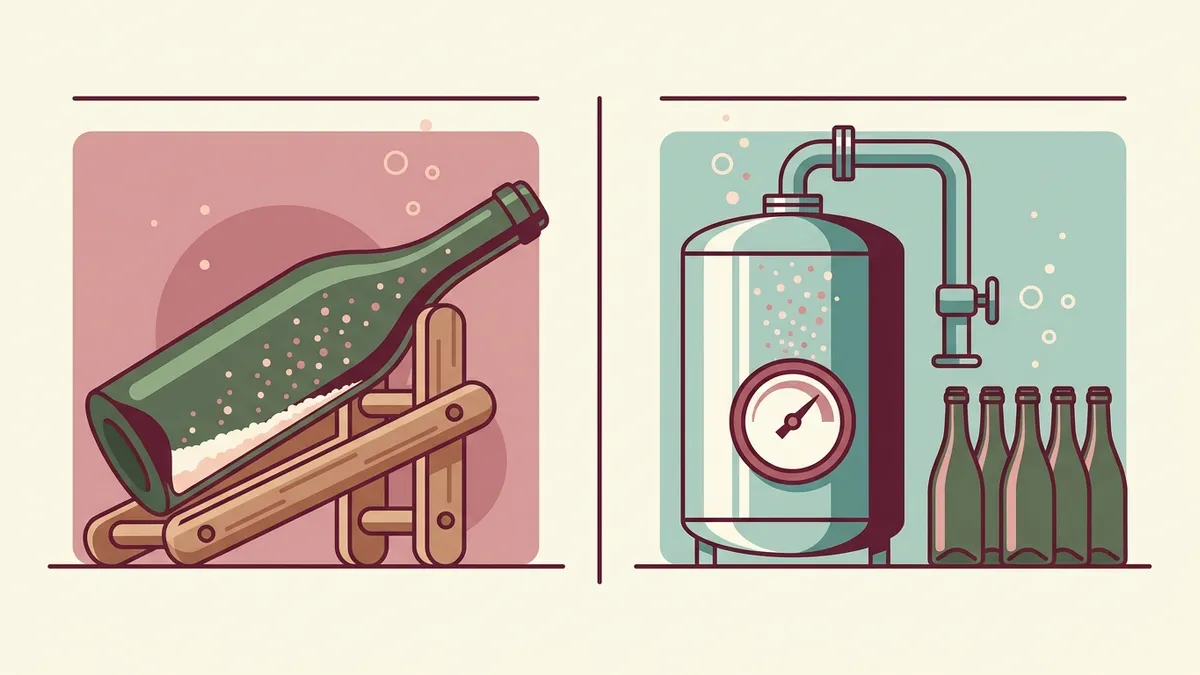
Prosecco usually skips that by fermenting in a large stainless steel tank; the tank stage can be as short as 30 days. Tank-method wine is not a cheap copy of Champagne. The short process keeps Glera's pear, green apple and white-flower aromas front and centre, which is the point of the style. The Charmat method and méthode champenoise explainers show each step. If a label says traditional method, méthode traditionnelle or metodo classico, the bubbles were made in that bottle, and the price will reflect it.
What Does Brut, Extra Dry or Demi-Sec Mean on the Label?
They are sugar levels, and the scale runs backwards from what the words suggest. Extra dry is sweeter than brut, not drier. The terms describe residual sugar (grape sugar left in the finished wine) in grams per litre, and the EU sets the bands:
- Brut nature: under 3 g/L, bone dry and sharp.
- Extra brut: under 6 g/L, very dry.
- Brut: up to 12 g/L, dry to most palates and the most common label.
- Extra dry: 12 to 17 g/L, a soft, rounded off-dry.
- Dry (sec): 17 to 32 g/L, noticeably sweet.
- Demi-sec: 32 to 50 g/L, sweet, for desserts.
- Doux: over 50 g/L, very sweet and rare.

Sparkling wine's high acidity hides sugar, which is why 10 grams in a brut tastes dry. If most guests drink dry wine, buy brut. If the wine will be poured with wedding cake or fruit tart, buy demi-sec, because a dry wine next to a sweet dessert tastes thin and sour. The full scale, still wines included, is in our wine sweetness scale.
What Is Crémant, and Why Is It the Smart Champagne Swap?
Crémant is French sparkling wine made the Champagne way, outside Champagne. Eight French appellations (protected place names with their own rules) carry the Crémant name, including Alsace, Loire, Burgundy, Bordeaux and Limoux. All use the traditional method, so the glass shows the same fine bubbles and lees notes.
Every Crémant must rest at least nine months on its lees and wait a year after bottling before sale; some regions ask for more. The grapes change with the place: Chenin Blanc gives Loire Crémant its apple and honey notes, and Burgundy uses the same Chardonnay and Pinot Noir as Champagne.
Limoux has a separate claim to the occasion: historians cite a sparkling wine made there in 1531, which would make it older than Champagne's bubbles. Look for Blanquette de Limoux on a label if you want to toast with that story. For a party of eight, buy Crémant de Bourgogne or Crémant d'Alsace: they are often named the closest in taste to Champagne. Every region is mapped in our Crémant wine guide.
Which Sparkling Wine Suits Guests Who Like Sweet Wine?
Moscato d'Asti, a demi-sec, or a sweet Lambrusco. Moscato d'Asti is a Piedmont white made from Moscato grapes, legally capped at 6.5% alcohol. It is frizzante (lightly sparkling): semi-sparkling wines hold about 1 to 2.5 bar, so the fizz is soft and the wine smells of fresh grapes, peach and orange blossom.
Lambrusco is the red option. It comes from Emilia-Romagna and Lombardy in sweetness levels that include secco (dry), amabile (off-dry to sweet) and dolce (very sweet). The light tannin and red-cherry fruit make it the sparkler here best suited to salami and pizza.
If the dessert is cake or fresh fruit, pour Moscato d'Asti, because its sugar matches the dessert and its low alcohol suits a late toast. If the party runs on pizza and cured meats, pour Lambrusco amabile: its sweetness softens salt and its acidity cuts fat. More on each in our Moscato guide and Lambrusco guide.
Can You Celebrate With a Still Wine?
Yes. Bubbles are the tradition for the toast, but a birthday or anniversary dinner is still a dinner, and the main dish should choose the wine. Pour a small glass of sparkling wine for the toast, then switch to a still wine that suits the plate.
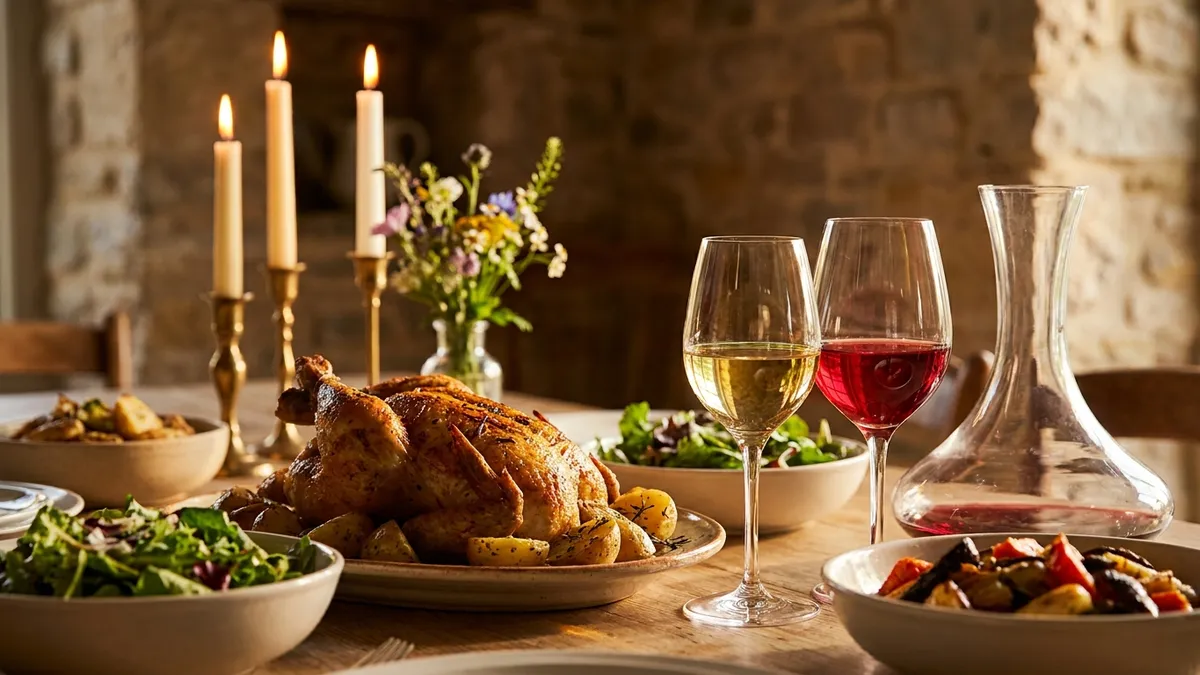
- Roast chicken, lobster or creamy pasta: a rich, oaked Chardonnay, whose full body (the wine's weight in the mouth) matches butter and cream.
- A mixed table or a buffet: a light red such as Pinot Noir or Gamay, served cool, whose low tannin goes with fish and meat alike.
- Lamb or beef: a structured red such as Cabernet Sauvignon or Syrah, whose tannin is softened by fat and protein.
- A cheese board: a sweet wine for blue cheese, a dry white for goat cheese.
If you are cooking one main dish, buy the wine for that dish and a single bottle of sparkling for the toast. If it is a buffet, buy the light red.
How Much Should You Buy, and How Do You Serve It?
Plan on one bottle for every seven toasts or every five to six full glasses. A 750 ml bottle holds seven pours of about 100 ml, or five to six glasses of 125 to 150 ml. Fifty guests need eight bottles for one toast.
For any other toast, divide the guest count by seven and round up. If sparkling is the drink of the evening, plan on about half a bottle per guest. Our page on how many glasses are in a bottle has the counts for other pour sizes.
Serve sparkling wine cold, around 6 to 9°C (43 to 48°F), which keeps the bubbles fine and the acidity fresh. If the bottles are warm an hour before guests arrive, put them in a bucket of half ice and half water for about 30 minutes; it chills faster than the fridge. The serving temperature chart has the range for every style.
To open, keep a thumb on the cork, tilt the bottle away from people, and slowly turn the bottle while the cork stays still. Pour a little into each glass, let the foam settle, then top up to about half. Tulip-shaped glasses hold the aroma better than narrow flutes, and the sparkling wine tasting guide explains why.
Is Prosecco Good Enough for a Wedding Toast?
Yes, as long as the label says brut. A brut Prosecco tastes dry, fresh and fruity, pleases a crowd, and costs less per glass when you pour a hundred toasts. Prosecco runs from basic DOC wine to two DOCG zones (Italy's top tier of protected names): Conegliano Valdobbiadene and Asolo, both hill areas with more careful rules.
If the budget allows a step up, buy one of the two DOCG names rather than switching to cheap Champagne. Our wedding wine guide covers the full wedding order, from the reception drinks to dessert.
Sommy's Wine 101 course teaches sweetness, acidity and bubbles in short lessons, with more ideas for choosing bottles in the beginners' buying hub. Tonight, check the sweetness word on any sparkling bottle in your fridge, then taste it with something salty and something sweet.
Sources
Frequently Asked Questions
What is the best wine for a celebration if not Champagne?
Crémant and Cava are the closest swaps. Both are made by the traditional method, with the second fermentation inside each bottle, which gives the fine bubbles and bready notes Champagne is known for. Crémant comes from eight French appellations; about 95% of Cava comes from Penedès in Catalonia. For a large toast, brut Prosecco is the lighter, fruitier choice.
What does brut mean on a sparkling wine?
Brut means the wine has up to 12 grams of sugar per litre, which tastes dry to most people. Below it sit extra brut (under 6) and brut nature (under 3). Above it come extra dry (12 to 17), dry (17 to 32), demi-sec (32 to 50) and doux (over 50). The words run backwards: extra dry is sweeter than brut.
Is Prosecco good enough for a wedding toast?
Yes. A brut Prosecco tastes fresh and dry, its light pear and apple fruit suits a crowd, and it costs less per glass, which matters when you pour a hundred toasts. For a step up, look for one of the two DOCG names on the label, Conegliano Valdobbiadene or Asolo, which mark Prosecco's top-tier hill zones.
How much sparkling wine do I need for a toast?
A 750 ml bottle gives about seven toast pours of 100 ml, or five to six full glasses of 125 to 150 ml. For any other toast, divide the guest count by seven and round up. If the sparkling wine is also the drink for the evening, plan on about half a bottle per guest and keep a spare bottle chilled.
What sparkling wine is sweet?
Look for demi-sec (32 to 50 grams of sugar per litre) or doux (over 50) on the label, or choose Moscato d'Asti, a gently fizzy, grapey Italian wine capped at 6.5% alcohol. Lambrusco labelled amabile or dolce is a sweet red sparkling option. Avoid assuming extra dry is dry: it sits between 12 and 17 grams per litre.
Can you celebrate with still wine?
Yes. Bubbles are a tradition, not a rule. For a celebration dinner, pick the still wine that fits the main dish: a rich, oaked white for roast chicken or lobster, a light, chillable red like Pinot Noir or Gamay for mixed dishes, and a structured red for lamb or beef. Pour a small glass of sparkling wine for the toast only.
What is the difference between Champagne and Crémant?
Both use the traditional method, but Champagne must come from the Champagne region and non-vintage Champagne rests at least 15 months before release. Crémant is made in eight other French appellations, such as Alsace, Loire, Burgundy and Limoux, with a shorter minimum: nine months on the lees and a year before sale. It is often the closest taste for the money.
Sommy Team
LinkedInFounder & Wine Educator
The Sommy Team is building the world's most approachable wine education app, helping beginners develop real tasting skills through structured courses and AI-guided practice.