Crémant Wine: France's Other Sparkling Wine (and a Bargain)

By the Sommy Team — AI-assisted, human-edited.
Updated Sep 24, 2026
Contents (12)
- What Is Crémant Wine?
- Is Crémant the Same as Champagne?
- Which Crémant Regions Should You Know?
- Is Crémant Sweet or Dry?
- How Is Crémant Made?
- How Long Is Crémant Aged, and Can You Taste It?
- Why Is Crémant Cheaper Than Champagne?
- Crémant vs Prosecco vs Cava: What Is Different?
- Which Crémant Should You Try First?
- How Do You Serve and Pair Crémant?
- Where Does the Name Crémant Come From?
- Try One Tonight
TL;DR
Crémant is French sparkling wine made the Champagne way, with a second fermentation in the bottle, in eight regions outside Champagne, from Alsace to the Loire. It spends less minimum time on its yeast and carries no famous name, so it costs far less while keeping fine bubbles and a toasty edge.
Crémant wine is French sparkling wine made exactly the way Champagne is made, just in other parts of France. The bubbles form inside the bottle, the wine rests on its yeast, and it comes out fine-bubbled and faintly toasty. It usually costs a fraction of the price. If Champagne prices put you off, it is the first bottle to learn.
What Is Crémant Wine?
Crémant is a French sparkling wine made by the traditional method, where a second fermentation happens inside each bottle, in one of eight appellations (protected place names) outside Champagne. They are Alsace, Bourgogne (Burgundy), Loire, Limoux, Jura, Bordeaux, Die and Savoie. By law the grapes are picked by hand and the wine ages at least a year before sale.
Each region uses its own grapes, so a Loire crémant built on Chenin Blanc tastes different from an Alsace one built on Pinot Blanc. What they share is the method, which gives crémant its fine bubbles and a light bread-crust note. The name is a legal category, so "Crémant de Loire" on a label promises both the place and the method.
Is Crémant the Same as Champagne?
Crémant uses the same method as Champagne, but not the same place, grapes or ageing rules. Both are fermented a second time in the bottle they are sold in, and both rest on the spent yeast before release. That shared process is why a good crémant and a simple Champagne can be hard to tell apart blind.
The differences are in the details. Champagne must come from the Champagne region and relies on Chardonnay, Pinot Noir and Pinot Meunier. Crémant comes from eight other regions and uses whatever grapes grow best there, from Chenin Blanc to Riesling to Mauzac. The minimum time on the yeast is also shorter for crémant.
So the common line that crémant is "cheap Champagne" gets it wrong in both directions. It is a separate family of wines with its own regional styles, and the best of them are made with as much care as Champagne. Our Champagne region guide covers what makes the original distinct, and the tour of sparkling wine types places crémant among its sparkling relatives.
Which Crémant Regions Should You Know?
Eight French regions make crémant, and each uses its own local grapes, so the style changes more by region than by bottle. The table lists all eight with the year each appellation was created, the main grapes and the moment each one suits best.
| Appellation | Since | Main grapes | Tastes like | Pick it when |
|---|---|---|---|---|
| Crémant de Loire | 1975 | Chenin Blanc, Chardonnay, Cabernet Franc | Yellow apple, honey, quince; high acidity | You want a fruity aperitif for salty snacks |
| Crémant de Bourgogne | 1975 | Chardonnay, Pinot Noir (Aligoté fills in) | Lemon, green apple, bread crust | You want the closest thing to Champagne |
| Crémant d'Alsace | 1976 | Pinot Blanc, Riesling, Pinot Gris, Auxerrois, Chardonnay; rosé is 100% Pinot Noir | Pear, white flowers, lime; crisp | You want a light, floral bubble |
| Crémant de Limoux | 1990 | Chardonnay, Chenin Blanc, some Mauzac and Pinot Noir | Green apple, citrus; fresh | You want a southern bottle with bright acidity |
| Crémant de Bordeaux | 1990 | Sémillon, Sauvignon Blanc; red grapes for rosé | Lemon, cut grass, waxy apple | You want a rosé crémant with red-grape depth |
| Crémant de Die | 1993 | Clairette, with Aligoté and Muscat | Apple, green fruit | You want a dry, apple-crisp rarity |
| Crémant du Jura | 1995 | Chardonnay, Pinot Noir, Savagnin, Poulsard, Trousseau | Lemon, hazelnut, bread | You want a nutty, savoury style |
| Crémant de Savoie | 2014 | At least 40% Jacquère, plus Altesse and other local grapes | Lemon, white flowers; light and fresh | You want a very light, alpine aperitif |
The Loire is France's largest sparkling-wine producer outside Champagne, and most of it is made around the town of Saumur, where cellars are dug into soft limestone. Crémant de Bourgogne must contain at least 30% Pinot Noir, Chardonnay, Pinot Blanc or Pinot Gris, which is why it sits closest to Champagne in taste. Limoux sets a precise recipe: 40 to 70% Chardonnay, 20 to 40% Chenin Blanc, up to 20% Mauzac and up to 10% Pinot Noir.
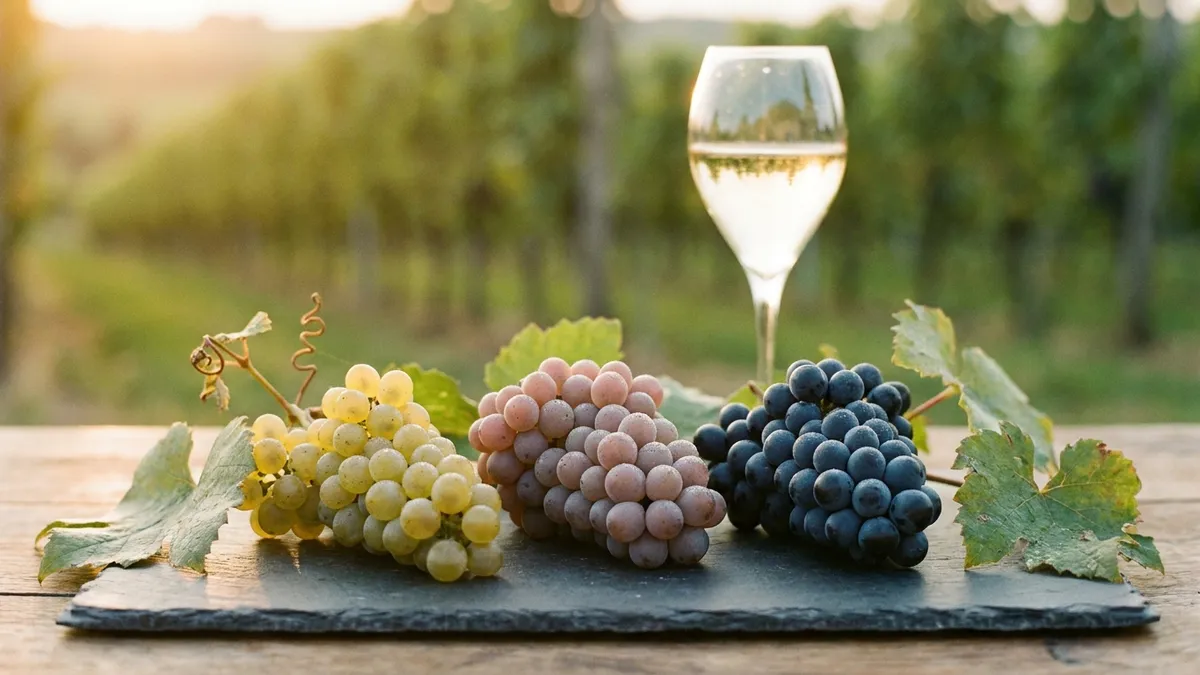
The grapes explain the flavours. Chenin Blanc brings honey and quince, which is why Loire crémant tastes rounder; the Chenin Blanc guide goes further. Riesling and Pinot Blanc keep Alsace crisp and floral, and the Alsace wine guide covers the region's still wines. Savagnin can add a nutty edge to Jura crémant, a grape the Jura wine guide explains.
Is Crémant Sweet or Dry?
Most crémant is dry, and the label tells you exactly how dry. After the yeast is removed, winemakers top up each bottle with a little wine and sugar, and the amount decides the sweetness word printed on the front. Crémant's high acidity also makes a little sugar taste drier than it is.
The words run from driest to sweetest:
- Brut Nature and Extra Brut: bone dry, sharp and lean.
- Brut: dry, and by far the most common crémant on the shelf.
- Extra Dry and Sec: a touch of sweetness you can notice.
- Demi-Sec: clearly sweet, made for dessert.
If the label says Brut, expect a dry wine; if it says Demi-Sec, expect a sweet one and save it for fruit tarts. Ripe apple and pear flavours can make a Brut seem soft, but fruity is not sweet. The wine sweetness scale shows how these words compare with still wines.
How Is Crémant Made?
Crémant is made by fermenting a still wine a second time inside the bottle it is sold in, then ageing it on the dead yeast. Each step takes hand work and cellar space, and a bottle can spend a year or more moving through them before it reaches a shop.
- Base wine. Hand-picked grapes are pressed and fermented into a dry, tart still wine.
- Second fermentation. A dose of yeast and sugar goes into each bottle, which is capped. The yeast eats the sugar and makes carbon dioxide, which has nowhere to go, so it dissolves into the wine as bubbles.
- Rest on the lees. The spent yeast, called lees, settles in the bottle. Over months it breaks down and gives the wine its bread, brioche and toast smells.
- Riddling. Bottles are tilted neck-down and turned a little each day until the sediment gathers in the neck.
- Disgorging and dosage. The neck is opened, the plug of yeast shoots out, and the bottle is topped up with the wine-and-sugar mix that sets the sweetness.
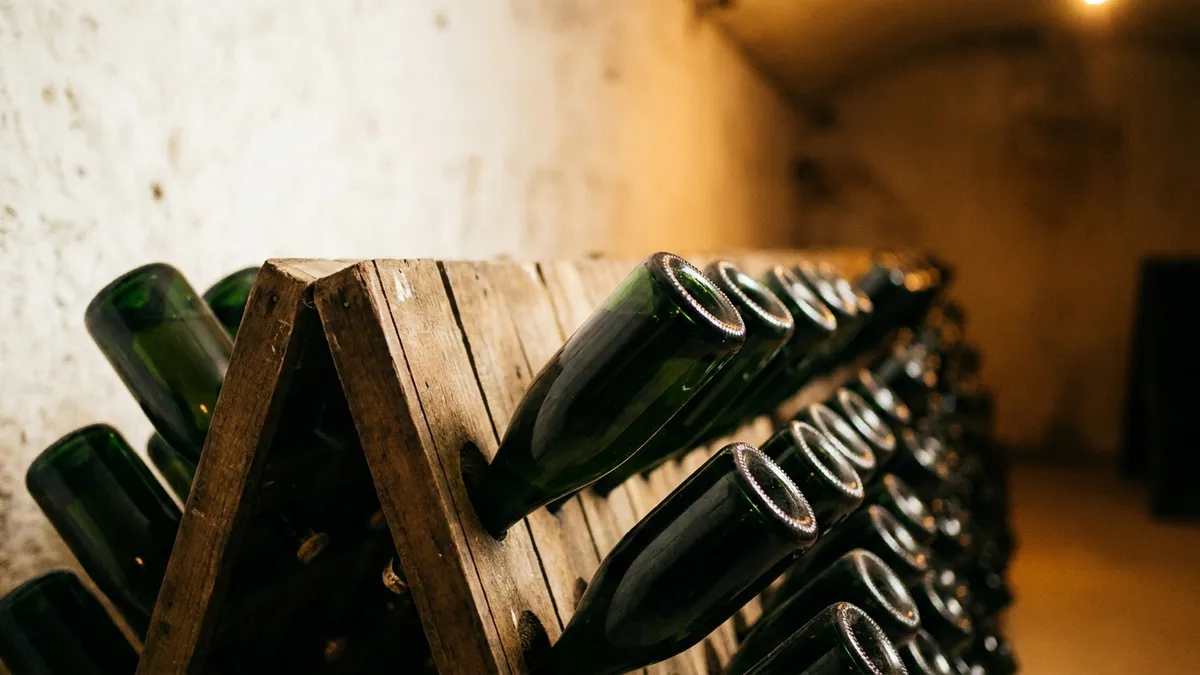
The in-bottle fermentation is what separates crémant from tank-made sparklers. Bubbles made under pressure in a sealed bottle and aged slowly come out finer and creamier on the tongue. Our explainer on yeast and fermentation covers what the yeast is doing at each stage.
How Long Is Crémant Aged, and Can You Taste It?
Crémant must rest at least nine months on its lees and a year in total before it is sold. Non-vintage Champagne must spend at least 15 months on its lees, and vintage Champagne must mature at least three years. That gap in cellar time is the main difference in how the two are made.
You can taste it. Time on the lees builds the bread-crust, biscuit and toasted-almond smells that people love in Champagne, because the yeast slowly releases flavour compounds into the wine. A crémant released close to the minimum smells mostly of fresh fruit: apple, pear, lemon. One kept longer in the cellar starts to smell like a bakery. Many producers age their better crémants well beyond the legal floor, and some say so on the back label.
Why Is Crémant Cheaper Than Champagne?
Crémant costs less mainly because of the name and the land. Crémant is a cheaper name, not a cheaper method. Making sparkling wine in the bottle is so slow and labour-intensive that it only pays for high-end wine, and crémant goes through every step, with hand-picked grapes and capped yields.
Three things drive the gap. First, the Champagne name itself carries a premium built by generations of marketing, and crémant pays none of it. Second, grapes and vineyard land in the Loire, Alsace or Limoux cost much less than in Champagne, so the raw material is cheaper. Third, the shorter minimum time on the lees means bottles sit in the cellar for less time before they earn money.

That makes crémant one of the best-value bottles in any shop, and our list of good wine under $20 makes the same point about value. If you want Champagne's toast for less money, choose a crémant that mentions extended ageing on the back label, or a Crémant de Bourgogne made from Chardonnay and Pinot Noir.
Crémant vs Prosecco vs Cava: What Is Different?
Crémant and Cava share the traditional method; Prosecco is fermented a second time in a large tank, which makes it fruitier and less bready. That one production choice explains most of the difference in the glass: the size of the bubbles, the amount of toast, and how long the wine sat before release.
- Crémant: French, bottle-fermented, local grapes by region, fine bubbles, fresh fruit plus a little toast.
- Cava: Spanish, bottle-fermented, mostly local Spanish grapes, fine bubbles, citrus and a light earthy edge.
- Prosecco: Italian, tank-fermented from the Glera grape, frothy bubbles, fresh pear and green apple, little or no toast.
Crémant usually costs a little more than Cava and Prosecco and much less than Champagne. The side-by-side detail lives in our Champagne vs Prosecco vs Cava comparison.
Which Crémant Should You Try First?
Start with a Brut from Alsace, Burgundy or the Loire, because those three are the easiest to find and show three distinct grape styles. Brut is the safe first choice, since it is dry enough for food and also works as an aperitif. Choose the region by the drinks you already like:
- If you like Champagne, pick Crémant de Bourgogne, made from the same Chardonnay and Pinot Noir.
- If you like fruity whites such as Chenin Blanc, pick Crémant de Loire for honey, quince and apple.
- If you like crisp, floral whites such as Riesling, pick Crémant d'Alsace.
- If you want pink bubbles, pick a Crémant d'Alsace rosé, which by law is pure Pinot Noir.
Two label words cause confusion. Blanc de blancs means the wine is made only from white grapes, usually Chardonnay, and tastes leaner and more lemony. Bourgogne Mousseux is a separate Burgundy appellation, reserved for red sparkling wine, so check for the word Crémant. In Limoux, Blanquette de Limoux (an appellation since 1938, at least 90% Mauzac) is an older, separate wine, while Crémant de Limoux, created in 1990, leans on Chardonnay. The Burgundy wine guide and Loire Valley wine guide cover both regions' still wines.
How Do You Serve and Pair Crémant?
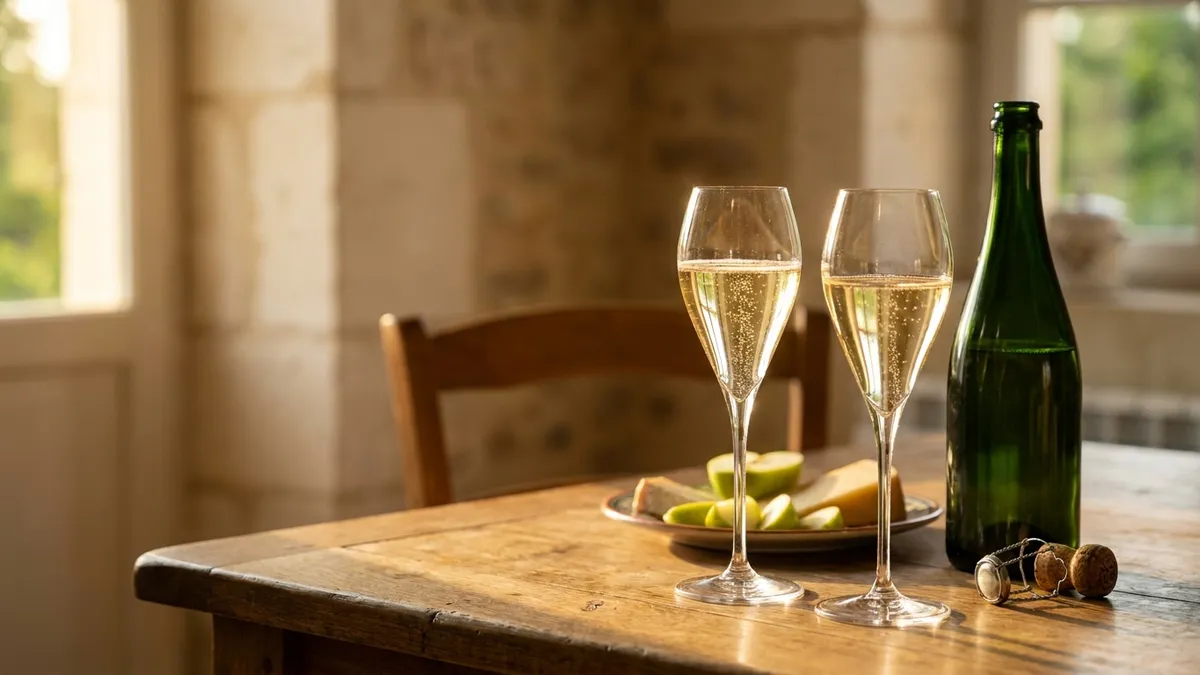
Serve crémant cold, in a white-wine glass, with salty, fried or creamy food. A tulip or white-wine glass gives the aroma room to gather, while a narrow flute keeps the bubbles but hides the smell. Chill the bottle in the fridge for a few hours and open it slowly, holding the cork and turning the bottle.
Crémant's acidity (the tartness that makes your mouth water) and bubbles scrub fat and salt off the tongue, which is why it suits so many snacks:
- Fried food such as tempura or fish and chips: the bubbles and acid cut through the oil.
- Salty snacks such as salted almonds, crisps or olives: salt softens the acid, so the fruit tastes riper.
- Creamy cheese such as a soft washed-rind cheese or goat cheese: the acid lifts the cream so each bite feels lighter.
- Sushi and oysters: a Brut Nature or Extra Brut matches the lean, briny flavours.
If the dish is fried or salty, pour a Brut; if it is a fruit dessert, open a Demi-Sec, because a dry wine tastes sour next to sugar. Our guide on how to taste sparkling wine covers what to look for in the bubbles themselves.
Where Does the Name Crémant Come From?
Crémant means "creamy" in French, a nod to the softer bubbles these wines once had. The word first described Champagnes made at lower pressure, around 2 to 3 atmospheres instead of 5 to 6, which felt creamy rather than fizzy in the mouth.
The modern meaning came from a labelling fight. In the 1980s, Champagne producers won a ban on the phrase "méthode champenoise" on wine made or sold in the European Union. Other regions kept the method and needed a new word for it, so crémant took on its present legal meaning. Labels now say "traditional method" or simply Crémant.
Some regions made sparkling wine long before the word was official. Loire bubbles were sold as Crémant de Saumur and Crémant de Vouvray before the 1975 appellation. Wine historians believe the monks of the Saint-Hilaire abbey near Limoux made the world's first sparkling wine in 1531. The term is also allowed beyond France: Crémant de Luxembourg meets the same EU production rules. For the wider picture of how French place names work, see the French wine regions guide and the wine styles hub.
Try One Tonight
Buy one Brut Crémant de Loire or Crémant d'Alsace and one Prosecco, chill both, and taste them side by side with a bowl of salted almonds. Smell each glass first, then compare the bubbles. The Sommy app at sommy.wine can guide the tasting through look, smell and taste. It keeps both notes in a tasting journal, so the next crémant on the shelf is easier to pick.
Sources
Frequently Asked Questions
What is crémant wine?
Crémant is a French sparkling wine made by the traditional method, the same process as Champagne, where a second fermentation happens inside each bottle. It comes from eight appellations outside Champagne, including Alsace, Burgundy, the Loire, Limoux, Jura, Bordeaux, Die and Savoie. Grapes must be picked by hand, and the wine rests at least a year before it is sold.
Is crémant the same as Champagne?
Crémant uses the same method as Champagne, with the bubbles made in the bottle and the wine aged on its yeast. It differs in place, grapes and ageing: crémant comes from other French regions, uses local grapes such as Chenin Blanc or Pinot Blanc, and needs at least nine months on its yeast against 15 months for non-vintage Champagne.
Is crémant sweet or dry?
Most crémant is dry. The sweetness word on the label tells you how dry: Brut Nature and Extra Brut are the driest, Brut is dry and the most common, and Demi-Sec is noticeably sweet. Fruit flavours such as apple or pear can make a Brut seem soft, but it has no sweetness you can taste.
Why is crémant cheaper than Champagne?
Crémant costs less mainly because it does not carry the Champagne name, and grapes and vineyards in regions such as the Loire and Alsace are cheaper. Its minimum time on the yeast is also shorter, so money is tied up in the cellar for less time. The bottle-fermentation method itself is the same labour-intensive process, which is why crémant is such good value.
What is the difference between crémant and Prosecco?
Crémant gets its bubbles from a second fermentation inside each bottle and then rests on its yeast, which gives finer bubbles and a bread or toast note. Prosecco is usually fermented a second time in a large pressurised tank and bottled young, so it tastes of fresh pear and apple with softer, frothier bubbles and little toast.
Which crémant should a beginner try first?
Start with a Brut from Alsace, Burgundy or the Loire, since those three are the easiest to find. Pick Crémant de Bourgogne if you already like Champagne, because it uses Chardonnay and Pinot Noir. Pick Crémant de Loire for a fruitier, honeyed style from Chenin Blanc, and Crémant d'Alsace for a crisp, floral style from Pinot Blanc and Riesling.
Can you use crémant in a mimosa or spritz?
Yes. A simple Brut crémant works well in a mimosa or spritz, because its high acidity keeps the drink fresh against orange juice or a bitter liqueur. Save the bottles with longer ageing on the label for drinking on their own, since juice and bitters cover up the toast and bread flavours that the extra time in the cellar paid for.
Sommy Team
LinkedInFounder & Wine Educator
The Sommy Team is building the world's most approachable wine education app, helping beginners develop real tasting skills through structured courses and AI-guided practice.