Jura Wine Guide: Vin Jaune, Vin de Paille, and Natural Wines
By the Sommy Team — AI-assisted, human-edited.
Updated Jun 17, 2026
Contents (12)
- What Is Jura Wine?
- Where the Jura Is: A Cold Pocket Between Burgundy and the Alps
- The Grapes of the Jura
- Vin Jaune: The Jura's Famous "Yellow Wine"
- Vin de Paille: The Jura's Sweet Straw Wine
- The Jura Wine Guide to Ouillé vs Sous Voile
- The Reds of the Jura: Pale, Perfumed, and Food-Friendly
- Crémant du Jura and Other Specialties
- The Jura and the Natural Wine Movement
- How the Jura Fits Into French Wine
- How a Beginner Should Start with Jura Wine
- The Reward of Learning the Jura
TL;DR
The Jura is a tiny region in eastern France between Burgundy and Switzerland, famous for oxidative Savagnin and the nutty, sherry-like Vin Jaune, sweet straw-dried Vin de Paille, and pale local reds from Poulsard and Trousseau. This jura wine guide shows beginners exactly where to start.
What Is Jura Wine?
This jura wine guide opens with the region's biggest secret: the Jura is one of the smallest, strangest, and most exciting wine regions in all of France. Tucked into the eastern hills between Burgundy and the Swiss border, it covers a sliver of vineyard yet produces flavors found almost nowhere else. Its signature is oxidative winemaking — deliberately exposing wine to air — which turns the local Savagnin grape into the nutty, sherry-like Vin Jaune ("yellow wine"). Alongside it sit sweet straw-dried Vin de Paille, fresher topped-up whites, and pale, fragrant reds from Poulsard and Trousseau. Tiny in size but enormous in influence, the Jura has become the spiritual home of natural wine.
Where the Jura Is: A Cold Pocket Between Burgundy and the Alps
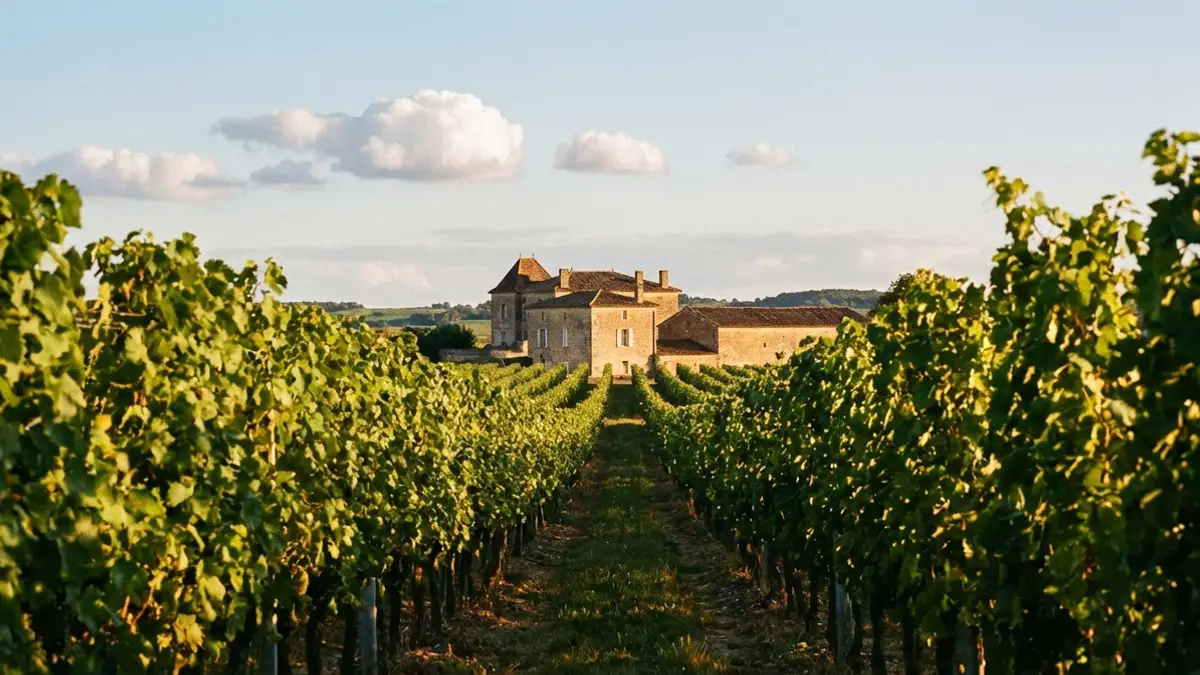
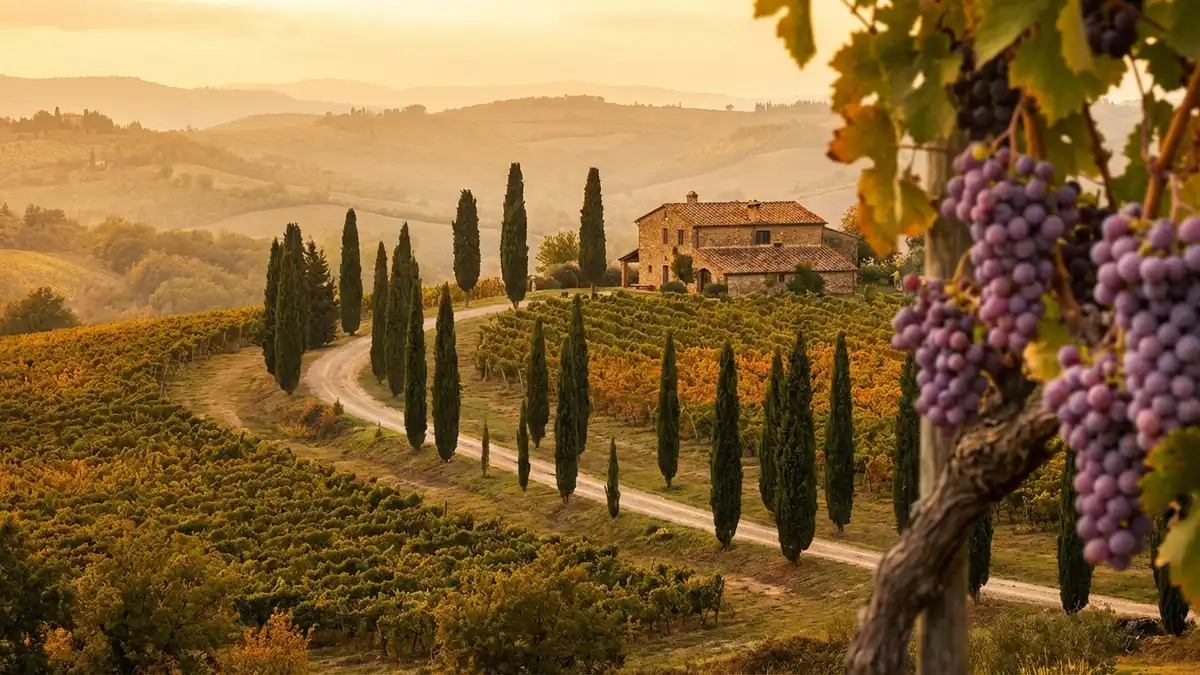
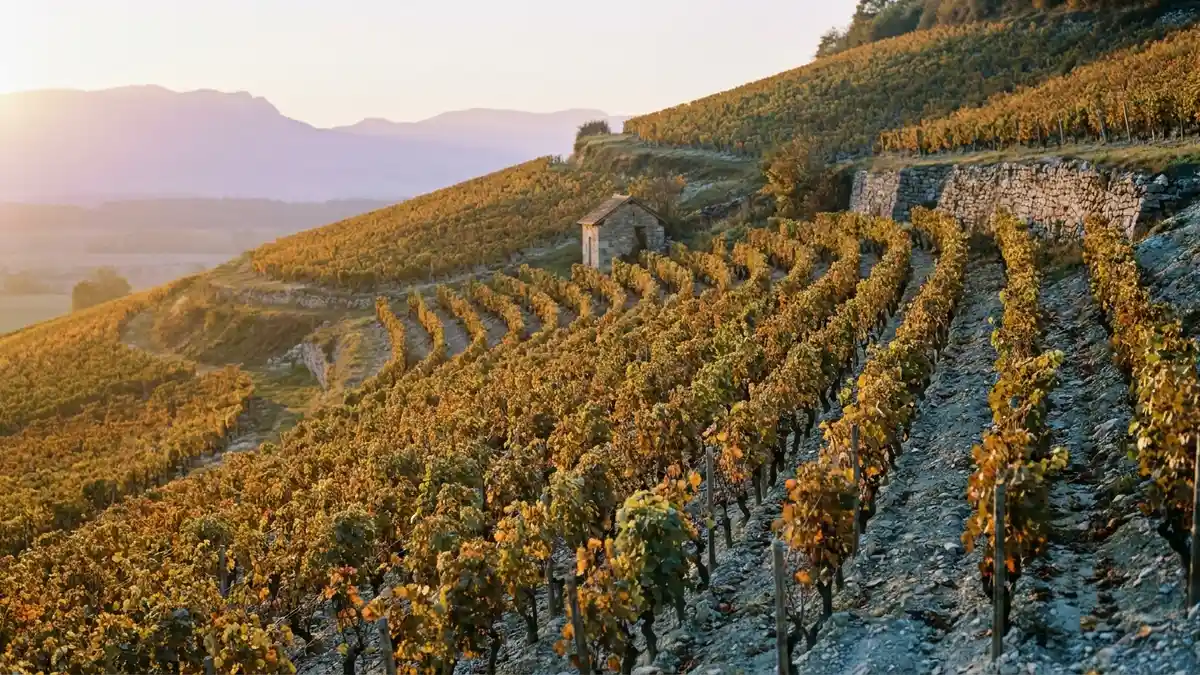
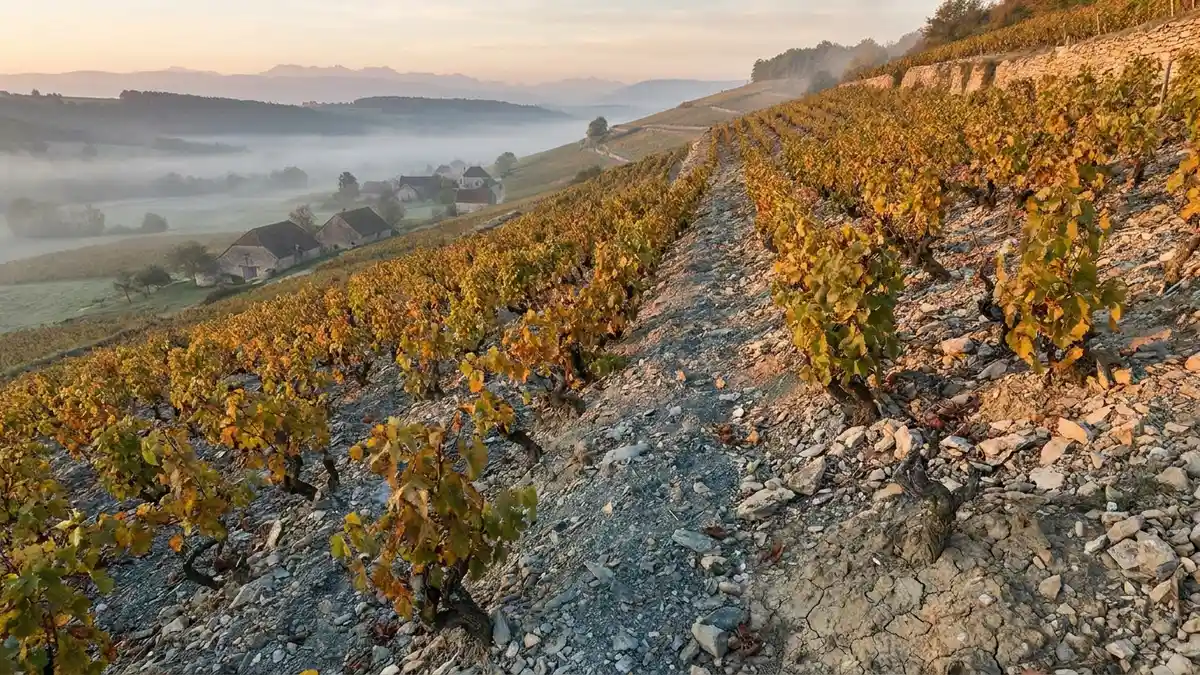
The Jura runs as a thin north-south band of vineyards on the western foothills of the Jura Mountains, roughly an hour's drive east of Burgundy's Côte d'Or. Look across the valley on a clear day and you can see the peaks that mark the Swiss frontier.
This is a cool, continental climate with cold winters, warm but short summers, and real risk of spring frost. Grapes ripen slowly and keep their bracing acidity, which is exactly why the region's wines feel so taut and alive.
The soils are the other half of the story. The hillsides are built on marl (a crumbly mix of clay and limestone), often stained blue or grey, layered with bands of harder limestone. These cold, mineral-rich soils stress the vines just enough to give the wines their nervy, salty intensity.
Geologists even named a worldwide rock layer after the region — the Jurassic period takes its name from these very hills. The Sommy app's French wine course maps how this terroir shapes flavor, glass by glass.
The Grapes of the Jura
Only five grapes really matter here, and learning them unlocks almost every bottle. Two are white, three are red, and several appear in famous specialties. Here is the cast:
- Savagnin (white): The soul of the Jura. A thick-skinned, high-acid grape that thrives under oxidative aging to make Vin Jaune. When aged without air it can also be fresh and zesty. For a deeper look at this grape's full range, see our Savagnin wine guide.
- Chardonnay (white): The most-planted grape in the Jura, often called "Melon" or "Gamay Blanc" locally. It makes both fresh, Burgundy-like whites and richer oxidative styles, and is frequently blended with Savagnin.
- Poulsard (red): Also spelled Ploussard. Extremely pale and thin-skinned, it makes delicate, almost rosé-colored reds full of red berry and floral perfume, with very light tannins.
- Trousseau (red): The Jura's most structured red — deeper in color, with spice, red cherry, and a savory edge. Our Trousseau wine guide covers its bolder personality in detail.
- Pinot Noir (red): Brought over from neighboring Burgundy. It adds color and backbone, often blended into local reds or bottled on its own.
These are textbook indigenous grapes worth seeking out — Savagnin, Poulsard, and Trousseau grow almost nowhere else in any quantity. If unusual native varieties excite you, our roundup of indigenous grapes worth trying places them in wider company, and our overview of the noble grapes explains why Chardonnay and Pinot Noir feel so familiar here.
Vin Jaune: The Jura's Famous "Yellow Wine"
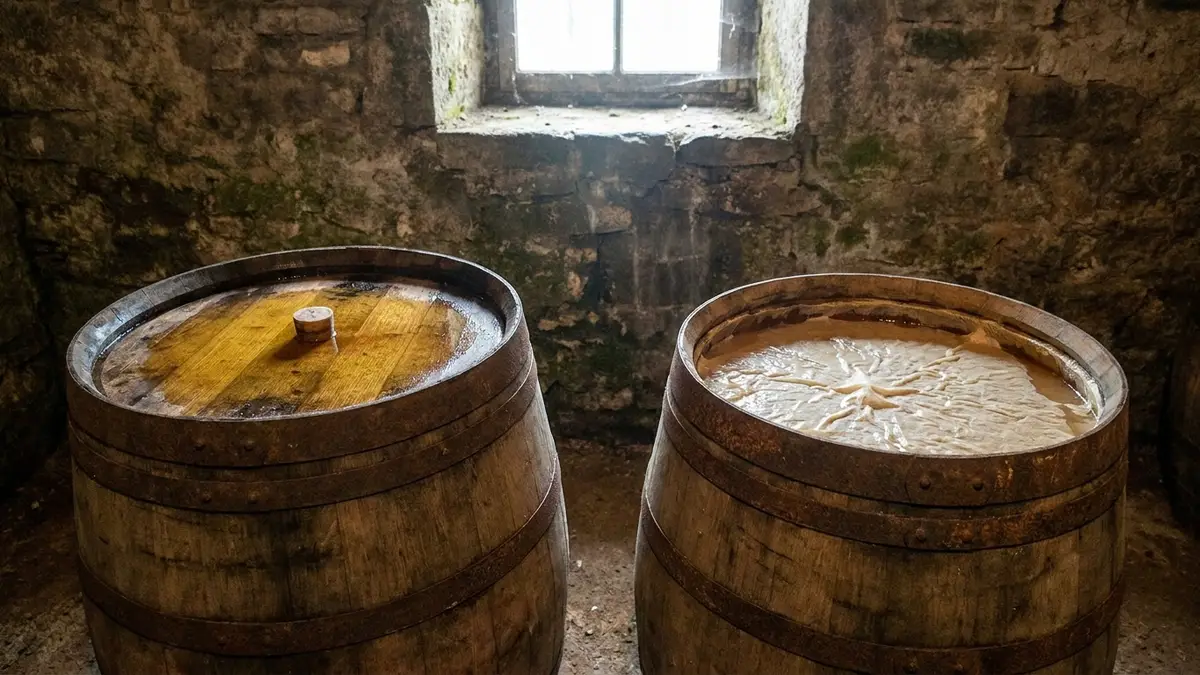
If the Jura has one icon, it is Vin Jaune. Made only from Savagnin, it is matured in barrel for a minimum of six years and three months without ever topping up the cask. As the wine slowly evaporates, a film of native yeast called the voile (the veil) grows across the surface, protecting the wine from full oxidation while feeding on it.
That long, slow transformation gives Vin Jaune its unmistakable flavor. Typical aromas: roasted walnut, bitter almond, curry spice, dried apple, brown butter, and a savory, briny lift. It is fully dry, despite the deep golden color, with searing acidity and a finish that goes on and on.
Compare it directly to its closest cousin and the picture sharpens:
- Vin Jaune: Made from Savagnin · still and unfortified · aged 6+ years under a yeast veil · dry · sold in the 62cl clavelin bottle.
- Fino and amontillado sherry: Made from Palomino · fortified with grape spirit · aged in a fractional solera system · dry · sold in standard bottles.
The kinship is no accident — both age under yeast. To understand the sherry side of that family, our sherry wine guide and the Jerez sherry region guide explain the solera in plain terms. The broader idea — that exposing wine to air can build flavor instead of ruining it — is unpacked in our piece on oxidative versus reductive winemaking.
Vin Jaune comes in its own squat, dumpy bottle: the clavelin, which holds 62 centiliters rather than the usual 75. Legend says it represents what is left of a liter of wine after six years of evaporation — the rest lost to "the angels' share."
Vin de Paille: The Jura's Sweet Straw Wine
The region's great sweet wine is Vin de Paille, or "straw wine." After harvest, bunches of Savagnin, Chardonnay, and Poulsard are laid out to dry — historically on beds of straw, now often on racks or hung from rafters — for at least six weeks. The grapes shrivel into raisins, concentrating their sugar.
The dried fruit is then pressed and slowly fermented into a luscious, amber dessert wine. Typical aromas: dried apricot, fig, candied orange, honey, and walnut. It is sweet but kept lively by the Jura's natural high acidity, so it never feels cloying.
A little goes a long way. Vin de Paille is bottled in small 37.5cl half-bottles and sipped in small pours. If you enjoy concentrated dessert styles, our dessert wine guide shows where straw wine sits among the world's sweet wines.
The Jura Wine Guide to Ouillé vs Sous Voile
Here is the single most useful idea in any jura wine guide. The same grape, in the same cellar, can become two completely different wines depending on one choice: whether the winemaker tops up the barrel or not. These two methods define the region's whites.
- Sous voile (under the veil): The barrel is deliberately left unfilled as the wine evaporates, so a yeast film forms on the surface. The result is nutty, savory, and oxidative — think roasted nuts, dried fruit, and a salty tang. This is the traditional Jura style and the foundation of Vin Jaune.
- Ouillé (topped up): The barrel is regularly refilled to keep air out, exactly as in Burgundy. The wine stays fresh, fruity, and floral — citrus, white peach, and orchard fruit — and tastes far closer to a familiar white Burgundy.
This distinction matters enormously for a beginner, because two bottles labeled "Savagnin" or "Chardonnay" can taste like different drinks entirely. A topped-up ouillé Chardonnay is the gentlest possible entry point; a sous voile Savagnin plunges you straight into oxidation.
Our guide to Chardonnay wine is a helpful reference here, because tasting an ouillé Jura Chardonnay against a Burgundy version reveals just how much winemaking, not grape, shapes the glass. Sommy turns exactly this kind of side-by-side into a guided tasting exercise.
The Reds of the Jura: Pale, Perfumed, and Food-Friendly
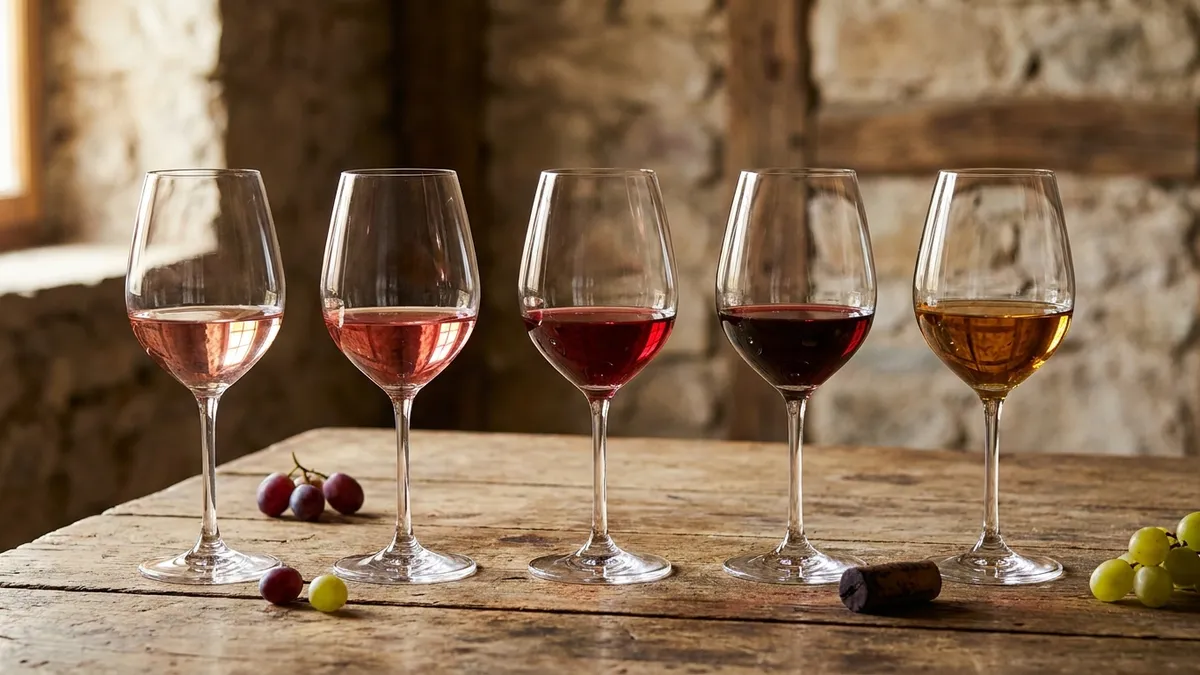
Jura reds surprise almost everyone. They are pale, light, and aromatic rather than dark and powerful — closer in weight to a rosé or a delicate Pinot Noir than to a hearty Bordeaux. Served lightly chilled, they are some of the most versatile food reds in France.
- Poulsard: So pale it can look like a deep rosé. Typical aromas: wild strawberry, redcurrant, rosehip, and a whiff of earth. Body: light (1-2/5) · Tannins: very low (1/5) · Acidity: high (4/5). Best served cool.
- Trousseau: The most serious red, with real grip and spice. Typical aromas: red cherry, cranberry, black pepper, and dried herbs. Body: medium (3/5) · Tannins: medium (3/5) · Acidity: high (4/5).
- Pinot Noir: Familiar and reliable, lending color and structure, often blended with the two local grapes.
Their lightness comes from the cool climate and thin grape skins, which build little color or tannin. If you have only met big, tannic reds, our explainer on tannins, acidity, and body helps you recognize why these wines feel so different on the palate.
Crémant du Jura and Other Specialties
The Jura makes more than still wine. Crémant du Jura is a traditional-method sparkling wine, usually from Chardonnay and Pinot Noir, offering bright, affordable bubbles. Macvin du Jura is a sweet aperitif made by adding local grape spirit to unfermented juice — a regional curiosity worth trying once.
And then there is the local ritual: pairing aged Comté cheese with Vin Jaune. The nutty cheese and the nutty wine echo each other so perfectly that it has become one of France's classic regional matches.
The Jura and the Natural Wine Movement
For decades the Jura was overlooked — too small, too odd, too far from the trade routes. Then the natural wine movement arrived, and the region's quiet traditions suddenly looked visionary.
Long before "low-intervention" was a marketing term, Jura growers were farming organically, fermenting with wild yeast, and bottling without filtering or added sulfur. The oxidative and topped-up styles both suit a hands-off approach, and a wave of small, cult-followed vineyards turned the Jura into a global reference point for the genre.
The Jura did not chase the natural wine trend. The trend caught up to what the Jura had been doing all along.
Today, a Jura bottle is a badge of honor on natural-leaning wine lists worldwide, often selling out within hours of release. To understand what the term actually means — and what it does not — read our explainer on natural wine. The Jura also taught the wider wine world to embrace a little oxidation as character rather than fault, a shift our piece on oxidative versus reductive winemaking traces in flavor terms.
How the Jura Fits Into French Wine
The Jura is one piece of a much bigger French puzzle. Sitting between Burgundy and Switzerland, it shares Chardonnay and Pinot Noir with its famous western neighbor but goes its own way with Savagnin, Poulsard, and Trousseau.
Knowing where it sits among the country's other regions makes the whole map click. Our overview of French wine regions shows how the Jura's cool-climate, low-intervention identity contrasts with the grandeur of Burgundy and the power of Bordeaux. You can also browse our growing library of regional explainers at our wine regions hub.
For appellation labels, the names to know are simple: Côtes du Jura (the regional appellation, covering all colors and styles), Arbois (the largest and most famous village), L'Étoile (a small white-focused zone named for star-shaped fossils in its soil), and Château-Chalon (the historic home of Vin Jaune, which makes nothing else).
How a Beginner Should Start with Jura Wine
You do not need to start with a six-year-old Vin Jaune. The smartest path eases you in from the familiar toward the wonderfully strange. Here is a practical order:
- Begin with an ouillé white. A topped-up Jura Chardonnay or Savagnin tastes close to white Burgundy — fresh, citrusy, easy to love. This is your bridge into the region.
- Chill a Poulsard red. Serve this pale, perfumed red slightly cool. Its light body and gentle red fruit will surprise anyone expecting a heavy wine.
- Compare ouillé and sous voile side by side. Pour a topped-up white next to an oxidative one. The leap from fresh fruit to roasted nuts in the same grape is the clearest lesson the Jura offers.
- Then meet Vin Jaune. Once oxidation makes sense, try a small pour. Decant it, give it air, and pair it with aged Comté or a curried dish to flatter its nutty, savory power.
- Finish with a sweet sip. A half-glass of Vin de Paille shows the region's gentle, raisined sweetness without overwhelming the table.
Building the vocabulary to describe these unusual flavors is half the fun. Our step-by-step guide to how to taste wine gives you a repeatable method, and Sommy turns each bottle into a short, guided lesson — naming the aromas, scoring the structure, and tracking what you sense. Start practicing free at sommy.wine, then bring the method to your first clavelin.
The Reward of Learning the Jura
The Jura asks you to set aside what you expect a white to taste like, and to meet a red so pale it could pass for rosé. In return it gives flavors — roasted walnut, dried apricot, wild strawberry, sea salt — that exist almost nowhere else in the wine world.
It is also a small, generous classroom. Because the grapes are few and the styles are distinct, every bottle teaches a clear lesson about climate, terroir, and the quiet power of a winemaker's choices. The Sommy app is built to make that habit stick, turning each glass into a guided exercise so the next clavelin you open feels a little less mysterious and a lot more delicious.
Sources
Frequently Asked Questions
What is Jura wine known for?
The Jura is best known for Vin Jaune, a powerful oxidative white made from Savagnin and aged under a yeast film for over six years. The region also makes sweet straw wine called Vin de Paille, fresh topped-up whites, and pale, perfumed reds from Poulsard and Trousseau. It is small but hugely influential in natural wine.
What grapes are grown in the Jura?
The Jura grows five main grapes. The whites are Savagnin, which makes oxidative styles, and Chardonnay, which makes fresher wines. The reds are Poulsard, a very pale and delicate grape, plus Trousseau and Pinot Noir, which give more color and structure. Many bottles blend Savagnin and Chardonnay together.
What does Vin Jaune taste like?
Vin Jaune tastes of roasted walnut, almond, curry spice, dried apple, and bruised yellow fruit, with a long, savory, slightly salty finish and high acidity. It is dry, not sweet, despite its golden color. The flavor comes from years of aging under a film of yeast that gives it a sherry-like, deeply nutty character.
Is Vin Jaune the same as sherry?
No, but they are cousins. Both age under a protective yeast film and share a nutty, oxidative character. Vin Jaune is a still, dry wine made from Savagnin and is never fortified, while fino and amontillado sherry are fortified wines from Palomino. Vin Jaune comes in a special 62cl bottle called the clavelin.
Why is the Jura important for natural wine?
The Jura became a hub of the natural wine movement because its small growers championed low-intervention farming, minimal sulfur, and unfiltered bottlings long before it was fashionable. Its oxidative and topped-up styles suit hands-off winemaking, and a wave of cult producers turned the once-overlooked region into a global reference for natural wine.
What is the difference between ouillé and sous voile?
These are two ways of aging Jura whites. Sous voile means under the veil — the barrel is not topped up, so a film of yeast forms and the wine develops nutty, oxidative flavors. Ouillé means topped up — the barrel is regularly refilled to keep air out, giving fresher, fruitier wines closer to white Burgundy.
How should a beginner start with Jura wine?
Start with a topped-up ouillé Chardonnay or Savagnin, which tastes closer to familiar white Burgundy, then try a pale Poulsard red lightly chilled. Once those make sense, taste a small pour of Vin Jaune to meet the oxidative style. Compare an ouillé and a sous voile white side by side to feel the difference clearly.
Sommy Team
LinkedInFounder & Wine Educator
The Sommy Team is building the world's most approachable wine education app, helping beginners develop real tasting skills through structured courses and AI-guided practice.