Méthode Champenoise Explained — How the Bubbles Get In

By the Sommy Team — AI-assisted, human-edited.
Updated Sep 24, 2026
Contents (8)
- Méthode Champenoise Explained in One Paragraph
- Which Label Words Mean the Traditional Method?
- What Happens at Each Step of Méthode Champenoise?
- How Is It Different From the Tank Method and Pét-Nat?
- Does Méthode Champenoise Mean Better Quality?
- How Can You Taste the Method in Your Glass?
- Who Really Invented Méthode Champenoise?
- Where to Start Tonight
TL;DR
Méthode champenoise makes the bubbles inside the bottle you buy. Yeast and sugar start a second fermentation, the wine rests on dead yeast for months or years, then the yeast is frozen out and a dosage sets sweetness. Only Champagne may use the name; elsewhere it is the traditional method.
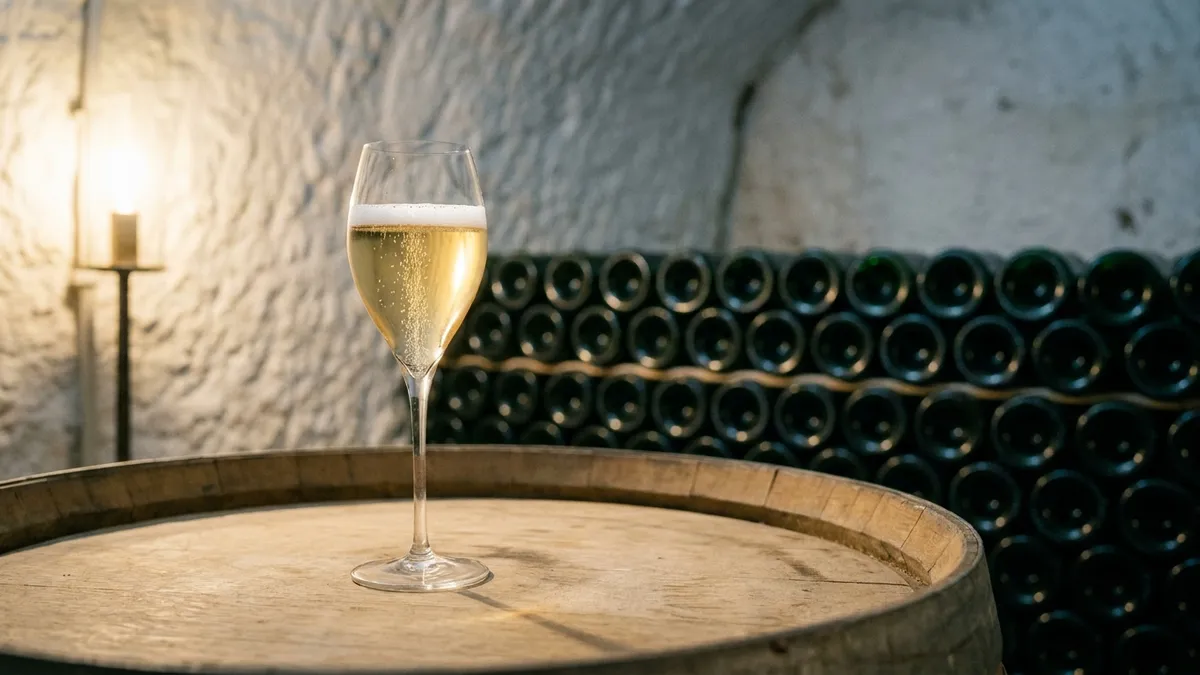
Méthode champenoise makes the bubbles inside the very bottle you buy. Méthode champenoise explained in brief: a second fermentation in a sealed bottle traps carbon dioxide. The months the wine then spends lying on dead yeast give Champagne, Cava and Crémant their smell of bread and toast.
Méthode Champenoise Explained in One Paragraph
Méthode champenoise is a sparkling winemaking process with six steps. A still, dry base wine is bottled with yeast and sugar, the liqueur de tirage. It ferments a second time under a crown cap, building about 6 bar of pressure.
The wine then ages, largely on its spent yeast, for at least 15 months for non-vintage Champagne and three years for vintage. Riddling slides the yeast into the neck, disgorgement freezes it and shoots it out, and a dosage of wine and sugar sets the sweetness, from zero added sugar to more than 50 grams per litre. Only Champagne may use the name. Cava, Crémant, Franciacorta and English sparkling wine use the same method under the label "traditional method" or its local translation.
Which Label Words Mean the Traditional Method?
Only wine from Champagne may say méthode champenoise; everywhere else in the EU the same process is sold as traditional method, méthode traditionnelle, método tradicional or metodo classico. Champagne producers lobbied the European Union to keep the word for their own region. The steps in the cellar are the same everywhere.
That split matters in the shop, because some names already promise the method. Champagne, Cava, Crémant and Franciacorta are each an appellation (a protected place name), and each requires bottle fermentation by law. If the label says one of those four names, the wine was fermented in its bottle. If it says only "sparkling wine", look for the method words before you pay a traditional-method price.
Each appellation also sets its own minimum time before release. That floor is the quickest quality signal on the shelf, because longer time on the yeast means more bread and toast in the glass.
| Wine | Where | Legal name for the method | Legal minimum ageing | Look for on the label |
|---|---|---|---|---|
| Champagne, non-vintage | Champagne, France | Méthode champenoise | 15 months | No year; Brut is the default style |
| Champagne, vintage | Champagne, France | Méthode champenoise | 3 years | A harvest year on the label |
| Crémant (most appellations) | Eight French regions, e.g. Loire, Alsace, Bourgogne | Méthode traditionnelle | About 12 months total | The word Crémant plus a region |
| Crémant de Limoux | Limoux, south-west France | Méthode traditionnelle | At least 12 months on lees | Crémant de Limoux |
| Cava | Spain, mostly Penedès in Catalonia | Método tradicional | 9 months on lees (base tier) | The word Cava; longer tiers cost more |
| Franciacorta, non-vintage | Lombardy, Italy | Metodo classico | 18 months on lees | Franciacorta; Satèn and Rosé need 24 months |
For every style beyond these six, including tank-method and naturally sparkling wines, the types of sparkling wine guide has the full list.
What Happens at Each Step of Méthode Champenoise?
Six steps, in order: base wine, tirage, second fermentation on the lees, riddling, disgorgement and dosage. The first step looks like any still winemaking. The last five happen inside the bottle, one bottle at a time, which is why the process is slow and the wine costs more.
1. The base wine
Grapes are picked early to keep acidity (the tartness that makes your mouth water) high, then pressed gently and fermented into a still, dry, rather sharp wine. In Champagne the three main grapes are Pinot Noir, Pinot Meunier and Chardonnay, with a handful of minor grapes also allowed. Winemakers blend base wines from different grapes, villages and often several years to build a house style before anything sparkles. The sparkling wine grapes guide covers what each grape adds.
2. Tirage: yeast and sugar go in
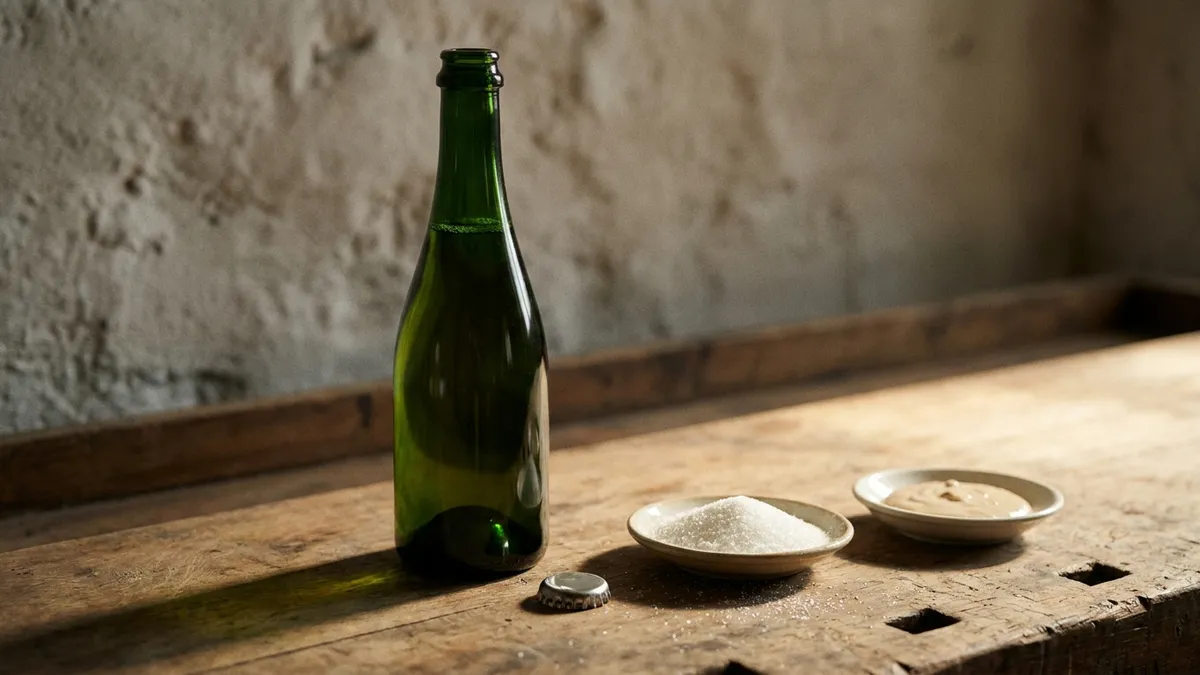
The blended wine is bottled with the liqueur de tirage, a small dose of yeast and sugar, and closed with a crown cap like a beer bottle. The sugar is measured with care. Roughly 18 grams in a standard bottle gives the standard 6 bar of pressure once the yeast has eaten it, which is about 90 psi. Add much more and the glass can burst.
3. Second fermentation and time on the lees
The yeast turns the sugar into a little more alcohol and carbon dioxide. With the cap on, the gas has nowhere to go, so it dissolves into the wine. The standard 750 ml bottle and the magnum ferment this way; larger formats are usually filled with finished wine instead. The wine yeast and fermentation guide explains the first fermentation that comes before this one.
When the sugar runs out, the yeast dies and settles as lees (spent yeast; bread notes) along the side of the bottle. Slowly the dead cells break down, a process called autolysis, and release compounds that smell of bread, brioche and toast. This stage decides the style more than any other. Legal minimums are counted in months, yet many top Champagne producers keep their best bottles on the lees for six to eight years.
4. Riddling: moving the yeast into the neck
Riddling, or remuage, slides the lees from the side of the bottle down into the neck. Bottles sit in angled racks, and each day they are given a small turn and tilted a little steeper, until they stand upside down with the sediment resting on the cap. By hand this takes 8 to 10 weeks for Champagne, against 10 to 14 days for many other traditional-method wines.
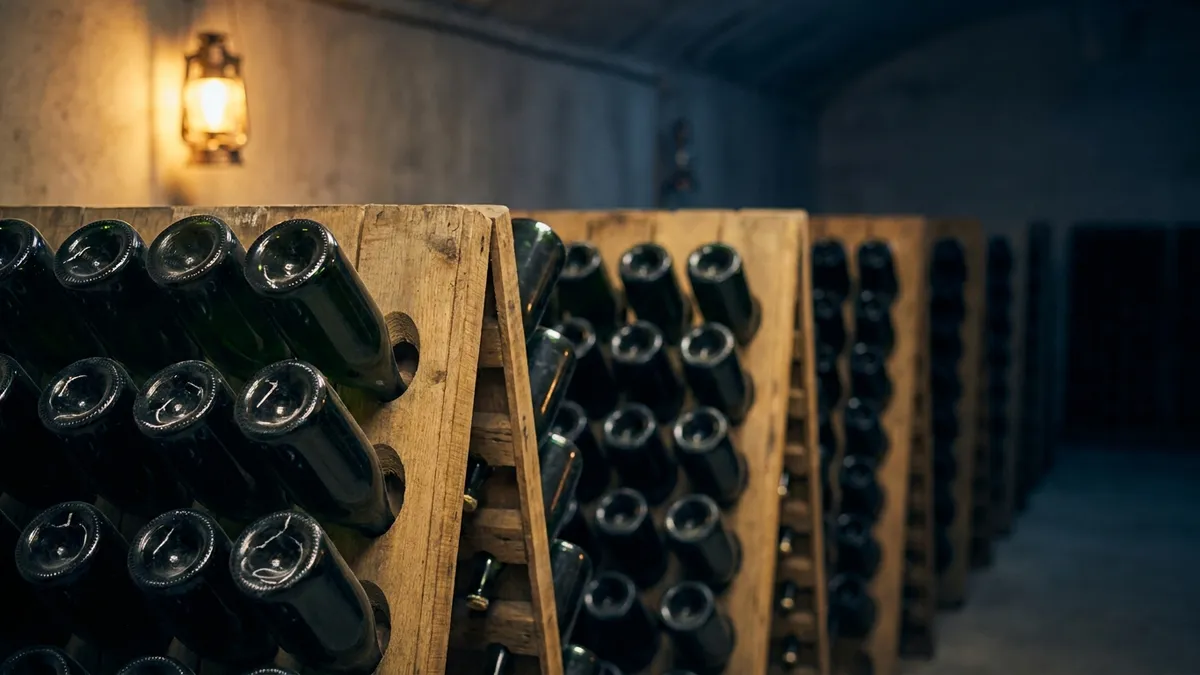
Hand riddling survives mostly for prestige wines and odd bottle shapes. Catalan Cava producers pioneered the gyropallet, a metal crate that holds hundreds of bottles and riddles them all at once by machine, and it now does most of the work worldwide.
5. Disgorgement: freezing the yeast out
Disgorgement removes the sediment. The upside-down neck is dipped in a freezing bath, which locks the lees into a small plug of ice. When the crown cap comes off, the 6 bar of pressure inside fires the plug out, and a little wine goes with it.
6. Dosage: setting the sweetness
The bottle is topped up with the dosage, or liqueur d'expédition, a mix of wine and usually some sugar, then corked and caged. The amount of sugar in the dosage gives the style word on the label. The high acidity of the base wine means a Brut with a few grams of sugar still tastes dry.
- Brut Nature or Zéro Dosage: no sugar added at all.
- Extra Brut: under 6 grams per litre.
- Brut: under 12 grams per litre, the most common style.
- Extra Dry: 12 to 17 grams per litre, noticeably softer than Brut.
- Sec: 17 to 32 grams per litre.
- Demi-Sec: 32 to 50 grams per litre, a dessert-friendly style.
- Doux: 50 grams per litre and above.
"Extra Dry" is sweeter than "Brut", which trips up many shoppers. The wine sweetness scale puts these numbers next to still wines.
How Is It Different From the Tank Method and Pét-Nat?
The tank method runs the second fermentation in a big pressurised vat, and the ancestral method finishes the first fermentation in the bottle, so neither needs riddling or disgorgement. Skipping those two steps saves weeks of cellar work per bottle, which is why tank-method wine usually costs less.
The tank method, also called Charmat or Martinotti, is how most Prosecco is made. Base wine, yeast and sugar go into a sealed steel tank, the wine ferments under pressure, and it is filtered and bottled under pressure. Contact with the yeast is brief, so the wine keeps fresh pear, apple and flower aromas from the grape instead of bread and toast. That suits aromatic grapes; the Champagne vs Prosecco vs Cava comparison sets the two methods side by side at the shelf.
The ancestral method is simpler and older. The wine is bottled before its first fermentation finishes, so the last of the grape sugar makes the bubbles. There is no tirage, usually no disgorgement and no dosage, which is why these wines are often cloudy and lower in pressure. Its modern name is pét-nat.
Does Méthode Champenoise Mean Better Quality?
No. It is a production method, and it guarantees bottle fermentation and a minimum time on lees, never a quality level. Traditional-method wines range from simple to excellent, just as Champagne itself runs from basic non-vintage to long-aged prestige wines.
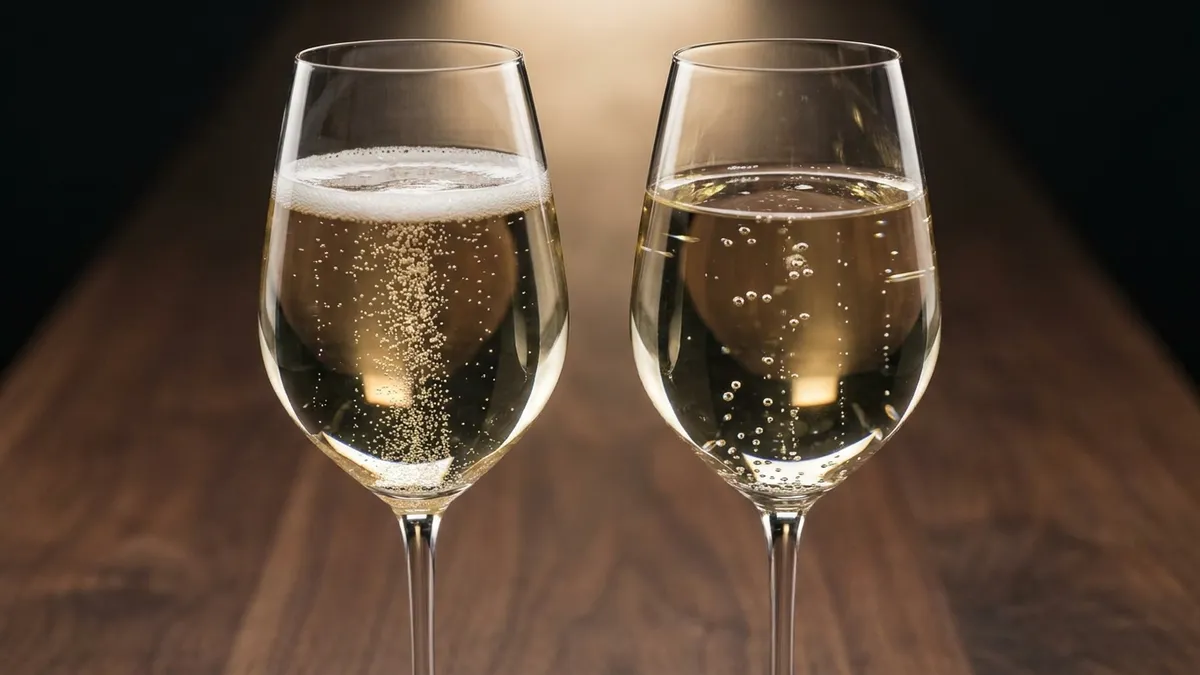
What the method does promise is a style. Lees contact adds proteins and other yeast compounds that help give a finer, longer-lasting stream of bubbles and a creamier feel. A good tank-method wine can have similar pressure, so pressure alone does not explain the difference.
The real quality clue is time. A Cava or Crémant aged well past its minimum can outclass a young Champagne, and a non-vintage Franciacorta already starts at 18 months on lees. England is the clearest proof that place matters as much as the name. English sparkling wine uses the same main grapes as Champagne: Chardonnay, Pinot Noir and Pinot Meunier. In 2004 a panel judging European sparkling wines gave English wines most of the top ten places. The English wine guide covers where it grows.
How Can You Taste the Method in Your Glass?
Look for fine, persistent bubbles and smell for bread, brioche or toast, which come from time on the lees. Those two clues, plus a dry, sharp finish, separate a traditional-method wine from a fruity tank-method one in a single glass.
Serve it straight from the fridge in a white-wine glass or a tulip rather than a wide coupe, so the aromas have room to gather. The mousse (the foam and feel of the bubbles on your tongue) is the next clue. A traditional-method wine usually feels creamy and fine, while a tank-method wine feels bigger and more prickly. If the bubbles are large, fade within minutes and the wine smells only of pear and apple, it is probably tank method. The how to taste sparkling wine guide walks through the full routine.
Who Really Invented Méthode Champenoise?
Nobody in Champagne. Wine historians believe bottle fermentation was used in Limoux, in south-west France, as early as 1531, long before the monk Dom Pérignon got the credit. The story of Dom Pérignon inventing sparkling wine is a legend with no record behind it. Limoux still makes traditional-method wine today, sold as Crémant de Limoux.
The science came from England. Christopher Merrett described in a paper to the Royal Society how adding sugar to wine before bottling made it sparkle, which is the idea behind the modern tirage. Champagne's contribution was to turn the process into a system, with riddling developed there in the 19th century.
Other regions copied it and gave it their own names. Josep Raventós made the first Spanish traditional-method sparkling wine in 1872 after visiting Champagne, and Spanish producers adopted the word Cava in 1970 to set their wine apart from Champagne. In 1995 Franciacorta became the first Italian bottle-fermented sparkling wine to get DOCG status, Italy's top appellation tier. For the region that gave the method its name, read the Champagne region guide, and the wine styles hub maps where sparkling wine sits among the others.
Where to Start Tonight
Buy one Brut Cava or Crémant and one Prosecco at a similar price, chill both to fridge temperature and pour them side by side. Smell the Cava or Crémant first and hunt for bread crust, then compare the pear and apple of the Prosecco. If you want a guide through the glasses, the Sommy app at sommy.wine has bite-sized courses and a tasting mode that logs both notes in your journal.
Sources
- Wikipedia: Traditional method (tirage, riddling, disgorgement, naming, history)
- Wikipedia: Champagne (grapes, ageing minimums, dosage levels)
- Wine Folly: How sparkling wine is made
- Wikipedia: Crémant (appellations and ageing rules)
- Wikipedia: Franciacorta (DOCG status and ageing rules)
- Consorzio Franciacorta: Production regulations (months on lees by style)
- Wikipedia: Limoux wine (Crémant de Limoux lees ageing, 1531 history)
Frequently Asked Questions
What is méthode champenoise?
It is the way Champagne is made sparkling. A still base wine is bottled with yeast and sugar, sealed with a crown cap, and ferments a second time so the carbon dioxide stays dissolved in the wine. The wine then ages on its dead yeast, the yeast is collected in the neck and removed, and a dosage of wine and sugar sets the final sweetness.
What is the difference between méthode champenoise and the traditional method?
There is no technical difference. They are the same process with different legal names. Champagne producers lobbied the European Union to keep méthode champenoise for wine made in Champagne, so other regions say traditional method, méthode traditionnelle, método tradicional in Spain and Portugal, or metodo classico in Italy. The steps, from tirage to dosage, are identical.
How long does méthode champenoise take?
At least 15 months for non-vintage Champagne and three years for vintage Champagne, counted from bottling. Many top producers keep their best bottles on the lees for six to eight years. Other regions set shorter floors: nine months on lees for basic Cava, about 12 months for most Crémants, and 18 months on lees for non-vintage Franciacorta.
What is riddling in champagne making?
Riddling, or remuage, moves the dead yeast from the side of the bottle into the neck. Bottles are turned a little and tilted steeper each day until they stand upside down with the sediment resting on the cap. By hand it takes eight to ten weeks for Champagne. Most producers now use gyropallets, machines that riddle hundreds of bottles at once.
What is disgorgement in winemaking?
Disgorgement removes the yeast sediment after riddling. The neck of the upside-down bottle is dipped in a freezing solution, which traps the sediment in a small plug of ice. When the crown cap comes off, the pressure inside the bottle, about six bar, shoots the plug out. The bottle is then topped up with the dosage and corked.
Is méthode champenoise better than the Charmat method?
It is slower and costlier, not automatically better. The traditional method adds bread and toast aromas and finer bubbles through time on the lees. The Charmat or tank method keeps the wine fresh and fruity, which suits aromatic grapes such as Glera in Prosecco. Choose traditional method for a toasty, savoury glass and tank method for pear, apple and flowers.
Which wines use the traditional method besides Champagne?
Cava from Spain, Franciacorta from Italy, the eight French Crémant appellations such as Crémant de Loire and Crémant d'Alsace, and most English sparkling wine all use it. So do many premium sparkling wines from elsewhere. The label will say traditional method or the local equivalent, because only Champagne may print méthode champenoise.
Sommy Team
LinkedInFounder & Wine Educator
The Sommy Team is building the world's most approachable wine education app, helping beginners develop real tasting skills through structured courses and AI-guided practice.