Cuvée Meaning in Wine: What the Label Word Tells You

By the Sommy Team — AI-assisted, human-edited.
Updated Oct 1, 2026
Contents (8)
- What Does Cuvée Mean on a Wine Label?
- What Are the Four Meanings of Cuvée?
- Does the Word Cuvée Mean Better Wine?
- How Should You Read Cuvée When You Buy?
- What Is the Cuvée in Champagne, and What Is the Taille?
- What Is a Prestige Cuvée or Tête de Cuvée?
- Is Cuvée the Same as Vintage or a Blend?
- Where Does the Word Come From, and How Do You Say It?
TL;DR
Cuvée comes from cuve, French for vat or tank. On most labels it names a specific blend or batch, and the term is unregulated, so it does not prove quality. In Champagne it has a fixed meaning: the first 2,050 litres of juice pressed from 4,000 kg of grapes.
Cuvée on a wine label means one thing every time: wine from a particular vat or batch that the producer chose to name. That makes it a name for a blend, and any producer may use it. Only in the Champagne press house does the word have a fixed, measured meaning, and there it describes juice.
What Does Cuvée Mean on a Wine Label?
Cuvée is French for a batch of wine from one vat or tank, and on a label it names a specific blend or batch. A producer might print "Cuvée Marie" for a house blend, "Cuvée Réserve" for a selected lot, or "Brut Cuvée" on a sparkling wine.
If you like a cuvée, write down its full name: it is how you find the same blend next year.
What the word does not say is how good the batch is. The term is unregulated, so its presence proves nothing about quality. The facts that do carry weight sit elsewhere on the label: the appellation (a protected place name with its own rules), the vintage year, and any ageing statement.
What Are the Four Meanings of Cuvée?
The word does four jobs: a tank or batch, a named blend, the first juice from a Champagne press, and a producer's top tier. All four grow from one picture, a tank of wine set aside for a purpose. Where the word appears tells you which meaning applies.
| Meaning | Where you see it | What it promises | What to check next |
|---|---|---|---|
| A tank or batch | Cellar talk, technical sheets | Wine handled as one lot | Nothing on the shelf; it is winery language |
| A named blend | Front labels: Cuvée + a name | That this lot has its own identity | Appellation, vintage, grapes on the back label |
| First press juice | Champagne and traditional-method sparkling | The finest, purest juice from the press | Whether the label says it uses only the cuvée |
| Top tier | Prestige cuvée, tête de cuvée, cuvée spéciale | The producer's own idea of its best | Vintage year, ageing time, price against the house's basic bottle |
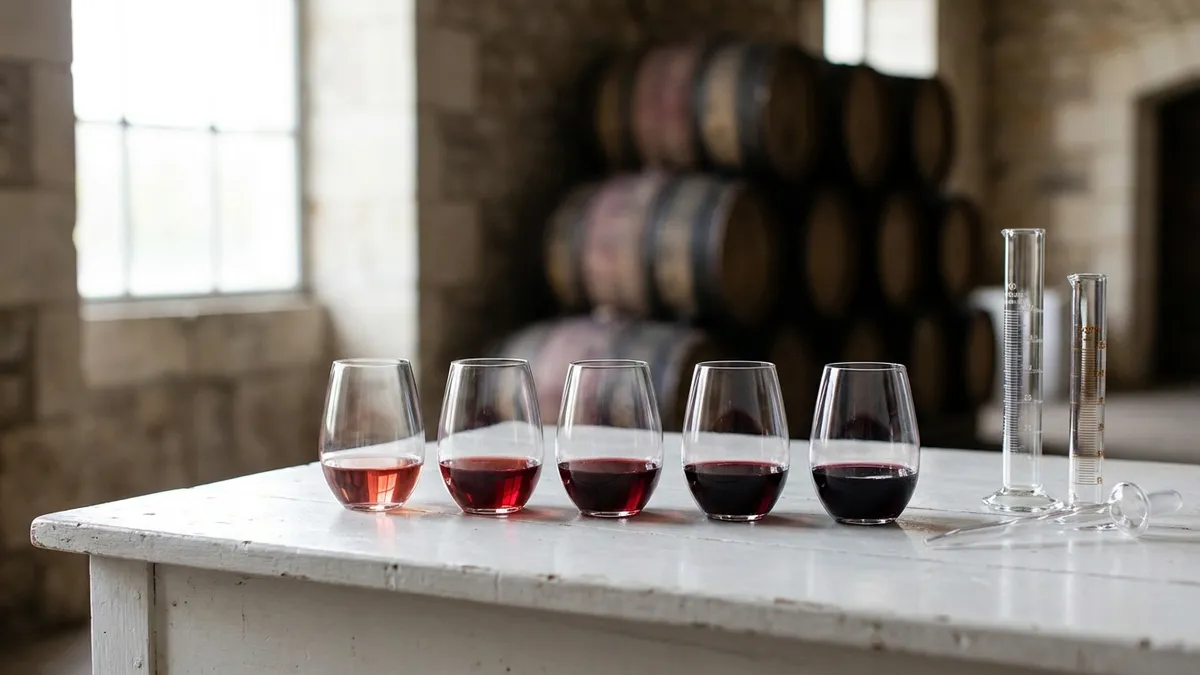
The named blend is the meaning you will meet most often. Winemakers think in tanks: grapes from one plot, one picking day or one grape go into separate vats, and the final wine is built by mixing them. A cuvée is the result of one of those recipes. Our guide to wine blends covers why producers mix grapes and lots in the first place.
Does the Word Cuvée Mean Better Wine?
Only if the producer earns it. The term is unregulated for quality, and nearly every wine spends time in a vat, so any producer can print cuvée on any bottle. A supermarket blend and a hand-picked selection can both carry the word.
Careful producers do use the word with intent. Many keep it for special or selected batches that sit above their standard wine. Others print it on their everyday blend because it sounds good on a label. The word cannot tell these two habits apart; the producer's wider range can.
The same holds for the grander versions. Cuvée spéciale and tête de cuvée are meant to signal higher quality, and tête de cuvée has a long history in Sauternes. Neither phrase has a legal definition behind it. Compare that with a word like Grand Cru in Burgundy or Champagne, which is tied to named vineyards or villages by law.
So the useful reading is narrow. Cuvée is a name, not a quality grade. It tells a producer's bottles apart on the shelf.
How Should You Read Cuvée When You Buy?
Read cuvée as a name, then look elsewhere on the label for proof. Four other clues carry the real information: the appellation, the vintage (the harvest year), the grape or grapes, and any ageing term. Our guide to how to read a wine label walks through each one.
Use these rules at the shelf:
- If the only quality word on the front is cuvée, judge the bottle by its appellation and price instead.
- If one producer sells several cuvées, the one naming a single vineyard, village or longer ageing is usually the step up.
- If a cheap bottle leans on "Grande Cuvée" or "Cuvée Prestige", expect a marketing name for the house blend.
- If you want detail, turn the bottle around: the back label often lists grapes, ageing and the story behind the cuvée name.
The appellation matters most because it comes with written rules on grapes, yields and methods. Our explainer on what an appellation is shows how those rules work.
What Is the Cuvée in Champagne, and What Is the Taille?
In Champagne the cuvée is the first and finest juice from the press, and the taille (usually called the tail in English) is the juice that follows. From a 4,000 kg load of grapes, called a marc, the first 2,050 litres are the cuvée and the next 500 litres are the taille. Here the word is a measured volume.
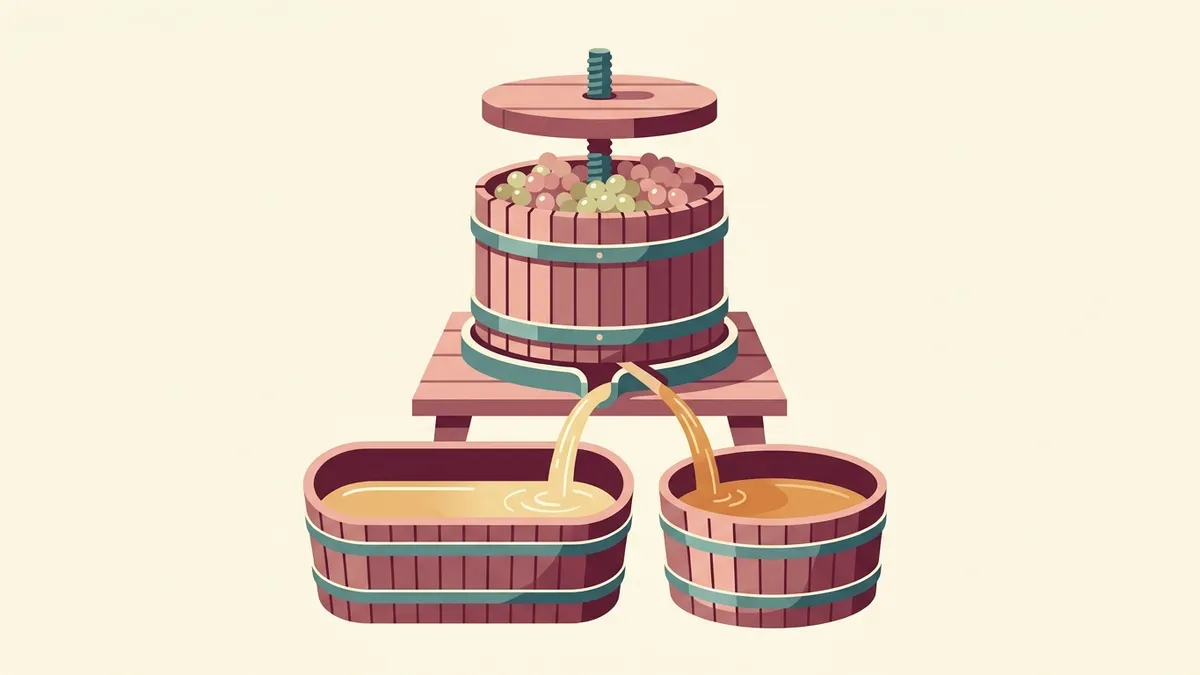
The split exists because juice changes as pressure rises. The first, gentle pressing releases juice from the pulp, which is high in sugar and acidity (the tartness that makes your mouth water). Harder pressing pulls more from the skins, so taille juice is fruitier, a little coarser and lower in acid. High-acid cuvée juice is the material for wines meant to age for years.
Champagne's trade body, the Comité Champagne (CIVC), sets the degree of pressing along with pruning, vineyard yields and lees ageing. Sparkling wines made by the traditional method (a second fermentation inside the bottle) in other regions often borrow the same idea, keeping the gentlest juice apart. The six steps of that method are covered in our méthode champenoise explainer.
If a sparkling label says it uses only the cuvée, expect a finer, more acidic wine built for ageing. If it says nothing, the blend may include some taille, which is normal and often adds fruit.
What Is a Prestige Cuvée or Tête de Cuvée?
A prestige cuvée is the wine a producer places at the top of its range, usually a Champagne. It is a proprietary blend, chosen from the house's best material and often from a single good year. Tête de cuvée ("head of the batch") means much the same and is used especially in Sauternes. Neither is a legal category.
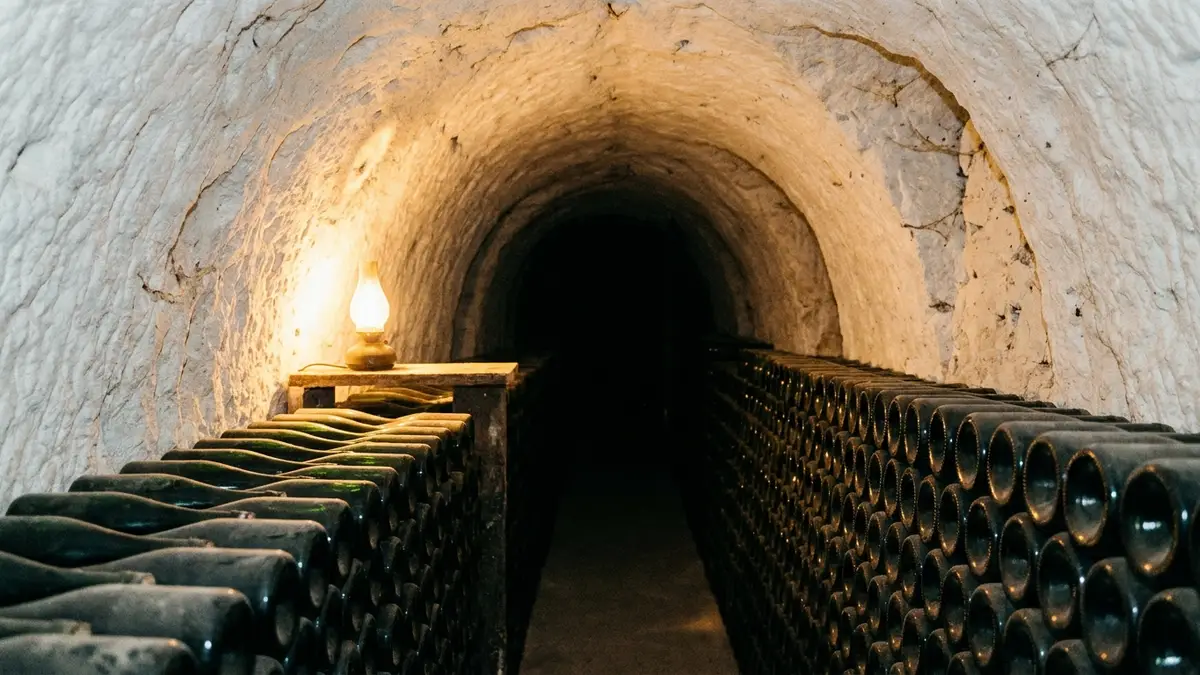
The idea of selling a house's top bottle under its own name is fairly recent. The first publicly sold prestige cuvée is usually dated to 1936, made from the 1921 vintage.
In Sauternes, the sweet white wine of Bordeaux, selection starts with picking. Grapes touched by noble rot (a mould that shrivels them and concentrates sugar) ripen unevenly, so pickers pass through the vines several times, and the finest selections form the top wine. Our Sauternes wine guide explains that process.
If a label says prestige cuvée or tête de cuvée, expect the producer's highest price and look for a vintage year. If no year appears, it is a top blend across harvests, which can still be priced among the house's highest.
Is Cuvée the Same as Vintage or a Blend?
Cuvée overlaps with blend but not with vintage. Most cuvées are a blend of something: grapes, plots, barrels or tanks. A cuvée names a batch, not a harvest year, so it can come from one year or several. Vintage only means the grapes came from one harvest.
That is why the two words often appear together. "Cuvée 2019" means a named blend made from the 2019 harvest (in the EU at least 85% of it, and all of it in Champagne). A cuvée with no year is usually non-vintage (blended from several harvests to keep a steady house style). Our comparison of vintage vs non-vintage wine explains why producers choose each route.
In Champagne the difference also changes ageing time. Non-vintage Champagne must rest at least 15 months, including time on its lees (spent yeast that gives bread and toast smells). Vintage Champagne must mature for at least three years. If you want the toastier style, a year on the label is the signal; the word cuvée is not.
Where Does the Word Come From, and How Do You Say It?
Cuvée comes from cuve, French for vat or tank, and sounds roughly like koo-VAY, stress on the second syllable. Literally it means "what fills the vat". The French first vowel is made with rounded lips, so a native speaker says something closer to kü-VAY.
The root explains every meaning in the table above. A vat holds one batch, so the batch became the cuvée. A named blend is a batch with a recipe. The first Champagne juice fills the first vat. A prestige bottle is the best vat in the cellar.
More label words and the styles behind them are gathered in the wine styles hub. The Sommy app adds bite-sized courses, including a France course and Wine 101, plus an AI-guided tasting mode that starts from a photo of the label. Tonight, find a bottle at home that says cuvée, then read its appellation, year and back label to see what the producer promises.
Sources
Frequently Asked Questions
What does cuvée mean on a wine bottle?
Cuvée is French for a batch of wine from one vat or tank. On a bottle it usually names a specific blend or batch that a producer wants to set apart, such as a house blend or a special selection. The word itself is unregulated, so the rest of the label tells you more about style and quality than cuvée does.
Does cuvée mean the wine is better quality?
Not on its own. The term is unregulated for quality, and almost every wine sits in a vat at some point, so any producer can print it. Careful producers use it for selected batches above their standard wine. Judge the bottle by its appellation, vintage, producer and ageing statement, and treat cuvée as a name for the batch.
What is the difference between cuvée and vintage?
Vintage is the year the grapes were harvested. Cuvée is a batch or blend, which can come from one year or several. A label can say cuvée with a year, which means a blend from that harvest, or cuvée with no year, which usually means a non-vintage blend across harvests. The two words answer different questions.
What is the cuvée and the taille in Champagne?
In Champagne the cuvée is the first and finest juice from the press: the first 2,050 litres from a 4,000 kg load of grapes, called a marc. The next 500 litres are the taille, or tail. Cuvée juice is purer and more acidic, which suits long ageing. Taille juice is fruitier and is often used in smaller amounts.
What is a prestige cuvée?
A prestige cuvée is the wine a producer places at the top of its range, most often a Champagne. It is usually a selected blend, often from a single good year, aged longer and priced far higher than the house's standard bottle. It is a producer's own tier name, not a legal category, so each house sets its own standard.
What does tête de cuvée mean?
Tête de cuvée means 'head of the batch' and signals a producer's best selection. It is used especially in Sauternes, the sweet white wine of Bordeaux, and sometimes in Champagne. Like cuvée spéciale, it is meant to indicate higher quality, but no law defines it, so the producer's reputation and the appellation carry the real weight.
How do you pronounce cuvée?
Say it roughly koo-VAY, with the stress on the second syllable. The French vowel in the first syllable is closer to the 'u' in French 'tu', made with rounded lips, so a native speaker sounds nearer to kü-VAY. Either version is understood in any wine shop or restaurant.
Sommy Team
LinkedInFounder & Wine Educator
The Sommy Team is building the world's most approachable wine education app, helping beginners develop real tasting skills through structured courses and AI-guided practice.