English Wine Guide: Sparkling Success and Beyond

By the Sommy Team — AI-assisted, human-edited.
Updated Jun 17, 2026
Contents (10)
- What Is English Wine?
- Why English Sparkling Wine Tastes Like Champagne
- The Chalk Soils and Cool Climate That Shape the Style
- The Grapes Behind English Wine
- The Key Counties of English Wine
- How English Wine Is Classified
- What Makes English Wine Distinctive
- How a Beginner Should Start with English Wine
- English Wine Beyond the Big Three Counties
- The Reward of Learning English Wine
TL;DR
English wine has become a serious traditional-method sparkling powerhouse, built on the same chalk soils as Champagne across Sussex, Kent, and Hampshire. A warming cool climate ripens Chardonnay, Pinot Noir, and Pinot Meunier, while Bacchus leads aromatic still whites. This english wine guide shows beginners where to start.
What Is English Wine?
This english wine guide opens with the headline that has surprised the wine world: England now makes traditional-method sparkling wine that competes with Champagne, and it does so on the same chalk. The wine heartland sits in the cool, green south — chiefly Sussex, Kent, and Hampshire — where the soil is part of the very chalk seam that runs under Champagne across the Channel. The flagship style is sparkling, built from three grapes: Chardonnay, Pinot Noir, and Pinot Meunier. Alongside it, a smaller range of still wine is led by Bacchus, an aromatic white. A warming cool climate, protected PDO and PGI labels, and rising quality have turned a once-marginal region into a genuine contender.
Why English Sparkling Wine Tastes Like Champagne
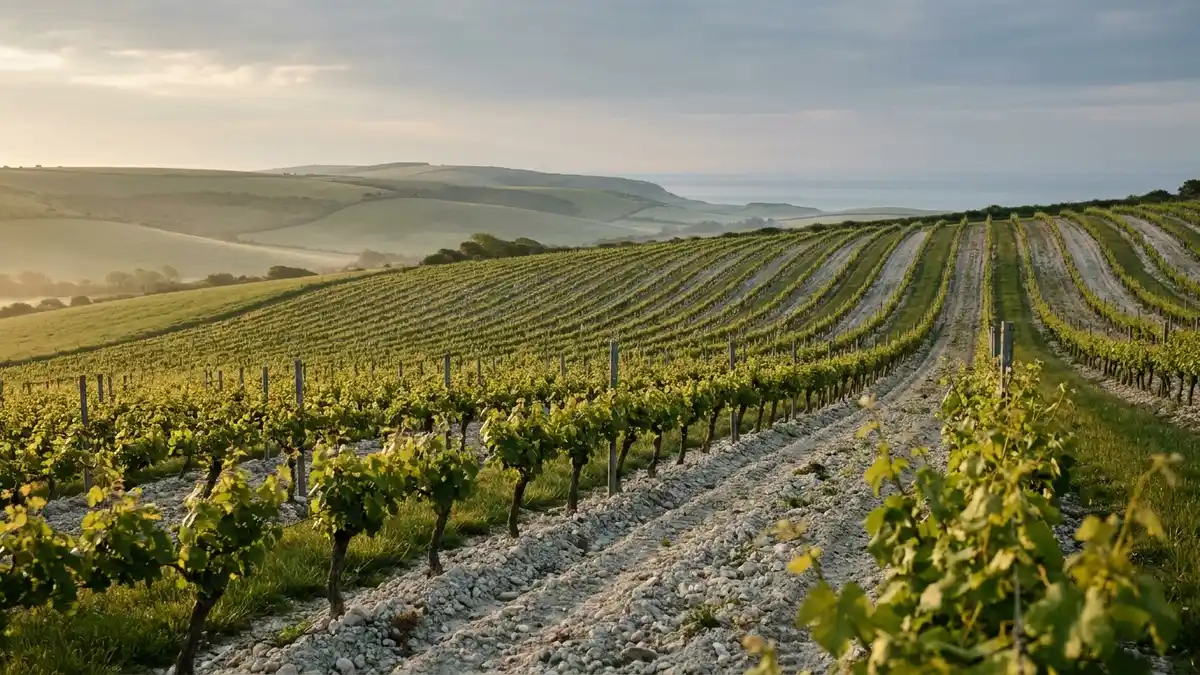
The resemblance between English sparkling wine and Champagne is not a marketing line — it is geology. The same band of chalk and limestone that surfaces in Champagne dips under the English Channel and rises again in the South Downs of southern England. Chalk drains well, reflects light, and holds just enough water, giving vines a steady, stress-free ripening on a cool site. It is the ideal bedrock for high-acid base wines.
On top of that shared soil, England plants the same three grapes as Champagne and uses the same traditional method — the technique where a second fermentation is triggered inside the sealed bottle, trapping carbon dioxide as fine, persistent bubbles. The wine then rests on its spent yeast, or lees, which adds the bready, biscuity character that defines fine fizz.
Add a cool climate that keeps acidity firm and alcohol moderate, and the result is unmistakable: bright, racy, green-apple-and-citrus sparkling wine with a brioche edge. If you want the full picture of the region that set the template, our Champagne region guide lays out how the original works.
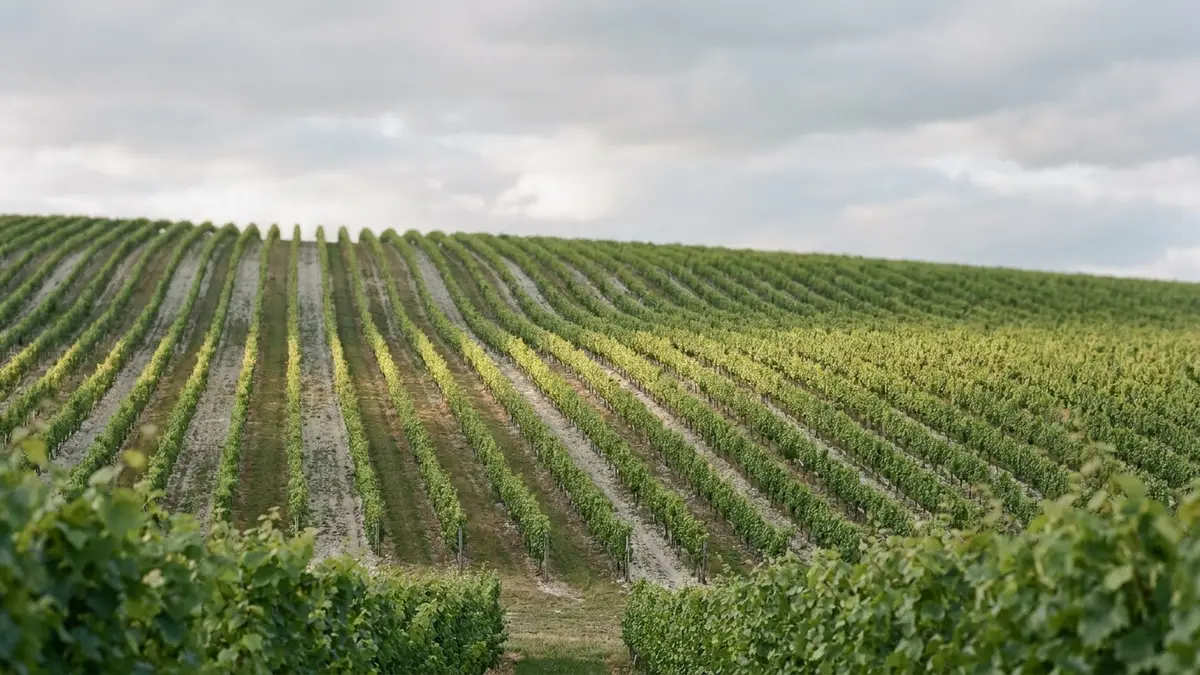
The Chalk Soils and Cool Climate That Shape the Style
Two forces shape every English bottle: the ground beneath the vines and the weather above them. Understanding both explains why the region leans so hard into sparkling wine.
Chalk and the South Downs
The South Downs are a long ridge of chalk hills running through Sussex and into Hampshire, with a sister seam in the North Downs of Kent. This is the same Cretaceous chalk found in Champagne, laid down by the same ancient sea. For vines it does three useful things: it drains heavy rain so roots never sit waterlogged, it reflects sunlight onto the fruit on grey days, and its deep, porous structure keeps a reservoir of moisture for dry spells.
The payoff is grapes that ripen slowly and evenly while holding on to their acidity — exactly the raw material a great sparkling wine needs. Chalk is so central to the region's identity that growers talk about it the way Burgundians talk about terroir, the idea that soil and site shape the wine in the glass.
A Warming Cool Climate
England remains a genuinely cool climate for grapes. Compared with most wine countries it is cloudy, damp, and northerly, sitting near the edge of where vines can ripen at all. That marginality used to make winemaking a gamble.
A gradual warming trend has changed the odds. Southern England now ripens Chardonnay and Pinot Noir far more reliably than it could a generation ago, which is the engine behind its sparkling success. Just as important, the climate is still cool enough to keep acidity high and alcohol modest — the freshness that makes the wines sing. The shift has been from marginal to dependable, not from cool to warm.
The Grapes Behind English Wine
England's vineyards split cleanly into two camps: the three classic grapes that make the famous sparkling wines, and the aromatic varieties that make the still ones.
The Three Champagne Grapes for Sparkling
- Chardonnay: The backbone of England's finest sparkling wine, contributing citrus, green apple, and a fine, age-worthy structure. In a blend it brings elegance and length; on its own it makes a Blanc de Blancs style — sparkling wine from white grapes only. For the grape's wider story, see our Chardonnay wine guide.
- Pinot Noir: A black grape pressed gently so its juice runs clear, adding body, red-fruit depth, and backbone to sparkling blends. It is the same variety behind the great reds of Burgundy, and our Pinot Noir guide covers how it behaves around the world.
- Pinot Meunier: The third grape, often the supporting player. It buds late and ripens early, a useful hedge against England's spring frosts and short summers. It lends roundness, fruitiness, and an approachable, early-drinking charm to a blend.
These same three varieties are the foundation of classic fizz everywhere; our overview of the grapes behind great sparkling wine shows how they work together. Typical aromas in English sparkling: green apple, lemon, white blossom, fresh bread, and a chalky, mineral finish. Body: light-to-medium (2-3/5) · Acidity: high (5/5) · Alcohol: moderate (2-3/5).
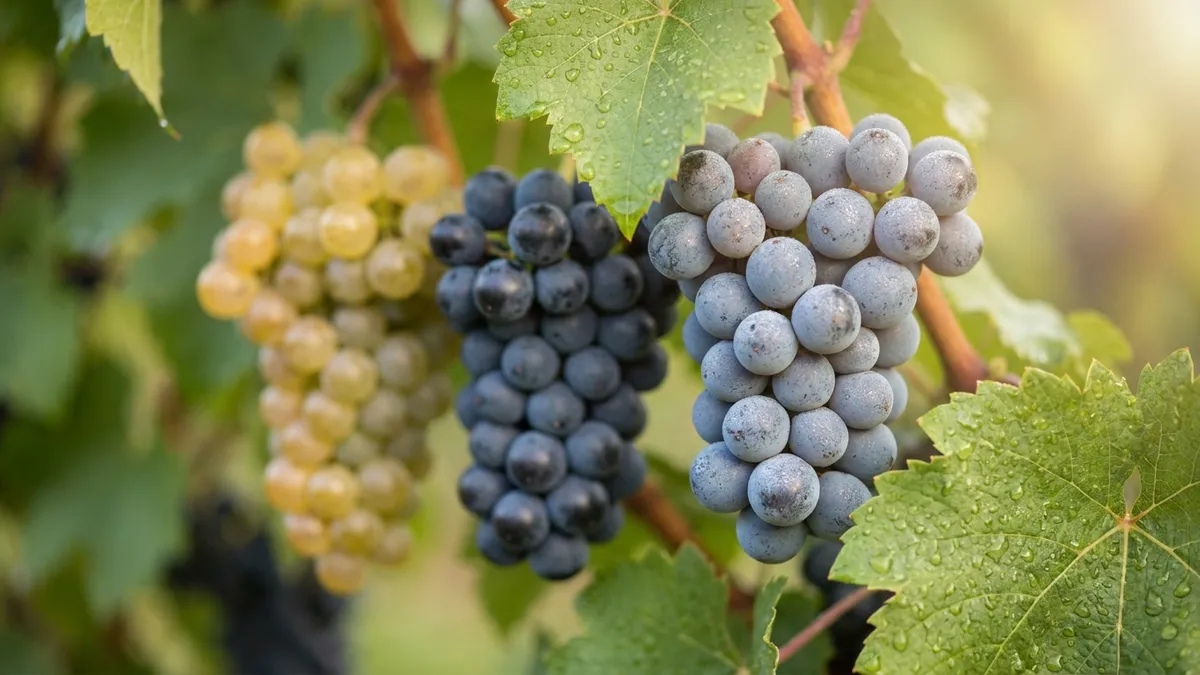
Bacchus and the Still Wines
England's still wines are a quieter success story, and one grape leads them.
- Bacchus: The signature English aromatic white, frequently likened to Sauvignon Blanc. It is zesty and pungent, with elderflower, gooseberry, grapefruit, and cut-grass notes, light in body and bone dry. Bacchus has become the region's calling card for still wine in the way Chardonnay defines its sparkling.
- Pinot Noir for still reds: In the warmest years and sites, Pinot Noir also makes light, pale, high-acid still reds — delicate and Burgundian in spirit rather than rich and ripe. A cool-climate take on a famous grape.
- Other cool-climate grapes: Hardy varieties such as Seyval Blanc, Reichensteiner, and Pinot Noir Précoce (an early-ripening clone) fill out the picture, especially on cooler or more northerly sites where the classic three struggle.
Typical aromas in a Bacchus white: elderflower, gooseberry, grapefruit, nettle, and a green herbal lift. Body: light (2/5) · Acidity: high (4/5) · Alcohol: moderate (2/5).
The Key Counties of English Wine
English wine is concentrated in the warmer south, and three counties form its heartland. Learning them turns a scattered map into a clear story.
- Sussex: The sparkling stronghold and arguably the spiritual home of English fizz. Its South Downs chalk and gentle south-facing slopes are tailor-made for Chardonnay and Pinot Noir. Sussex became England's first wine region to win its own protected designation, a marker of how seriously the area is taken for traditional-method sparkling.
- Kent: Known as the Garden of England, Kent sits on the North Downs chalk and grows the widest spread of grapes in the country — sparkling classics plus still Bacchus, Chardonnay, and Pinot Noir. Its mix of soils and sheltered valleys makes it the most versatile of the three.
- Hampshire: Another chalk-rich sparkling specialist, just west of Sussex along the same downland. Hampshire's cool, well-drained sites produce taut, mineral base wines and have built a strong reputation for elegant traditional-method sparkling.
Beyond this core, vineyards reach into Surrey, Essex (one of England's driest and sunniest counties), and as far afield as Cornwall and Yorkshire, proving how the warming climate keeps pushing the map outward.

How English Wine Is Classified
England does not use a ranked vineyard pyramid like Burgundy's crus. Instead it relies on two protected European-style categories that signal origin and quality. Knowing them helps you read a label with confidence.
- PDO English Quality Sparkling Wine: The top tier. PDO stands for Protected Designation of Origin, the strictest category. To qualify, a sparkling wine must use approved grapes, be made by the traditional method, and spend a set minimum time ageing on its lees before release. This is the badge to look for on serious English fizz.
- PGI English Wine: A broader Protected Geographical Indication covering a wider range of styles and grapes with more relaxed rules. It guarantees English origin but sets a lower bar than the PDO sparkling category.
- Regional designations: Specific areas, such as Sussex, have begun securing their own protected names, the closest England comes to a Champagne-style place identity. Over time these may carve the country into recognised quality pockets.
Because there is no cru ladder, quality is signalled three ways: the PDO mark, the traditional method on the label, and the producer's track record. The Sommy app's wine courses walk through how protected designations work across Europe so a label stops being a puzzle.
What Makes English Wine Distinctive
Several threads set England apart from older wine countries, and they reinforce one another.
First, the chalk-and-Champagne parallel gives England a ready-made identity: the same soil and grapes as the world's benchmark sparkling region, on the cooler side of the Channel. Few new regions can claim such a direct geological lineage.
Second, acidity is the signature, not a flaw. Where warm regions fight to retain freshness, England has it in abundance. That razor-bright acidity, combined with lees ageing, gives the sparkling wines a crisp, mineral precision that defines the house style.
Third, the region is young and producer-driven. Without centuries of vineyard hierarchy, English wine is shaped by ambitious modern growers planting on the best chalk sites and chasing quality from scratch. It is one of the clearest cases of a wine identity being built in real time.
England did not copy Champagne — it inherited the same chalk and decided to use it.
If you enjoy comparing how cool-climate regions express shared grapes, the same curiosity rewards a look at how France handles its own patchwork of climates. Our guide to French wine regions shows how cool northern areas favour the same Chardonnay and Pinot Noir that shine on England's chalk.
How a Beginner Should Start with English Wine
You do not need an expert palate or a big budget to get English wine. The key is to taste deliberately and in pairs, so the regional character stands out. Here is a practical order.
- Begin with a traditional-method sparkling. Choose a PDO English sparkling from Sussex or Hampshire. Look for the green-apple, citrus, and bready notes, and notice how high the acidity runs.
- Compare it directly with a Champagne. Pour the two side by side. The family resemblance — the chalk, the grapes, the bready lees — is the whole point, and the small differences teach you what makes each one itself.
- Try a Blanc de Blancs. A sparkling wine from Chardonnay alone shows England's most elegant, mineral side. It is the clearest window onto what the chalk does.
- Meet still England through Bacchus. Open a dry Bacchus white next to a Sauvignon Blanc. The elderflower, gooseberry, and grapefruit will feel familiar, while the cooler, leaner edge marks it as English.
- Build the tasting habit. Note the colour, the firm acidity, the moderate alcohol, and the green-fruit core. Our guide to how to taste wine gives the step-by-step method, and understanding tannins, acidity, and body explains the structure behind these crisp wines.
Sommy turns these comparisons into guided exercises — naming the aromas, scoring the acidity, and building the vocabulary to describe what you sense. You can start practising free at sommy.wine, then bring the method to your next glass of English sparkling.
English Wine Beyond the Big Three Counties
The story does not end at Sussex, Kent, and Hampshire. The warming climate keeps nudging the map north and west. Essex has emerged as one of England's driest, sunniest spots, drawing serious growers chasing ripeness on free-draining soils. Surrey shares the same chalk downland as its famous neighbours, and pioneering vineyards reach all the way to Cornwall in the southwest and Yorkshire in the north.
This outward spread is a sign of confidence. A region that once clung to a few sheltered corners now plants further afield each year. It is also a reminder of how grape behaviour shifts with site — the same variety can taste very different a few counties apart, a theme our piece on why grapes that look the same can taste different carries well beyond England. The classic three grapes here are also part of the wider family of noble grapes every learner should know first.
The Reward of Learning English Wine
English wine rewards the curious because it is a region you can watch grow up. The chalk-and-Champagne parallel gives you an instant frame, the high acidity makes the style easy to recognise, and the youth of the scene means every vintage adds to the story. There is no centuries-old hierarchy to memorise — just good chalk, three grapes, and a method borrowed from across the Channel.
Start with a glass of traditional-method sparkling, taste it beside a Champagne, and let the resemblance and the differences teach you at once. The Sommy app is built to make that habit stick — turning each bottle into a short, guided lesson so the next glass of English fizz is a little clearer than the last.
Sources
Frequently Asked Questions
What is English wine best known for?
England is best known for traditional-method sparkling wine made from Chardonnay, Pinot Noir, and Pinot Meunier — the same three grapes as Champagne. The southern counties sit on the same chalk seam that runs under Champagne, giving high acidity and fine bubbles. Still wines, led by the aromatic Bacchus grape, are a smaller but growing part of the picture.
Why is English sparkling wine compared to Champagne?
Both regions share the same chalk and limestone soils, a cool climate that preserves acidity, and the same three grapes vinified by the traditional method, where the second fermentation happens inside the bottle. England's chalk is part of the same geological seam that surfaces in Champagne, so the raw materials are strikingly similar even though the labels and place names differ.
What grapes are grown in England?
The three Champagne grapes — Chardonnay, Pinot Noir, and Pinot Meunier — dominate sparkling production. For still wines, Bacchus is the signature aromatic white, often compared to Sauvignon Blanc. Other cool-climate and hybrid grapes such as Seyval Blanc, Reichensteiner, and Pinot Noir Précoce appear too, especially in cooler or more northerly sites.
Where is wine made in England?
Most English vineyards sit in the warmer south. Sussex, Kent, and Hampshire form the heartland, all on chalk downland near the coast. Sussex and Hampshire are sparkling strongholds, while Kent, known as the Garden of England, grows a wide spread of grapes. Smaller pockets reach into Surrey, Essex, and as far as Cornwall and Yorkshire.
Does English wine have a classification system?
England uses two protected categories rather than a cru hierarchy. PDO English Quality Sparkling Wine sets the highest bar, requiring approved grapes, the traditional method, and bottle ageing. PGI English Wine is a broader regional tier. There is no ranked vineyard pyramid like Burgundy; quality is signalled by the PDO, the method, and the producer.
What does English sparkling wine taste like?
Expect bright, high-acid wines with green apple, citrus, white flowers, and bready, brioche notes from time on the lees. The cool climate keeps alcohol moderate and acidity firm, giving a crisp, racy style. Still Bacchus whites are aromatic and zesty, with elderflower, gooseberry, and grapefruit, light in body and refreshingly dry.
How should a beginner start exploring English wine?
Start with a traditional-method sparkling wine from Sussex or Hampshire and taste it beside a Champagne to feel the family resemblance. Then try a still Bacchus white next to a Sauvignon Blanc. Note the high acidity, the green-apple and citrus core, and the moderate alcohol. Tasting in pairs makes the regional character obvious.
Is English wine getting better because of climate change?
A gradual warming trend has helped. Southern England now ripens Chardonnay and Pinot Noir more reliably than it could a few decades ago, which is central to its sparkling success. The climate remains genuinely cool, so acidity stays high — the very trait that makes the sparkling wines fresh. Warming has shifted the region from marginal to dependable, not from cool to warm.
Sommy Team
LinkedInFounder & Wine Educator
The Sommy Team is building the world's most approachable wine education app, helping beginners develop real tasting skills through structured courses and AI-guided practice.