Charmat Method Sparkling Wine: How Prosecco Gets Its Fizz

By the Sommy Team — AI-assisted, human-edited.
Updated Sep 25, 2026
Contents (9)
- What Is the Charmat Method, in One Paragraph?
- How Does the Charmat Method Work, Step by Step?
- How Is Charmat Different From the Traditional Method?
- Why Does Tank-Method Wine Taste So Fruity?
- Does the Charmat Method Mean Lower Quality?
- Is Every Tank-Method Wine Made the Same Way?
- How Do You Buy and Serve Charmat Sparkling Wine?
- Who Invented the Charmat Method, and What Do Labels Call It?
- How Can You Taste the Difference Tonight?
TL;DR
The Charmat method makes sparkling wine by running the second fermentation in a sealed steel pressure tank, then filtering and bottling under pressure. Prosecco needs at least 30 days in tank, Charmat Lungo up to about nine months, against 15 months for Champagne. Short yeast contact keeps pear, apple and flower aromas and lowers the price.
The Charmat method makes sparkling wine by creating the bubbles in one big sealed steel tank instead of inside each bottle. The wine spends weeks with its yeast rather than years, so it keeps the fresh pear, apple and flower smells of the grape. That single choice explains why Prosecco tastes the way it does and why it costs less than Champagne. Charmat method sparkling wine also includes most Lambrusco, Asti and some German Sekt.
What Is the Charmat Method, in One Paragraph?
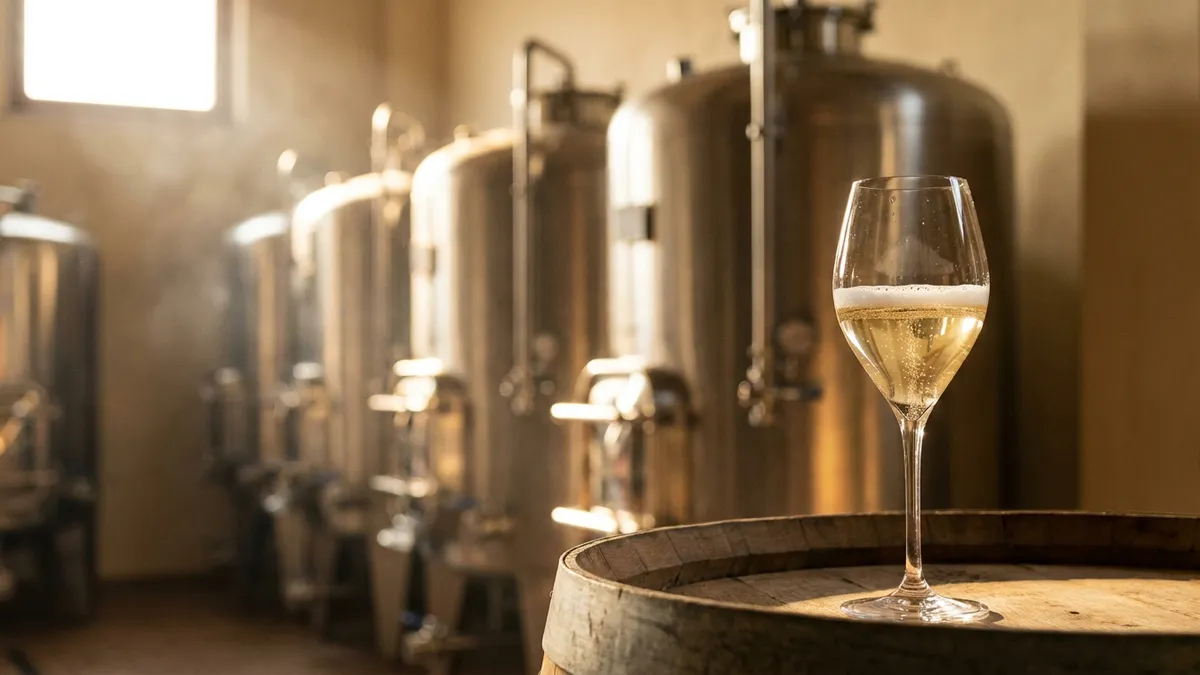
The Charmat method, also called the tank method, cuve close or metodo Martinotti, makes sparkling wine with a second fermentation in a sealed stainless steel pressure tank. Base wine, sugar and yeast go into the tank together. The yeast turns the sugar into alcohol and carbon dioxide, and because the tank is sealed, the gas dissolves into the wine. The wine is then filtered and bottled under pressure.
Prosecco DOC must spend at least 30 days in the tank; long-fermented Charmat Lungo can stay up to about nine months. Champagne, made in the bottle, needs at least 15 months.
How Does the Charmat Method Work, Step by Step?
Base wine, sugar and yeast go into a sealed stainless steel pressure tank, the yeast ferments the sugar, and the carbon dioxide has nowhere to go, so it dissolves into the wine. After that, the yeast is filtered out and the wine moves into bottles without ever losing its pressure.
Every sparkling wine starts as a still wine. That still wine is called the base wine: grapes are pressed and fermented once, as for any white. The bubbles come from a second fermentation (a new round of yeast eating fresh sugar, this time in a closed space). Where that second round happens is what separates the methods.
In the tank method it runs in four stages:
- Fill. The base wine goes into a large stainless steel pressure tank, known in the trade as an autoclave, together with sugar and selected yeast.
- Ferment. The tank is sealed. As the yeast works, the gas it makes cannot escape, so the pressure rises and the carbon dioxide dissolves into the wine.
- Clean. When the fermentation is done, the spent yeast is filtered out of the wine.
- Bottle. The clear, fizzy wine is pumped into bottles under pressure, so the gas stays in solution until you pull the cork.
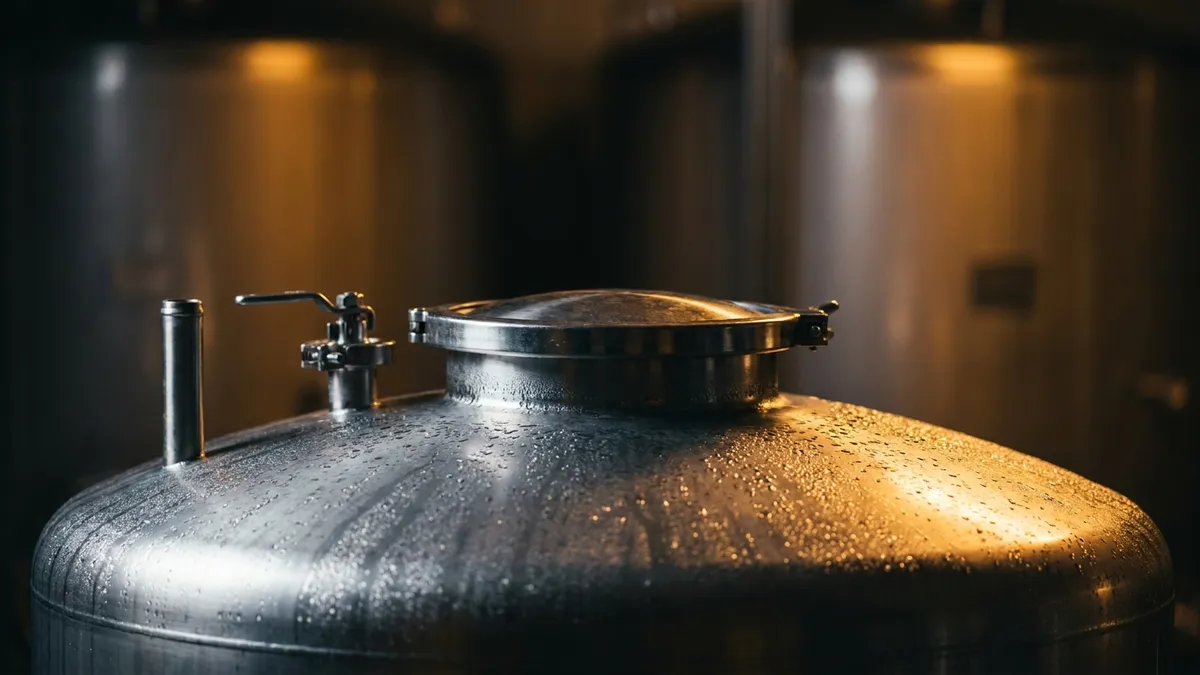
Each batch shares one vessel, so the winemaker controls temperature and pressure for thousands of bottles at once. That control is the point of the tank. The wine yeast and fermentation guide explains what the yeast is doing in both rounds.
How Is Charmat Different From the Traditional Method?
The difference is where the second fermentation happens: the Charmat method runs it once in a tank for a whole batch, while the traditional method runs it separately inside each bottle. Everything else follows from that, including time on the yeast, flavour, bubble texture and price.
In the traditional method, used for Champagne, a few grams of yeast and sugar go into each bottle of base wine, and the bottle is capped. The dead yeast left behind, called lees, stays in the bottle and slowly adds bread and toast smells.
The bottles are then tilted and turned so the lees slide into the neck, a step called riddling. Finally the neck is frozen and the cap removed, and the pressure shoots out the plug of yeast. That last step is disgorgement. Champagne needs at least 15 months to develop its flavour after the second fermentation. The méthode champenoise explainer covers each step.
Both methods can make a fully sparkling wine. In the EU, a wine needs at least 3 bar of extra pressure to be sold as sparkling, and a bottle of Champagne holds about 6 bar. Wines with less gas are sold as semi-sparkling, frizzante in Italian.
| Style | Where the bubbles form | Time or legal marker | Tastes like | Buy it for |
|---|---|---|---|---|
| Prosecco DOC | Tank, second fermentation | 30 days in tank | Pear, green apple, white flowers; soft froth | Aperitifs, spritz, a big group |
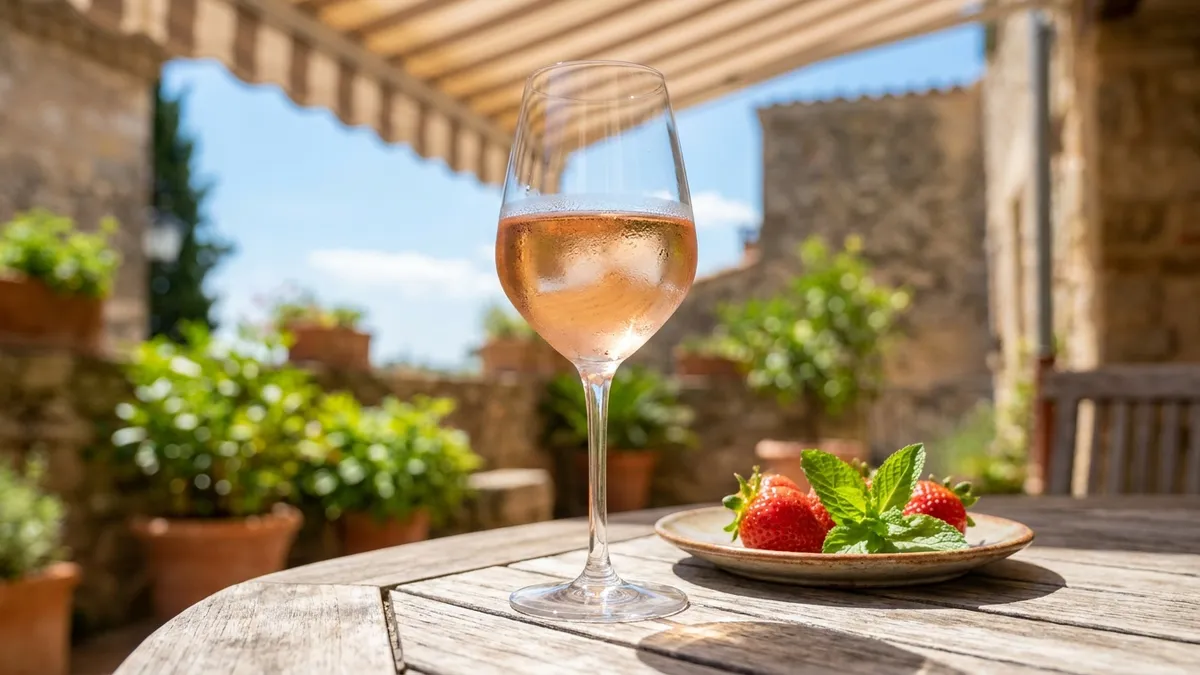
| Prosecco DOC Rosé | Tank, second fermentation | 60 days in tank | Pear plus a little strawberry from Pinot Nero | A pink aperitif with salty snacks |
| Charmat Lungo Prosecco | Tank, long second fermentation | Up to about 9 months in tank | Same fruit, finer and longer-lasting bubbles | A dinner-table Prosecco |
| Lambrusco | Tank, second fermentation | Varies by producer | Fresh cherry and berries, light grip; dry to sweet | Salami, ham, pizza |
| Moscato d'Asti | Tank, one fermentation stopped early | 4.5 to 6.5% alcohol | Peach, grape, orange blossom; sweet and light | Fruit desserts, brunch |
| Champagne | Each bottle, second fermentation | 15 months after second fermentation | Bread, toast, lemon; fine creamy bubbles | A special dinner, rich food |

For the shelf-level version of this comparison, the Champagne vs Prosecco vs Cava guide sets the three best-known styles side by side on price and occasion.
Why Does Tank-Method Wine Taste So Fruity?
Because the wine meets its yeast only briefly and in bulk, the grape's own aromas survive and few bready smells form. What you taste is mostly the grape. For Prosecco that grape is Glera, which was called Prosecco until 2009, when it was renamed so the place name could be protected.
Glera is aromatic but delicate. Its pear, green apple and white-flower smells are exactly what months on the lees would cover with toast and brioche. The tank lets the winemaker lock in the gas and bottle the wine while those smells are still bright. The Glera grape guide covers where it grows and how it ripens.
Tank-method wine is often said to get no yeast character at all, but the lees character is muted, not absent. A wine left longer in the tank sits on its lees in bulk and picks up a little creaminess. It simply never reaches the toasty depth of a bottle aged for years. The bubbles tell the same story. A short tank fermentation gives larger bubbles that feel frothy on the tongue and fade faster in the glass.
Does the Charmat Method Mean Lower Quality?
No, it means lower cost and a different style. Tank-method sparkling wine can be made far more cheaply than traditional-method wine, because one tank replaces thousands of bottles handled one at a time and the fermentation takes weeks, not months.
Cheap to make and cheap in quality are two separate things. The tank is a style choice, not a shortcut: winemakers pick it for aromatic grapes because bottle aging would bury their fruit. Quality inside the method rises with time in the tank. A longer fermentation in the tank keeps the wine's aromas better and gives finer, longer-lasting bubbles.
That is the idea behind Charmat Lungo (long Charmat), where the wine can spend up to about nine months in the tank instead of the legal minimum of 30 days. If a back label mentions a long or extended tank fermentation, expect finer bubbles and a slightly creamier feel than an everyday bottle. If it gives no detail and the price is at the floor, expect the short, frothy style that works best in a spritz.
Is Every Tank-Method Wine Made the Same Way?
No. The same pressure tank does two different jobs, and they make very different wines. For Prosecco and Lambrusco it hosts a true second fermentation in a finished, dry base wine. For Moscato d'Asti and Asti it hosts a single fermentation of fresh grape juice, stopped early on purpose to keep sugar in the wine.
Second fermentation. Prosecco and most Lambrusco follow the steps above. The base wine is already dry and fully fermented, and new sugar and yeast create the bubbles. Lambrusco then comes in three main sweetness levels, secco (dry), amabile (off-dry) and dolce (sweet). The Lambrusco wine guide covers the zones and grapes.
One fermentation, stopped early. Moscato d'Asti never has a second fermentation. The fresh Moscato juice ferments in a sealed tank, trapping its own gas. When enough bubbles and alcohol have built up, the must is chilled almost to freezing to halt the yeast. This is called an arrested fermentation, and it leaves plenty of natural grape sugar in the wine. By law Moscato d'Asti must stay between 4.5% and 6.5% alcohol, and most sit near 5%.
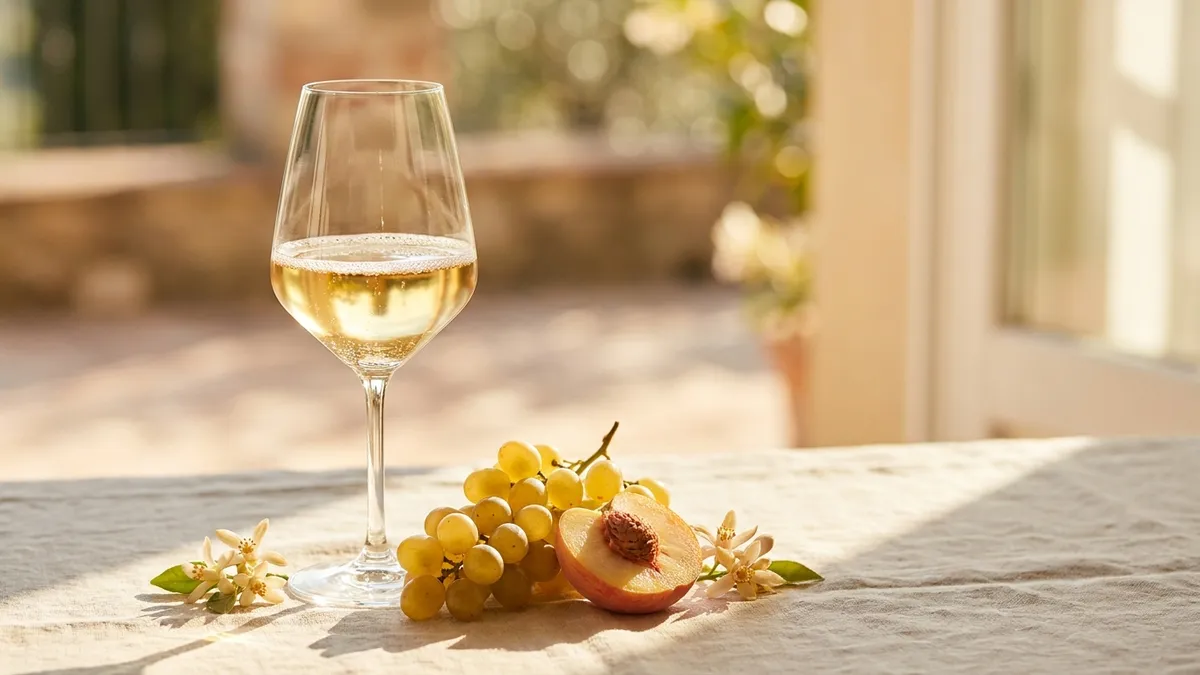
Both jobs rely on the same thing: a sealed tank where temperature and pressure can be controlled for a whole batch. Doing either inside individual bottles would cost far more. Beyond Italy, the tank method is also used for certain German Sekt. The moscato wine guide covers Asti as well, and the types of sparkling wine guide places every method on one map.
How Do You Buy and Serve Charmat Sparkling Wine?
Read the sweetness word first, because on Prosecco it runs backwards: Extra Dry is sweeter than Brut, and Dry is sweeter still. Then buy the youngest bottle on the shelf, serve it cold, and pour it into a glass with room for the aroma to gather.
The legal sweetness bands for Prosecco look like this:
- Brut: up to 12 g/L of sugar. Tastes dry (no sugar you can pick out; fruity is not sweet).
- Extra Dry: 12 to 17 g/L. A soft, fruity edge you can taste.
- Dry: 17 to 32 g/L. Noticeably sweet, despite the name.
If you want the crispest glass for salty food, buy Brut. If the table has brunch pastries or a little chilli, Extra Dry's sugar softens the heat and matches the sweetness. Prosecco carries a minimum of 10.5 to 11.5% alcohol depending on the style and zone, so it stays light enough for a long aperitif. The wine sweetness scale shows how these words compare across other sparkling wines.
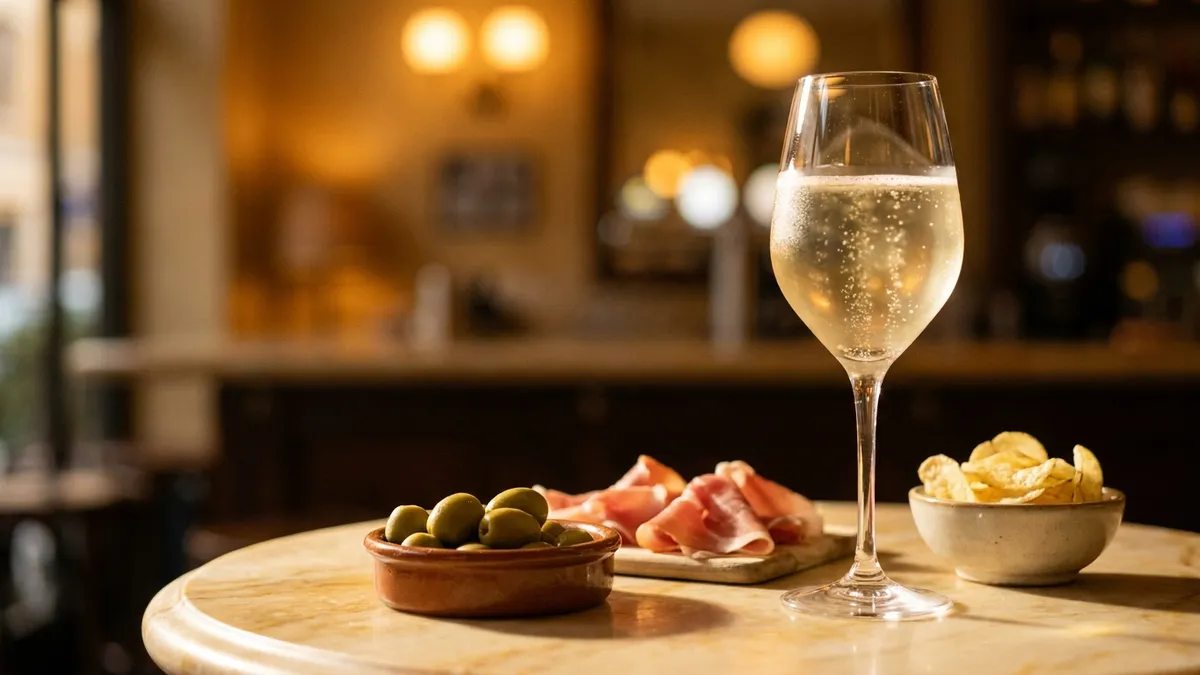
Serve tank-method wine straight from the fridge; the wine serving temperature chart gives the exact range. Young bottles matter because the fresh fruit is the point, and it fades with time in the bottle. A tulip-shaped or white-wine glass gathers the pear and flower smells better than a narrow flute.
For food, think salt, fat and crunch. If the plate is salty or fried, such as olives, cured ham, crisps or tempura, pour a Brut: the bubbles and acidity scrub the fat, and the salt makes the fruit taste riper. If the dessert is fruit-based, pour Moscato d'Asti, whose sweetness should match or beat the plate.
Who Invented the Charmat Method, and What Do Labels Call It?
An Italian winemaker, Federico Martinotti, patented the tank method in 1895, and a French inventor, Eugène Charmat, improved it with his own patent in 1907. Italian labels and producers say metodo Martinotti or metodo Italiano. French and English sources say Charmat or cuve close, which means closed tank.
Those names are the label words to look for on a back label. Any of them tells you the bubbles were made in a tank, so you can expect fresh fruit over toast before you open the bottle.
The method's speed and scale also explain Prosecco's growth. Production rose from about 150 million bottles in 2008 to about 600 million in 2018. A tank fermentation that takes weeks can follow demand in a way that 15 months of bottle aging cannot. The Veneto wine guide covers the region where most Prosecco is made, and the wine styles hub maps sparkling wine against every other style.
How Can You Taste the Difference Tonight?
Pour a tank-method sparkling wine next to a traditional-method one and compare the bubbles and the smell. A Brut Prosecco beside a Cava or a Crémant makes the clearest pair, because the prices are close and the methods are opposite.
In the tank-method glass, look for larger bubbles and smell for pear, apple and flowers. In the bottle-fermented glass, look for a finer stream and smell for bread or toast. The how to taste sparkling wine guide walks through the full routine, and the Crémant wine guide helps you pick the traditional-method side.
The Sommy app at sommy.wine has bite-sized courses, starting with Wine 101, and a guided tasting mode where you photograph each label before you start. Open both bottles tonight, fill two glasses side by side, and write down which bubbles fade first.
Sources
Frequently Asked Questions
What is the Charmat method in winemaking?
The Charmat method is a way of making sparkling wine in which the second fermentation happens inside a sealed stainless steel pressure tank. Base wine, sugar and yeast go in together, the carbon dioxide from fermentation dissolves into the wine, and the finished wine is filtered and bottled under pressure. It is the method behind most Prosecco, Lambrusco and Asti, and some German Sekt.
Is the Charmat method the same as the tank method?
Yes. Charmat method, tank method, cuve close, metodo Italiano and metodo Martinotti all describe the same process: making the bubbles in a large sealed pressure tank rather than in each bottle. Italy uses Martinotti's name because he patented the idea in 1895. France and English-speaking markets usually use Charmat, after the Frenchman who improved it in 1907.
How long does Prosecco spend in the tank?
Prosecco DOC must spend at least 30 days in the tank for its second fermentation, and Prosecco DOC Rosé at least 60 days. Longer versions, known as Charmat Lungo, can stay up to about nine months. That extra time keeps more aroma and gives finer, longer-lasting bubbles. Champagne, by comparison, needs at least 15 months after its second fermentation begins in the bottle.
Does Charmat method sparkling wine taste worse than traditional method?
It tastes different rather than worse. Tank-method wine spends little time on its yeast, so it keeps fresh pear, apple and white-flower aromas and has softer, frothier bubbles. Traditional-method wine ages for months or years on yeast in the bottle, which adds bread and toast aromas and finer bubbles. Choose the tank method for aromatic grapes and easy aperitifs, the bottle method for toasty, savoury styles.
Is Moscato d'Asti made the same way as Prosecco?
No. Both are made in pressure tanks, but Prosecco goes through a full first fermentation and then a second one in the tank. Moscato d'Asti has only one fermentation. The juice ferments in a sealed tank and is chilled almost to freezing to stop it early, which traps natural grape sugar and bubbles. That is why it usually sits around 5% alcohol and tastes sweet.
Why is Prosecco cheaper than Champagne?
Mostly because of the method. One tank does the second fermentation for thousands of bottles at once, and that fermentation takes weeks rather than months. Champagne ferments separately in every bottle, then needs riddling, disgorgement and at least 15 months before release. Less handling and less time mean far lower production costs, which reach the shelf price.
Sommy Team
LinkedInFounder & Wine Educator
The Sommy Team is building the world's most approachable wine education app, helping beginners develop real tasting skills through structured courses and AI-guided practice.