Cava vs Prosecco: Method, Taste and Which One to Pick

By the Sommy Team — AI-assisted, human-edited.
Updated Oct 1, 2026
Contents (10)
- Cava vs Prosecco, in One Paragraph
- What Is the Difference Between Cava and Prosecco?
- Which Is Drier, Cava or Prosecco?
- Cava or Prosecco for Mimosas and Spritzes?
- What Food Goes With Cava vs Prosecco?
- How Should You Serve Cava and Prosecco?
- How Is Each One Made?
- What Do Cava and Prosecco Labels Tell You?
- Where Do Cava and Prosecco Come From?
- How Do You Pick Between Cava and Prosecco?
TL;DR
Cava gets its bubbles in the bottle and ages at least nine months on yeast, so it tastes drier, of lemon, almond and toast. Prosecco is usually made in a steel tank from at least 85% Glera, so it keeps pear and white-flower fruit. Pick Cava for food, Prosecco for spritzes and mimosas.
Cava vs Prosecco comes down to one step. Cava gets its bubbles inside the bottle and rests on yeast for at least nine months, so it tastes drier, of lemon, almond and toast. Prosecco usually gets its bubbles in a steel tank in about a month, so it keeps the pear and white-flower fruit of its grape. The prices overlap, so the choice is about flavour and use.
Cava vs Prosecco, in One Paragraph
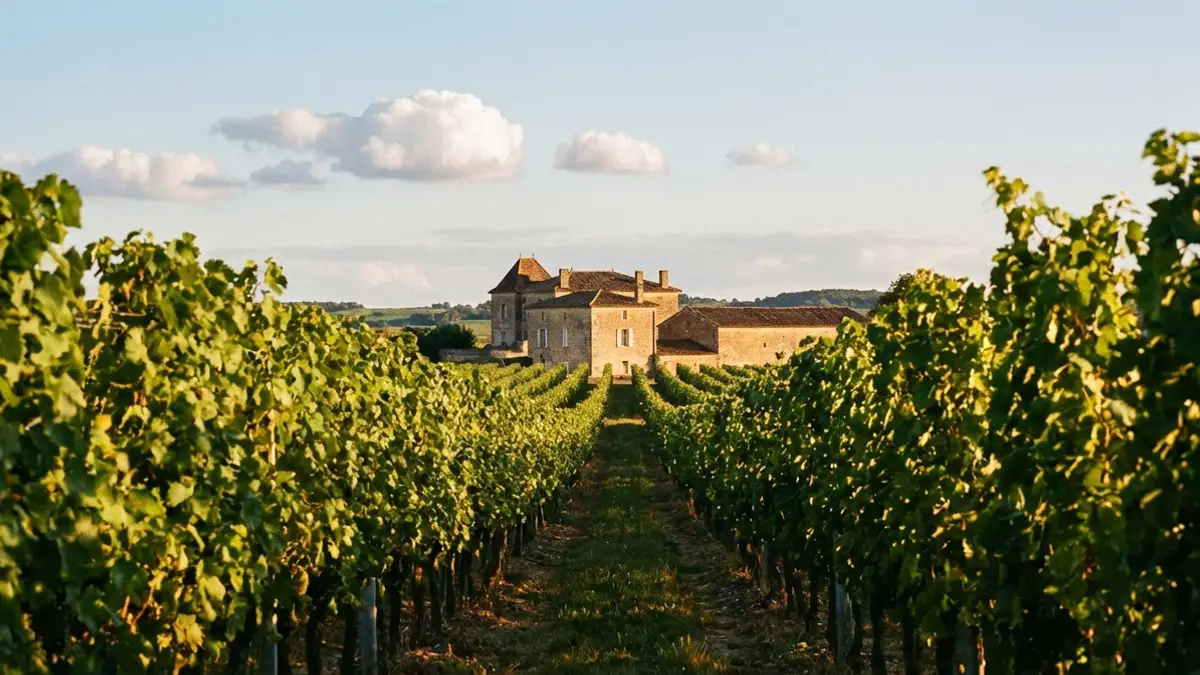
Cava is a Spanish sparkling wine, about 95% of it made in Penedès in Catalonia, from Macabeo, Xarel-lo and Parellada grapes. By law it is made by the traditional method, with the second fermentation in the bottle and at least 9 months on yeast. Prosecco is an Italian sparkling wine from nine provinces of the Veneto and Friuli, made from at least 85% Glera, usually fermented a second time in a pressurised tank for at least 30 days. Both use the same sugar words: Brut means up to 12 grams per litre, and Extra Dry means 12 to 17. Pick Cava for food and Prosecco for spritzes, mimosas and aperitivo.
What Is the Difference Between Cava and Prosecco?
Cava and Prosecco differ in where the second fermentation happens, and that one step decides their flavour, their bubbles and their best uses. Cava ferments again in each bottle and sits on its yeast for months. Prosecco ferments again in a big steel tank and is bottled young.
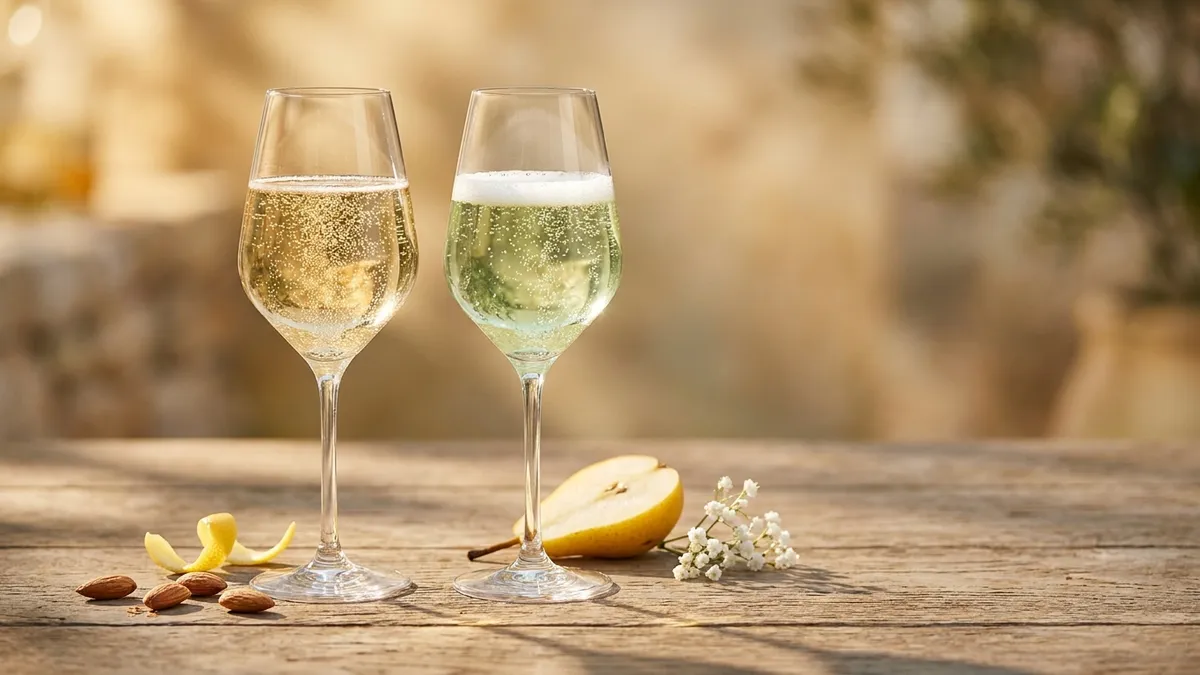
The grapes follow the method. Glera, Prosecco's grape, is aromatic: it smells of yellow apple, pear and white peach, and the tank keeps those smells fresh. Cava's Spanish grapes are less aromatic, so the time on yeast shapes much of the flavour. Macabeo brings fresh citrus, Xarel-lo brings body and an earthy edge, and Parellada brings lightness and delicate citrus.
| Wine | Where | Main grapes | Second fermentation | Tastes of | Pick it for |
|---|---|---|---|---|---|
| Cava | Spain, about 95% from Penedès in Catalonia | Macabeo, Xarel-lo, Parellada; Chardonnay allowed | In the bottle, at least 9 months on yeast | Lemon, green apple, almond, toast; fine bubbles | Tapas, fried food, a toast at dinner |
| Prosecco | Northeast Italy: nine provinces of the Veneto and Friuli | At least 85% Glera | Usually in a steel tank, at least 30 days | Pear, yellow apple, white peach; soft, frothy bubbles | Spritz, mimosa, aperitivo, a warm afternoon |
The bubbles feel different too. Months of slow fermentation and rest in a sealed bottle give Cava a fine, steady stream that pricks the tongue. Prosecco's bubbles feel bigger and softer, closer to a froth. You notice it most in the mouth, so take a sip and hold it a second before you swallow.

Which Is Drier, Cava or Prosecco?
Neither, by law: the same label word sets the same sugar limit on both. Brut means up to 12 grams of sugar per litre on a Cava and on a Prosecco. The driest word, Brut Nature at 0 to 3 grams, is common on Cava and rare on Prosecco. Its toast and citrus also read drier than Prosecco's ripe pear at the same sugar.
The sugar comes from the dosage (a small dose of wine and sugar added just before the cork goes in). The label word tells you how much went in, and it follows a European scale. Cava labels use Spanish for the sweeter words, Seco and Semi Seco; Prosecco labels use the English Extra Dry and Dry.
| Label word | Sugar per litre | Where you see it | What to expect |
|---|---|---|---|
| Brut Nature | 0 to 3 g | Cava; rare on Prosecco | Bone dry and sharp; best with oysters and salty snacks |
| Extra Brut | 0 to 6 g | Cava; rare on Prosecco | Dry and lean, a touch rounder |
| Brut | Up to 12 g | Cava and Prosecco | Dry to the tongue; the safe all-round pick |
| Extra Dry (Extra Seco) | 12 to 17 g | Prosecco; Extra Seco on Cava | Soft, a hint of sweetness; good in a spritz |
| Dry (Seco) | 17 to 32 g | Prosecco; Seco on Cava | Clearly sweet; fruit desserts, mild chilli |
| Semi Seco | 32 to 50 g | Cava; Demi-Sec on Prosecco | Sweet; with dessert |
This is where most shoppers slip. Extra Dry is sweeter than Brut, and Dry is sweeter still. A bottle labelled Extra Dry Prosecco holds 12 to 17 grams per litre. Brut on either wine is the drier pick.
If you want the driest glass, buy Cava Brut Nature or Extra Brut. If you want a softer, rounder sip, buy Extra Dry Prosecco. Our wine sweetness scale puts these words on one chart with still wines.
Cava or Prosecco for Mimosas and Spritzes?
Prosecco, for most drinks. Its pear and peach fruit sits naturally with juice and with bitter orange aperitifs, and its softer fizz blends in instead of fighting the mixer. The Bellini, Prosecco with white peach purée, was built on it, and the modern spritz recipe calls for it.
Match the sugar to the mixer. Orange juice and peach purée are already sweet, so a Brut Prosecco keeps a mimosa or Bellini from tasting like soda. A bitter aperitif in a spritz needs the opposite, so an Extra Dry Prosecco rounds off its edge.
Cava earns its place in drinks without juice. A gin, lemon and sugar sour topped with sparkling wine needs something dry and firm, and Cava Brut's sharper finish keeps the drink tight. Its toast flavours vanish under juice, so save the aged bottles for the glass.
If the drink has juice, purée or a bitter liqueur, use Prosecco. If it is a dry, citrus-led drink with spirit and no juice, use Cava Brut. For a morning table, our wine for brunch guide matches both to eggs and smoked salmon.
What Food Goes With Cava vs Prosecco?
Cava for the main course and anything salty or fried; Prosecco for the aperitivo board and fruit. The split follows their flavour. Cava's dry finish, fine bubbles and toast stand up to fat and salt. Prosecco's lighter body and pear fruit suit fruit, cured ham and light snacks, which an aged Cava's toast would cover.
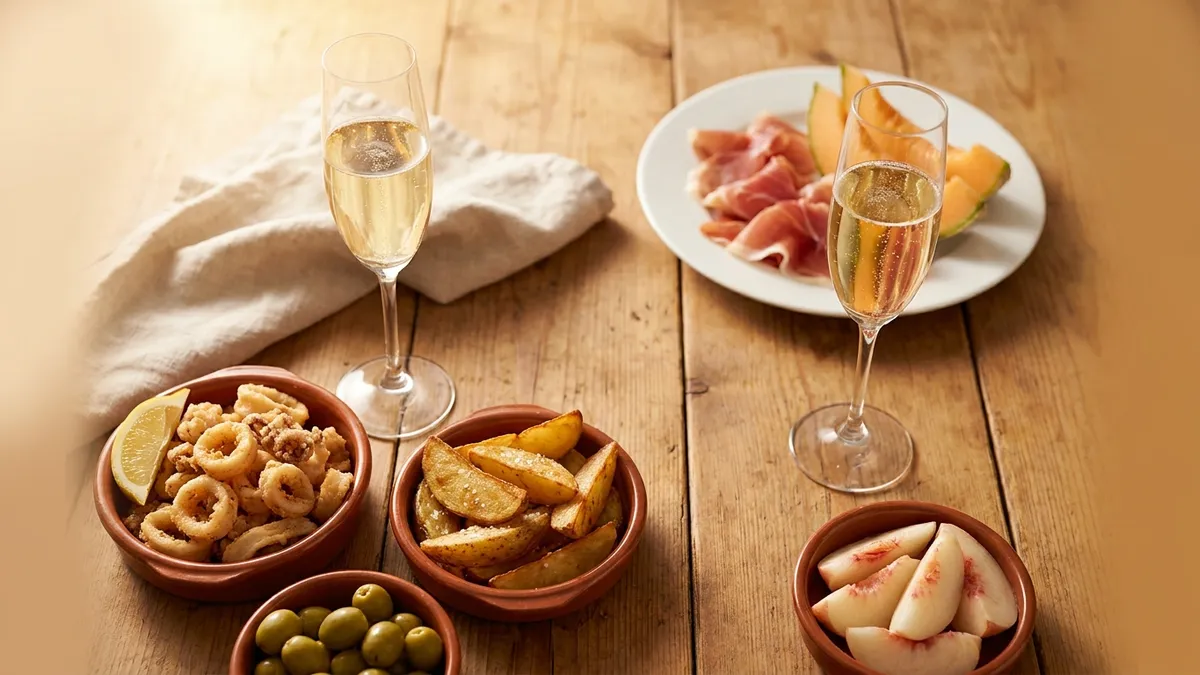
Pour Cava with:
- Fried food: calamari, croquettes, tempura and potato chips. The bubbles and dry finish lift the oil off your tongue.
- Salty cured ham and hard cheese: jamón and Manchego make a classic Spanish pair, because salt makes the wine taste fruitier.
- Seafood and rice: grilled prawns and paella, where the citrus in the wine works like a squeeze of lemon.
Pour Prosecco with:
- Ham with melon: the salt meets the wine's pear fruit, and the melon echoes it.
- Fruit and light desserts: a Dry Prosecco with a peach tart, so the wine is at least as sweet as the plate.
- Mild chilli: an Extra Dry Prosecco with Thai noodles, because its touch of sugar softens heat; our wine with spicy food guide covers hotter dishes.
If the plate is salty, fried or fatty, pour Cava. If it is fruit or a mild chilli dish, pour Prosecco.
How Should You Serve Cava and Prosecco?
Cold, straight from the fridge, in a white-wine glass rather than a narrow flute. A wider bowl lets you smell Prosecco's pear and Cava's toast, which a narrow flute hides. Our wine serving temperature chart gives the target range for sparkling wine. If a bottle is warm, a bucket of ice and water chills it faster than the freezer.
Age matters for Prosecco. Most of it is meant to be drunk within three to five years of its vintage, while the fruit is fresh. Cava Reserva and Gran Reserva have already spent a year and a half or more on yeast before release, so they arrive with the toast already built in. If a Prosecco has no vintage and you cannot tell how old it is, drink it soon. If a Cava says Gran Reserva, it is ready to open now and can wait for a dinner. For a full method of tasting bubbles, see how to taste sparkling wine.
How Is Each One Made?
Cava is fermented a second time inside the bottle you buy; Prosecco is usually fermented a second time in a pressurised steel tank and bottled afterwards. Both start as a still, dry base wine. The second fermentation, with added yeast and sugar, makes the gas.
For Cava, this is the traditional method, required by law for any wine sold as Cava. The base wine is bottled with yeast and sugar, sealed, and left to ferment. The gas has nowhere to go, so it dissolves into the wine. The dead yeast, called lees (spent yeast that gives bread and toast smells), then rests against the wine for months. That contact gives Cava its toast, bread and almond notes. The yeast is finally collected in the neck and removed. The méthode champenoise explainer walks through each stage. It is the same method used for Champagne, which the Champagne vs Prosecco vs Cava comparison sets against both.
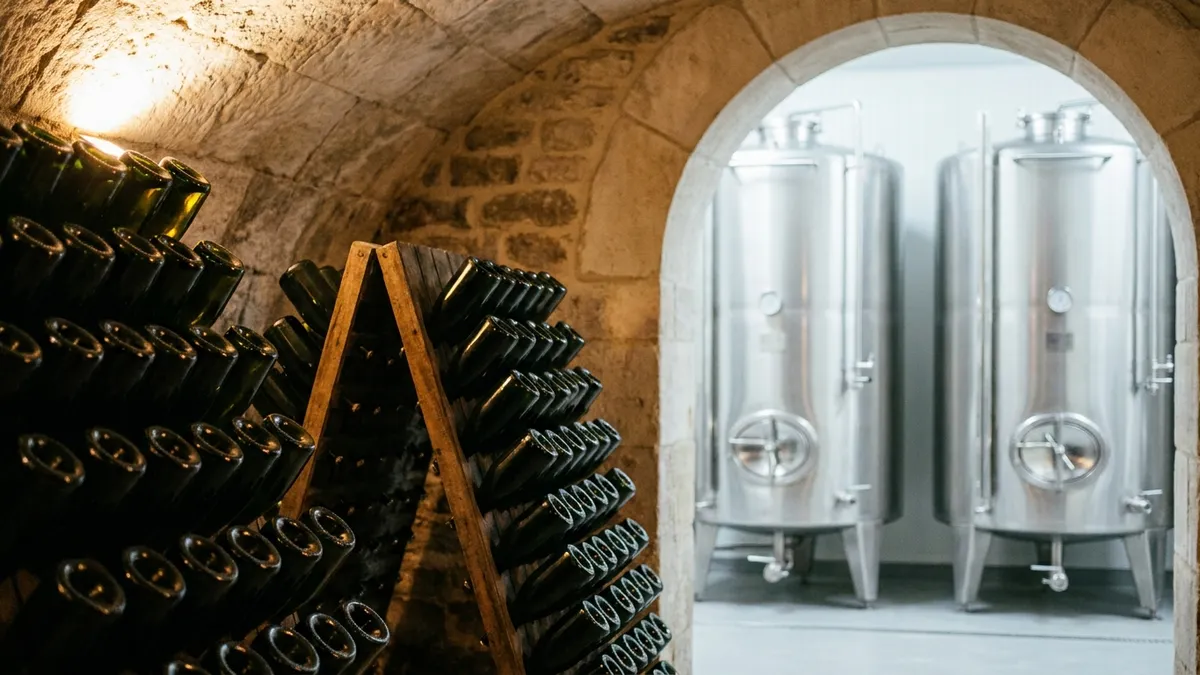
For Prosecco, the usual route is the tank method (also called Charmat or Martinotti), where the second fermentation happens in a sealed steel tank. The rules require at least 30 days in the tank. The wine is then filtered and bottled under pressure. Short contact with the yeast is the point: Glera's pear and flower smells would be covered by months of toast. The Charmat method explainer covers longer tank versions with finer bubbles.
Prosecco has bottle-fermented exceptions. The best known, Col Fondo, is refermented in the bottle and never disgorged, so the yeast stays in as a cloudy sediment. It is lightly sparkling, about 2.5 bar, the frizzante (semi-sparkling) style. If a Prosecco looks hazy and says Col Fondo, the haze is yeast and expected.
What Do Cava and Prosecco Labels Tell You?
On Cava, the ageing word tells you how long it sat on yeast; on Prosecco, DOC or DOCG tells you whether it came from the broad plain or the hills. Both names are an appellation (a protected place name with its own rules), explained in our guide to what an appellation is.
Cava's ageing ladder, set by its regulator:
- Cava de Guarda: at least 9 months on lees. Fresh, citrusy, the everyday tier.
- Reserva: at least 18 months, up from 15 before 2020. More bread and almond.
- Gran Reserva: at least 30 months. Toast, nuts and a creamier feel.
- Cava de Paraje Calificado: at least 36 months, from one named site with vines at least 10 years old.
Prosecco's ladder is about place. Prosecco DOC is the broad tier across the nine provinces, with at least 85% Glera. In 2009 two hill zones were promoted to DOCG, Italy's top tier: Conegliano Valdobbiadene Prosecco Superiore, between the towns of Conegliano, Valdobbiadene and Vittorio Veneto, and the smaller Asolo Prosecco Superiore. Hillside grapes give more concentrated fruit. The Glera grape guide explains the single-hill names you may see on DOCG labels.
If you want toast and bread, buy Cava Reserva or Gran Reserva. If you want the freshest fruit, buy a young Prosecco DOC, and step up to DOCG for more concentration.
Where Do Cava and Prosecco Come From?
Prosecco comes from nine provinces of northeast Italy; Cava comes mostly from Penedès in Catalonia, though its appellation also covers vineyards in several other Spanish regions. About 95% of Cava is made in Penedès, around the town of Sant Sadurní d'Anoia near Barcelona.
Cava is a protected name, not a grape and not a single region. The rules also allow it in parts of Aragon, La Rioja, Navarra, the Basque Country, Castile and León, Valencia and Extremadura. The word means "cellar", and Spanish producers adopted it in 1970.
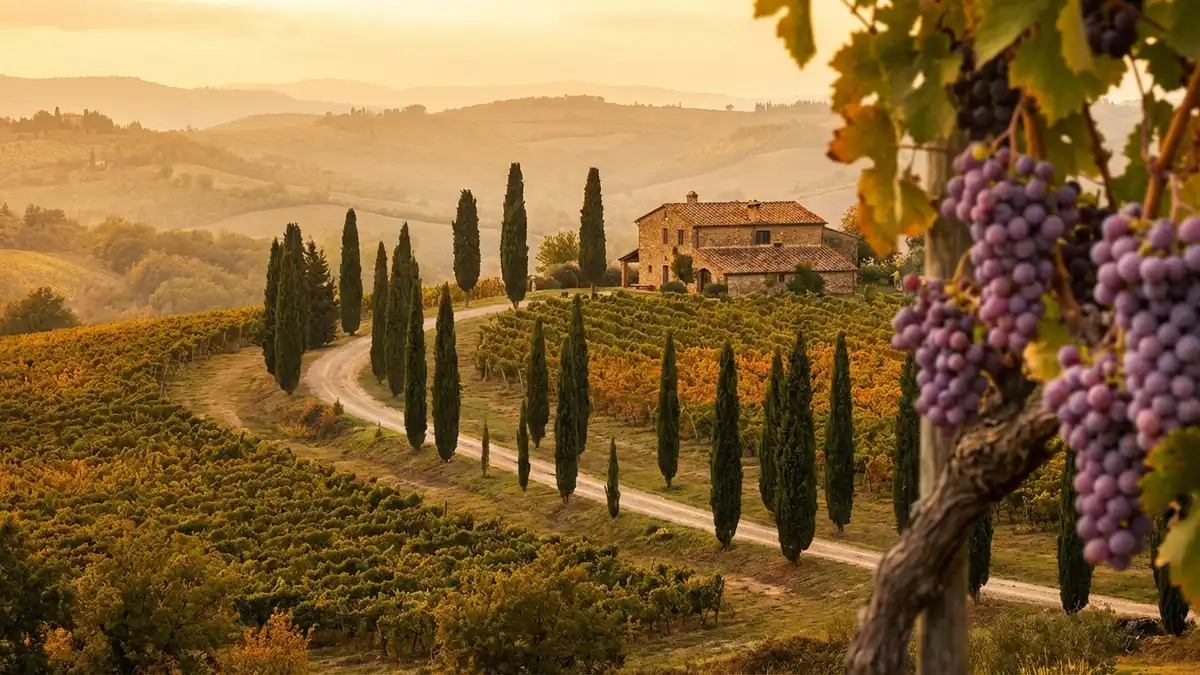
Prosecco's zone covers Treviso, Venice, Vicenza, Padua and Belluno in the Veneto, plus Gorizia, Pordenone, Trieste and Udine in Friuli. Until 2009 the grape was also called Prosecco. Italy renamed it Glera that year, so the word Prosecco now protects only the place. A sparkling Glera from outside the zone cannot use it.
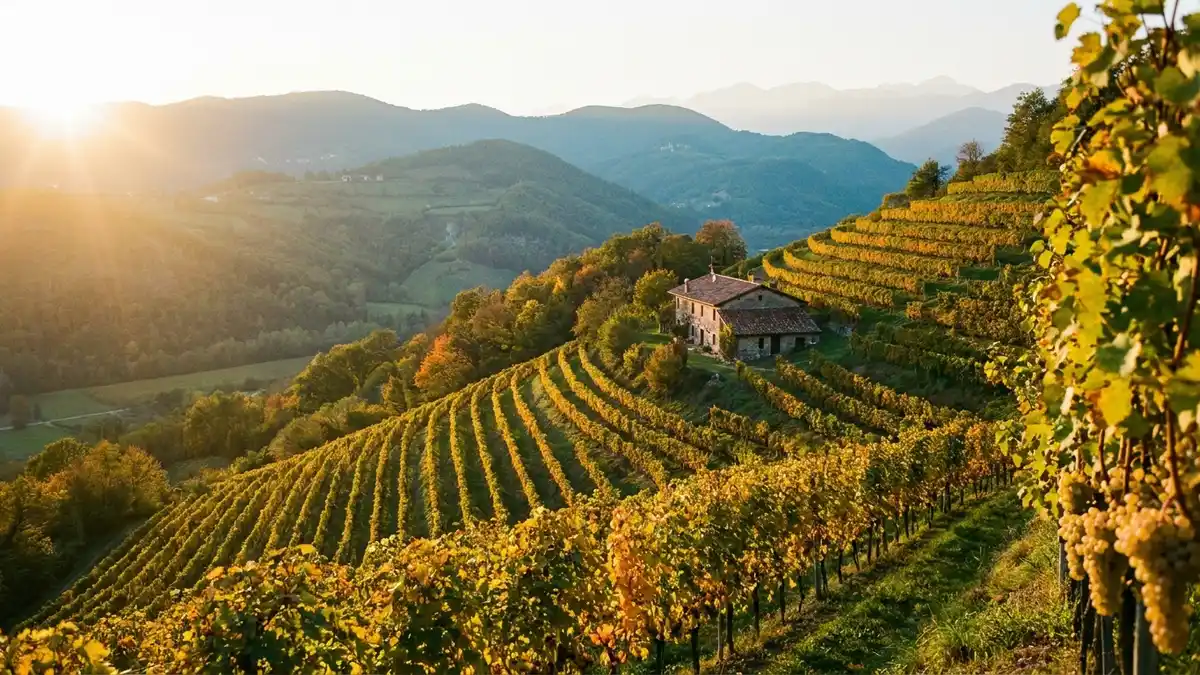
The two regions sit inside wider wine maps. The Spanish wine regions guide places Penedès among Rioja, Priorat and Sherry, and the Veneto wine guide covers Prosecco's neighbours Soave and Amarone. For other bottle-fermented bubbles at Cava's price, the Crémant guide covers France's regional versions, and sparkling wine types maps the full family. More region guides sit in the wine regions hub.
How Do You Pick Between Cava and Prosecco?
If the wine meets food, pick Cava; if it meets juice, bitters or a warm afternoon, pick Prosecco. Then read one more word. On Prosecco, choose Brut for dry or Extra Dry for soft. On Cava, choose Reserva or Gran Reserva when you want toast.
The Sommy app at sommy.wine has bite-sized courses on Spain and Italy, and an AI-guided tasting mode that saves your notes to a tasting journal. Tonight, open one bottle of each, photograph the labels, and taste them side by side: smell for pear in one glass and toast in the other, then note which bubbles feel finer.
Sources
Frequently Asked Questions
What is the difference between Cava and Prosecco?
The main difference is where the second fermentation happens. Cava ferments again inside each bottle and rests on its spent yeast for at least nine months, which adds toast and almond flavours and fine bubbles. Prosecco usually ferments again in a large steel tank for about a month, which keeps the pear and white-flower fruit of the Glera grape. Cava is Spanish, mostly from Catalonia; Prosecco comes from northeast Italy.
Is Cava drier than Prosecco?
At the same label word, the sugar limits are the same: Brut means up to 12 grams of sugar per litre on both. Cava often tastes drier because its toast and citrus flavours carry less fruit. The trap is Prosecco labelled Extra Dry, which holds 12 to 17 grams per litre and is sweeter than Brut. For the driest glass, buy Cava Brut Nature, with 0 to 3 grams.
Is Cava or Prosecco better for mimosas?
Prosecco is the easier choice for mimosas. Its pear and peach fruit sits naturally with orange juice, and its softer, frothier bubbles blend into the drink. Use a Brut Prosecco if the juice is sweet, so the drink does not turn sugary. Cava works too and gives a drier, sharper mimosa, but its toast flavours are mostly lost under the juice.
Is Cava made the same way as Champagne?
Yes. By law, only wine made by the traditional method can be called Cava: the second fermentation happens inside the sealed bottle, and the wine then ages on its yeast before the yeast is removed. That is the same method Champagne uses. The grapes and climate differ: Cava is built on Spanish grapes such as Macabeo, Xarel-lo and Parellada, grown mostly in Catalonia.
Do Cava and Prosecco taste the same?
No. Prosecco tastes of yellow apple, pear and white peach, with soft, frothy bubbles, because the tank method keeps the grape's fresh fruit in front. Cava tastes of lemon, green apple and almond, with a toast or bread note that grows with age, because the wine rests on yeast in the bottle for months. Pour them side by side and the difference shows in one sip.
What food goes with Cava vs Prosecco?
Pour Cava with salty, fried and fatty food: fried calamari, croquettes, cured ham, hard cheese and potato chips. Its dry finish and fine bubbles scrub the fat from your tongue. Pour Prosecco with lighter plates and fruit: ham with melon, peach salads, light antipasti. An Extra Dry Prosecco also suits mildly spicy dishes, because a little sugar softens chilli heat.
Why is Cava aged longer than Prosecco?
Because the methods set different minimums. Cava's second fermentation happens in the bottle, and the rules require at least nine months on the yeast for the basic tier, 18 months for Reserva and 30 months for Gran Reserva. Prosecco's second fermentation in the tank needs at least 30 days. The short time protects Glera's fresh fruit, which long yeast contact would cover with toast.
Sommy Team
LinkedInFounder & Wine Educator
The Sommy Team is building the world's most approachable wine education app, helping beginners develop real tasting skills through structured courses and AI-guided practice.