Best Wine for Brunch: What to Pour Beyond the Mimosa

By the Sommy Team — AI-assisted, human-edited.
Updated Sep 25, 2026
Contents (11)
- Wine for Brunch, in One Paragraph
- What Wine Goes With Each Brunch Dish?
- Why Does Sparkling Wine Work So Well With Eggs?
- Which Sparkling Wine Should You Buy for Brunch?
- What Wine Goes With Pancakes and Other Sweet Dishes?
- Can You Drink Red Wine at Brunch?
- Is Rosé a Good Brunch Wine?
- How Do You Make a Better Mimosa or Bellini?
- Where Did the Mimosa Actually Come From?
- How Should You Serve Wine at Brunch?
- What Should You Pour This Weekend?
TL;DR
The best wine for brunch has high acidity to cut egg yolk, butter and salt, and at least as much sweetness as the sweetest dish. Pour dry sparkling wine with eggs, Moscato d'Asti with pancakes, dry rosé with smoked salmon, and chilled Gamay with fried chicken or sausage.
The best wine for brunch has high acidity to cut through egg yolk, butter and salt, plus at least as much sweetness as the sweetest dish on the table. That one rule covers eggs benedict and maple syrup at the same meal. A mimosa follows the same rule, and a dry sparkling wine poured on its own often does the job better.
Wine for Brunch, in One Paragraph
Pour a dry sparkling wine for anything built on eggs, butter or cheese, because its acidity (the tartness that makes your mouth water) cuts through fat. Pour a sweet, low-alcohol sparkler such as Moscato d'Asti for pancakes, waffles and French toast, because a wine less sweet than the syrup tastes sour. Pour a pale, dry rosé with smoked salmon and a tart Sauvignon Blanc with avocado toast. Save red for plates with meat or fried chicken, and pick a light, chilled Gamay.
For mimosas, buy a Brut Prosecco or Cava: the classic mix is 75 ml of wine to 75 ml of orange juice, so half the glass is still wine. Serve everything cold, from an ice bucket on the table.
What Wine Goes With Each Brunch Dish?
Match the wine to the richest or sweetest thing on the plate. Egg and butter dishes want bubbles, herby dishes want a tart white, sweet dishes want a sweet sparkler, and fried or meaty dishes can take a chilled light red. A mixed table needs two or three bottles.
| Brunch dish | What drives it | Pour this | If the dish changes |
|---|---|---|---|
| Eggs benedict | Yolk and butter sauce: fat | Brut Cava or Crémant | With smoked salmon instead of ham, a dry rosé works too |
| Quiche | Egg custard, cheese, pastry | Dry Riesling | With lots of bacon, choose Brut sparkling for its salt-cutting bubbles |
| Smoked salmon bagel | Oily fish, salt, cream cheese | Pale dry rosé | Heavy on capers and onion: switch to Sauvignon Blanc |
| Avocado toast | Soft fat, lime, herbs | Sauvignon Blanc | With chilli flakes, pick a lower-alcohol white such as Vinho Verde |
| Pancakes, waffles, French toast | Syrup: sugar | Moscato d'Asti | With fruit and yoghurt instead of syrup, a Prosecco labelled Extra Dry |
| Fried chicken, sausage, bacon | Protein, fat, salt | Chilled Gamay (Beaujolais) | Served with syrup-drenched waffles, pour Lambrusco with a touch of sweetness |
If a dish has both eggs and syrup, such as chicken and waffles with a fried egg, pour for the syrup. Sugar changes how a wine tastes more than fat does. The general method behind every row is set out in the wine pairing rules, and the food pairing hub covers the same thinking for lunch and dinner.
Why Does Sparkling Wine Work So Well With Eggs?
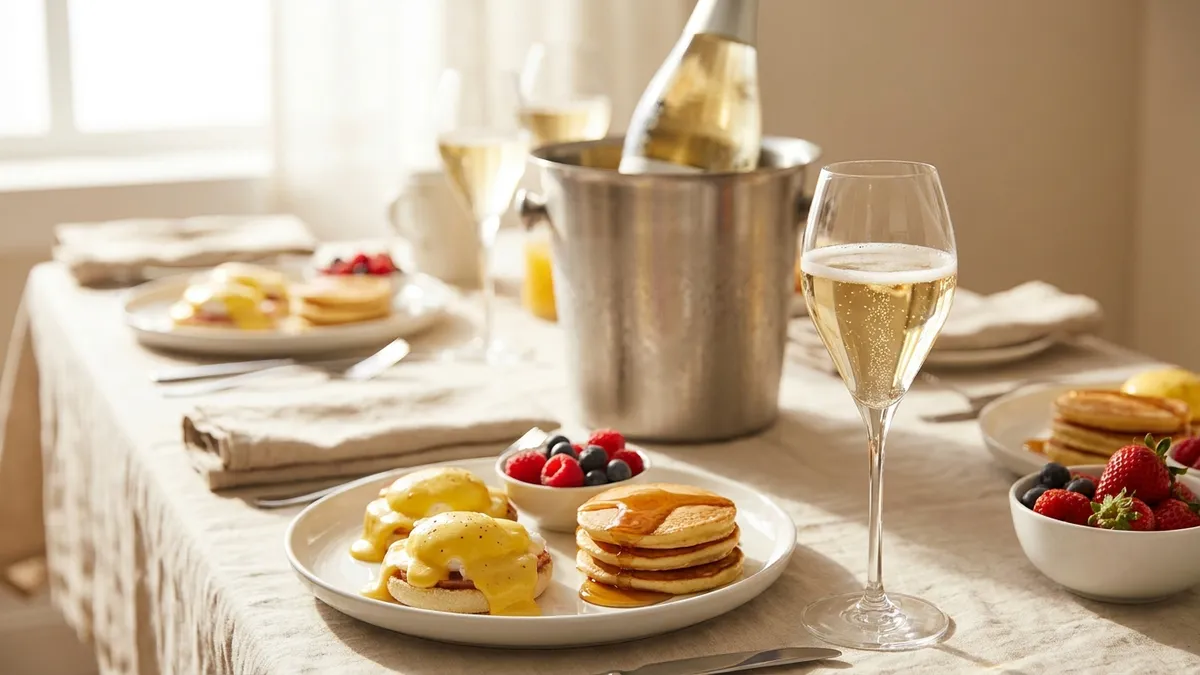
Yolk and hollandaise coat the mouth with fat, and a wine's acidity cuts through fat and salt. A dry sparkling wine brings high acidity and a stream of bubbles together, so each sip clears the coating and the next bite tastes as fresh as the first.
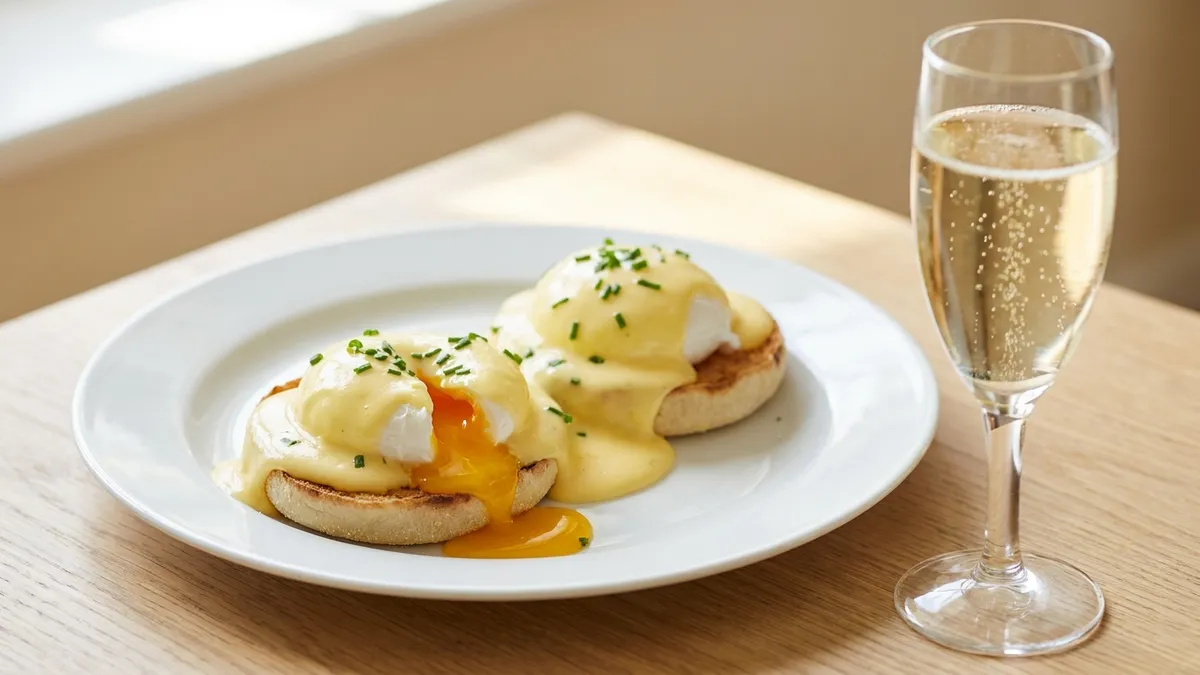
Egg yolk is where almost all of an egg's fat sits. Eggs benedict then adds a sauce of butter emulsified with more yolk, plus ham or bacon for salt. A soft, low-acid white such as an oaky Chardonnay adds weight on top of weight, and the pairing turns heavy and dull. A Brut sparkling wine does the opposite. Its acidity makes your mouth water, and the saliva helps wash the fat away.
The same logic runs through quiche, cheese omelettes and shakshuka with feta. If the plate has hollandaise, cheese or cream, choose Brut sparkling over a still white. For a still option, a dry Riesling or an unoaked Chardonnay from a cool region keeps enough acidity to do the job. The wine acidity guide explains how to spot a high-acid wine before you buy it.
Which Sparkling Wine Should You Buy for Brunch?
For a mimosa pitcher, buy a Brut Prosecco. For drinking with eggs, buy a traditional-method Cava or Crémant. Keep Champagne for glasses poured neat at the table, never for the jug, because juice hides the toasty flavours that make it expensive.
The difference is how the bubbles get in. The traditional method runs a second fermentation inside each bottle and ages the wine on the spent yeast, which gives fine bubbles and bread-like flavours. Champagne, Cava and Crémant are made this way. The tank method, also called Charmat-Martinotti, runs the second fermentation in large pressurised steel tanks. Most Prosecco is made like this from the Glera grape, which keeps it light and fruity, of pear and green apple. The best versions spend up to nine months in the tank.
Bread-like flavour and fine bubbles stand up to eggs, cheese and cured ham. Light pear-and-apple fruit suits orange juice, peach purée and fruit salad. The Champagne vs Prosecco vs Cava comparison puts the three side by side on price, and the guide to sparkling wine types covers Crémant, Sekt and the rest.
The sweetness word on the label matters as much as the name. On Prosecco, Brut means up to 12 grams of sugar per litre, Extra Dry means 12 to 17, and Dry means 17 to 32. If the label says Extra Dry, expect a touch of sweetness, and if you are mixing with juice, buy Brut. The wine sweetness scale puts these numbers next to still wines.
What Wine Goes With Pancakes and Other Sweet Dishes?
Pick a wine at least as sweet as the syrup, such as Moscato d'Asti or a Prosecco labelled Dry. A dry wine next to maple syrup, jam or powdered sugar tastes tart and thin, because the sugar in the food makes the wine's acidity stand out.
The textbook example is Brut Champagne with a sweet wedding cake, a match that makes the wine taste weak and sour. Pancakes with syrup do the same thing to a Brut at brunch. If the dish is sweeter than the wine, the wine tastes sour, so the fix is always more sugar in the glass.
Moscato d'Asti is the easy choice. It is gently fizzy, smells of peach and orange blossom, and is low in alcohol, which suits a late morning. The Moscato wine guide explains how to tell it from the stronger, fully sparkling Asti. A Prosecco labelled Dry, with up to 32 grams of sugar per litre, is the other option, and it goes well with berry-topped waffles. Fruit salad and yoghurt are less sweet than syrup. For them, an off-dry wine (one with a little sugar you can just taste) such as an Extra Dry Prosecco or an off-dry German Riesling is enough. More low-strength options are listed in low-alcohol wines.
Can You Drink Red Wine at Brunch?
Yes, if the red is light, low in tannin and served cool, and the plate carries meat or fried chicken. A Gamay from Beaujolais, given a short chill in the fridge, goes with sausage, bacon, fried chicken and a charcuterie board.
Red is not the problem at brunch; tannin is. Tannin is the drying grip a red leaves on your gums. It binds to proteins, and when food brings protein and fat, the tannin grabs those instead and tastes softer. With a plain omelette or a fruit plate there is little for it to grab, so it binds to the proteins in your saliva and tastes harsher. The guide to tannins shows how to feel this on your own gums.
Gamay has thin skins, so it has little tannin. It also has plenty of acidity and tastes of fresh raspberry and cherry. A short chill tightens it and makes it taste fresher next to fried food. If the plate has no meat, skip the red and stay with bubbles. The Gamay wine guide covers which Beaujolais villages give a lighter or firmer bottle.
Is Rosé a Good Brunch Wine?
Yes. A pale, dry rosé is the best still wine for smoked salmon, cured fish and fruit-heavy brunch tables. It has the acidity of a crisp white and a little of the fruit of a light red, so one bottle covers a mixed table.
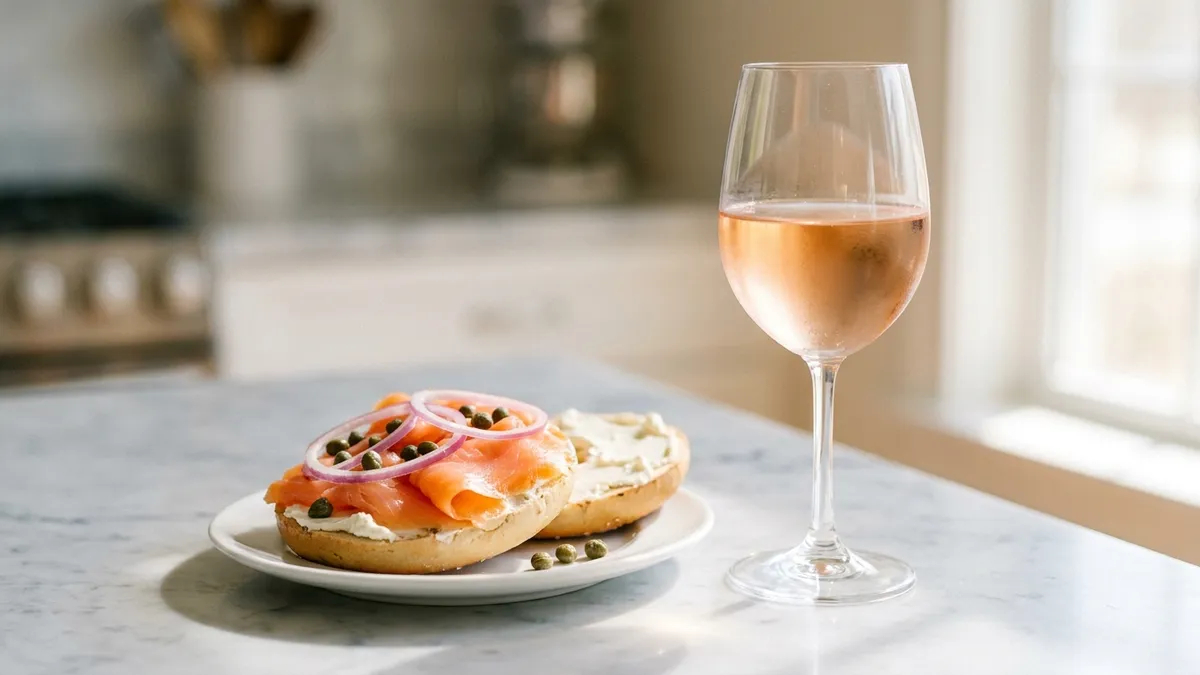
Rosé takes its colour from brief contact with red grape skins, only a few hours for the palest styles. Short contact means almost no tannin, which is why it sits so easily next to oily fish. The salmon brings fat and salt, the cream cheese brings more fat, and the wine's acidity cuts both. If salmon or cured fish is on the table, pour a dry, pale rosé.
Deeper pink rosés from Spain or Tavel have more body and can stand next to sausage or ham. The rosé wine guide explains how colour hints at style. A sparkling rosé does both jobs at once: bubbles for the eggs and fruit for the salmon.
How Do You Make a Better Mimosa or Bellini?
Use a dry sparkling wine, cold juice and a 1:1 ratio, and pour the wine first so the juice does not foam over. The classic mimosa is 75 ml of sparkling wine and 75 ml of orange juice. For a Bellini, mix two parts Prosecco with one part fresh white peach purée.
A mimosa is half wine, so juice does not rescue a bad sparkling wine. The cheapest fizz is still wine with carbon dioxide pumped in, which gives large bubbles that fade quickly. Once juice goes in, those bubbles are gone within minutes, and the drink tastes like flat orange squash. A tank-method Prosecco or a basic Cava keeps its fizz longer. Buy Brut, because the juice already brings the sugar.
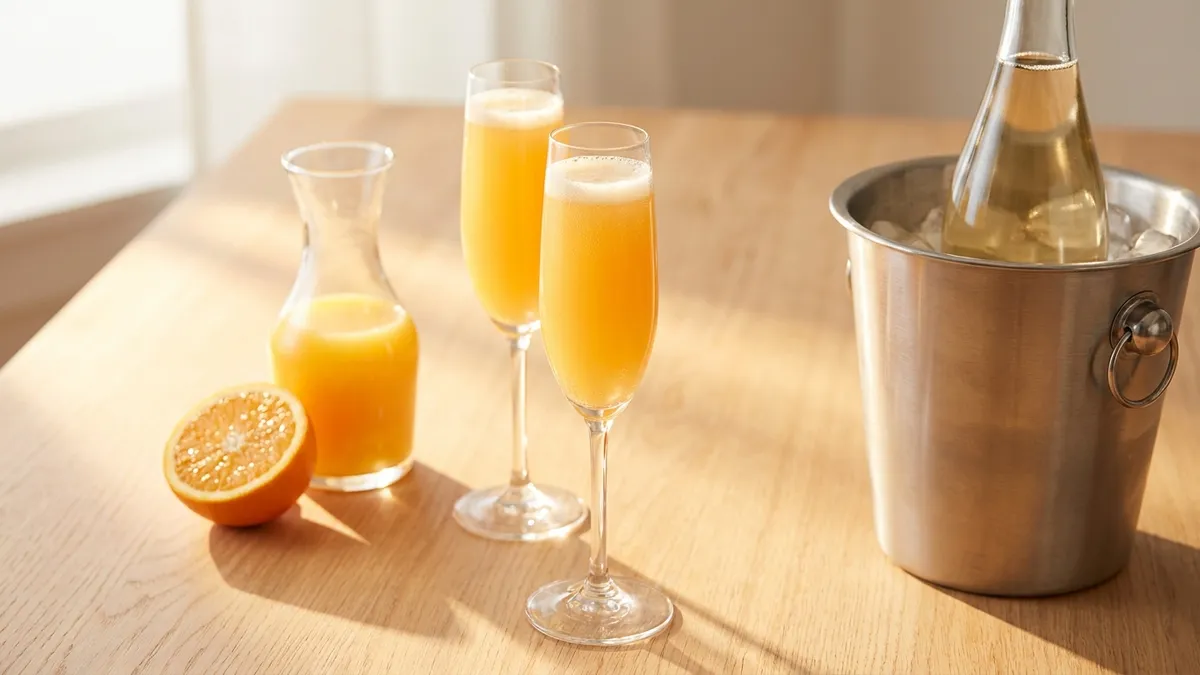
Chill both the wine and the juice before mixing, since ice cubes water the drink down. Tilt the flute and pour the wine slowly down the side, then top with juice. For the Bellini, purée ripe white peaches and strain the purée so it stays silky. The drink was created by Giuseppe Cipriani at Harry's Bar in Venice, sometime between 1934 and 1948. He named it after the painter Giovanni Bellini because its pink colour reminded him of one of his paintings.
Where Did the Mimosa Actually Come From?
Nobody knows for sure. The drink was first called a "champagne orange", it is a close variant of the British Buck's Fizz from about 1921, and it became popular in the United States in the 1960s. The popular story that Frank Meier invented it at the Paris Ritz rests on weak evidence.
Meier's own 1934 book on mixing drinks marks his inventions with a special symbol, and the mimosa does not carry it. A second story credits Alfred Hitchcock in 1940s San Francisco, and it is considered even less likely. The International Bartenders Association lists the mimosa as "also known as Buck's Fizz". If a British menu offers a Buck's Fizz, it is essentially the same drink, though some recipes use more wine than juice, so order it only where the bar pours a dry sparkling wine and fresh juice.
How Should You Serve Wine at Brunch?
Serve every brunch wine cold, in an ice bucket on the table, and open the driest bottle first. Sparkling wine, whites and rosé go straight from the fridge. Light reds go into the fridge for a short spell before pouring, enough to feel cool in the hand.
A bucket filled with half ice and half water chills a bottle faster than ice alone, because water touches all of the glass. The guide to chilling wine fast has the other quick methods, and the wine serving temperature chart gives the target for each style. If a bottle has sat out for half an hour in a sunny room, put it back in the ice. Pour small glasses, and move from dry to sweet as the meal goes on, so the Brut is not tasted straight after the Moscato. After a morning of wine, set out plenty of water and juice without alcohol on the table.
What Should You Pour This Weekend?
Buy two bottles: a Brut Cava or Crémant for the savoury plates and a Moscato d'Asti for the sweet ones. The Brut handles eggs, butter, cheese and salt. The Moscato handles syrup, jam and berries, so between them they cover most brunch tables.
The Sommy app at sommy.wine has bite-sized courses, including a Wine 101 course. Its AI-guided tasting mode starts from a photo of the label. Pour the Brut and the Moscato side by side this weekend, next to one plate of eggs and syrup, and taste each wine after each bite.
Sources
Frequently Asked Questions
What wine goes best with brunch?
A dry sparkling wine is the safest single bottle, because its acidity and bubbles cut through egg yolk, hollandaise and butter. Choose a Brut Cava or Crémant for savoury plates. If the table leans sweet, with pancakes, waffles or French toast, add a Moscato d'Asti, since a dry wine next to syrup tastes sour and thin.
What is the best wine for brunch besides mimosas?
Drink the sparkling wine on its own, then branch out by dish. Dry Riesling goes with quiche, Sauvignon Blanc with avocado toast, pale dry rosé with smoked salmon, and Moscato d'Asti with pancakes and syrup. For fried chicken, sausage or a charcuterie board, a lightly chilled Gamay from Beaujolais is a red that suits the morning.
What wine pairs with eggs benedict?
A dry, traditional-method sparkling wine such as Brut Cava or Crémant. Eggs benedict is mostly fat: runny yolk, a butter sauce and often ham. Acidity cuts through fat, and the bubbles lift the coating off your tongue, so every bite and sip tastes fresh. A still, unoaked Chardonnay is the next best choice if you prefer a wine without bubbles.
Is Prosecco or Champagne better for brunch?
Prosecco is better for mixing and Champagne is better for drinking with food. Prosecco is made in pressurised tanks, which keeps it light and fruity, and it costs far less, so it suits a mimosa or Bellini. Champagne and Cava ferment in the bottle, giving finer bubbles and bready flavours that stand up to eggs and cheese.
What is the difference between a mimosa and a Bellini?
A mimosa mixes sparkling wine with orange juice in equal parts, 75 ml of each in the classic recipe. A Bellini mixes two parts Prosecco with one part fresh white peach purée. The Bellini was created at Harry's Bar in Venice sometime between 1934 and 1948 and is named after the painter Giovanni Bellini, because of its pink colour.
Can you drink red wine at brunch?
Yes, if the red is light, low in tannin and served cool. A Gamay from Beaujolais, given a short chill in the fridge, goes with fried chicken, sausage, bacon and charcuterie. Skip big, tannic reds with plain egg dishes, since the drying grip of the tannin has little fat or protein to soften against.
What is the best sparkling wine for mimosas?
A Brut Prosecco or a basic Brut Cava. Brut is the driest common label, which matters because orange juice already adds plenty of sugar. Avoid the cheapest carbonated wines, whose large bubbles fade fast once juice goes in. Save Champagne and older traditional-method wines for drinking on their own, since juice covers the toasty flavours you paid for.
Sommy Team
LinkedInFounder & Wine Educator
The Sommy Team is building the world's most approachable wine education app, helping beginners develop real tasting skills through structured courses and AI-guided practice.