How Much Wine to Pour: The Standard Pour, Glass by Glass

By the Sommy Team — AI-assisted, human-edited.
Updated Oct 1, 2026
Contents (10)
- How Much Wine to Pour, in One Paragraph
- How Full Should You Fill a Wine Glass?
- Why Does a Correct Pour Look So Small?
- How Do You Pour the Right Amount Without Measuring?
- How Much Wine Do You Pour for a Tasting?
- When Should You Top Up a Glass?
- Why Do Restaurant, Bar and Home Pours Differ?
- How Does Pour Size Change the Alcohol in a Glass?
- How Much Wine Do You Need per Guest?
- Pour One Measured Glass Tonight
TL;DR
A standard pour of still wine is 5 oz (150 ml), one fifth of a bottle. Judge it by the glass: about a third full for red, half for white, half to two-thirds for sparkling. Tasting pours are half that. Measure 150 ml of water in your glass once and pour to that line.
How much wine to pour comes down to one number and one line. The number is 5 oz (150 ml) of still wine. The line is set by the style of wine: about a third of the bowl for red, half for white, half to two-thirds for sparkling. Pour to that line, and a 750 ml bottle gives five even glasses with room left to swirl.
How Much Wine to Pour, in One Paragraph
Pour 5 US fluid ounces, about 150 ml, for a glass of still wine at dinner. That is one fifth of a standard 750 ml bottle and the typical US restaurant pour. In a large glass it looks small, so judge the fill by eye.
Riedel advises roughly a third of the glass for red, half for white and half to two-thirds for sparkling. A tasting pour is about half a glass, 2 to 2.5 oz (60 to 75 ml). Dessert and fortified wines also go in small pours. To pour it right without a jug, measure 150 ml of water in your own glass once and remember where it sits.
How Full Should You Fill a Wine Glass?
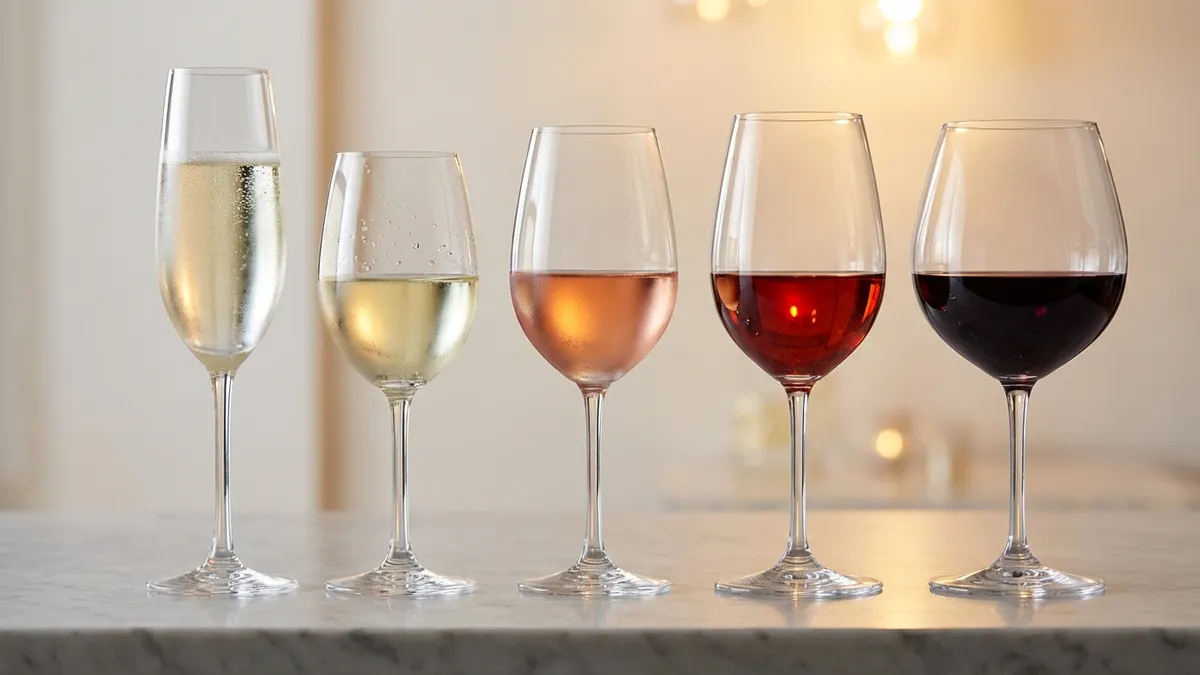
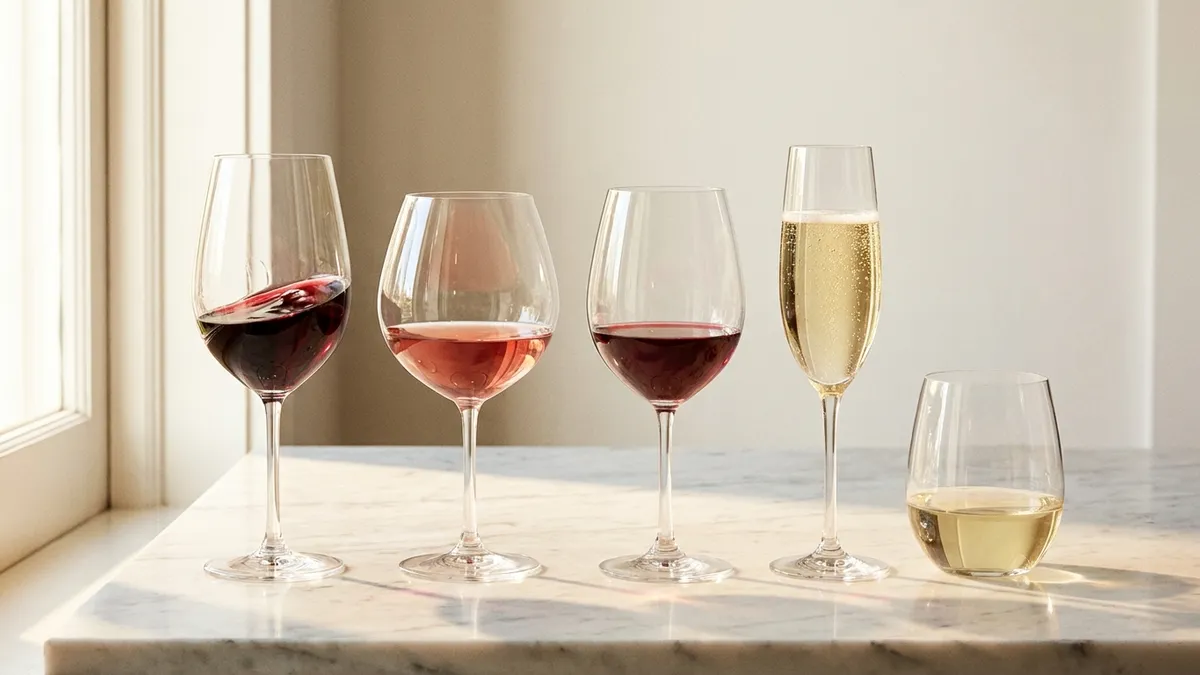
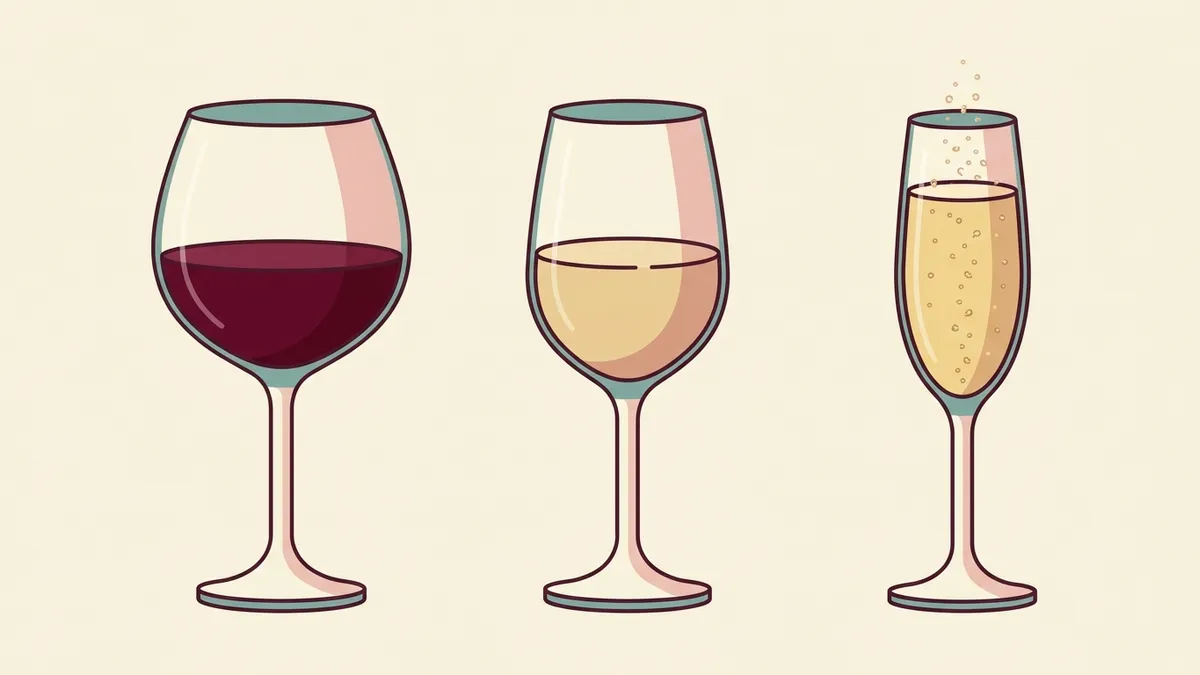
Fill a red wine glass about a third, a white about half and a sparkling glass between half and two-thirds. That is Riedel's house guidance, and the logic holds for any glass. Overfilling a sparkling glass makes it foam over the rim.
Reds need the most empty space above the wine: swirling there brings air into the wine and lifts its aromas toward your nose. Whites go higher because a fuller glass shows less surface to warm air, so the wine stays cool and fresh for longer.
| Wine | Fill level | Why | Do this |
|---|---|---|---|
| Full-bodied red (Syrah, Cabernet Sauvignon) | A little under a third | Most room to swirl and air the wine | Stop below the widest point of the bowl |
| Light red (Pinot Noir, Gamay) | Just over a third | Needs less air than a big red | Pour to the widest point |
| Crisp white or rosé | About half | Less surface keeps it cold | Pour smaller, top up more often |
| Oaked or full-bodied white | A little under half | Gains from some swirling | Give it room, like a light red |
| Sparkling | Half to two-thirds | Keeps the bubbles and the chill | Pour in two stages for the foam |
| Dessert or fortified | A small pour in a small glass | Rich and often stronger than table wine | Pour half a table glass or less |
If your red glass is a wide bowl, stop at the widest point, because that is where the wine has the most surface for swirling. Riedel also suggests pouring a little less of a full-bodied red such as Syrah or Cabernet Sauvignon, and a little more of a light one such as Pinot Noir or Beaujolais. The swirl itself is covered step by step in how to swirl wine.
Why Does a Correct Pour Look So Small?
Because wine glasses are built with far more room than the pour. The ISO tasting glass that professional panels use holds about 215 ml, yet it is designed for a 50 ml pour. Everyday red-wine bowls are often bigger still, so 150 ml covers only the bottom of the bowl.
The empty part is called headspace (the air between the wine and the rim). It is where aroma collects when you swirl, and it is the reason a full glass smells of less. Pour a glass to the brim and you lose both the swirl and most of the smell. The wine glass guide explains which glass shape suits which wine, and the size of the bowl is why the same 150 ml sits at a different height in each.
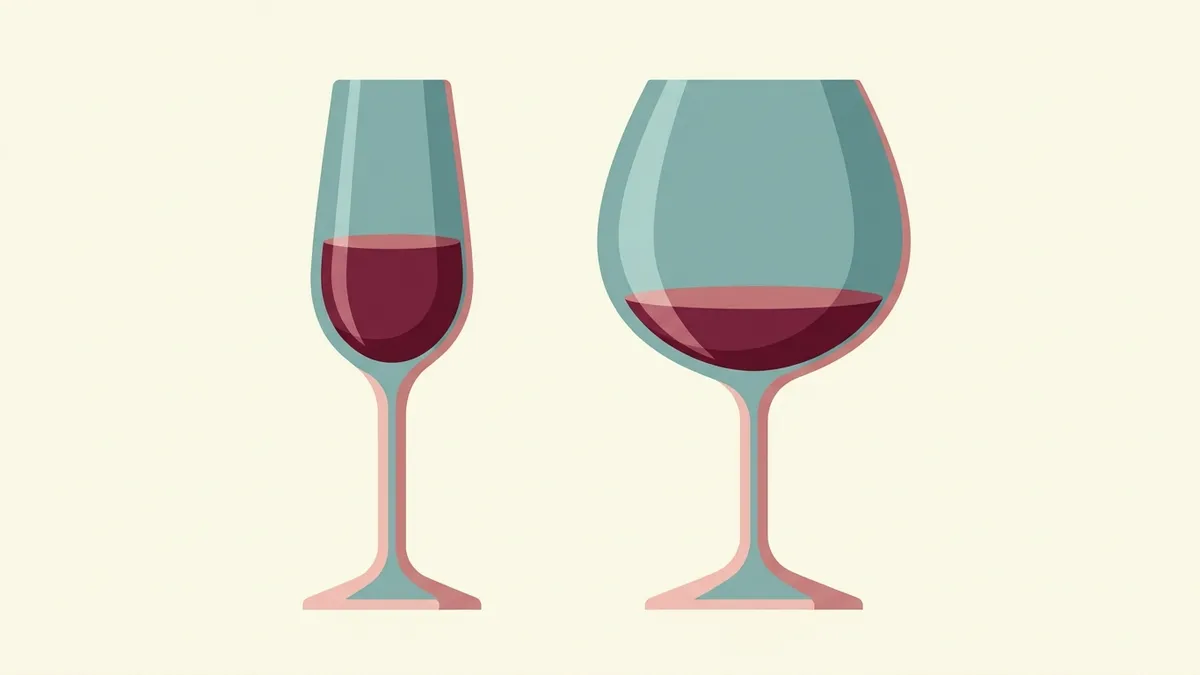
If you own two shapes of glass, measure each one, since a pour that half-fills a small tulip barely covers the bottom of a big bowl.
How Do You Pour the Right Amount Without Measuring?
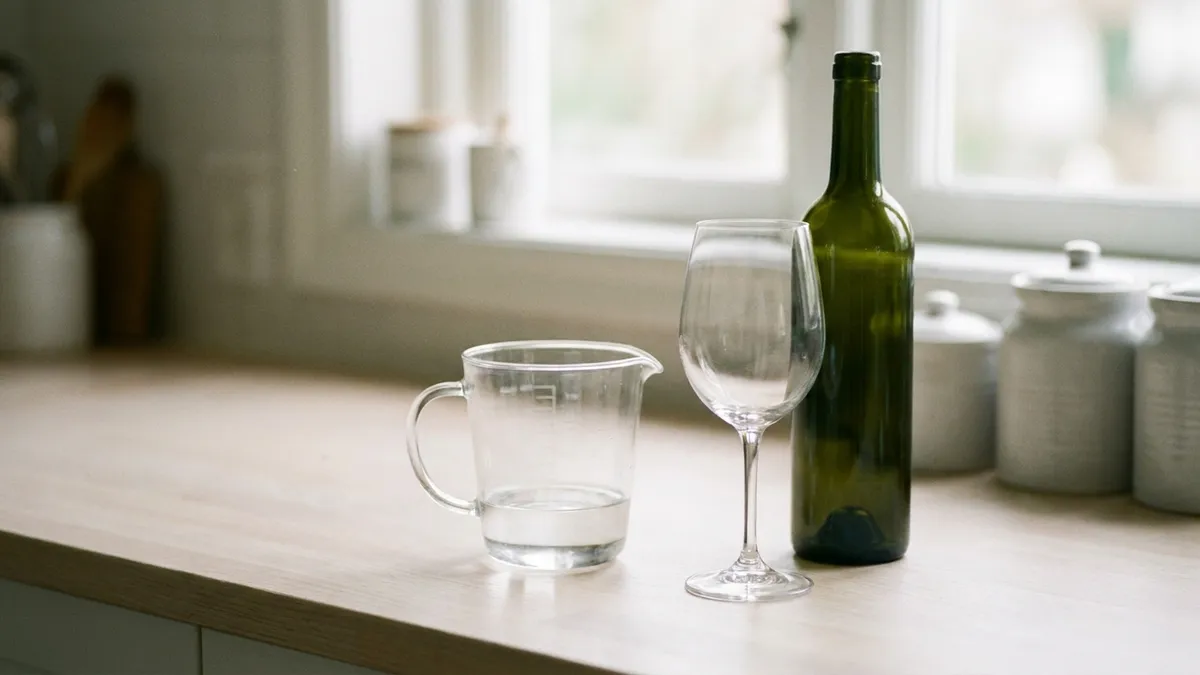
Measure once with water, then pour to that height every time. Pour 150 ml of water from a kitchen measuring jug into the glass you use most, hold it at eye level and note where the water sits against the bowl. That height is your pour.
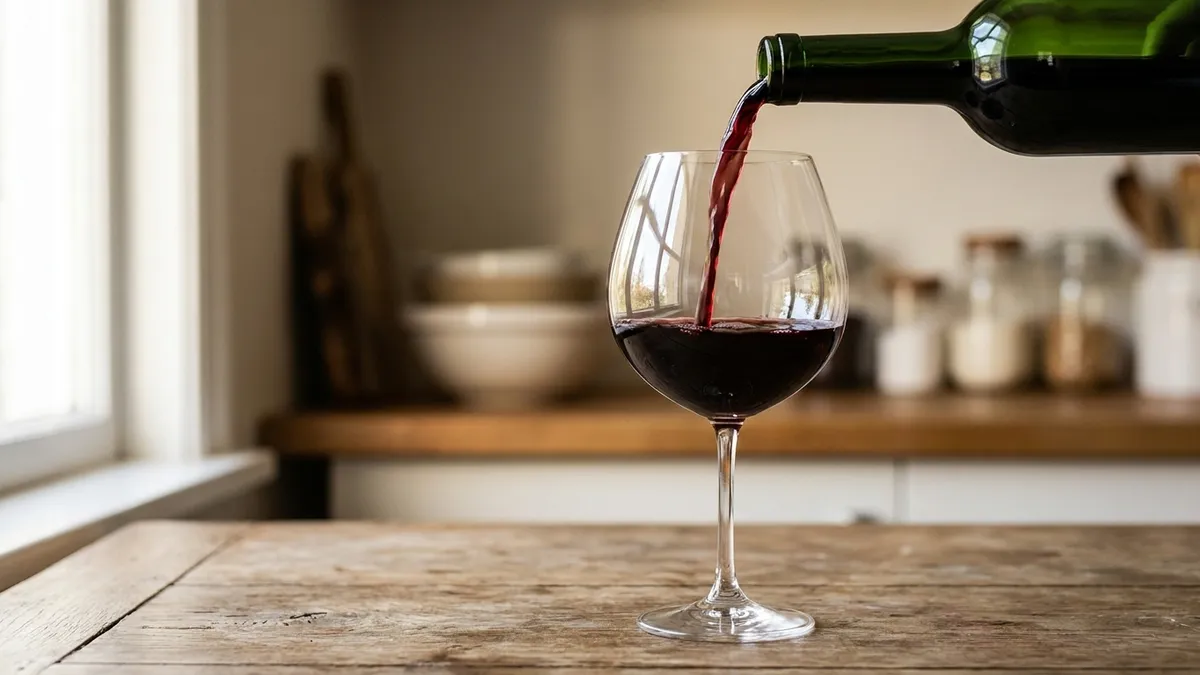
Technique matters as much as the target. Hold the bottle near its base for more control over the flow. Pour slowly, with the bottle's mouth just above the rim. As you finish, twist the bottle a quarter turn while lifting it, so the last drop stays on the lip instead of running down the label. A drip collar or pourer does the same job.
For a table of guests, pour the first glass to your marked height and set the rest beside it. Matching glasses side by side is easier than judging each one alone. Sparkling needs two stages: pour a splash, let the foam fall back, then fill to the line. Pouring it in one go overflows the glass and leaves less wine once the foam settles.
How Much Wine Do You Pour for a Tasting?
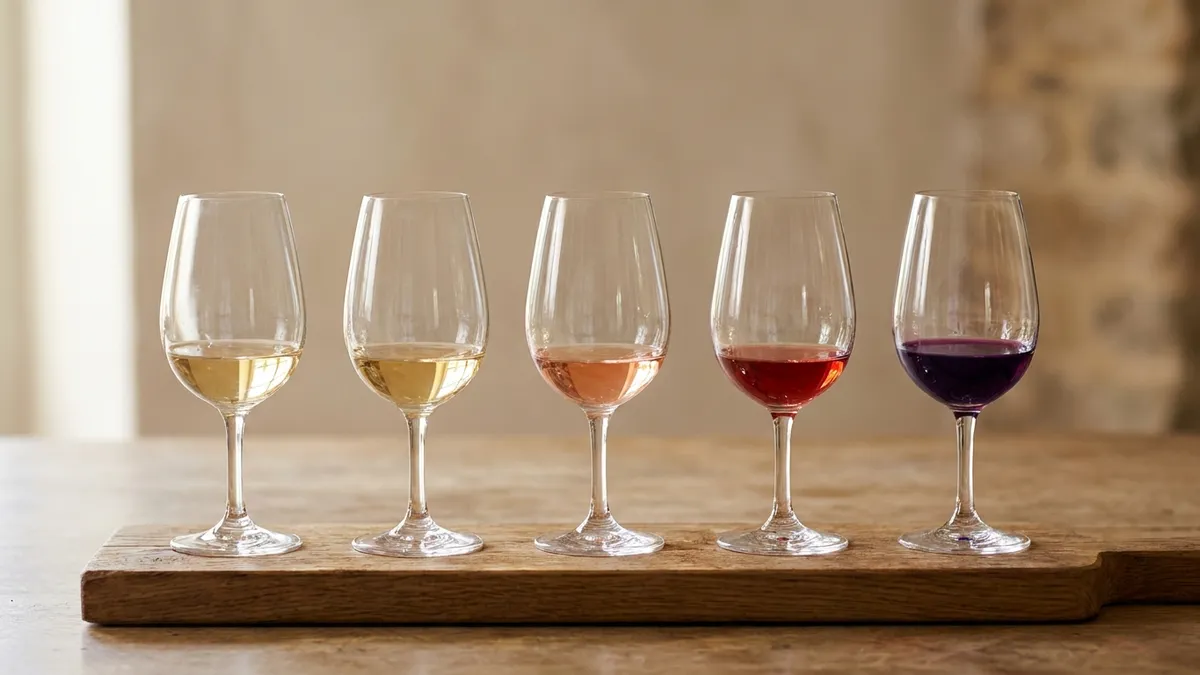
About half a normal pour, so 2 to 2.5 oz (60 to 75 ml) per wine. Tasting pours in the US are typically half the 150 ml restaurant glass, and professional panels go smaller still, at 50 ml in the ISO glass. In that glass, 50 ml leaves more than three-quarters of the bowl empty for swirling.
A tasting pour (a small serving for judging a wine side by side with others) keeps a flight from adding up to a lot of wine.
A small pour also leaves plenty of headspace, which makes swirling and smelling easier, and it stretches a single bottle across a whole table. If you pour four or five wines, keep each to 50 to 60 ml, so the full flight stays under two ordinary glasses. If you pour two or three, 75 ml each is fine. The wine flight tasting guide sets out how to order a flight, and how to host a wine tasting at home covers the setup.
When Should You Top Up a Glass?
Top up a white or sparkling glass before it runs low, and a red only when it is nearly empty. A chilled white warms in the glass, so several small refills keep each sip cold. If the white is down to a finger, add a small splash rather than a full glass.
A big refill of cold wine poured onto a warm inch at the bottom gives you a glass at neither temperature. Our wine serving temperature chart gives the right range for each style.
Reds are different. Their best smell comes after a few minutes of swirling, and topping up halfway resets that. If a guest's red is down to a finger, refill it to the same third-of-a-glass line. If the next bottle is a different wine, finish the first glass or give the guest a fresh one, because even a little of the old wine changes the new one's smell.
Why Do Restaurant, Bar and Home Pours Differ?
Because no law fixes the pour. No US federal rule sets how much wine makes a glass. The 150 ml pour is a trade convention, not a law, and restaurants use it because it divides a bottle into five clean glasses. A US restaurant can pour 4 oz or 6 oz and still call it a glass.
The UK sells wine by the glass in set sizes, usually 125, 175 and 250 ml. Many pubs have moved from the 125 ml glass toward 250 ml, which is a third of a bottle. In England and Wales, a code of practice under the Licensing Act, added in 2010, requires bars to tell customers that smaller measures are available. If you order "a large glass" in a British pub, you are likely getting 250 ml, two-thirds more than a US restaurant glass.
Home pours usually run largest of all. Big glasses make 8 oz look like a modest glass, and nobody is measuring. If a bottle never stretches to five glasses at home, measure the pour: at 8 oz the bottle runs out after three.
How Does Pour Size Change the Alcohol in a Glass?
One 5 oz pour of 12% wine is one US standard drink, the fixed amount of pure alcohol the US uses to count drinks, about 14 grams or 0.6 fluid ounces. Pour more, or pour a stronger wine, and the same glass holds more than one drink.
The National Institute on Alcohol Abuse and Alcoholism defines it that way: 5 oz times 12% is 0.6 oz of alcohol. The figure on the label is the ABV (alcohol by volume, the percentage of the wine that is alcohol). An 8 oz pour of a 14% red holds about 1.1 oz of alcohol, which by that arithmetic is close to two US standard drinks. The UK counts in units of 8 grams instead, and the NHS puts a 175 ml glass of 12% wine at 2.1 units and a 250 ml glass at 3 units.
Country-by-country definitions are in our standard drink of wine guide, and alcohol in wine by type shows which styles run above 14%. The same pour arithmetic drives the energy figures in calories in wine. If the label says 14% or more, pour toward the lower end of the fill line.
How Much Wine Do You Need per Guest?
Multiply guests by glasses each by 150 ml, then divide by 750, and that gives the number of bottles to buy before rounding. A bottle holds 25.4 US fluid ounces, so it gives five glasses at 5 oz, about four at 6 oz and three at 8 oz.
Six guests drinking two glasses each at 150 ml need 1,800 ml, which is 2.4 bottles. If the sum ends in a fraction, round up a bottle. The full table for every pour size and bottle format, from a half bottle to a magnum, is in how many glasses are in a bottle of wine.
Pour One Measured Glass Tonight
Sommy's Wine 101 course covers serving basics like this in bite-sized lessons, at sommy.wine, and the serving and storage hub gathers temperature, glass and storage guides in one place. If your glasses come in two shapes, mark both. Tonight, pour 150 ml of water into the glass you use most, mark the level, then open the bottle and pour your first glass of wine exactly to that line.
Sources
Frequently Asked Questions
How much wine is a standard pour?
In the US a standard pour of still table wine is 5 fluid ounces, or 150 ml, which is one fifth of a 750 ml bottle. No federal law sets it; it is the convention restaurants use, and it matches the US definition of one standard drink of 12% wine. Tasting pours are usually about half that size.
How full should you fill a wine glass?
Riedel's guidance is about a third full for red wine, about half for white and between half and two-thirds for sparkling. Reds get the most empty space so you can swirl and smell them. Whites and sparkling go higher because a fuller glass with less exposed surface stays cold and keeps its bubbles longer.
Is a glass of wine 5 oz or 8 oz?
A restaurant glass in the US is about 5 oz (150 ml). An 8 oz pour is more than half again as much, and only three of them fit in a bottle. Big home glasses make 8 oz look normal, which is why home pours drift upward. Measure 5 oz of water in your glass once to see the real line.
How much wine do you pour for a tasting?
Pour about half a normal glass, roughly 2 to 2.5 oz (60 to 75 ml), when you taste several wines. Professional panels using the ISO tasting glass pour only 50 ml. Small pours leave room to swirl, let each guest taste every wine, and keep the total amount close to two ordinary glasses across a four-wine flight.
Why do restaurants pour less wine than I do at home?
They pour to a measure, usually 5 oz, while most people at home pour by eye into large glasses. A 5 oz pour fills only the bottom third of a big red bowl, so it looks stingy next to a half-full glass at home, which can easily hold 8 oz or more. The restaurant pour is the normal one.
How much sparkling wine do you pour in a flute?
Fill a flute or tulip glass between half and two-thirds. Pour in two stages: a small splash first, then wait for the foam to settle and top up to the line. Pouring all at once makes the foam overflow and leaves less wine in the glass once it settles.
Sommy Team
LinkedInFounder & Wine Educator
The Sommy Team is building the world's most approachable wine education app, helping beginners develop real tasting skills through structured courses and AI-guided practice.