Calories in Wine: A Guide by Type, Glass, and Bottle

By the Sommy Team — AI-assisted, human-edited.
Updated Apr 29, 2026
Contents (12)
- Calories in Wine, in 90 Seconds
- The Simple Math Behind Every Number
- Calories by Wine Type — A 5oz Glass Breakdown
- Calories by Bottle — Multiplying the Math
- The Two Forces That Drive Wine Calories
- The Pour Size Trick
- Wine vs Beer vs Cocktails
- "Lower-Calorie" Wine — What It Actually Means
- Hidden Sugar — When It Sneaks In
- Calorie-Conscious Drinking Strategy
- What Wine Calorie Labels Will Look Like Soon
- Building Calorie Awareness Without Becoming Obsessive
TL;DR
Wine calories come from two sources: alcohol (7 cal per gram) and residual sugar (4 cal per gram). A 5oz pour ranges from 95 calories for a light white to 150 for a bold red, and 165-200 for dessert wines. A 750ml bottle holds 475-1000 calories depending on style.
Calories in Wine, in 90 Seconds
The calories in wine come from two ingredients: alcohol (about 7 calories per gram) and residual sugar (about 4 calories per gram). A standard 5oz (150ml) pour of dry table wine lands somewhere between 95 and 150 calories, almost entirely from alcohol. That 5oz figure is also the US standard drink size for wine, so the calorie count and the drink count rise together with ABV.
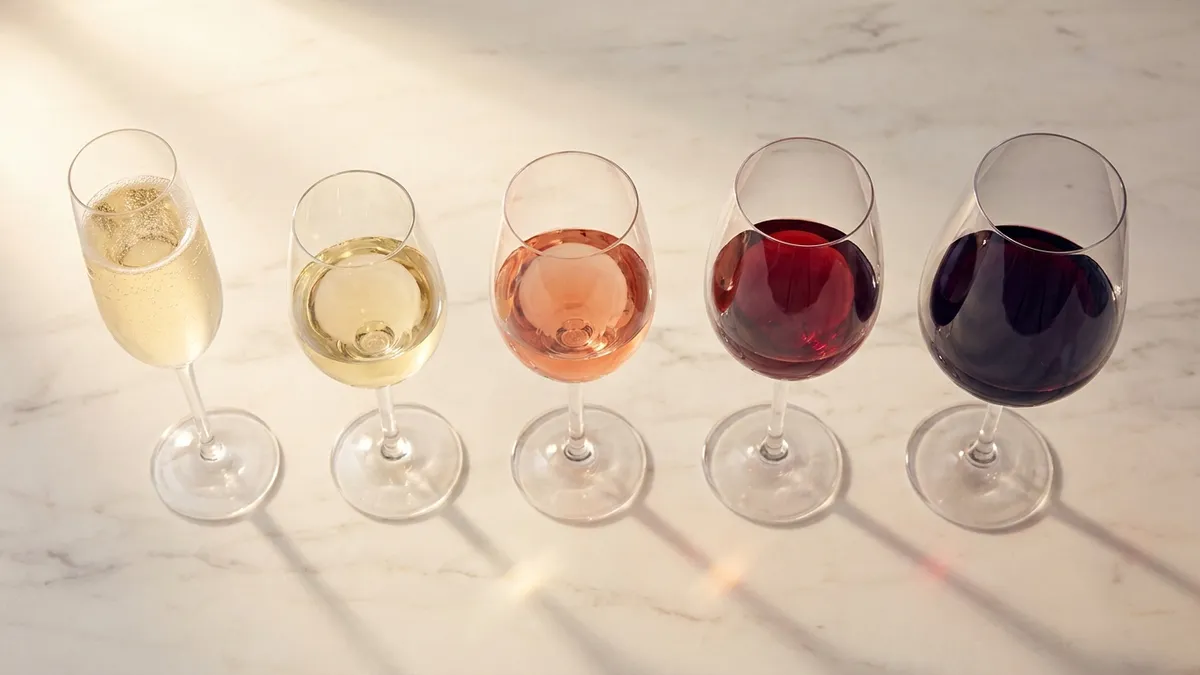
Light whites like Pinot Grigio at 10% ABV hit roughly 95 calories. Crisp dry whites like Sauvignon Blanc are around 120. Brut sparkling wines like Champagne and Prosecco fall in the 95-110 range. Light reds like Pinot Noir match crisp whites at 120. Medium reds like Merlot and Sangiovese sit at 125-130. Bold reds like Cabernet, Syrah, and Malbec at 14-15% ABV reach 140-150 calories per glass.
Sweet wines climb higher because sugar adds calories on top of alcohol. A sweet Riesling Spätlese hits 135-150 calories. Dessert wines like Sauternes reach 165-200. Fortified wines like Port and Sherry pack 190-220 calories into a much smaller 3oz pour.
A full 750ml bottle holds five standard pours, so multiply accordingly: 475-750 calories for most table wines, 825-1100 for sweet and fortified styles.
The Simple Math Behind Every Number
Wine calories follow a formula you can do in your head. Two numbers drive everything:
- Alcohol contributes roughly 7 calories per gram
- Residual sugar contributes roughly 4 calories per gram
Everything else in wine — water, acids, tannins, aromatic compounds, minerals — has zero calories. So when you compare a Pinot Grigio at 95 calories with a Cabernet at 145, you are looking at exactly two variables: how much alcohol the wine contains, and how much sugar.
For dry table wines, alcohol does almost all the work. A glass of dry wine has 0-4 grams of sugar — barely enough to register as calories. The 50-calorie difference between a light white and a bold red comes almost entirely from the alcohol percentage.
For sweet wines, sugar starts to matter. A late-harvest Riesling with 30 grams of sugar per liter adds about 18 calories of sugar to a 5oz pour. A Sauternes with 120 grams per liter adds 72. That extra sweetness is what pushes dessert wines into a different calorie tier.
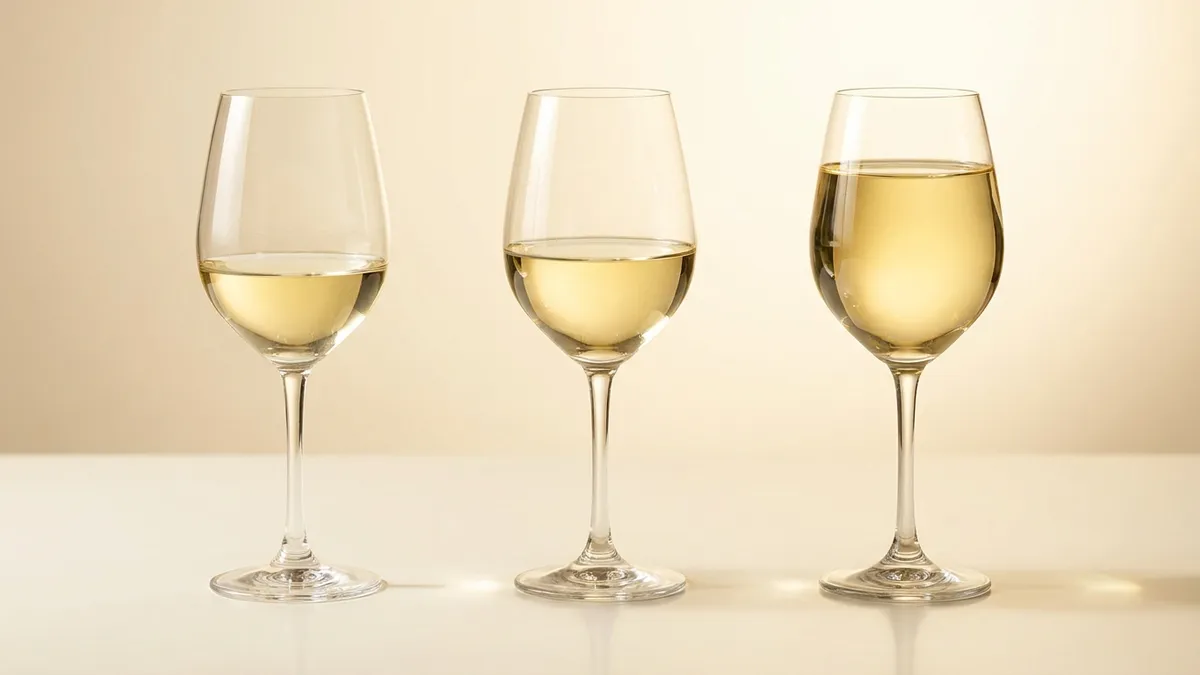
Calories by Wine Type — A 5oz Glass Breakdown
The numbers below assume a standard 5oz (150ml) pour and typical alcohol levels for each style. Real-world wines vary, but these averages are accurate for most bottles you will encounter.
Light Whites — 95 to 110 Calories
The lightest table wines are dry whites in the 10-11% ABV range. Pinot Grigio, Vinho Verde, German Riesling Kabinett, and most Albariño from cool sites all fall here. With minimal sugar and modest alcohol, they top out around 95-105 calories per glass.
These wines are also among the most beginner-friendly because their lighter body makes flavors easier to identify. Our Pinot Grigio guide explains how that lightness translates into the glass.
Crisp Dry Whites — 115 to 125 Calories
Sauvignon Blanc, dry Chenin Blanc, Vermentino, and most Albariño from warmer regions land in the 12-12.5% ABV range. A 5oz pour of these wines runs 115-125 calories.
The grape and the climate matter — a New Zealand Sauvignon Blanc at 13% will have a few more calories than a Loire version at 12%. For a deeper comparison of these two styles, see our breakdown of Chardonnay vs Sauvignon Blanc.
Full-Bodied Whites — 125 to 140 Calories
Oaked Chardonnay, white Rhône blends, and richer styles often finish at 13.5-14.5% ABV. The riper grapes that produce these fuller wines also produce more alcohol, which means more calories. A glass of California Chardonnay can hit 130-140 calories.
Brut Sparkling Wines — 95 to 110 Calories
Sparkling wines are often the lowest-calorie option at any bar. Brut Champagne, Cava, and most Prosecco contain 12% ABV and very low residual sugar — typically under 12 grams per liter, meaning a 5oz pour adds only a few calories of sugar.
A 5oz glass of Brut sparkling wine sits at 95-110 calories. For a comparison of how these three styles differ in sugar and alcohol, see our Champagne vs Prosecco vs Cava guide.
Light Reds — 115 to 125 Calories
Pinot Noir, Beaujolais (Gamay), and other light reds at 12-13% ABV deliver about 115-125 calories per pour. They have very little sugar and modest alcohol, which keeps them in the same calorie zone as crisp dry whites.
Medium Reds — 125 to 135 Calories
Sangiovese, Merlot, Tempranillo, and Grenache typically finish at 13-13.5% ABV. A glass lands at 125-135 calories.
Bold Reds — 140 to 155 Calories
This is where the calorie math turns sharply upward. Cabernet Sauvignon, Syrah, Shiraz, Malbec, Zinfandel, and Petite Sirah are made from very ripe grapes and routinely finish at 14-15.5% ABV. A 5oz glass of bold red contains 140-155 calories.
The extra alcohol does the work — there is still very little sugar in these wines, but the higher ABV adds 25-50 calories per pour compared to a light red. Our Cabernet vs Merlot comparison shows how just two percent more alcohol changes the experience.
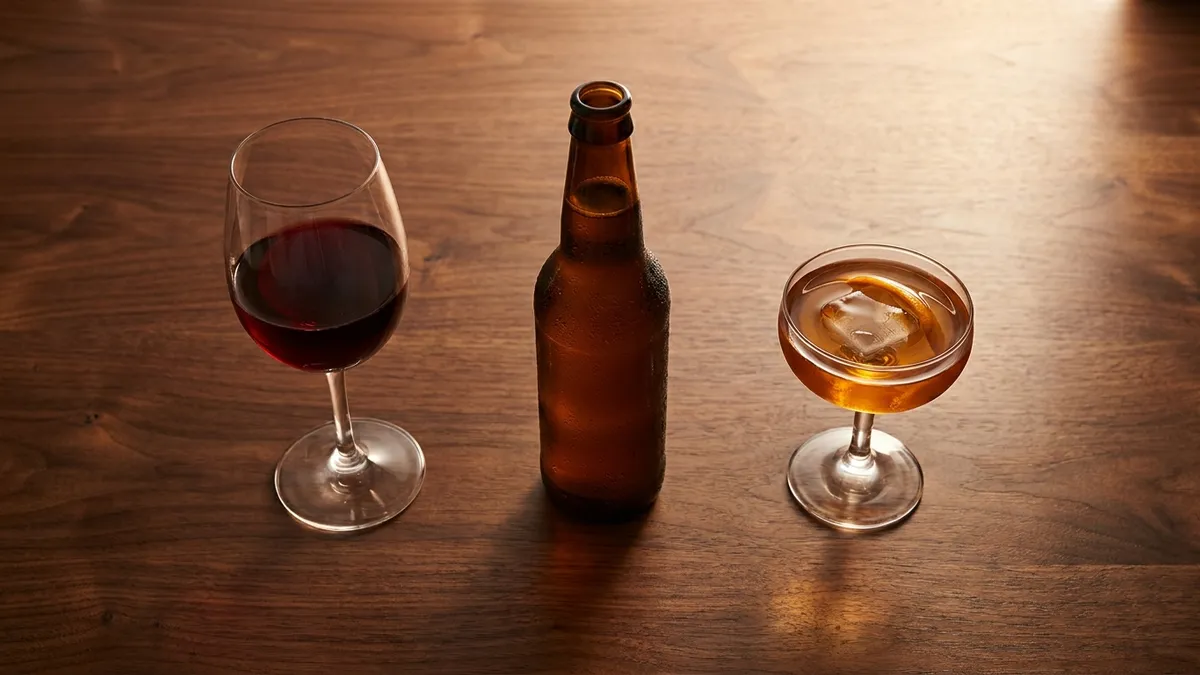
Sweet Whites — 135 to 150 Calories
A late-harvest Riesling Spätlese at 9% ABV but 30-50 grams of sugar per liter delivers 135-150 calories per glass. The lower alcohol cuts calories from the alcohol side, but the sugar more than makes up for it.
Sweet Dessert Wines — 165 to 200 Calories
Sauternes, Tokaji, Vin Santo, and sweet Vouvray contain 80-150 grams of sugar per liter — a glass can hold 30-50 grams of sugar alone, adding 120-200 calories from sugar before you even count alcohol.
A 5oz pour reaches 165-200 calories. Most people only drink 2-3oz of dessert wine, which brings the practical number closer to 65-100 calories per serving. Our dessert wine guide covers the styles that command these smaller pours.
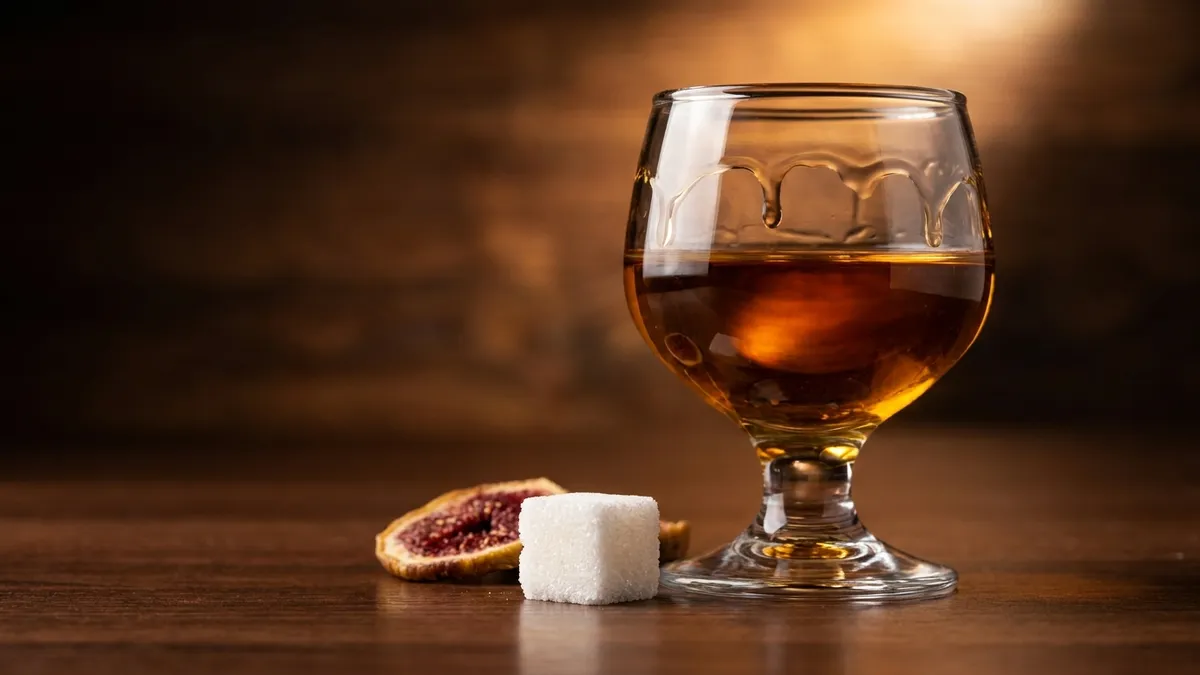
Fortified Wines — 190 to 220 Calories per 3oz Pour
Tawny Port, Sherry, Madeira, and Marsala have been strengthened with grape spirit, pushing them to 17-22% ABV. They are also typically sweet, with 50-150 grams of sugar per liter.
A 3oz pour — the standard serving for fortified wine — packs 190-220 calories. A full 5oz pour would hit 320-360 calories, which is why these wines are served in smaller glasses.
Calories by Bottle — Multiplying the Math
A standard 750ml bottle holds five 5oz pours. Multiply the per-glass numbers above to estimate bottle totals:
- Light white (Pinot Grigio, Vinho Verde) — about 475 calories
- Crisp white (Sauvignon Blanc, Albariño) — about 600 calories
- Full white (oaked Chardonnay) — about 625-700 calories
- Brut sparkling (Champagne, Prosecco, Cava) — about 475-550 calories
- Light red (Pinot Noir, Gamay) — about 600 calories
- Medium red (Merlot, Sangiovese) — about 625-675 calories
- Bold red (Cabernet, Syrah, Malbec) — about 700-775 calories
- Sweet white (Riesling Spätlese, Moscato) — about 675-750 calories
- Sweet dessert (Sauternes, Tokaji) — about 825-1000 calories
- Fortified (Port, Sherry) — about 950-1100 calories
The headline number — that a bottle of wine often holds 600 to 1000 calories — is worth keeping in mind. Splitting a bottle of bold red between two people is the calorie equivalent of a fast-food meal.
The Two Forces That Drive Wine Calories
Alcohol Percentage Is the Dominant Factor
For dry wines, alcohol determines almost everything. A simple rule:
- 10% ABV wine — about 100 calories per 5oz glass
- 12% ABV wine — about 120 calories per glass
- 13.5% ABV wine — about 135 calories per glass
- 15% ABV wine — about 150 calories per glass
Each additional percent of alcohol adds roughly 5 calories per glass. That is why region and ripeness matter — a Pinot Noir from Burgundy at 12.5% ABV will have meaningfully fewer calories than a California Pinot at 14.5%.
Residual Sugar Drives the Sweet-Wine Tier
For dry table wine, sugar barely matters — most contain 1-4 grams per liter, which adds only 1-3 calories to a glass. The sugar effect kicks in once you cross into off-dry, medium-sweet, and sweet wines.
The standard sweetness scale:
- Dry — under 4 g/L of residual sugar (most table wines)
- Off-dry — 4-12 g/L (some Riesling Kabinett, "Extra Dry" Champagne)
- Medium sweet — 12-45 g/L (many German Spätlese wines)
- Sweet — 45-150 g/L (Sauternes, sweet Vouvray)
- Very sweet — 150-400 g/L (Ice Wine, Pedro Ximenez)
Each step up adds calories. A wine at 30 g/L sugar contributes about 18 extra calories per 5oz pour compared to a dry wine. A wine at 100 g/L sugar contributes 60 extra calories. A wine at 200 g/L sugar contributes 120 extra calories.
The Pour Size Trick
This is the secret variable most calorie discussions ignore: how much wine actually goes into the glass.
Standard pour sizes:
- Restaurant pour — 5oz (150ml). Five glasses per 750ml bottle.
- Generous pour — 6oz (175ml). About 4.3 glasses per bottle.
- Tasting pour — 2-3oz (60-90ml). Used in flights and dessert wine service.
- Home pour — typically 7-8oz (210-240ml). About 3-3.5 glasses per bottle.
Most home pours are 50% larger than restaurant pours. A 7oz home pour of bold red is not 145 calories — it is more like 200. Without measuring, the calorie reality of an evening of wine drinking can be 50% higher than what calorie charts suggest.
A simple fix: pour the first glass against a measuring cup or jigger, then mark the level on your wine glass with a pencil dot on the outside. Once you can see the 5oz line, your eye recalibrates fast.

Wine vs Beer vs Cocktails
Calorie comparisons across alcohol categories depend heavily on portion size:
- Wine (5oz, 12.5% ABV) — about 120 calories
- Beer (12oz, 5% ABV) — about 150 calories
- Light beer (12oz, 4.2% ABV) — about 100 calories
- IPA (12oz, 7% ABV) — about 200 calories
- Vodka soda (1.5oz vodka) — about 100 calories
- Margarita (4oz with sugar) — about 250-400 calories
Wine sits in the middle — lower than sugary cocktails, similar to regular beer. The advantage is portion control: a 5oz glass is smaller than a beer or typical cocktail by volume, which keeps evening totals lower.
"Lower-Calorie" Wine — What It Actually Means
A wave of wine brands now market themselves on calories. Read the labels carefully:
Genuinely lower-calorie wines are made from grapes that produced less sugar, resulting in lower alcohol — typically 9-11% ABV. The math is real: a 9% wine genuinely has about 30 fewer calories per 5oz glass than a 14% wine.
Marketing-only "skinny" wines sometimes claim 85-90 calories per glass while delivering the same calories as any other wine the same alcohol. The trick is changing the serving size on the label — listing a 4oz or 5oz pour when industry comparisons sometimes use 6oz. Same wine, smaller glass, lower headline number.
To calorie-conscious drinkers, the real low-calorie options have been hiding in plain sight:
- Brut Champagne, Cava, and Prosecco
- German Riesling Kabinett
- Vinho Verde
- Pinot Grigio from cool sites
- Light Pinot Noir from Germany or Burgundy
Our develop your wine palate guide shows how to tell whether a wine is naturally light or just marketed that way.
Hidden Sugar — When It Sneaks In
Most dry table wines have negligible sugar. The exceptions:
- "Extra Dry" Champagne — confusingly, this is sweeter than Brut, with up to 12 g/L of sugar
- Many supermarket reds — some commercial bottlings add 5-10 g/L sugar to soften young, tannic wine
- Some California Cabernets — modern styles can carry noticeable residual sugar to feel rounder
- Most rosé Champagne and demi-sec — significantly higher sugar than Brut equivalents
If you want to keep wine calories low, sticking with dry styles is the easiest control. A Brut Nature sparkling wine has under 3 g/L of sugar and around 95 calories per glass — about as light as wine gets.
Calorie-Conscious Drinking Strategy
If wine calories matter to you, the practical playbook is short:
- Pour to 5oz, not 8oz. Measure the first glass to calibrate.
- Choose dry over sweet. Stick with table wines under 4 g/L residual sugar.
- Choose 11-13% over 14-15%. Lower alcohol means fewer calories per glass.
- Skip dessert wine and fortified wine if calories matter — even small pours run 100-200 calories.
- Drink intentionally. A 5oz glass that you actually taste delivers more pleasure than a 7oz glass you barely notice.
For more on the structural elements that make wine satisfying at any alcohol level, see our /learn/wine-health/ hub.
What Wine Calorie Labels Will Look Like Soon
Wine has historically been exempt from the nutrition labeling that applies to most foods. That is changing. The European Union now requires alcohol calorie information on all wine sold in the EU — either on the label or via a QR code. The US is moving more slowly, but voluntary calorie labeling is appearing on more bottles each year.
Once the numbers are printed on the label, the guesswork goes away. In the meantime, the rules of thumb in this guide get you within 5-10% of the actual calorie count for any wine you might drink.
Building Calorie Awareness Without Becoming Obsessive
Wine is enjoyable, social, and culturally rich. It also has calories. Both can be true.
The goal of understanding wine calories is not to count every gram in every glass — it is to know the rough territory you are in. A bottle of bold red split with friends is roughly the calorie equivalent of a meal. A glass of dessert wine after dinner is similar to a small dessert by itself. Once these reference points are in your head, you can drink with awareness rather than tracking.
The wines that win on flavor at lower alcohol — fine Riesling, great Burgundy, Brut Champagne, top Loire whites — are the same wines that quietly win on calories. They were made from grapes that did not need to be over-ripened to produce satisfying wine. Drinking them is its own answer to the calorie question.
Sommy helps you find the styles that match your taste while giving you the structural awareness — alcohol, sugar, body, balance — to read any wine you pick up. The calorie chart is one more tool, not the whole story. The bigger story is learning what you actually like, and choosing it on purpose.
Frequently Asked Questions
How many calories are in a glass of wine?
A standard 5oz (150ml) pour of dry table wine contains roughly 95-150 calories, depending on the wine. Light whites like Pinot Grigio sit around 95 calories. Crisp whites like Sauvignon Blanc are closer to 120. Bold reds like Cabernet Sauvignon or Malbec land at 140-150. Sweet and fortified wines run higher, from 165 calories up to 220 per pour.
How many calories are in a bottle of wine?
A 750ml bottle holds about five 5oz pours, so total calories scale with style. A bottle of light white runs around 475 calories. A crisp dry white is closer to 600. A bold red sits at 700-750. A sweet dessert wine can reach 825-1000 calories per bottle, and fortified wines like Port hit 950-1100 because of higher alcohol and sugar.
Which wine has the fewest calories?
Naturally low-alcohol dry wines have the lowest calorie counts per glass. Light white wines around 10% ABV — Pinot Grigio, Vinho Verde, German Kabinett Riesling — typically come in at 80-100 calories per 5oz pour. Brut sparkling wines like Champagne and Prosecco are similarly light at 95-110 calories because they are dry and moderate in alcohol.
Does sweet wine have more calories than dry wine?
Yes, usually. Sweet wines carry residual sugar that adds about 4 calories per gram on top of the alcohol calories. A dry wine has 0-4 grams of sugar per liter, while a sweet dessert wine can have 80-150 grams per liter. That extra sugar adds 30-60 calories to a single glass, which is why dessert wines run significantly higher than dry table wines.
Is wine more or less caloric than beer or cocktails?
It depends on portion size. A 5oz glass of wine at 12.5% ABV has about 120 calories. A 12oz beer at 5% ABV has about 150 calories. A vodka soda with 1.5oz of vodka has about 100 calories. A margarita at 4oz can hit 250-400 calories from added sugar. For portion-controlled drinking, wine sits in the middle of the pack.
Why do bold red wines have more calories than light whites?
Alcohol is the dominant calorie source in wine. Bold reds like Cabernet, Syrah, and Malbec are typically made from very ripe grapes and finish at 14-15% ABV, while light whites finish at 10-12%. Each additional percent of alcohol adds about 5 calories per glass. The difference between a 10% Pinot Grigio and a 15% Zinfandel is roughly 50 calories per pour.
Are 'low-calorie' wines really lower in calories?
Sometimes, but read the fine print. Genuinely lower-alcohol wines (around 9-11% ABV) do contain fewer calories. But many 'skinny' wine brands claim 85-90 calories per glass by changing the serving size — they list a 5oz pour while the industry standard for some calorie comparisons is 6.4oz. Same wine, smaller glass on the label, lower number on the bottle.
How does pour size affect wine calories?
Pour size matters more than most people realize. A 5oz restaurant pour of dry red wine has about 125 calories. A 7-8oz home pour of the same wine has 175-200 calories. Pouring to the widest part of the glass instead of the standard fill line can add 50% more calories without you noticing. Using a measure or pouring against a marked glass keeps portions honest.
Sommy Team
LinkedInFounder & Wine Educator
The Sommy Team is building the world's most approachable wine education app, helping beginners develop real tasting skills through structured courses and AI-guided practice.