How to Host a Wine Tasting at Home: A Practical Guide
By the Sommy Team — AI-assisted, human-edited.
Updated Apr 29, 2026
Contents (16)
- TLDR
- How to Host a Wine Tasting, in 90 Seconds
- The Premise: Curation and Logistics, Not Expertise
- Pick a Theme First — Five That Always Work
- The Bottle Math
- The Four-Step Host Preparation Timeline
- The Setup Checklist
- Pour Order: Light to Heavy, Always
- The 90-Minute Hosting Flow
- Conversation Prompts That Work
- Food: Light, Palate-Cleansing, Sparing
- The Six Rookie Host Mistakes
- Match the Theme to the Occasion and Budget
- After the Tasting: Capture the Lessons
- A Practical First Tasting: Sauvignon Blanc Around the World
- The Bottom Line
TL;DR
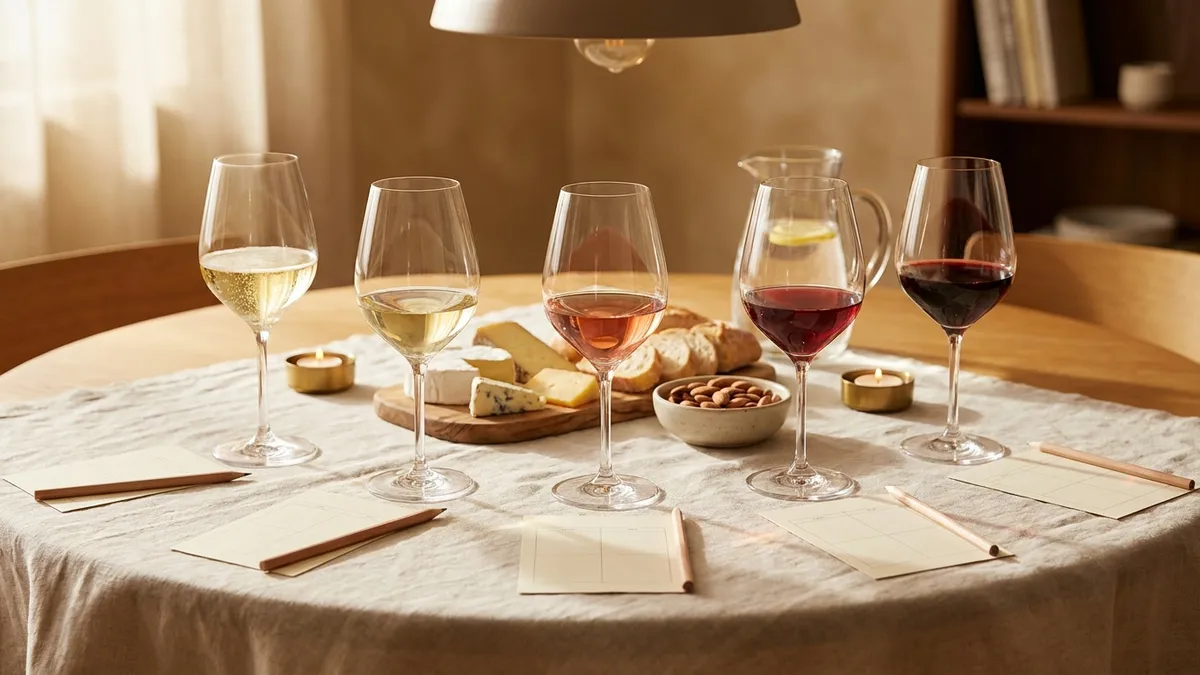
Hosting a wine tasting at home is half logistics, half curation. Pick one clear theme, plan four to six bottles for four to eight guests, prep over four days, and run a structured 90-minute flow with a brief, blind pours, and a discussion pause after every wine. Done well, a dinner becomes a memorable shared experience instead of a free-for-all.
TLDR
Hosting a wine tasting at home is half logistics, half curation. Pick one clear theme, plan four to six bottles for four to eight guests, prep over four days, and run a structured 90-minute flow with a brief, blind pours, and a discussion pause after every wine. Done well, a dinner becomes a memorable shared experience instead of a free-for-all.
How to Host a Wine Tasting, in 90 Seconds
To host a wine tasting at home, you need a theme, four to six bottles, four to eight guests, and a 90-minute structured flow. Pick one variable to compare — same grape, different regions; same region, different producers; same producer, different vintages. Buy the wines three days ahead. Print numbered tasting mats. On the night, wrap the bottles for blind pouring, set out one identical glass per wine per guest, and brief the room for two minutes before the first pour. Smell every glass silently, sip, then discuss for five minutes. Reveal the labels at the end. The host's job is curation and pacing, not expertise — the wines do the teaching.
The Premise: Curation and Logistics, Not Expertise
A common worry stops most people from hosting a wine tasting at home: the host will be exposed as not-actually-a-sommelier somewhere around glass two. The worry is misplaced. A good host is not the most knowledgeable person in the room — a good host is a curator and a logistics manager.
The wines do the teaching. The host picks them, sets the pace, asks the prompts, and keeps the comparison structured. That is the entire job description. Instead of preparing to lecture, prepare the table. Instead of memorising tasting notes, design the flight.
Pick a Theme First — Five That Always Work
The single most important decision is the theme. Four random bottles is a dinner. Four bottles organised around one variable is a tasting. The constant gives guests something familiar; the variable gives them something to learn.
1. Old World vs New World
Same grape, two contrasting climates. A Pinot Noir flight pairing Burgundy against Oregon, or a Cabernet flight pairing Bordeaux against Napa, teaches the climate-style axis faster than any other format. The contrast is dramatic and the comparison is legible to anyone. Our old world vs new world wine article goes deeper into the underlying split.
2. Vertical
Same producer, same wine, different vintages. Three or four years of one estate's bottling isolate the year as the only variable. Vertical tastings work brilliantly for date nights or small groups because the focus narrows and the listening gets more careful.
3. Horizontal
Same vintage, same region, different producers. Hold grape, region, and year constant, and the only variable left is the winemaker's hand. Our dedicated horizontal wine tasting guide covers the format in full depth.
4. Single grape, four countries
A Sauvignon Blanc lineup from France, New Zealand, Chile, and South Africa. The shared grape is the anchor; the geographic spread is the lesson. The most beginner-friendly format — the differences are obvious, the conversation runs itself.
5. Style flight
Wines connected by a category. A sparkling theme might pair Champagne, Cava, Crémant, and Prosecco. A dessert theme might cover late-harvest, ice wine, and fortified styles. Our wine flight tasting guide catalogues the full set of comparison formats.
For a first-time host, the single grape across four countries beats the others on entertainment and learning per dollar. The contrasts are dramatic and the bottles are easy to source.
The Bottle Math
A standard 750 ml bottle holds 25 ounces — five standard 5-ounce pours, or twelve 2-ounce tasting pours. For a four-wine tasting with six guests, four bottles is enough; for eight guests, five bottles gives margin. For other pour sizes and party counts, see how many glasses are in a bottle of wine. Always buy one spare in case a featured wine is corked or off — our how to tell if wine is corked guide covers the recognition cues.
The discipline of the 2-ounce pour is what separates a real tasting from a dinner with extra wine. A 4-ounce pour across five wines is a full bottle per guest, and by glass three, every taster is in no shape to notice differences.
The Four-Step Host Preparation Timeline
A relaxed evening starts with a planned week. The work is small but it has to happen ahead, not under time pressure.
One week ahead — pick the theme. Decide the format, write down the four wines, lock in the group size.
Three to four days ahead — buy the wines. Wine shops sometimes have to special-order, so do not leave this until the day. Reds stored at 16 to 18°C, whites in the fridge from purchase.
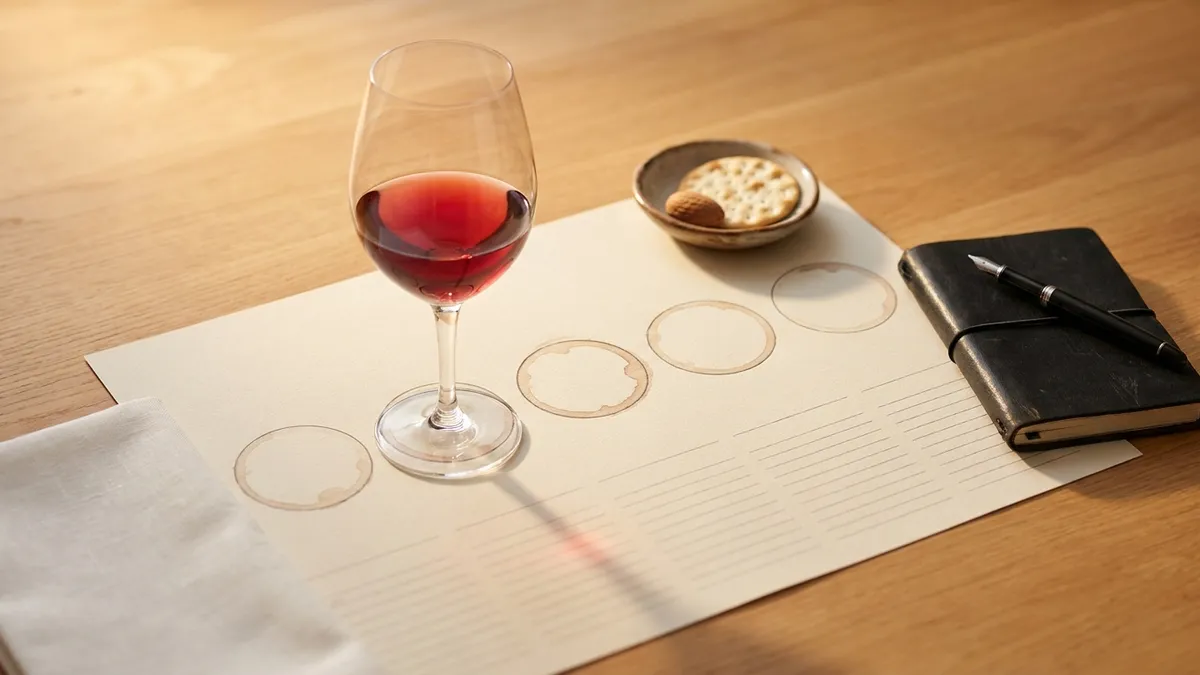
Twenty-four hours ahead — print the materials. A simple numbered tasting mat with space for color, aroma, taste, and a 1-to-10 score. A theme briefing on one sheet. Keep it minimal.
On the day — chill, decant, set the table. Whites into the fridge four hours ahead. Younger reds decanted thirty to sixty minutes before tasting. Glasses polished, bottles wrapped, mats on the table.
The pattern lets the host be a guest at their own party. Everything that can be prepared in advance, is.
The Setup Checklist
Equipment matters more than budget. The cheapest bottle in matching glassware tastes more honestly than an expensive bottle in mismatched cups.
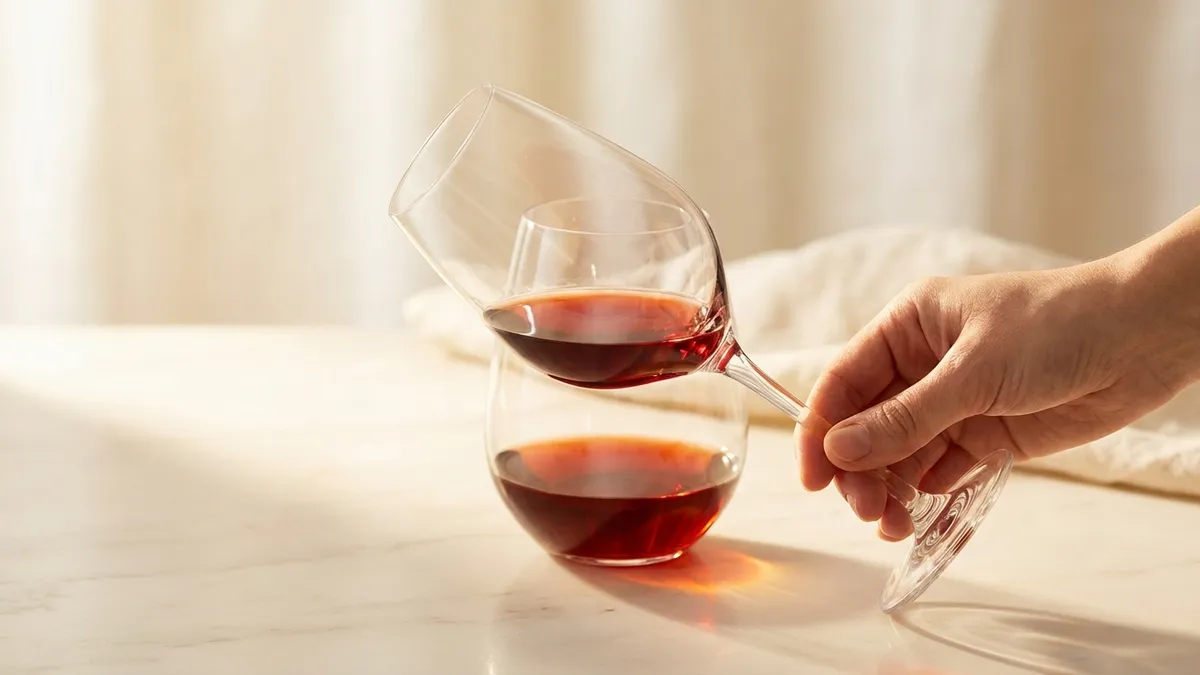
- Four to six identical glasses per guest — universal or Bordeaux shape works for almost every flight. Mismatched shapes ruin the comparison. Our wine glass guide walks through which shapes do what.
- A measured pour or a tasting jigger — 1.5 to 2 ounces per glass.
- Spit cups — opaque if possible, one per guest.
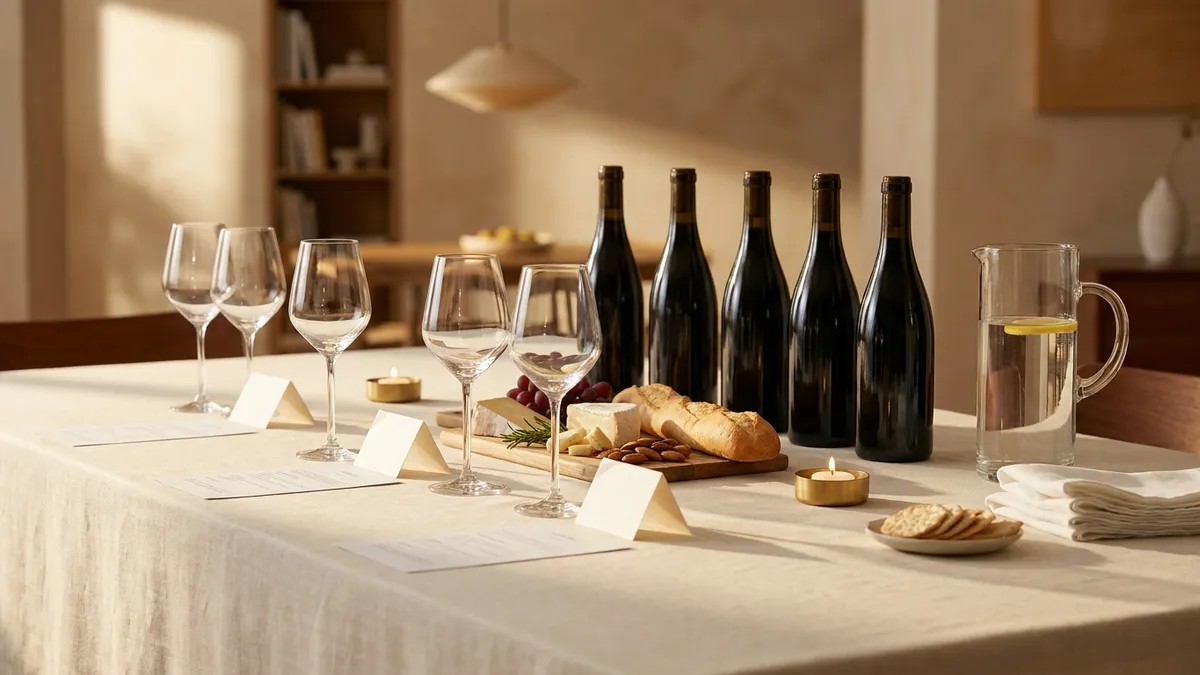
- Plain bread, unsalted crackers, water without ice — palate cleansers between wines.
- Numbered tasting mats — one per guest. Number the glasses, not the bottles.
- Brown bags or foil — for blind pours.
- A white surface — sheet of paper or a pale tablecloth — for color comparison against a neutral background. Keep club soda nearby for red wine spills on the cloth.
Avoid stemless glasses for the structured portion of the evening. The hand warms the bowl, the heat shifts the aromatics, and the comparison loses precision.
Pour Order: Light to Heavy, Always
Pour order is not arbitrary. Heavier or sweeter wines coat the palate and dull what comes after. Whites before reds, light before heavy, dry before sweet, young before old, less complex before more complex. For a vertical, pick a direction before the flight — oldest to youngest if you want to feel the wines getting fresher, or youngest to oldest if you want to feel them gaining complexity. Our wine tasting order article expands the principle across longer evenings.
The 90-Minute Hosting Flow
Once guests arrive, the evening runs in five phases.
Welcome (10 minutes). A welcome bottle on arrival — something easy, served in a different glass from the tasting line. Light conversation while everyone settles.
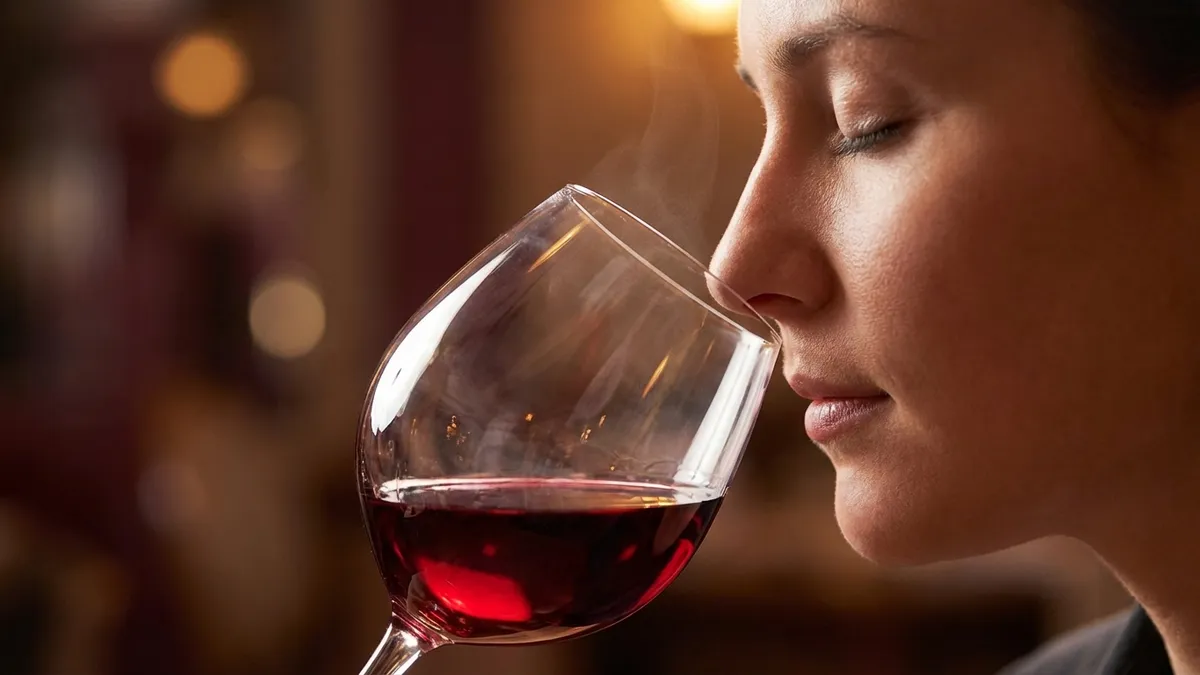
Briefing (3 minutes). Stand up, hold the room. Cover the theme, then the protocol — "smell first in silence, then sip, then we discuss for five minutes before moving on." End with the line that defuses everything: "there are no wrong answers here, only honest impressions."
The Flight (60 minutes). Pour wine 1 into all glasses. Guests smell silently for ninety seconds, sip once, and only then start talking. Five minutes of discussion. Move to wine 2, repeat. The host's job is to keep the pacing crisp and call the transitions.
The Reveal (10 minutes). Unwrap the bottles. Each guest reads their ranking before the labels come off. The disconnect between blind preference and reveal expectation is where most learning happens.
Free Pour (15 to 30 minutes). Open one or two of the favorites for a relaxed second pass alongside the meal. The structured portion is over; the social wine starts now.

Conversation Prompts That Work
The hardest part of hosting is the silence after the first sip. Guests look at each other, nobody wants to be wrong, and the room can stall.
Have four prompts ready. Use them in order if needed.
- "What does this remind you of?" — Invites association without requiring vocabulary. Cherry pie, grandma's garden, wet stone, lemon zest. Anyone can answer.
- "Sweet or dry?" — A binary that even total beginners can call. The follow-up — "how dry?" — opens up the structural conversation.
- "Would you drink this again?" — Cuts past the performance of evaluating and gets to honest preference.
- "Pick your favorite without seeing the label." — The most useful prompt of the evening. Forces a real opinion before the reveal.
The four prompts together carry a four-wine flight without the host needing to play sommelier. Our wine tasting vocabulary cheat sheet is a handy reference if guests want more language to describe what they are noticing.
Food: Light, Palate-Cleansing, Sparing
Food during the tasting is for cleansing the palate, not feeding the room. Save the proper meal for after the structured portion.
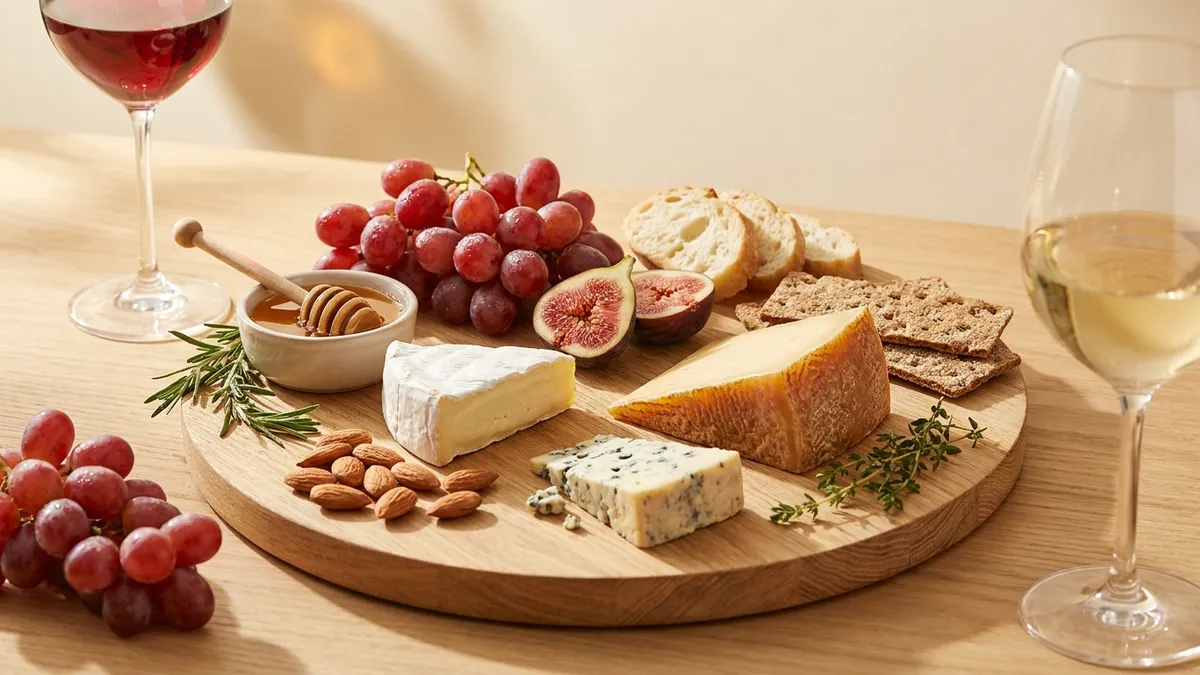
What works during the flight: plain bread or unsalted crackers, hard cheese in small amounts, fresh fruit (apple slices, grapes), unsalted nuts, mild olives.
What ruins the comparison: anything sweet (coats the palate), strongly flavored items like garlic, raw onion, or blue cheese (dominate the next two wines), vinegar and citrus dressings (clash with wine acidity), and heavy meals that saturate the palate before the comparison starts.
After the structured tasting ends, a proper meal is exactly the right move. The wines that ranked highest can be reopened to drink with food, and the contrast between tasting and drinking is itself instructive.
The Six Rookie Host Mistakes
Six errors collapse the format. Avoid them and the evening lands cleanly.
Pouring too much. The 1.5 to 2 ounce pour is non-negotiable. Use a measured jigger.
Mismatched glassware. All glasses in the flight must be the same shape.
Forgetting spit cups. Even if no one uses them, the option needs to be visible.
Heavy meal alongside the tasting. The structured portion is for clean palates. Save dinner for after.
Revealing labels too early. Unwrap only at the reveal phase, never before.
Too many wines. Four is the sweet spot, six is a firm upper limit. Beyond that, palate fatigue flattens every distinction. Our common wine tasting mistakes article covers the broader pitfalls beyond hosting.
Match the Theme to the Occasion and Budget
Different evenings call for different formats. A focused vertical wastes itself on a chatty group of eight; a single-grape comparison wastes itself on an intimate couple. Read the audience first, design the flight second.
- Friend group dinner — Old World vs New World blind. Runs itself once the wines are poured, and our wine party games add a scoreboard if the table wants one.
- Date night — Vertical of one producer. Intimate, focused, conversation deepens with each vintage.
- Holiday gathering — Themed by region. A Tuscan flight for Italian holidays; a Rhône lineup for autumn.
- Beginner crowd — Single grape across four countries. Sauvignon Blanc is the most reliable choice.
The format works at every price tier. A casual lineup at $15 to $25 a bottle is enough to make the comparison work; a mid-range lineup at $35 to $60 starts showing producer character clearly; the premium tier is special-occasion territory. A casual flight done well teaches more than a premium dinner without structure — the format is what makes the evening, not the bottles. Our good wine under $20 guide is a useful primer for the entry-level lineup.
After the Tasting: Capture the Lessons
The discipline that turns one good evening into a year of learning is writing the lessons down.
- Save the unfinished bottles with a stopper or a vacuum pump; most reds drink well for two days, whites for three. Our how long does wine last after opening guide covers the storage detail.
- Photograph each label with the tasting note next to it. The visual archive is worth more than the written notes alone.
- Log the session in a dedicated tasting journal or app. The pattern across five or ten sessions is where the actual palate skill compounds.
The Sommy app is purpose-built for exactly this. The tasting journal logs each wine in a flight slot, captures color, aroma, structure, and a finish score, and surfaces patterns across dozens of entries. Six months in, the journal becomes a searchable map of what the host actually likes — which is the dataset every serious palate eventually relies on. The full skill arc of how to taste wine is built on this kind of accumulated practice.
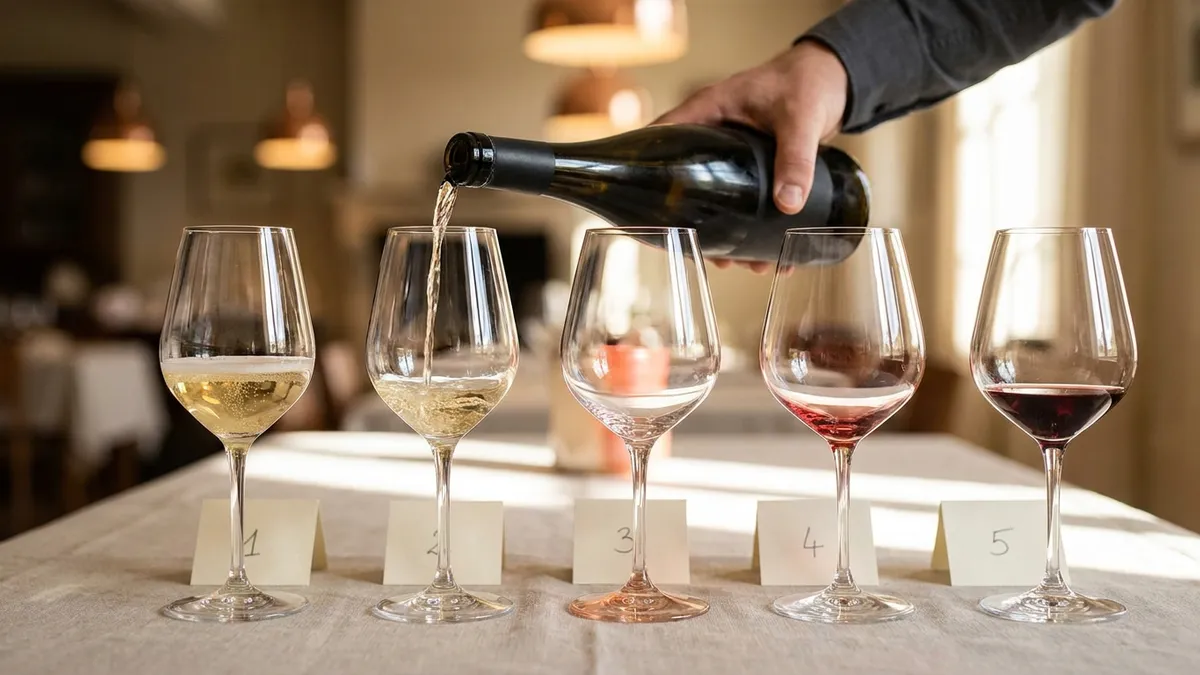
A Practical First Tasting: Sauvignon Blanc Around the World
For a first home tasting, four Sauvignon Blancs from four countries is the most reliable starting point — Sancerre from France (flinty, mineral, restrained), Marlborough from New Zealand (passion fruit, grapefruit, pungent), a Chilean bottling from Casablanca Valley (citrus and herb, the middle ground), and a South African Stellenbosch (green pepper, fig, often a touch of wood).
Four bottles, one grape, four continents. The differences are dramatic enough that even a guest with no wine background can rank them in order of preference, and the conversation writes itself. The wines are widely available, the contrasts are obvious, and the format teaches the climate-style relationship without requiring any technical preparation. The chardonnay vs sauvignon blanc primer is a useful background read for the host.
The Bottom Line
A wine tasting at home is not a performance — it is a curated experience. The host picks four wines around one clear theme, plans the prep over four days, runs a structured ninety-minute flow, and lets the wines do the teaching. Five rookie mistakes flatten the evening; avoid them and the format works at every budget. Run one tasting a quarter for a year and a small group of friends builds shared palate vocabulary, real preferences, and the kind of memorable shared evenings that pure dinners rarely produce. The wines are the textbook; the host is the editor.
Frequently Asked Questions
How many guests work best for a home wine tasting?
Four to eight is the sweet spot. Below four, the conversation runs thin and one strong opinion can dominate the comparisons. Above eight, the discussion fragments, the pour math gets awkward, and the host loses the room. If the guest list grows past eight, split into two parallel tasting tables of four to six and reunite for the meal afterward.
How many bottles do I need to buy?
Plan one bottle per wine in the lineup, not one per guest. A standard 750 ml bottle gives twelve 2-ounce tasting pours, which covers a four-wine flight for six guests with margin. For a four-wine, eight-guest evening, four bottles is enough — add one welcome bottle and one spare in case a featured wine is corked or off.
What is the best theme for a first-time host?
Same grape across four countries. A Sauvignon Blanc lineup from France, New Zealand, Chile, and South Africa is universally interesting because the climate and winemaking differences are dramatic on a single grape. The shared anchor keeps the comparison legible, and the geographic spread teaches more about wine in one evening than weeks of casual single-bottle drinking.
Should I taste blind or with the labels visible?
Blind, almost always. Wrap each bottle in foil or a paper bag and number them one to four. Knowing the producer, region, or price changes how the wine tastes — label and price bias are real and surprisingly large. A common practical compromise is to taste blind, write notes, rank the wines, and only then reveal the labels for a second labeled pass.
How long should a home wine tasting actually take?
Plan ninety minutes for the structured tasting and an extra hour for the meal and free social pour afterward. A four-wine tasting fits comfortably inside the ninety-minute window if every wine gets two to three minutes of silent smell, a sip, and a five-minute discussion before moving on. Anything longer drags; anything shorter rushes the comparisons.
Do guests really need to spit?
For a four-wine tasting, spitting is optional and most guests will not. For five or six wines, offer it warmly and make it look normal — opaque cups within reach, casual mention in the briefing. Alcohol erodes palate accuracy after three or four swallows, and at six wines the difference between a spitting taster and a swallowing one is dramatic by glass five.
What food works during the tasting itself?
Plain bread, unsalted crackers, mild hard cheese in small amounts, fresh fruit, unsalted nuts. Anything sweet, salty, oily, or strongly flavored coats the palate and ruins the next wine. The proper meal — pasta, roast, anything with sauce — waits until after the structured tasting ends. The light snacks during the flight are palate cleansers, not dinner.
What is the single biggest hosting mistake to avoid?
Pouring too much wine. A 4-ounce pour across five wines is a full bottle per guest — by glass three, every taster is in no shape to notice the differences the evening was supposed to reveal. The discipline of the small 1.5 to 2 ounce pour is what separates a real tasting from a dinner with extra wine. Use a measured pour or a tasting jigger.
Sommy Team
LinkedInFounder & Wine Educator
The Sommy Team is building the world's most approachable wine education app, helping beginners develop real tasting skills through structured courses and AI-guided practice.