Wine Tasting Order: The Sommelier Rules (With a Chart)

By the Sommy Team — AI-assisted, human-edited.
Updated Sep 10, 2026
Contents (13)
- TLDR
- The Four Core Rules
- Wine Tasting Order Chart
- White Wine Tasting Order
- Red Wine Tasting Order
- When the Rules Break
- Palate Cleansers Between Wines
- Temperature Order
- A Sample Flight for a Home Dinner
- Small Pour Sizes Make Sequencing Matter More
- How to Plan the Order of Your Own Flight
- Common Mistakes
- The Bottom Line
TL;DR
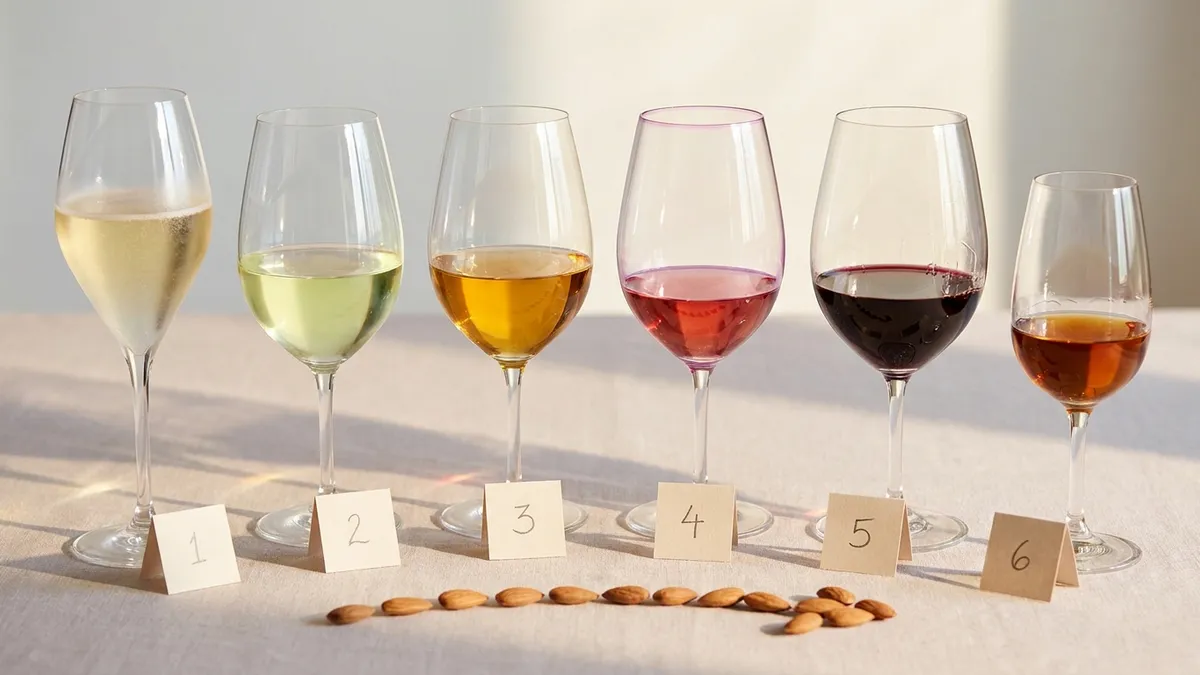
What order should you taste wine in? Sparkling first, then light dry whites, fuller whites, rosé, light reds, full reds, and sweet or fortified wines last. The four rules behind that chart: light before heavy, dry before sweet, white before red, young before old. Four wines in the right order teach more than six in the wrong one.
TLDR
Sparkling first, then light dry whites, fuller whites, rosé, light reds, full reds, and sweet or fortified wines last. Four rules set that order: light before heavy, dry before sweet, white before red, young before old. At home, four wines in the right order teach more than six in the wrong one.
The Four Core Rules
Master of Wine Andy Howard, in Decanter's "Ask Decanter" column, names two non-negotiables. Taste delicate before rich: Pinot Noir before Syrah or Cabernet, fragrant whites before oaky ones. Then taste dry to sweet, because sugar can make dry wines taste sharp or bitter. Palate fatigue is the mechanism under both.
Rule 1: Light Before Heavy
Lighter-bodied wines go first. The palate calibrates to the strongest signal it has had, so a Muscadet after a Barolo tastes like dishwater. Body is the weight a wine leaves in the mouth, built from alcohol, sugar, extract and glycerol (wine structure explained).
Rule 2: Dry Before Sweet
Sweet wines go last. Residual sugar (grape sugar left after fermentation stops) coats the tongue for several minutes. After a Sauternes or a Port, every dry wine tastes flat and unripe until it fades.
Rule 3: White Before Red
Most whites are lighter than most reds, and tannin (the drying grip on your gums) dulls any white tasted after it.
If an oaked white is fuller than a light red, pour the light red first. A California Chardonnay or a Viognier can feel heavier than a Gamay or a cool-climate Pinot Noir, and body drives palate fatigue more than color does.
Rule 4: Young Before Old
At home, younger vintages go first. Older wines carry delicate tertiary aromas (dried fruit, leather and earth from age), and young fruit tasted first drowns them out.
Formal blind tastings, sommelier exams and most professional verticals put the oldest first, because the first wine gets the freshest palate. Pick one order per flight; vertical wine tasting compares both.
Wine Tasting Order Chart
Seven slots run from the lightest, coldest, driest wine to the heaviest and sweetest. Skip any slot you do not need. If the flight has four wines, it might run unoaked white, oaked white, Pinot Noir, then Cabernet Sauvignon.
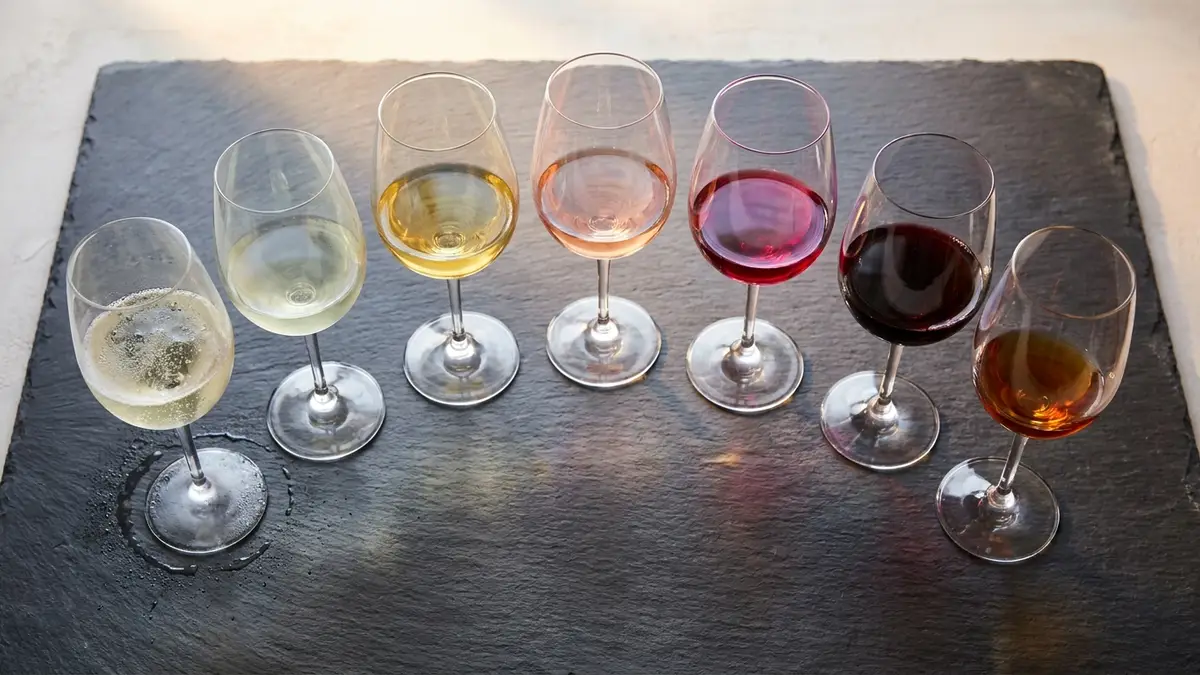
| Slot | Style | Typical grapes and styles | Body (1-5) | Serve at | Why it sits here |
|---|---|---|---|---|---|
| 1 | Sparkling | Champagne, Crémant, Cava, dry Prosecco | 1 | 6-8 °C | Coldest, lightest, highest acid; cleans the palate rather than coating it |
| 2 | Light dry white | Pinot Grigio, Muscadet, Albariño, unoaked Chardonnay, dry Riesling | 1-2 | 8-11 °C | Delicate citrus and mineral notes vanish if anything heavier comes first |
| 3 | Full or oaked white | Oaked Chardonnay, Viognier, white Rioja, skin-contact white | 3 | 11-13 °C | Oak and texture add weight; still no tannin, so whites stay before reds |
| 4 | Rosé | Provence, Tavel, Rosado, dry Cerasuolo | 2-3 | 9-12 °C | Bridges whites and reds; a full rosé can swap places with slot 3 |
| 5 | Light red | Pinot Noir, Gamay, Frappato, Schiava | 2-3 | 13-15 °C | First tannin of the flight, but gentle; a light red can precede a very oaky white |
| 6 | Medium to full red | Sangiovese, Tempranillo, Merlot, then Cabernet, Syrah, Malbec, Nebbiolo | 3-5 | 15-17 °C | Rising tannin and alcohol; nothing dry should follow a full red |
| 7 | Sweet or fortified | Sauternes, late-harvest Riesling, Tokaji, Port, Madeira | 3-5 | 8-16 °C | Sugar coats the palate for minutes, so it always closes the flight |
The International Organisation of Vine and Wine (OIV) sets the same order for competition juries. Article 10 of its 2021 competition standard lists sparkling whites, still whites, sparkling rosés, still rosés, sparkling reds, still reds, then sweet, ice and liqueur wines. Within each group, organisers sort by sugar and by oaked versus unoaked. To fill each slot, see the wine flight tasting guide.
White Wine Tasting Order
The white wine tasting order runs sparkling, then light crisp unoaked whites, then aromatic dry whites, then full-bodied or oaked whites, with off-dry and sweet whites last. With no tannin to manage, body, oak and sugar do the sorting.
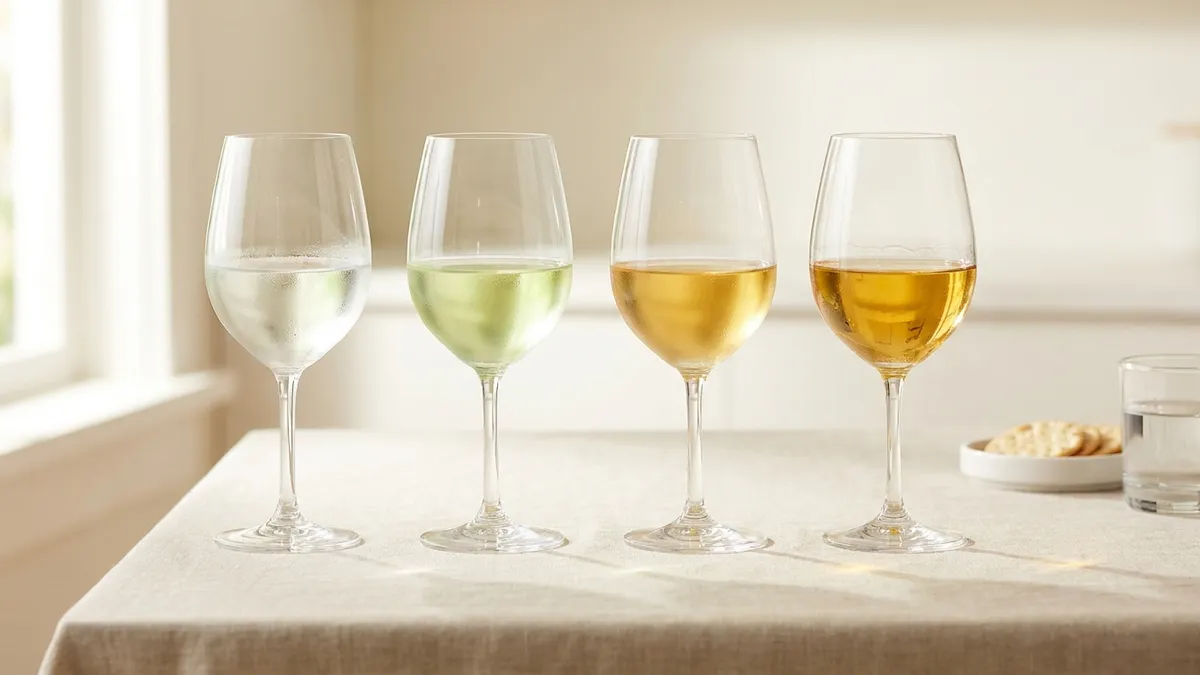
| Order | White style | Examples | Why here |
|---|---|---|---|
| 1 | Sparkling | Champagne, Crémant, Cava, dry Prosecco | Coldest and lightest; bubbles and acidity open the palate |
| 2 | Light, crisp, unoaked | Pinot Grigio, Muscadet, Albariño, Vinho Verde, dry Riesling | Subtle citrus and mineral notes need the freshest palate |
| 3 | Aromatic dry | Sauvignon Blanc, Grüner Veltliner, Torrontés, dry Gewürztraminer | More perfume and flavor intensity, still light and dry |
| 4 | Full-bodied or oaked | Oaked Chardonnay, Viognier, white Rioja, Marsanne, skin-contact white | Weight, texture, and oak would flatten anything lighter tasted after them |
| 5 | Off-dry to sweet | Kabinett or Spätlese Riesling, Chenin demi-sec, Moscato, Sauternes | Sugar lingers for minutes; even a lightly off-dry wine goes after every dry one |
If Sauvignon Blanc and Chardonnay are both unoaked, the greener, more aromatic Sauvignon Blanc usually goes first. An oaked Chardonnay always goes after it. Dry Riesling is light, high-acid and bone dry, so it belongs near the front. Only off-dry or late-harvest Riesling moves to the back. For what to look for in each glass, see how to taste white wine.
Red Wine Tasting Order
The red wine tasting order runs light, low-tannin reds first, then medium-bodied reds, then full-bodied, high-tannin reds, with any sweet or fortified red last.
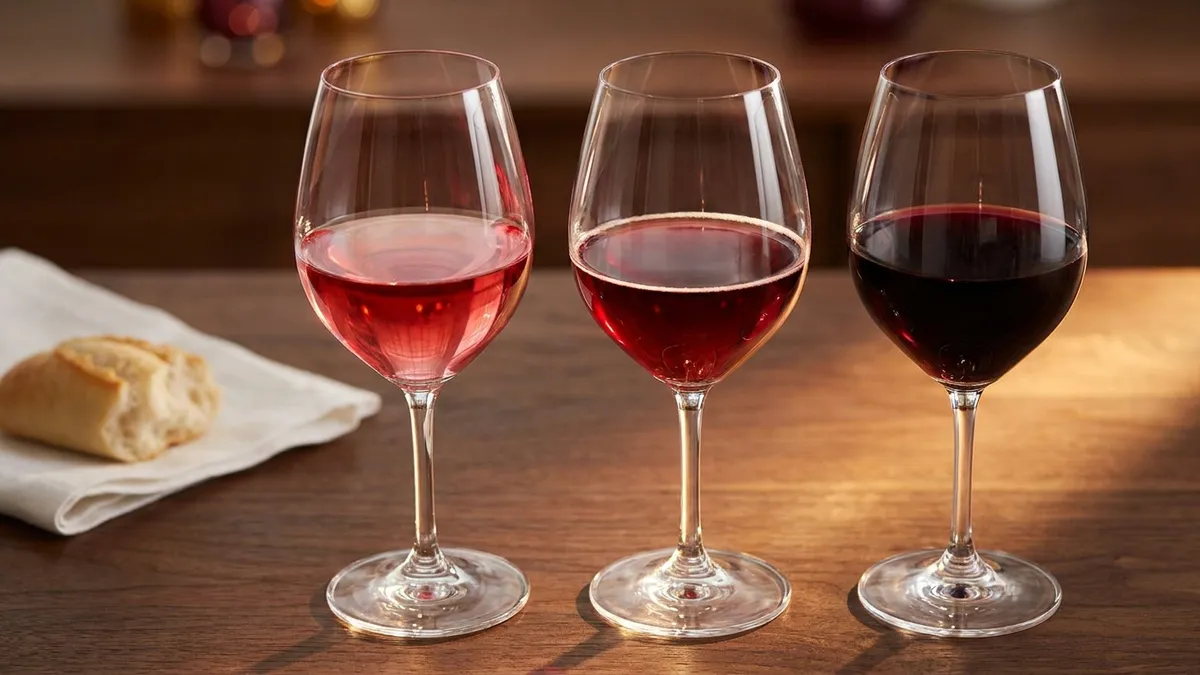
| Order | Red style | Examples | Why here |
|---|---|---|---|
| 1 | Light, low tannin | Pinot Noir, Gamay, Frappato, Schiava, Zweigelt | Delicate red fruit and silky texture disappear after anything tannic |
| 2 | Medium body, moderate tannin | Sangiovese, Tempranillo, Merlot, Grenache, Barbera | More grip and darker fruit, still not palate-coating |
| 3 | Full body, high tannin | Cabernet Sauvignon, Syrah or Shiraz, Malbec, Nebbiolo, Zinfandel | Maximum tannin, extract, and alcohol; nothing dry should follow |
| 4 | Aged or mature | Any of the above with 8+ years | Oldest last at home; oldest first in formal evaluation |
| 5 | Sweet or fortified | Port, Banyuls, Recioto della Valpolicella | Sugar and extra alcohol end the flight |
Nebbiolo pours pale but carries some of the highest tannin of any grape, so it goes at the end with the Cabernets. Merlot can pour nearly black yet feel soft, so it sits in the middle. If two reds seem equally heavy, pour the lower-tannin one first.
When the Rules Break
Same-grape horizontals
In a horizontal wine tasting the only variable is producer. Still go from lightest to fullest body for the cleanest comparison.
Blind tastings
A badly ordered blind flight still tires the palate, so the pourer sets the order and the tasters never see the labels (blind wine tasting tips).
Long trade tastings
In the same column, Andy Howard MW says that at long trade tastings he sometimes tastes reds first: after many wines, a fresh white is easier to assess after the reds. He calls this his own preference, and delicate-before-rich and dry-before-sweet still apply within each color. For four wines at home, ignore it.
Palate Cleansers Between Wines
What works:
- Plain still water: the most reliable cleanser
- Plain bread or baguette: absorbs residual alcohol and neutralizes tannin
- Unsalted crackers: same effect
- Neutral mild cheese: young Manchego or a mild Gouda, never a blue, washed-rind, or strong aged cheese
What does not work:
- Coffee: saturates retronasal smell receptors for up to an hour
- Strong mints or toothpaste flavors: strip acidity perception
- Heavily seasoned food: leaves flavor on the palate longer than the wine
- Chocolate (except with dessert wines): coats the tongue
Take a sip of water and a bite of bread between wines, and a 5-minute break halfway through a long flight. Professionals also spit; see spitting at a wine tasting.
Temperature Order
Colder wines come first, following the Serve at column in the chart. The OIV competition standard climbs the same way. It sets sparkling at 8 to 10 °C, white and rosé at 10 to 12 °C, sweet and liqueur wines at 10 to 14 °C, and red at 15 to 18 °C. Every wine of one type is served at the same temperature.
If bottles come from a fridge or a warm room, check them with a thermometer. Home fridges run 2 to 4 °C colder than whites need, and rooms run 4 to 6 °C warmer than reds need. The wine serving temperature chart gives the number per style.
A Sample Flight for a Home Dinner
At dinner the wine follows the food, and the rules bend to fit it; wine serving order at dinner shows which rule wins when two clash. A four-guest dinner:
- Welcome glass: dry sparkling wine (8 °C)
- Starter with fish: light dry white (Sauvignon Blanc, 11 °C)
- Main course with poultry: light red (Pinot Noir, 14 °C)
- Main course with beef or lamb: medium red (Tempranillo, 16 °C)
- Cheese course: aged Gouda with a small pour of Port (dessert-adjacent, 14 °C)
For glassware, timing and how much to buy, see hosting a wine tasting at home.
If you must cut a wine, keep the body climb even: light white → light red → full red is smoother than light white → full red.
Small Pour Sizes Make Sequencing Matter More
The ISO 3591 tasting glass was adopted by France's INAO and then by the International Organization for Standardization. According to the standard as summarised on Wikipedia, it holds roughly 215 mL but takes a 50 mL pour (under 2 oz), and its narrow rim concentrates aroma from that small pour.
Fifty millilitres is about a third of a US standard drink. The National Institute on Alcohol Abuse and Alcoholism (NIAAA) defines one as 14 g of pure alcohol, or a 5 fl oz (150 mL) glass of 12% ABV wine.
The OIV's 2021 competition standard limits each juror to 45 samples a day. They come in three sessions of roughly 15 dry wines, preferably in the morning, in a glass at least equivalent to ISO 3591. If judges who spit every sample stop at 15 wines a sitting, four to six is the right size for a home flight.
How to Plan the Order of Your Own Flight
Five minutes before any tasting:
- List every wine.
- Rate each for body, 1 to 5. 1 is Muscadet-light, 5 is Amarone-heavy.
- Mark off-dry or sweet wines with an asterisk.
- Mark any wine over 8 years old.
- Sort by body, lowest first.
- Move asterisked wines to the end.
- Place the oldest. Last if the tasting is casual, first if it is a serious evaluation.
Then assess every glass the same way. The WSET Systematic Approach to Tasting gives a fixed grid for appearance, nose and palate, so wine four is judged on the same terms as wine one. Sommy's guided tastings use that grid.
Common Mistakes
- Starting with the "most interesting" wine. Its body sets its slot: earlier if delicate, later if heavy.
- Opening a dessert wine mid-flight "for fun." Its sugar coats the palate for 10 to 20 minutes.
- Pouring all glasses at once at the start of the evening. Some wines warm before they are tasted; pour each one 5 to 10 minutes before it is evaluated.
The Bottom Line
Sommy's guided tastings save each glass to the journal in the order tasted. Taste a light white and a full red back to back tonight, in both orders, and notice how the white changes.
Sources
- OIV — Standard for International Wine and Spirituous Beverages of Vitivinicultural Origin Competitions, 2021 edition (Articles 9-10)
- Decanter — Wine tasting order: Red, white or sparkling first? Ask Decanter (Andy Howard MW)
- Wikipedia — ISO 3591 wine tasting glass (INAO glass specification)
- NIAAA — What Is a Standard Drink?
- Wikipedia — Standard drink (US definition, citing NIAAA)
Frequently Asked Questions
What order should you taste wine in?
Sparkling first, then light dry whites, fuller or oaked whites, rosé, light reds, medium reds, full-bodied reds, and sweet or fortified wines last. The sequence follows four rules: light before heavy, dry before sweet, white before red, young before old. Not every flight uses every slot; a four-wine flight skips the ones it does not need.
Does it matter what order you taste wine in?
Yes, for any tasting with more than two wines. Each wine changes your palate for the next one: tannin dulls delicacy, sugar makes dry wines taste sharp, and a heavy wine makes a light one taste thin. A bad order can make a good wine seem dull and an ordinary wine seem impressive. For a single bottle, order is irrelevant.
Should you taste white or red wine first?
White first, almost always. Most whites are lighter than most reds, and red-wine tannin coats the palate in a way that flattens a white tasted afterward. The one exception is body: a rich oaked Chardonnay can be fuller than a delicate cool-climate Pinot Noir, and when color and body conflict, body wins, so the light red goes first.
What order do you taste white wines in?
Sparkling, then light crisp unoaked whites, then aromatic dry whites, then full-bodied or oaked whites, with off-dry and sweet whites last. Within each group, chilled before less chilled, and younger before older. A four-white flight might run Pinot Grigio, Sauvignon Blanc, oaked Chardonnay, then a late-harvest Riesling to close.
Do you taste dry or sweet white wine first?
Dry first, sweet last, without exception. Residual sugar lingers on the tongue for several minutes and makes any dry wine that follows taste thin, sharp, or bitter. Even a lightly off-dry Riesling should go after the fully dry whites, and a dessert-level sweet wine such as Sauternes should close the flight entirely.
Why do you taste sparkling wine first?
Sparkling wine is usually the lightest, highest-acid, coldest wine in the room, so it opens the palate rather than coating it. The bubbles and acidity have a cleansing effect that prepares the mouth for what follows. It also tastes best the moment it is opened, when the mousse is at its peak, which is another reason to pour it before anything else.
How many wines should I serve in a flight?
Four is ideal for a home tasting. Six is a strong upper limit. Beyond six, palate fatigue blunts even a perfect order, and the later wines blur together. Professional flights with ten or more wines rely on small pours, spitting, and deliberate breaks, and are not recommended as a home format.
Should I pour oldest wine first or last?
For casual home tastings, oldest last is safer, because the tertiary character of aged wine is delicate and shows best as the final impression. For formal blind evaluation, oldest first is the rigorous choice because the first wine gets the freshest palate. Pick one protocol per flight and stay consistent throughout.
Sommy Team
LinkedInFounder & Wine Educator
The Sommy Team is building the world's most approachable wine education app, helping beginners develop real tasting skills through structured courses and AI-guided practice.