Blind Wine Tasting: How to Host and What to Look For
Sommy Team
Founder & Wine Educator
April 10, 2026
11 min read
TL;DR
Blind wine tasting removes the label and forces your senses to do the work. It is the single fastest way to sharpen your palate. Host one at home with three to six wines, brown paper bags, and a simple tasting grid. Focus on structure first, then narrow down grape and region. Practice beats theory.
Why Blind Tasting Is the Best Tool in Wine Education
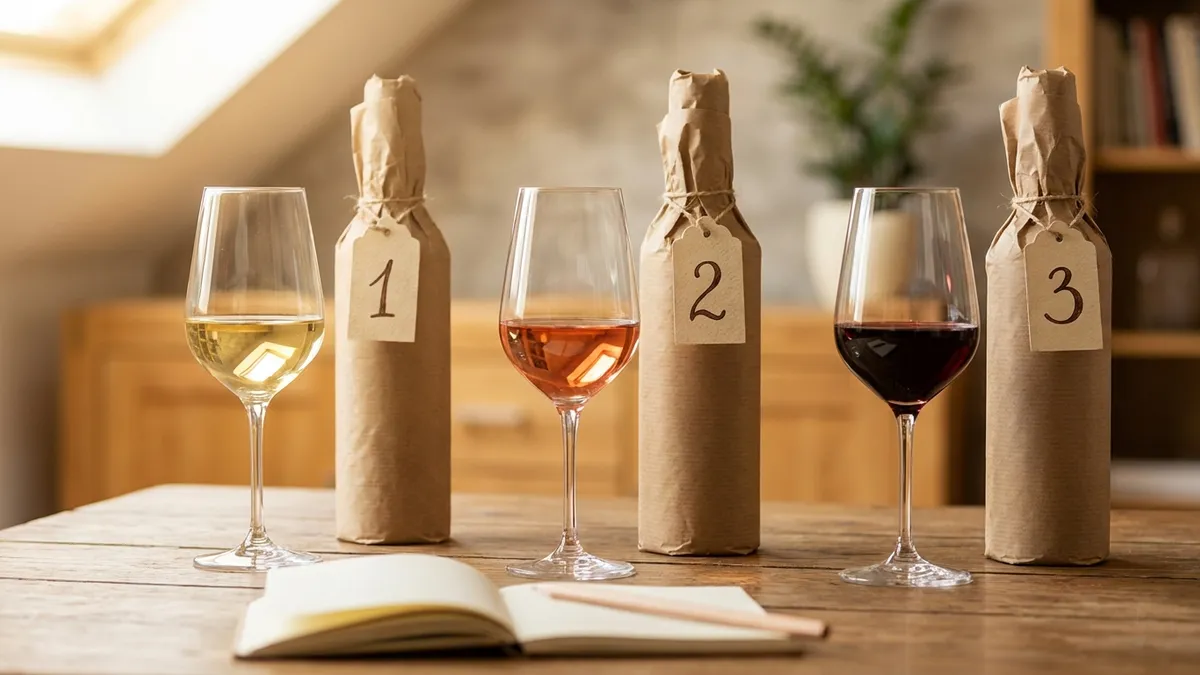
Tell any sommelier the single most useful thing they did to build their palate, and the answer is almost always the same: blind wine tasting. Not reading wine books. Not visiting vineyards. Not watching courses. Tasting wines without seeing the labels, again and again, until the habit of paying close attention becomes automatic. The label on a bottle is a shortcut that your brain will always take if you let it. The number on a price tag, the name of a famous region, the photo of a chateau — all of them bias your perception before the wine even hits your glass. Blind tasting turns that bias off and forces your senses to do the work.
This guide walks through exactly what blind wine tasting is, why it works so well as a teaching tool, how to host one at home with almost no equipment, the structured deduction grid that sommeliers use to guess a wine's identity, common mistakes that ruin beginner blind tastings, and the single most important mindset shift that separates a frustrating first session from one where you actually learn something. By the end, you will be ready to set up your own tasting tonight.
What Blind Wine Tasting Actually Is
Blind wine tasting is a format where the taster does not see the bottle or the label before evaluating the wine. The wine is poured from a bag, a foil-wrapped bottle, or a hidden decanter, and the taster works with nothing except what is in the glass. The goal varies by context — sometimes you are trying to guess the grape variety, sometimes the region, sometimes the vintage, sometimes all three. Sometimes the goal is just to compare two wines without knowing which is which.
There are two broad formats worth knowing:
- Single-blind — the taster knows roughly what the wines might be (e.g., "two New World Chardonnays") but does not know which specific bottle is which.
- Double-blind — the taster has no prior information at all. The wines could be from anywhere, any grape, any vintage. This is the format used in sommelier certification exams and is dramatically harder.
For beginners, single-blind is the right starting point. It gives you enough constraint to make meaningful comparisons without overwhelming you with infinite possibilities.
Why Removing the Label Works
Your brain is a heroic prediction machine. The moment you see a label that says "Napa Cabernet," your palate starts anticipating dark fruit, oak, and high alcohol before the wine even touches your tongue. That prediction colors what you actually taste. It is not a weakness — it is how perception works. But it also means you are often confirming expectations instead of honestly evaluating the wine.
When you remove the label, your brain has nothing to anchor to. It is forced to notice what is actually in the glass: color, aroma, structure, flavor. The awkwardness of that first few seconds, when you do not know what you are looking at, is exactly where tasting skill gets built.
The Sommelier Deduction Grid
The classic blind wine tasting process follows a fixed sequence. Every professional certification — WSET, Court of Master Sommeliers, Master of Wine — uses some version of this grid. The structure matters because it prevents you from jumping to conclusions too fast. Here is the simplified version that works for home tastings.
Step 1: Appearance
Hold the glass against a white background — a napkin, a tablecloth, a blank sheet of paper — and note three things:
- Color — lemon green, gold, ruby, garnet, purple, brick, tawny
- Intensity — pale, medium, deep
- Clarity and rim — clear or hazy, youthful or aged
A pale lemon white is probably a young, cool-climate white like Sauvignon Blanc or unoaked Chablis. A deep golden white is likely aged or oaked — oaked Chardonnay, aged Riesling, Viognier. A translucent ruby red suggests a light-bodied red like Pinot Noir or Gamay. An opaque purple red points to Syrah, Malbec, or young Cabernet.
Step 2: Nose
Swirl gently, take two or three short sniffs, and sort the aromas into broad families before narrowing down:
- Fruit family — citrus, tree fruit, stone fruit, red berry, black fruit, tropical
- Floral family — rose, violet, elderflower, jasmine
- Herbal and vegetal family — mint, grass, bell pepper, tomato leaf
- Spice family — black pepper, white pepper, cinnamon, clove
- Earth family — wet stone, forest floor, mushroom, leather
- Oak markers — vanilla, coconut, toast, coffee, smoke
Each family points to different grape varieties. A nose of grapefruit, cut grass, and elderflower screams Sauvignon Blanc. A nose of black cherry, violet, and tar suggests Nebbiolo. A nose of blackcurrant, cedar, and tobacco points to Cabernet Sauvignon or a Bordeaux blend. For a deeper look at the smelling technique, see our guide to how to smell wine.
Step 3: Palate
Now take a real sip and hold the wine in your mouth for three to four seconds. Evaluate the structure first because structure is the most reliable signal:
- Sweetness — bone dry, dry, off-dry, sweet
- Acidity — low, medium, high (high acid wines make you salivate)
- Tannin (reds only) — low, medium, high (drying and gripping)
- Body — light, medium, full
- Alcohol — low, medium, high (warmth at the back of the throat)
Structure narrows the field fast. A wine with searing acidity and low alcohol is almost certainly a cool-climate white. A wine with massive tannin and high alcohol is a warm-climate full-bodied red. The combinations are diagnostic. For a fuller breakdown of the structural components, see our guide to understanding tannins, acidity, and body.
Step 4: Finish and Conclusion
Count the finish length — short, medium, or long — and note what lingers. Now combine everything you have observed and make a guess. The pro grid asks for four conclusions:
- Grape variety
- Region or country of origin
- Approximate vintage (how young or old the wine is)
- Quality level (simple, good, very good, outstanding)
You will miss some of these. Everyone does. The point is the process, not the accuracy. Every guess — right or wrong — builds your internal reference library for next time.
How to Host a Blind Wine Tasting at Home
Setting up a home blind tasting is surprisingly simple. You need almost no equipment. Here is the full workflow for a three-to-six bottle tasting with friends.
What You Need
- 3 to 6 bottles of wine. For a beginner tasting, pick wines from a common theme — "three New World Chardonnays," "four Pinot Noirs from different regions," "three sparkling wines at different price points."
- Brown paper bags or foil. Enough to cover every bottle completely. Rubber bands or tape help keep the cover secure.
- Identical glasses. One all-purpose wine glass per taster per wine. Proper glass shape matters — see our guide to how to taste wine for the right technique.
- A tasting grid. A simple sheet of paper per taster with rows for each wine and columns for appearance, nose, palate, finish, and guess.
- Water and plain crackers. For rinsing palates between wines.
- A pen for each taster.
- A spittoon (optional but useful for longer sessions — a plastic cup works fine).
The Setup Ritual
- Before guests arrive, wrap each bottle and label it with a number (1 through N).
- Write down which bottle is which number on a hidden sheet of paper.
- Pour from the wrapped bottle into a numbered glass for each taster.
- Decide on a tasting order. For a mixed tasting, go whites before reds, light before heavy, dry before sweet. This minimizes palate fatigue.
- Give everyone about 10 minutes per wine — enough time to swirl, sniff, taste, and take notes.
- After all wines are tasted, have everyone write down their guesses.
- Reveal the wines one at a time, starting with wine number one.
The reveal is the best part. Discussion after each reveal is where the real learning happens — people share what they noticed, what confused them, and what specific clues pointed them in the right or wrong direction.
The reveal is not the point. The awkward minute before the reveal, when everyone is second-guessing their notes, is where your palate grows.
A Good Beginner Theme: The Three-Wine "Style Flight"
If you are hosting your first blind tasting, do not start with six wines and a deduction grid. Start with three wines in a single style and two contrasts:
- Two wines from the same grape but different regions (e.g., a French Sauvignon Blanc and a Marlborough Sauvignon Blanc)
- One wine from a completely different grape in the same broad category (e.g., a Pinot Grigio to see how different it feels)
This format makes the learning immediate and visible. Tasters will notice the regional difference between the two same-grape wines and the grape-level difference between the third. Three bottles, one hour, enormous teaching value.
Common Mistakes That Ruin Blind Tastings
A few small missteps can turn a promising tasting into a frustrating mess. Avoid these and your session will go much better.
- Picking wines that are too similar. Three Napa Cabernets from the same vintage will be almost impossible to distinguish. Pick wines with real structural differences.
- Pouring too much wine per glass. A small pour — about an ounce — is plenty. More wine means palate fatigue and sloppy notes.
- Serving wines at the wrong temperature. Cold mutes aromatics; too warm amplifies alcohol. Use the wine serving temperature chart to get every wine in its proper range.
- Talking during evaluation. Let everyone taste silently for two minutes per wine before anyone shares. Comments bias other tasters immediately.
- Skipping the structural assessment. Beginners jump straight to guessing aromas. The structure (acid, tannin, body, alcohol) narrows the field much more reliably than aroma alone.
- Overcomplicating the grid. A clean, minimal tasting sheet beats a fancy multi-column grid every time. Columns you will not actually fill in are just decoration.
- Taking it too seriously. The goal is to learn, not to prove anything. A blind tasting should be fun and a little humbling. Nobody gets every answer right, including the experts.
The Mindset Shift That Makes It Work
Most beginners approach their first blind tasting like a test. They worry about looking foolish when their guess turns out to be wrong. They get defensive when the reveal contradicts their note. They stop writing things down because they are afraid of being embarrassed by what they wrote.
This is the wrong frame. A blind tasting is not a test of what you already know. It is a training session for your senses. A wrong guess is not a failure — it is information. When you say "this tastes like Pinot Noir" and the reveal shows it is Grenache, you have learned something specific about Grenache that you did not know before. The wrong guess is actually more useful than a right one, because it sharpens a distinction in your mind that was previously blurry.
Approach the tasting with curiosity instead of pressure, and the entire experience changes. You will learn faster. You will enjoy it more. You will come back to the next one eager instead of anxious.
The Sommy app includes guided blind-tasting practice modes where you can work through structured deduction exercises solo, complete with feedback on which structural cues you missed and which you caught correctly. It is the closest thing to a low-stakes sommelier training session you can do on your couch.
Build the Habit, Not the Single Session
A single blind tasting is useful. A weekly blind tasting habit is transformative. The compounding effect of doing this practice repeatedly, even in a casual home format, is what separates beginners who plateau from beginners who become genuinely skilled tasters within a few months. Each session teaches you something specific — a new grape's structural signature, a regional style you had never met, a combination of aromas that had not clicked before.
Visit sommy.wine to start building that habit with the Sommy app's structured tasting courses. Every lesson adds a new calibrated reference point to your palate library, and the built-in journal tracks your guesses, your notes, and your improvement over time. A few weeks of deliberate blind tasting practice turns the whole wine world from an overwhelming mystery into a set of patterns you can actually recognize.
Frequently Asked Questions
What is blind wine tasting?
Blind wine tasting is a format where you taste a wine without seeing the label, so your judgment comes only from appearance, aroma, and palate. It removes brand bias, price bias, and region bias and forces you to evaluate the wine on its own merits. Sommeliers use it to practice; beginners use it to learn.
How do you host a blind wine tasting at home?
Pick three to six wines, wrap each bottle in a brown paper bag or a foil cover so the label is hidden, assign each bottle a number, and pour from the bagged bottle into numbered glasses. Give each taster a grid or notebook and work through the wines in a deliberate order — typically whites before reds, light before heavy, dry before sweet.
What should I look for in a blind tasting?
Start with structure — acidity, tannin, sweetness, body, and alcohol. These are the most reliable clues because they do not depend on naming specific aromas. From structure you can narrow down the grape family, then use aroma and flavor to pin down the variety, and finally use style and oak to guess the region.
Is blind wine tasting actually hard?
Yes, much harder than most people expect the first time. Even experienced drinkers struggle to identify a specific grape from aroma alone. That is the point. The goal is not to get the right answer every time but to build the habit of paying close attention without external clues. The process is where the learning happens.
What is the deduction grid sommeliers use?
The classic grid walks you through appearance, nose, and palate in a fixed order, and then moves to conclusions. You note color, intensity, aroma families, sweetness, acidity, tannin, body, alcohol, and finish, then combine those clues to guess the grape, region, and vintage. It is a disciplined process, not a guessing game.
How many wines should I use in a home blind tasting?
Three is the sweet spot for beginners. It is enough to create meaningful comparisons without exhausting your palate. For a more serious tasting, four to six wines is ideal. Going above six makes palate fatigue a real problem and reduces the quality of your notes on the later wines.
Should I use the same glass for every wine in a blind tasting?
Yes. Different glass shapes change how a wine presents, and using different shapes introduces noise into your comparisons. A single all-purpose wine glass per taster per wine is the standard. Number the glasses so the taster knows which wine is which before the reveal.
Can beginners actually learn from blind tasting?
Absolutely. Beginners often learn faster from blind tasting than from regular tasting because there is no label to short-circuit their attention. The first blind tasting you do will feel chaotic. The tenth will feel structured. The fiftieth will start to feel automatic. The learning curve is steep but real.
Get the free Wine 101 course
Start learning to taste wine like a pro with structured lessons and AI-guided practice.
Sommy Team
LinkedInFounder & Wine Educator
The Sommy Team is building the world's most approachable wine education app, helping beginners develop real tasting skills through structured courses and AI-guided practice.
Keep Reading
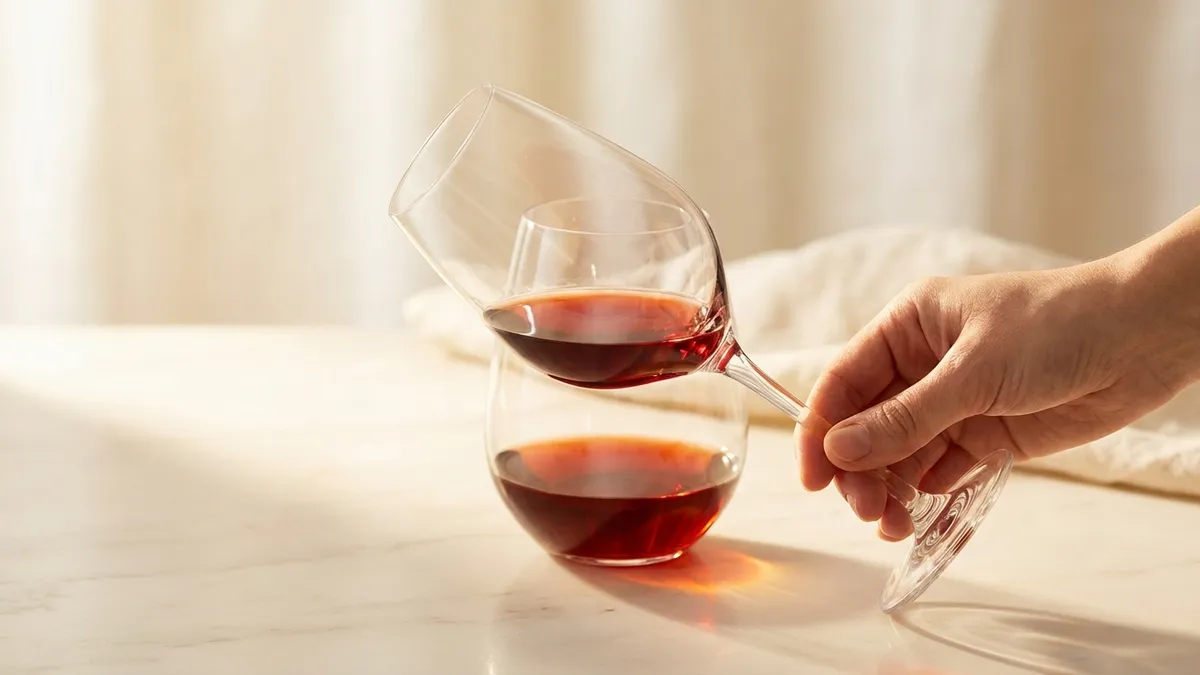
How to Taste Wine: The Complete Beginner's Guide
Learn the four-step method that sommeliers use to evaluate every glass. Master the look, swirl, sniff, and sip technique with this comprehensive guide.
Understanding Tannins, Acidity, and Body in Wine
Learn what tannins, acidity, and body actually are, how to identify them on your palate, and why they matter for food pairing and aging.
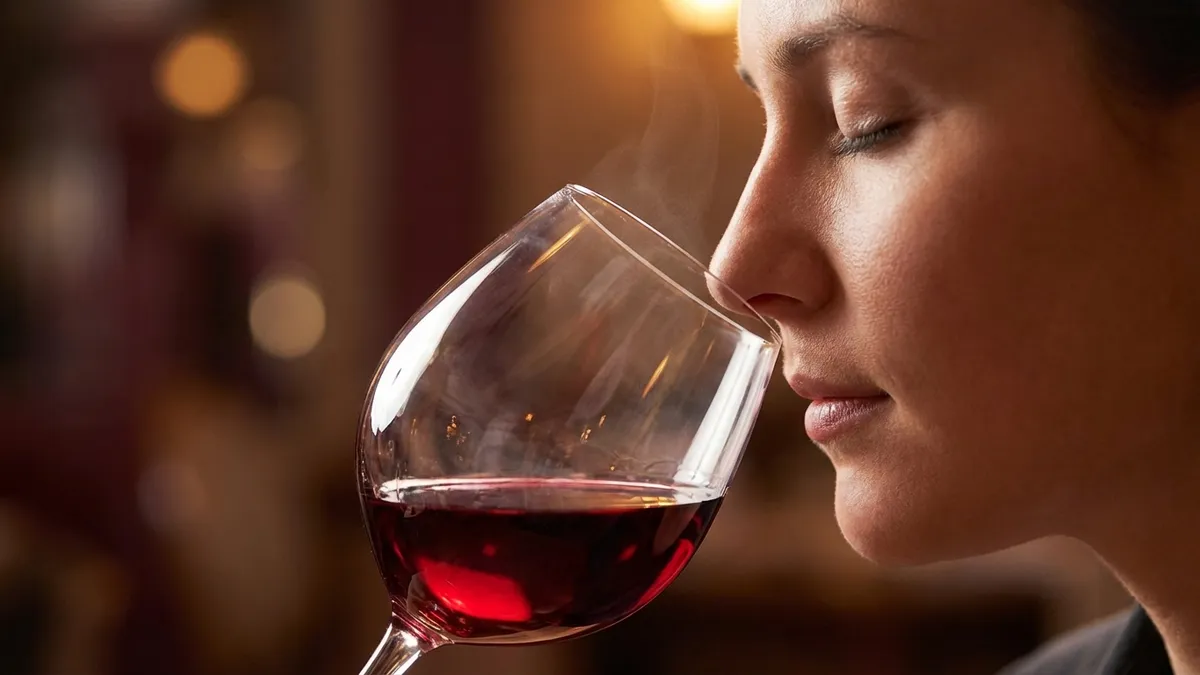
How to Smell Wine: A Beginner's Guide to Wine Aromas
Most wine flavor comes from your nose, not your tongue. Here is how to smell wine properly, what to look for, and how to build an aroma vocabulary from scratch.