Half Bottle Wine (375ml): When a Full Bottle Is Too Much

By the Sommy Team — AI-assisted, human-edited.
Updated Oct 1, 2026
Contents (9)
- What Is a Half Bottle of Wine, in One Paragraph?
- How Many Glasses Are in a Half Bottle?
- When Is a Half Bottle the Smart Choice?
- Are Half Bottles Worse Value?
- Do Half Bottles Age Faster?
- How Long Does a Half Bottle Last Once Opened?
- Why Are Dessert Wines Sold in Half Bottles?
- How Do You Order a Half Bottle at a Restaurant?
- When Should You Skip the Half Bottle?
TL;DR
A half bottle of wine holds 375 ml, two and a half 150 ml glasses or three 125 ml glasses. It costs more per millilitre because glass, cork and labour barely shrink with the bottle, and it ages slightly faster. Buy one when you want a glass or two of something good tonight.
A half bottle wine pour runs out at two and a half glasses, which is exactly why people buy it. The 375 ml bottle costs more per glass than a full one and ages slightly faster. In return, two people can drink something good tonight without leaving most of a bottle to fade on the counter. It is the right buy for one good bottle, two courses, or a sweet wine after dinner.
What Is a Half Bottle of Wine, in One Paragraph?
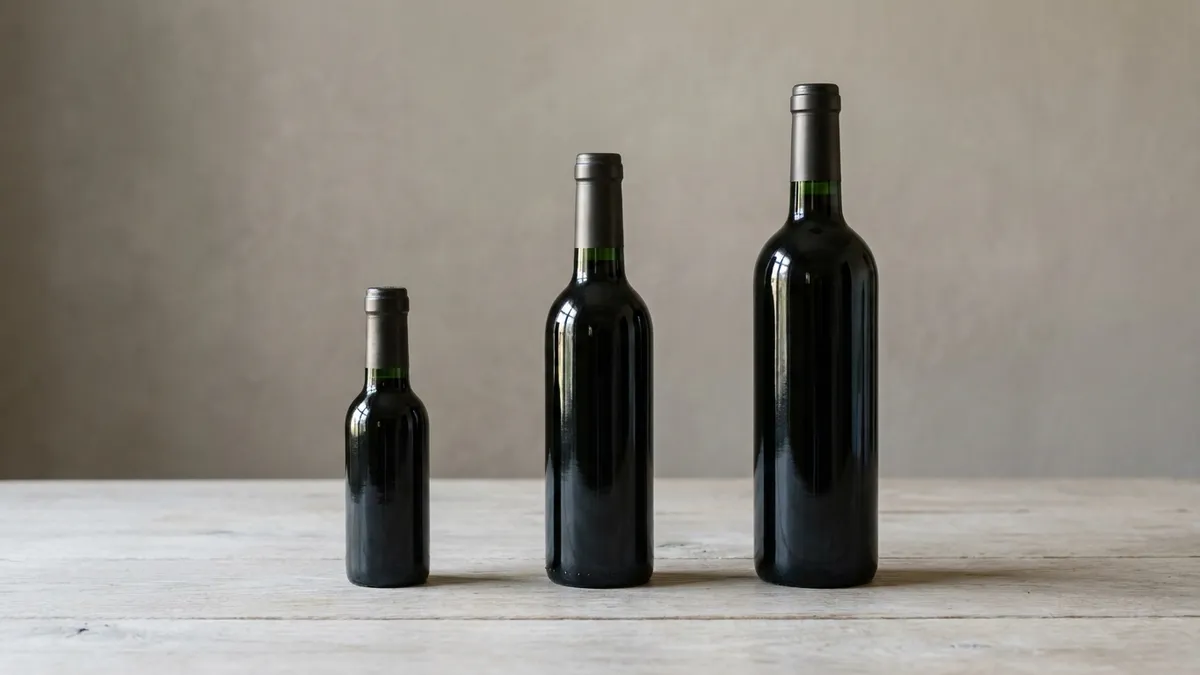
A half bottle of wine is a 375 ml bottle, exactly half the standard 750 ml. In French it is a demi, which simply means half. It gives about two and a half 150 ml glasses or three 125 ml glasses. Producers bottle the same wine in it, but it costs more per millilitre to make and sell. The air in the neck takes up a larger share of the bottle, so the wine also matures a little faster. The size is common for dessert wines and on restaurant lists, where it lets a table drink two different wines.
How Many Glasses Are in a Half Bottle?
A half bottle gives two and a half glasses at a 150 ml pour, or three at 125 ml. The US National Institute on Alcohol Abuse and Alcoholism defines a standard drink of wine as 5 ounces (about 150 ml) at 12% alcohol. A standard 750 ml bottle holds six 125 ml servings, so a half holds three.
The name trips people up. A split (also called a piccolo or quarter bottle) holds 187.5 ml, a quarter of a standard bottle, and turns up mostly as single-serve sparkling wine. Ask for a split and you get one glass; ask for a half and you get enough for two.
| Bottle | Also called | Volume | 150 ml glasses | 125 ml glasses | Buy it when |
|---|---|---|---|---|---|
| Split | Piccolo, quarter bottle | 187.5 ml | About 1 | 1.5 | One person wants one glass of fizz |
| Half bottle | Demi | 375 ml | 2.5 | 3 | Two people, one good wine, one evening |
| Standard | Full bottle | 750 ml | 5 | 6 | Two to four people, or a wine you finish over two days |
| Magnum | Double bottle | 1.5 litres | 10 | 12 | A party of eight or more, or long cellaring |
For pour sizes across every style, from sparkling to fortified, see how many glasses are in a bottle of wine.
When Is a Half Bottle the Smart Choice?
Buy a half when you want one or two glasses of a wine and would otherwise leave most of a full bottle open, or when you want two different wines in one evening. Four situations fit, from a pricey red to a sweet wine after dinner:
- An expensive wine you only want a glass of. A half of a top Burgundy or Barolo lets you taste the real thing for far less than the full bottle.
- Two courses, two wines. A half of crisp white with the starter and a half of red with the main gives each dish its own wine for the same total volume as one bottle.
- Sweet wine after dinner. Small pours make 375 ml enough for a table; the dessert section below explains why.
- Testing a style before committing. A half of a grape or region you have never tried costs less to get wrong.
If you will drink two glasses or fewer of a wine that costs real money, buy the half. If the wine is cheap and you like it, a full bottle that lasts two evenings usually costs less per glass than two halves.
Halves also help when one person drinks wine and the other does not.
Are Half Bottles Worse Value?
Usually yes, per millilitre, because a small bottle costs nearly as much to fill, cork, label and ship as a big one. A winery manager quoted by VinePair puts the cost of producing a half at between two thirds and three quarters of a full bottle. The wine itself is half; the glass, cork, capsule, label, case and handling are not.
That cost reaches the shelf. Work out the price per 100 ml before you buy. As an illustration, a wine at 20 dollars for 750 ml costs about 2.70 dollars per 100 ml. If its half sells for 13 dollars, that is about 3.50 per 100 ml, roughly 30% more for the same wine.
If the half costs more than about 55% of the full bottle and you would finish the full one within two days, buy the full bottle. If a third of a full bottle usually ends up poured down the sink, the half is the cheaper choice, because the wine you throw away costs the same as the wine you drink.
Our wine budget guide has more ways to stretch a wine budget without trading down.
Do Half Bottles Age Faster?
Slightly, yes: smaller bottles mature more quickly, but a Wine Spectator side-by-side found the half only "ever so slightly" more evolved than the larger bottles. It is a small effect, not a different wine. The evidence is one experiment by critic James Laube, comparing a half with larger bottles.
The cause is headspace, the pocket of air between the wine and the cork. Wine Spectator explains that this pocket is about the same size whatever the bottle, so the smaller the bottle, the greater the effect of that oxygen on the wine. In a half, the same air works on half the wine.
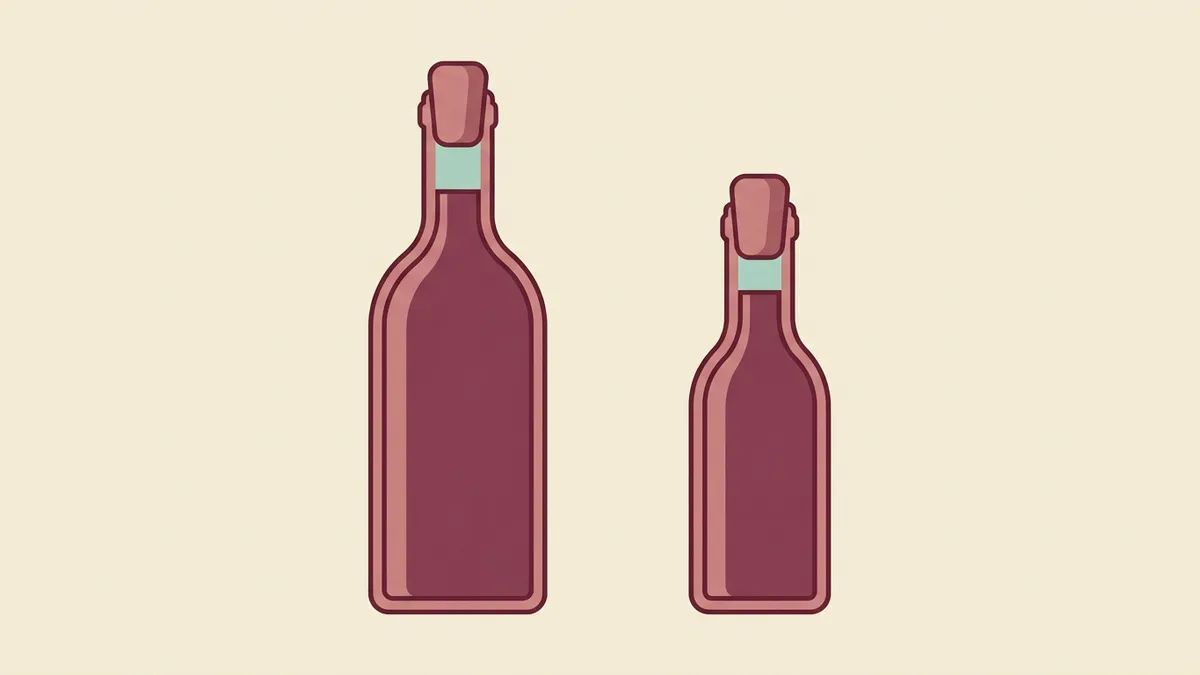
For cellaring, that means one adjustment. A drinking window is the span of years a critic or producer suggests a wine will taste its best. Wine Spectator's advice is to use the earlier end of the range for smaller bottles and the later end for larger ones. If a red is rated to drink from 2028 to 2038, plan to open the half in the early 2030s.
The faster pace can even help. VinePair points out that in a half, a higher proportion of the wine is in contact with oxygen, which suits young red wines with firm tannin (the drying grip on your gums). A tannic red bought to drink in five years may be ready a little sooner in the half. For how wine changes over the years, see our wine aging guide.
How Long Does a Half Bottle Last Once Opened?
An opened half lasts about as long as an opened full bottle of the same wine; its advantage is that two people usually finish it the same night. The smaller bottle does not slow oxidation. Re-cork a half with one glass left and that glass still sits under a bottle mostly full of air.
If a half is still a third full at bedtime, cork it and put it in the fridge like any opened bottle. The day counts by style are in how long wine lasts after opening.
That transfer trick is the cheapest of the methods compared in our wine preservation tools guide.
Why Are Dessert Wines Sold in Half Bottles?
Because the serving is small: sweet wine is poured in little glasses and sipped slowly, so 375 ml covers a whole table. The half bottle is a common size for ice wine, and many other sweet styles come in it too.
A sweet wine pour is often around 75 ml, half a table-wine glass, so one half serves five people. A full bottle of a wine this rich usually outlasts the evening. Sweet wines also cost a lot to make: grapes left on the vine to freeze for ice wine or to shrivel for Sauternes give very little juice. The half keeps the price of trying them within reach.
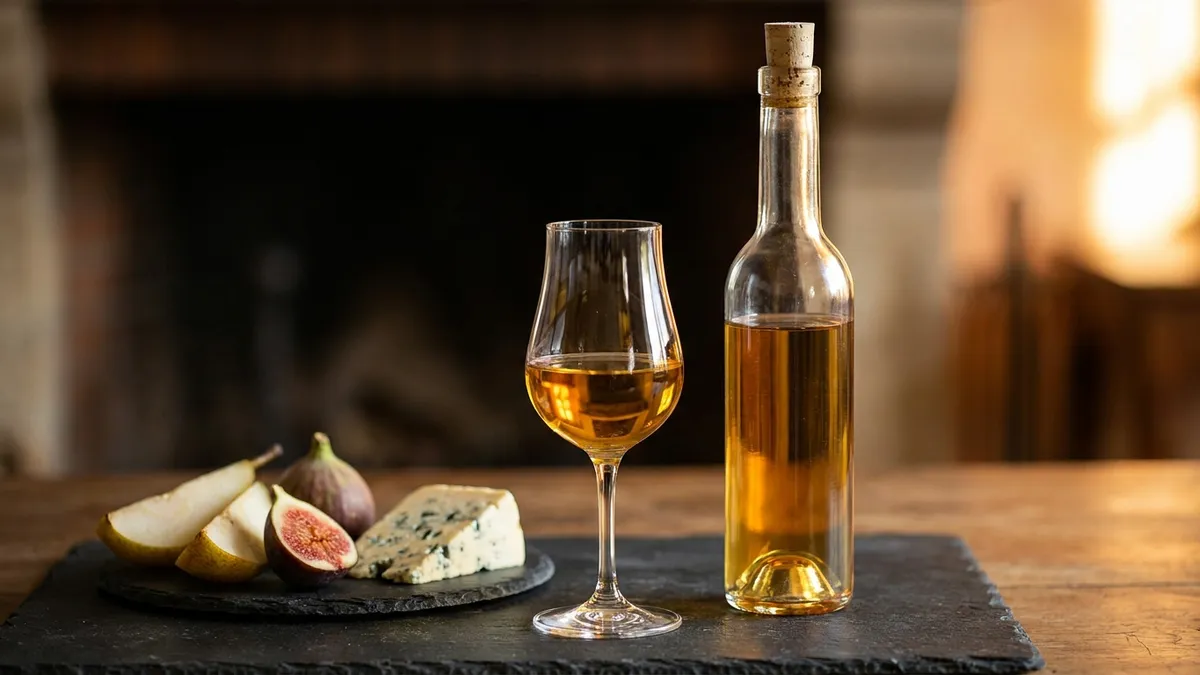
If you serve sweet wine to four or more people after dinner, one half covers it. Chill it well and pour small. The dessert wine guide covers which styles go with which desserts, from fruit tarts to blue cheese.
How Do You Order a Half Bottle at a Restaurant?
Ask whether the list has a half-bottle section; it lets two people drink two different wines across two courses instead of one bottle chosen to suit neither dish. Where a list has no such section, staff can still say which wines they stock in the small size.
If two of you order different dishes, pick a half of white for the first course and a half of red for the main. Together they make one bottle's worth of wine. A half of a light, high-acidity white (the tartness that makes your mouth water) with fish, then a half of red with braised meat, gives each plate the wine it needs.
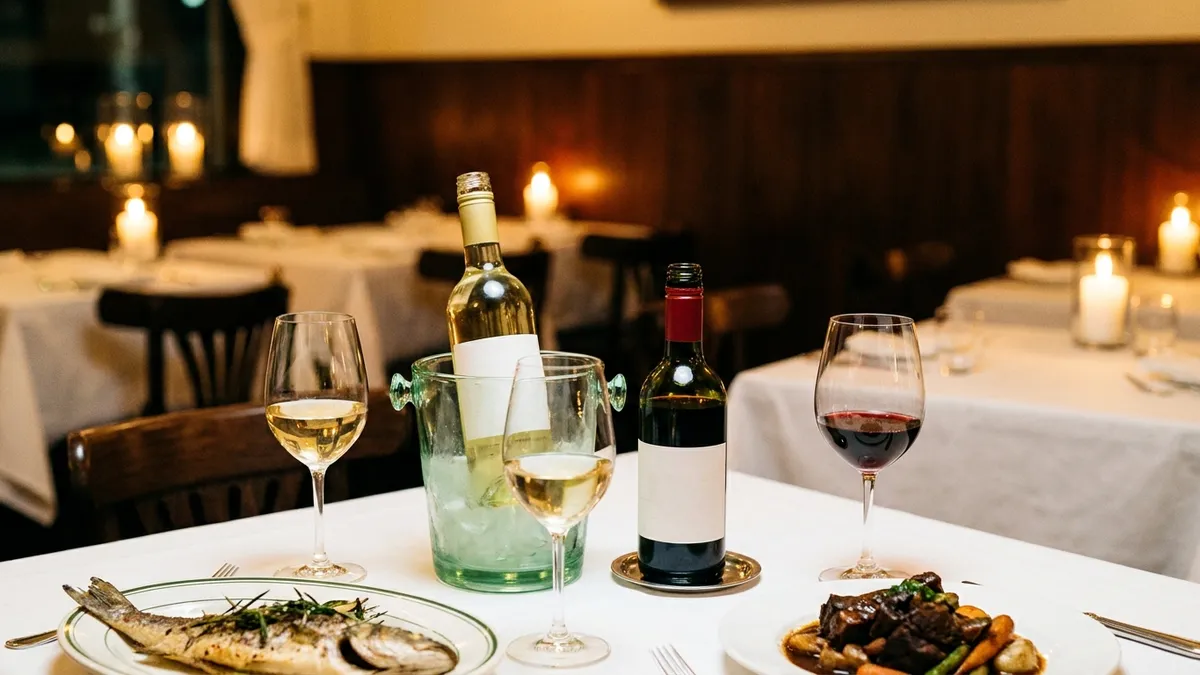
Restaurant prices follow the same per-millilitre logic as shops, so a half is rarely half the price of the full bottle. Our guide to restaurant wine markup explains how lists are priced, and how to order wine at a restaurant covers the ordering ritual.
When Should You Skip the Half Bottle?
Buy the full bottle for everyday wine, for three or more people, and for anything you mean to cellar for years. With three people, a half gives under one glass each. With an everyday wine you will happily finish tomorrow, the extra cost per glass buys nothing.
If three or more are drinking, buy the 750 ml. If you plan to cellar a wine for ten years or more, buy the full bottle or a magnum, which age more slowly. More on serving and keeping wine at home is in the serving and storage hub.
Tonight, buy one half bottle of a grape or region you have never tried. Pour two glasses, open Sommy, photograph the label and taste it through the look, smell and taste steps. The notes save to the tasting journal, so the next shop visit starts with a verdict on whether the style deserves a full bottle.
Sources
Frequently Asked Questions
How many glasses are in a half bottle of wine?
A half bottle holds 375 ml. At a 150 ml pour, close to the US standard drink of 5 ounces, that is two and a half glasses. At the 125 ml pour often used in Europe, it is exactly three. For a sweet wine poured in small glasses of about 75 ml, one half bottle serves five people.
Is a half bottle the same as a split?
No. A half bottle, or demi, holds 375 ml, half of a standard 750 ml bottle. A split, also called a piccolo or quarter bottle, holds 187.5 ml, a quarter of a standard bottle, and is most often seen with sparkling wine. A split gives one generous glass; a half bottle gives two and a half.
Do half bottles of wine age faster?
Slightly. An unopened bottle holds roughly the same small pocket of air whatever its size, so the smaller the bottle, the more that oxygen affects the wine. A Wine Spectator side-by-side found the half only ever so slightly more evolved than the full bottles. For cellaring, aim for the earlier end of a wine's suggested drinking window.
Are half bottles worse value than full bottles?
Usually, measured per millilitre. Bottling a half costs between two thirds and three quarters as much as bottling a full one, says a winery manager quoted by VinePair, and that cost shows up on the shelf. The premium is worth paying when you would otherwise pour away or let spoil much of a full bottle.
Why are dessert wines sold in half bottles?
Because sweet wine is poured in small glasses and drunk slowly, so 375 ml goes a long way. The half bottle is a common size for ice wine, and many other sweet styles follow. One half covers a table of four or five after dinner, which is all most people want of a wine this rich.
How long does a half bottle of wine last once opened?
An opened half lasts as long as any opened bottle of the same wine at the same fill level. The size does not slow oxidation; what helps is that two people usually finish a half in one evening. If some is left, cork it and put it in the fridge, just as you would with a full bottle.
Sommy Team
LinkedInFounder & Wine Educator
The Sommy Team is building the world's most approachable wine education app, helping beginners develop real tasting skills through structured courses and AI-guided practice.