Wine Advent Calendar Guide — Are They Worth the Money?

By the Sommy Team — AI-assisted, human-edited.
Updated Oct 1, 2026
Contents (9)
- Wine Advent Calendars, in One Paragraph
- How Much Wine Is in a Wine Advent Calendar?
- Are Wine Advent Calendars Worth the Money?
- Is the Wine in an Advent Calendar Any Good?
- Who Should Buy One, and Who Should Skip It?
- How Do You Taste 24 Wines Without Losing Track?
- What Do You Do With Half a Mini Bottle?
- Is a Wine Advent Calendar a Good Gift for a Beginner?
- Advent Calendar or Wine Subscription Box?
TL;DR
A wine advent calendar holds 24 small bottles, which add up to about six standard bottles for 187 ml minis or twelve for 375 ml halves. Budget calendars cost about $8 to $10 per full-bottle equivalent; a premium one costs nearer $28. Buy one when variety matters more than price per litre.
A wine advent calendar gives you 24 small bottles but only six to twelve bottles' worth of wine, so the deal turns on one number: what you pay per full-bottle equivalent. At the budget end that number sits near everyday supermarket prices. At the premium end it can triple.
Wine Advent Calendars, in One Paragraph
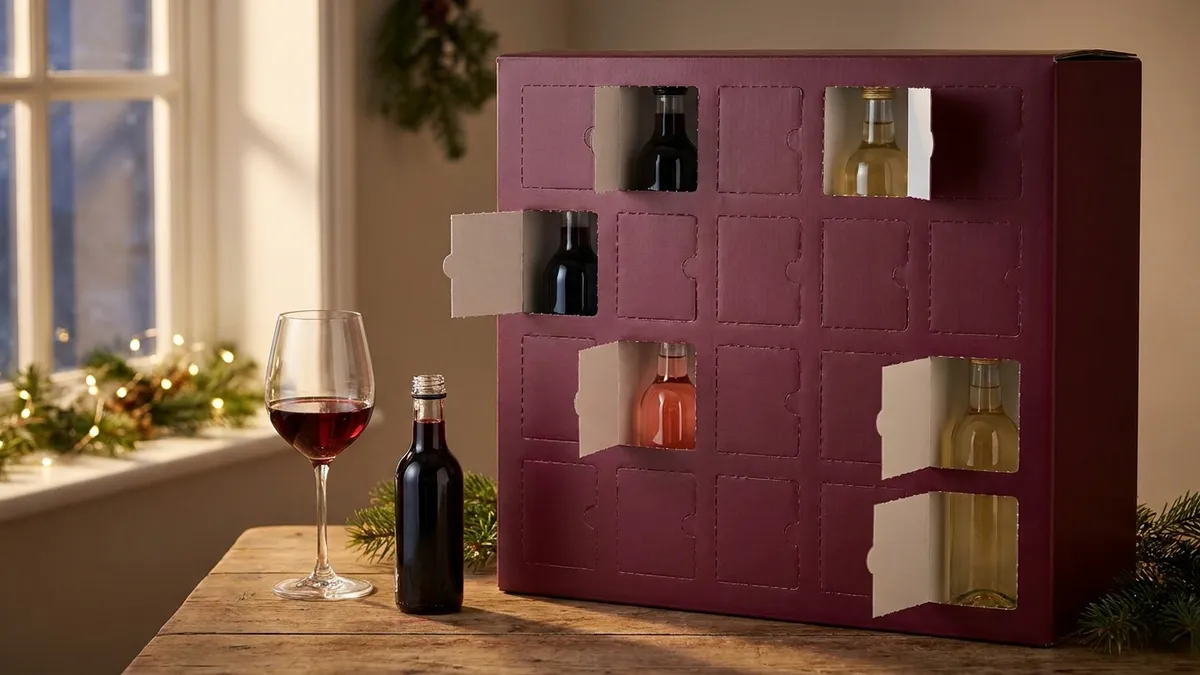
A wine advent calendar is a box of 24 small bottles, one opened each day of December up to Christmas Eve. Most use 187 ml quarter bottles, so the box holds about 4.5 litres, the volume of six standard 750 ml bottles. Calendars with 375 ml half bottles hold 9 litres, or twelve bottles. At time of writing, budget calendars cost about $60 to $100, which works out at $8 to $10 per full-bottle equivalent. A premium calendar at $160 with 6 oz minis comes to about $28.
A long-running reviewer finds the budget boxes mostly decent with a couple of weak wines. Tasted with a short note per door, the calendar works as a 24-wine sampler.
How Much Wine Is in a Wine Advent Calendar?
About six bottles, not 24. A calendar of 187 ml minis holds 4,488 ml, almost exactly six standard 750 ml bottles. The 24 in the marketing counts doors. A calendar of 375 ml halves holds twelve bottles, and one of 6 oz minis a little under six.
The standard wine bottle holds 750 ml. A quarter bottle (also called a split) holds 187.5 ml, one quarter of that; calendars round it to 187 ml. A half bottle holds 375 ml. Some premium calendars use minis of about 6 US fluid ounces, roughly 177 ml.
| Calendar type | Bottle size | Total wine | Standard-bottle equivalent | Price (time of writing) | Price per 750 ml | Buy it if your usual bottle costs |
|---|---|---|---|---|---|---|
| Discount supermarket | 24 × 187 ml | 4.5 litres | About 6 bottles | $59.99 | About $10 | $10 or more |
| Warehouse club | 24 × 375 ml | 9 litres | 12 bottles | $99.99 | About $8.33 | $8 or more |
| Wine-club premium | 24 × 6 oz | About 4.3 litres | About 5.7 bottles | $159.99 | About $28 | $28 or more |
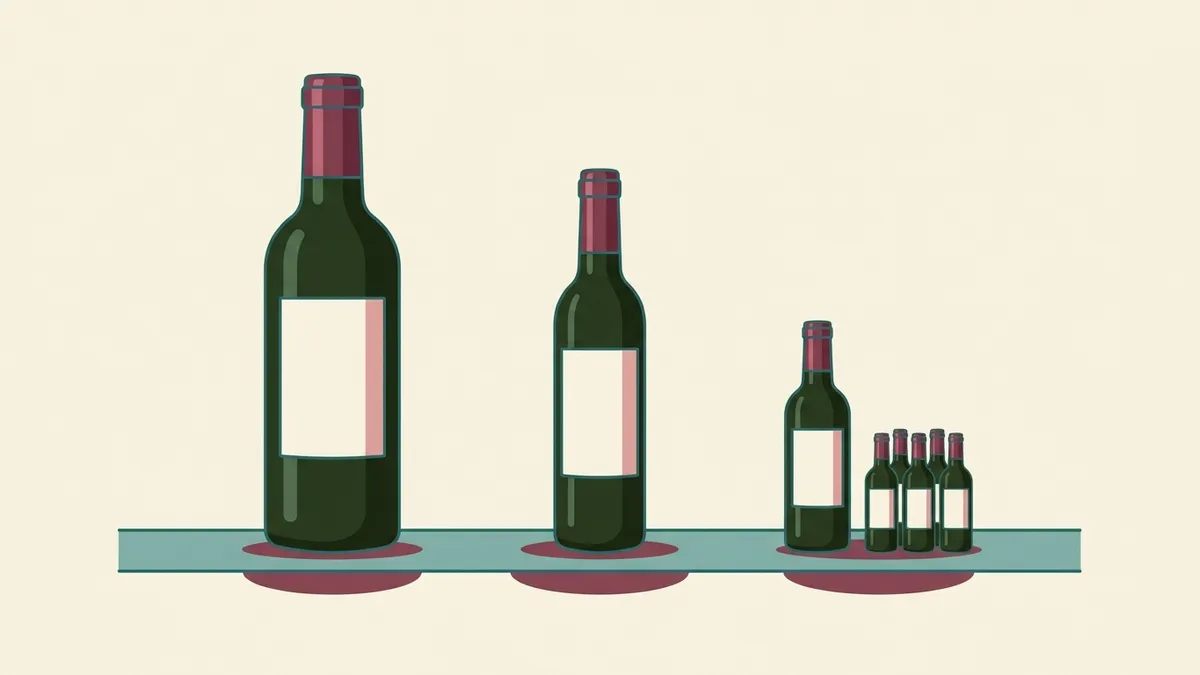
The bottle size decides the volume, and the volume decides the value. Two calendars at the same price can hold twice as much wine as each other. Our guide to how many glasses are in a bottle gives the pour counts for each size.
Are Wine Advent Calendars Worth the Money?
Usually yes on price, rarely as a bargain. The budget calendars land at about $8 to $10 per full-bottle equivalent, which is ordinary supermarket money for wine you did not have to choose. The premium calendar in the table costs nearly three times as much per litre.
At about $28 per equivalent, a $160 calendar costs about the same as six bottles at $28 each. Part of the extra pays for small glass and a printed box. Six bottles you pick at that price would come from a far higher shelf.
If the price per 750 ml equivalent is at or below what you pay for one everyday bottle, and trying 24 styles appeals, buy the calendar. If it is double your usual bottle, buy six bottles you would choose and spend the difference on one better one. Our guide to wine price vs quality shows where extra money starts to show up in the glass, and the wine budget guide sets out what each price band buys.
Is the Wine in an Advent Calendar Any Good?
Mostly decent, with a few duds every year. One long-running reviewer described a recent $59.99 supermarket calendar as "almost all decent wines with just a couple duds." That calendar drew its 24 wines from New Zealand, France, South Africa, Chile, Italy, Germany, Australia, Argentina, Spain, Hungary, Greece and more. It mixed whites and reds with rosé and sparkling.
For a beginner, that spread does the teaching. A Greek white tasted the night after a Chilean red shows two climates and two grapes in a week.
Quality is not fixed from one December to the next. The same reviewer scored a warehouse-club calendar as disappointing in 2021, better in 2022 and "quite fun" in 2023. Last year's good review says little about this year's box, so read a review of the current edition.
The $159.99 wine-club calendar in the table leaned towards red, according to its reviewer. If you mostly drink white or sparkling, check the style list before you pay for 24 doors of red.
Who Should Buy One, and Who Should Skip It?
Buy one if variety is the point; skip it if you drink one wine with one dinner. The calendar suits drinkers who want a different grape or country each night and will taste with some attention. It frustrates anyone who wants a full glass of a known favourite.
Good fits:
- The curious beginner who does not yet know whether they prefer Sauvignon Blanc or Pinot Noir.
- Couples who split a pour and want something different each night without opening a full bottle.
- Anyone building a tasting habit who will write a short note per door.
- Gift buyers shopping for a wine-curious friend with no fixed favourites.
Poor fits:
- The one-style drinker who reaches for the same red every week.
- People who dislike leftovers, since a mini is more than a single small glass.
- Collectors chasing specific regions or vintages, which a sampler never targets.
If you open a bottle with dinner and want the same wine all evening, skip the calendar and buy two or three full bottles you already like. If the best wines for beginners still look like unknowns to you, the calendar is a cheap way to meet them.
How Do You Taste 24 Wines Without Losing Track?
Give each door a three-line tasting note: colour, smell, and one word for acidity or body. Twenty-four short notes in December build a better map of your taste than six bottles drunk without one. Each note takes about a minute, written before the second sip.
Line one is colour. Tilt the glass over white paper and write pale, medium or deep, plus the hue. Line two is smell. Name at most two things you recognise, such as lemon, green apple, strawberry or black cherry.
Line three is structure. Acidity is the tartness that makes your mouth water; body is weight, like skimmed versus whole milk.
For reds, also judge tannin, the drying grip on your gums. Write light, medium or firm.
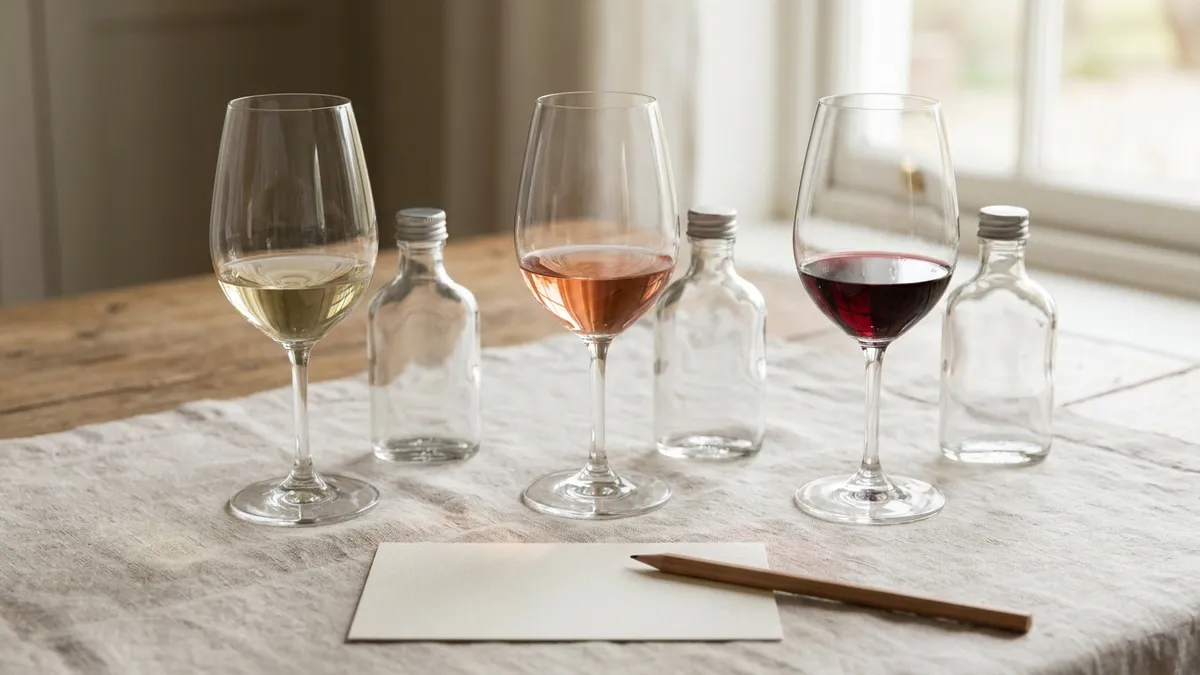
Group the notes on weekends. Lay out the week's six or seven notes and mark the wines you would buy again. By Christmas Eve a pattern shows, such as high-acid whites or light reds. That pattern is your shopping list for January. Our wine tasting notes template gives a printable version, and how to taste wine covers each step in more depth.
What Do You Do With Half a Mini Bottle?
Split it, close it, and finish it within a few days. A 187 ml mini holds about 6.3 US fluid ounces. A US standard drink of table wine is 5 fluid ounces at 12% alcohol, as defined by the National Institute on Alcohol Abuse and Alcoholism.
One mini is a little more than one standard drink, and a 375 ml half bottle is about two and a half.
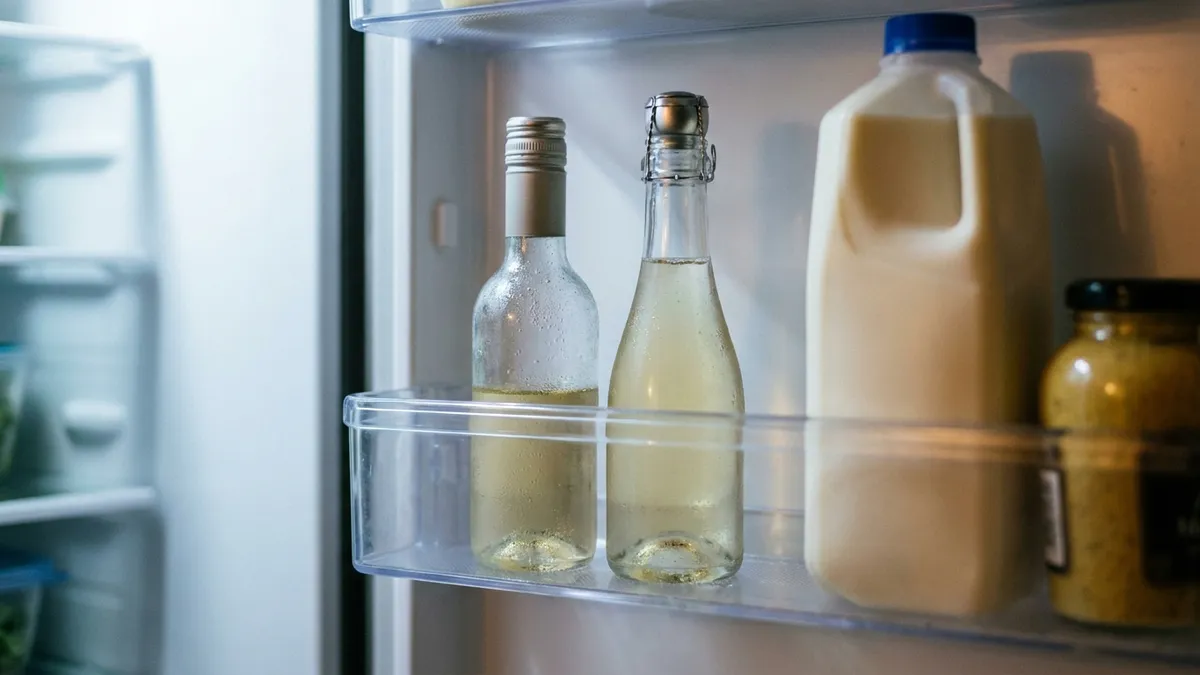
Nothing says a door has to be finished the night it opens. If the mini is still wine, close it with its screw cap or a stopper and put it in the fridge. If it is sparkling, finish it the next day, because the bubbles fade first. Our guide to how long wine lasts after opening gives day counts by style.
Is a Wine Advent Calendar a Good Gift for a Beginner?
Yes, and a better one for a curious beginner than for a seasoned wine lover. A reviewer of a premium calendar concluded that alcohol advent calendars "might actually be better for novices than diehard fans." Two dozen styles let a beginner find favourites without buying a full bottle of each.
The reason is the format. A beginner learns most from contrast, and 24 doors deliver contrast every night. An experienced drinker already knows which regions they like and may find a mixed box full of wines they would never choose.
If the recipient already has a favourite region or grape, give a good bottle of it instead. If they say they like wine but cannot name what they like, the calendar fits. Our wine gift guide matches gifts to seven kinds of wine lover, with price tiers for each. A calendar paired with a bite-sized course from Sommy gives a beginner the wines and the words to describe them.
Advent Calendar or Wine Subscription Box?
A calendar is a one-month sampler of small pours; a subscription box sends full bottles every month. The calendar wins on range: 24 wines for the price of about six bottles. It is also a single purchase, while a subscription usually bills until you cancel.
A subscription wins on depth, because each delivery brings full bottles to drink with meals, often with notes from a curator. It also keeps going after January. The wine subscription boxes guide sets out the tiers and who each one suits.
If the goal is a December treat and a quick tour of styles, buy the calendar. If the goal is to keep learning through the year, start a subscription in January and use the calendar notes to choose its style. More buying guides sit in the beginners' buying hub.
Tonight, find the millilitres per bottle on the calendar you are considering and divide its price by the full-bottle equivalent. Buy it if the answer beats the price of the bottle you would pour tonight.
Sources
Frequently Asked Questions
How much wine is in a wine advent calendar?
It depends on the bottle size printed on the box. Twenty-four 187 ml quarter bottles hold 4,488 ml, almost exactly six standard 750 ml bottles. Twenty-four 375 ml half bottles hold 9 litres, or twelve standard bottles. Calendars with 6 oz minis hold about 4.3 litres, a little under six bottles. None of them holds 24 full bottles.
Are wine advent calendars worth it?
They are worth it when the price per full-bottle equivalent is close to what you already pay for one everyday bottle and you want to try many styles. At time of writing, budget calendars come out at about $8 to $10 per 750 ml equivalent, which is fair. A premium calendar at about $28 per equivalent costs nearly three times as much, partly for small bottles and packaging.
How big are the bottles in a wine advent calendar?
Most use 187 ml bottles, called quarter bottles or splits, which are a quarter of a standard 750 ml bottle. Some use 375 ml half bottles, and some use minis of about 6 fluid ounces. Check the millilitres on the box before you compare prices.
How many glasses are in a mini wine bottle?
A 187 ml mini holds about 6.3 US fluid ounces. A US standard drink of table wine is 5 fluid ounces at 12% alcohol, so one mini is a little more than one standard drink. A 375 ml half bottle holds about two and a half standard drinks. Splitting a mini between two people gives each a small tasting pour.
Is a wine advent calendar a good gift for a beginner?
Yes. Twenty-four different wines from many countries let a beginner find out which grapes and styles they like without buying full bottles of each. One reviewer concluded these calendars may suit novices better than seasoned wine lovers. For someone who already knows their favourite region, a single good bottle from it is the better gift.
Can you start a wine advent calendar late or skip days?
Yes. Nothing in the wine depends on the date on the door. The minis are sealed, so unopened ones keep like any other bottle stored upright or on its side, away from heat and light. Opening two on a weekend and tasting them side by side makes the differences between styles easier to notice.
Sommy Team
LinkedInFounder & Wine Educator
The Sommy Team is building the world's most approachable wine education app, helping beginners develop real tasting skills through structured courses and AI-guided practice.