Wine Gift Guide: What to Buy for Every Type of Wine Lover

By the Sommy Team — AI-assisted, human-edited.
Updated Apr 29, 2026
Contents (10)
- What Makes a Great Wine Gift
- Wine Gift Guide, in 90 Seconds
- The Seven Wine Lover Archetypes
- Price Tiers Without Producer Names
- Magnums and Birthyear Vintages
- Non-Bottle Gifts That Often Win
- Pairing Gifts: Bottle Plus Something Else
- Gift-Giving Etiquette
- The 5-Question Gift Framework
- When in Doubt: The Universal Rescue Bottles
TL;DR
The best wine gift matches the recipient, not the price tag. Beginners want easy-drinking sparkling and crisp whites. Explorers want indigenous grapes. Classics fans want a recognized appellation. Sweet-tooth drinkers want dessert wines. Non-bottle gifts — glassware, decanters, courses, magnums, birthyear vintages — often beat another bottle. Shop by region and grape, not producer.
What Makes a Great Wine Gift
A great wine gift guide does not start with bottles — it starts with the person. The best wine gift matches the recipient's palate, curiosity, and occasion, not the giver's budget or the prettiest label. A thoughtful $25 bottle for a beginner beats a $150 Burgundy for the same person every time.
This guide walks through seven types of wine lovers, the price tiers that fit each one, and the non-bottle gifts that often outshine another bottle. Magnums, birthyear vintages, etiquette, and a five-question framework round it out. Everything below is anchored in regions, grape varieties, and styles rather than producer names — wine retailers vary by country and the right bottle in London is the wrong one in Toronto.
Wine Gift Guide, in 90 Seconds
The best wine gift guide rule is simple: match the gift to the recipient, not the price tag. Beginners want approachable sparkling and crisp whites — Prosecco DOC, Marlborough Sauvignon Blanc, or Beaujolais. Adventurous drinkers want indigenous grapes like Albariño, Grüner Veltliner, Xinomavro, or Etna Rosso. Classics enthusiasts want recognized appellations: Champagne, Burgundy, Bordeaux, or Barolo. Sweet-tooth recipients love Sauternes, Tokaji Aszú, or Vin Santo. Foodies appreciate styles tied to their cuisine. For everyone else, a wine experience — a course, a tasting class, or a curated subscription — often beats another bottle. Five questions get you there fast: dry or sweet, light or bold, white or red, special occasion, and budget.
The Seven Wine Lover Archetypes
The fastest way to land on the right gift is to identify which kind of wine lover you are buying for. Most people fall cleanly into one of seven archetypes.
1. The Beginner or Casual Drinker
This person enjoys wine but has not gone deep. They drink what is in the fridge, order the second-cheapest at restaurants, and would rather have something delicious than rare. The gift should be friendly, low in tannin (the drying, gripping sensation in red wines), and easy to love.
Good gift styles: Prosecco DOC, Marlborough Sauvignon Blanc, Provence Rosé, Beaujolais Villages, and Argentine Malbec. All reward attention without demanding it. For a deeper map of approachable styles, see our guide to the best wine for beginners.
2. The Adventurous Explorer
This person already drinks wine regularly and wants to learn. They get bored by the same Pinot Grigio every Friday night and light up when a sommelier suggests something new. Give them an indigenous grape from a region that does not get supermarket airtime.
Good gift styles: Albariño from Rías Baixas, Grüner Veltliner from Austria, Xinomavro from Greek Naoussa, Assyrtiko from Santorini, Aglianico from Campania, or Etna Rosso from Sicily. Each one sparks a conversation and drinks easily that night.
3. The Classics Enthusiast
This person knows what they love and stays loyal. They drink Bordeaux at Christmas, Burgundy on birthdays, Champagne at New Year. Lean into a recognized appellation rather than something experimental.
Good gift styles: Champagne (vintage or non-vintage), Burgundy (village-level red or white), Bordeaux (Left Bank or Right Bank), Barolo or Barbaresco from Piedmont, and Northern Rhône Syrah. The label does the work. Our Bordeaux blend grapes guide explains the structure these wines are built on.

4. The Spirits-Curious Drinker
This person drinks whisky, mezcal, or aged rum and finds most wine a little too dainty. They want body, depth, and intensity. Skip light reds and bright whites and go straight to fortified styles, where the alcohol matches their usual pour and the flavor density rivals a good bourbon.
Good gift styles: Tawny Port (10-year, 20-year, or single-vintage Colheita), Madeira (Sercial through Malmsey by dryness), and Sherry (Amontillado, Oloroso, or Palo Cortado for savory; Pedro Ximénez for sweet). All three age beautifully and reward slow sipping.
5. The Sweet Tooth
This person orders dessert without flinching and lights up at the words "ice wine." They will love almost anything in the dessert category that has electric acidity (the tart, mouth-watering quality that keeps wine fresh) to balance the sugar.
Good gift styles: Sauternes from Bordeaux, Tokaji Aszú from Hungary, Vin Santo from Tuscany, Eiswein from Germany or Canada, and late-harvest Riesling. Our dessert wine guide breaks down how each style is made.
6. The Foodie
This person treats every meal as a project. Wine is part of the meal, not separate from it. The best gift is a bottle built around their favorite cuisine.
Good pairings: Sangiovese for an Italian-pasta cook, Riesling for a sushi or Thai-curry household, Pinot Noir for a roast-chicken regular, or a Loire Valley Chenin Blanc for a seafood-leaning kitchen. Pair the bottle with a note suggesting the dish — that turns it into a planned dinner.
7. The Experience Seeker
This person already has the cellar, the glasses, and the decanter. Another bottle disappears into the rack. Skip the bottle and gift the experience — a tasting class, a wine course, a structured subscription box, or a sommelier-led dinner. In December, a wine advent calendar gives the same variety in 24 small bottles.
The Sommy app fits cleanly here. A gifted course in wine fundamentals, blind tasting, or regional study lasts long after a single bottle. Visit https://sommy.wine/ for the current course catalog. The app walks beginners through swirling, smelling, and structured tasting in short daily sessions.
Price Tiers Without Producer Names
Once you know the archetype, the second question is budget. Each tier opens up a different category of gift — and within each tier, the same shopping rule applies: ask the wine shop for the region plus grape combination that fits the recipient.
Under $25 — A Solid Single Bottle
Perfect for a host gift, a thank-you, or a casual drinker. At twenty-five dollars or less you can land a high-quality everyday wine — Marlborough Sauvignon Blanc, Beaujolais Villages, Argentine Malbec, Provence Rosé, German Riesling Kabinett, or Chianti Classico. Avoid going below ten dollars where the wine usually comes from industrial production with little character.
$25-50 — A Structured Wine from a Known Appellation
The sweet spot for thoughtful gifts. Côtes du Rhône Villages, village-level Sancerre or Chablis, Crozes-Hermitage, aged Reserva Rioja, lower-end Brunello di Montalcino, or single-vintage Tawny Port all fit. These wines have real structure and reward a quiet evening.
$50-150 — Aged or Vintage-Dated Bottles
Genuine ceremony lives here. Vintage Champagne, village-level Burgundy (red or white), classified-growth Bordeaux from a younger vintage, mature 20-year Tawny Port, Barolo, or premier-cru Chablis all sit in this range. Bottles people remember.
$150 and Above — Birthyear Vintages and Magnums
Above $150 you are buying memory. Birthyear vintages, magnum (1.5 litre) formats, library releases of aged Bordeaux or Burgundy, and grand-cru-level wines fit here — gifts for major milestones where the wine is part of the occasion itself.
Magnums and Birthyear Vintages
Two formats punch far above their weight.
Why Magnums Are the Generosity Format
A magnum is a 1.5 litre bottle — twice the volume of a standard 750 ml. The larger format ages more slowly and more evenly because the ratio of wine to oxygen inside the bottle is lower. The wine stays fresher and develops more gracefully. One magnum pours twelve generous glasses, the right size for a celebratory dinner. Champagne magnums are the most versatile; Bordeaux magnums signal serious ceremony.
How to Buy a Birthyear Vintage
A birthyear vintage — a bottle made in the year someone was born — is one of the most personal wine gifts possible. The challenge is that most table wine does not age beyond ten to fifteen years. To find a bottle that will drink beautifully at age 30, 40, or 50, choose from styles built for the long haul:
- Vintage Port — easily 50+ years; the most forgiving long-haul red
- Sauternes and Tokaji Aszú — high acidity and sugar preserve them for decades
- Top Bordeaux (classified growths) — strong vintages hold 30-50 years
- Barolo and Brunello di Montalcino — a strong vintage holds 25-40 years
- Vintage Champagne — drinks beautifully at 20-30 years
Buy from a wine merchant with verified provenance. Old bottles without confirmed storage history are unpredictable, and a corked birthyear bottle is a heartbreak no card can fix. Our does decanting change wine flavor guide explains how to handle older sediment.
Non-Bottle Gifts That Often Win
A bottle disappears in an evening. Glassware, accessories, and education stay in the recipient's life every time they pour. For serious wine drinkers, non-bottle gifts often outshine another bottle.
Glassware
A trio of well-chosen wine glasses is one of the most-used gifts in any wine drinker's life. Aim for a Bordeaux glass for bold reds, a Burgundy glass for aromatic reds and full whites, and a universal glass for everyday pours. Lead-free crystal feels better in the hand and on the lip; machine-blown glass is excellent value. Our wine glass guide covers which shapes actually change perception.
Decanters
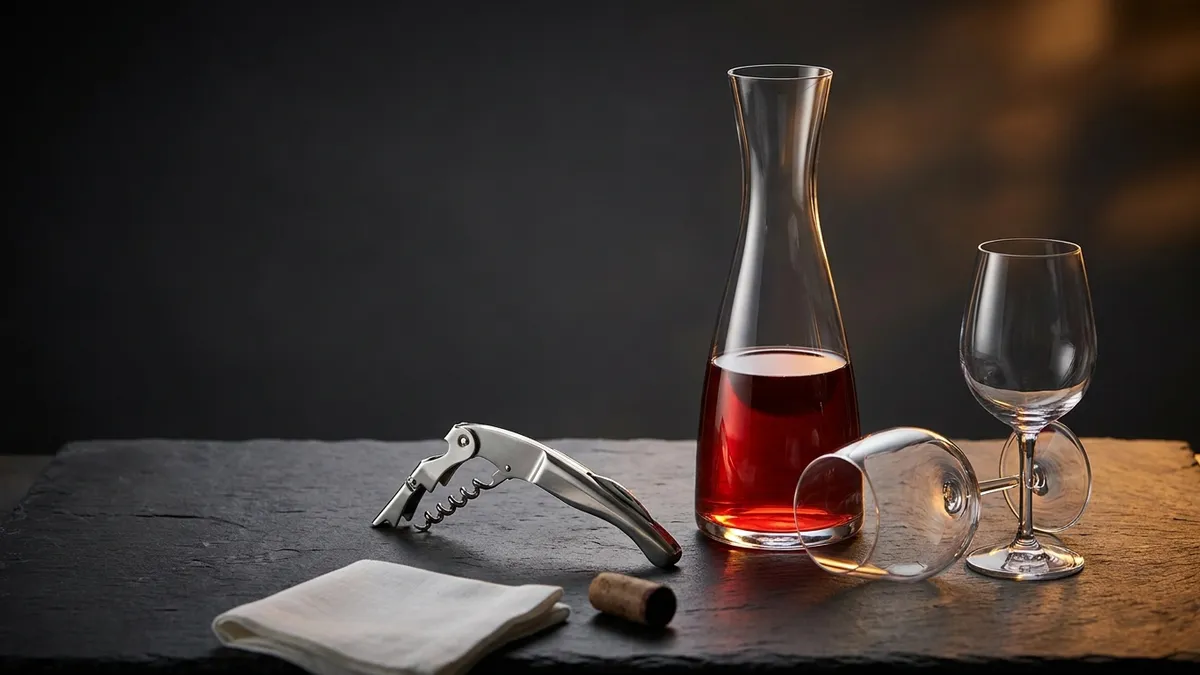
A decanter is a wide-bodied glass vessel that exposes wine to oxygen, softening tannin and lifting aromas. Two shapes matter: a traditional duck-shape decanter for Burgundy, Pinot Noir, and aged whites; and a tall pyramid or carafe shape for younger, tannic reds like Bordeaux and Barolo. A duck-shape Port decanter is the classic gift for the fortified-wine fan.
Vacuum Stoppers and Coravin
For drinkers who pour by the glass, a quality vacuum stopper preserves wine for two to four days after opening. A Coravin — a needle-and-argon system that pours through the cork without removing it — preserves wine for months and is the most extravagant gift in this category.
Wine Fridges, Books, and Subscriptions
A small wine fridge — 18 to 32 bottles — is right for someone who has outgrown the kitchen counter and now keeps wine for months at a time. Dual-zone units handle whites and reds at the same time. Our wine fridge guide covers capacity, single versus dual zone, and the red flags to avoid.
A great wine atlas or regional deep-dive book sits on the shelf for a decade. Smaller regional books — a Burgundy guide, a Champagne overview — fit a recipient already loyal to a region.
A wine course or class is the gift that scales. In-person tastings, structured online courses, and app-based learning give the recipient real skill rather than a one-night experience. The Sommy app structures wine learning around the same swirl, smell, and sip skills professionals use, in short daily sessions. For a foundation in palate development, see our guide to develop your wine palate.
A 3-, 6-, or 12-month wine subscription turns a single gift into a year of discovery. Three to six months is the sweet spot — long enough to feel like a real gift, short enough that the recipient is not committed to a routine they may not want. Pair it with a single special bottle for night one so the gift starts immediately.
Pairing Gifts: Bottle Plus Something Else
A bottle paired with something else multiplies the impact. The pairing turns a single gift into a planned evening.
- Bottle plus cheese — a Cabernet-Merlot with aged Comté; Sauternes with Roquefort; Vintage Port with Stilton
- Bottle plus chocolate — Tawny Port with dark chocolate; Banyuls with milk chocolate
- Bottle plus cookbook — a Rhône Syrah with a French bistro cookbook; a Tuscan Sangiovese with an Italian classics cookbook
- Bottle plus glassware — a Burgundy with a Burgundy glass set; a Champagne with two tulip flutes
For more on the food side, see Cabernet Sauvignon vs Merlot and Champagne vs Prosecco vs Cava.
Gift-Giving Etiquette
A few small rules separate a thoughtful wine gift from an awkward one.
Never bring "your" wine to dinner expecting the host to open it. A gifted bottle is for the host to enjoy later. They have already chosen the pairing for the evening.
Hand it over with a card, not a story. A short note — "thinking of you, enjoy when the moment is right" — beats a five-minute explanation of why this vintage is meaningful. Let the wine speak.
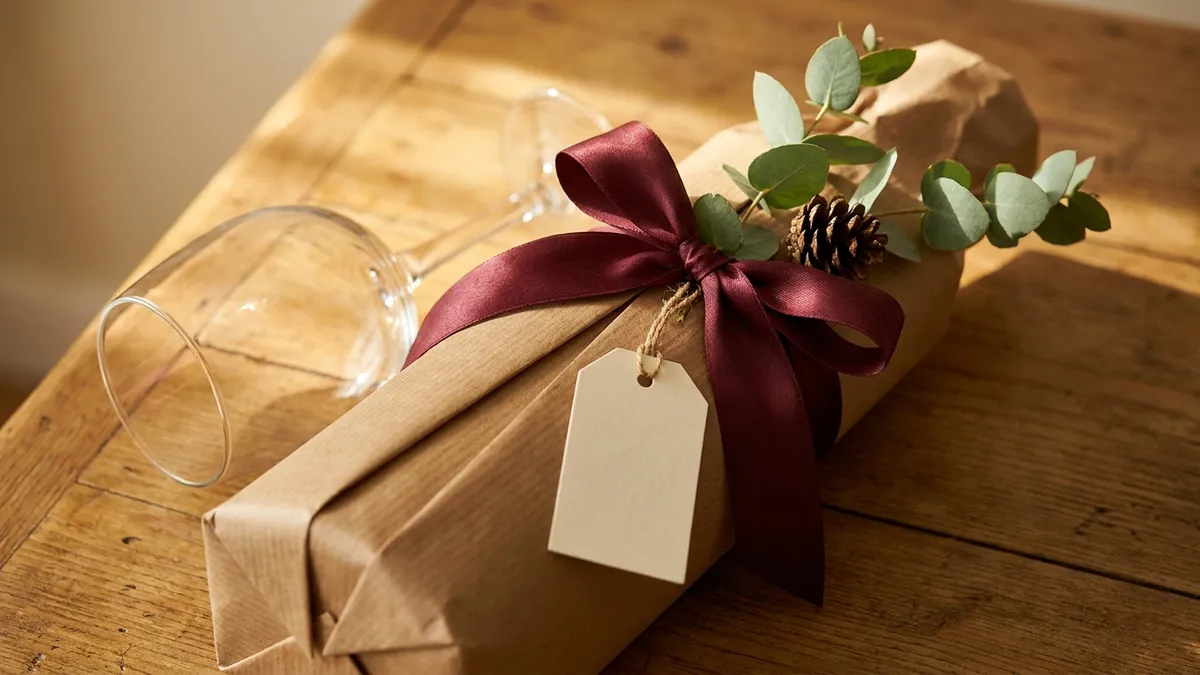
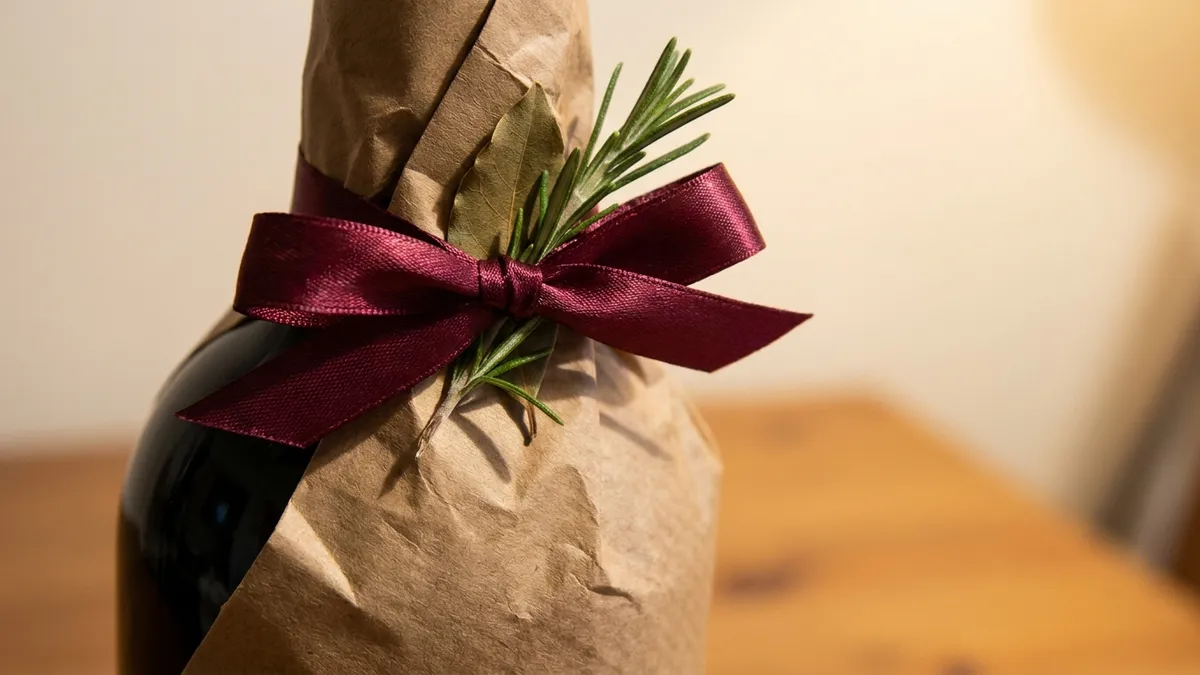
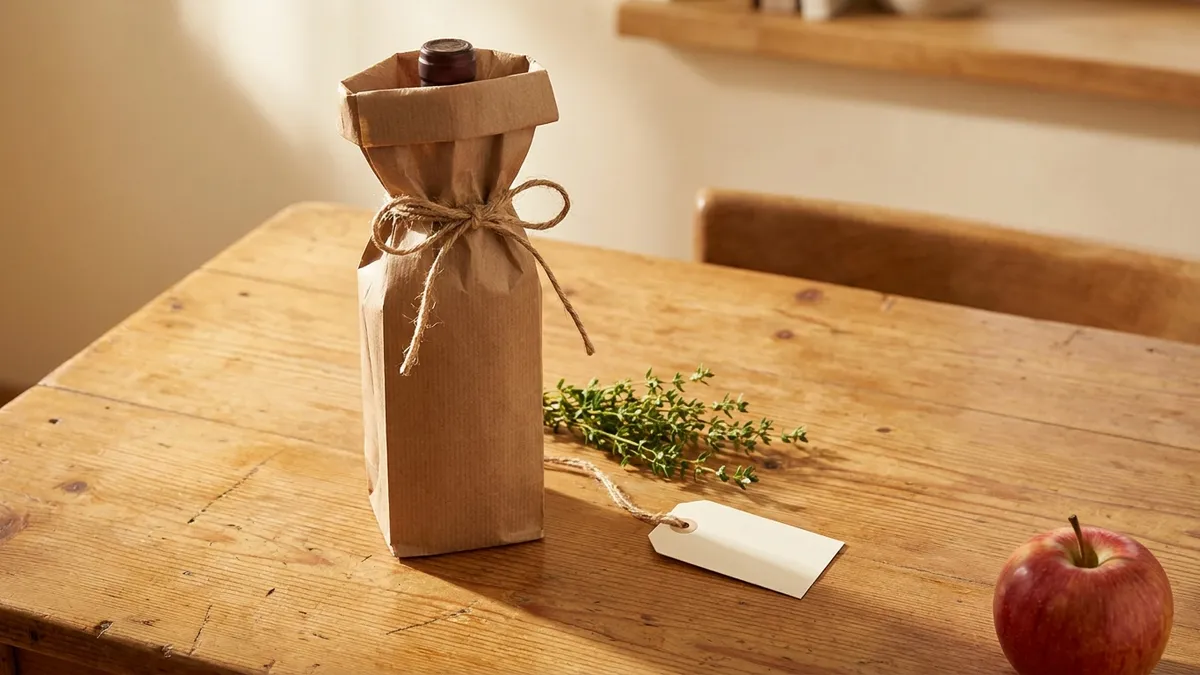
Wrapping is simple. A clean paper bag, a velvet pouch, or a custom box all work. Avoid clear plastic gift bags and elaborate cellophane. A handwritten gift tag adds more than any wrapping flourish.
Do not gift a wine you would not drink yourself. If the recipient comes back with a question, you want to answer honestly.
The 5-Question Gift Framework
When you are shopping under pressure, five questions get you to a gift in under a minute.
- Dry or sweet? Most everyday gifts are dry. Sweet wine — Sauternes, Tokaji, Port — is for someone who has shown they like dessert wines.
- Light or bold? Light suits Pinot Noir, Beaujolais, and Sauvignon Blanc fans. Bold suits Cabernet, Syrah, Barolo, and Tawny Port lovers.
- White or red? Usually obvious from past behavior. When in doubt, sparkling wine fits both camps.
- Special occasion? A wedding, milestone birthday, or retirement calls for a magnum, vintage Champagne, or birthyear bottle. A casual host gift calls for a $25-50 everyday wine.
- Budget? Decide before you walk into the shop. A clear budget makes the wine merchant conversation five times faster.
For a deeper map of the styles and grapes behind these answers, the Sommy beginners and buying pillar covers the building blocks. The app turns these fundamentals into structured tasting practice over a few minutes a day.
When in Doubt: The Universal Rescue Bottles
Some bottles work for almost everyone. If you have run out of time, two styles are reliably safe.
Vintage Champagne is the universal celebration wine. The dated bottle adds occasion, and the flavor profile suits beginners and connoisseurs alike. It pairs with appetizers, fish, white meat, and dessert.
Cru Beaujolais — from villages like Morgon, Fleurie, Moulin-à-Vent, or Brouilly — is the universal dinner wine. Light enough for fish, full enough for red meat, friendly to beginners and respected by serious drinkers. At $25-40 it is unbeatable value.
If you cannot pick between them, default to the bottle that fits the season — Champagne for cold-weather celebrations, Cru Beaujolais for spring and autumn dinners. The best wine gift is the one the recipient remembers — the bottle they pour at the right moment, the glass they reach for every evening, or the course that changed how they taste. Match the gift to the person, anchor every shopping decision in region plus grape plus style, and the rest takes care of itself.
Frequently Asked Questions
What is the best wine to give as a gift if you do not know what they like?
Vintage Champagne or a Cru Beaujolais is the safest universal gift. Both are widely loved, work with most foods, and signal generosity without being intimidating. Vintage Champagne carries a date and a sense of occasion. Cru Beaujolais — from villages like Morgon, Fleurie, or Moulin-a-Vent — is fresh, food-friendly, and works for almost any palate from beginner to enthusiast.
How much should you spend on a wine gift?
Match the spend to the relationship and the occasion. Twenty-five to fifty dollars buys a structured red or aged white from a known appellation — perfect for hosts and casual gifts. Fifty to one hundred fifty dollars covers vintage Champagne, mature Tawny Port, or a serious Burgundy. Above one hundred fifty dollars is birthyear vintage or magnum territory, which signals real ceremony.
Is it rude to give cheap wine as a gift?
Not at all if the wine is well-chosen. A twenty-dollar bottle of Marlborough Sauvignon Blanc or Argentine Malbec given to a beginner is far more thoughtful than a hundred-dollar Burgundy they will never open. Match the wine to the recipient. Price matters less than fit.
Should you bring wine to a dinner party expecting the host to open it?
No. The etiquette is simple: a gifted bottle is for the host to enjoy later, not to serve at that meal. The host has already chosen the pairing for the evening. Bring the wine with a card, hand it over with no expectation, and let them save it for the right occasion.
What is a magnum and why is it a good gift?
A magnum is a 1.5 litre bottle — twice the size of a standard 750 ml. The larger volume means the wine ages more slowly and more evenly, so it stays fresher and develops more elegantly than the same wine in a regular bottle. Magnums also signal celebration and generosity. They are the natural choice for milestones, weddings, and memorable dinners.
What is a birthyear vintage and how do you buy one?
A birthyear vintage is a bottle made in the year someone was born. The trick is choosing a wine that will still be drinking well decades later. Vintage Port, top Bordeaux, Sauternes, and Tokaji are all built to age fifty years or more. Buy from a wine merchant who can verify provenance — old wines need confirmed storage history to be worth opening.
Are non-bottle gifts better than wine itself?
Often, yes. A great Bordeaux glass, a decanter, or a small wine fridge becomes part of the recipient's life every time they pour. A wine bottle disappears in one evening. Glassware, accessories, courses, and subscriptions deliver value for months or years, not minutes.
Should you give a wine subscription as a gift?
Subscriptions work well for curious drinkers who want to explore. Three to six months is the sweet spot — long enough to be a real gift, short enough that you are not committing the recipient to a routine they may not want. Pair the subscription with a single special bottle for the first night, so the gift starts immediately.
Sommy Team
LinkedInFounder & Wine Educator
The Sommy Team is building the world's most approachable wine education app, helping beginners develop real tasting skills through structured courses and AI-guided practice.