Wine Charcuterie Board Pairing: Which Wine for Each Meat

By the Sommy Team — AI-assisted, human-edited.
Updated Oct 1, 2026
Contents (10)
- Wine Charcuterie Board Pairing, in One Paragraph
- Which Wine Goes With Each Meat on the Board?
- Why Do Salt and Fat Change How Wine Tastes?
- What Wine Goes With Salami?
- What Wine Pairs With Prosciutto and Other Dry-Cured Ham?
- What Wine Goes With Pâté, Terrine and Rillettes?
- Does Sparkling Wine Work With Everything on the Board?
- Can One Bottle Cover a Mixed Board?
- What About the Cheese, Fruit and Pickles?
- How Many Bottles, and How Cold?
TL;DR
Cured meat is salt and fat, and acidity cuts both, so the best charcuterie wines are tart, low in tannin, moderate in alcohol and served cool. Pour dry Lambrusco with salami, a crisp white or dry sparkling wine with prosciutto, and a sweet white with liver pâté.
Wine charcuterie board pairing comes down to two ingredients: salt and fat. Cured meat is full of both, and the wine that handles them best has high acidity, low tannin and moderate alcohol. Colour matters less than those three. Serve it cool and it will work with most of the board.
Wine Charcuterie Board Pairing, in One Paragraph
Pick a wine with high acidity (the tartness that makes your mouth water), because acidity cuts through salt and fat. Keep tannin (the drying grip on your gums) light, since a few thin slices of cured meat give tannin far less protein and fat to bind than a steak does. Keep alcohol moderate, because salt makes alcohol taste hotter. Dry Lambrusco goes with salami, a crisp white or dry sparkling wine with prosciutto, and a sweet white with fine-textured liver pâté. If only one bottle is open, a chilled dry rosé, a dry sparkling wine or a light red such as Gamay covers every meat on the board.
Which Wine Goes With Each Meat on the Board?
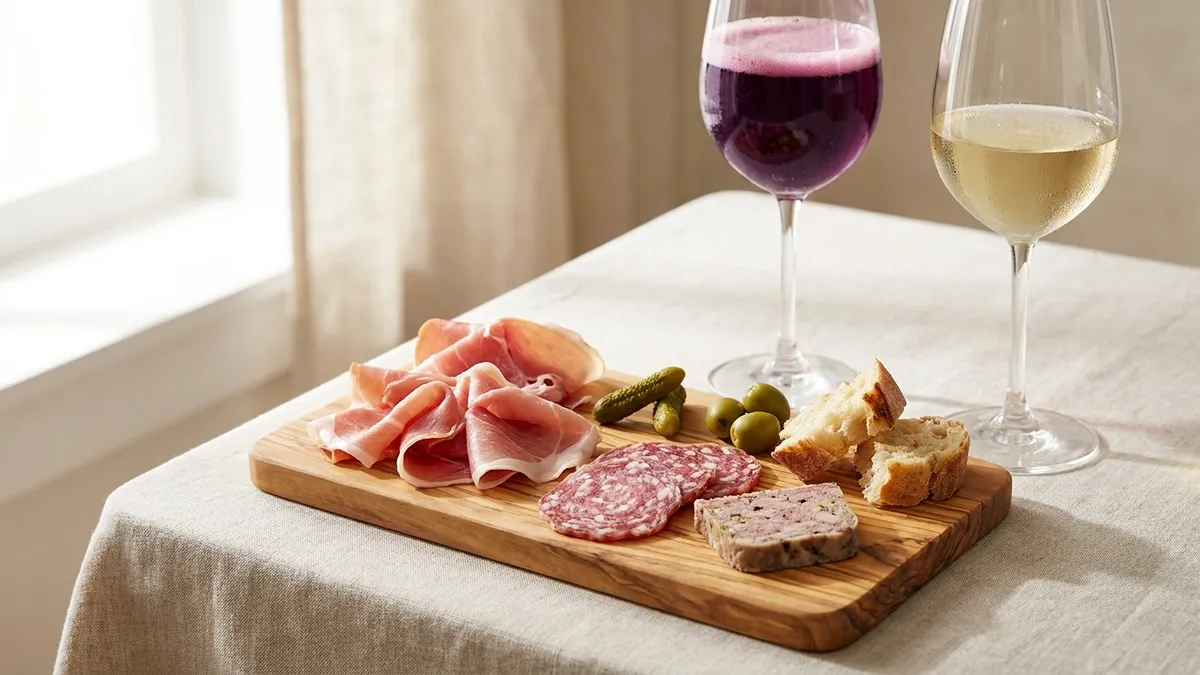
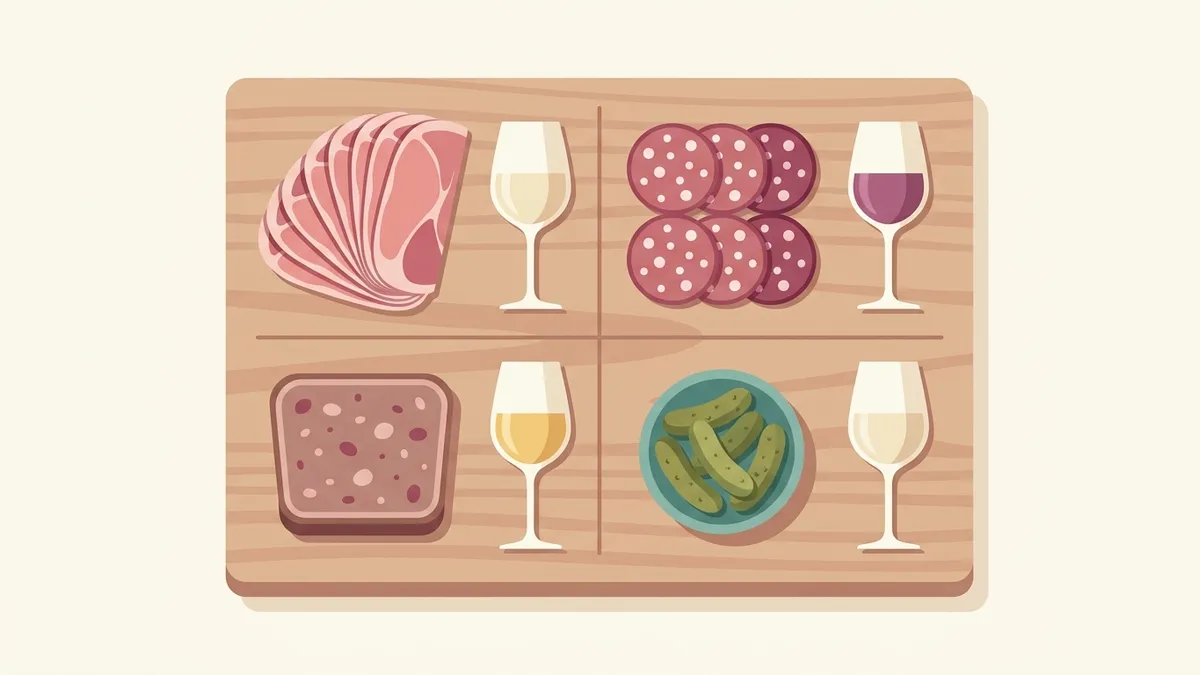
Match the wine to whatever dominates each meat: salt and tang in salami, salt and a delicate sweetness in dry-cured ham, fat and liver in pâté. Charcuterie is the French word for prepared meats, mostly pork, from chair (flesh) and cuit (cooked). A board mixes cured, fermented, cooked and potted meats, and each one wants something different from the glass.
| Meat | What dominates | Wine style that works | Pour this |
|---|---|---|---|
| Salami, soppressata, finocchiona | Salt, fat, a sour tang from fermentation | Fresh red, fizzy or still, high acidity, light tannin | Dry Lambrusco, Gamay, light Pinot Noir |
| Spicy sausage (chilli salami, chorizo) | Salt, fat, chilli heat | Low alcohol with a touch of sweetness | Off-dry Lambrusco, off-dry Riesling |
| Prosciutto and other dry-cured ham | Salt, delicate sweet meat | Crisp, light, dry | Dry sparkling wine, dry rosé, crisp unoaked white |
| Cooked ham (prosciutto cotto) | Mild salt, soft texture | Light, fruity | Light red or dry rosé |
| Smooth liver pâté | Richness, liver | Sweet or off-dry white for contrast | Sweet white, off-dry Riesling |
| Coarse terrine, rillettes | Fat | High acidity to cut fat | Gamay, crisp white, dry sparkling wine |
Why Do Salt and Fat Change How Wine Tastes?
Acidity cuts through fat and salt, salt makes alcohol taste hotter, and tannin only softens when there is enough protein and fat to grab. Those three effects explain every row of the table. The wider rules for food and wine sit in our wine and food pairing guide.
Curing means preserving meat with salt. Salt draws water out, so every slice is salty and dense. In a dish that is fatty or salty, acidity in the wine "cuts" through the heaviness, which is why tart wines feel refreshing next to cured pork. You can see how acid works on the tongue in what is wine acidity.
Salt pushes the other way on alcohol. Salt and chilli both make alcohol feel hotter, so a 15% red that seems fine on its own can burn next to salami.
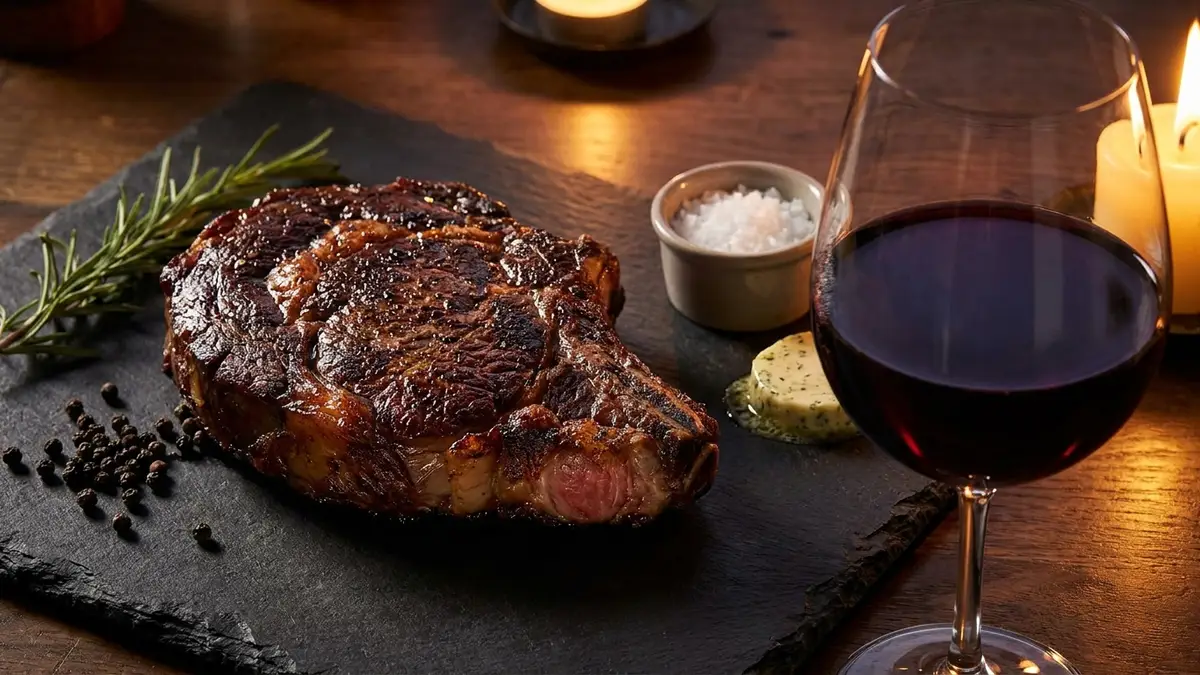
Tannin binds to proteins. When a dish is high in protein and fat, like a steak, tannin grabs the meat instead of your gums and tastes softer. A paper-thin slice of ham offers much less, so a tannic red tends to stay harsh and drying. Our tannin explainer shows where that grip comes from, and how food changes wine taste covers the other food effects.
What Wine Goes With Salami?
Pick a fresh, fruity red with high acidity and light tannin, served cool. The classic is dry Lambrusco. Salami is a fermented sausage: bacteria in the meat make lactic acid, which lowers the pH and gives salami its sour tang.
The sausage is then air-dried, and about half its water evaporates. That leaves a dense, salty, tangy slice, and a wine with matching acidity keeps up with it.
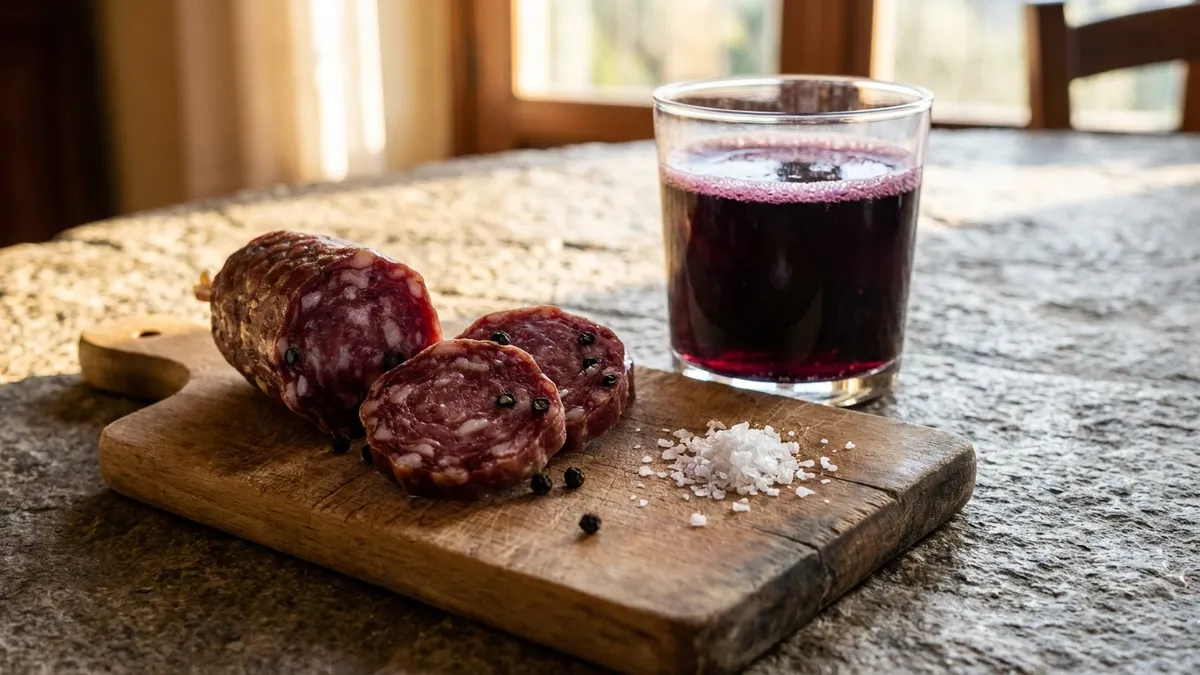
Lambrusco comes from Emilia-Romagna, where gnocco fritto, salame and Lambrusco are a local trio. Most Lambrusco gets its bubbles by the Charmat method (a second fermentation in a sealed pressure tank). The bubbles and acidity rinse fat off the tongue, and the light tannin stays out of the way. The Lambrusco guide explains the grapes and styles.
Lambrusco runs from bone-dry secco to off-dry (a light, noticeable sweetness) amabile to sweet dolce. If the salami is hot with chilli, pick an amabile or an off-dry Riesling, because sweetness calms heat and lower alcohol stops the burn. More on chilli and wine is in wine with spicy food. If the salami is mild, like a fennel-scented Tuscan finocchiona, a cool Gamay or a light Pinot Noir works too.
What Wine Pairs With Prosciutto and Other Dry-Cured Ham?
Dry-cured ham wants a crisp white, a dry rosé or a dry sparkling wine, because its flavour is delicate and its salt is high. A full-bodied, high-tannin red flattens it. Prosciutto crudo is the raw, dry-cured ham; prosciutto cotto is the cooked version.
Prosciutto di Parma is made from the hind leg of the pig, sea salt and lard, and nothing else. Its rules ban the nitrites that give many other cured meats their reddish colour. San Daniele, from Friuli-Venezia Giulia, is darker and sweeter in flavour.
That sweetness is fragile. A crisp, unoaked white or a dry sparkling wine refreshes the palate between salty bites without masking the meat. A dry rosé adds a little red-fruit flavour without tannin. If the ham is sliced thin and tastes sweet, pick the lightest, crispest wine you have. If it is cooked cotto ham, which is milder and softer, a light red or a dry rosé works.
What Wine Goes With Pâté, Terrine and Rillettes?
Fine-textured liver pâté goes with a sweet or off-dry white; coarse country terrine and fatty rillettes go with a tart light red or a crisp white. All three are forcemeats (ground, seasoned meat cooked in a mould or pastry). Pâté usually means a finer, liver-based mixture, while terrines tend to be coarser.
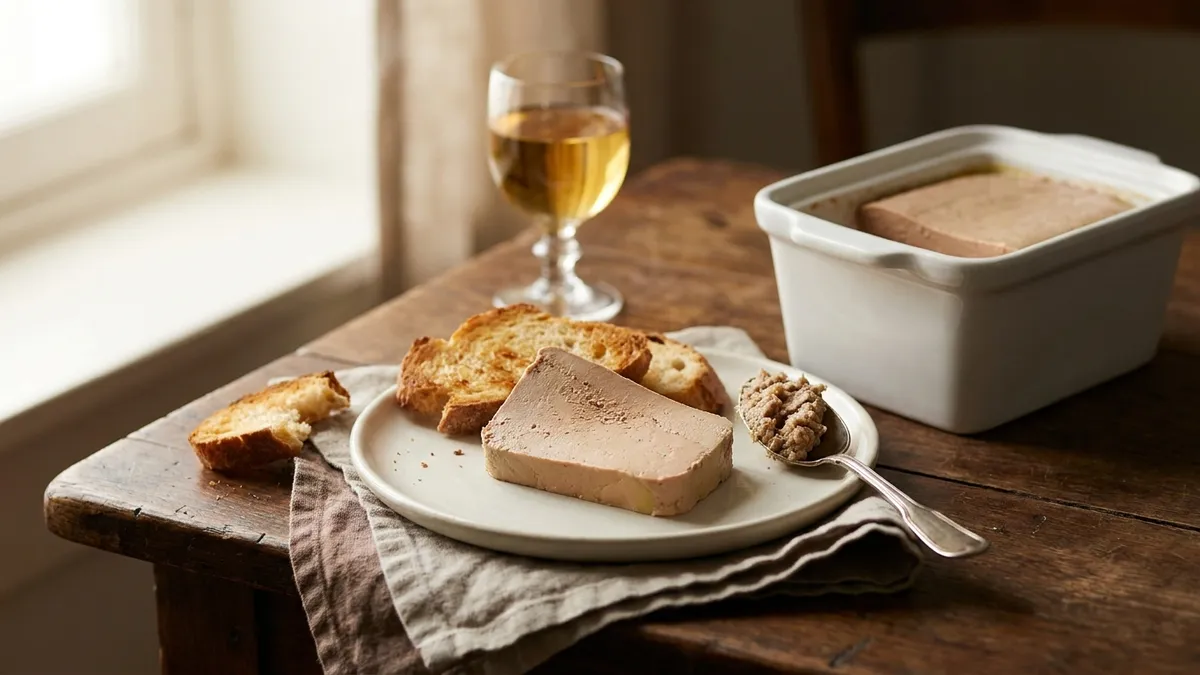
Liver brings richness rather than tang. Sweetness in wine can contrast with salt, as in the European custom of serving salty Stilton cheese with sweet Port. The same contrast works with liver pâté.
Pâté de campagne, the country style made with pork and liver, has more fat and texture. Rillettes are shredded meat preserved in its own fat. With both, fat dominates. If liver dominates, pour sweet. If pork and fat dominate, pour tart, such as a chilled Gamay from the Beaujolais region or a crisp white.
Does Sparkling Wine Work With Everything on the Board?
Nearly, and for a reason. Dry sparkling wine has high acidity, and bubbles scrub fat and salt off the palate between bites. On a board, that covers ham, salami, rillettes and most cheeses. The styles are compared in sparkling wine types.
The claim that bubbles go with everything has two exceptions. With hot chilli sausage, a bone-dry brut gives no sweetness to calm the heat. With fine-textured liver pâté, a dry sparkling wine tastes thin next to the richness. If the board has either, add an off-dry or sweet white alongside the bubbles.
Can One Bottle Cover a Mixed Board?
Yes, one bottle can cover salami, ham and pâté if it passes four tests. Each test answers one of the effects above: salt, fat and thin slices. Gamay, dry Lambrusco, dry rosé and dry sparkling wine usually pass all four:
- Low tannin, because thin slices do little to soften it.
- High acidity, to cut salt and fat.
- Moderate alcohol, because salt makes alcohol taste hotter.
- Served cool, which keeps acidity tasting fresh.
The old rule says red wine with meat. Cured meat needs acidity more than tannin, so a chilled dry rosé often beats a big Cabernet next to salami. Body (weight in the mouth, like skimmed versus whole milk) should stay light to medium. If the label says over 14%, keep that bottle for another night. Oaky, full-bodied reds usually fail on tannin and alcohol.
What About the Cheese, Fruit and Pickles?
Let the meat choose the wine, then check the extras. Sweet fruit, honey and jam need a wine at least as sweet as they are, or the wine tastes sour and thin. Pickles and mustard are sharp, so the wine needs plenty of acidity of its own.
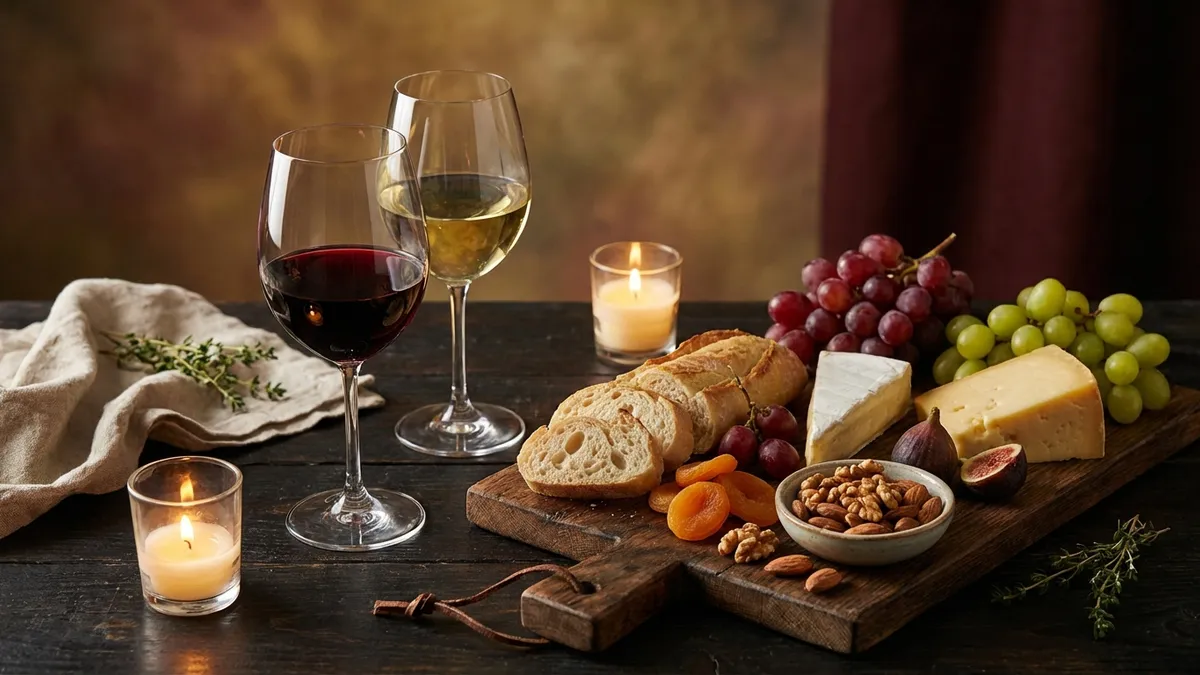
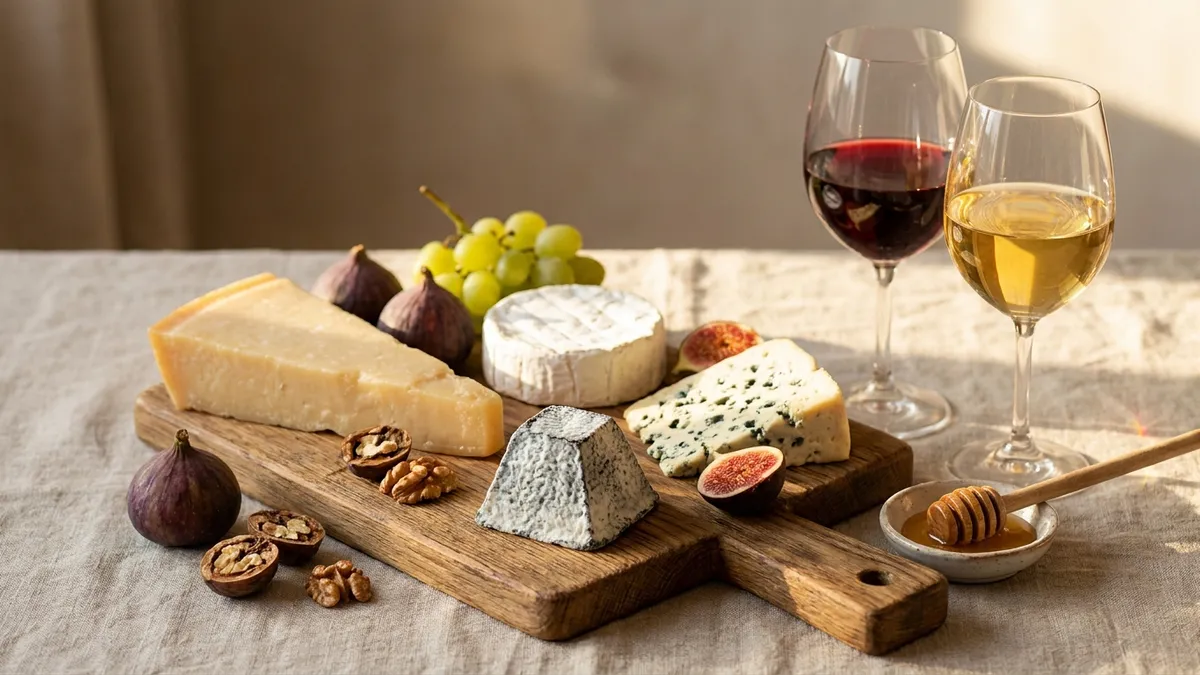
Cheese has its own logic. A wine that suits a hard cheese may not suit the salami beside it. Our wine and cheese pairing guide covers it cheese by cheese. If the board leans on blue cheese and fig jam, add a small sweet wine, as with liver pâté.
How Many Bottles, and How Cold?
A standard 750 ml bottle pours about five 150 ml glasses, so plan by glasses rather than by guests. Multiply the number of guests by the glasses each will drink, then divide by five. If the board is dinner, plan more than for a snack before dinner.
Open two styles, such as a sparkling wine and a light red, so each meat finds its match.
Serve everything cooler than room temperature. Whites, rosés and sparkling wines go straight from the fridge. Light reds like Gamay and Lambrusco taste better after time in the fridge too. Our wine serving temperature chart has the ranges by style, and how to chill wine fast helps when guests are already at the door. For an outdoor board, the wine for a picnic guide covers keeping bottles cold.
More pairing rules by dish sit in the food pairing hub. The Sommy app has bite-sized courses, including Wine 101 and a course on Italy. For tonight: buy one salami, one dry-cured ham and one pâté, chill a dry Lambrusco or a Gamay, and take a sip after each bite to find which meat it suits best.
Sources
Frequently Asked Questions
What wine goes best with a charcuterie board?
A wine with high acidity, low tannin and moderate alcohol, served cool. Dry Lambrusco, a light red such as Gamay or Pinot Noir, a dry rosé or a dry sparkling wine all fit. Acidity cuts the salt and fat in cured meat, while big tannic reds tend to taste harsh and hot next to salty slices.
Is red or white wine better with charcuterie?
Either colour works when the wine is tart and light. Colour matters less than tannin and alcohol. A light, chilled red suits salami and country terrine. A crisp white or dry rosé suits delicate dry-cured ham. A full-bodied, high-alcohol red is the riskiest choice, because salt makes alcohol taste hotter and thin slices of meat do little to soften tannin.
Does sparkling wine go with charcuterie?
Yes, for most of the board. Dry sparkling wine has high acidity and bubbles, which cut through fat and salt between bites. It struggles in two places: hot, chilli-spiced sausages, where an off-dry wine calms the heat better, and smooth liver pâté, where a sweet white gives a stronger contrast. Dry sparkling red Lambrusco is the classic match for salami.
What wine goes with salami?
Dry Lambrusco, a fizzy red from Emilia-Romagna in Italy, is the classic, and locals serve it with salame. Any fresh red with high acidity and light tannin also works, such as Gamay or a light Pinot Noir served cool. For spicy salami, pick an off-dry Lambrusco or an off-dry Riesling, because a little sweetness softens chilli heat.
What wine goes with pâté?
It depends on the pâté. Smooth liver pâté is rich and dense, so a sweet or off-dry white gives a contrast, the same way sweet Port meets salty Stilton. Coarse pork terrine and fatty rillettes go better with a tart light red or a crisp white, because acidity cuts the fat that dominates them.
How many bottles of wine do I need for a charcuterie board?
Count glasses, not guests. A standard 750 ml bottle pours about five 150 ml glasses. Decide how many glasses each guest will drink, multiply by the number of guests, and divide by five. If the board is the whole meal, plan more than for a pre-dinner snack, and open two different styles rather than two bottles of one.
Sommy Team
LinkedInFounder & Wine Educator
The Sommy Team is building the world's most approachable wine education app, helping beginners develop real tasting skills through structured courses and AI-guided practice.