Wine for a Picnic: The Best Styles and Formats to Pack

By the Sommy Team — AI-assisted, human-edited.
Updated Sep 25, 2026
Contents (9)
- Best Wine for a Picnic, in One Paragraph
- What Makes a Wine Good for a Picnic?
- Cork, Screw Cap, Can or Box: Which Travels Best?
- Which Wine Styles Are Best for a Picnic?
- Is Sparkling Wine Safe to Bring to a Picnic?
- What Wine Goes With Picnic Food?
- Does Wine Need to Stay Cold at a Picnic?
- How Do You Keep Picnic Wine Cold Without a Fridge?
- What Should You Pack for Each Kind of Picnic?
TL;DR
The best wine for a picnic is a dry rosé, a crisp high-acid white or a light, low-tannin red, packed cold in a screw-cap bottle, a can or a box. Carry it in an insulated bag with ice and water, keep it shaded, and match its light body to cold picnic food.
The best wine for a picnic is a dry rosé, a crisp white or a light red, packed cold in a bottle, can or box that opens without tools. A picnic asks different things of wine than a dinner table does. There is no fridge, no corkscrew in half the bags, and the bottle rides in a warm tote before anyone pours.
Best Wine for a Picnic, in One Paragraph
Pick a dry rosé, a high-acid white such as Sauvignon Blanc or Vinho Verde, or a light, low-tannin red such as Gamay or Pinot Noir. Buy it in a screw-cap bottle for two to four people, cans for a short outing, or a box for a long afternoon with a group. Chill it overnight, then carry it in an insulated bag with ice and water, kept in the shade. Serve the rosé at 48 to 53°F (9 to 12°C) and the light red at 55 to 60°F (13 to 16°C). Light cheeses, cured meat, salads and sandwiches all want light-bodied wine with good acidity, which these three styles give.
What Makes a Wine Good for a Picnic?
A picnic wine has to survive three things a dinner table never asks of it: a few hours without a fridge, no corkscrew, and a bumpy walk. On top of that, it has to taste right with cold food eaten outdoors, often in warm air.
Two structural traits decide that last part. The first is body, the weight of the wine in your mouth, like skimmed milk versus whole milk. Picnic food is light: sandwiches, salads, soft cheese, fruit. A light-bodied wine sits level with it, while a heavy one flattens it.
The second is acidity, the tartness that makes your mouth water. Warm air makes wine taste softer and more alcoholic, so a wine with plenty of acid keeps tasting fresh after it has sat in a glass for ten minutes. High acidity also cuts through the salt and fat in cured meat and cheese.
Put those together and the shortlist writes itself. Light body, high acidity, low alcohol, no heavy oak, and a closure that opens by hand.
Cork, Screw Cap, Can or Box: Which Travels Best?
A screw-cap bottle is the best all-rounder, a can is best for one or two people on a short outing, and a box is best for a long afternoon with a group. A cork bottle works only if someone remembers the corkscrew and the group finishes it, since a pulled cork rarely goes back in tight.
| Format | Opens without tools | Leftovers | Weight and breakage | Bring it when |
|---|---|---|---|---|
| Cork bottle | No, needs a corkscrew | Hard to reseal tightly | Heavy glass, can break | It is a short picnic and the bottle will be finished |
| Screw-cap bottle | Yes | Closes tight again | Heavy glass, can break | Two to four people want one wine through lunch |
| Can | Yes | None, one serving each | Light, hard to break, chills fast | One or two people, a hike or a beach |
| Bag-in-box | Yes, pour tap | Stays fresh after pouring | Light, no glass at all | A group, a long afternoon, a hot day |
The screw cap earns its top spot for two reasons. It opens and closes by hand, and it removes two common wine faults at once. Screw caps reduce oxidation (air getting in and turning fresh fruit into bruised apple) and cork taint (a musty, wet-cardboard smell from a contaminated cork), and they fail far less often than cork.
Screw caps are no mark of cheap wine. In New Zealand, screw caps went from 1% of bottles in 2001 to 70% in 2004. The full comparison is in our screw cap vs cork guide.
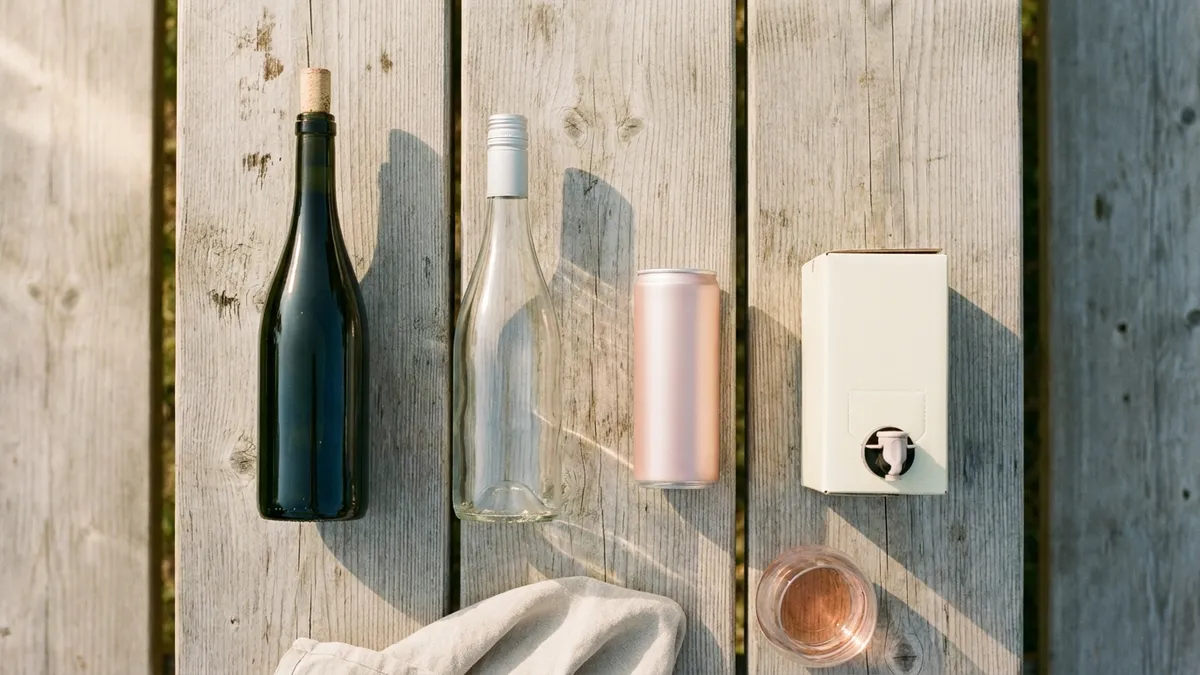
A box suits the long afternoon because of how the bag inside works. The bag collapses as wine is poured out, so the wine left inside is not touched by air until it reaches the tap. The last glass at six o'clock tastes like the first at noon. Our boxed wine guide covers what to look for on the carton, and the canned wine guide explains can sizes and which styles suit them.
If the wine will sit out longer than the meal, or more than four people are drinking, bring a box. If there are only two of you, bring a can each.
Which Wine Styles Are Best for a Picnic?
Dry rosé, crisp high-acid whites and light, low-tannin reds served cool are the three styles that suit a picnic best. All three are light in body, taste fresh when cold, and go with the salty, creamy and fruity food that fills a picnic basket.
Dry rosé
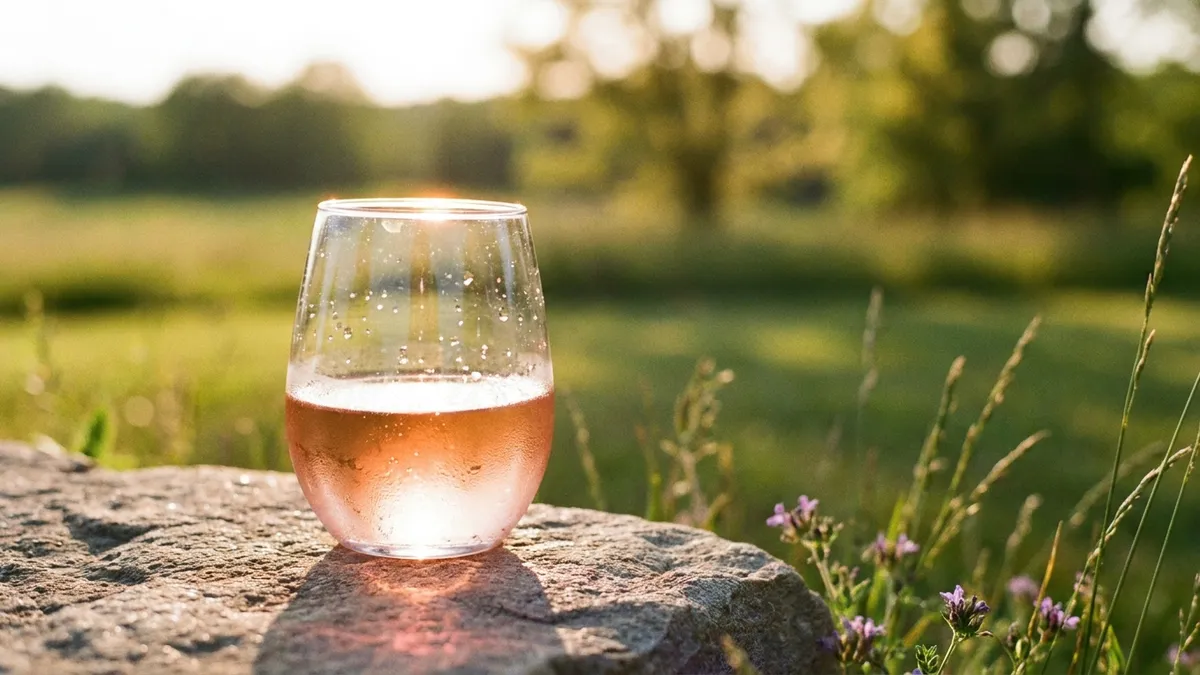
Rosé is the safest single bottle. Its colour comes from a short soak on red grape skins, typically a few hours to a day rather than the days a red gets. That short soak gives it a red wine's strawberry and raspberry fruit with a white wine's lightness and acid. Many rosés on the shelf are dry. A pale Provence-style rosé goes with nearly everything on the blanket, from goat cheese to ham sandwiches. The rosé wine guide explains the styles, from pale and dry to deeper and fruitier.
Crisp whites
Pick whites with high acid and no noticeable oak. Sauvignon Blanc tastes of lime and cut grass, with sharp acid that stays fresh in warm air. Portuguese Vinho Verde is lighter still, often with a faint prickle of fizz. Pinot Grigio works too. Leave heavily oaked Chardonnay for the dinner table, since its vanilla and buttery weight feel heavy in the sun.
Chilled light reds
Red wine works outdoors if it is light and low in tannin, the drying grip you feel on your gums. Warm air makes alcohol burn hotter and chilling makes tannin taste harsher, so a big Cabernet Sauvignon suffers either way on a picnic. Gamay, the grape of Beaujolais, tastes of fresh cherry and has so little tannin that a chill suits it. Pinot Noir and slightly fizzy Lambrusco do the same job.
If a red leaves your gums dry when you taste it at home, leave it at home.
Is Sparkling Wine Safe to Bring to a Picnic?
Yes, with care. A fully sparkling bottle such as Champagne holds 5 to 6 atmospheres of pressure, more than twice the pressure in a car tyre. Warmth and shaking raise that pressure further, which is why a bottle carried in a hot bag can shoot its cork and gush half its wine onto the grass.
A calmer option is a semi-sparkling wine, defined by its lower pressure of 1 to 2.5 atmospheres. Most Lambrusco and some Moscato fall here, and the faint prickle in Vinho Verde is gentler still. They fizz gently in the glass and travel with far less drama. Our guide to types of sparkling wine shows where each style sits.
Sunlight adds a second risk for sparkling wine and delicate whites in clear or pale glass. Ultraviolet light in the 325 to 450 nm range can cause lightstrike, a fault that smells of wet cardboard or wet wool. Red wines rarely suffer from it, because their pigments protect them. The lightstruck wine explainer covers the chemistry.
If the bottle will ride in a hot car or a sunny bag, bring a semi-sparkling style or sparkling cans. If you bring fully sparkling wine, chill it for at least half an hour in ice water, carry it upright and let it rest ten minutes before you open it.
What Wine Goes With Picnic Food?
Match the weight of the wine to the weight of the food: light cheeses, salads and sandwiches want light-bodied wines with good acidity. That weight match is the most basic rule in food and wine pairing, and a picnic makes it easy because nearly everything on the blanket is light.
Soft, young cheeses such as fresh goat cheese, mozzarella and young Brie go best with dry or off-dry whites, light reds and rosé. Their mild, tangy flavour and creamy texture get lost beside a heavy red. Our wine and cheese pairing guide goes through harder and bluer cheeses too.
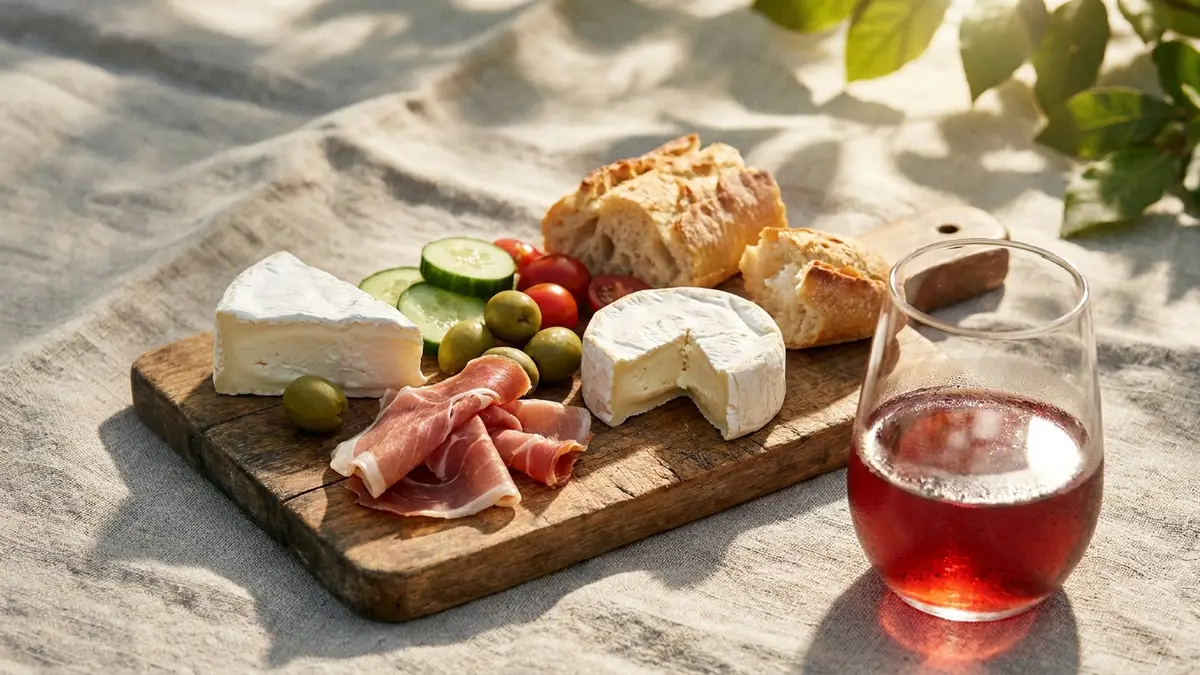
Other picnic foods each have one feature that decides the wine:
- Cured ham and salami bring salt and fat. A chilled Gamay or a dry rosé cuts the fat with acid.
- Salads with vinaigrette bring vinegar, which makes a low-acid wine taste flat. Pick the sharpest white in the bag, such as Sauvignon Blanc.
- Tomato sandwiches and gazpacho bring acid of their own. A crisp rosé or a Vinho Verde has enough acid to keep up.
- Fried chicken brings fat and a crisp, salty crust. Sparkling wine or a high-acid white scrubs the palate between bites.
- Strawberries and fruit tarts bring sugar, which makes a dry wine taste sour. Choose an off-dry rosé or a lightly sweet Moscato.
If the plate has vinaigrette or tomato on it, pick the white with the most acid. Sommy's Wine 101 course teaches acidity, tannin and body in bite-sized lessons. For the full framework of fat, salt, acid and sugar, see wine and food pairing and the rest of our food pairing hub.
Does Wine Need to Stay Cold at a Picnic?
Not every minute, but it should stay cool and shaded. A few warm hours will not make wine unsafe to drink. Sustained heat and repeated warm-cool swings are what damage it, by dulling the fresh fruit and, in extreme cases, pushing wine out past the closure.
The ideal storage temperature for wine is generally put at 13°C (55°F). Above that, wine ages faster. Heat damage, also called cooked wine, is reported to be the most widespread fault found in wines, and it turns fresh fruit into a stewed, jammy flatness. Under extreme heat, wine expands and can leak from the top of the bottle.
Swings matter as much as peaks. Each time a bottle warms and cools, pressure inside changes and can pump air past a cork faster than steady conditions would. A bottle that goes from fridge to hot car to cooler and back has taken several of those swings in one day.
So a picnic afternoon is a quality risk, not a food-safety one. Wine does not spoil like potato salad. No reliable figure exists for how many warm hours a given wine can take, so treat shade and ice as the rule rather than counting hours. Our guide to cooked wine and heat damage shows how to spot a bottle that has already suffered.
How Do You Keep Picnic Wine Cold Without a Fridge?
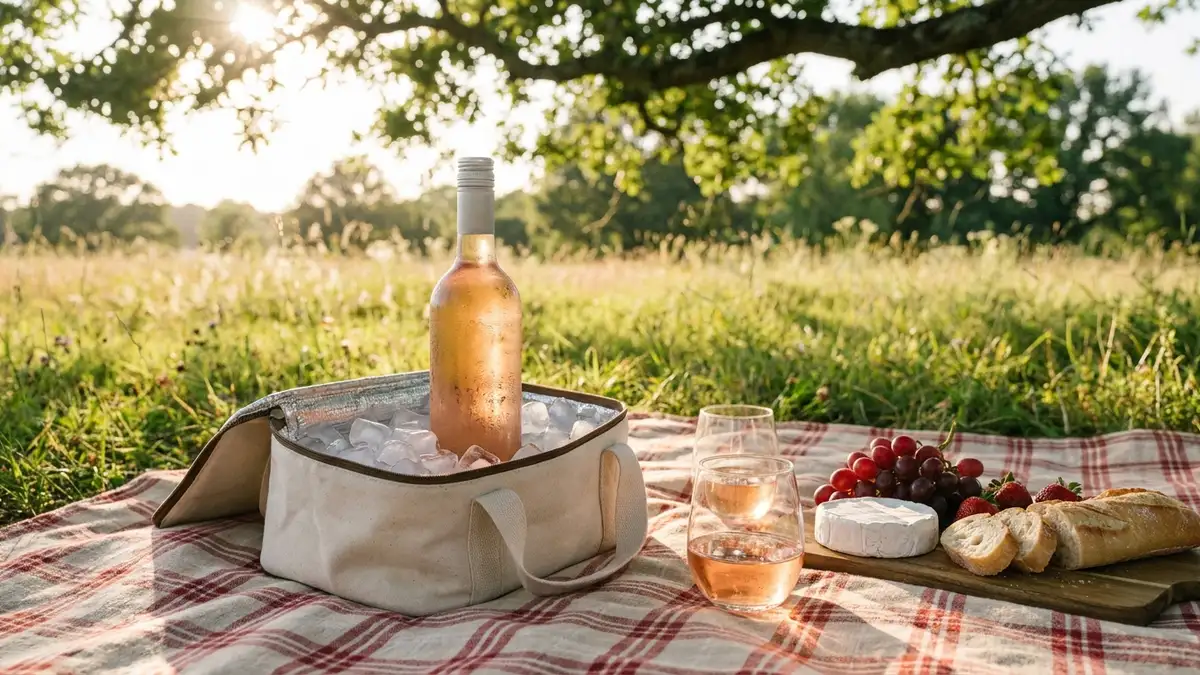
Leave home with the wine already cold and carry it in an insulated bag with ice and water. Ice alone touches the bottle in only a few spots, while ice water wraps around all of the glass, so it cools faster and holds the temperature longer.
Aim each style at its serving range from our wine serving temperature chart:
- Sparkling wine: 43 to 48°F (6 to 9°C), the coldest of the day.
- Light, crisp whites: 45 to 50°F (7 to 10°C).
- Dry rosé: 48 to 53°F (9 to 12°C).
- Light reds: 55 to 60°F (13 to 16°C), cool rather than cold.
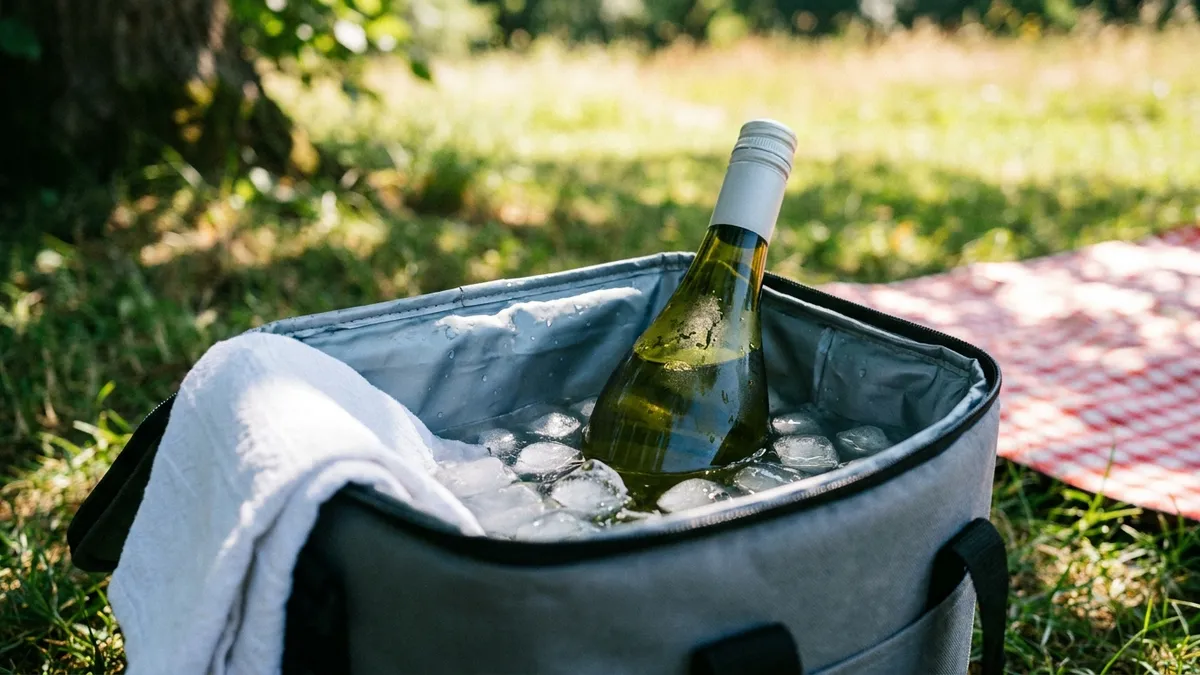
Chill the wine in the fridge overnight, then pack the bag just before leaving. Put the bag under a tree or an umbrella the moment you arrive. Pour small glasses and put the bottle straight back in the water, since a glass warms within minutes in summer air. Light reds need the opposite care: take them out of the ice water after ten minutes so they do not end up as cold as the whites. The how to chill wine fast guide has the quickest methods if a bottle arrives warm.
What Should You Pack for Each Kind of Picnic?
Choose the format by how long the wine will sit out and how many people are drinking, then choose the style by the food. Time and headcount decide between glass, cans and a box. The food decides between rosé, white and red, using the pairings above.
- A short evening picnic for two: a screw-cap rosé or two cans of crisp white, in ice water.
- A long lazy afternoon with friends: a box of dry rosé or light red, plus a cooler of ice water.
- A hike or a beach: cans only, since glass is heavy and breaks on rocks and sand.
- A cheese-and-charcuterie spread: a chilled Gamay and a dry rosé, so both the ham and the soft cheese are covered.
- A special occasion: fully sparkling wine chilled overnight, carried upright in ice water.
If you will be out past three hours in the sun, choose a box or cans in a cooler over a glass bottle. Rules on alcohol in parks vary by city and country, so check local rules before you go.
At the picnic, open the Sommy app at sommy.wine and photograph the label. The AI-guided tasting walks you through look, smell and taste, and saves the note in your tasting journal.
Put the picnic wine in the fridge tonight. Then pack the bag with a towel, a few frozen water bottles and two glasses, so tomorrow you only add ice and water.
Sources
Frequently Asked Questions
What is the best wine to bring to a picnic?
A dry rosé is the safest single choice, because it goes with cheese, cured meat, salads and fruit and tastes good cold. Crisp whites such as Sauvignon Blanc or Vinho Verde come next, then light reds like Gamay or Pinot Noir served cool. Pick a screw-cap bottle, a can or a box so you need no corkscrew and can close what is left.
Does wine need to be refrigerated for a picnic?
It does not need a fridge, but it should stay cool and shaded. A few warm hours will not make wine unsafe to drink. Sustained heat and repeated warm-cool swings do flatten the fruit and can push wine past the closure. Leave home with the wine already cold and carry it in an insulated bag with ice and water.
Can you bring red wine to a picnic?
Yes, if it is light and low in tannin and you serve it cool. Gamay, Beaujolais, Pinot Noir and Lambrusco taste fresher at around 55 to 60°F (13 to 16°C), which takes a short spell in ice water. Leave big tannic reds such as Cabernet Sauvignon at home, because warm air makes their alcohol burn and chilling them makes their tannin taste harsh.
Is canned or boxed wine good for a picnic?
Both suit a picnic well. Cans chill fast, weigh little, need no opener and give each person a measured serving, which makes them ideal for two or three people on a short outing. A box keeps the wine away from air until it is poured, so it stays fresh through a long afternoon with a group. Quality comes from the wine inside the package.
Is it safe to bring Champagne or sparkling wine to a picnic?
Yes, with care. A fully sparkling bottle holds 5 to 6 atmospheres of pressure, more than twice a car tyre, so warmth and shaking make the cork fly and the wine gush. Chill it well, carry it upright in ice water and let it rest before opening. Semi-sparkling styles such as Lambrusco hold only 1 to 2.5 atmospheres, and lightly fizzy Vinho Verde holds less than 1, so both travel more calmly.
How do you keep wine cold at a picnic without a cooler?
Chill the wine fully the night before, then wrap the bottle in a wet towel and pack it in the middle of the bag, away from the sun. Freeze a few water bottles to use as ice packs. At the picnic, set the wine in shade and pour small glasses so the rest stays cold. A bucket of ice and water is still the fastest way to bring it back down.
Sommy Team
LinkedInFounder & Wine Educator
The Sommy Team is building the world's most approachable wine education app, helping beginners develop real tasting skills through structured courses and AI-guided practice.