Wine for Camping: What to Pack, Chill and Carry Out

By the Sommy Team — AI-assisted, human-edited.
Updated Oct 1, 2026
Contents (10)
- Best Wine for Camping, in One Paragraph
- Which Format Should You Pack for Your Trip?
- How Much Does Wine Weigh in a Backpack?
- Which Wine Styles Survive a Camping Trip?
- How Do You Keep Wine Cold at a Campsite?
- Does Boxed Wine Stay Fresh for a Whole Trip?
- Is Canned Wine Good Enough to Bring?
- Do You Need Wine Glasses at Camp?
- What Do You Do With Leftovers and Empties?
- How Much Wine Should You Pack per Person?
TL;DR
Pick wine for camping by distance from the car. Screw-cap bottles suit car camping, cans or a soft pouch suit backpacking, and a bag-in-box suits a group over several nights. A full bottle weighs about 1.25 kg, 40% of it glass. Pack light, high-acid styles and drink the coldest-needing wines first.
The best wine for camping is decided by how far it has to walk. If the car is parked beside the tent, a screw-cap bottle is fine. If you hike in, glass is dead weight, so bring cans or wine poured into a soft pouch. For a group staying several nights, a bag-in-box keeps pouring fresh glasses long after a bottle would have gone flat.
Best Wine for Camping, in One Paragraph
Pack a dry rosé, a crisp unoaked white such as Sauvignon Blanc, or a light, low-tannin red such as Gamay, because all three taste right cool and handle warm afternoons. Match the format to the trip: screw-cap bottles for car camping, cans or a soft pouch for backpacking, and a bag-in-box for groups over several nights. A full 750 ml bottle weighs about 1.25 kg, and 40% of that is glass you carry out again. Keep everything in a shaded cooler and drink the wines that need the most cold first.
Which Format Should You Pack for Your Trip?
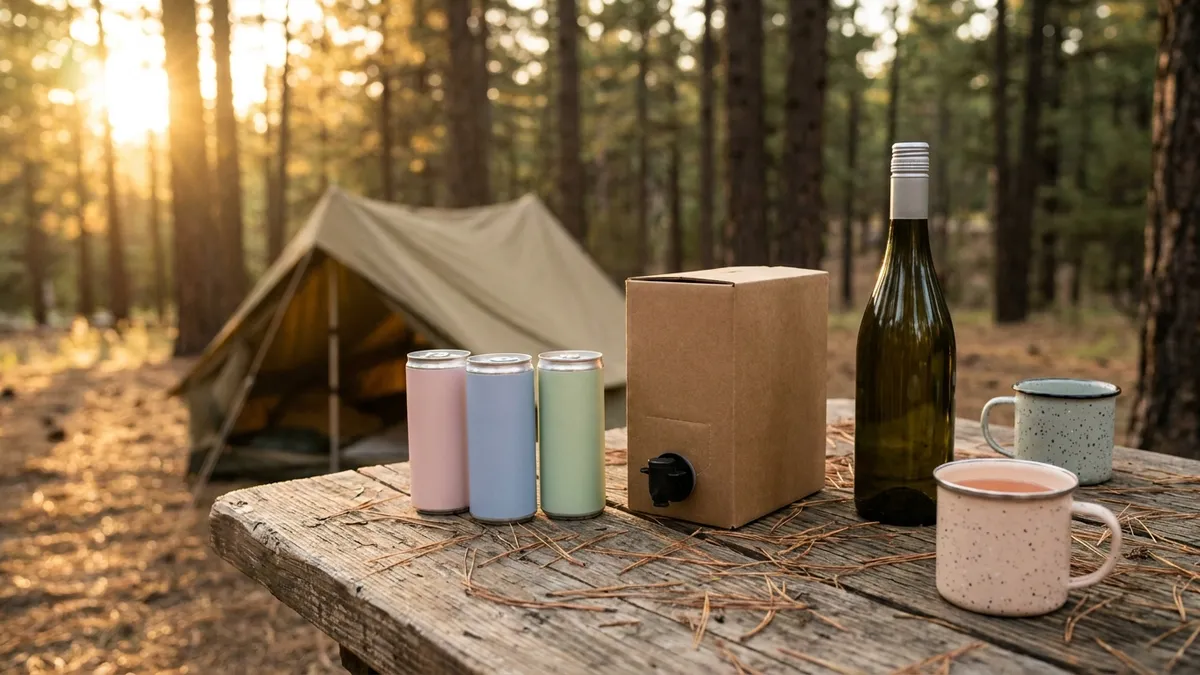
Choose by distance from the car. Screw-cap bottles suit car camping, cans suit hikes and short trips, and a bag-in-box (a sealed plastic bag of wine with a tap, inside a cardboard carton) suits a group camp of several nights. Cork is the weakest choice, because a pulled cork rarely goes back in tight.
| Format | Weight to carry | What you pack out | Once opened at camp | Pack it when |
|---|---|---|---|---|
| Screw-cap bottle | Heaviest: about 1.25 kg full | A heavy glass bottle that can break | Closes tight; finish within a day or two | The car is beside the tent |
| Cork bottle | Heaviest, plus a corkscrew | Glass and a cork | Hard to reseal | You will finish it at one meal |
| Cans | Light, no glass | Empty cans you can crush flat | None, one serving each | You hike in, or each person drinks a different wine |
| Bag-in-box | Light carton, but large volume | A flat carton and an empty bag | Fresh for the whole weekend | A group stays several nights |
| Soft pouch (wine decanted at home) | Lightest per glass | A rolled-up pouch | Drink within a day or two | You backpack and want a specific wine |
A screw cap earns its place in the car-camping box because it closes again by hand. It also reduces two wine faults: oxidation (air turning fresh fruit into bruised apple) and cork taint (a musty, wet-cardboard smell from a contaminated cork). The full trade-off is in our screw cap vs cork guide.
If the walk from the car takes more than a few minutes, leave the glass behind.
How Much Does Wine Weigh in a Backpack?
A full 750 ml bottle weighs about 1.25 kg, and roughly 40% of that is glass. The empty bottle alone averages about 500 grams, with heavy premium bottles reaching 900. The wine itself weighs close to 750 grams, the same as water, so every format carries that part.
The difference is what is left after the last glass. An empty bottle weighs two-thirds as much as the wine it held. Cans and a carton weigh a fraction of that, and a soft pouch rolls up to almost nothing.
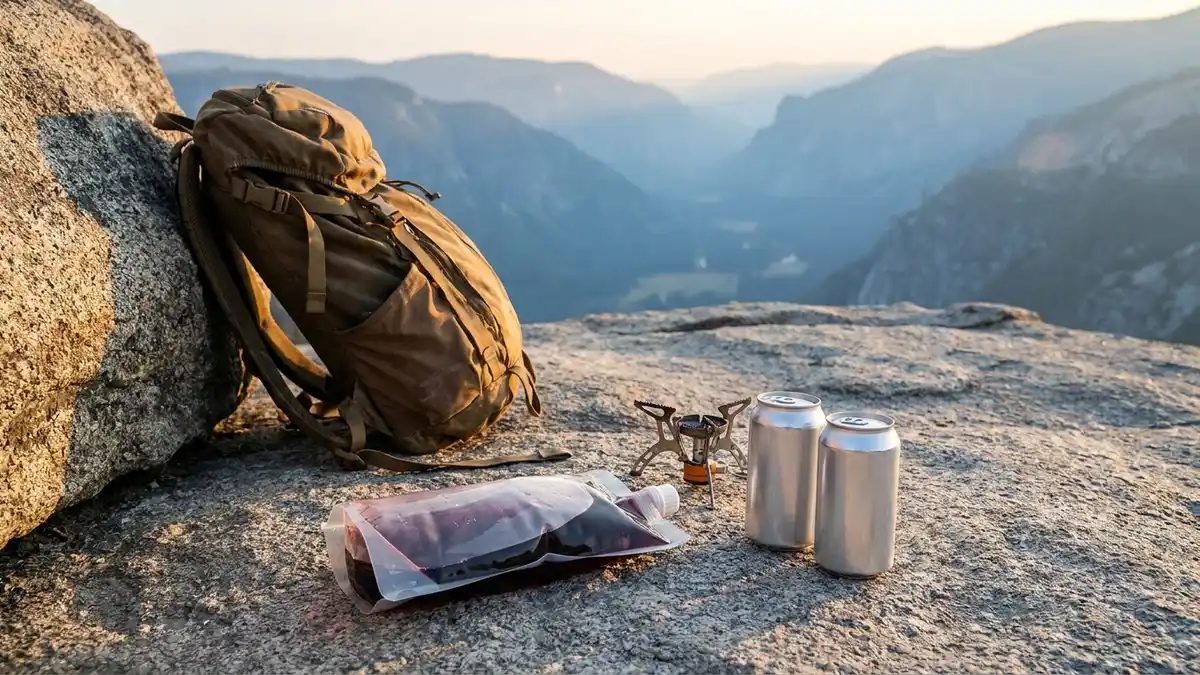
If the wine rides on your back, decant it at home into a clean, collapsible drinking pouch on the morning you leave. Fill it to the top and squeeze out the air before closing, since air in the pouch dulls the fruit within a day or two. Use a pouch that has never held anything flavoured. Plan to drink pouch wine on the first or second night, and keep cans for later in the trip.
Which Wine Styles Survive a Camping Trip?
Pack wines that taste right cool and forgive rough handling: dry rosé, crisp unoaked whites and light, low-tannin reds. Two traits decide it. Acidity (the tartness that makes your mouth water) keeps a wine tasting fresh as it warms in a mug. Low tannin (the drying grip on your gums) keeps a red pleasant when it is served cool.
- Dry rosé goes with almost anything off a camp stove, from sausages to foil-wrapped fish. The rosé wine guide explains how to spot the dry ones.
- Sauvignon Blanc tastes of lime and cut grass, with acid sharp enough to stay fresh after the ice melts. See the Sauvignon Blanc guide.
- Gamay tastes of fresh cherry and has so little tannin that a cool cooler suits it. See the Gamay wine guide.
Leave behind anything old, expensive or full of sediment. A shaken older red pours cloudy, and nobody decants beside a tent. Fully sparkling wine also needs care, because warmth and shaking raise the pressure in the bottle. Pack it only if it stays in the cooler until you open it.
Camp nights at altitude change the rule for reds. If the evening is cold and dinner comes off the fire, a medium-bodied red such as Merlot or Grenache at air temperature tastes right, because the cold air does the chilling for you. For day-trip lunches, the style picks in our wine for a picnic article apply unchanged.
How Do You Keep Wine Cold at a Campsite?
Load wine into the cooler already cold, and drink in order of how much cold each wine needs: sparkling and whites first, rosé next, light reds last. A cooler loses its cold a little every time it opens, so the first night gets the coldest wine.
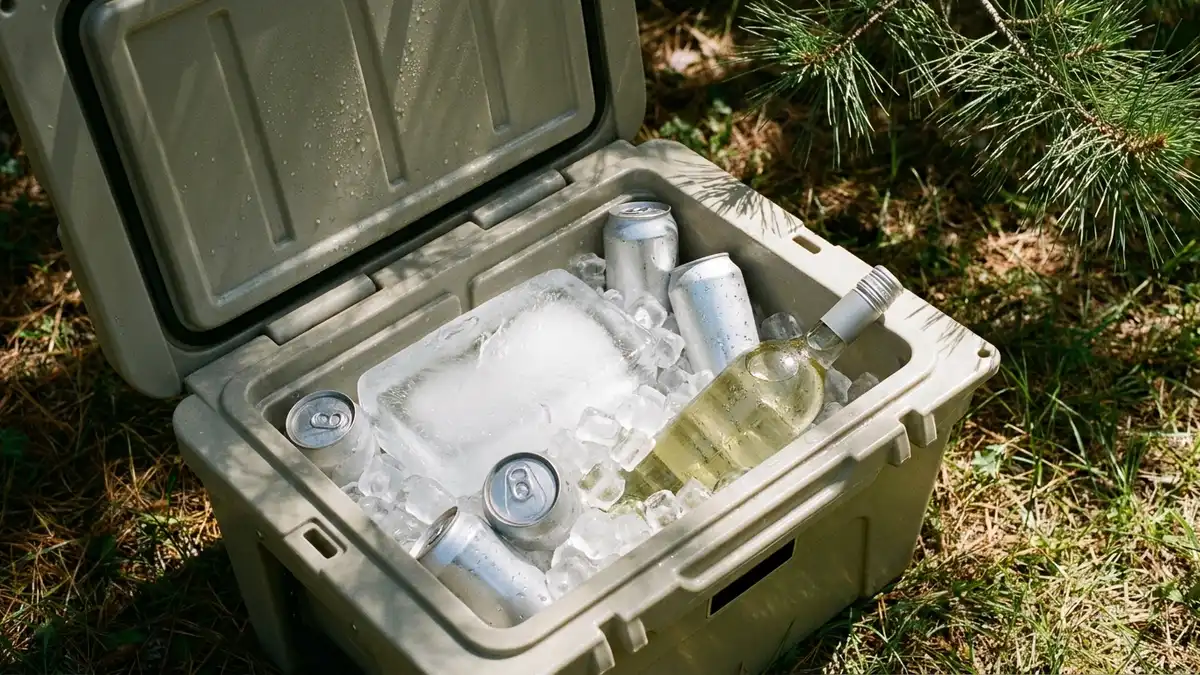
A few habits keep the cooler working for days:
- Chill everything at home overnight, so the ice is not spent cooling warm wine.
- Use a block of ice under the cans and bottles. A solid block melts more slowly than loose cubes.
- Keep the cooler in shade and closed, with a blanket or sleeping pad over it on hot days.
- Keep a separate cooler for food if you can, because it gets opened far more often.
Never leave wine in a parked car in the sun. A hot car is far above the cool room temperature reds are meant for, and heat makes wine taste flat and alcoholic. Our guide to how temperature affects wine taste explains why, and the wine serving temperature chart gives each style's target.
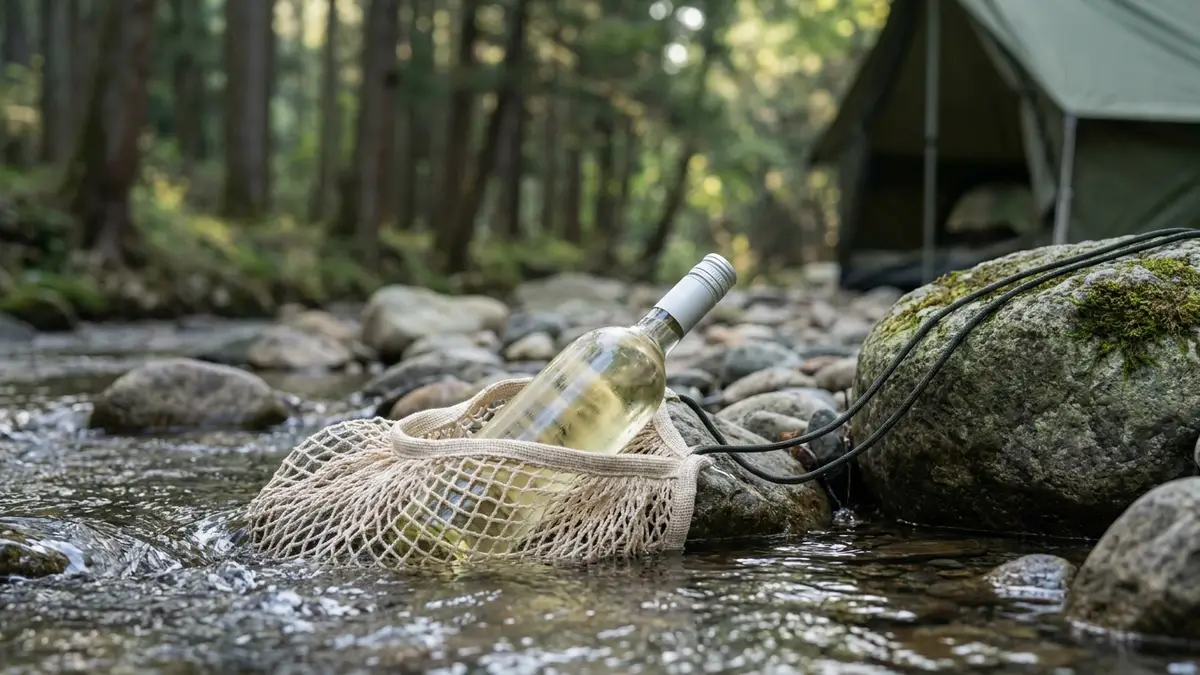
When the ice runs out, use the water around you. Put a closed screw-cap bottle or cans in a mesh bag, tie the cord to a rock or tree on the bank, and sink the bag in the coldest, shadiest part of a stream. Check that the current cannot carry it off. More fast-chilling methods, including the wet-towel trick, are in how to chill wine fast.
Does Boxed Wine Stay Fresh for a Whole Trip?
Yes, for a long weekend. The bag collapses as you pour, so the wine left inside is not touched by air until it reaches the tap. An open bottle fills with air as the level drops. The design dates back to a cask patented by the Australian winemaker Thomas Angove's company on 20 April 1964.
Boxed wine does not last forever once opened, though. Oxygen still creeps slowly through the plastic bag. In testing reported by Wine Spectator, opened boxes lasted two or three weeks before starting to fade, and the magazine notes that cold storage slows the fade. A box riding in a warm car fades sooner.
If the trip runs longer than a week, buy the smaller box size, or bring two and open the second halfway through. Our boxed wine guide covers what to look for on the carton.
Is Canned Wine Good Enough to Bring?
Yes. Canned wine was first produced in Italy in 1982. Early attempts often failed because acidic wine attacked the can's liner (the thin coating that keeps wine off the metal), causing corrosion, leaks and sulfur smells. An Australian company solved the packaging problems in the early 2000s after about five years of research.
A can says nothing about the wine's style or quality, despite its reputation for sweet, fizzy wine. Dry whites, rosés and light reds all come in cans now. Each one is a sealed serving, so nothing goes stale after opening and every person can drink something different. Read the volume on the can, because sizes vary and a large can holds more than one glass. Our canned wine guide explains the sizes and why an odd can sometimes smells of rotten eggs.
If you hike in, pour each can into a mug rather than drinking from it. You smell far more of the wine from an open cup.
Do You Need Wine Glasses at Camp?
No. An unpainted stainless-steel or enamel mug, or a plastic stemless tumbler, does the job. Pick the widest mouth you own, fill it only a third full, and you can still swirl and smell. Glass shape changes how much aroma reaches you, as our piece on whether glass shape affects taste explains.
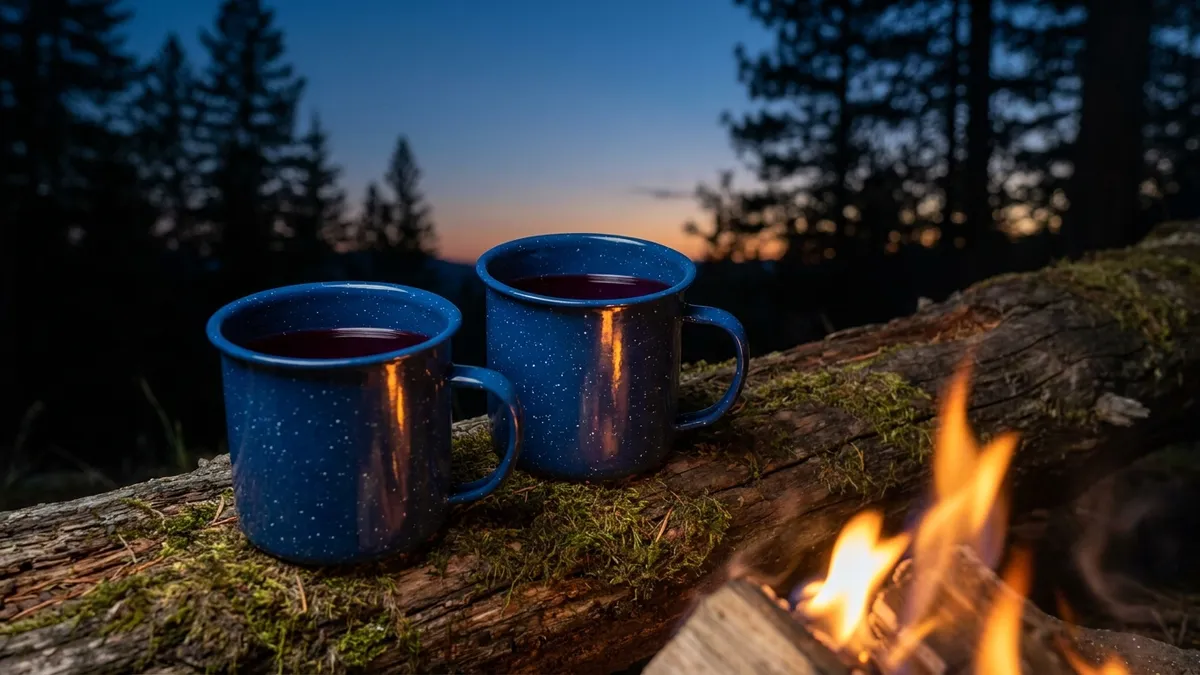
Rinse mugs with clean water rather than soap you cannot rinse away, since soap residue flattens the fruit in the next pour. Keep a dedicated wine mug if your other mugs smell of coffee.
What Do You Do With Leftovers and Empties?
Pack out every can, carton, bag and bottle. Crush cans flat, pull the bag out of the box and roll it up, and flatten the carton to save space. Seal leftover wine and take it home rather than pouring it onto the ground or into a stream.
For half-finished wine, screw the cap back on and put the bottle back in the cooler upright. A screw-cap white or rosé tastes fine the next evening, and our guide to how long wine lasts after opening gives the limits by style. Alcohol and glass rules vary between campgrounds, parks and countries, so check the site's rules before you pack.
How Much Wine Should You Pack per Person?
Count glasses first, then bottles. A 750 ml bottle pours five 150 ml glasses, as the breakdown in how many glasses in a bottle shows. Estimate the glasses each adult drinks at an evening meal at home, multiply by the number of nights, and divide by five.
Pack to that number and no more, because every extra bottle is weight to carry and packaging to bring home. Formats and styles for other occasions sit in the beginner's buying hub.
Before the trip, put a full bottle and a can on a kitchen scale and decide how far each one should walk. Then open the wine you plan to bring tonight, photograph the label with Sommy and note how it tastes cool and at room temperature, so you know where it belongs in the cooler.
Sources
Frequently Asked Questions
What is the best wine to take camping?
A dry rosé, a crisp unoaked white such as Sauvignon Blanc, or a light, low-tannin red such as Gamay. All three taste right cool and survive warm afternoons. For format, take screw-cap bottles when the car is close, cans or a soft pouch when you hike in, and a bag-in-box when a group stays several nights.
How do you keep wine cold while camping?
Pack it cold into a cooler with a solid block of ice, keep the cooler shaded and closed, and drink sparkling and white wines first while the ice is fresh. Light reds come last because they only need to be cool. If the ice runs out, sink a closed bottle or cans in a mesh bag in a cold stream, tied to a rock.
Can you take wine backpacking?
Yes, but leave the glass at home. An empty 750 ml bottle weighs about 500 grams, which you carry in and then carry out again. Pour the wine into a clean, collapsible soft pouch the morning you leave, or pack cans, and drink it within a day or two, since air in the pouch dulls the fruit.
Does boxed wine go bad once opened at a campsite?
Not over a long weekend. The bag inside the box collapses as you pour, so the wine left in it is not touched by air until it reaches the tap. It does still fade: in Wine Spectator's testing, opened boxes lasted two or three weeks before losing freshness, and heat in a car or tent shortens that.
Should red wine be chilled when camping?
A light red should be cool, so keep it in the cooler on warm days and take it out before you pour. A warm tent or car is far above the cool room temperature reds are meant to be served at, and heat makes the alcohol taste hot. On a cold mountain evening, a red at air temperature needs no chilling at all.
How much wine should you bring camping?
Count glasses rather than bottles. A 750 ml bottle pours five 150 ml glasses. Estimate the glasses each adult drinks at an evening meal at home, multiply by the number of evenings, and divide by five for bottles. Add nothing extra for the drive, and remember everything you bring has to be carried and packed out.
Sommy Team
LinkedInFounder & Wine Educator
The Sommy Team is building the world's most approachable wine education app, helping beginners develop real tasting skills through structured courses and AI-guided practice.