Canned Wine: Everything You Need to Know Before Buying

By the Sommy Team — AI-assisted, human-edited.
Updated Sep 23, 2026
Contents (9)
- Canned Wine, in One Paragraph
- Is Canned Wine Really the Same Wine as the Bottle?
- Why Does Some Canned Wine Smell Like Rotten Eggs?
- Which Wine Styles Work in a Can, and Which Don't?
- How Much Wine Is in a Can, and How Does It Compare to a Bottle?
- How Long Does Canned Wine Last, Opened and Unopened?
- Is Canned Wine Better for the Environment Than Bottled Wine?
- How Should You Serve Wine From a Can?
- Who Is Canned Wine Actually For?
TL;DR
Canned wine is ordinary wine sealed in a lined aluminum can, built for drinking within about 18 months rather than aging. A 250 mL can holds roughly 1.7 standard drinks. Peer-reviewed Cornell research traced the occasional rotten-egg smell to sulfur dioxide reacting with aluminum through thin can liners, which careful producers can avoid.
Canned Wine, in One Paragraph
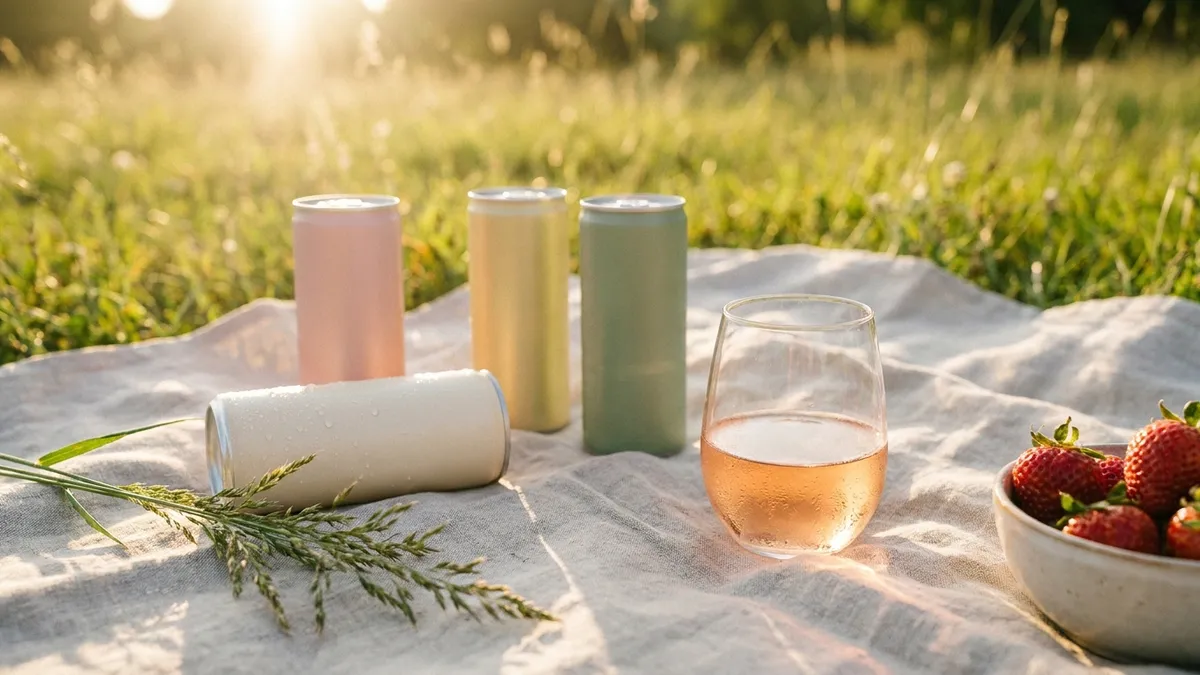
Canned wine is ordinary wine sealed in an aluminum can whose inside is coated with a thin polymer liner (a lacquer film that keeps the liquid off the metal). Most cans hold 187, 250 or 375 mL, so a 250 mL can is about 1.7 standard drinks and a 375 mL can is half a bottle. Cans suit wines built to drink young, especially rosé, crisp whites, sparkling styles and chilled light reds, and industry guidance gives an unopened can roughly 18 months of shelf life. The one format-specific flaw is a rotten-egg smell that can appear when a wine with too much free sulfur dioxide sits in a thinly lined can for months. Peer-reviewed Cornell research has now mapped exactly why that happens and how producers avoid it, which is the part no marketing page tells you.
Is Canned Wine Really the Same Wine as the Bottle?
Yes. Nobody makes a different liquid for cans. The wine is fermented, blended and finished exactly as it would be for glass, then filled on a canning line. The liner means the wine never touches aluminum, so a fresh, well-made can tastes the same as the same wine from a bottle. Where cans differ is what happens over months on the shelf, and which wines producers choose to put in them.
The idea is older than it looks: US wineries first tried canning wine in 1936 and failed, an Italian producer was canning wine by 1982, and the modern liner and preservation process arrived from Australia in the early 2000s.
One thing has not changed: the can is only as good as the wine inside it. Judging the grape, the style and the freshness matters more than the container, which is the same lesson our boxed wine guide draws for bag-in-box, and the screw cap vs cork debate draws for closures.
Why Does Some Canned Wine Smell Like Rotten Eggs?
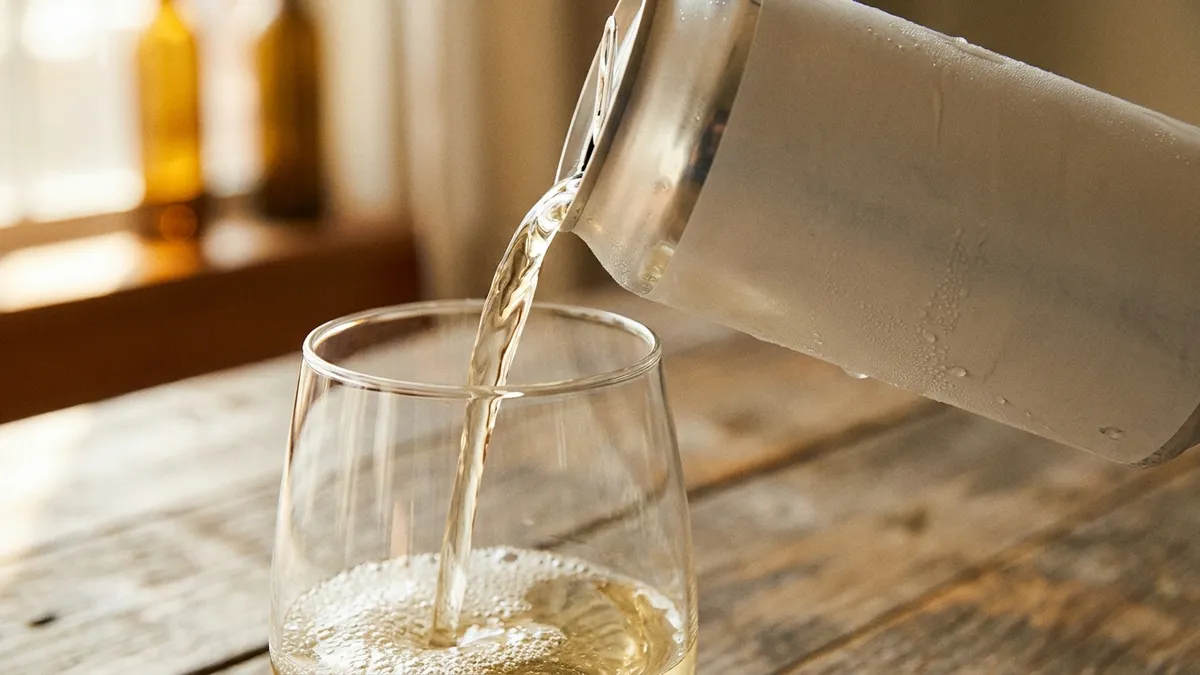
Because a small amount of the wine's own preservative reacts with the aluminum through the liner and produces hydrogen sulfide (H2S), the compound behind the rotten-egg smell. A Cornell University team identified the mechanism in peer-reviewed studies published in the American Journal of Enology and Viticulture in 2023 and 2024. The nose detects hydrogen sulfide at roughly 1 microgram per litre, so it takes very little to notice.
Winemakers add sulfur dioxide (SO2) to almost every wine as an antioxidant and antimicrobial, and only a fraction of it is in the active, unbound form called molecular SO2. That fraction protects the wine, and it is also what does the damage in a can. Liners have microscopic pinholes and thin patches. Molecular SO2 slips through those gaps, reacts with the aluminum wall, and the sulfur comes back out as hydrogen sulfide. Our guide to sulfites in wine explains the normal, harmless role SO2 plays before it ever meets a can.
The numbers make the risk concrete. In the Cornell trials, wines with more than about 0.5 ppm of molecular SO2 showed significant increases in hydrogen sulfide within four to eight months of canning. In one study, high-SO2 wines averaged 28.7 micrograms per litre of H2S after four months, with some samples above 100, while low-SO2 versions of the same wines averaged 2.2.
The liner matters as much as the wine. In a trial lasting up to 32 weeks, cans with acrylic liners produced up to 1,307 micrograms per litre of H2S within eight weeks (median 162), while cans with a BPA epoxy liner peaked at 51.8 (median 11.8) after 32 weeks. Epoxy-lined cans also varied by supplier: with the same wines, one supplier's cans averaged 5.9 micrograms per litre while two others, one using the identical liner type, averaged 36.6, and thicker coatings tracked with less H2S.
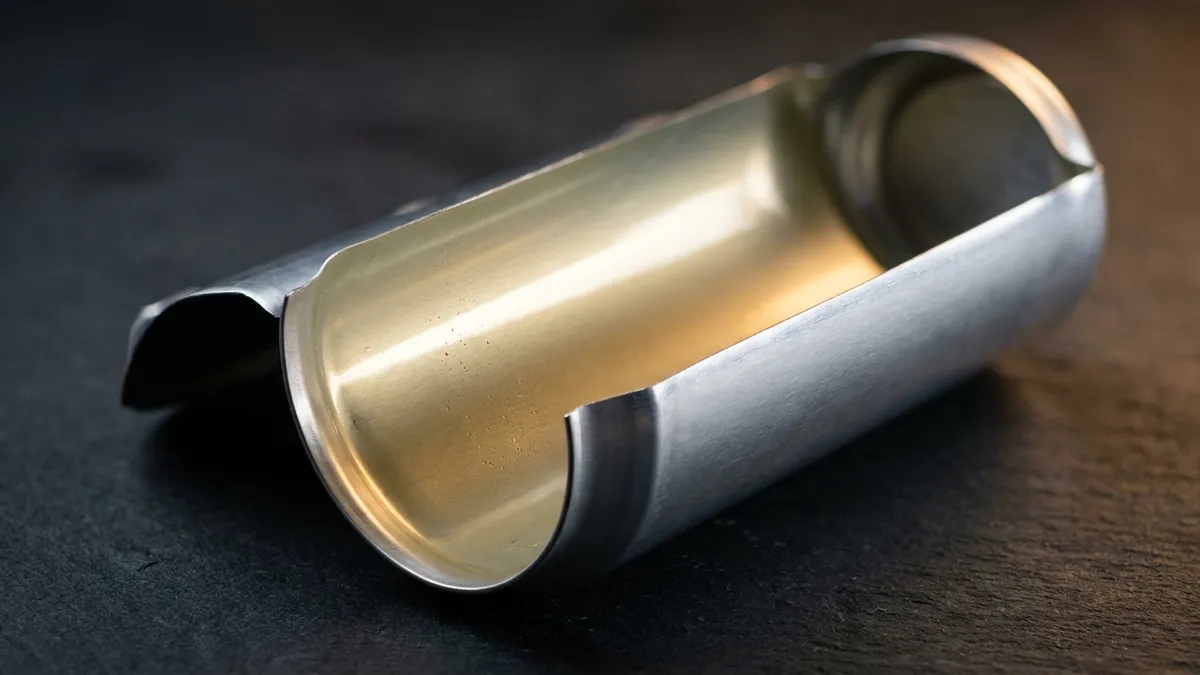
The researchers' recommendation is simple: keep molecular SO2 below roughly 0.4 mg/L and use an epoxy liner, which together kept H2S low through up to eight months of storage. Careful producers can do both.
As a drinker, you can buy from shops that sell cans quickly, keep them cold, and pour into a glass. The wider family of these smells, from struck match to rubber, is covered in our guide to sulfur smells in wine, and the fix is the same swirl-and-wait routine we teach for smelling reduction in wine.
Which Wine Styles Work in a Can, and Which Don't?
Cans suit wines made to be drunk young and cold: dry rosé, crisp aromatic whites, sparkling wine and spritzers, and light, low-tannin reds that take a chill. They do not suit age-worthy, tannic or heavily oaked wines, which need years in glass to soften and gain nothing from an 18-month window. The pattern is not a quality judgment; it is a match between a wine's drinking window and the container's.
The fresh styles win because their appeal comes from primary fruit and acidity (the mouth-watering freshness that makes a wine feel crisp), both at their best in the first year or two, and a dark, airtight, easily chilled can protects exactly those qualities. The wines that lose the most are ones whose value lies in slow change, such as a structured red whose tannins (the drying grip you feel on your gums) need a decade to relax.
- Dry rosé is the natural fit, and one of the styles that drove the format. Pale, dry pinks want to be cold and young. Our rosé wine guide covers the styles.
- Crisp whites such as Sauvignon Blanc, Vermentino, Albariño and unoaked Chardonnay carry their aromatics well and are best in the first year anyway.
- Sparkling and spritz styles gain from a can's pressure tolerance. Expect lighter, fruit-led bubbles rather than long-aged traditional-method wines; see the types of sparkling wine for where each sits.
- Light reds such as Gamay, Zweigelt, Pinot Noir and juicy Grenache blends work when served chilled, because low tannin and bright fruit read as refreshing rather than harsh.
- Lower-alcohol styles and spritzers are common in cans, since the format already signals casual, portion-sized drinking. Our guide to low-alcohol wines explains how those are made.
For what "drink young versus lay down" means across every category, the wine styles hub walks through each family and its natural window.
How Much Wine Is in a Can, and How Does It Compare to a Bottle?
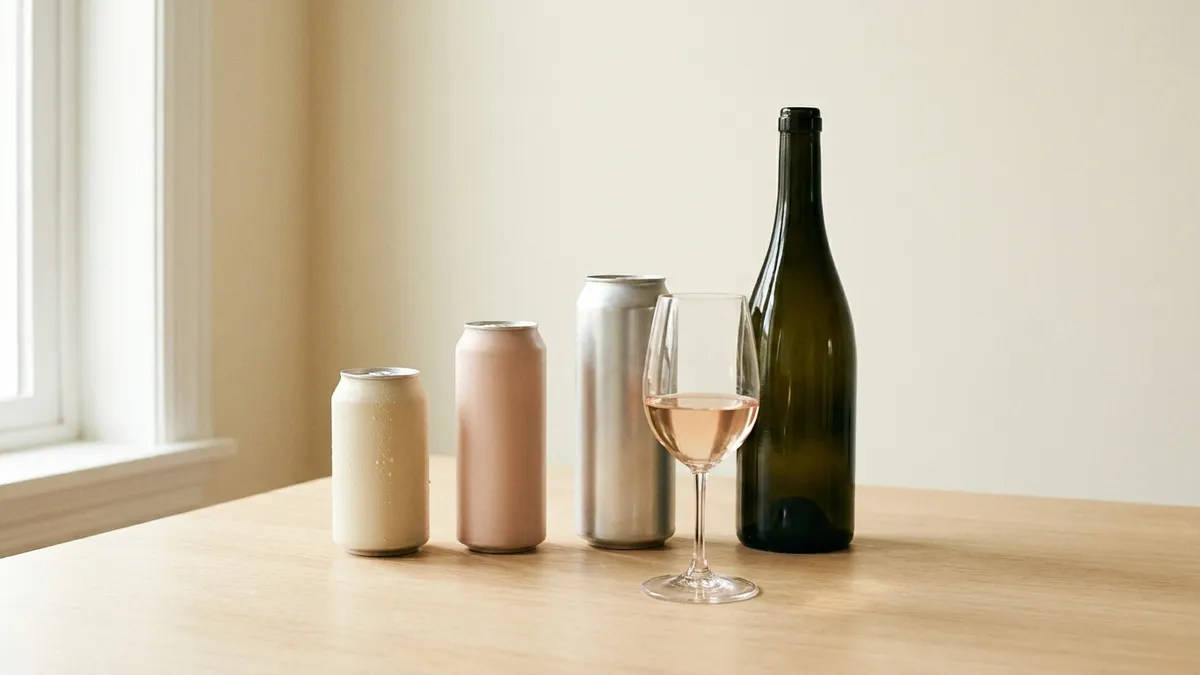
The three common can sizes are 187 mL (a quarter bottle), 250 mL (a third of a bottle) and 375 mL (half a bottle), with 500 mL cans in some markets. A standard bottle holds 750 mL, or about five 150 mL restaurant pours. A can looks like one serving, but only the smallest size actually is.
The honest measure is the standard drink, the amount of liquid that contains roughly 14 grams of pure alcohol under the US definition, which works out to a 150 mL pour at 12 percent alcohol. For a 12 percent wine, a 187 mL can is about 1.3 standard drinks, a 250 mL can about 1.7, a 375 mL can about 2.5, and a 500 mL can about 3.4. A 13.5 percent wine pushes each of those up by roughly an eighth. Our responsible wine drinking guide covers how to pace an evening once you know the number.
A note for US readers, because it is often mangled online. Wine may only be sold in the container sizes on the TTB's standards of fill, the federal list of permitted volumes, and cans in the 187, 250 and 375 mL family were already on it. In January 2025 the TTB added a longer set of wine sizes (180, 300, 330, 360, 473, 550, 568, 600, 620, 700 and 720 mL, plus 1.8 L and 2.25 L). You may read that the rule was written to legalize canned wine. It was not: it broadened the list for wine in every container, and the can-specific language in the same rulemaking concerned distilled spirits.
| Can | Bottle | Bag-in-box | |
|---|---|---|---|
| Typical volume | 187, 250 or 375 mL | 750 mL | 1.5 to 3 L |
| Standard drinks (12% ABV) | About 1.3 to 2.5 | About 5 | About 10 to 20 |
| Unopened shelf life | Around 18 months (industry guidance) | Years for age-worthy wines | Months; a trickle of oxygen enters over time |
| After opening | Same day; no reseal | 3 to 5 days chilled and stoppered | 3 to 6 weeks; the bag collapses and keeps air out |
| Weight for 750 mL of wine | About 30% less than a bottle | Heaviest; mostly glass | Lightest per glass; ships flat |
| Best-suited styles | Rosé, crisp whites, sparkling, chilled light reds | Everything, including wines for aging | Fresh everyday reds, whites and rosé |
| Recycling | Aluminum; 69% global can recycling rate | Glass; widely recycled but heavy to move | Cardboard recycles; the plastic bladder often does not |
How Long Does Canned Wine Last, Opened and Unopened?
Unopened, treat canned wine as an 18-month product from the day it was packaged, and drink it sooner when you can. Opened, a can has no reseal, so finish it the same day; a poured glass fades within a few hours like any other wine. Those numbers are industry guidance, but the science above explains why the window is shorter than a bottle's.
Two clocks run inside a can. The first is the ordinary drinking window of a young wine, a year or two for the styles producers choose to can. The second is the liner clock: any sulfur reaction builds with time, so an aromatic white that was spotless at three months can carry a faint egg note at fourteen. Many cans carry no clear best-before date, so buy where turnover is fast and keep them cold, because heat speeds up every reaction in wine. Our guide to how to store wine at home applies to cans too.
Once opened, a foil-covered can in the fridge holds for the evening but not for tomorrow. For the day-by-day fade rates of every style, see how long wine lasts after opening. The single-serve can solves the leftover problem differently from wine preservation tools: it removes the leftover altogether.
Is Canned Wine Better for the Environment Than Bottled Wine?
On the measures that have been published, cans win on weight, transport and recycling. Independent, full life-cycle comparisons of wine in cans versus glass are still scarce and swing with assumptions such as recycled content, so treat any tidy percentage from a producer as its own estimate rather than settled science.
Here is what industry sources told Fortune in 2019. A wine-canning executive said three 250 mL cans, holding the same 750 mL as one bottle, weigh about 30 percent less than that bottle, and that moving the same volume of wine takes roughly one truckload of cans for every two truckloads of glass. Can maker Ball Corporation put the global recycling rate for aluminum cans of all kinds at 69 percent. Recycling aluminum uses only about 5 percent of the energy needed to make new aluminum from ore, and a recycled can can be back on a shelf in about 60 days.
What the numbers leave out is the front end: refining new aluminum is energy-intensive, so a can's footprint depends on how much recycled metal it contains. Our boxed wine guide reports the life-cycle figures published for bag-in-box, which comes out well ahead of glass on most measures. The reasonable summary: for wine you will drink within months, a can is a lighter choice than a bottle, and its edge grows the more reliably it gets recycled.
How Should You Serve Wine From a Can?
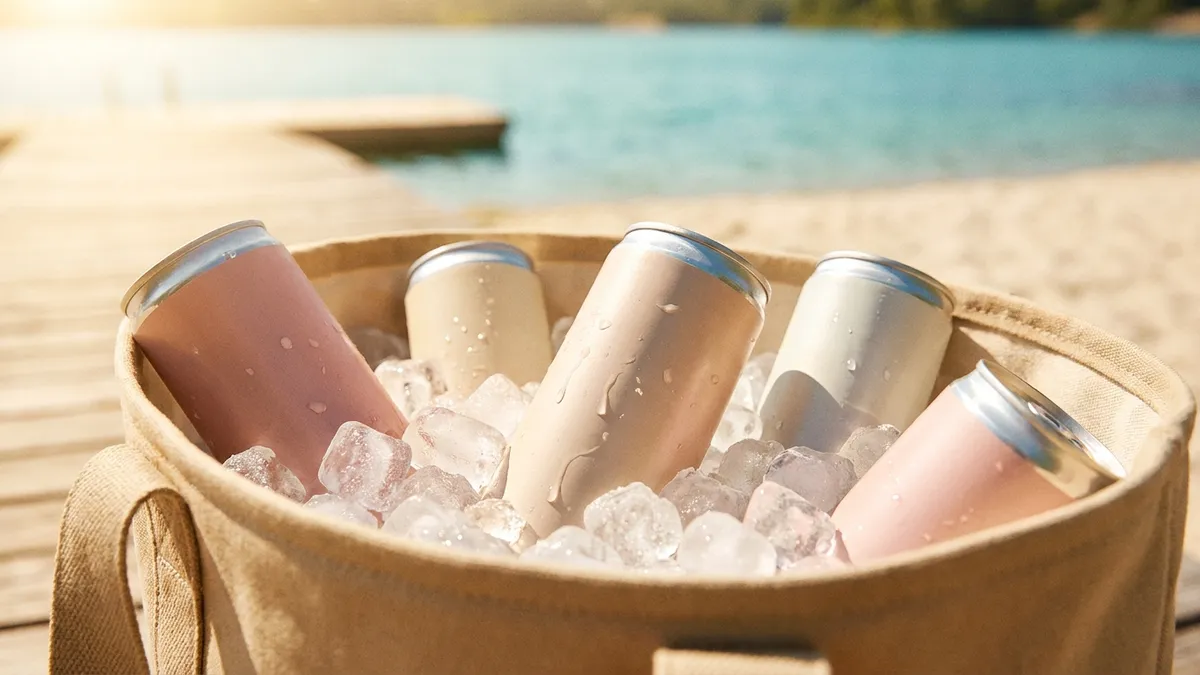
Cold, and in a glass. Chill whites, rosé and sparkling cans to 7 to 13°C (45 to 55°F), and light reds to around 12 to 14°C (54 to 57°F). Then pour. Drinking from the can sends far less aroma to your nose, and aroma is most of what you taste.
Rinse the top of the can before opening, pour sparkling wine slowly down the side of the glass to keep the fizz, and if a red is too cold to show much fruit, cup the glass in your hands for a minute. Our wine serving temperature chart has the full range for every style.
Two or three cans also make a mini tasting flight for the price of one bottle. Run each through the same look, smell and taste routine from our guide to how to taste wine. If you would like a hand, Sommy's AI-guided tasting mode lets you photograph the can's label and then walks you through look, smell and taste, saving your notes to a tasting journal so you can see which styles you keep coming back to.
Who Is Canned Wine Actually For?
Canned wine is for anyone who wants a single glass without opening a bottle, wine where glass is banned or impractical, and an easy way to try several styles in small amounts. It is not for collectors, for wines that need years to come around, or for anyone hoping to spend less per millilitre than a bottle costs.
That last point deserves honesty. Per millilitre, a can is often no cheaper than a bottle of similar quality, because you are paying for portioning and packaging. Per occasion, though, a can usually costs less. If value per glass is the goal, a bottle or box of the same wine wins; if the goal is exactly one glass of something good, a can wins. For newer drinkers, the low commitment and casual styles make cans a friendly entry point, the same place our guide to wine for people who do not like wine starts from.
Read the volume and the alcohol percentage, buy it fresh, keep it cold, and pour it into a glass, and canned wine is simply wine in a container built for the moment you are in. To build the tasting habit that makes every format more enjoyable, start with a free course at sommy.wine, where Wine 101 covers look, smell and taste one short lesson at a time.
Sources
- Cornell Chronicle: What's behind canned wine's rotten-egg smell? Cornell team IDs culprit (2024)
- Montgomery et al., American Journal of Enology and Viticulture 74(1), 2023: Hydrogen sulfide formation in canned wines under long-term and accelerated conditions
- Sheehan et al., American Journal of Enology and Viticulture 75(1), 2024: Hydrogen sulfide formation in canned wines, variation among can sources
- Alcohol and Tobacco Tax and Trade Bureau (TTB): TTB adds new standards of fill for wine and distilled spirits (January 2025)
- Fortune (2019): Canned vs. bottled, which type of wine is more sustainable? (industry recycling, weight and transport figures)
Frequently Asked Questions
Does canned wine taste different from bottled wine?
Well-made canned wine tastes the same as the same wine from a bottle, because the liquid never touches metal. The exception is a rotten-egg note that can develop when a wine with too much free sulfur dioxide sits in a thinly lined can for months. Cornell researchers showed that low molecular sulfur dioxide and an epoxy liner keep hydrogen sulfide low through up to eight months of storage.
How many glasses of wine are in a can?
It depends on the can. A 187 mL can is a generous single glass. A 250 mL can is about 1.7 standard drinks at 12 percent alcohol, or about one and two-thirds 150 mL restaurant pours. A 375 mL can is half a bottle, about 2.5 standard drinks. A 500 mL can is two thirds of a bottle, roughly 3.4 standard drinks. Check the volume and the alcohol percentage on the can before assuming it is one serving.
How long does canned wine last?
Industry guidance puts unopened canned wine at around 18 months from packaging, and fresher is better, because any sulfur reaction inside the can builds with time. Many cans carry no clear best-before date, so buy from shops with fast turnover and drink within a few months. Once opened, a can has no reseal, so finish it the same day. A poured glass fades within a few hours like any wine.
Why does some canned wine smell like rotten eggs?
The smell is hydrogen sulfide, which the nose detects at roughly one microgram per litre. Cornell researchers found that molecular sulfur dioxide in the wine reacts with the aluminum through microscopic gaps in the can's liner, releasing hydrogen sulfide over months. Acrylic liners and thin coatings let far more form than thick epoxy liners. Pour the wine into a glass and swirl hard; a mild case often clears.
Is canned wine better for the environment than bottled wine?
By industry figures, cans win on weight and recycling: three 250 mL cans weigh about 30 percent less than one 750 mL glass bottle, the same volume of wine needs roughly one truck of cans for every two trucks of bottles, and aluminum cans have a 69 percent global recycling rate with recycling taking about 5 percent of the energy of new metal. Independent life-cycle comparisons of wine in cans versus glass are still scarce, so treat percentage claims from producers with care.
What wines come in cans?
Mostly wines built to drink young: dry rosé, crisp aromatic whites, sparkling wine and spritzers, and light, low-tannin reds meant to be served chilled. These styles rely on fresh fruit and acidity rather than years of aging, which suits a container with an 18-month window. Big, tannic, oak-aged reds and wines meant for a cellar are poor candidates and rarely appear in cans.
Sommy Team
LinkedInFounder & Wine Educator
The Sommy Team is building the world's most approachable wine education app, helping beginners develop real tasting skills through structured courses and AI-guided practice.