A Practical Guide to Responsible Wine Drinking

By the Sommy Team — AI-assisted, human-edited.
Updated Apr 29, 2026

Contents (14)
- Wine, Honestly Considered
- Responsible Wine Drinking, in 90 Seconds
- The Standard Drink Reality Check
- Government Guidelines, Rapidly Tightening
- The "Moderation" Myth
- Quality Over Quantity — The Real Shift
- Practical Pacing Strategies
- Mindful Drinking Habits
- Driving and BAC
- Pregnancy and Drinking
- When to Talk to a Doctor
- The Cultural Reset
- A Practical 30-Day Reset
- Closing Thoughts
TL;DR
Responsible wine drinking is mostly drinking less. One standard drink is 5oz at 12% ABV — high-ABV wines mean smaller pours. Pace at one glass per hour, alternate water, eat first, and keep alcohol-free days each week. Quality over quantity is the cultural shift, and the only fully safe number from a population-health view is zero.
Wine, Honestly Considered
Wine is a fermented alcoholic beverage. That sentence is the simplest, most honest starting point for any conversation about responsible wine drinking. Wine is also delicious, culturally rich, and central to thousands of years of shared meals — none of that is in dispute. But pretending it carries no health risks because it comes with a cork and a cheese plate has been the default for too long.
This guide is a practical, non-moralizing look at how to drink wine in a way you can sustain — the actual math behind a standard drink, what current guidelines say, how to pace an evening, and how to build habits that protect both your enjoyment of wine and your health. For technical context on what alcohol does the next morning, our wine hangover prevention and wine headache causes guides go deeper on the chemistry.
Responsible Wine Drinking, in 90 Seconds
Responsible wine drinking is mostly drinking less, more intentionally. One standard drink is 5oz of 12% ABV wine — roughly 14 grams of pure alcohol. Higher-alcohol wines mean smaller pours: 4.4oz at 13.5%, 4oz at 15%. Government guidelines are tightening: the US suggests at most 1-2 drinks a day, the UK 14 units a week with alcohol-free days, and Canada's 2023 update calls 2 drinks per week low risk. The WHO has stated there is no safe level from a population-health view. Pace at one glass per hour, alternate water, eat first, stop two to three hours before bed, and keep alcohol-free days each week. The cultural shift is quality over quantity — fewer glasses, paid more attention.
The Standard Drink Reality Check
Most wine drinking goes wrong at the pour. People genuinely believe they had "two glasses" when they had four standard drinks. The fix starts with a number you can keep in your head.
A standard drink is the international shorthand for a unit of pure alcohol — about 14 grams in the US (other countries use different figures; see our standard drink of wine explainer for the UK, Canada and Australia). That maps to:
- 5oz (150ml) of wine at 12% ABV — one standard drink
- 4.4oz (130ml) of wine at 13.5% ABV — one standard drink
- 4oz (120ml) of wine at 15% ABV — one standard drink
- 3oz (90ml) of fortified wine at 20% ABV — one standard drink
ABV varies more than beginners realize. A cool-climate Pinot Noir might be 12.5%, while a Napa Cabernet next to it is 15%. Most home pours run 7-8oz, which means a single glass of a 14% wine can easily be two standard drinks.
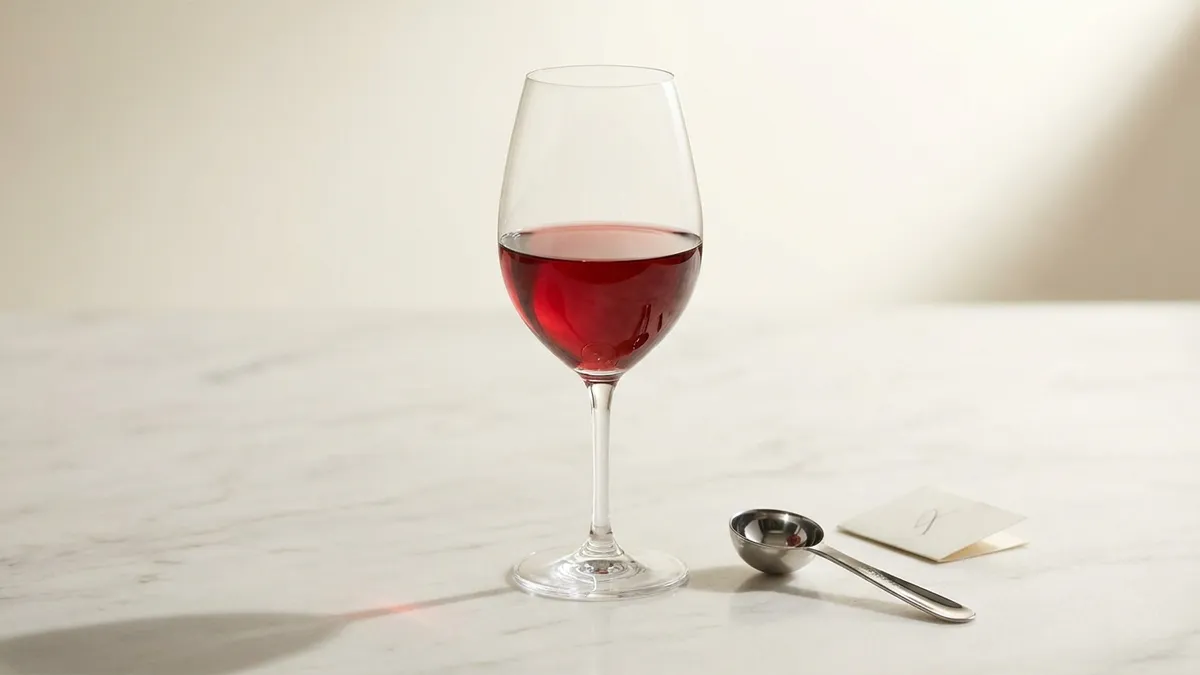
The first responsible-drinking move is the simplest: use a 5oz line on your wine glass — most decent glasses are sized so the standard pour reaches just below the widest part. The visual cue rewires the muscle memory of pouring without any willpower involved.
Government Guidelines, Rapidly Tightening
The science around moderate drinking has shifted since 2020. A short tour of where the major bodies land today:
United States — NIAAA
The National Institute on Alcohol Abuse and Alcoholism uses a more permissive baseline: up to 1 drink per day for women and 2 drinks per day for men as the upper bound for low-risk drinking. Anything above that meets the formal definition of heavy drinking.
United Kingdom — Chief Medical Officers
The UK guidance is 14 units per week maximum for both men and women, spread across three or more days, with alcohol-free days built in. A UK unit is 10 grams of pure alcohol — so 14 units is roughly 10 standard US drinks, or about 6-7 large home glasses across a week.
Canada — CCSA 2023 Update
The 2023 update from the Canadian Centre on Substance Use and Addiction is the most significant shift in years:
- Zero drinks per week: safest
- 1-2 drinks per week: low risk
- 3-6 drinks per week: moderate risk
- 7+ drinks per week: increasingly high risk
What counted as light drinking under the old guidelines is now flagged as moderate-to-high risk.
World Health Organization
The WHO's 2023 statement was the bluntest: "no safe level of alcohol consumption" from a population-health view can be established. The famous J-curve — the old finding that light drinkers seemed healthier than abstainers — is now widely viewed as a methodological artifact. Cleaner studies that exclude former heavy drinkers from the abstainer group fail to find the protective effect.
The takeaway is not that one glass of wine will harm you. The takeaway is that the long-standing claim that wine was good for you has not held up.
The "Moderation" Myth
For decades, the message was that "moderate" drinking — a glass or two a day — was harmless and possibly beneficial. That framing did real damage. It encouraged a daily-drinking pattern that more recent research links to measurable risks: certain cancers, cardiovascular issues, sleep disruption, and liver stress.
Seven drinks a week — the casual one-a-day pattern — sits at the higher end of Canada's framework now. The benefits historically attributed to red wine are likely overstated, and where they exist, they are reachable through diet (berries, dark chocolate, leafy greens) without the alcohol.
This is not an argument for stopping wine. It is an argument for dropping the framing that a daily glass is a health choice. It is a pleasure choice — fine, as long as you make it consciously. The one place the research stays genuinely nuanced is the link between wine and gut health, where red wine's polyphenols show a small, real effect — but even there the benefit belongs to occasional glasses, not a daily habit.
Quality Over Quantity — The Real Shift
The framing that actually works for wine drinkers who want to drink less without losing enjoyment: one excellent glass with full attention beats four casual glasses on autopilot.
If you spend the same monthly wine budget on fewer, better bottles and pour smaller, you end up drinking less alcohol and tasting more. A modest jump in price-per-bottle, a smaller pour, slower consumption — that is the entire shift in three steps.
Slow tasting is the bridge. When you look at the color, smell the aromas, sip with attention, and think about what the wine is doing, a single 5oz pour can stretch over 20-30 minutes of dinner. The Sommy app is built around this exact pattern — its tasting framework (see, smell, sip, think) slows you down because each step takes real attention. Practicing the how to taste wine like a sommelier approach is, accidentally, one of the most effective drinking-less interventions available.

Practical Pacing Strategies
Pacing is where most evenings go off the rails. The average adult liver clears about one ounce of pure alcohol per hour — roughly one 5oz glass of 12% wine. Drink faster and blood alcohol rises steadily through the meal.
A short rule set:
- One glass per hour, maximum. If a dinner runs three hours, three standard drinks is the realistic ceiling, not six.
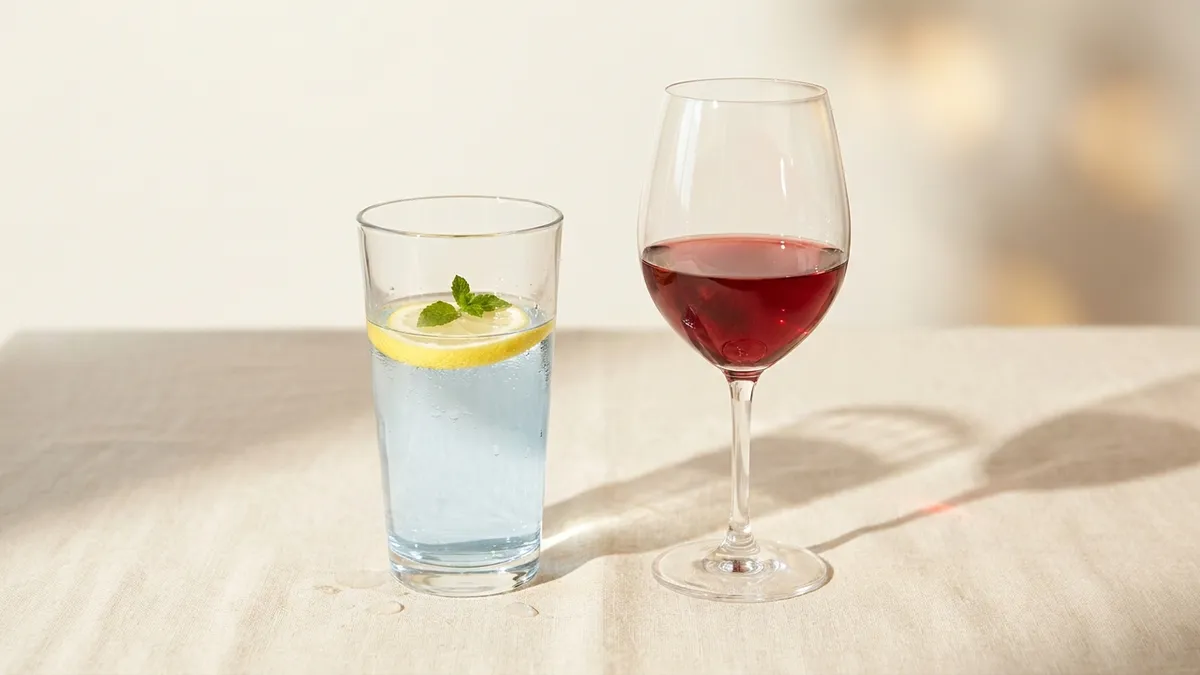
- Alternate water, glass for glass. The simplest intake-control move available, and it slows you naturally because your stomach is fuller.
- Eat before and throughout. Fat and protein slow alcohol absorption by 30-50%. First sip after first bite, not before.
- Stop two to three hours before bed. Alcohol circulating when you fall asleep is the biggest single cause of fragmented sleep — our wine and sleep guide explains why.
- Smaller glasses, deliberately. A glass that holds less means a smaller pour without thinking about it.
These five habits stacked together usually cut weekly intake by 30-50% without any sense of deprivation.
Mindful Drinking Habits
The pacing rules cover any single evening. The mindful habits cover the broader pattern.
Drink With People, Not To Cope
A persistent finding in addiction research is that solo drinking and drinking-to-cope are stronger predictors of problem drinking than total volume. A glass with a partner over dinner is not the same as a glass alone after a hard day. If wine has become how you decompress, give that slot to something else — a walk, a call, a non-alcoholic drink with the same ritual feel.
Track Your Consumption
Most people underestimate weekly intake by 30-50%. A simple journal — phone notes are fine — closes that gap. Write down each pour size and ABV. After two weeks, the real number is almost always larger than the felt one. A tasting journal works double duty: our guide to wine tasting journal tips covers what to write beyond volume.
Build Alcohol-Free Days Each Week
The Canadian and UK guidelines both emphasize spacing, not just totals. Two or three alcohol-free days a week is the easiest single move with the best returns: better sleep, better next-day focus, lower weekly intake. Pick the days in advance.
Set a Monthly Limit, Not Just a Daily One
Daily limits get rationalized away on special occasions. A monthly cap — say, 12 bottles for the household — is harder to fudge and easier to plan around.
Driving and BAC
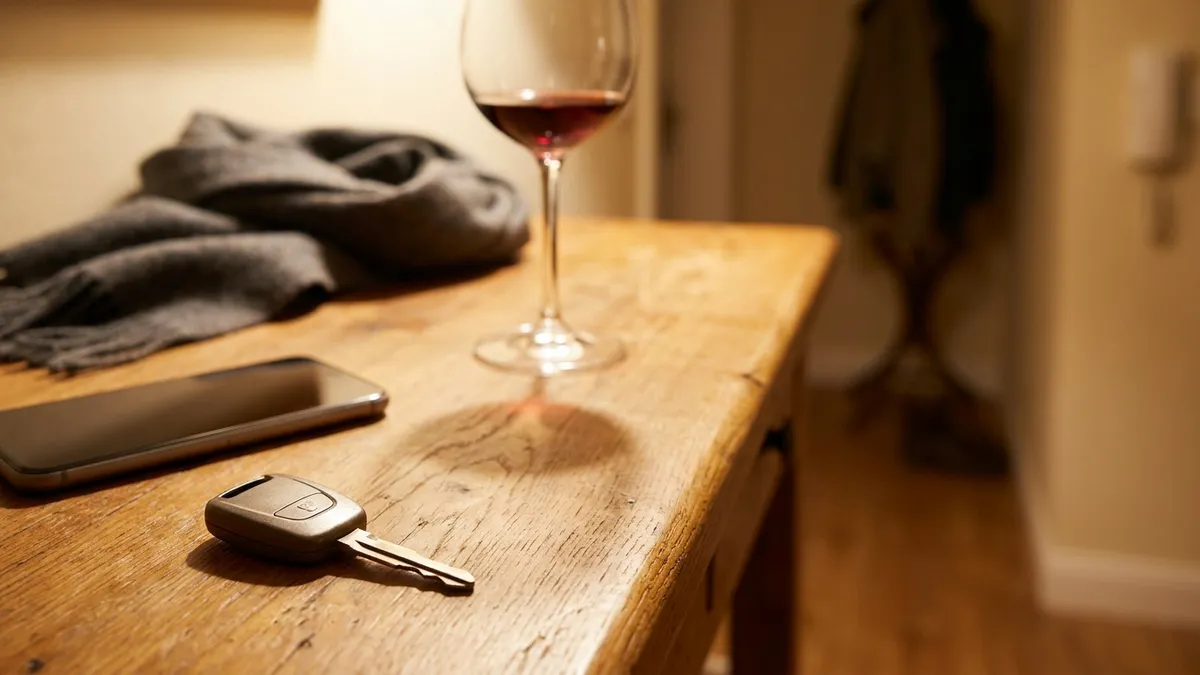
A single standard drink raises blood alcohol concentration by roughly 0.02-0.03% in an average adult. Most countries set the driving limit at 0.05% BAC; some use 0.08%. That math suggests one drink might keep you under the limit — but it also assumes average body weight, a full stomach, and that you have not poured a 7oz "glass" that was actually two drinks.
Even a single glass measurably impairs reaction time, judgment, and visual processing. The legal limit is not a safety threshold — it is a regulatory line.
The honest rule: zero alcohol if you plan to drive within the next four hours. Designate a driver, take a rideshare, or stay where you are.
Pregnancy and Drinking
Public health guidance has converged on a single answer: no safe amount of alcohol during pregnancy or while trying to conceive. The CDC, UK NHS, and most national bodies are aligned.
Even small amounts of alcohol cross the placenta, and the developing brain is most vulnerable in the earliest weeks — often before pregnancy is confirmed. Fetal alcohol spectrum disorder (FASD) risk is cumulative and exists at exposures well below what older guidelines treated as fine. If you are pregnant, planning to be, or breastfeeding, the recommended threshold is zero.
When to Talk to a Doctor
A few patterns suggest a conversation with a healthcare provider, regardless of weekly volume:
- Drinking to manage stress, sadness, anxiety, or sleep
- Difficulty stopping after one or two glasses, repeatedly
- Tolerance increasing — needing more wine for the same effect
- Hiding consumption or feeling embarrassed about it
- Wine becoming the central reward of an evening or weekend
- Family history of alcohol use disorder
None of these alone means a problem. Together, they are signals worth checking. Your primary care doctor can run liver function tests and screen with a short questionnaire (AUDIT-C is common). Support resources include Alcoholics Anonymous, SMART Recovery, national alcohol helplines, and moderation-focused communities like Reframe and Sunnyside. Asking for help is a check-in, not a verdict.
The Cultural Reset
The "wine is healthy" framing of the 1990s and 2000s is fading fast. A few visible shifts:
- Younger generations drink less. Gen Z drinks substantially less than millennials at the same age, and millennials drink less than Gen X did.
- "Sober curious" went mainstream. Dry January, sober October, and alcohol-free wine alternatives are all in major retailers now.
- Quality-over-quantity is the marketing pivot. Wine brands are leaning into smaller, finer pours and food pairings rather than volume.
- Health authorities have updated. Canada, the UK, and the WHO have all tightened guidance in the last three years.
The framing that survives — wine as a food-friendly beverage worth tasting carefully and in moderation — is closer to how the great wine cultures of Europe have always treated it. The framing that is fading — wine as a daily health tonic — was always more marketing than medicine.
A Practical 30-Day Reset
If the last few sections have you wanting to recalibrate, here is a non-restrictive plan that produces real change in a month.
Week 1 — Track Honestly
For seven days, write down every pour. Volume, ABV, time of day. No changes yet — the point is to see the actual baseline. Most people are surprised by the total.
Week 2 — Identify Triggers
Circle the patterns: daily-drinking days, large-pour days, after-work auto-pilot pours. Note the emotional or social context next to each entry. Triggers usually cluster around stress, end-of-day decompression, or social momentum.
Week 3 — Build Two or Three Alcohol-Free Days
Pick the days in advance. The first week is the hardest; by the second, the pattern feels normal. Replace the wine slot with sparkling water with citrus or a non-alcoholic wine alternative if you want to keep the ritual.
Week 4 — Quality Over Quantity
Spend the same monthly budget on fewer, better bottles. Pour 5oz with intention. Use the develop your wine palate habits — see, smell, sip, think — to extend the enjoyment of each glass.
By day 30, most people notice better sleep, easier mornings, modest weight changes, and a real sense that wine is an experience again, not a habit.
For more on the slow-tasting practice that makes this whole approach sustainable, the wine tasting vocabulary cheat sheet and the broader wine health hub are good follow-up reads.
Closing Thoughts
Responsible wine drinking is not a virtue test. It is a set of practical habits — knowing what a standard drink is, pacing your evening, alternating water, eating real food, keeping alcohol-free days, and staying honest about how much you drink and why.
The complexity in a thoughtfully made bottle is one of the small genuine pleasures in modern life. That pleasure scales with how much you taste, not how much you drink. The cultural shift toward quality over quantity makes that easier than it has been in a generation.
Drink less. Taste more. Keep alcohol-free days. Talk to your doctor if your drinking concerns you. None of those instructions ruin a dinner — they protect it. If you want to make slow tasting your default, sommy.wine is the front door.
Frequently Asked Questions
What counts as one standard drink of wine?
In most countries, one standard drink is the amount of wine that contains roughly 14 grams of pure alcohol. That works out to a 5oz (150ml) pour of wine at 12% ABV. As alcohol percentage rises, a standard drink shrinks — a 13.5% wine is about 4.4oz, and a 15% wine is about 4oz. Most home pours are closer to 7-8oz, which means a single glass can easily be 1.5 to 2 standard drinks. Knowing that math is the foundation of any honest pacing plan.
How much wine per week is considered low risk?
Guidelines vary by country. The US (NIAAA) suggests up to 1 drink per day for women and 2 per day for men. The UK CMOs recommend a maximum of 14 units per week, spread across at least three days, with several alcohol-free days. Canada's 2023 update from the CCSA is the strictest — it labels 2 drinks per week as low risk and warns that any consumption carries some risk. The WHO has stated there is no safe level of alcohol consumption from a population health perspective.
Is a glass of red wine actually good for you?
Probably not in the way old headlines suggested. The famous J-curve, where light drinkers appeared healthier than abstainers, is now thought to be a methodological artifact — the abstainer group included former heavy drinkers and people who quit for health reasons. Recent meta-analyses have found no protective effect for low-level wine drinking. Resveratrol and other compounds in wine are real, but you cannot drink enough wine to reach therapeutic doses without doing the alcohol more harm than the antioxidants are worth.
How can I drink less wine without giving it up?
Smaller pours, slower drinking, and a quality-over-quantity mindset do most of the work. Use a 5oz measure at home so a glass actually equals a standard drink. Pace at one glass per hour, alternate water glass for glass, and eat real food first. Build in two or three alcohol-free days each week. Above all, treat wine as something to taste rather than something to consume — slowing down through structured tasting practice naturally cuts your weekly intake without any willpower.
How much wine is safe before driving?
The honest answer is none. Most countries set the legal limit at 0.05% blood alcohol concentration — some are stricter, a few use 0.08%. A single standard drink raises BAC by roughly 0.02-0.03% in an average adult, but factors like food, body weight, gender, and individual metabolism shift that significantly. Even a single glass impairs reaction time and judgment in ways drivers consistently underestimate. The simple rule is zero alcohol if you plan to drive within the next four hours — designate a driver, take a rideshare, or stay where you are.
Is any amount of wine safe during pregnancy?
Current public health guidance from the CDC, the UK NHS, and most national bodies is no. Even small amounts of alcohol have been linked to fetal alcohol spectrum disorder (FASD) risk. There is no established safe threshold, and the developing brain is most sensitive in the first weeks — often before pregnancy is confirmed. The recommendation is to avoid alcohol entirely while pregnant or trying to conceive.
When should I talk to a doctor about my drinking?
Several signs are worth taking seriously: drinking to manage stress, sadness, or sleep; difficulty stopping after one or two glasses; needing more wine to get the same effect (rising tolerance); hiding consumption from people close to you; or wine becoming the central part of social or solo evenings. A confidential conversation with your doctor is a good first step. Resources like Alcoholics Anonymous, SMART Recovery, and national alcohol helplines are also widely available.
Does the type of wine matter for responsible drinking?
Less than total volume, but a little. Lower-ABV wines under 12% mean each pour contains less alcohol — a 5oz glass of 11% Vinho Verde is genuinely lighter than a 5oz pour of 15% Zinfandel. Sparkling wines tend to be moderate in alcohol. Fortified wines like port and sherry are higher and need smaller pours. The biggest variable is still how many glasses you have, not which style is in the glass.
Sommy Team
LinkedInFounder & Wine Educator
The Sommy Team is building the world's most approachable wine education app, helping beginners develop real tasting skills through structured courses and AI-guided practice.