Wine Chiller Bucket and Sleeve Guide: Keep Bottles Cold

By the Sommy Team — AI-assisted, human-edited.
Updated Oct 1, 2026
Contents (9)
- What Does a Wine Chiller Bucket Do, in One Paragraph?
- Bucket, Sleeve or Marble Cooler: Which Should You Use?
- How Should You Fill a Wine Chiller Bucket?
- How Long Does Wine Take to Chill in a Bucket?
- Does Salt Make a Wine Bucket Work Faster?
- Can a Bucket Freeze or Over-Chill Your Wine?
- Do Wine Chiller Sleeves Work?
- How Do You Keep Bottles Cold at the Table and Outdoors?
- What Temperature Should the Wine Be When It Comes Out?
TL;DR
A wine chiller bucket works when it holds ice and cold water up to the bottle's neck: whites reach about 7°C in 15 to 20 minutes, reds about 13°C in 10. Salt speeds it up but can over-chill. A frozen gel sleeve holds a cold bottle well and chills a warm one slowly.
A wine chiller bucket only chills a bottle when it holds water as well as ice. Ice alone touches the glass at a few points and leaves air around the rest. Filled with ice and cold water to the bottle's neck, the same bucket takes a white to drinking temperature in 15 to 20 minutes. A frozen sleeve is the better travel tool but the weaker chiller.
What Does a Wine Chiller Bucket Do, in One Paragraph?
A wine chiller bucket does two jobs: it brings a warm bottle down to serving temperature, and it holds an open bottle there through the meal. For the first job, fill it one third with water and one third with ice and sink the bottle to its neck. A white then reaches about 7°C (45°F) in 15 to 20 minutes and a red about 13°C (55°F) in 10. A pinch of salt makes the bath colder and faster, which also means a forgotten bottle can turn to slush. A frozen gel sleeve holds a cold bottle well and is the easier tool away from the table.
Bucket, Sleeve or Marble Cooler: Which Should You Use?
Use a bucket of ice and water to chill a warm bottle, and a bucket or a frozen sleeve to keep a cold one cold. Marble and other solid coolers come last, because they hold only the cold you put into them in the freezer.
| Tool | Chills a warm bottle | Holds a cold bottle | Mess | Use it when |
|---|---|---|---|---|
| Bucket, ice and water | Fast: 10 to 20 minutes | Best of all | Wet bottle, drips | Guests arrive soon, or the bottle sits on the table all evening |
| Bucket, ice, water and salt | Fastest | Best, but risks over-chilling | Wet, salty drips | Minutes count and a timer is running |
| Bucket of ice only | Slow | Fair | Little | Never on purpose: add water |
| Frozen gel sleeve | Slow | Good | None | Picnics, balconies, a bottle already cold from the fridge |
| Marble or stone cooler | Barely | Fair, once pre-chilled | None | The bottle is cold and the table is short on space |
| Insulated double-walled bucket | Only with ice water inside | Good | No outside condensation | A long dinner on a wooden or linen-covered table |
If the bottle is warm, it goes in a bucket with water, whatever else is on hand. If it is already cold and you are heading outdoors, a sleeve is enough. For the full ranking of fast-chilling methods, freezer and wet towel included, see how to chill wine fast.
How Should You Fill a Wine Chiller Bucket?
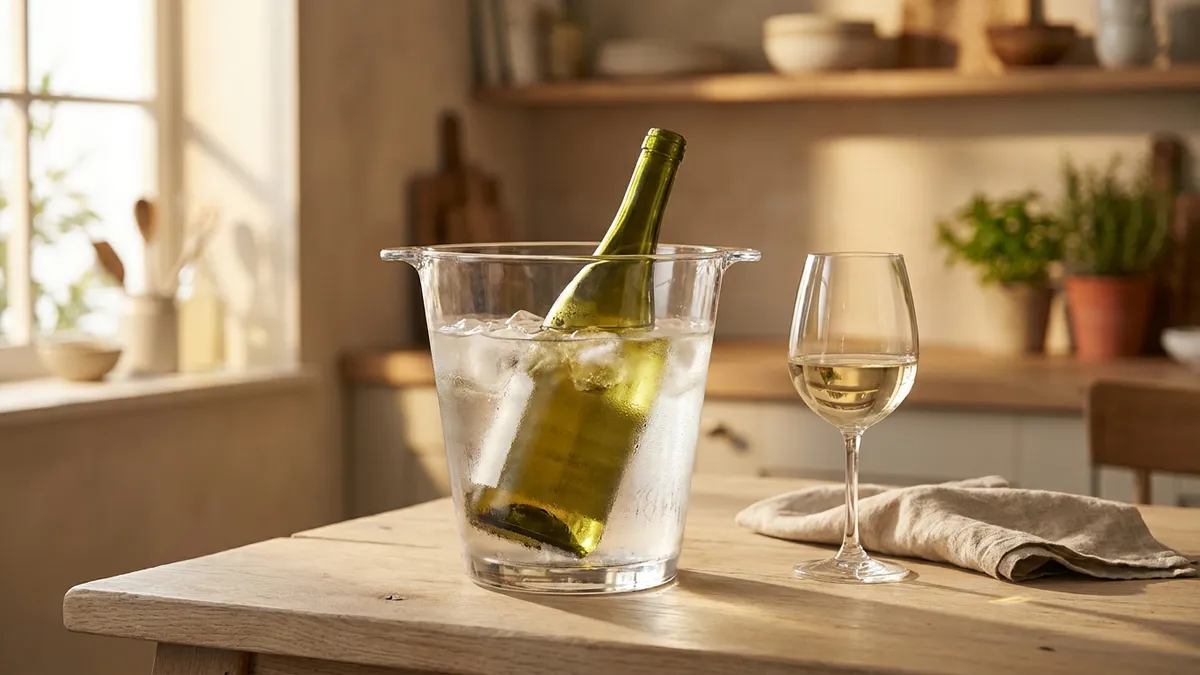
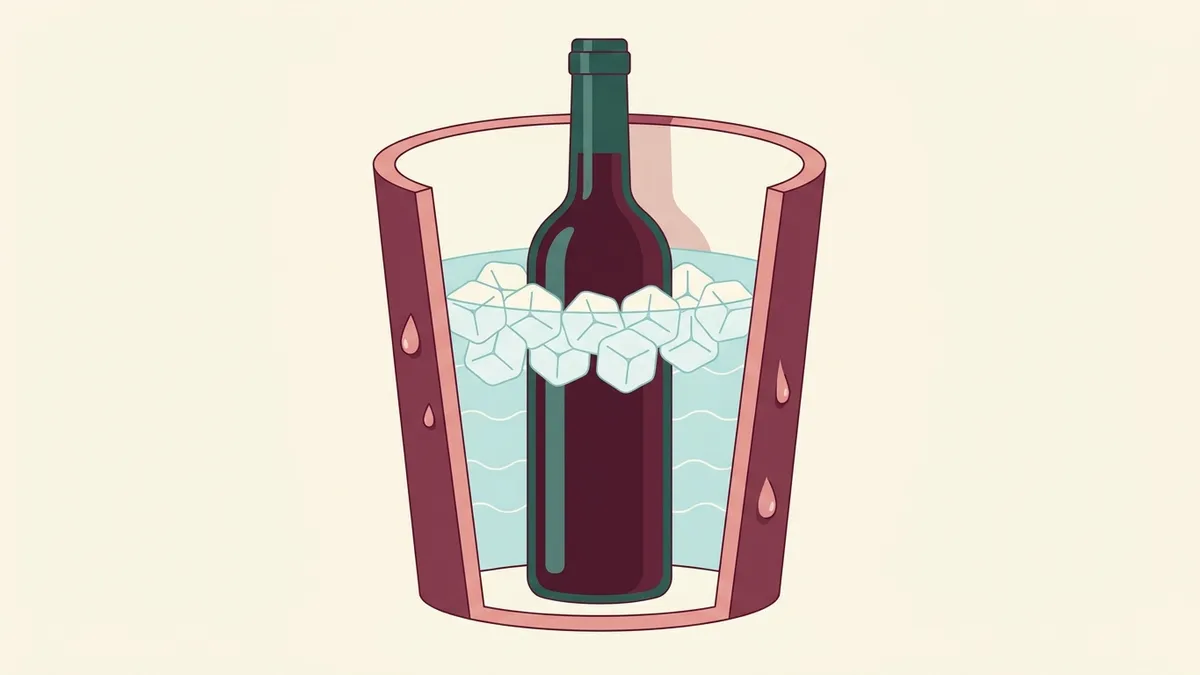
Fill the bucket about one third with cold water and one third with ice, then push the bottle in until the liquid reaches its neck. Ruinart's champagne recipe uses exactly those thirds and leaves the top third empty, so the bottle goes in without the bucket overflowing.
The water does the work, not the ice. Cubes piled into a bucket leave a lot of air between them, and air carries heat away slowly. Pour in water and the gaps fill, so icy water touches every part of the bottle at once and carries the heat away.
Three habits make the fill work:
- Water first, then ice. Cubes dropped onto a bottle can chip a label; water cushions them.
- Depth over quantity. A bottle that stands only half in the water leaves its top half warm, and the first glass poured comes from there.
- Turn the bottle. Rotating it every few minutes moves the warmed water away from the glass.
If the bottle's shoulders show above the waterline, top up with water. A tall, narrow bucket needs less ice to reach the neck than a wide, shallow one, so pick the tall one for a single bottle.
How Long Does Wine Take to Chill in a Bucket?
In ice water, a white takes about 15 to 20 minutes to reach about 7°C (45°F), and a red needs about 10 minutes to reach about 13°C (55°F). Reds have less distance to cover. A bottle from a cool cellar lands at the short end of each range.
For comparison, a white takes about three hours in the fridge and about an hour in the freezer, and a red about 40 minutes in the freezer.
Sparkling wine gets the gentlest treatment. Ruinart's bucket method takes about 30 minutes, and the house says the slow, gradual cooling protects the wine.
A bottle from a hot car or a sunny shelf needs the top of each range or longer. A magnum holds twice the wine and takes longer than any of these figures.
If the bucket is salted, check the bottle after 5 minutes instead of waiting out the full time.
Does Salt Make a Wine Bucket Work Faster?
Yes. Salt lowers the freezing point of the water, so the bath stays liquid below 0°C and pulls heat out faster. A salt-and-water mix like this is called a brine. Plain ice water sits at about 0°C; a brine sits several degrees below it, and the bigger gap between bath and bottle speeds the chill.
A generous handful in a full bucket is enough. Spinning the bottle in the brine speeds it further, because it keeps the coldest water against the glass.
Salt has two costs. Salty water drips down the bottle onto the tablecloth, so wipe it before pouring. And salt removes the natural floor that keeps plain ice water from freezing anything, which the next section covers. The physics of why water beats air in the first place is laid out in how to chill wine fast.
Can a Bucket Freeze or Over-Chill Your Wine?
It can, if you forget a bottle in salted water. Common table salt can push the freezing point of water down to about minus 21°C (minus 6°F), and wine of about 12.5% alcohol starts to freeze around minus 6°C (21°F).
A kitchen bucket rarely gets near minus 21°C, but it does not need to: a long stay in strong brine can cross the line where the wine turns to slush.
Frozen wine does not set into a solid block. The ice that forms is close to pure water, so the liquid left behind grows stronger in alcohol and harder to freeze. The result is a slushy bottle with ice crystals floating in it. Plain ice water, at about 0°C, cannot freeze wine at all, which makes it the safer choice for a bottle you might forget.
The quieter problem is over-chilling. A wine that never freezes can still come out too cold to smell, which the last section explains with the temperatures. For what happens when a bottle is left in the freezer instead, see can you put wine in the freezer.
Do Wine Chiller Sleeves Work?
Yes, for holding. A wine chiller sleeve is a jacket of freezable gel that lives in the freezer, then wraps around the bottle. Wine Spectator says gel sleeves can be effective because they fit snugly against the bottle. That makes a sleeve the right tool for a fridge-cold bottle at a picnic or on a balcony.
Snug matters for the same reason water matters in a bucket: no air between the cold and the glass.
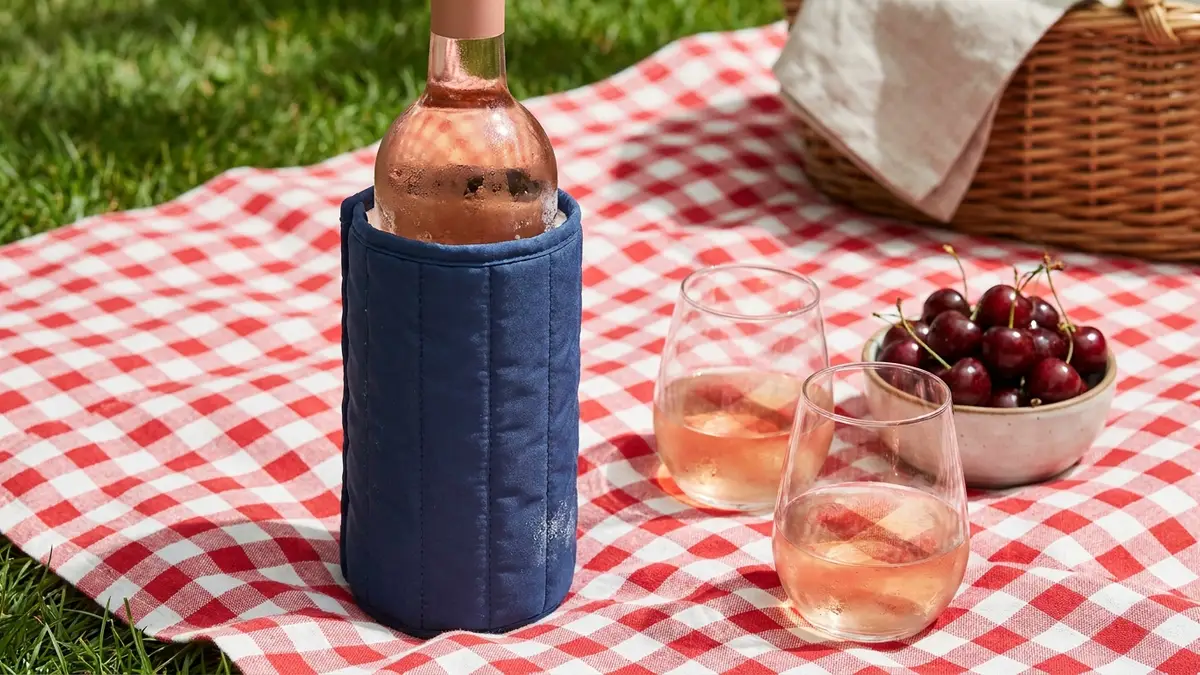
A sleeve carries a small, fixed amount of cold. A bucket of iced water carries far more, and you can top it up with ice. So a sleeve slows warming well but brings a warm bottle down slowly. Vendors print chilling and holding times on the box; we found no independent test of them, so treat them as optimistic.
If the bottle comes from a warm shelf, chill it in a bucket or the fridge first and put the sleeve on afterwards. Keep the sleeve flat in the freezer so it is ready the next time.
How Do You Keep Bottles Cold at the Table and Outdoors?
At the table, a bucket partly filled with water, ice and a generous pinch of salt keeps an open bottle cold better than anything else, according to Wine Spectator. The bottle goes back in after each pour and stays at its temperature through the meal.
Two small upgrades help at a long dinner. A double-walled bucket (an insulated bucket with an air gap between its inner and outer skin) limits condensation, so it does not leave a ring on wood or soak the tablecloth. A folded napkin wrapped around the bottle catches drips as you pour. Marble coolers look tidy but must be pre-chilled in the fridge or freezer, and they hold the cold less well than iced salt water.
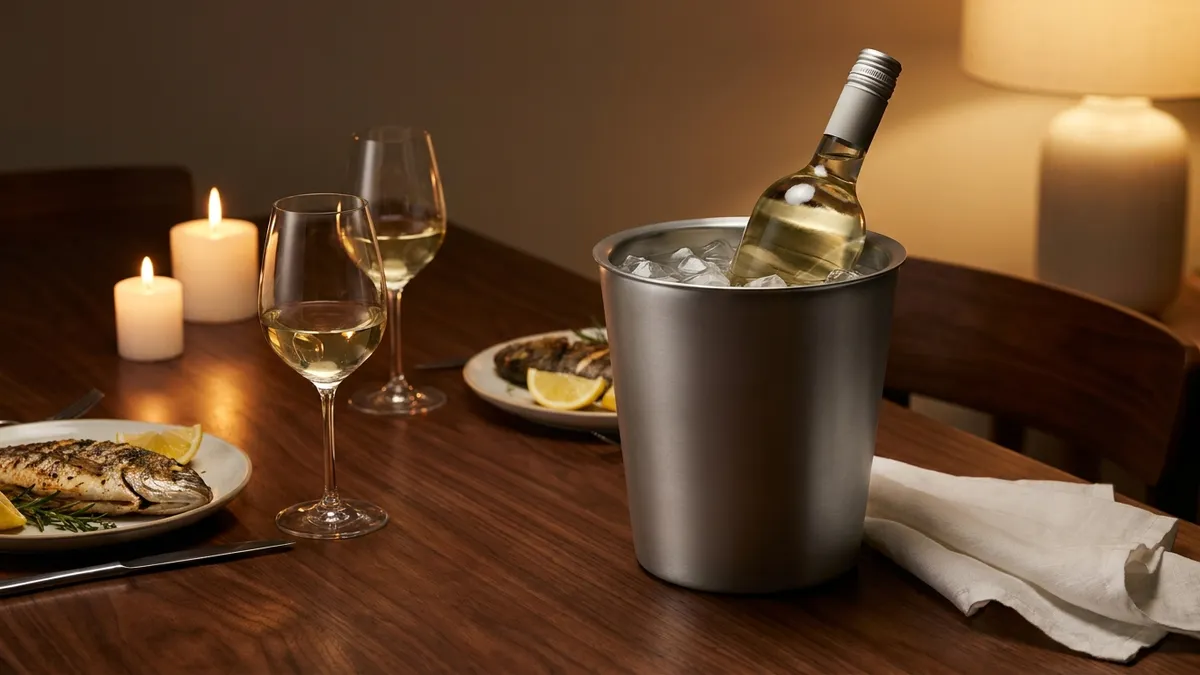
Style decides how long a bottle stays in. If it is white, rosé or sparkling, put it back in the bucket between pours. If it is red, take it out once it reaches about 13°C and leave it on the table, because an hour in ice water will push it well below where it tastes best.
Outdoors, carry the chill with you: an insulated bag with ice and a little water works as a portable bucket, and a sleeve covers the bottle once it is out. Keep both in the shade. The wine for a picnic guide covers which styles survive warm air best. An open bottle you do not finish goes back in the fridge with a stopper; how long wine lasts after opening gives the timeline by style.
What Temperature Should the Wine Be When It Comes Out?
Pull it out at the cool end of its serving range, because the wine warms in the glass. For whites that means about 7°C (45°F), for many reds about 13°C (55°F). Ruinart serves its non-vintage champagnes at around 8°C and its vintage ones between 10 and 12°C.
Colder is not better. Ruinart warns that below 8°C a champagne is too cold, which limits how much of its aroma you can perceive. The same holds for still wine: a white left an hour in salted ice comes out tasting of little but acid. The wine serving temperature chart lists the targets grape by grape, and how temperature affects wine taste explains why cold hides fruit and warmth exaggerates alcohol.
If a glass smells of almost nothing, cup the bowl in your hands for a minute and smell again. If a red tastes hot and soupy, give it 10 minutes in the bucket.
More on glasses, storage and serving sits in the serving and storage hub, and the Sommy app teaches the basics in bite-sized lessons in its Wine 101 course. Tonight, fill a bucket one third with water and one third with ice, chill a white for 15 minutes, then pour a glass and taste it.
Sources
Frequently Asked Questions
How long does it take to chill wine in an ice bucket?
In a bucket of ice and water, a white wine reaches about 7°C (45°F) in 15 to 20 minutes, and a red reaches about 13°C (55°F) in about 10 minutes. A bucket of ice with no water takes much longer, because air gaps between the cubes insulate the bottle. Adding salt shortens the time further.
Should you put water in a wine ice bucket?
Yes. Ice cubes touch the bottle at a few points and leave air gaps around the rest of the glass. Cold water fills those gaps and touches the whole bottle, so it pulls heat out much faster. The champagne house Ruinart recommends roughly one third water and one third ice, with the bottle pushed in up to its neck.
Does salt really make wine chill faster?
Yes. Salt lowers the freezing point of water, so a salted ice bath stays liquid below 0°C and chills the bottle faster than plain ice water. The catch is that a strong salt solution can get far colder than the point at which wine freezes, so a salted bucket needs a timer.
Do wine chiller sleeves work?
Yes, mainly for keeping a cold bottle cold. A frozen gel sleeve fits snugly around the glass and works well where a bucket is awkward, such as at a picnic or on a balcony. It holds far less cold than a bucket of iced water, so it brings a warm bottle down slowly. Chill first, then sleeve.
Can wine freeze in an ice bucket?
It can, in salted water. Wine of about 12.5% alcohol starts to freeze around minus 6°C (21°F) and turns slushy, while a strong salt and ice mix can fall well below that. Plain ice water stays near 0°C and cannot freeze wine. Set a timer whenever salt goes into the bucket.
Can you put red wine in an ice bucket?
Yes, briefly. Many reds taste best around 13°C (55°F), cooler than most rooms, and about 10 minutes in ice water gets them there. Lighter reds such as Pinot Noir or Gamay take the chill best. Take the bottle out once it is cool, because a red left in the bucket all evening ends up too cold to smell.
Sommy Team
LinkedInFounder & Wine Educator
The Sommy Team is building the world's most approachable wine education app, helping beginners develop real tasting skills through structured courses and AI-guided practice.