Campania Wine Guide: Aglianico, Fiano, and Greco

By the Sommy Team — AI-assisted, human-edited.
Updated Jun 17, 2026
Contents (9)
- What Is Campania Wine?
- Where Campania Is and Why the Terroir Matters
- The Campania Wine Guide to Aglianico, the Barolo of the South
- The White Wines: Fiano, Greco, and Falanghina
- Lacryma Christi and the Volcanic Wines of Vesuvius
- Other Campanian Grapes Worth Knowing
- What Makes Campania Distinctive
- How a Beginner Should Start with Campania Wine
- The Reward of Learning Campania
TL;DR
Campania is southern Italy's ancient wine region around Naples and Vesuvius. It makes powerful, age-worthy red from Aglianico, led by Taurasi, plus mineral white from Fiano and Greco. This Campania wine guide covers the grapes, the volcanic terroir, the key appellations, and where a beginner should start.
What Is Campania Wine?
This Campania wine guide opens in one of the oldest vineyard zones in Italy — the sun-baked hills and volcanic slopes of southern Italy around Naples and Mount Vesuvius. Campania is where Greek and Roman growers planted vines thousands of years ago, and the region still leans on those ancient native grapes rather than international ones. The flagship red is Aglianico, a tannic, age-worthy variety nicknamed "the Barolo of the South" and crowned by Taurasi DOCG. The signature whites are Fiano and Greco, both mineral and high in acidity, with friendly Falanghina alongside. Add the volcanic wines of Lacryma Christi del Vesuvio, and you have a region of remarkable character that most beginners have never properly explored.
Where Campania Is and Why the Terroir Matters
Campania runs down the western coast of southern Italy, with Naples at its heart and the Bay of Naples, Vesuvius, and the islands of Capri and Ischia along its shore. Inland, the province of Avellino rises into cool, hilly country that gives the region its finest whites and its most structured reds.
The climate is broadly Mediterranean — warm, sunny days and a long ripening season — but the better vineyards sit at altitude inland, where cooler nights preserve the acidity that keeps Campanian wines fresh rather than heavy. This swing between warm days and cool nights is the quiet engine behind the region's balance.
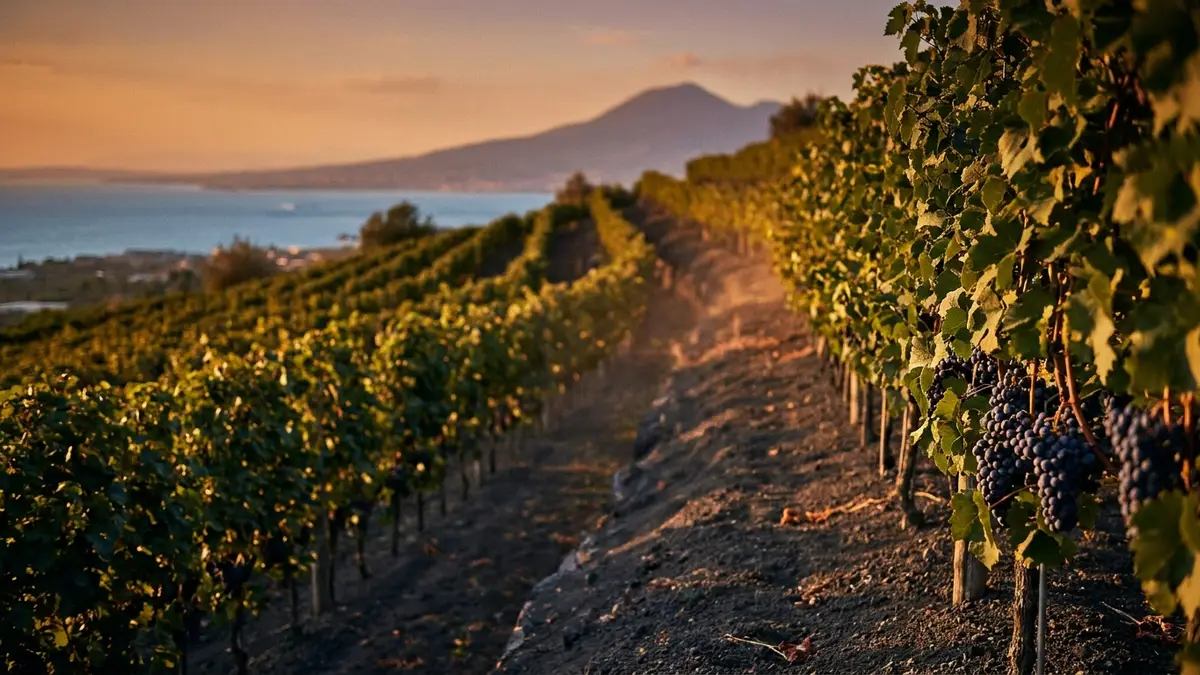
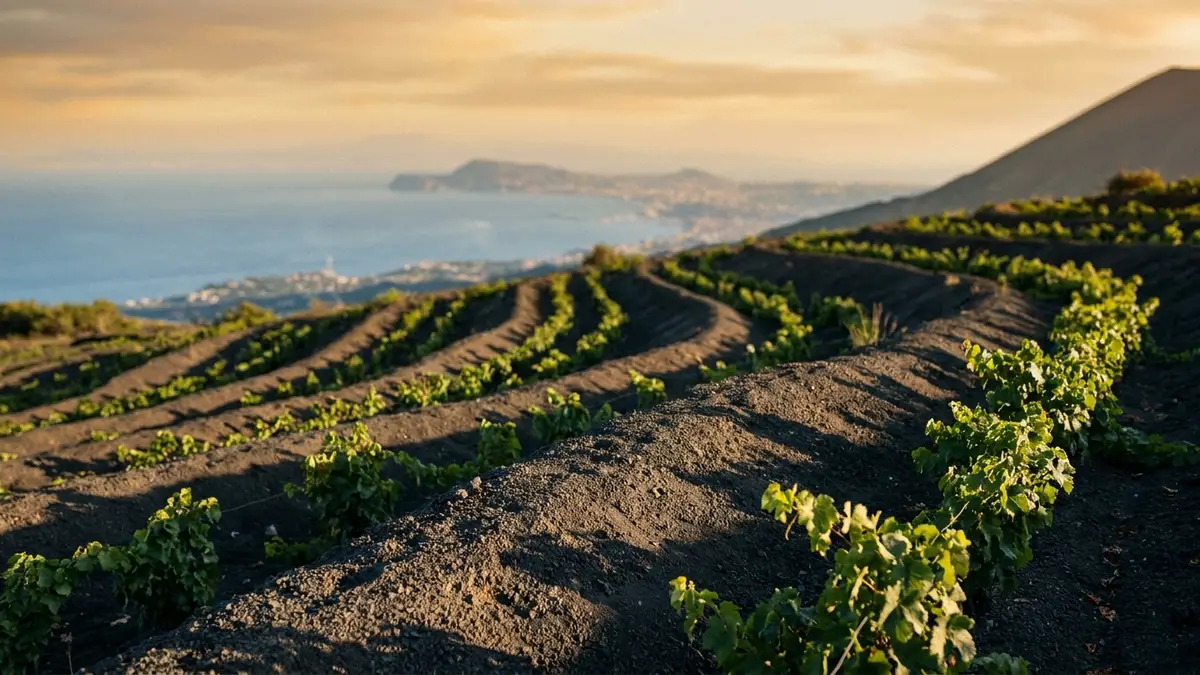
What truly sets Campania apart is volcanic terroir — the soil and environment shaped by volcanic activity. Vesuvius, Italy's most famous volcano, has spread layers of ash, pumice, and mineral-rich rock across the area for millennia. Around Avellino, the tufo soils (a soft, sulfur-rich volcanic rock) give Greco di Tufo its flinty edge. These soils drain well, stress the vines just enough, and lend many Campanian wines a smoky, saline, mineral signature you can learn to recognize.
The Campania Wine Guide to Aglianico, the Barolo of the South
If Campania has a king, it is Aglianico (pronounced ah-LYAH-nee-koh). This thick-skinned red grape ripens late, holds high acidity, and packs the kind of firm tannins (the drying, gripping sensation in red wine that comes from grape skins and seeds) that build wines made to last. Those qualities are exactly why it earns its famous nickname.
Why "the Barolo of the South"? Like Nebbiolo in Piedmont's Barolo, Aglianico makes reds that start tight and savory and soften only with years in bottle. Both grapes share high acidity, gripping tannins, and a long life. It is a useful comparison for a beginner, because if you have met Barolo, you already half-know what to expect from a serious Aglianico.
Aglianico in brief:
- Color & body: deep ruby to garnet · full-bodied (5/5)
- Structure: high acidity (4/5) · high, grippy tannins (5/5) in youth
- Typical aromas: black cherry, plum, leather, tobacco, ash, dried herbs, and an earthy, smoky volcanic edge
- Ageability: excellent — the best Taurasi can improve for fifteen years or more
The grippy tannins are the thing to understand first. In a young Aglianico they can feel almost austere, drying the inside of your cheeks. Time, food, and a good decant all tame them. Our guide to understanding tannins, acidity, and body explains why this happens, and the piece on thick- versus thin-skinned grapes shows why a thick-skinned variety like Aglianico delivers so much grip and color.
Aglianico does not flatter you in its youth. It asks for patience and a plate of food, then rewards both.
Taurasi DOCG and the Aglianico Hierarchy
Aglianico reaches its peak in Taurasi DOCG, the prestigious red appellation in the hills of Avellino. DOCG (Denominazione di Origine Controllata e Garantita) is Italy's top quality tier, with stricter rules on where the grapes grow, how long the wine ages, and how it is made. Taurasi must age for years before release and is among the longest-lived wines in all of southern Italy.
Below Taurasi sit more approachable Aglianico bottlings labelled simply Aglianico or under broader regional names — softer, fruitier, and ready to drink younger. Just over the border in neighboring Basilicata, Aglianico del Vulture offers the same grape grown on another extinct volcano, a worthy cousin if you want to taste how terroir shifts the variety. The Sommy app's Italian wine course walks through these tiers so you can place any Aglianico bottle in the hierarchy at a glance.
The White Wines: Fiano, Greco, and Falanghina
Campania is one of Italy's great white regions, a fact that surprises people who assume the warm south makes only big reds. Three grapes carry the whites, and learning to tell them apart is one of the most satisfying steps in this region.
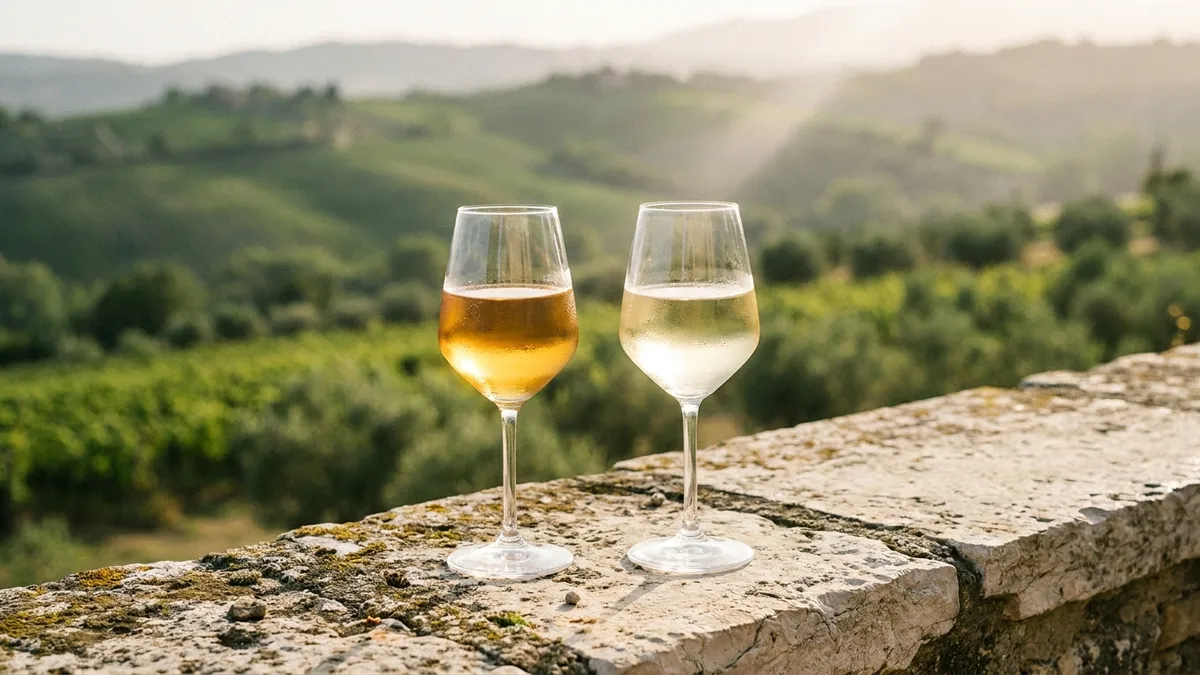
Fiano di Avellino DOCG is the most complex. Grown in the cool Avellino hills, Fiano gives a rounded, textured white with a waxy, almost oily mouthfeel and real aging potential. Typical aromas run to pear, honey, hazelnut, and toasted nuts, deepening with a few years in bottle. It is a white with the structure of a serious wine.
Greco di Tufo DOCG is the sharper sibling. Greco grown on the sulfur-rich tufo soils around the town of Tufo gives a leaner, more cutting white — stone fruit and citrus over a flinty, faintly saline mineral core. Where Fiano is broad and nutty, Greco is taut and mineral.
Falanghina is the friendly entry point. Brighter and more immediately likable than the two DOCG whites, Falanghina offers crisp green apple, citrus, and white flowers with refreshing acidity. It is the Campanian white to reach for first, and the easiest to enjoy without much thought.
The three whites compared:
- Fiano di Avellino: Style: rounded, nutty, textured · Acidity: medium-high · Aromas: pear, honey, hazelnut, toasted nut · Aging: several years
- Greco di Tufo: Style: lean, mineral, cutting · Acidity: high · Aromas: peach, citrus, flint, faint salinity · Aging: a few years
- Falanghina: Style: bright, easy, floral · Acidity: high · Aromas: green apple, citrus, white flowers · Aging: best young
Tasting Fiano and Greco side by side is the single best lesson Campania offers a learning palate — two native whites, grown miles apart on volcanic hills, that taste nothing alike. The Sommy app turns exactly this kind of comparison into a guided exercise, naming the aromas and scoring the structure so the differences click.
Lacryma Christi and the Volcanic Wines of Vesuvius
No Campania wine guide is complete without the wine grown in the shadow of the volcano itself. Lacryma Christi del Vesuvio — "tears of Christ" — comes from the dark, mineral slopes of Mount Vesuvius and is the region's most romantic name.
It is made in red, white, and rosé from local grapes: Piedirosso (a soft, savory red) and Aglianico for the reds, and Coda di Volpe with Falanghina for the whites. What unites them all is the volcanic stamp — a smoky, savory, mineral character that the ash-and-pumice soils press into the wine.
Lacryma Christi is not built to age like Taurasi. It is a wine of place and pleasure, best enjoyed young and with food, and it is one of the most direct ways to taste what "volcanic" means in a glass. If you have ever wondered why wine writers talk about minerality, a Lacryma Christi white is a clear, affordable lesson.
Other Campanian Grapes Worth Knowing
Beyond the headliners, a few more native grapes fill out the region and reward the curious:
- Piedirosso: A light-to-medium red with soft tannins, red-fruit character, and a faintly herbal, volcanic edge. Often blended, sometimes solo, it is Campania's easygoing red answer to the serious Aglianico.
- Coda di Volpe: Literally "tail of the fox," a gentle, low-acid white with melon and almond notes, common in Vesuvius whites and Falanghina-adjacent blends.
- Asprinio: A rare, razor-sharp white historically trained up tall poplar trees, prized for its bracing acidity and use in sparkling wines.
These grapes grow almost nowhere else, which is the whole appeal of Campania. If chasing varieties you cannot find anywhere else excites you, our roundup of indigenous grapes worth trying and the wider Italian wine guide set Campania in the context of Italy's 600-plus native grapes.
What Makes Campania Distinctive
Campania does not try to copy the international playbook. Where many regions plant Cabernet and Chardonnay, Campania doubles down on grapes that have grown on these volcanic hills since antiquity. That commitment to native varieties is its first signature.
The second is volcanic terroir. Vesuvius and the surrounding volcanic soils give Campanian wines a smoky, saline, mineral thread that links the firm Aglianico reds to the cutting Greco whites. It is a family resemblance you can taste across colors.
The third is the unusual seriousness of its whites. In a warm southern climate where you might expect soft, simple wine, Campania makes some of Italy's most structured, age-worthy whites in Fiano. That contrast — old grapes, volcanic soil, ageable whites — is what gives the region its identity, much as a single grape defines a region in our guide to the noble grapes every learner should know.
For context on how Campania sits among Italy's other southern and island regions, our companion guides to Sardinia wine and Alto Adige wine show how dramatically Italian wine shifts from north to south. The volcanic theme continues on Sicily's Etna, home to the elegant Nerello Mascalese grape, while central Italy's powerful Sagrantino makes another instructive comparison to the tannic Aglianico.
How a Beginner Should Start with Campania Wine
You do not need a cellar or a big budget to understand Campania. The trick is to taste deliberately and notice what changes. Here is a practical order:
- Begin with Falanghina. The friendliest Campanian white — crisp, citrusy, and easy to like. It sets a baseline before you meet the more serious bottles.
- Taste Fiano next to Greco. Open a Fiano di Avellino and a Greco di Tufo together. Fiano feels rounder and nutty; Greco feels leaner and flinty. Two native whites, one clear lesson in volcanic minerality.
- Meet Aglianico young first. Start with a basic younger Aglianico before opening a serious Taurasi, so the firm tannins do not catch you off guard. Then taste a Taurasi to feel how much more structure and depth the top tier carries.
- Try a Lacryma Christi. A red or white from the Vesuvius slopes is the most direct taste of volcanic character — smoky, savory, and mineral.
- Build the tasting habit. Note the color, the high acidity in the whites, the grip of the reds, and the smoky volcanic edge that ties them together. Our guide to how to taste wine gives you the step-by-step method.
Sommy turns these comparisons into guided exercises — naming the aromas, scoring the structure, and building the vocabulary to describe what you sense. You can start practicing free at sommy.wine, then bring the method to your next bottle from southern Italy.
The Reward of Learning Campania
Campania asks you to set aside the familiar grape names and meet a set of ancient varieties on their own terms. The payoff is a region with genuine identity: powerful, age-worthy Aglianico; mineral, serious whites in Fiano and Greco; and the smoky pull of volcanic wine grown beneath Vesuvius.
Start small, taste in pairs, and let the volcanic soils reveal themselves one glass at a time. The Sommy app is built to make that habit stick — turning each bottle into a short, guided lesson so the next Campanian wine you open is a little clearer than the last.
Sources
Frequently Asked Questions
What grapes does Campania wine use?
Campania leans on ancient native grapes rather than international ones. The flagship red is Aglianico, a tannic, age-worthy variety behind Taurasi. The signature whites are Fiano and Greco, both high in acidity and mineral character, with Falanghina as a fresher, friendlier white. Coda di Volpe and Piedirosso round out the local picture.
Why is Aglianico called the Barolo of the South?
Aglianico earns the nickname because, like Nebbiolo in Barolo, it produces deeply structured reds with firm tannins, high acidity, and the ability to age for a decade or more. Both grapes start tight and savory in youth and reward patience. The label captures the seriousness and longevity of Aglianico, especially the Taurasi DOCG version.
What is the difference between Fiano and Greco?
Both are top Campanian whites, but they taste different. Fiano di Avellino is rounder and nutty, with pear, honey, hazelnut, and a waxy texture that deepens with a few years in bottle. Greco di Tufo is leaner and more cutting, with stone fruit, citrus, and a flinty, almost saline mineral edge from its sulfur-rich tufo soils.
What is Lacryma Christi del Vesuvio?
Lacryma Christi del Vesuvio is a wine made on the volcanic slopes of Mount Vesuvius near Naples. The name means tears of Christ. It comes in red, white, and rosé from local grapes such as Piedirosso, Coda di Volpe, and Falanghina, and its volcanic soils give the wines a smoky, mineral, savory character that sets them apart.
Is Campania wine good for aging?
The reds certainly are. Taurasi, made from Aglianico, is one of southern Italy's longest-lived wines and can improve for fifteen years or more, softening its firm tannins into something silky. Fiano di Avellino among the whites can also age gracefully for several years, gaining nutty, honeyed complexity. Falanghina and most everyday bottles are best young and fresh.
Where should a beginner start with Campania wine?
Start with a Falanghina for an easy, citrusy white, then a Fiano di Avellino and a Greco di Tufo side by side to feel two mineral styles. For red, try a younger Aglianico before a serious Taurasi so the tannins do not surprise you. A Lacryma Christi shows off the volcanic side.
What does Aglianico taste like?
Aglianico is dark, savory, and firmly structured. Typical aromas run to black cherry, plum, leather, tobacco, ash, and dried herbs, with an earthy, smoky edge from volcanic soils. On the palate it is full-bodied with high acidity and grippy, drying tannins in youth. Time tames the tannins and brings out tar, dried fruit, and forest floor.
How does Campania compare to Tuscany or Piedmont?
Campania is older, warmer, and more volcanic than Tuscany or Piedmont, and it builds its identity on grapes that grow almost nowhere else. Where Piedmont has Nebbiolo and Tuscany has Sangiovese, Campania answers with Aglianico for reds and Fiano and Greco for whites. The volcanic terroir near Vesuvius gives many Campanian wines a smoky, mineral signature.
Sommy Team
LinkedInFounder & Wine Educator
The Sommy Team is building the world's most approachable wine education app, helping beginners develop real tasting skills through structured courses and AI-guided practice.