Sardinia Wine Guide: Cannonau, Vermentino, and Island Wines

By the Sommy Team — AI-assisted, human-edited.
Updated Jun 17, 2026
Contents (10)
- What Is Sardinia Wine?
- Where Sardinia Sits and Why Its Climate Matters
- A Spanish and Catalan History on an Italian Island
- The Sardinia Wine Guide to Cannonau and Its Blue Zone Lore
- Vermentino: The Crisp Coastal White
- Carignano del Sulcis: Old Bush Vines on Sand
- The Other Grapes Worth Knowing
- How Sardinia's Reds and Whites Compare
- How a Beginner Should Start with Sardinia Wine
- Why Sardinia Is Worth the Detour
TL;DR
Sardinia is a Mediterranean island making bold reds from Cannonau, the local name for Grenache, and crisp coastal whites from Vermentino. Carignano grows on old bush vines in sandy southern soils. Spanish and Italian history shaped both grapes and labels. This Sardinia wine guide shows beginners where to start.
What Is Sardinia Wine?
This Sardinia wine guide opens with the island itself: a sun-drenched slab of granite, limestone, and sand sitting in the middle of the western Mediterranean, closer to North Africa than to Rome. Sardinia (Sardegna in Italian) is Italy's second-largest island, and its wines taste like the place — warm, herbal, and shaped by sea breezes and centuries of Spanish rule. The flagship red is Cannonau, the island's name for Grenache, while the signature white is Vermentino, crisp and saline along the northern coast. A third pillar, Carignano del Sulcis, grows on old bush vines in the sandy south. Learn those three grapes and the island's history, and Sardinia opens up quickly.
Where Sardinia Sits and Why Its Climate Matters
Sardinia is its own world. Politically Italian, the island sits about 200 kilometers off the mainland and has a culture, language, and wine tradition all its own. The climate is classic Mediterranean: long, hot, dry summers, mild winters, and relentless sunshine that ripens grapes to full, generous flavors.
Two natural forces define how the wines taste. The first is the maestrale, a strong, dry northwesterly wind that sweeps across the island, cooling the vines, keeping disease low, and concentrating the fruit. The second is the macchia — the wild Mediterranean scrubland of myrtle, juniper, rosemary, and wild herbs that perfumes the air and lends Sardinian wines, especially the reds, a savory, herbal edge.
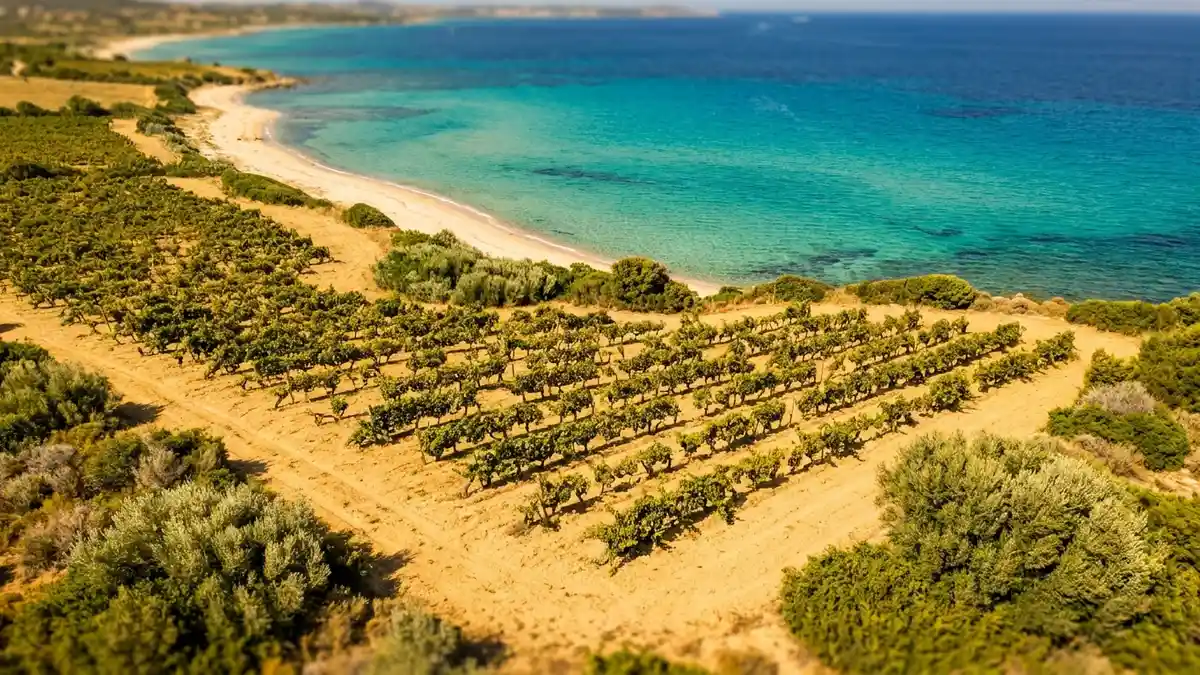
Soils change dramatically across the island. The northeast is granite, the south and west turn to limestone and sand, and the central highlands are rocky and poor. That patchwork is why a single grape can taste so different from one corner of Sardinia to another — the clearest lesson in terroir (the environment where grapes grow — soil, climate, and altitude) the island has to offer.
A Spanish and Catalan History on an Italian Island
To understand Sardinian wine, you have to understand who ruled it. For roughly four centuries, from the 1300s to the early 1700s, the island belonged to the Crown of Aragon and then to Spain. That long stretch left a deep Catalan-Spanish imprint that still shows up in the glass.
The clearest fingerprint is on the grapes. Cannonau is almost certainly linked to Spanish Garnacha (Grenache), and Carignano is the local form of Carignan, a grape with strong Spanish heritage known as Cariñena or Mazuelo across the water. In the northwest town of Alghero, people still speak a form of Catalan, and the labels and wine names there carry a distinctly Spanish accent.
Sardinia is an Italian island that drinks like a Spanish one — warm, generous reds with the soul of the Mediterranean coast.
Layered on top of the Spanish past is the older Italian framework that governs the wines today. Sardinia uses Italy's quality classification system, with DOC (Denominazione di Origine Controllata) and the higher DOCG (Denominazione di Origine Controllata e Garantita) marking wines made to defined regional rules. This mix — Spanish grapes, Italian rules — is what makes Sardinia such a distinctive crossroads.
The Sardinia Wine Guide to Cannonau and Its Blue Zone Lore
If Sardinia has one wine the world should know, it is Cannonau. It is the island's most planted grape and the heart of nearly every serious red, and in any Sardinia wine guide this is where most beginners should begin.
Cannonau is simply Grenache under a Sardinian name, but the island's heat, age-old vines, and low yields push it toward a bolder, deeper style than many mainland versions. Expect a wine that is medium ruby to garnet, warm, and full of personality.
Cannonau (Grenache): medium-to-full body, ripe red and dark berries, warming alcohol, and the herbal lift of the macchia. Typical aromas: red cherry, blackberry, dried plum, wild herbs, leather, a hint of cocoa. Body: medium-to-full (4/5) · Acidity: medium (3/5) · Tannins: medium, soft and rounded (3/5) · Alcohol: high, often 14% and above. For the grape's wider story across France and Spain, our Grenache wine guide covers how it behaves beyond the island.
Cannonau carries a piece of wellness lore worth knowing. Parts of central Sardinia, especially the Nuoro province, are one of the world's so-called blue zones — pockets where people live unusually long lives. Local red wine, rich in polyphenols from old mountain vines, is often cited as one ingredient in that longevity, alongside diet and a slow rural rhythm. Take the claim as folklore rather than medical fact, but it speaks to how central wine is to Sardinian daily life.
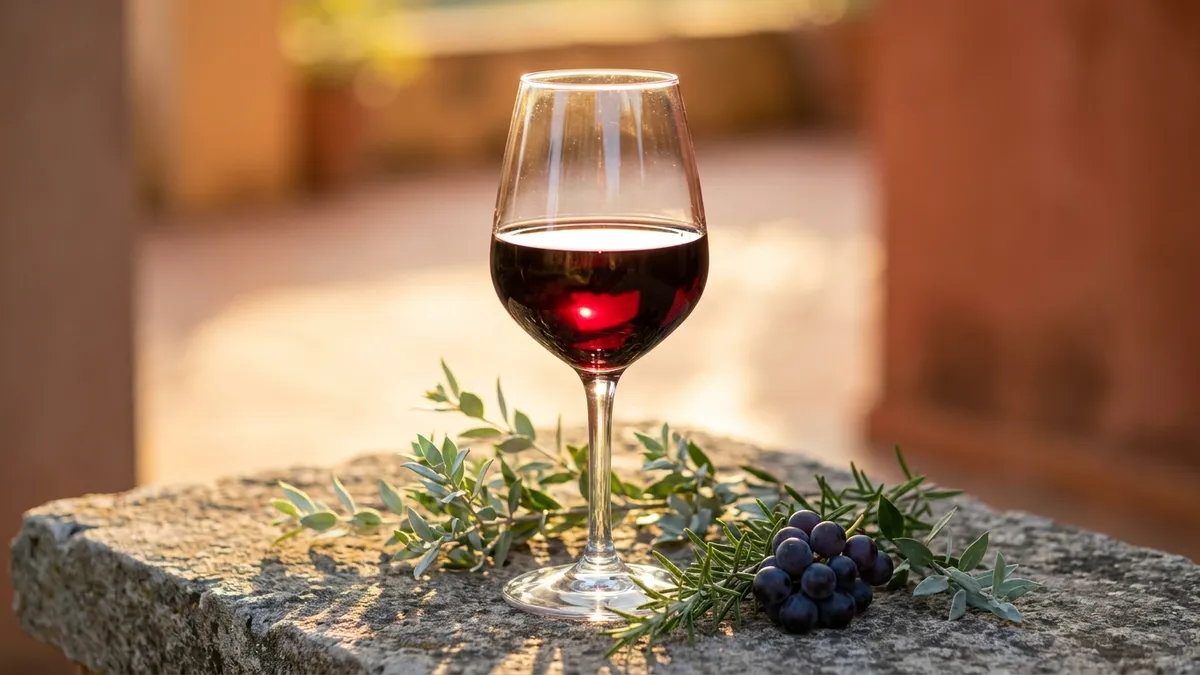
The main Cannonau appellation is Cannonau di Sardegna DOC, which can be made across the whole island, with named sub-zones like Oliena and Jerzu marking pockets known for particular character. The wines range from juicy and everyday to structured bottlings built to age for a decade or more.
Vermentino: The Crisp Coastal White
Where Cannonau is the island's warmth, Vermentino is its sea breeze. This white grape thrives in Sardinia's coastal heat and turns out fresh, aromatic wines that have become the island's calling card for white-wine drinkers.
The benchmark is Vermentino di Gallura DOCG, Sardinia's only DOCG and its top-tier designation. It comes from the Gallura region in the granite-rich northeast, where the stony soils and constant maestrale wind produce a white with real cut and a distinctive salty tang.
- Vermentino di Gallura DOCG (northeast): The island's flagship white, grown on weathered granite. Crisp, mineral, and saline, with citrus, green apple, white flowers, and a faintly bitter almond finish. The highest expression of the grape and the only DOCG on the island.
- Vermentino di Sardegna DOC (island-wide): A broader, more flexible category that can come from anywhere in Sardinia. Generally rounder and softer than Gallura, ranging from easy everyday whites to more serious bottlings, and the easiest entry point to the grape.
Typical aromas of Vermentino: lemon, grapefruit, green apple, white flowers, fresh herbs, sea salt. Body: medium (3/5) · Acidity: medium-to-high, bright and refreshing (4/5). That saline freshness makes it a natural with the island's seafood, and it sits alongside the other coastal varieties in our white grapes overview for beginners building a map of crisp Mediterranean whites. The Sommy app helps you name those citrus and saline notes step by step, so a glass of Vermentino becomes a quick tasting lesson rather than a guess.
Carignano del Sulcis: Old Bush Vines on Sand
The third pillar of Sardinian red wine sits in the far southwest, in a low-lying coastal corner called Sulcis. Here the grape is Carignano — known as Carignan in France and Spain — and the story is all about the soil.
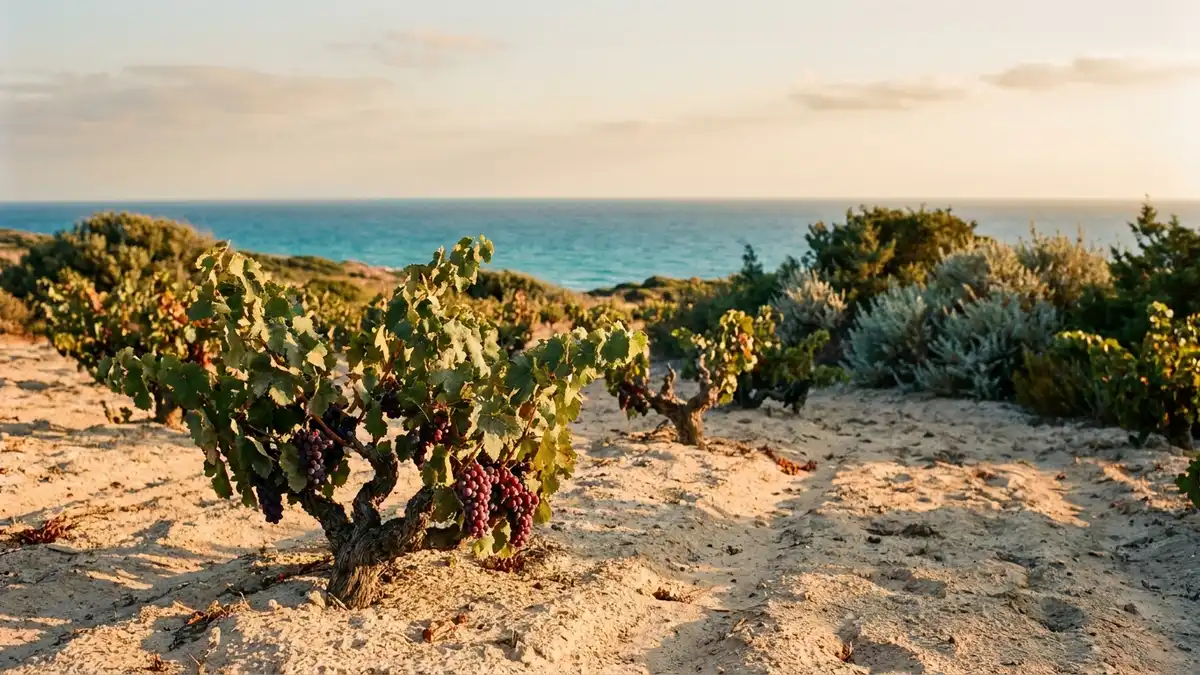
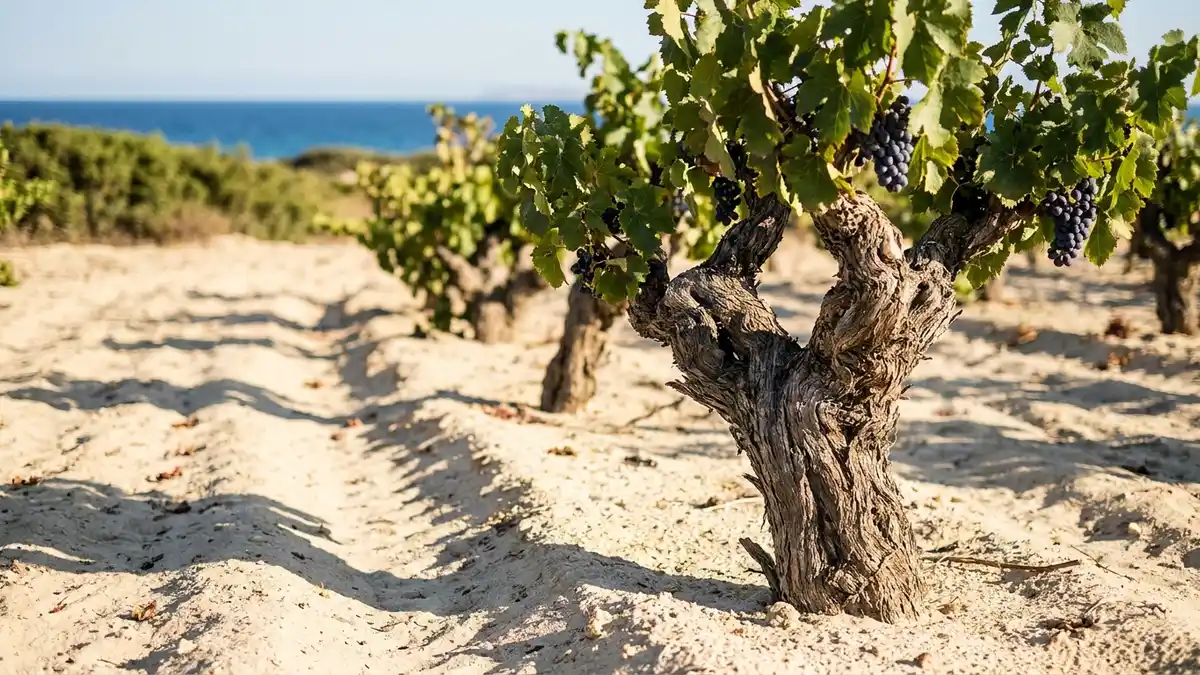
Much of Sulcis is sand. That matters because the phylloxera louse (a root-feeding pest that devastated the world's vineyards in the late 1800s) cannot survive in sandy soils. As a result, many Carignano vines here are ungrafted and very old, grown as low, free-standing bush vines (alberello, or "little tree") that need no trellis and shrug off the heat and wind.
- Carignano del Sulcis DOC (southwest): Deeply colored, full-bodied reds from old bush vines on coastal sand. Dark berry and plum fruit, soft tannins, a warm, almost sweet ripeness, and good aging potential from the oldest vines.
- Old-vine character: The ancient, low-yielding vines concentrate flavor, giving Carignano del Sulcis more depth and richness than Carignan often shows in its higher-cropped homes elsewhere.
These bush-vine survivors are living history, and they explain why Carignan tastes so different here than it does as a workhorse blending grape across the Mediterranean. To see how the same variety behaves elsewhere, our Carignan wine guide traces it across southern France and Spain.
The Other Grapes Worth Knowing
Cannonau, Vermentino, and Carignano carry the island's fame, but a handful of other varieties round out the picture and reward the curious drinker.
- Monica: A soft, fruity red grown widely across the south, often made as an easygoing everyday wine. Bottled as Monica di Sardegna DOC, it is light, juicy, and a friendly introduction to Sardinian reds.
- Vernaccia di Oristano: A rare, oxidatively aged white from the Oristano area on the west coast. Made in a deliberately maderized, sherry-like style, it is nutty, dry, and savory — one of Italy's most unusual whites and a true island specialty.
- Nasco, Nuragus, and Torbato: Older local whites that survive in pockets. Nuragus is light and lemony, Torbato (centered on Alghero) is more aromatic and structured, and Nasco gives delicate, floral wines. These are the kind of native finds covered in our roundup of indigenous grapes worth trying.
Sardinia's depth of native grapes is part of what makes it exciting. While much of the wine world leans on the same handful of international varieties, this island has held onto its own — a theme we explore in our look at the noble grapes and the indigenous varieties that sit alongside them.
How Sardinia's Reds and Whites Compare
Two glasses tell the island's whole story, and lining them up side by side is the fastest way to feel what Sardinia does. Here is how the two signature styles differ at a glance:
- Cannonau (red): Grape: Grenache · Where: island-wide, strongest inland and central · Color: medium ruby to garnet · Body: medium-to-full · Mood: warm, herbal, generous, high alcohol · Best with: roast lamb, grilled meats, hard cheeses.
- Vermentino di Gallura (white): Grape: Vermentino · Where: granite soils of the northeast coast · Color: pale lemon-green · Body: medium · Mood: crisp, saline, citrusy, refreshing · Best with: seafood, shellfish, light pasta, bottarga.
Notice how the contrast maps onto geography: the bold red comes from the hot, dry interior, while the bright white clusters along the cooler, windswept coast. That inland-versus-coast split is the simplest mental model for the whole island. For the structural vocabulary behind these comparisons — what body, acidity, and tannins actually mean — our guide to understanding tannins, acidity, and body breaks it down in plain language.
How a Beginner Should Start with Sardinia Wine
You do not need to visit the island or chase rare bottles to understand Sardinian wine. The smartest path is to taste deliberately and pay attention to what the grapes and soils are telling you. Here is a practical order:
- Start with a Cannonau di Sardegna. This is the island's signature and the best first impression — warm, herbal, and full of character. Notice the ripe red fruit and the savory, scrubland edge that sets it apart from cooler-climate reds.
- Add a Vermentino di Gallura. Open it alongside the Cannonau to feel the island's two faces at once. Look for citrus, white flowers, and that distinctive saline, salty finish from the granite coast.
- Try a Carignano del Sulcis next. Once you know Cannonau, taste this southern red to feel what old bush vines on sand do to a wine — deeper color, softer tannins, and a richer, warmer fruit.
- Explore a native white last. A Nuragus or a Torbato shows the island's quieter side and proves how much variety hides beyond the famous names.
- Build the tasting habit. Note the color, the medium-to-high acidity in the whites, and the warm, herbal lift in the reds. Our guide to how to taste wine gives you the step-by-step method, and the Sommy app turns each bottle into a short, guided lesson.
Sardinia also rewards a wider curiosity about Italian wine as a whole. The island is one chapter in a country with dozens of distinctive regions, and our broader Italian wine guide shows where Sardinia fits in the national picture. You can start practicing the method free at sommy.wine, then bring it to your next bottle from the island.
Why Sardinia Is Worth the Detour
Sardinia asks a little curiosity of a wine learner and gives a lot back. It is a place where a Spanish grape grows under an Italian flag, where ancient bush vines survive on beach sand, and where a glass of red carries the scent of wild island herbs. None of that is decoration — it is exactly what makes the wines taste the way they do.
Start small, taste in pairs, and let the island's two faces — warm inland reds and bright coastal whites — reveal themselves one glass at a time. The Sommy app is built to make that habit stick, turning each bottle into a guided lesson so the next Sardinian wine you open is a little clearer than the last.
Sources
Frequently Asked Questions
What is the most famous Sardinia wine?
Cannonau is Sardinia's flagship red and its most widely planted grape. It is the local name for Grenache, the same variety grown across southern France and Spain. Sardinian Cannonau tends to be warm, full-bodied, and high in alcohol, with red-berry fruit and a savory, herbal edge from the island's wild scrubland called the macchia.
Is Cannonau the same as Grenache?
Yes. Cannonau is the Sardinian name for Grenache, the widely planted Mediterranean red grape known as Garnacha in Spain. The wine is typically deeper and more robust than many mainland Grenache styles because of Sardinia's hot, sunny climate and old, low-yielding vines. The local name simply reflects centuries of island and Spanish history.
What does Vermentino di Gallura taste like?
Vermentino di Gallura is a crisp, dry white from granite soils in northeast Sardinia. Expect aromas of citrus, green apple, white flowers, and a distinctive saline, almost salty finish from the coastal climate. It is medium-bodied with bright acidity and a slightly bitter almond note on the close, which makes it a natural match for seafood.
Why does Sardinian wine have Spanish influences?
Sardinia was ruled by the Crown of Aragon and then Spain for roughly four centuries, from the 1300s to the early 1700s. That long period left a Catalan-Spanish imprint on the island's grapes, language, and labels. Cannonau likely shares roots with Spanish Grenache, and Carignano is the local form of Carignan, a grape with strong Spanish heritage.
What is Carignano del Sulcis?
Carignano del Sulcis is a red wine from the Sulcis area in southwest Sardinia, made from the Carignano grape, known as Carignan elsewhere. Many vineyards are old, ungrafted bush vines planted directly in sandy coastal soils, which the phylloxera louse cannot survive in. The wines are deeply colored, full-bodied, and dark-fruited with a soft, warm character.
Is Sardinia wine red or white?
Sardinia makes both, and beginners should explore each. The island's signature red is Cannonau, with Carignano and Monica adding more red options in the south. Its leading whites are Vermentino, especially Vermentino di Gallura, and the rarer Vernaccia di Oristano. Roughly speaking, reds dominate inland and the south while crisp whites cluster along the cooler coasts.
Where should a beginner start with Sardinia wine?
Start with one bottle of Cannonau and one Vermentino di Gallura, tasted side by side. The red shows the island's warm, herbal power and the white shows its bright, saline coastal style. Once those two anchor your palate, add a Carignano del Sulcis to feel the difference sandy old-vine soils make to a southern red.
Sommy Team
LinkedInFounder & Wine Educator
The Sommy Team is building the world's most approachable wine education app, helping beginners develop real tasting skills through structured courses and AI-guided practice.