Carignan Wine Guide: Old-Vine Mediterranean Character

By the Sommy Team — AI-assisted, human-edited.
Updated Jun 17, 2026
Contents (11)
- What Is Carignan Wine?
- Carignan in 100 Words
- Carignan Tasting Notes and Flavor Profile
- Why Carignan Was Dismissed — and Why That Changed
- How Old Vines and Skins Shape the Wine
- Carbonic Carignan: The Juicy Modern Style
- Where Carignan Grows
- Carignan's Blending Role in GSM and Southern France
- How to Pair Carignan with Food
- Carignan vs Other Mediterranean Reds
- How a Beginner Should Approach Carignan
TL;DR
Carignan is a Mediterranean red grape long dismissed as a high-yield workhorse, but transcendent from old bush vines in Languedoc, Priorat, Chile's Maule, and California. Expect tart cranberry and raspberry, dried herbs, licorice, very high acidity, and firm tannin when young. It anchors GSM-style southern French blends.
What Is Carignan Wine?
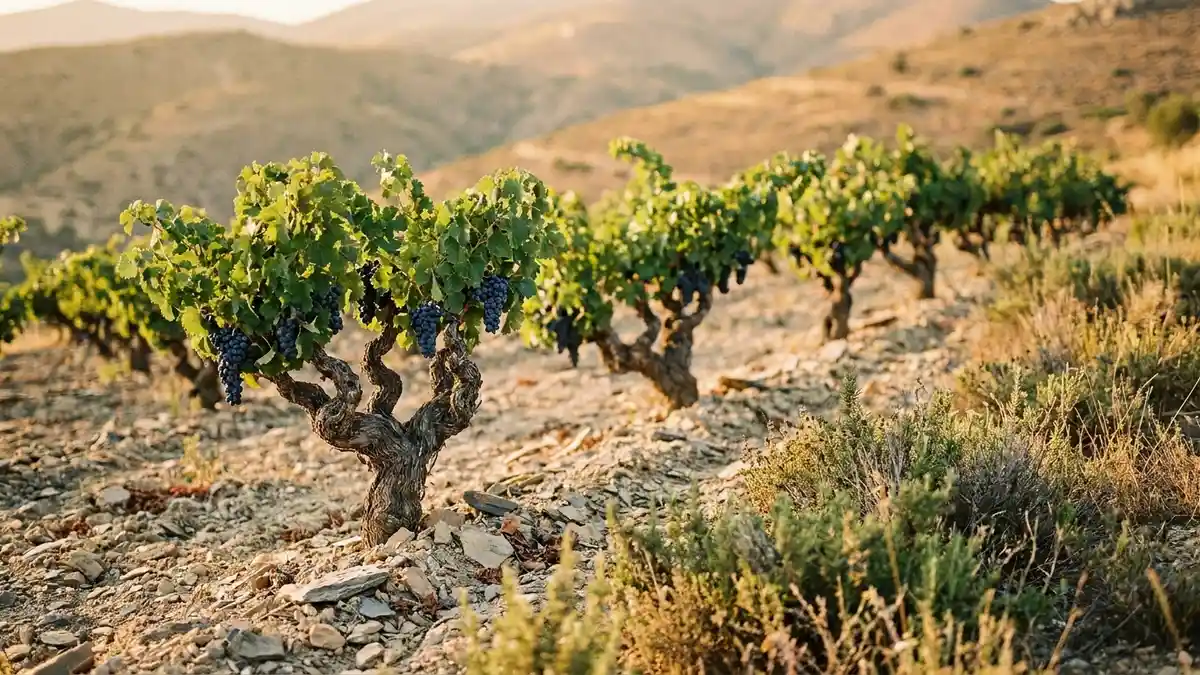
Carignan is a dark-skinned Mediterranean red grape with a split reputation: for most of the last century it was the workhorse of cheap bulk wine, yet today some of the most exciting reds in southern France, Spain, and Chile are made from it. The difference is the vine. From old, low-yielding bush vines, carignan wine becomes savory, structured, and deeply characterful — tart red fruit, dried herbs, licorice, and a stony, sun-baked edge.
The grape travels under many names. In Spain it is Cariñena, and also Mazuelo in Rioja and Samsó in Catalonia and Priorat. On Sardinia it is Carignano, and in older California vineyards it appears as Carignane. Same vine, same naturally high acidity and firm tannin, many regional accents.
Carignan ripens late and yields generously, which is exactly why it was abused for volume. Tame those yields and the grape reveals a wine of real grip and personality — closer in spirit to a savory southern French red than to anything jammy or soft.
Carignan in 100 Words
Carignan wine is a medium to full-bodied dry red built on tart cranberry, raspberry, and sour cherry, dried herbs, licorice, and savory cured-meat notes, with very high acidity and firm tannin when young. Long farmed for bulk across the Languedoc, Spain, and North Africa, it shines from old bush vines in Languedoc, Priorat, Chile's Maule Valley, and old-vine California. Carbonic maceration softens its grip into juicy, crunchy fruit. Historically a blending grape — adding color and acidity to Grenache and Syrah in GSM-style reds — it now stands alone as a single-varietal old-vine bottling.
Carignan Tasting Notes and Flavor Profile
Carignan is a savory, high-tension red rather than a soft, fruity one. Its calling cards are bright, tart fruit and a firm, mouth-watering acidity that keeps every sip lively. Learn that combination and the grape becomes easy to recognize.
The Core Flavors
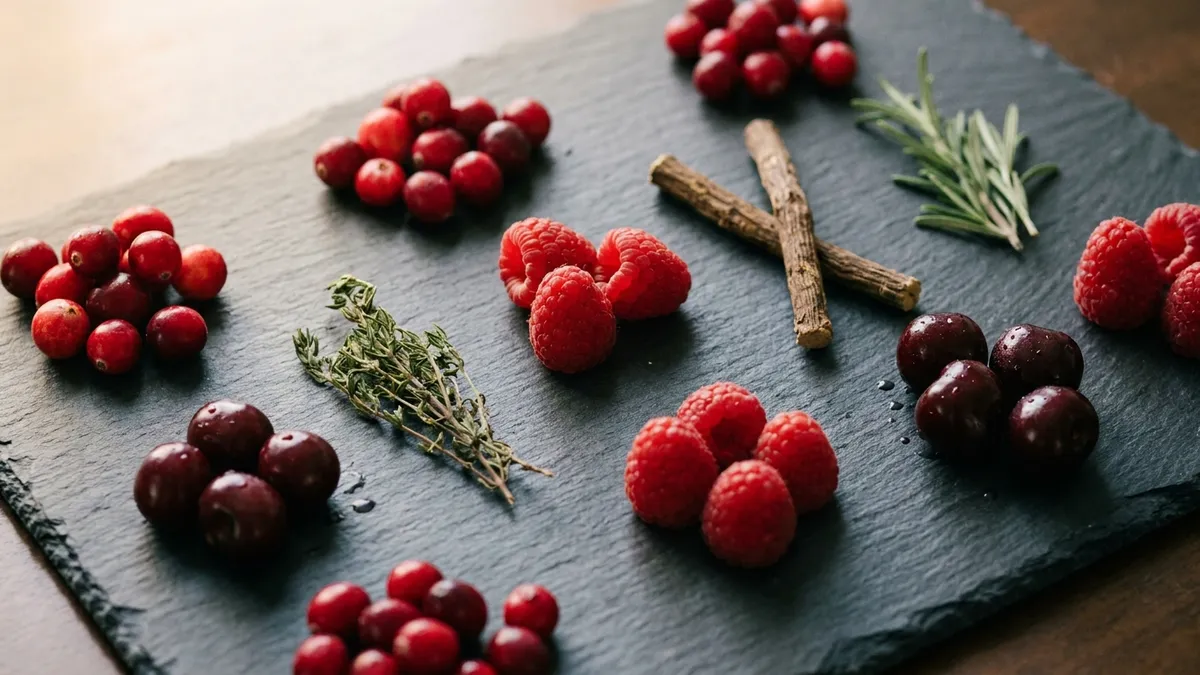
- Red fruit — tart cranberry, raspberry, sour cherry, and red plum in warmer years
- Herbal and earthy — dried Mediterranean herbs (thyme, rosemary), licorice, and a wet-stone minerality
- Savory — cured meat, leather, and a faintly smoky, sun-baked quality on old-vine bottlings
- Oak-derived (when present) — cedar, baking spice, and a rounder texture from time in barrel
The grape's thick skins give deep color and real tannic grip, while its naturally high acidity keeps everything taut and refreshing. That tension is exactly what made high-yield Carignan taste harsh and what makes low-yield old-vine Carignan taste thrilling.
Structure at a Glance
Carignan leans medium to full in body, with assertive acidity and firm, sometimes rustic tannins. Reading those three axes — body, acidity, and tannin — is the fastest way to understand any red. If the terms are new, the guide to tannins, acidity, and body breaks them down.
Body medium to full (3-4/5) · Acidity very high (5/5) · Tannin high (4/5)
Old vines and warmer sites push the body toward full and round out the tannins; carbonic and cool-site wines stay leaner, brighter, and crunchier. Either way, the acidity rarely drops below "very crisp" — it is the grape's defining trait.
Why Carignan Was Dismissed — and Why That Changed
No grape's reputation has swung further than Carignan's. Understanding why explains everything about how to choose a good bottle today.
The Bulk-Wine Era
Through much of the twentieth century, Carignan was the most planted red grape in France, farmed across the Languedoc and North Africa for one reason: it produces enormous quantities of deeply colored wine. Trained on wires and pushed to huge yields, the grape gave thin, sharp, aggressively tannic wine that filled the tanks of Europe's cheap-red market. The grape took the blame for what was really a farming decision.
The Old-Vine Revival
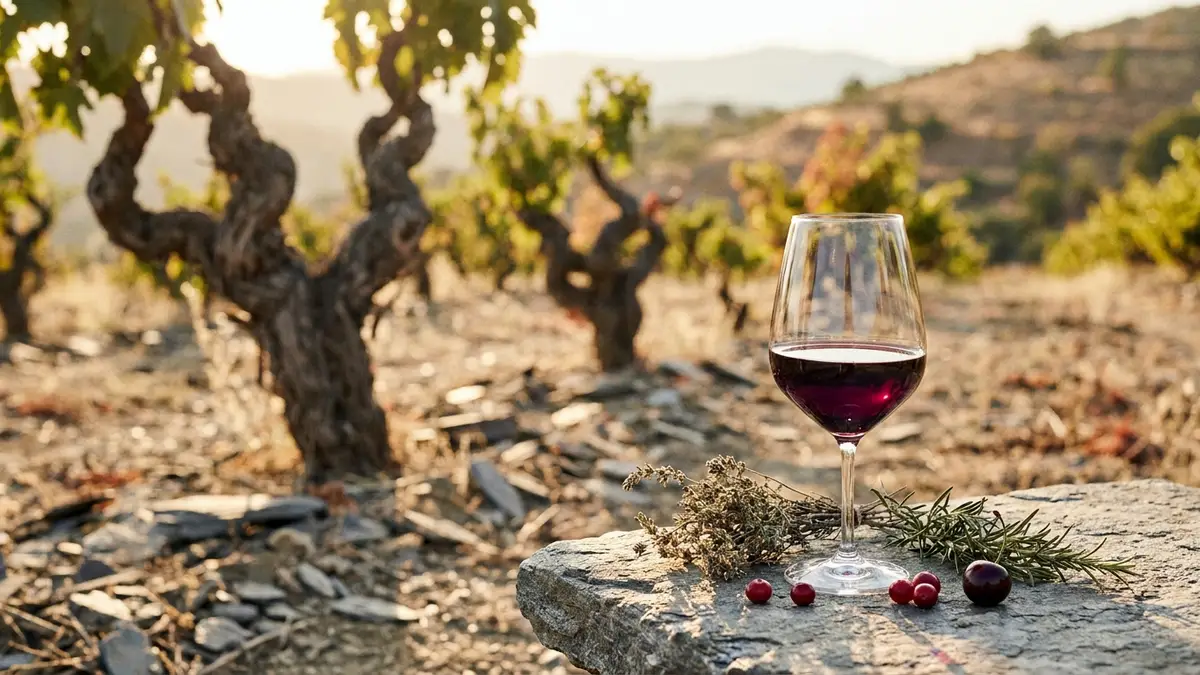
The turnaround came when growers and winemakers looked again at the old bush vines that survived the vine-pull schemes — gnarled, head-trained plants often 50 to over 100 years old, planted before the volume era. These ancient vines naturally self-limit their yields, concentrating fruit and taming the harshness.
Carignan was never a bad grape. It was a great grape farmed for the wrong goal.
From those vines, with gentler extraction and sometimes carbonic maceration, Carignan reveals finesse: savory depth, fine-grained tannin, and a singular tart-fruit-and-herb character. The same arc rewarded other once-dismissed Mediterranean varieties, including Cinsault, and it sits within the wider family of black grapes now being rediscovered.
How Old Vines and Skins Shape the Wine
Two factors do most of the work in a great Carignan: vine age and skin thickness.
Old-vine fruit is the engine of quality. Low yields mean each cluster carries more concentration, so the wine gains depth without losing the bright acidity that defines it. Vine age also deepens the savory, complex side — the cured-meat and licorice notes that distinguish serious Carignan from simple bulk red.
Carignan is also firmly a thick-skinned grape, which explains both its deep color and its firm tannin. Thick skins pack pigment and tannin, so even careful winemaking leaves real structure in the glass. That is why the grape responds so well to techniques that soften extraction, and why its deep ruby color is one of its visual signatures.
Carbonic Carignan: The Juicy Modern Style
One of the most important shifts in modern Carignan is the rise of carbonic maceration — fermenting whole, uncrushed grapes inside a carbon-dioxide-rich tank. The technique, made famous by Beaujolais and the Gamay grape, ferments much of the juice inside the intact berry, which softens tannin and lifts vivid, crunchy fruit.
For a naturally high-tannin grape like Carignan, this is transformative. Carbonic Carignan tastes of fresh cranberry, raspberry, and a faint bubblegum lift, with the grape's firm grip dialed back to something light and gulpable. Many modern Languedoc growers and natural-wine producers use partial or full carbonic to show Carignan's friendliest face.
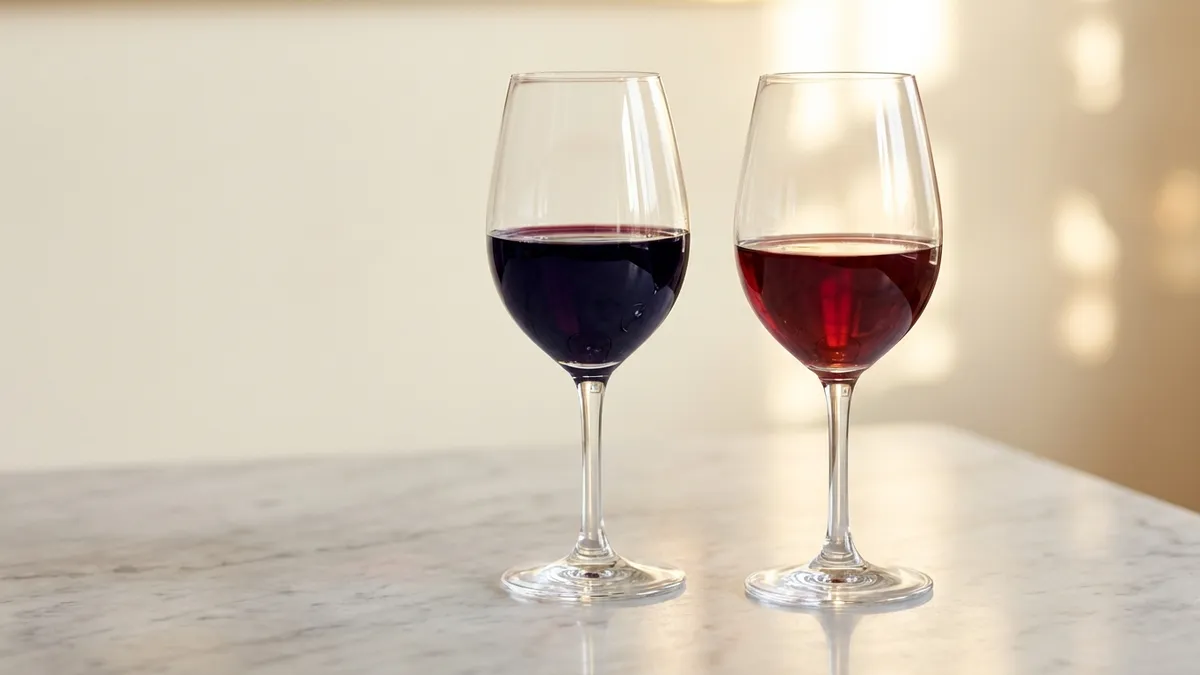
The contrast between a carbonic Carignan and an old-vine, oak-aged one is dramatic — same grape, two completely different wines. Tasting them side by side is one of the clearest lessons in how winemaking, not just the grape, shapes a wine.
Where Carignan Grows
Languedoc-Roussillon, France
The Languedoc-Roussillon in southern France is Carignan's historic heartland. Once the source of an ocean of bulk wine, the region now holds some of the world's greatest old-vine Carignan, especially in appellations like Corbières, Minervois, Fitou, and Saint-Chinian.
Here Carignan plays two roles. It is a backbone blending grape in the region's GSM-style reds, and increasingly a star single-varietal wine from ancient bush vines. For the wider geography, the French wine regions guide places the Languedoc in context.
Priorat and Catalonia, Spain
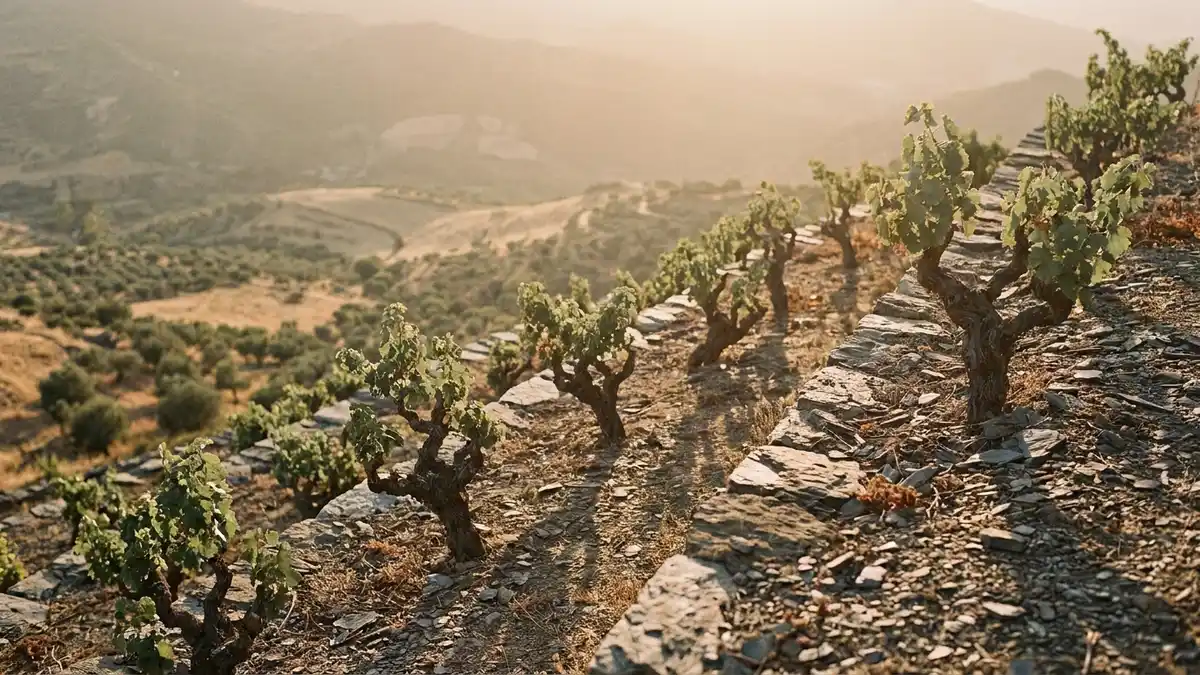
In Priorat, Carignan — here called Samsó or Cariñena — partners with old-vine Garnacha on the region's steep slopes of black slate known as llicorella. The vines are often ancient, the yields tiny, and the wines profound: dark, mineral, powerful, and built to age. Carignan supplies the acidity and structure that balance Garnacha's generous warmth.
In Rioja, the grape is called Mazuelo and plays a traditional supporting role, lending color and acidity to Tempranillo-based blends. The Tempranillo guide and the broader Spanish wine regions guide both show where Carignan fits in Spain's classic reds.
Maule Valley, Chile
Chile's Maule Valley is home to a remarkable trove of dry-farmed, century-old Carignan bush vines, many planted after a 1939 earthquake to rebuild the region's vineyards. A group of growers formed a movement to champion these old vines, producing concentrated, savory, high-acid reds that have become one of South America's most distinctive wine stories. Maule Carignan tends to show ripe yet tart red fruit, dried herbs, and a rustic, sun-soaked depth.
California and Beyond
In California, old-vine Carignane survives in heritage vineyards across regions like Mendocino, Contra Costa, and Lodi — some planted over a century ago. Once destined for jug wine, these vines are now prized by producers chasing freshness and savory character. The grape also appears on Sardinia as Carignano, most notably in the Carignano del Sulcis appellation, where sandy coastal soils give rich, sun-baked reds, and in scattered plantings across Italy, Israel, and South Africa.
Carignan's Blending Role in GSM and Southern France
For most of its history, Carignan earned its keep in the blend rather than the spotlight. It remains one of the most useful partner grapes in Mediterranean reds.
In southern French and Spanish wines, Carignan brings three things to a blend:
- Color — its thick skins add deep pigment to paler partners
- Acidity — its very high acidity lifts and freshens richer grapes
- Structure — its firm tannin adds grip and a backbone for aging
The classic Languedoc red is a GSM-style blend — Grenache, Syrah, and Mourvèdre — and Carignan is the traditional fourth grape that ties it together. Grenache gives red fruit and warmth, Syrah adds dark fruit and pepper, Mourvèdre brings savory tannin, and Carignan contributes the acidity and color that keep the whole wine fresh and structured. (For the warm, generous heart of these blends, see the Grenache guide.)
The same logic plays out in Priorat, where Carignan (Samsó) is Garnacha's essential structural partner, and in Rioja, where Mazuelo sharpens Tempranillo-based blends.
How to Pair Carignan with Food
Carignan was born at the table. Its very high acidity cuts through fat, its firm tannin handles protein, and its savory, herbal edge bridges to grilled and roasted dishes. The principle is the same one behind all structured reds: match the wine's grip and acid to the dish's richness.
Reliable Pairings
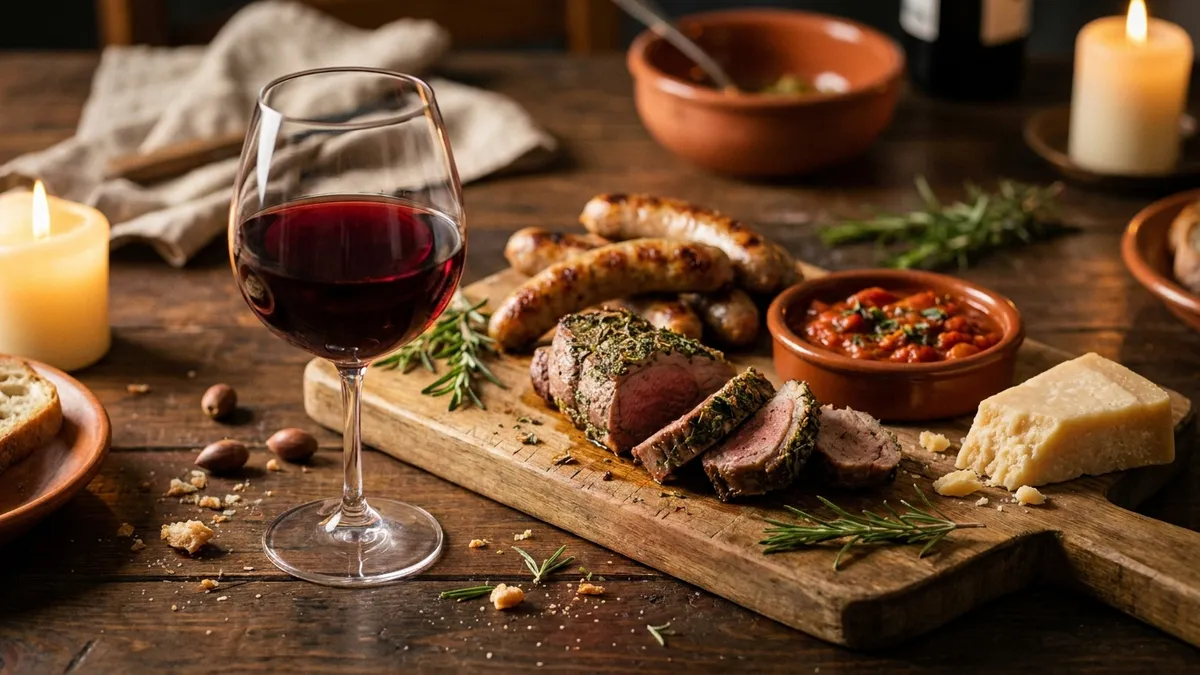
- Grilled and roasted meats — lamb, beef, and herb-rubbed pork mirror the wine's savory depth
- Sausages and cassoulet — Languedoc classics that meet Carignan's acidity and grip head-on
- Tomato-rich Mediterranean dishes — ratatouille, pasta with tomato and olive, pizza; the acidity loves tomato's brightness
- Cured meats and charcuterie — fat and salt meet the wine's cutting acidity
- Hard cheeses — aged Manchego, Pecorino, and Gruyère match its structure
- Mushroom and lentil dishes — earthy flavors echo the grape's savory side
What to Avoid
Skip very delicate fish and creamy, sweet desserts — Carignan's acidity and tannin will overpower both. Save fresher, carbonic styles for charcuterie and tomato-based pasta, and bring out the structured, old-vine bottles for the roast.
Carignan vs Other Mediterranean Reds
Placing the grape next to familiar Mediterranean varieties makes its profile easier to remember.
How Carignan compares to three southern reds.
- Body: Carignan medium to full; Grenache medium to full; Syrah full; Cinsault light to medium
- Acidity: Carignan very high; Grenache low to medium; Syrah medium; Cinsault medium to high
- Tannins: Carignan high; Grenache soft; Syrah high; Cinsault low
- Key flavors: Carignan tart cranberry, dried herbs, licorice; Grenache strawberry, white pepper, warmth; Syrah black fruit, pepper, smoke; Cinsault red berry, floral, light spice
- Oak affinity: Carignan good; Grenache moderate; Syrah excellent; Cinsault low
- Best with: Carignan grilled lamb, cassoulet, tomato dishes; Grenache roast chicken, stews; Syrah grilled red meat, game; Cinsault charcuterie, light meats
If this tart, savory profile appeals, you may also enjoy the warmth of Grenache or the lighter charm of Cinsault — Carignan's frequent blending partners. For the foundational varieties every taster should learn first, the guide to the noble grapes is the place to start.
How a Beginner Should Approach Carignan
The smartest way to learn any grape is to taste it across two contrasting styles, side by side. Carignan makes this easy because its range — from juicy carbonic to deep old-vine — is so wide.
- Start fresh or carbonic. Pour a young, lighter Languedoc Carignan and lock onto the tart cranberry-and-herb signature with bright, mouth-watering acidity. This is the grape's fingerprint without the harsh edge.
- Then taste an old-vine bottling. A Priorat, Maule, or California old-vine wine shows how low yields and vine age add depth, savory complexity, and finer tannin.
- Note the shift. Watch how the fruit deepens from crunchy cranberry to ripe plum, how the tannins gain grip and polish, and how the finish stretches. Those changes are vine age and winemaking made tangible.
The point of a comparison is to give your senses a contrast to react to. A single glass tells you little; two glasses side by side teach you the variable that changed. That habit of systematic tasting is the single fastest way to build a real palate — and the steps in the guide to tasting red wine apply directly to Carignan's bright, structured style.
The Sommy app walks you through exactly these structured comparisons — guiding you to gauge the acidity, name the tart fruit, and put words to the difference between a carbonic Carignan and an old-vine one. With its clear signature and dramatic stylistic range, Carignan is an ideal grape to practice on, one tart, savory glass at a time.
Sources
- Carignan — Wikipedia
- Carignan: The Mediterranean's Underdog Grape — Wine Folly
- Old-Vine Carignan and the Maule Valley — Wines of Chile
Frequently Asked Questions
What does Carignan wine taste like?
Carignan tastes of tart cranberry, raspberry, and sour cherry layered with dried herbs, licorice, cured-meat savoriness, and a stony edge. It carries very high acidity and firm tannin when young, which is why old-vine fruit and gentle winemaking matter so much. Warmer sites and old vines add darker plum fruit and a richer, rounder body.
What are Carignan's other names?
Carignan goes by several names across the Mediterranean. In Spain it is Cariñena, and also Mazuelo in Rioja and Samsó in Catalonia and Priorat. It is Carignano on the Italian island of Sardinia and Carignane in older California plantings. All refer to the same dark-skinned, late-ripening, high-acid red grape variety.
Why was Carignan considered a bad grape?
For much of the twentieth century Carignan was farmed for volume, not quality. Trained on wires and pushed to enormous yields across the Languedoc and North Africa, it produced thin, harsh, overly tannic bulk wine. The grape itself was never the problem. Low-yield old bush vines and careful winemaking reveal a completely different, far more characterful wine.
What is old-vine Carignan and why does it matter?
Old-vine Carignan comes from gnarled bush vines often 50 to over 100 years old, planted before the bulk-wine era. These vines self-limit their yields, concentrating flavor and taming the grape's natural harshness. The result is deeper fruit, finer tannin, and a savory complexity that young high-yield vines cannot match. Old vines drive Carignan's modern revival.
What is carbonic maceration Carignan?
Carbonic maceration ferments whole, uncrushed grapes in a carbon-dioxide-rich tank, softening tannin and lifting bright, juicy fruit. Applied to high-tannin Carignan, it tames the grape's grip and produces a fresher, more drinkable red full of crunchy cranberry and raspberry. Many modern Languedoc and natural-wine producers use it to show Carignan's lighter, more approachable side.
What food pairs well with Carignan?
Carignan's high acidity and firm tannin make it a natural table wine. It loves grilled and roasted meats, lamb, sausages, cassoulet, and tomato-rich Mediterranean dishes. The savory edge flatters cured meats, hard cheeses, and herb-rubbed vegetables. Its acidity cuts through fat and salt, while old-vine richness stands up to braises and barbecue.
Is Carignan usually blended or bottled on its own?
Historically Carignan was a blending grape, adding color, acidity, and structure to Grenache and Syrah in southern French and Spanish reds. It is the backbone of many GSM-style Languedoc blends and a key partner to Garnacha in Priorat. Single-varietal old-vine Carignan is a newer trend, proving the grape can stand alone when the fruit is concentrated.
Is Carignan a good wine for beginners?
Yes, if you enjoy savory, high-acid reds over soft fruit bombs. Start with a carbonic or fresher Languedoc Carignan to meet the grape's bright cranberry-and-herb signature without harsh tannin. Then try an old-vine bottling from Priorat, Maule, or California to taste how low yields and vine age add depth, structure, and savory complexity.
Sommy Team
LinkedInFounder & Wine Educator
The Sommy Team is building the world's most approachable wine education app, helping beginners develop real tasting skills through structured courses and AI-guided practice.