Cinsault Wine Guide: The Light, Juicy Southern Grape

By the Sommy Team — AI-assisted, human-edited.
Updated Apr 29, 2026
Contents (15)
- Cinsault Wine — The Quiet Charmer of the Mediterranean
- What Is Cinsault, in 100 Words
- A Short History — From Provence Workhorse to Cult Grape
- What Cinsault Wine Tastes Like
- Cinsault in France — The Mediterranean Heartland
- The Pinotage Parentage Story
- South Africa — The Old-Vine Cinsault Revival
- Cinsault in Lebanon
- Other Cinsault Regions
- How to Pair Cinsault Wine with Food
- Should You Age Cinsault?
- Serving Cinsault
- Tasting Cinsault the Sommy Way
- Cinsault vs Cinsaut — A Note on Spelling
- Where to Start with Cinsault
TL;DR
Cinsault is a heat-loving thin-skinned red grape from Southern France, known for pale ruby color, soft tannin, and juicy red cherry, raspberry, dried herb, and black pepper notes. It anchors Provence rosé blends, Languedoc and Rhône reds, signature Lebanese wines, and South Africa's old-vine revival, drinking best young at 12 to 13 percent alcohol.
Cinsault Wine — The Quiet Charmer of the Mediterranean
If you have ever sipped a chilled Provence rosé on a summer afternoon, or wondered why a Languedoc red felt so light and easy after a heavier Bordeaux, there is a strong chance cinsault wine had a hand in it. Cinsault is one of the most planted grapes you have probably never thought about — a quiet workhorse of the Mediterranean that is finally stepping into the spotlight on its own terms.
The grape is thin-skinned, heat-loving, and naturally generous with juice. For most of the twentieth century it was treated as a blending partner, valued for softness and yield rather than character. Today, a new generation of winemakers in Southern France, Lebanon, and South Africa is bottling it solo — and the results are some of the most charming, food-friendly, low-alcohol reds in the world.
This guide walks through what cinsault wine tastes like, where it grows, the famous Pinotage parentage story, and how to enjoy it at the table.
What Is Cinsault, in 100 Words
Cinsault (sometimes spelled Cinsaut) is a heat-loving thin-skinned red grape native to Southern France, often blended in Provence rosé and Languedoc and Rhône reds, increasingly bottled solo. The profile is unmistakable: pale ruby color, low to medium tannin, juicy red cherry and raspberry, dried herb, and black pepper, with 12 to 13 percent alcohol. It is the genetic parent of Pinotage (crossed with Pinot Noir in 1925). Star regions include Provence rosé blends, Languedoc-Roussillon reds, Lebanon (where it is a signature variety), South Africa's old-vine revival (often 50-plus year bush vines), and Chile. Most cinsault drinks young — one to three years — with top old-vine examples ageing three to seven.
A Short History — From Provence Workhorse to Cult Grape
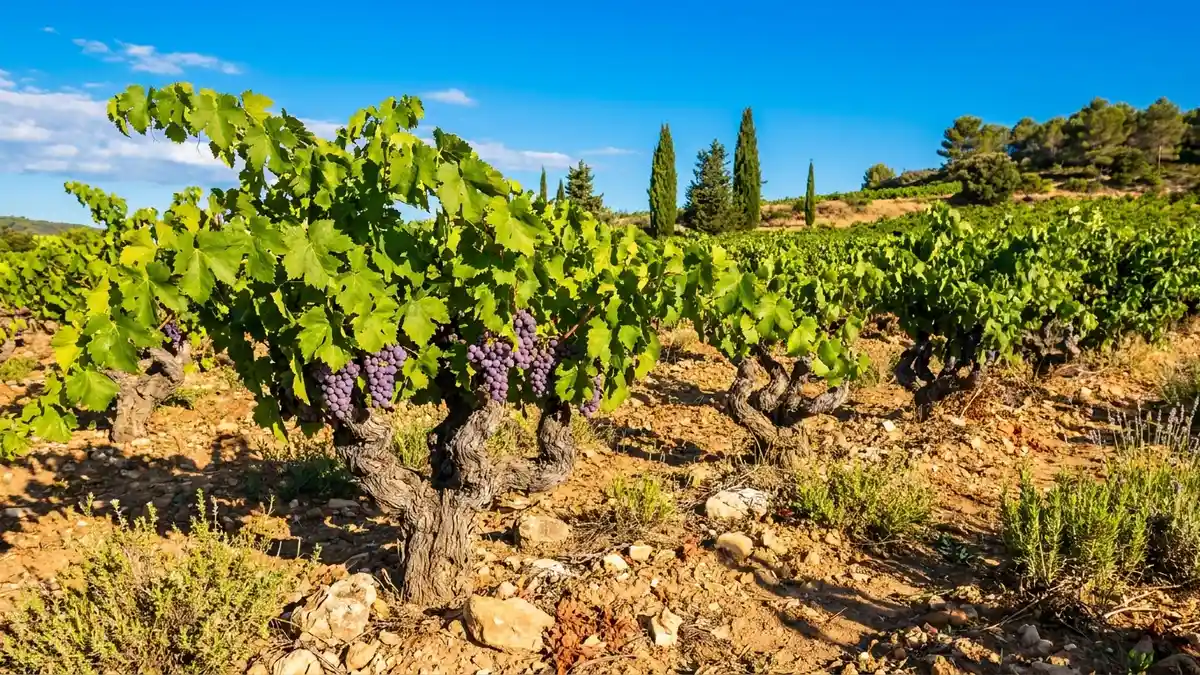
Cinsault has been grown across the South of France for centuries, with its earliest records pointing to Provence and the Languedoc as its likely homeland. It thrives in heat, drought, and poor soils, which made it indispensable across the Mediterranean basin during the nineteenth and twentieth centuries.
For most of that history, cinsault was a quantity grape. High yields and reliable ripening made it a favourite of the bulk-wine industry across Southern France, Algeria, and Morocco. Its softness and bright red fruit also made it a natural component of Provence rosé blends long before pale rosé became a global phenomenon.
The pivot came slowly, then quickly. Old-vine plantings in unfashionable corners of the Languedoc and South Africa survived the great pull-out programmes of the late twentieth century by accident. As natural-leaning, lower-alcohol wines came back into fashion in the 2010s, those forgotten vineyards became gold. Today some of the most exciting wines in the world are coming from cinsault that no one wanted twenty years ago.
For more on how grape origins shape wine style, see the noble grapes guide and the grenache wine guide for cinsault's most common blending partner.
What Cinsault Wine Tastes Like
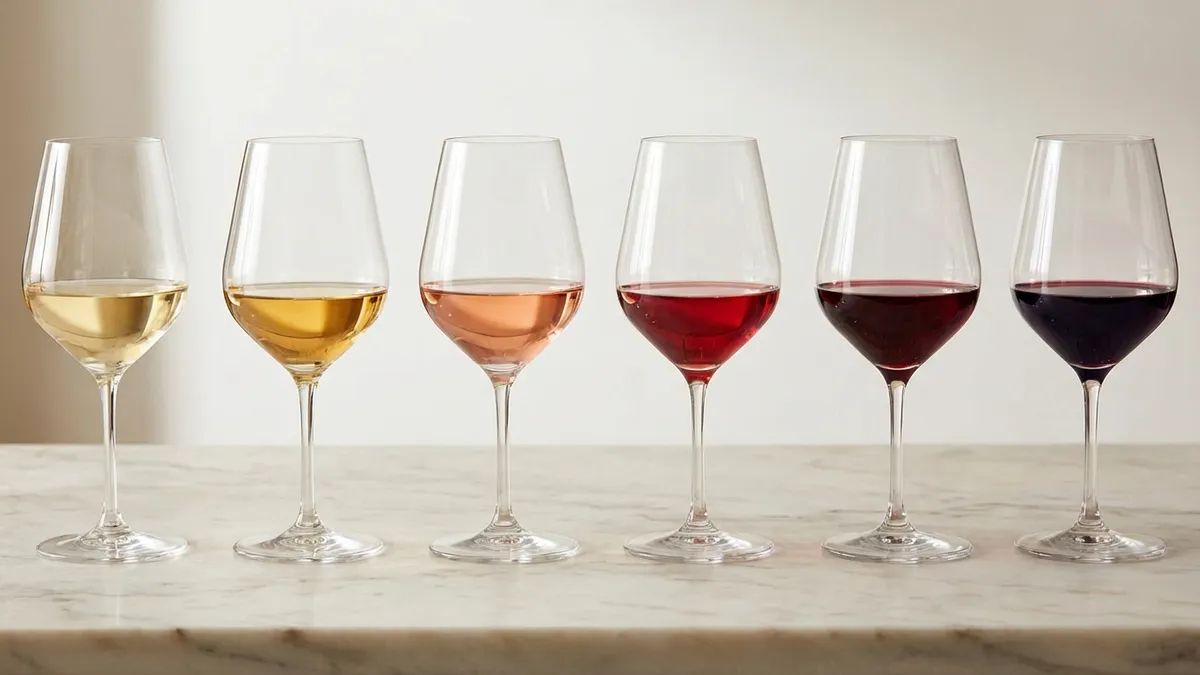
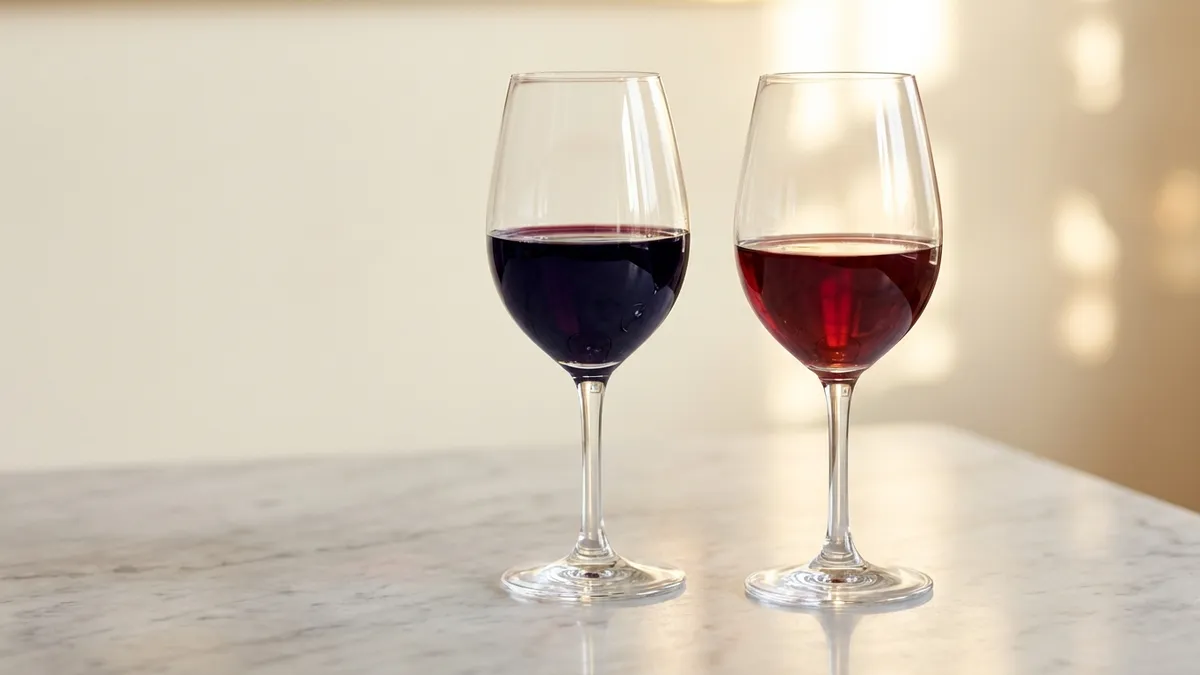
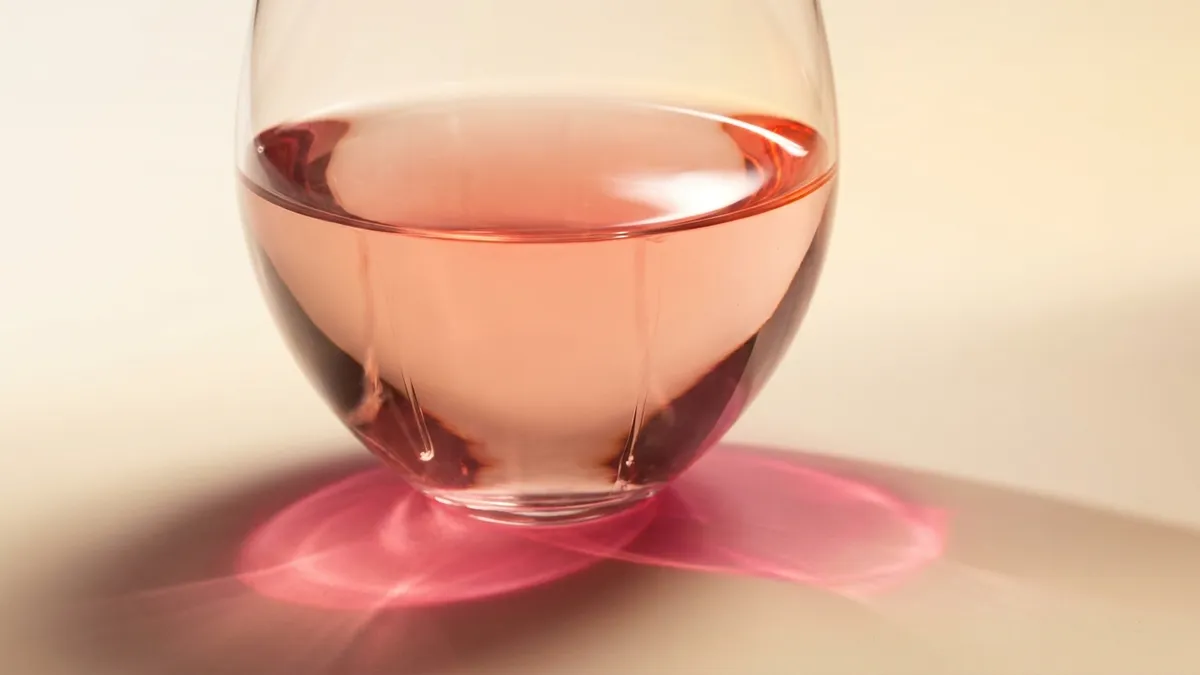
Pour a glass of cinsault and the first thing you notice is the color. It is pale — a translucent ruby that often shifts toward salmon at the rim, more like a deeper Pinot Noir than a typical Mediterranean red. The thin skins simply do not carry much pigment, no matter how ripe the fruit is. (See the wine color meaning guide for what color reveals about a wine.)
Aroma Profile
- Red fruit — red cherry, raspberry, pomegranate, redcurrant, sometimes a slightly candied strawberry note
- Floral — rose petal, violet, dried hibiscus
- Herbal — Provençal garrigue (the wild thyme, rosemary, and lavender of Mediterranean hillsides), dried bay leaf
- Spice — black pepper, white pepper, a faint orange peel lift
- Earth — gentle leather, dried tobacco in older bottlings
Palate Profile
- Body — light to medium, with a juicy, refreshing texture
- Tannins — soft, low to medium, rarely grippy
- Acidity — medium, sometimes bright in cooler vintages
- Alcohol — typically 12 to 13 percent — unusually moderate for a Southern grape
- Finish — clean, fragrant, often with a savoury herbal echo
The combination of pale color, low tannin, and modest alcohol makes cinsault one of the easiest red grapes to chill lightly. In fact, served at 13 to 15°C rather than full room temperature, the wine becomes more vivid and lifted — closer in spirit to a Beaujolais than to a Châteauneuf-du-Pape. (For practical guidance, see the wine serving temperature chart.)
Cinsault in France — The Mediterranean Heartland
Provence — The Rosé Engine Room
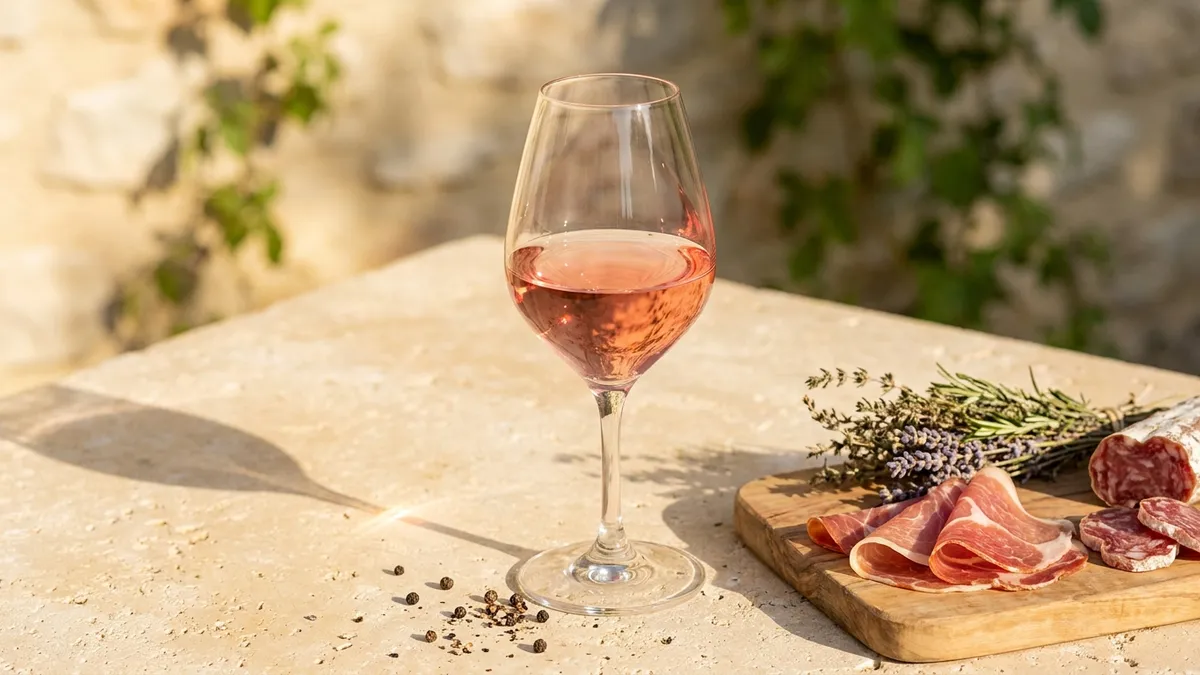
In Provence, cinsault is one of the cornerstones of pale rosé. Alongside Grenache, Syrah, Mourvèdre, and the local specialty Tibouren, cinsault contributes the softness, gentle red fruit, and floral lift that define the regional style. Its naturally pale juice makes it ideal for the brief skin contact that gives Provence rosé its signature whisper-pink color.
Many of the rosé wines that fill summer wine lists worldwide rely heavily on cinsault. The grape's thin skins, low tannin, and bright cherry fruit translate beautifully into rosé form — fresh, dry, and built for sipping cold. For more on the style, see the rosé wine guide and how to taste rosé.
Languedoc-Roussillon
The vast vineyards of the Languedoc-Roussillon are cinsault's other French stronghold. Here it appears in blends with Grenache, Syrah, Mourvèdre, and Carignan, contributing softness, red fruit, and approachability to wines that might otherwise be heavier on tannin and pepper.
A growing number of small producers across appellations like Minervois, Corbières, Faugères, and Saint-Chinian are also bottling cinsault on its own — often from old vines, sometimes with carbonic maceration to maximise the grape's juicy charm. These wines are some of the best value in French wine right now.
Southern Rhône
In the Southern Rhône, cinsault plays a supporting role in Côtes-du-Rhône blends and is one of the 13 permitted varieties of Châteauneuf-du-Pape. It rarely takes top billing, but it lends fragrance, softness, and a touch of red-fruit lift to grenache-dominated reds. (For a deeper dive, see the grenache wine guide.)
The Pinotage Parentage Story
Cinsault occupies a unique place in wine history thanks to a single experiment in 1925. Professor Abraham Perold, working at Stellenbosch University in South Africa, crossed Pinot Noir with cinsault — known locally at the time as Hermitage — to create a new grape suited to the Cape's climate. The result was Pinotage, the only major wine grape that exists thanks to deliberate twentieth-century breeding.
The "Pinot" half of the name comes from Pinot Noir; the "tage" half comes from Hermitage, the local name for cinsault. The two parents could not be more different in style — Pinot Noir is delicate and cool-climate, cinsault is warm and Mediterranean — but their offspring inherited something from each. (For the full story, see the South African wine guide and the pinotage wine guide.)
What is striking is that cinsault itself has now become a celebrated Cape grape in its own right, alongside the child it helped create. The two grapes share a country, a history, and now a moment in the spotlight.
South Africa — The Old-Vine Cinsault Revival
The most exciting cinsault story of the last decade has unfolded in South Africa. The grape has been grown there since the seventeenth century, and for most of the twentieth was used for brandy, fortified wine, and bulk red. Many of those old vineyards survived, untended and unloved, into the early 2000s.
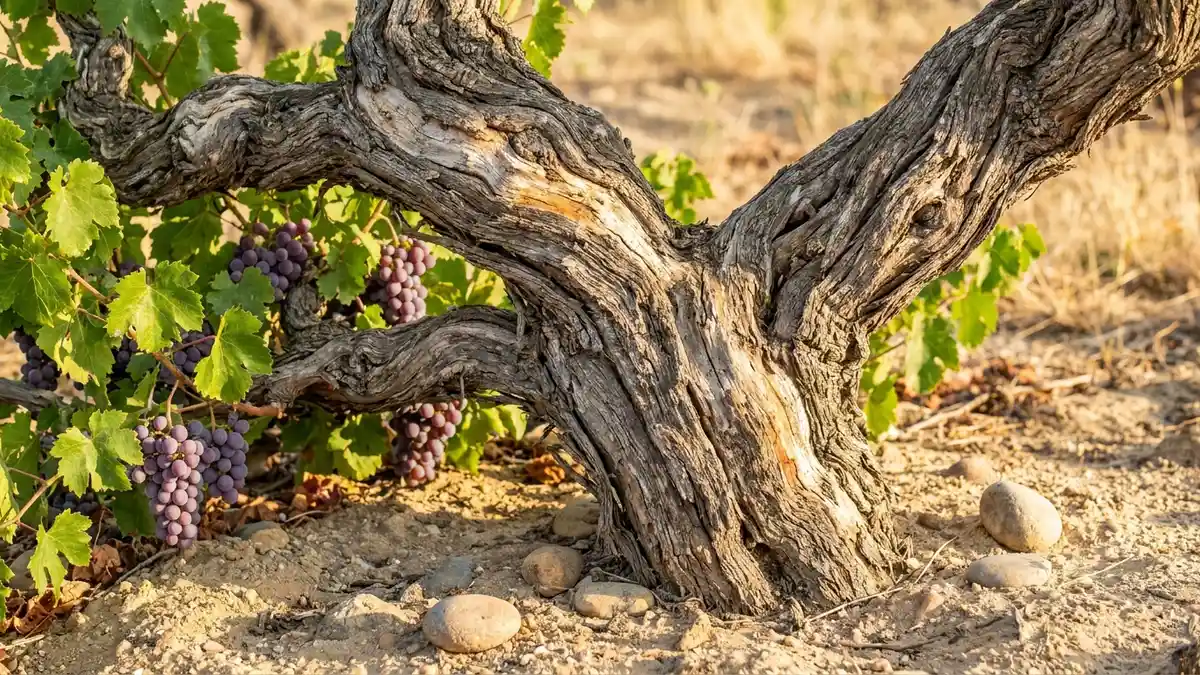
A new generation of winemakers — many associated with the Swartland Independent Producers movement and the Old Vine Project — began bottling these forgotten vineyards on their own. Some of the bush vines are 50, 60, or even 80 years old. Yields are tiny. The wines are pale, perfumed, low in alcohol, and remarkably complex — qualities that drinkers and critics had been searching for in Pinot Noir from much pricier regions.
Today South African cinsault is one of the most quietly admired styles in the wine world. Bottles from the Swartland, Stellenbosch, Darling, and the Cape South Coast can rival entry-level Burgundy on character at a fraction of the cost.
Cinsault in Lebanon
Lebanon has been making wine for thousands of years, and cinsault is one of its signature grapes. Plantings in the Bekaa Valley date back generations, with some bush vineyards approaching a century in age. The Lebanese style is distinctive — sun-baked but balanced, with riper red fruit, a savoury herb edge, and a slightly higher alcohol register than French versions.
Cinsault often appears blended with Grenache, Mourvèdre, Carignan, and increasingly Cabernet Sauvignon and Syrah, producing some of the most distinctive wines from the Eastern Mediterranean. Lebanese rosé built on cinsault is particularly admired.
Other Cinsault Regions
Chile
Chilean País has long shared vineyards with cinsault in regions like Itata and Bío Bío in the south. A growing wave of natural-leaning producers has begun making pale, juicy, low-intervention cinsault from old bush vines, often via carbonic maceration. The style sits somewhere between Beaujolais and Loire Valley red.
North Africa
Morocco and Algeria have substantial cinsault plantings, a legacy of French colonial viticulture (the Morocco wine guide covers how Cinsault came to lead the country's vineyards). Most of this fruit is used for everyday red and rosé, though a small number of producers are pursuing more serious bottlings.
Other New World Pockets
Small but interesting plantings exist in Australia, California, and parts of the Loire Valley in France. None are yet at the scale of Languedoc or South Africa, but each adds another voice to the global cinsault conversation.
How to Pair Cinsault Wine with Food
Cinsault is one of the most food-friendly red grapes you can pour. Its low tannin, juicy fruit, and bright herbal edge make it a natural partner for lighter Mediterranean cooking, while its pale, refreshing frame lets it bridge the gap between red and rosé.
Classic Pairings
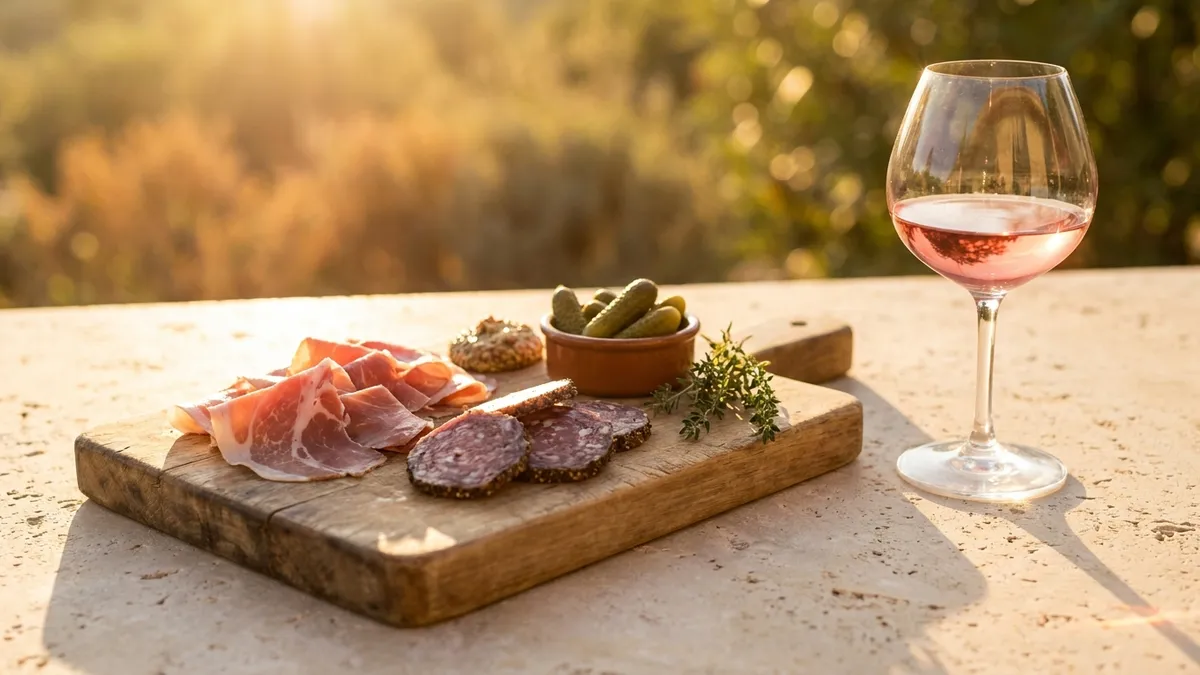
- Charcuterie — saucisson, jamón, prosciutto, pâté, terrines
- Roast chicken — especially with herbes de Provence or lemon
- Grilled vegetables — peppers, courgettes, aubergine, tomato salads
- Salade niçoise and other composed Mediterranean salads
- Pizza margherita and tomato-driven pasta
- Salmon and tuna — particularly seared or grilled
- Mushroom dishes — risotto, grilled portobellos, tagliatelle with porcini
Less Obvious But Excellent
- Lebanese mezze — hummus, tabbouleh, kibbeh, grilled lamb skewers
- Cape Malay curries — gentle spice meets juicy red fruit
- Vietnamese summer rolls — the floral aromatics carry through
For broader pairing principles, see the wine and food pairing guide and the pairing rules cheat sheet.
What to Avoid
Cinsault's gentle tannins and modest body can be overwhelmed by very rich, heavy red meats — think slow-braised beef cheeks or barbecue ribs with sticky sauce. For those plates, reach for Syrah, Malbec, or a sturdier red.
Should You Age Cinsault?
Most cinsault is best within one to three years of the vintage, while the fruit is fresh and the aromatics are vivid. The exceptions are worth knowing:
- Old-vine South African cinsault — top bottlings can develop for three to seven years
- Old-vine Languedoc cinsault — three to five years, sometimes longer for the most concentrated examples
- Lebanese cinsault blends — five to ten years, gaining savoury complexity
Most everyday cinsault and almost all cinsault rosé should be enjoyed young. (Curious about how ageing changes wine? See tasting young vs aged wine.)
Serving Cinsault
Temperature
Serve red cinsault slightly cooler than most reds — 13 to 16°C (55 to 61°F). The wine becomes more vivid, the red fruit lifts, and the gentle tannins feel even more silky. Cinsault rosé wants the standard pink-wine treatment of 8 to 10°C (46 to 50°F).
Decanting
Cinsault rarely needs serious aeration. A short rest in the glass — 10 to 15 minutes — is usually all an old-vine bottle needs to open up. Older Lebanese bottlings or concentrated Cape examples can benefit from a gentle decant to separate any sediment.
Glassware
A medium-bowl red wine glass works perfectly, similar to what you would use for Pinot Noir. The wide opening lets the fragrant red fruit and floral notes lift out of the glass without exaggerating the alcohol.
Tasting Cinsault the Sommy Way
Cinsault is a wonderful grape for beginners practising the link between what you see and what you taste. The pale color suggests a light, delicate wine — and that promise is mostly kept on the palate, but the depth of red fruit and herbal complexity can surprise you. It is a perfect grape for training your eye-to-palate calibration.
Try a side-by-side: a glass of South African cinsault next to a Beaujolais Gamay and a Burgundian Pinot Noir. All three are pale, low-tannin, fragrant reds — but each tells a different regional story. This kind of comparative tasting is exactly what the Sommy app builds into its courses, helping you connect color, aroma, and structure into a coherent picture of a grape.
For more on the structural side of wine — body, tannin, acidity, alcohol — read the tannins, acidity, and body guide and the wine balance explainer.
Cinsault vs Cinsaut — A Note on Spelling
You will see the grape spelled both Cinsault and Cinsaut. "Cinsaut" (no L) is the official French ampelographic spelling, used in Provence and parts of the Languedoc. "Cinsault" (with L) is the more common form on labels and in English-language writing. Same grape — pick whichever spelling appears on the bottle in front of you.
Where to Start with Cinsault
A short tasting plan to build a real sense of the grape:
- A Provence rosé — to taste cinsault in its most familiar guise, blended into pale pink summer wine
- A Languedoc cinsault — old-vine where possible, to meet the grape solo in its French homeland
- A South African Swartland or Stellenbosch cinsault — the old-vine revival in a single glass
- A Lebanese red blend featuring cinsault — the Eastern Mediterranean voice
- A Chilean Itata cinsault — pale, juicy, and often beautifully unfussy
Tasted across a few weeks, this lineup teaches you cinsault as a concept — a grape that takes the shape of its place while keeping a recognisable lightness, freshness, and red-fruit charm.
Whether you sip a chilled Languedoc bottle with a roast chicken or splurge on an old-vine Cape rarity, cinsault is one of the most welcoming grapes in wine — light, fragrant, food-friendly, and refreshingly modest in alcohol.
Frequently Asked Questions
What does cinsault wine taste like?
Cinsault wine tastes of bright red cherry, raspberry, and pomegranate, with a lift of dried Mediterranean herbs, black pepper, and rose petal. The color is pale ruby, the tannins are soft and gentle, the acidity is medium, and alcohol typically sits at 12 to 13 percent. The overall impression is juicy, fragrant, and refreshing — closer in feel to a light Pinot Noir than to Syrah or Cabernet.
Is cinsault the same as pinotage?
No, but they are closely related. Pinotage is a South African grape created in 1925 by crossing Pinot Noir with Cinsault at Stellenbosch University. Cinsault was known locally as Hermitage at the time, which is why Pinotage got its name. The two grapes taste quite different — Pinotage is darker and more structured, while Cinsault remains pale, juicy, and lighter on its feet.
What is cinsault used for in Provence rosé?
Cinsault is one of the core grapes in classic Provence rosé blends, alongside Grenache, Syrah, Mourvèdre, and Tibouren. It contributes pale color, soft red fruit, gentle acidity, and a delicate floral lift. The thin skins and naturally low pigment make cinsault ideal for the brief skin contact that defines Provence's signature pale-pink style. Many rosé wines you drink in summer rely heavily on cinsault.
Why is South African old-vine cinsault a big deal?
South Africa has some of the world's oldest cinsault vineyards, with bush vines often planted in the 1900s through 1970s. Once dismissed as bulk-wine fodder, these old vines are now prized by a generation of winemakers in Swartland and elsewhere. The wines are pale, fragrant, low-alcohol, and complex — quietly rivaling Pinot Noir at a fraction of the price and reshaping the grape's global reputation.
What food pairs best with cinsault wine?
Cinsault pairs beautifully with charcuterie, roast chicken, grilled vegetables, salade niçoise, and Mediterranean dishes built around tomato, olive, and herbs. Its low tannin and bright fruit also handle salmon, tuna, mushroom risotto, and lighter cured meats. For rosé cinsault, think summer aperitifs, goat cheese, and seafood. Avoid heavy red meats and big tannic dishes that would overwhelm the wine's gentle frame.
Should you age cinsault wine?
Most cinsault is built to drink young — within one to three years of the vintage — while the fruit is fresh and the aromatics are vivid. The exceptions are top old-vine bottlings from South Africa, the Languedoc, or Lebanon, which can develop tertiary notes for three to seven years. Cinsault rarely rewards long cellaring, so the rule is simple: drink the everyday bottles young, enjoy the special ones within a decade.
Where is cinsault grown today?
Cinsault is grown across Southern France — especially the Languedoc-Roussillon, the Rhône, and Provence — where it remains a major blending grape. Lebanon treats it as a signature variety, with Bekaa Valley plantings dating back generations. South Africa has its celebrated old vines, and smaller plantings exist in Chile, Morocco, Algeria, Australia, and California. The grape thrives in warm, dry, sun-baked climates.
Sommy Team
LinkedInFounder & Wine Educator
The Sommy Team is building the world's most approachable wine education app, helping beginners develop real tasting skills through structured courses and AI-guided practice.