Sagrantino: Umbria's Tannic Powerhouse Grape

By the Sommy Team — AI-assisted, human-edited.
Updated Jun 17, 2026
Contents (12)
- What Is Sagrantino Wine?
- Sagrantino Wine Umbria, in One Paragraph
- Why Sagrantino Is One of the Most Tannic Grapes on Earth
- Sagrantino Tasting Notes and Flavor Profile
- Montefalco: The Home of Sagrantino in Umbria
- The Historic Sweet Passito Style
- Long Oak Aging: Why Sagrantino Demands Patience
- How Sagrantino Compares to Other Tannic Reds
- Decanting and Serving Sagrantino
- How to Pair Sagrantino with Food
- How a Beginner Should Approach Sagrantino
- The Takeaway on Sagrantino
TL;DR
Sagrantino is the dark, intensely tannic red grape of Montefalco in Umbria, central Italy. With among the highest polyphenol levels of any variety, it makes massively structured wines of black plum, tar, and dark chocolate that demand long oak aging, decanting, and rich, fatty food.
What Is Sagrantino Wine?
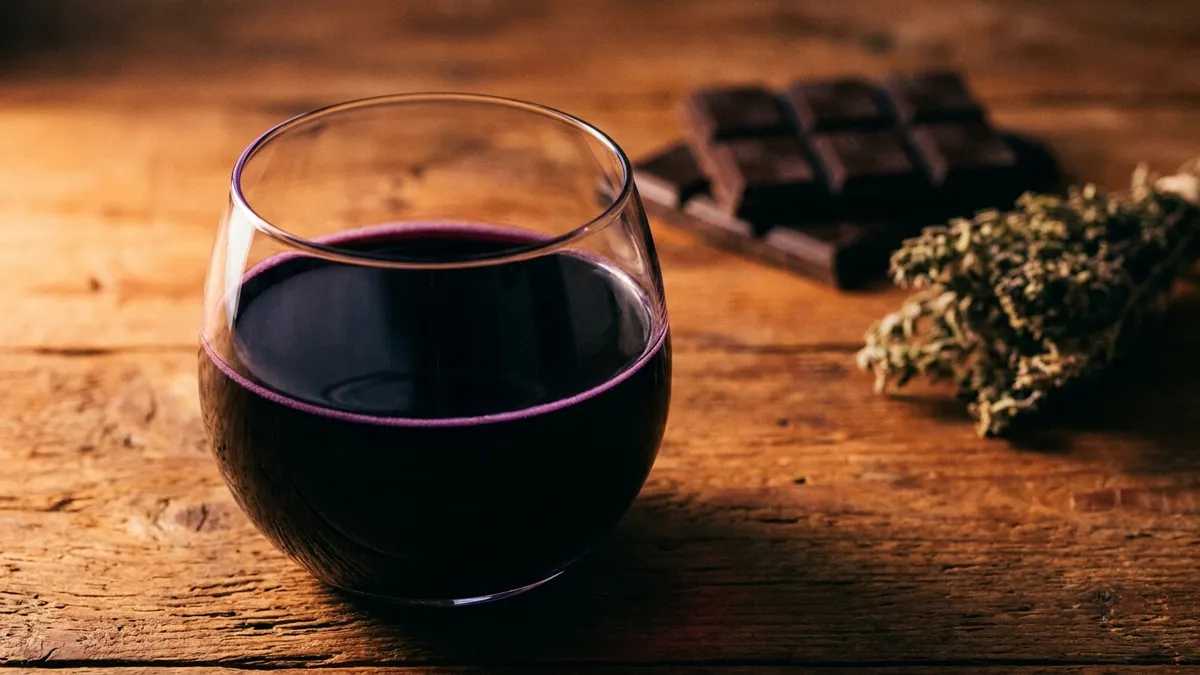
Sagrantino is the dark, fiercely structured red grape of Montefalco in Umbria, central Italy — and one of the most tannic grapes grown anywhere on earth. The phrase sagrantino wine umbria points to a single hilltop zone where this thick-skinned variety produces wines of black fruit, tar, and dark chocolate, framed by tannins so abundant they put Sagrantino in a category of its own among red grapes.
The grape is almost entirely confined to its home. Where Cabernet Sauvignon and Merlot circle the globe, Sagrantino remains a Montefalco specialty, an indigenous Italian variety that nearly vanished in the mid-20th century before a small group of growers revived it. Its top dry expression, Montefalco Sagrantino, earned DOCG status (Denominazione di Origine Controllata e Garantita, Italy's highest quality classification) in 1992.
Two faces define Sagrantino. The modern face is a powerful dry red built for long aging and rich food. The historic face is a sweet passito wine made from dried grapes — most likely the grape's original purpose, tied to local feast days and the name sacro, meaning sacred.
Sagrantino Wine Umbria, in One Paragraph
Sagrantino wine umbria refers to the intensely tannic red grape of Montefalco, a hilltop town in central Italy, where it makes both a dry DOCG red and a historic sweet passito. Sagrantino carries among the highest polyphenol levels of any variety, giving massive tannins and deep color alongside high acidity. It tastes of black plum, blackberry, tar, dark chocolate, dried herbs, and earth, evolving into leather and dried fig with age. Montefalco Sagrantino DOCG requires roughly 37 months of aging, including long time in oak, and good bottles then improve for 10 to 20 years. Because the tannins are so firm, the wine rewards decanting and rich, fatty food. For beginners it is best met with a meal and given plenty of air.
Why Sagrantino Is One of the Most Tannic Grapes on Earth
The single most important fact about Sagrantino is its tannin load. Tannins are the drying, gripping compounds — a class of polyphenols (natural plant compounds found in grape skins, seeds, and stems) — that pucker your gums and coat your tongue in a young red. Sagrantino has among the highest measured concentrations of these compounds of any wine grape studied.
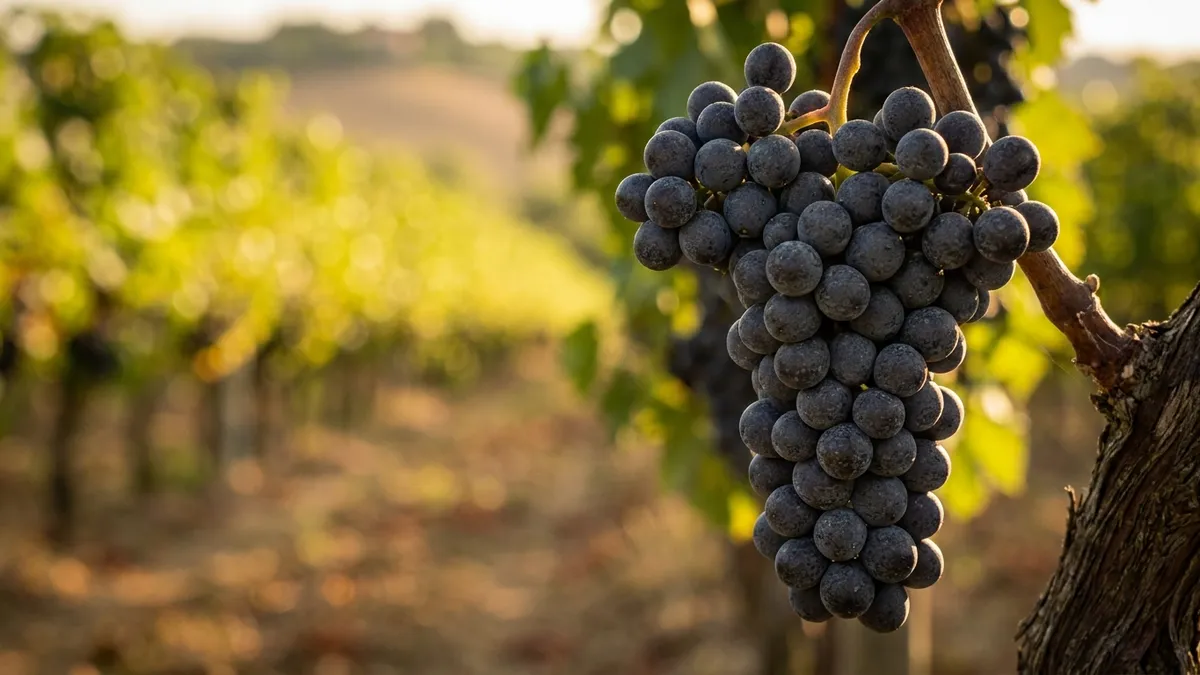
Two features of the grape explain this. First, Sagrantino has unusually thick skins and small berries, which means a high ratio of skin to juice — and the skins are where most tannin and color live. Second, the tannins themselves are simply abundant and firm rather than soft. The combination produces a wine that, in its youth, can feel almost chewable.
This puts Sagrantino in rare company. It sits at the extreme tannic end of the red-grape spectrum, beyond even famously structured varieties. For context on how skin thickness drives tannin and color, the guide to thick vs thin-skinned grapes explains exactly why a grape like this delivers so much grip.
What This Means in the Glass
- Tannins: very high (5/5) — the defining trait, grippy and mouth-coating when young.
- Acidity: high (4/5) — bright enough to keep the dense fruit fresh and to demand food.
- Body: full (5/5) — dense, concentrated, weighty on the palate.
- Color: deep ruby to near-black with a purple rim in youth.
Because all of Sagrantino's structural pillars are turned up at once, it is a remarkable teaching wine. Learning to feel where the acidity (a mouth-watering rush of saliva) ends and the tannin (a dry, gripping sensation on the gums) begins is one of the biggest unlocks in tasting. The guide to understanding tannins, acidity, and body walks through how to isolate each sensation, and Sagrantino makes them impossible to miss.
Sagrantino Tasting Notes and Flavor Profile
Tasted dry and young, Sagrantino is a serious, dark, structured wine — never a soft crowd-pleaser. The first impression is depth: deep color, dense black fruit, and a wave of firm tannin that takes time and air to settle.
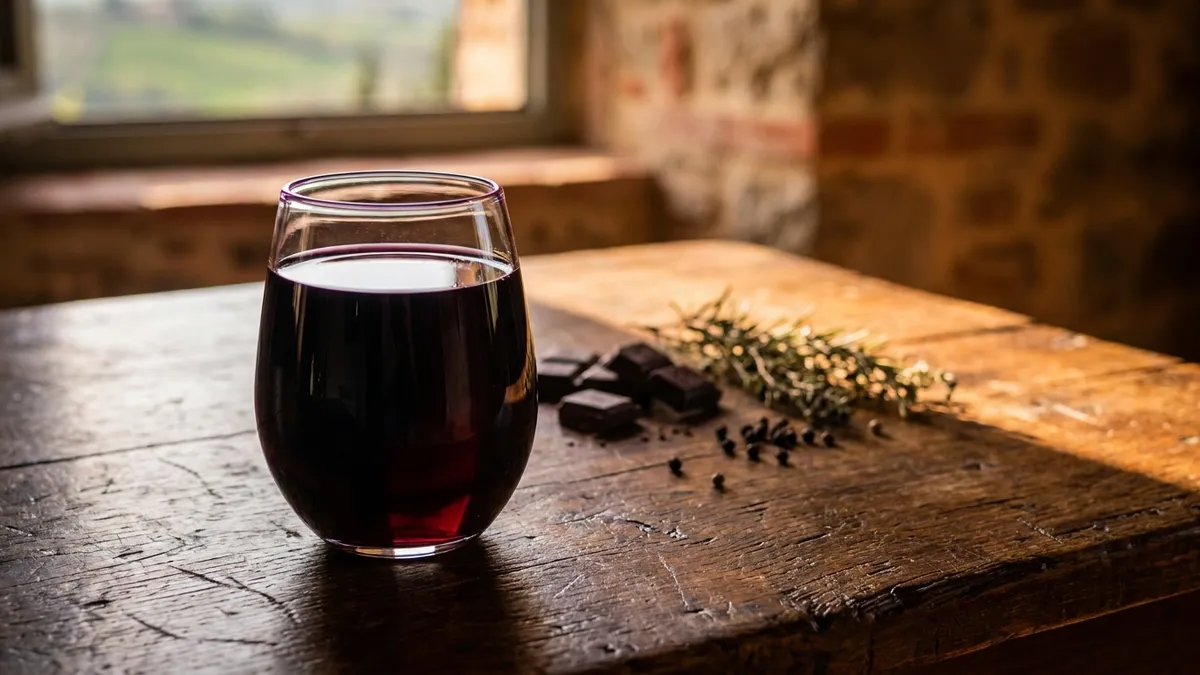
Typical aromas: black plum, blackberry, dark cherry, tar, dark chocolate, dried herbs, licorice, leather, tobacco, dried fig, forest floor. The signature profile pairs ripe black fruit with savory, earthy, almost smoky depth — fruit and structure in roughly equal measure.
Fruit and Dark Notes
The fruit core is unambiguously black: black plum, blackberry, and dark cherry, ripe but rarely jammy because the high acidity keeps it taut. Over and under that fruit sit Sagrantino's hallmark dark tones — tar, dark chocolate, and a thread of licorice that give the wine its brooding character.
The Earthy, Herbal Streak
What sets Sagrantino apart from a simple fruit bomb is its savory side. Expect dried herbs, an earthy, leathery depth, and a faintly smoky edge. This earthy character is part of why the grape suits the rustic, herb-driven cooking of its home region and stands up to game and braised meats.
How Sagrantino Tastes With Age
- Young (under 5 years) — tight, grippy tannins; black plum and blackberry dominate; tar and chocolate in the background; needs decanting.
- Mid-life (5–12 years) — tannins begin to integrate; fruit deepens toward dried fig and stewed plum; leather and tobacco emerge.
- Mature (12–20+ years) — savory and complex; forest floor, dried fruit, and spice; tannins soft but still present; long, layered finish.
Montefalco: The Home of Sagrantino in Umbria
To understand Sagrantino you have to understand how local it is. The grape is concentrated almost entirely around Montefalco, a hilltop town in Umbria, the green, landlocked heart of central Italy. This is one of the most localized fine-wine grapes in the country — a true indigenous variety rather than a traveling international one.
The DOCG Zone
The top dry expression is Montefalco Sagrantino DOCG, which by law must be 100% Sagrantino. The hilly terrain, warm days, and cool nights of the zone help the thick-skinned grape ripen fully while retaining the acidity that balances its tannin. A second classification, Montefalco Rosso, is a more approachable blend that uses Sangiovese as the base with a smaller portion of Sagrantino for grip and color — a gentler way to meet the grape.
For the wider picture of where Umbria sits among Italy's wine regions and how its style compares to Tuscany and the north, the Italian wine guide maps the country's major grapes and zones.
A Grape That Nearly Disappeared
Sagrantino's revival is a recent story. For much of the 20th century the grape survived mainly as the sweet passito wine of local tradition, and plantings dwindled to a sliver. From the 1970s onward, a handful of Montefalco growers replanted it and reimagined it as a dry, age-worthy red — work that culminated in DOCG status in 1992 and the grape's modern reputation. It sits comfortably alongside other rediscovered varieties explored in the guide to indigenous grapes worth trying.
The Historic Sweet Passito Style
Before Sagrantino was a powerful dry red, it was a sweet wine — and the passito style is likely the grape's original purpose. The name itself is thought to derive from sacro (sacred), tying the wine to religious feast days when a rich, sweet red would be shared.
Passito is made by drying harvested grapes on mats or racks for several weeks, a process that shrivels the berries and concentrates their sugar. The dried grapes are then fermented into a sweet red wine. Sagrantino is ideally suited to this: its massive tannins and high acidity provide a backbone that stops the sweetness from cloying, producing a wine that is rich and concentrated yet structured.
Passito Sagrantino is the rare sweet red with enough tannin and acid to feel serious rather than syrupy — sweetness and grip pulling in opposite directions, holding the wine in balance.
On the palate the passito is intensely sweet — Sweetness: sweet (5/5) — yet framed by the same high acidity and firm tannins as the dry version. Traditionally it is served with hard cheese, dark chocolate, or simple dry pastries, the fat and bitterness playing against the wine's sweetness. Production today is small, but the style remains a living link to the grape's past.
Long Oak Aging: Why Sagrantino Demands Patience
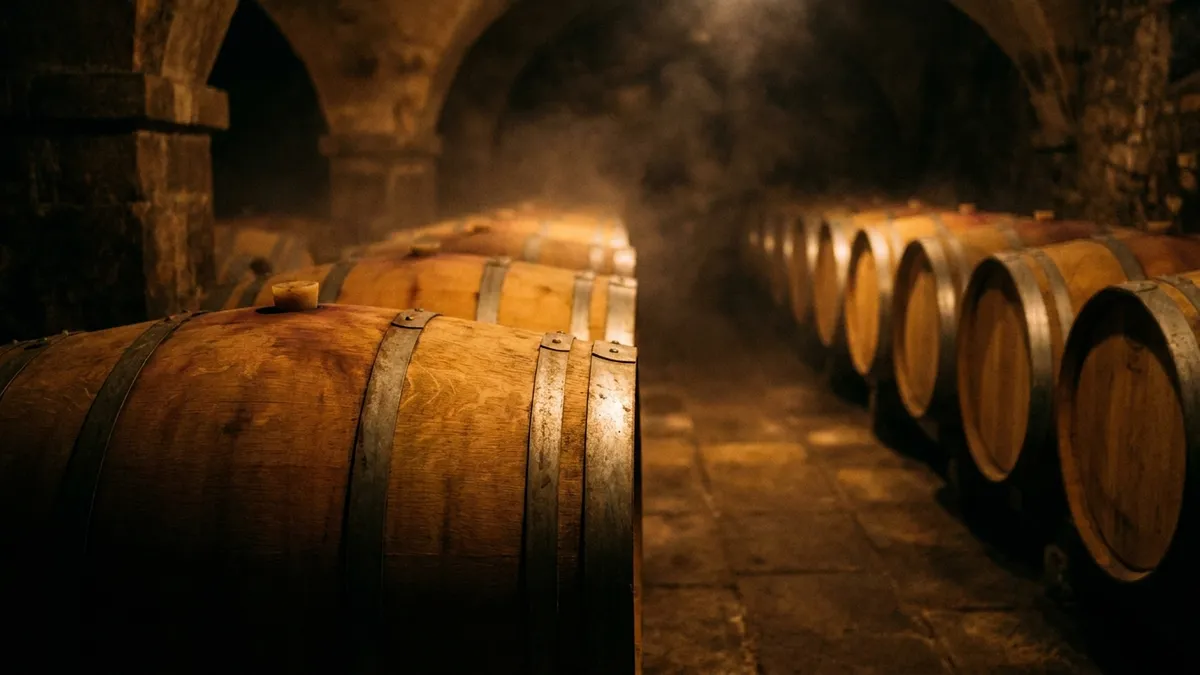
Sagrantino's defining flaw and virtue are the same thing: its tannins are so firm that the wine is undrinkable when raw. Time is the only cure. Long aging — first in oak barrels, then in bottle — gradually softens those tannins, knitting them into the wine so the fruit and savory complexity can come forward.
The DOCG rules codify this. Montefalco Sagrantino must be aged for a minimum of around 37 months before release, including substantial time in oak. That is one of the longer mandatory aging periods for an Italian DOCG red, and it exists because the grape genuinely needs it.
What oak contributes:
- Tannin softening — Slow oxygen exposure through the barrel rounds off the harshest edges of the tannin.
- Aromatic complexity — Time in wood adds spice, cedar, and a savory depth that layers over the black fruit.
- Color stabilization — Aging helps lock in Sagrantino's deep, saturated hue.
Even after release, good Montefalco Sagrantino keeps improving for 10 to 20 years or more. The bright black fruit slowly trades for dried fig, leather, tobacco, and forest floor, while the once-ferocious tannins settle into a fine, integrated grip. This is a wine built deliberately for the cellar, in the company of other great age-worthy reds.
How Sagrantino Compares to Other Tannic Reds
Sagrantino is often called the most tannic grape in the world, which invites comparison to the other famously structured reds. The differences are instructive.
How Sagrantino stacks up against three other tannic, age-worthy red grapes.
- Tannins: Sagrantino very high (5/5); Nebbiolo high (4/5); Cabernet Sauvignon high (4/5); Tempranillo medium-high.
- Acidity: Sagrantino high; Nebbiolo very high; Cabernet Sauvignon medium-high; Tempranillo medium-high.
- Body: Sagrantino full; Nebbiolo medium-full; Cabernet Sauvignon full; Tempranillo medium-full.
- Color: Sagrantino deep, near-black; Nebbiolo pale ruby to garnet; Cabernet Sauvignon deep purple; Tempranillo ruby to garnet.
- Key flavors: Sagrantino black plum, tar, chocolate; Nebbiolo cherry, rose, tar; Cabernet Sauvignon blackcurrant, cedar; Tempranillo cherry, leather, tobacco.
- Aging requirement: Sagrantino very long; Nebbiolo long; Cabernet Sauvignon long; Tempranillo medium to long.
The most telling contrast is with Nebbiolo, Piedmont's great grape, which shares Sagrantino's high acidity and savory tar complexity but delivers its tannin from a much paler, lighter-bodied wine. Where Nebbiolo grips from a translucent glass, Sagrantino grips from a near-opaque one — see the Nebbiolo wine guide for that lighter-framed style.
Against Cabernet Sauvignon, Sagrantino is darker, earthier, and even more tannic, with less cassis-and-cedar polish; the Cabernet Sauvignon wine guide details the benchmark it out-grips. The black grapes overview places Sagrantino among its dark-skinned peers.
Decanting and Serving Sagrantino
With a wine this tannic, how you serve it matters almost as much as which bottle you choose. The goal is always to soften the grip.
Decanting
- Young Sagrantino (under 5 years) — Decant for 1 to 2 hours. The exposure to air rounds off the harshest tannins and opens the dark aromatics. Do not be shy; a young example genuinely improves over the course of an evening.
- Mid-life (5–12 years) — 45 to 90 minutes of air helps the wine show its developing complexity.
- Mature (12+ years) — Decant gently and briefly, mainly to separate sediment. Old Sagrantino can fade once open, so taste early and adjust.
Temperature
Serve dry Sagrantino at 16–18°C (60–65°F). Too warm and the alcohol and tannin feel harsh; too cold and the tannins clamp down further. The passito sweet style is best slightly cooler, around 14–16°C, to keep it fresh.
Glassware
A large-bowled glass gives the wine room to breathe and concentrates its aromas toward the rim — useful for a variety this aromatically dense.
How to Pair Sagrantino with Food
Sagrantino's enormous tannins and high acidity make food not optional but essential. Fat and protein bind the tannins, instantly making the wine feel smoother and more harmonious, while the acidity cuts through richness to refresh the palate. This is the central principle of pairing structured reds: the bigger the tannin, the richer and fattier the food should be.
Best Pairings
- Braised and roast meats — Slow-cooked beef, short ribs, and pot roasts give the tannins ample protein and fat to soften against.
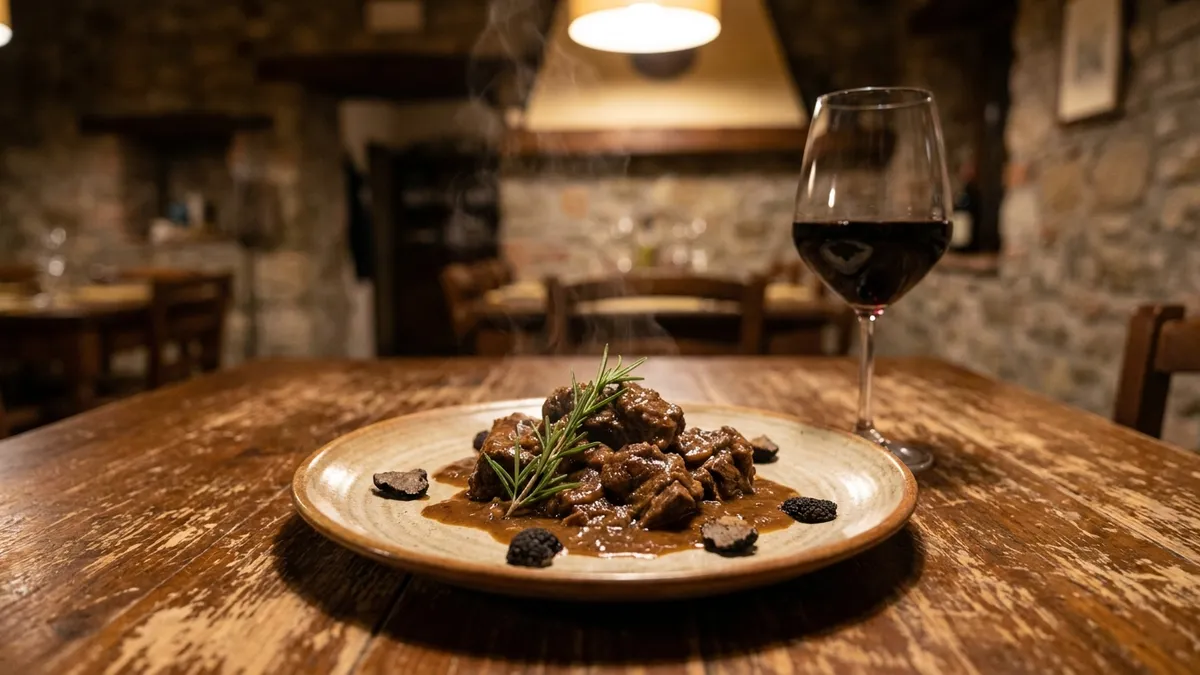
- Wild boar and game — The classic Umbrian match. Game's savory intensity meets Sagrantino head-on, and the grape's earthy streak echoes the meat.
- Lamb — Roast leg of lamb with rosemary and garlic suits the wine's herbal, structured character.
- Hearty stews — Umbrian and central-Italian stews, often built on lentils, beans, and meat, are made for this wine.
- Truffle dishes — Umbria's black truffle finds a savory, earthy partner in Sagrantino.
- Aged hard cheeses — Pecorino and aged cow's-milk cheeses bring umami and fat that amplify the wine's depth.
What to Avoid
Sagrantino overwhelms delicate food. Skip light fish, mild poultry, and subtly seasoned dishes — the tannins will flatten them. It also clashes with most sweet dishes in its dry form; that is where the passito takes over.
How a Beginner Should Approach Sagrantino
Sagrantino is not the gentlest first red. Its enormous tannins and high acidity can feel austere if your palate is tuned to soft, fruity wines. Approached the right way, though, it is one of the most instructive grapes a developing taster can meet, precisely because everything about its structure is dialed up.
Start by tasting it with rich food and after decanting. Both steps tame the tannin and let the dark fruit and savory complexity come through. A good gateway is Montefalco Rosso, the Sangiovese-based blend with a small slice of Sagrantino, which previews the grape's grip and color without the full intensity of the varietal DOCG. Then, when you are ready, open a dry Montefalco Sagrantino and give it an hour in the glass: the lesson is patience, both years in the cellar and minutes at the table.
A Simple Practice Routine
- Look — Note the deep, near-black color and the purple rim in youth.
- Smell — Find the black plum and blackberry first, then hunt for the tar, dark chocolate, and dried herbs underneath.
- Sip with food — Feel the rush of acidity and the firm tannic grip, and notice how a bite of fatty, savory food softens both at once.
If you want to put structured words to these sensations, the Sommy app walks you through color, aroma, and palate step by step, building your tasting vocabulary one glass at a time. Practicing on a high-contrast grape like Sagrantino — where tannin, acidity, and color are all at their extreme — accelerates that learning far faster than a soft, easygoing wine. Working through the foundations first helps too; the guide on how to taste wine covers the look-smell-sip method that turns a daunting grape like this into an approachable one.
The Takeaway on Sagrantino
Sagrantino is the wine world's heavyweight: a grape so tannic it nearly defies drinking when young, grown almost nowhere but a single Umbrian hilltop, and saved from near-extinction by growers who saw what long aging could do. Its two faces — the powerful dry DOCG red and the historic sweet passito — both spring from the same extraordinary structure.
For a curious drinker, the reward is clear. Decant it, pour it alongside rich, savory food, and give it time, and Sagrantino delivers a dark, brooding, deeply satisfying experience that few other grapes can match. Meet it with patience and a plate, and one of Italy's most uncompromising reds becomes one of its most memorable.
Sources
- Wine Grapes: A Complete Guide to 1,368 Vine Varieties — Jancis Robinson, Julia Harding, José Vouillamoz, Allen Lane, 2012
- The Oxford Companion to Wine — Jancis Robinson (ed.), Oxford University Press, 2023
- Native Wine Grapes of Italy — Ian D'Agata, University of California Press, 2014
Frequently Asked Questions
What does Sagrantino wine taste like?
Sagrantino tastes of black plum, blackberry, and dark cherry layered with tar, dark chocolate, dried herbs, and an earthy, leathery depth. It carries massive tannins and high acidity, which make young examples feel grippy and austere. With age the fruit deepens into dried fig, tobacco, and forest floor, and the tannins slowly soften into a long, savory finish.
Why is Sagrantino so tannic?
Sagrantino has among the highest polyphenol and tannin concentrations of any grape measured. Its thick skins and small berries pack an unusually high ratio of skin to juice, and the tannins themselves are abundant and firm. Winemakers must handle the variety carefully and age it for years so those tannins soften enough for the wine to become approachable.
Where does Sagrantino come from?
Sagrantino comes from Montefalco, a hilltop town in Umbria in central Italy. The grape is grown almost nowhere else in significant quantity, making it one of Italy's most localized indigenous varieties. Its top expression, Montefalco Sagrantino, holds DOCG status, Italy's highest quality classification, and is produced as both a dry red and a historic sweet passito wine.
What is Sagrantino passito?
Passito is the historic sweet style of Sagrantino, and likely the grape's original purpose. Harvested grapes are dried on mats or racks for weeks to concentrate their sugar, then fermented into a rich, sweet red wine. The result balances intense sweetness against Sagrantino's enormous tannins and acidity, traditionally served with hard cheese, dark chocolate, or dry pastries.
How long should you age Sagrantino?
Dry Montefalco Sagrantino is built for the long haul. The DOCG rules require a minimum of around 37 months of aging, including substantial time in oak, before release. Good examples then continue to improve for ten to twenty years or more, as the firm tannins gradually integrate and the black fruit develops into complex tertiary notes of leather and dried fruit.
Do you need to decant Sagrantino?
Yes, decanting is strongly recommended for Sagrantino. Its massive tannins benefit from exposure to air, which softens the grip and opens the aromas. Young examples can take one to two hours in a decanter, while older bottles need gentler, shorter aeration and care for sediment. Pairing the wine with rich, fatty food further tames the tannins at the table.
What food pairs well with Sagrantino?
Sagrantino's huge tannins and acidity want rich, fatty, protein-heavy food. Classic matches include roast and braised meats, wild boar, game, lamb, and the hearty stews of Umbrian cooking. Aged hard cheeses and dishes with truffle or dried herbs also work. Fat and protein bind the tannins, making the wine feel smoother and more harmonious.
Is Sagrantino good for beginners?
Sagrantino is a rewarding step up rather than a first red. Its enormous tannins and high acidity can feel austere if your palate is used to soft, fruity wines, so it is best met with food and given air. Tasting it alongside a gentler red makes its scale of structure easy to recognize and turns it into a memorable learning wine.
Sommy Team
LinkedInFounder & Wine Educator
The Sommy Team is building the world's most approachable wine education app, helping beginners develop real tasting skills through structured courses and AI-guided practice.