The Oldest Grape Varieties Still in Production Today

By the Sommy Team — AI-assisted, human-edited.
Updated Jun 16, 2026
Contents (10)
- What Are the Oldest Wine Grape Varieties, in 90 Words
- Why "Oldest" Is Harder to Pin Down Than It Sounds
- The Cradle of Wine: Georgia and the South Caucasus
- Muscat Blanc à Petits Grains: A Strong Claim to "Oldest"
- The Ancient European Grapes: Savagnin, Pinot, and Syrah
- Italy and Greece: Grapes With Classical Roots
- Cyprus, the Caucasus, and the Western Mediterranean
- A Side-by-Side Look at the Oldest Grapes
- How to Taste the Story for Yourself
- The Takeaway on the Oldest Grapes
TL;DR
The oldest wine grape varieties still in production trace to the Caucasus, where winemaking began around 8,000 years ago. Georgia's Saperavi and Rkatsiteli, plus Muscat Blanc, Savagnin, Pinot, Aglianico, and Assyrtiko, are among the most ancient grapes still fermented today, though precise ages stay debated.
What Are the Oldest Wine Grape Varieties, in 90 Words
The oldest wine grape varieties still in production today descend from the South Caucasus, where grape winemaking began roughly 8,000 years ago. Georgia, the widely cited cradle of wine, still grows ancient varieties such as Rkatsiteli and Saperavi. Other strong contenders for "oldest" include Muscat Blanc à Petits Grains, Savagnin (the same grape as Traminer), Pinot, Aglianico, and Santorini's Assyrtiko. No single grape can be dated precisely, because vines were propagated by cuttings for millennia and DNA reveals family, not calendar age. "Oldest" is a careful estimate, not a leaderboard.
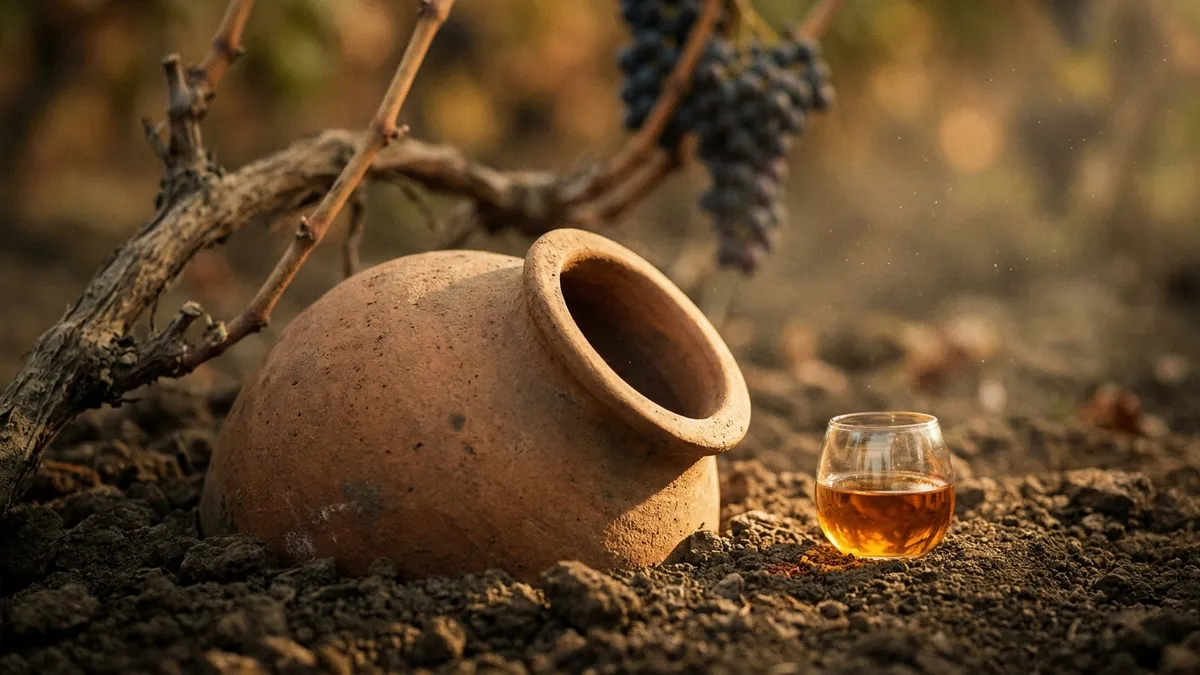
Why "Oldest" Is Harder to Pin Down Than It Sounds
Before naming names, it helps to understand why the oldest wine grape varieties resist a tidy ranking. The honest answer is that nobody can hand you a single, dated champion.
Grapevines are propagated by cuttings (snipping a shoot from one vine and rooting it to grow a genetically identical clone), not by planting seeds. A seed produces a brand-new, different variety; a cutting produces the same grape, again and again. That means a vine in a vineyard today can be a direct genetic continuation of a plant grown thousands of years ago.
This is also why dating is so slippery. DNA fingerprinting (analyzing a grape's genetic markers to identify it and find its relatives) can prove that two grapes are the same variety under different names, or that one grape is the parent of another. What it cannot do is stamp a calendar year on when a variety first appeared.
A grape's DNA tells you its family tree, not its birthday.
So when a guide calls a variety "ancient," that claim rests on three older tools working together: written records, archaeology, and ampelography.
The Three Tools for Estimating a Grape's Age
- Historical texts — Greek and Roman writers like Pliny the Elder described wines and grape types, giving us names and places to anchor a variety in time.
- Archaeology — grape pips, pressing equipment, and chemical residue inside ancient vessels reveal where and roughly when wine was made.
- Ampelography — the study of identifying vines by the shape of their leaves, clusters, and shoots, used for centuries before DNA existed.
When these line up, a grape earns its place among the oldest. None of them, on their own, is precise — which is exactly why every careful claim here carries a caveat.
The Cradle of Wine: Georgia and the South Caucasus
The story of the oldest wine grape varieties starts in one place: the South Caucasus, the mountainous region between the Black and Caspian Seas. This is where the wild grapevine, Vitis vinifera, was most likely first domesticated.
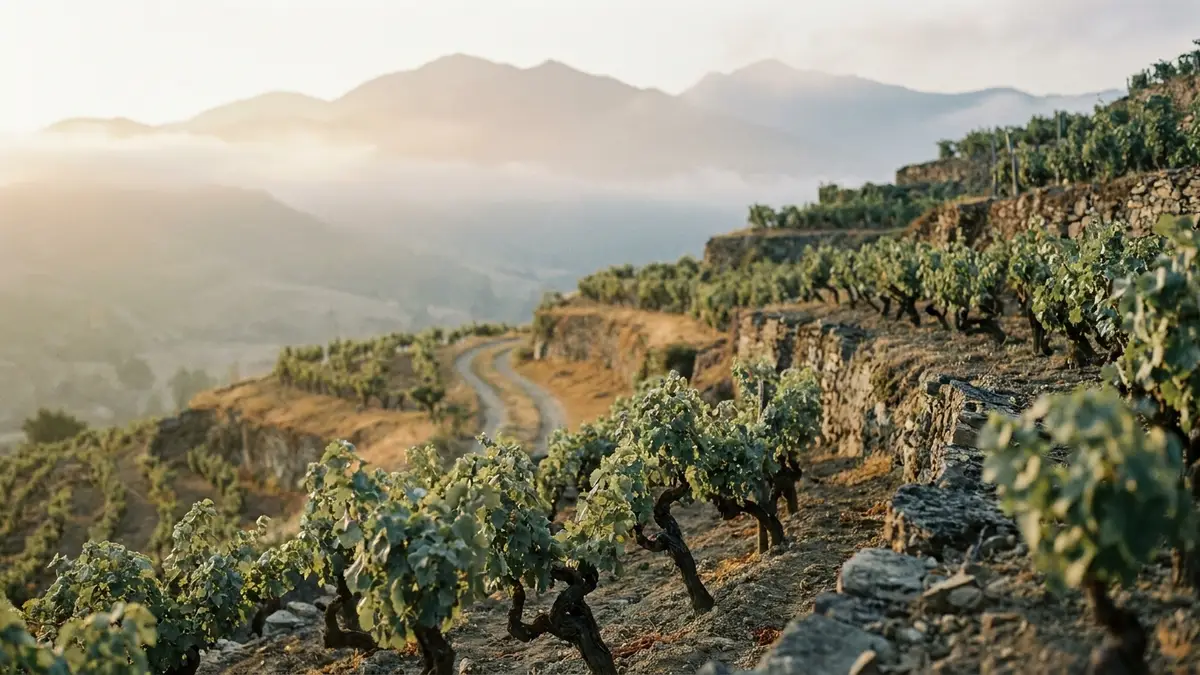
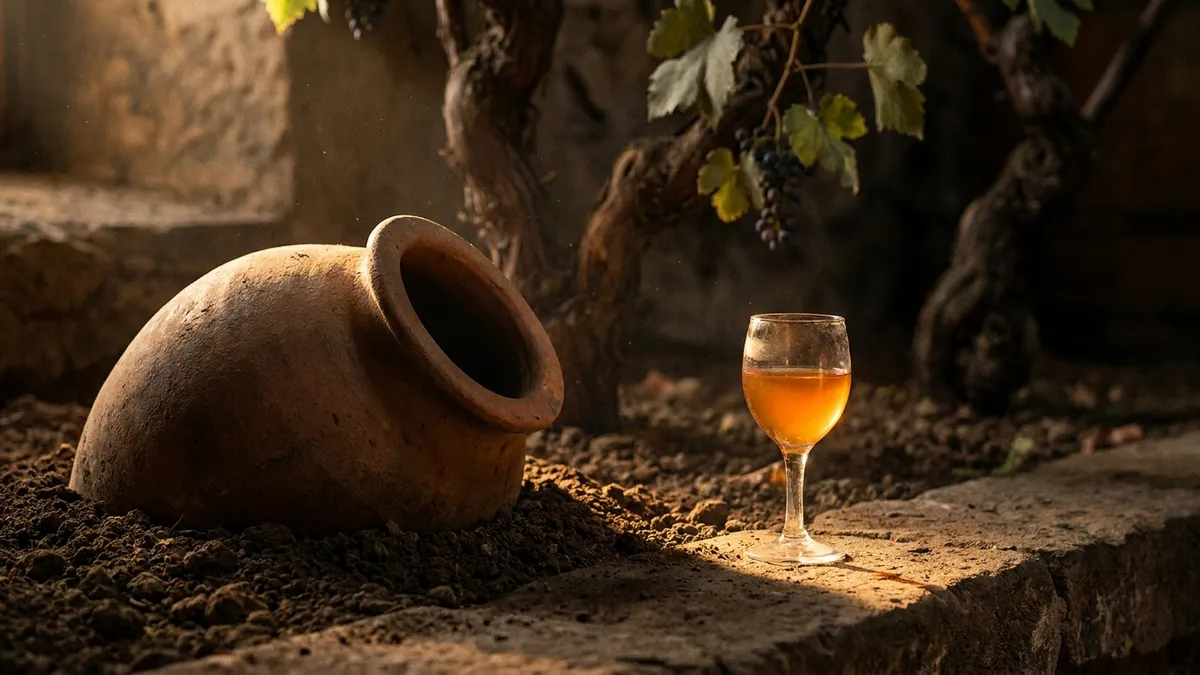
The strongest physical evidence comes from Georgia. Researchers found chemical traces of grape wine inside Neolithic clay jars dated to around 6000 BCE — roughly 8,000 years ago. That makes Georgia the earliest confirmed home of grape winemaking, and the reason it is so often called the cradle of wine.
What makes Georgia remarkable is continuity. The country still ferments wine in qvevri (large egg-shaped clay vessels buried in the ground), a method so old and so intact that UNESCO recognized it as cultural heritage. Georgia also holds an enormous library of native grapes — several hundred indigenous varieties — far more than most modern wine countries.
Saperavi: Georgia's Inky Ancient Red
Saperavi is Georgia's flagship red and one of the most ancient grapes still in wide production. It is a teinturier grape (one whose flesh is red, not just the skin), which gives the wine an opaque, almost black depth.
Saperavi delivers firm tannins (the drying, gripping sensation in red wine), bright acidity, and dark fruit — black plum, blackberry, black cherry — often with licorice and a savory, earthy edge. For a full breakdown of the grape, see our dedicated Saperavi wine guide. Its structure and acidity make it built to age, much like the famous Italian grapes covered later.
Rkatsiteli: An Ancient White Workhorse
Where Saperavi is the celebrated red, Rkatsiteli is Georgia's ancient white. Its name means "red stem," and it has been grown in the Caucasus for thousands of years. Grape pips identified as Rkatsiteli-type have been found in archaeological sites dating back millennia.
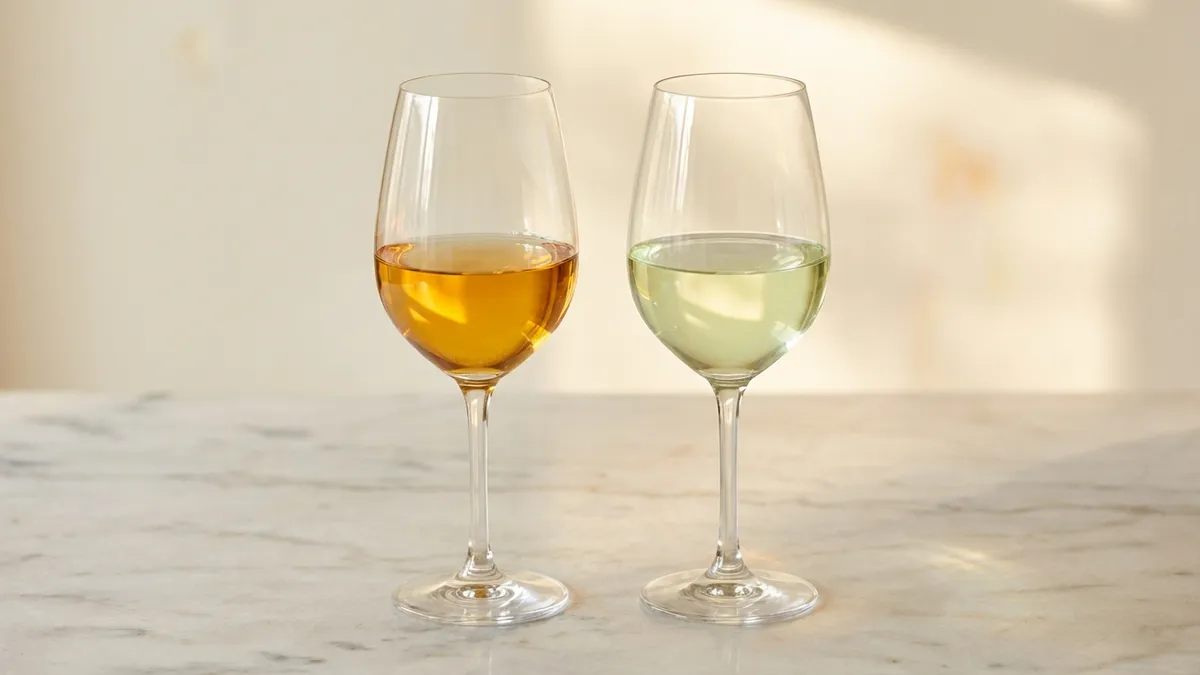
Rkatsiteli is hardy, high in acidity, and remarkably versatile. Fermented conventionally it makes a crisp, green-apple-and-quince white; fermented in qvevri on its skins it becomes an amber wine (a white grape vinified like a red, with extended skin contact), full of tea, dried apricot, and nutty, tannic grip.
Muscat Blanc à Petits Grains: A Strong Claim to "Oldest"
If any single variety has a credible claim to being among the very oldest, it is Muscat Blanc à Petits Grains — literally "white Muscat with small berries." This is the original, noblest member of the sprawling Muscat family, and it is plausibly the same grape Greek and Roman writers described over 2,000 years ago.
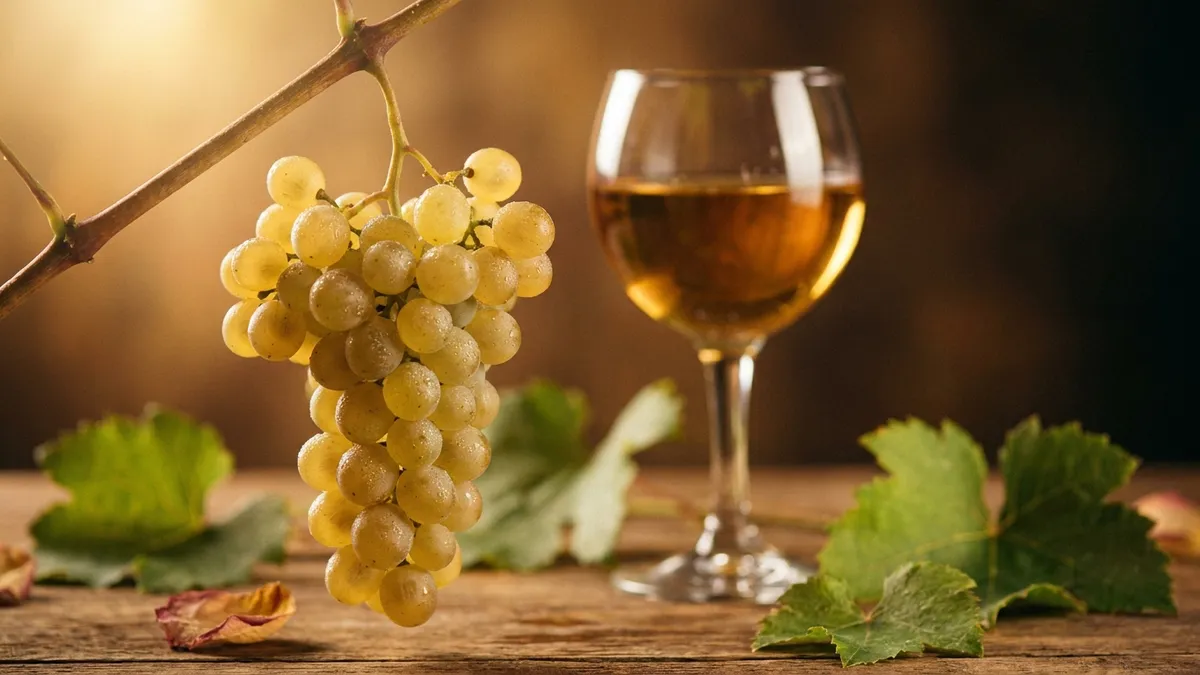
Muscat is unusual because it actually smells and tastes like fresh grapes — the rare grape whose wine carries an unmistakable grapey aroma, alongside orange blossom, honey, and rose. It is made in every style imaginable: bone-dry, lightly sparkling, and lusciously sweet. The full range is covered in our Muscat wine guide.
Its age claim rests on its enormous family. Muscat Blanc à Petits Grains is the parent or ancestor of hundreds of Muscat-family grapes worldwide, the kind of sprawling lineage that only accumulates over a very long time.
The Ancient European Grapes: Savagnin, Pinot, and Syrah
Three pillars of European wine carry deep histories, even if their exact ages remain estimates.
Savagnin (Traminer)
Savagnin — the same grape known as Traminer in German-speaking regions — is one of the oldest European varieties and a genetic founder of countless others. DNA has shown it is a parent or close relative of grapes ranging from Sauvignon Blanc to Grüner Veltliner. A variety with that many descendants has clearly been around a very long time. It is the grape behind the famously long-lived, nutty vin jaune of the Jura in France.
Pinot
Pinot is genetically ancient and prone to mutation, which is why it exists as Pinot Noir, Pinot Gris, and Pinot Blanc — the same grape wearing different coats. This tendency for a single variety to throw off color and form variants is explored in our piece on grape mutations and sports. Pinot's DNA places it close to wild vines, suggesting an old lineage with deep roots in European viticulture.
Syrah
Syrah feels like a modern superstar, but its parentage is old. DNA revealed it is the natural cross of two obscure varieties from southeastern France — Dureza and Mondeuse Blanche — meaning Syrah arose, unplanned, in the northern Rhône long ago. Its ancient parents are nearly extinct, but Syrah carries their genetics into millions of bottles today.
Italy and Greece: Grapes With Classical Roots
Some of the most thrilling old grapes come from the Mediterranean, where Greek colonists and Roman growers shaped viticulture two and three thousand years ago.
Nebbiolo
Nebbiolo, the grape behind Barolo and Barbaresco, has been documented in northwest Italy since at least the 13th century, and its true age is likely far greater. It produces pale, perfumed reds with ferocious tannins and acidity, and tar-and-roses aromatics. Our Nebbiolo wine guide digs into why this demanding grape rewards patience.
Aglianico
Aglianico is southern Italy's great ancient red, grown in Campania and Basilicata. Its name is often linked to Hellenic, pointing to vines brought by ancient Greek settlers. Roman writers praised the wines of this region, and Aglianico is the leading candidate for the grape behind the legendary Falernian wine of antiquity. It makes dark, powerful, age-worthy reds.
Assyrtiko
Assyrtiko is the indigenous white of Santorini, grown on volcanic soils in basket-shaped vines trained low to survive fierce winds. It is an old Aegean variety producing bracing, mineral, citrus-and-saline whites of remarkable structure. Few white grapes combine such high acidity with such longevity.
Cyprus, the Caucasus, and the Western Mediterranean
A few more deserve a place among the oldest wine grape varieties still pressed today.
- Xynisteri — Cyprus's main indigenous white, an ancient island variety central to the historic dessert wine Commandaria, often described as one of the oldest named wines in the world.
- Mavro — Cyprus's most-planted red, another deeply old Mediterranean grape with a long local history.
- Grenache (Garnacha) — a hardy, drought-tough red of likely Spanish or Sardinian origin, old enough to have spread across the western Mediterranean centuries ago and become a pillar of warm-climate blends.
If exploring lesser-known old varieties appeals to you, our roundup of indigenous grapes worth trying is a natural next step.
A Side-by-Side Look at the Oldest Grapes
Because exact ages are estimates, the table below frames each grape by its homeland, its rough era of documented or inferred origin, and how it is most often made today. Treat the "rough age" column as careful approximation, not certified fact.
Old wine grapes still in production — eras are careful estimates, not exact dates.
- Rkatsiteli — Homeland: Georgia (Caucasus) · Rough age: millennia, Neolithic roots · Still made as: crisp white & amber qvevri white
- Saperavi — Homeland: Georgia (Caucasus) · Rough age: millennia, Neolithic roots · Still made as: inky, tannic dry red
- Muscat Blanc à Petits Grains — Homeland: Eastern Mediterranean · Rough age: 2,000+ years documented · Still made as: dry, sparkling & sweet whites
- Savagnin / Traminer — Homeland: Northeast France / Alps · Rough age: ancient European founder · Still made as: nutty dry whites, vin jaune
- Pinot — Homeland: Northeast France · Rough age: ancient, close to wild vines · Still made as: light reds, whites, sparkling
- Syrah — Homeland: Northern Rhône, France · Rough age: ancient parentage · Still made as: dark, peppery dry reds
- Nebbiolo — Homeland: Piedmont, Italy · Rough age: documented since 13th century · Still made as: pale, tannic, age-worthy reds
- Aglianico — Homeland: Campania / Basilicata · Rough age: classical Greek/Roman era · Still made as: dark, powerful dry reds
- Assyrtiko — Homeland: Santorini, Greece · Rough age: ancient Aegean variety · Still made as: mineral, saline dry whites
- Xynisteri — Homeland: Cyprus · Rough age: ancient island variety · Still made as: dry whites & Commandaria
How to Taste the Story for Yourself
The best way to understand why these grapes endured is to taste them with intent. Old varieties tend to share two traits — high acidity and firm structure — that helped their wines survive, age, and travel before refrigeration existed.
A simple, structured approach works best:
- Start with structure, not flavor. Note the acidity (does it make your mouth water?) and, for reds, the tannin grip. Old grapes usually run high on both. Our guide to tannins, acidity, and body gives you the vocabulary.
- Compare one ancient grape to one familiar grape. The contrast teaches faster than tasting either alone, the same method behind our overview of the noble grapes.
- Name the aromas slowly. Muscat's grapey-floral lift, Saperavi's dark licorice edge, Assyrtiko's saline citrus — each is a fingerprint worth learning to recognize.
This kind of one-variable-at-a-time comparison is exactly the approach the Sommy app uses to build a beginner's palate. If you want the broader map of varieties beyond the ancient ones, our overviews of the most planted grapes in the world and white grapes round out the picture, and how to taste wine covers the fundamentals.
The Takeaway on the Oldest Grapes
The oldest wine grape varieties are less a ranked list than a living thread back to the Neolithic. Georgia's qvevri tradition, with Saperavi and Rkatsiteli, reaches back some 8,000 years. Muscat, Savagnin, Pinot, Nebbiolo, Aglianico, and Assyrtiko each carry classical or near-classical pedigrees that DNA, archaeology, and old texts support but cannot date to the year.
That uncertainty is part of the appeal. Every glass of these grapes is a careful estimate poured into a bottle — a taste of something humans have been refining since before written history. Seek them out, taste for structure first, and the comeback of the old world makes perfect sense in the glass.
Sources
Frequently Asked Questions
What is the oldest wine grape variety still made into wine?
No single variety can be crowned with certainty. Muscat Blanc à Petits Grains is among the oldest documented grapes, and Georgia's Rkatsiteli and Saperavi descend from the world's earliest winemaking region. Because grapes were propagated by cuttings for millennia, several ancient varieties have a credible claim, and DNA cannot date a grape precisely.
Where was wine first made?
The earliest chemical evidence of winemaking comes from the South Caucasus, in present-day Georgia, dated to roughly 6000 BCE — about 8,000 years ago. Residue inside Neolithic clay vessels confirmed grape wine. This region is widely described as the cradle of wine, and grapevines were likely first domesticated nearby.
How old is Muscat Blanc à Petits Grains?
Muscat Blanc à Petits Grains is one of the oldest grapes with a documented history, plausibly grown in ancient Greece and Rome over 2,000 years ago. It is the parent or ancestor of hundreds of Muscat-family grapes. Its exact origin date is unknown, since written and ampelographic records only stretch back so far.
Can DNA tell us how old a grape variety is?
DNA can reveal parentage and family relationships between grapes, and it can show that two grapes are the same variety under different names. It cannot put a calendar date on when a variety arose. Age estimates instead rely on historical texts, archaeology, and ampelography — the study of vine identification by leaf and cluster shape.
Why is Georgia called the cradle of wine?
Georgia holds the earliest physical evidence of grape winemaking, around 8,000 years old, and still ferments wine in buried clay qvevri using methods recognized by UNESCO. The country has hundreds of indigenous grape varieties, including ancient ones like Saperavi and Rkatsiteli, suggesting a deep, continuous winemaking tradition stretching back to the Neolithic.
What does Saperavi wine taste like?
Saperavi is a deeply colored Georgian red with firm tannins, high acidity, and dark fruit flavors of black plum, blackberry, and black cherry, often with notes of licorice and a savory, earthy edge. It is a teinturier grape, meaning its flesh is red, not just its skin, which gives the wine its inky, opaque depth.
Are ancient grape varieties worth seeking out?
Yes, for both flavor and history. Varieties like Assyrtiko, Aglianico, Nebbiolo, and Saperavi offer distinctive profiles you cannot find in mainstream international grapes. Tasting them connects a drinker to thousands of years of tradition while expanding their palate. Many are also excellent value compared with famous noble grapes from prestige regions.
Sommy Team
LinkedInFounder & Wine Educator
The Sommy Team is building the world's most approachable wine education app, helping beginners develop real tasting skills through structured courses and AI-guided practice.