Grape Mutations and Sports: How Pinot Gris Came from Pinot Noir

By the Sommy Team — AI-assisted, human-edited.
Updated Jun 16, 2026
Contents (7)
TL;DR
Grape mutations, called sports, are spontaneous genetic changes in a single vine — often a shift in berry color — that growers then propagate by cuttings. Pinot Gris, Pinot Blanc, and Pinot Meunier are all mutations of Pinot Noir, sharing nearly identical DNA but producing very different wines.
What Is a Grape Mutation or Sport?
A grape mutation, often called a sport, is a spontaneous genetic change that appears in a single vine — most famously a change in berry color. The terms grape mutations sports wine writers use describe the same event: a vine that suddenly grows one cane of differently colored or differently flavored fruit, which a grower then propagates by taking cuttings. The clearest example is the Pinot family. Pinot Gris, Pinot Blanc, and Pinot Meunier are all mutations of Pinot Noir, sharing nearly identical DNA yet producing wines that look and taste completely different. DNA profiling confirms these grapes are not separate species but one variety wearing several coats.
How Grape Mutations Happen on the Vine
A grapevine reproduces in two ways. Seeds create genetically new individuals — that is how new varieties are born through breeding. But a commercial variety (a named, propagated grape type like Chardonnay or Merlot) is reproduced by cuttings, not seeds. Every Chardonnay vine on earth is, in effect, a clone of one ancestral plant, copied over and over for centuries.
Because cuttings copy the parent exactly, a vineyard of one variety should be genetically uniform. Mutations break that uniformity. Every time a vine grows, its cells divide, and very occasionally a single cell makes a copying error in its DNA. If that error lands in a growing bud, the new shoot — and every berry on it — carries the change. This is a somatic mutation (a genetic change in a body cell rather than in a seed), and when it shows up as a visible new shoot it is called a bud sport.
From a Single Bud to a New Variety
A bud sport on its own is just one odd cane on one vine. It becomes a new variety only when a grower notices it, takes cuttings from that shoot, and roots them into new plants. Those plants carry the mutation forward.
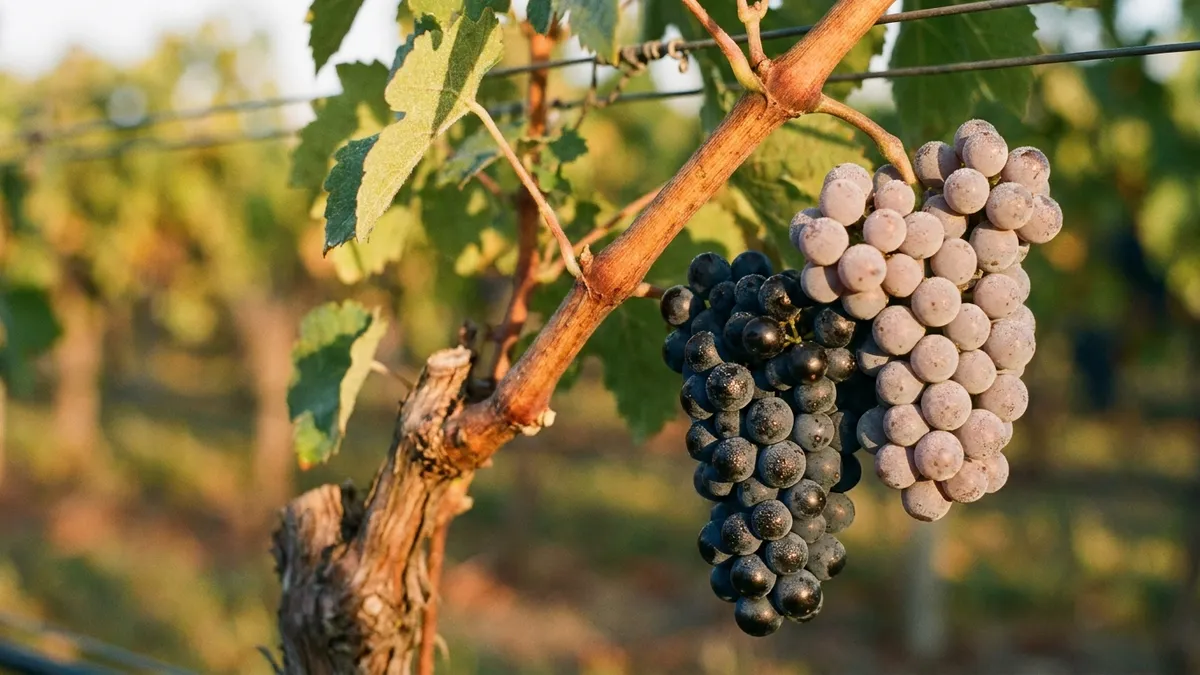
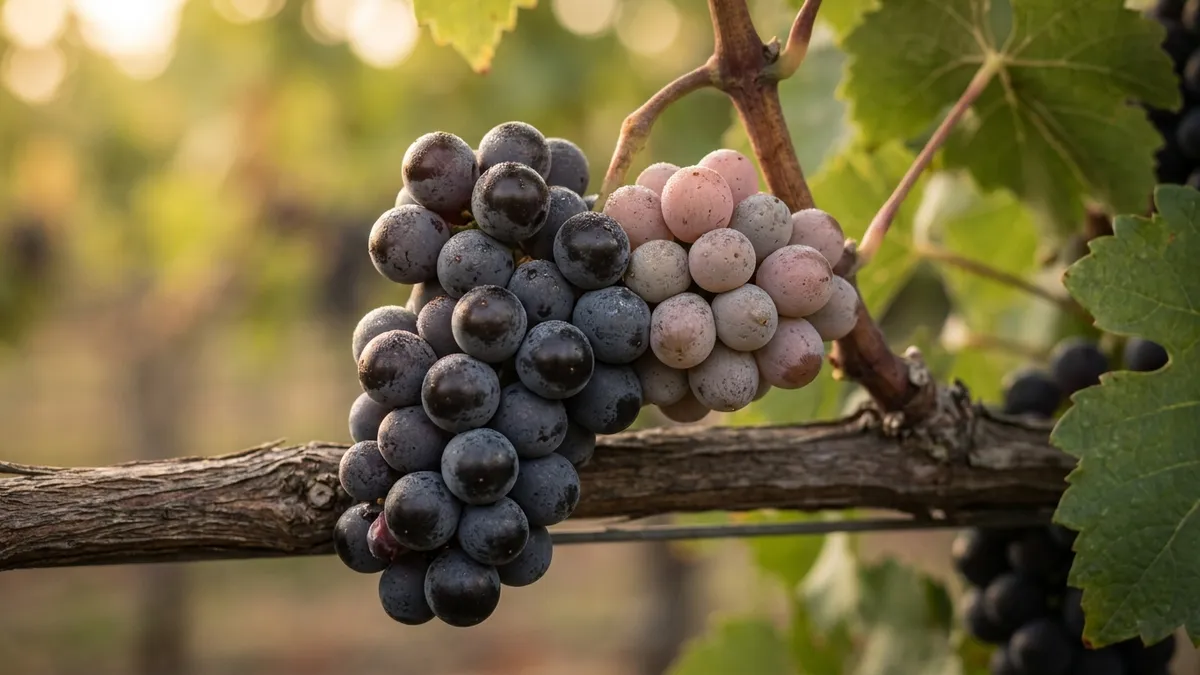
- A grower spots a Pinot Noir vine with one cane of grey-pink berries instead of blue-black.
- Cuttings are taken from that specific cane.
- The cuttings root and grow into vines that all produce grey-pink fruit.
- Over generations of propagation, a new named grape — Pinot Gris — exists across whole vineyards.
This is why mutations and clones are so closely linked. Every clone is technically a tiny mutation that a grower chose to keep. The difference is one of degree: a clone differs from its parent only subtly, while a true mutation like Pinot Gris differs enough in color and wine style to earn its own name.
The Pinot Family: One Grape, Many Colors
No grape illustrates mutation better than Pinot. The name comes from the French for "pine cone," a nod to the tight, cone-shaped clusters the family produces. Pinot is genetically unstable — it mutates more readily than most grapes — which is exactly why it has thrown off so many color variants.
The relationship runs in a line of decreasing pigment. Pinot Noir is the dark, fully colored ancestor. Pinot Gris is a partial loss of color, leaving greyish-pink to brownish berries. Pinot Blanc is a further loss, leaving pale green-white fruit. Pinot Meunier is a Pinot Noir carrying an additional mutation that coats its young leaves in fine white down (meunier means "miller," as if dusted with flour).
The Pinot family: one variety expressed through four mutations.
- Pinot Noir — Berry color: dark blue-black · Typical wine: light-bodied red, sparkling base · Flavor: red cherry, raspberry, earth, forest floor
- Pinot Gris — Berry color: greyish-pink to brown · Typical wine: dry to off-dry white · Flavor: pear, apple, citrus, honey, light spice
- Pinot Blanc — Berry color: pale green-white · Typical wine: crisp dry white, sparkling · Flavor: green apple, almond, white flowers, fresh acidity
- Pinot Meunier — Berry color: dark blue-black, downy leaves · Typical wine: sparkling base, rare still red · Flavor: bright red fruit, earlier ripening, soft body
Why Pinot Gris and Pinot Grigio Taste Different
The same grape can produce two famous styles depending on where it grows and how it is made. In Alsace, Pinot Gris is typically rich, weighty, and sometimes off-dry, with honey and stone-fruit depth. In northern Italy, the very same grape, labeled Pinot Grigio, is usually picked earlier and made lean, crisp, and citrusy. The genetics are identical; the choices are not. The deeper contrast between these two styles is covered in the Pinot Grigio vs Pinot Gris guide.
Pinot Noir, the Ancestor
Everything in the family traces back to Pinot Noir, one of the oldest and most studied grapes in the world. Its thin skin and tight clusters make it difficult to grow but capable of extraordinary finesse. To understand why the mutations behave the way they do — light color, delicate structure, cool-climate preference — it helps to know the parent first, which the Pinot Noir guide covers in depth.
Mutation vs Crossing vs Hybrid vs Clone
These four words get used interchangeably, but they describe genuinely different events. Getting them straight is the single most useful thing a learner can take from grape genetics.
Mutation
A mutation is a spontaneous change inside one variety, with no second parent involved. The result is genetically almost identical to its source — Pinot Gris versus Pinot Noir. Mutations are discovered, not bred.
Crossing
A crossing is the deliberate or natural breeding of two different varieties of the same species, Vitis vinifera. The offspring inherits DNA from two parents and is a genuinely new grape. Cabernet Sauvignon is the classic case: it is a natural crossing of Cabernet Franc and Sauvignon Blanc, discovered by DNA profiling in 1996. Most of the world's great grapes are crossings somewhere in their history.
Hybrid
A hybrid crosses two different grape species — usually European Vitis vinifera with a hardy American or Asian species — to gain disease resistance or cold tolerance. Grapes like Vidal Blanc and Seyval Blanc are hybrids that let growers in harsh climates make wine where vinifera struggles. A mutation, by contrast, never involves a second species. The broader story of cross-species breeding appears in the guide to hybrid grapes in wine.
Clone
A clone is a selected version of the same variety that differs only subtly — yield, ripening date, cluster looseness, disease resistance. Growers pick clones the way a gardener picks a favorite plant to propagate. Every clone began as a tiny mutation; it simply never changed enough to become a new variety. The full picture of how nurseries select and number these is in the explainer on grape clones.
How White Grapes Were Born from Red
Here is the twist that surprises most people: red is the original color, and most white grapes are mutated descendants of red ancestors. Grape skins get their color from anthocyanin (the pigment that turns berries blue, purple, and black). When a mutation switches off the genes that make anthocyanin, the berries grow green, yellow, or grey instead.
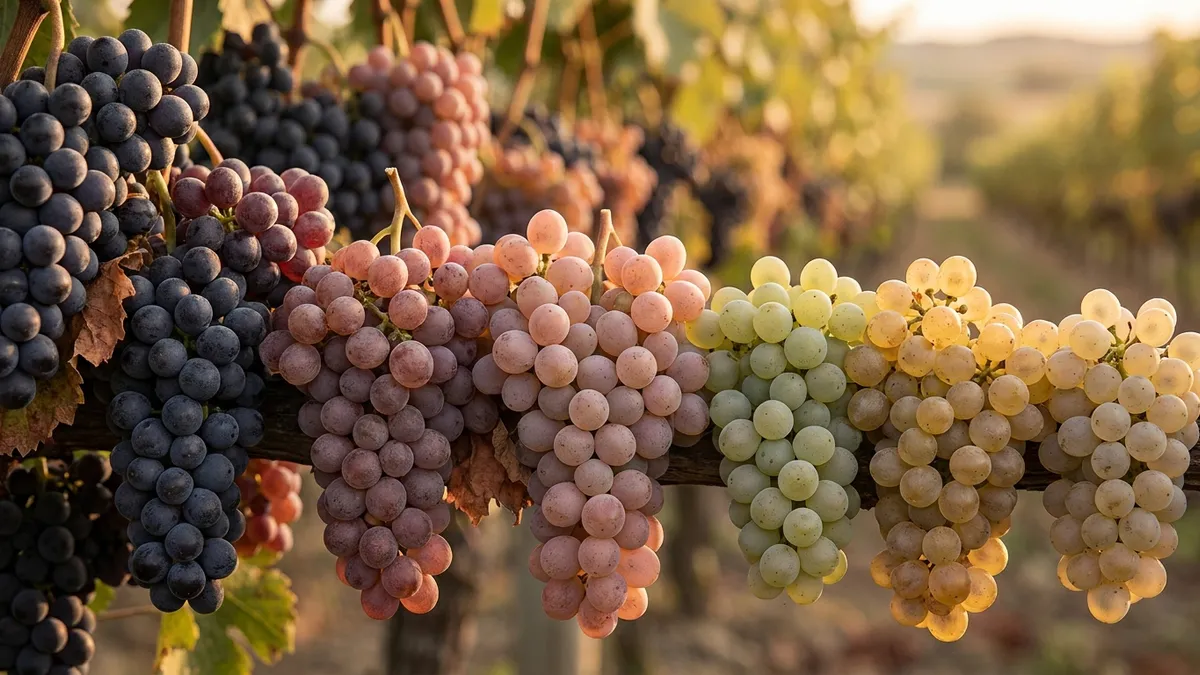
This is why so many famous whites have a darker shadow in their family tree. Pinot Blanc lost almost all its color from a red ancestor. Many ancient varieties exist in both red and white forms for exactly this reason. The pattern is everywhere once you know to look for it, and it reshapes how to read a vineyard.
Grenache: A Family in Three Colors
A second great example of color mutation is Grenache. It exists as Grenache Noir (the dark red original), Grenache Gris (a pink-grey mutation prized for textured rosé and white blends), and Grenache Blanc (a green-berried white that makes full-bodied, low-acid whites across southern France and Spain). Same grape, three colors, three wine styles — the Pinot pattern repeated in a warm-climate variety. The red form anchors the family, as the Grenache wine guide explains.
This loss-of-color story is part of why grapes are so ancient and so tangled. Many of the oldest grape varieties carry these mutations in their lineage, recorded in DNA long before anyone wrote them down.
DNA Profiling: Untangling Centuries of Confusion
For most of wine history, grapes were identified by leaf shape, cluster form, and local name — methods that produced endless errors. The same grape carried different names in different valleys, and different grapes shared a single name. DNA profiling (reading specific genetic markers in a grape's genome) changed everything from the 1990s onward.
Cases DNA Profiling Solved
- Cabernet Sauvignon's parents — Profiling in 1996 revealed it as a natural crossing of Cabernet Franc and Sauvignon Blanc, settling centuries of speculation.
- The Pinot family — DNA confirmed that Gris, Blanc, and Meunier are color mutations of Pinot Noir, not independent grapes.
- Sauvignonasse confusion — A grape long grown in northern Italy as Tocai Friulano and in Chile as a supposed Sauvignon Blanc turned out to be Sauvignonasse, also called Sauvignon Vert — a different variety entirely. Whole vineyards had been mislabeled for decades.
Why It Matters for the Drinker
DNA profiling does more than satisfy curiosity. It tells growers which vines are truly disease-tolerant, helps protect a region's authentic varieties, and corrects labels so the wine in the glass matches the name on the bottle. When the noble grapes are mapped against their relatives, it is DNA — not folklore — that draws the lines.
A grape's name is a label of convenience. Its DNA is the truth, and the two have not always agreed.
Putting Mutation Knowledge to Work When You Taste
Understanding mutation turns a wine list into a family tree. When a Pinot Gris and a Pinot Blanc sit near a Pinot Noir, you can taste the shared backbone — the acidity, the restraint, the savory edge — and notice exactly where the mutation diverges. That habit of comparing close relatives side by side is one of the most efficient ways to build a palate, far faster than tasting unrelated wines at random. The same logic links tannins, acidity, and body across a whole family of grapes.
The next time a label says Pinot Grigio, Pinot Gris, or Pinot Blanc, remember it is reading you a chapter from one grape's mutated history. Learning to taste wine systematically — same method, same vocabulary, one glass at a time — is how those chapters start to connect. The Sommy app walks beginners through exactly these family comparisons with guided tasting exercises, turning genetic trivia into a skill you can use at any dinner table.
Sources
- Wine Grapes: A Complete Guide to 1,368 Vine Varieties — Jancis Robinson, Julia Harding, José Vouillamoz, Allen Lane, 2012
- Historical Genetics: The Parentage of Chardonnay, Gamay, and Other Wine Grapes of Northeastern France — Bowers et al., Science, 1999
- Pinot (Grape Variety) and Its Color Mutations — Oxford Companion to Wine, 2023
Frequently Asked Questions
What is a grape sport or mutation?
A grape sport is a spontaneous genetic change that appears in part of a single vine, such as one cane producing differently colored berries. Growers propagate that mutated tissue through cuttings, creating a new variety that is genetically almost identical to its parent but expresses a different color, flavor, or growth habit.
Is Pinot Gris really the same grape as Pinot Noir?
Genetically, Pinot Gris is a color mutation of Pinot Noir, so their DNA profiles are nearly identical. They are treated as separate varieties because the mutation changes berry color and produces a distinctly different wine. Pinot Gris berries are greyish-pink, while Pinot Noir berries are dark blue-black.
What is the difference between a mutation and a crossing?
A mutation is a spontaneous change within one variety, so the result is genetically almost identical to the parent. A crossing is the deliberate breeding of two different varieties of the same species, combining DNA from two parents. Cabernet Sauvignon, for example, is a crossing of Cabernet Franc and Sauvignon Blanc.
What is the difference between a hybrid and a mutation?
A hybrid crosses two different grape species, usually European Vitis vinifera with an American or Asian species to gain disease resistance or cold tolerance. A mutation happens inside a single vinifera variety with no second species involved. Hybrids include grapes like Vidal Blanc and Seyval Blanc.
How is a clone different from a mutation?
Every clone is technically a small mutation, but the term clone refers to a selected version of the same variety that differs only subtly, such as in yield, ripening time, or cluster size. A mutation becomes a new named variety only when the change is large enough, like a complete shift in berry color.
Why do white grapes come from red ancestors?
Most white wine grapes descend from red-skinned ancestors that lost the ability to produce anthocyanin, the pigment that colors grape skins. A genetic switch turned off color production, leaving green or yellow berries. This means red is the original color and white grapes are the mutated descendants.
How do scientists prove two grapes are related?
Scientists use DNA profiling, which reads specific genetic markers in a grape's genome. By comparing markers, researchers can confirm parent-offspring relationships and identify mutations. DNA profiling has corrected centuries of mistaken identity, including the confusion between Tocai Friulano and Sauvignonasse, which is actually Sauvignon Vert.
Sommy Team
LinkedInFounder & Wine Educator
The Sommy Team is building the world's most approachable wine education app, helping beginners develop real tasting skills through structured courses and AI-guided practice.