Hybrid Grapes in Wine: From Chambourcin to Marquette

By the Sommy Team — AI-assisted, human-edited.
Updated Jun 16, 2026
Contents (11)
- What Are Hybrid Grapes?
- What Is a Hybrid Grape, in 80 Words
- Hybrid vs Crossing vs Vinifera: The Key Distinction
- Why Hybrid Grapes Exist
- The "Foxy" Flavor Reputation, Explained
- The Key Hybrid Grapes at a Glance
- Red Hybrid Grapes Worth Knowing
- White Hybrid Grapes Worth Knowing
- The PIWI Movement: Disease Resistance as a Feature
- Where Hybrid Grapes Thrive
- How to Approach Hybrid Wines as a Drinker
TL;DR
Hybrid grape wines come from crossing European Vitis vinifera with hardy American or Asian species to gain cold tolerance and disease resistance. Grapes like Chambourcin, Marquette, Frontenac, and Vidal Blanc let growers in the US Midwest, Canada, England, and Scandinavia make clean, modern wine where vinifera cannot survive the winter.
What Are Hybrid Grapes?
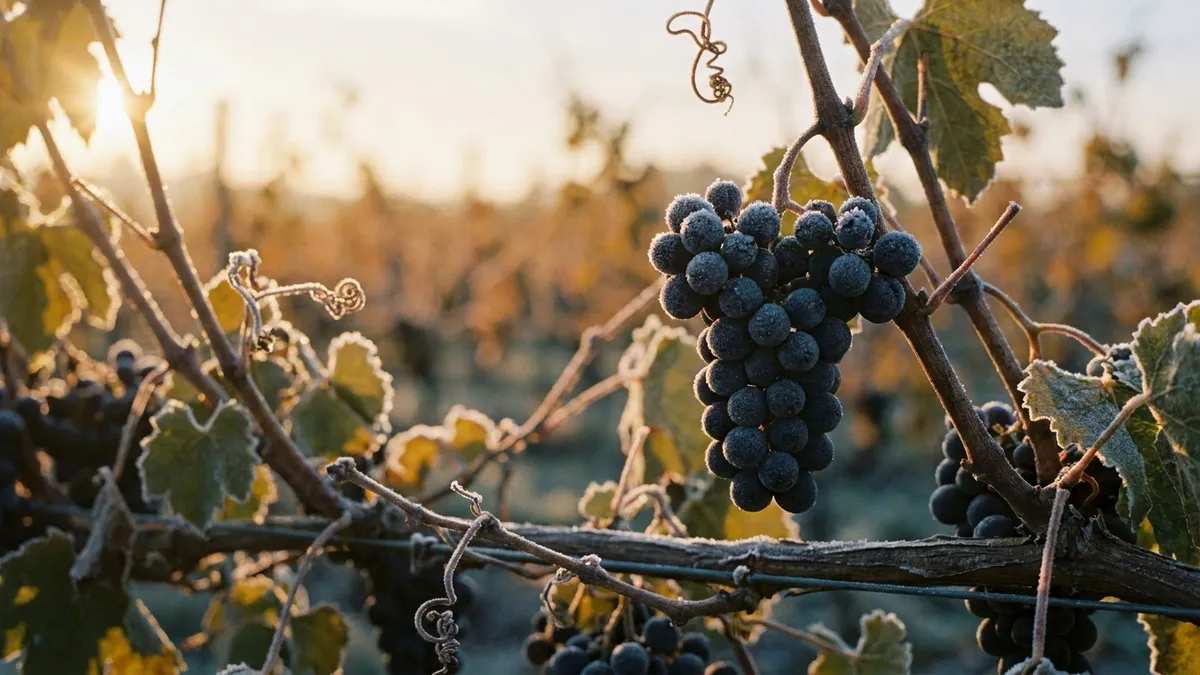
Hybrid grapes are crosses between Vitis vinifera — the European species behind nearly every famous wine — and a tough wild species such as American Vitis labrusca or Vitis riparia. The goal is to keep vinifera's wine quality while borrowing the wild parent's cold hardiness and disease resistance. The result is a vine that survives where Cabernet or Chardonnay would freeze, rot, or die.
These hybrid grape wines matter because they unlock winemaking in places the European grape cannot reach. Minnesota winters, English damp, Quebec frost, Scandinavian short seasons — all of these are hostile to vinifera and friendly to a well-chosen hybrid. Grapes like Chambourcin, Marquette, Frontenac, and Vidal Blanc now anchor entire regional wine industries that simply did not exist a few decades ago.
What Is a Hybrid Grape, in 80 Words
A hybrid grape is an interspecific cross: one parent is European Vitis vinifera, the other is a wild species like American Vitis labrusca or Vitis riparia. Breeders make hybrid grape wines to gain cold hardiness down to roughly minus 30 to minus 40 degrees Celsius and resistance to mildew and phylloxera. This is different from a vinifera crossing, where both parents are the same European species. Today over a dozen hybrids — Chambourcin, Marquette, Frontenac, Vidal Blanc — power cold-climate wine industries across the US, Canada, England, and Scandinavia.
Hybrid vs Crossing vs Vinifera: The Key Distinction
The single most common confusion in this topic is the difference between a hybrid and a crossing, so it is worth getting clear before anything else.
- A hybrid (more precisely an interspecific hybrid) combines two different grape species. Almost always that means European Vitis vinifera paired with a wild North American species. The wild parent contributes toughness; the vinifera parent contributes drinkability.
- A crossing (intraspecific) combines two grapes that are both Vitis vinifera. The offspring is fully European. Pinotage is a crossing of Pinot Noir and Cinsault, and Muller-Thurgau crosses Riesling with another vinifera grape. To go deeper on within-species breeding, see our guide to Pinotage, South Africa's unique cross grape.
- A clone or sport is something else again — a spontaneous mutation of one existing vine rather than a deliberate cross of two parents, which we cover in grape mutations and sports.
The reason the distinction matters is reputation. Crossings are widely accepted because they are "real" vinifera. Hybrids historically carried a stigma because their wild ancestry could leave an unusual flavor in the glass. That stigma is now mostly outdated, but understanding where it came from explains a lot about how these grapes are still discussed.
Why Hybrid Grapes Exist
Hybrid grapes were not invented to be trendy. They were invented to solve three specific, expensive problems.
Phylloxera Resistance
The first reason is the phylloxera crisis. Phylloxera is a tiny root-feeding aphid native to North America that arrived in Europe in the 1860s and destroyed millions of hectares of vineyards within a generation. European vines had no defense; American species had co-evolved with the pest and shrugged it off.
The eventual fix was grafting vinifera onto American rootstock, which is still standard practice. But in the same period, French breeders raced to create French-American hybrids — also called French hybrids or direct producers — that could grow on their own roots and resist the pest outright. Many of the grapes profiled below trace their lineage to that breeding boom.
Cold Hardiness
The second reason is cold hardiness — the ability of a vine to survive deep winter freeze without dying back to the ground. European vinifera typically suffers serious damage below about minus 20 degrees Celsius. Wild species like Vitis riparia, native to the upper Midwest and Canada, tolerate minus 30 to minus 40 degrees Celsius.
This is why a winery in Minnesota or Quebec plants Marquette and Frontenac rather than Pinot Noir. The hybrid does not just survive the winter; it produces a reliable crop year after year in a climate that would kill a vinifera vine outright.
Disease Resistance
The third reason is disease resistance, especially against the two great fungal threats: downy mildew and powdery mildew. Both thrive in damp, humid conditions and force conventional growers to spray repeatedly through the season. Hybrids with wild parentage often shrug these off with a fraction of the chemical input, which is the foundation of the modern PIWI movement covered later in this guide.
The "Foxy" Flavor Reputation, Explained
If you have ever tasted Concord grape juice or a classic American grape jelly, you have met foxiness — a musky, candied, slightly "grapey" character that comes from Vitis labrusca. The compound largely responsible is methyl anthranilate, and a little goes a long way.
For decades, this was the flavor most people associated with hybrid and native American wines, and it is the root of the grape's quality stigma. Early French-American hybrids and labrusca-heavy varieties could taste sweet, simple, and unmistakably non-European.
The important update is that modern hybrids were deliberately bred away from foxiness. Breeding programs at the University of Minnesota, Cornell, and elsewhere selected for clean, vinifera-like flavor over many generations. Marquette, Chambourcin, Vidal Blanc, and Traminette do not taste foxy. They taste like wine — fruit-forward, balanced, and recognizable to anyone used to European grapes. The old reputation persists mostly among people who have not tasted a well-made example in twenty years.
If you want to train yourself to tell the difference between a genuine grape character and a winemaking artifact, working through how to taste wine systematically is the fastest way to build that discrimination.
The Key Hybrid Grapes at a Glance
Here is a quick reference to the most important hybrids before the individual profiles. Cold hardiness is approximate and depends on site, but it shows why these grapes go where they go.
Approximate cold-hardiness thresholds and signature traits of major wine hybrids.
- Chambourcin — Color: red · Cold hardiness: moderate (to ~ -23°C) · Deep color, dark fruit, low foxiness
- Marquette — Color: red · Cold hardiness: very high (to ~ -38°C) · Pinot-like spice, balanced tannin
- Frontenac — Color: red · Cold hardiness: very high (to ~ -40°C) · High acid, cherry, often off-dry or rosé
- Vidal Blanc — Color: white · Cold hardiness: high (to ~ -29°C) · Thick-skinned, the classic icewine grape
- Seyval Blanc — Color: white · Cold hardiness: high (to ~ -29°C) · Crisp, mineral, Loire-like restraint
- Traminette — Color: white · Cold hardiness: high (to ~ -29°C) · Floral, Gewurztraminer-style aromatics
- Norton / Cynthiana — Color: red · Cold hardiness: high (to ~ -30°C) · Structured, age-worthy, no foxiness
- Baco Noir — Color: red · Cold hardiness: high (to ~ -29°C) · Dark, smoky, high-acid, low tannin
- La Crescent — Color: white · Cold hardiness: very high (to ~ -38°C) · Aromatic apricot and citrus, off-dry
Red Hybrid Grapes Worth Knowing
Chambourcin: The Versatile French-American Red
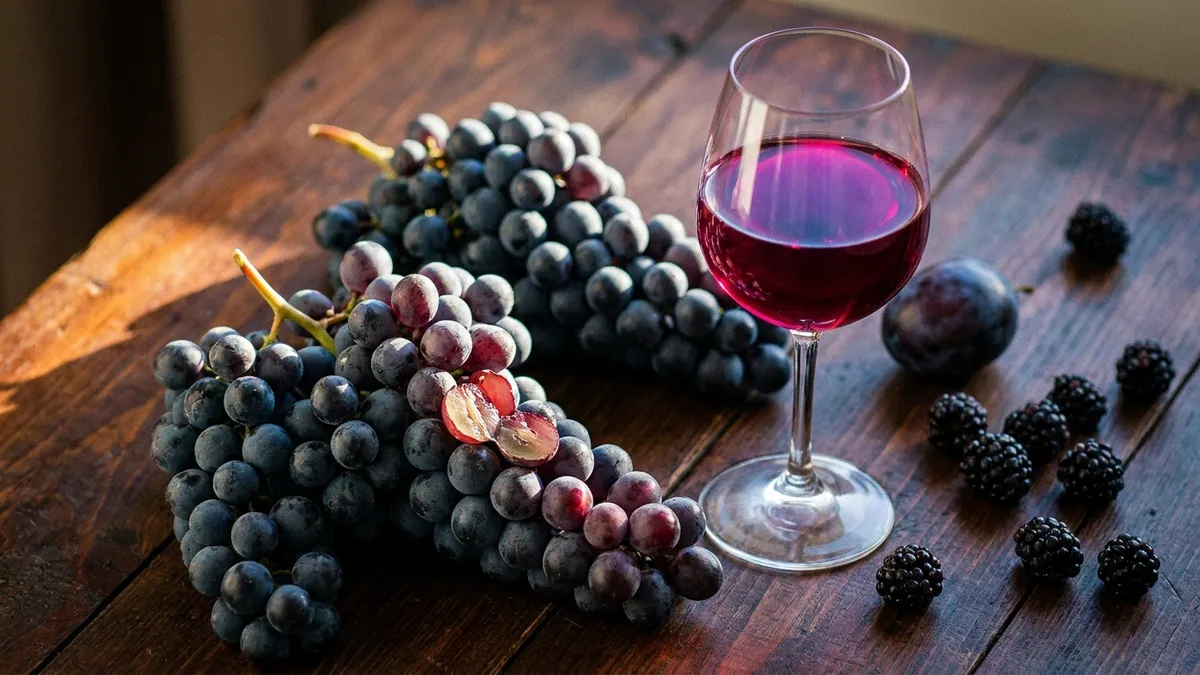
Chambourcin is one of the most widely planted French-American hybrids in the eastern United States, and a good entry point to the category. It produces deeply colored, medium-bodied reds with blackberry, plum, and a savory, almost herbal edge. Best of all, it carries little to no foxiness, which is why it became a workhorse for serious East Coast producers.
Chambourcin is flexible in the cellar. It can be made dry and structured, lightly oaked, or as a fresh fruity rosé. Its natural acidity makes it food-friendly across the table, much like a lighter Cabernet Sauvignon without the heavy tannin.
Marquette: Minnesota's Pinot-Like Star
Marquette is the breakout success of the University of Minnesota breeding program, released in 2006. It is a complex hybrid — a grandchild of Pinot Noir — and it shows that heritage. Expect cherry, black pepper, and spice, with moderate tannin and a more elegant frame than most cold-climate reds.
What makes Marquette remarkable is the combination of vinifera-quality flavor with cold hardiness to roughly minus 38 degrees Celsius. It made genuinely dry, balanced red wine possible across the upper Midwest and Canada for the first time, and it remains the benchmark cold-climate red.
Frontenac: The High-Acid Workhorse
Frontenac and its color variants (Frontenac Gris and Frontenac Blanc) are extremely cold hardy, surviving close to minus 40 degrees Celsius. The reds bring intense cherry and blackcurrant fruit but very high acidity, which is why they are often made off-dry, as rosé, or as port-style fortified wines to balance that natural tartness.
To understand why acidity dictates so many of these stylistic choices, our guide to tannins, acidity, and body breaks down how each structural element shapes the final wine.
Norton (Cynthiana): America's Age-Worthy Native
Norton, also sold as Cynthiana, is unusual. It is derived largely from Vitis aestivalis rather than labrusca, so it shows none of the foxy character. Norton produces dark, structured, tannic reds with dark berry and earthy notes that can age for years. It was a celebrated American wine grape in the 19th century and remains the signature red of Missouri and a point of pride in Virginia.
Baco Noir: Smoky and Bright
Baco Noir is an older French-American hybrid that makes deeply colored reds with high acidity, low tannin, and a distinctive smoky, dark-fruit profile. It ripens early and tolerates cold and damp, which made it popular in Ontario, New York, and Oregon. Its bright acidity gives it a lively, almost juicy character that suits cooler-climate food.
White Hybrid Grapes Worth Knowing
Vidal Blanc: The Icewine Specialist
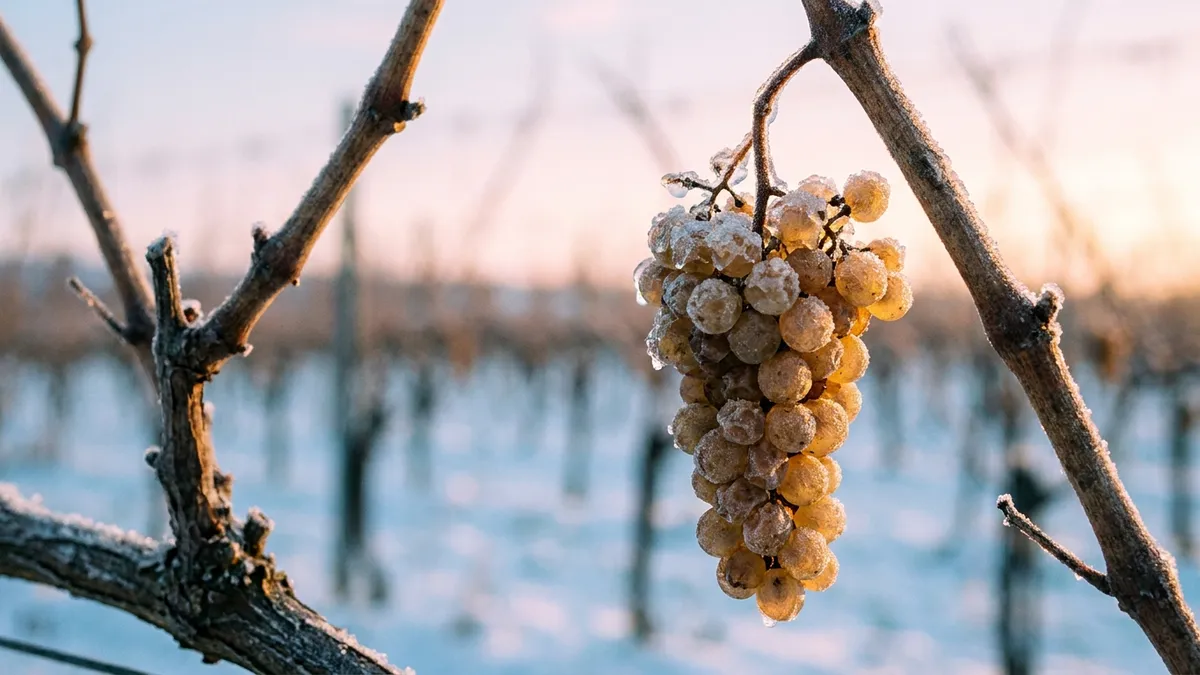
Vidal Blanc is arguably the most commercially important white hybrid, and the reason is icewine. Its thick skins cling to the vine through hard frost, letting growers in Canada's Ontario region leave the fruit hanging until it freezes naturally on the vine. The frozen grapes are pressed while still frozen, concentrating sugar and acid into an intensely sweet, balanced dessert wine.
Vidal Blanc icewine wins international awards routinely, which single-handedly demolishes the idea that hybrids cannot make serious wine. As a dry wine it offers pineapple, grapefruit, and floral notes with brisk acidity.
Vidal Blanc icewine wins international awards routinely — proof that a hybrid grape can make wine the rest of the world takes seriously.
Seyval Blanc: Crisp and Mineral
Seyval Blanc is a French-American hybrid that drew comparisons to the Loire Valley long before English wine was fashionable. It makes crisp, mineral, citrus-driven whites that can be made bone-dry and even barrel-aged into something Chablis-like. It was a backbone of early English sparkling and still wine and remains widely planted across the eastern US and the UK.
Traminette: Aromatic and Floral
Traminette is a Cornell-bred hybrid descended from Gewurztraminer, and it inherits much of that grape's exotic perfume. Expect rose petal, lychee, and spice in an off-dry, aromatic white that is far more cold-hardy than its famous parent. It has become the signature white grape of Indiana and a favorite across the Midwest for its instant aromatic appeal.
La Crescent: Apricot and Citrus
La Crescent is another University of Minnesota release, prized for intense aromatics of apricot, peach, and citrus blossom. Its very high acidity means it is usually made off-dry, where a touch of residual sugar balances the bracing freshness. For aromatic-white lovers in cold regions, it scratches the same itch as an off-dry Riesling.
The PIWI Movement: Disease Resistance as a Feature
The newest chapter in this story is happening in Europe, and it reframes hybrids entirely. PIWI is a German abbreviation for pilzwiderstandsfaehig — "fungus-resistant." PIWI grapes are modern hybrids bred specifically for strong resistance to downy and powdery mildew.
The selling point is sustainability. A conventional European vineyard might spray fungicide a dozen or more times a season. A PIWI vineyard can cut that dramatically, lowering chemical input, tractor passes, and carbon footprint. As organic farming and climate concerns rise, that has turned disease resistance from a compromise into a competitive advantage.
Leading PIWI varieties include:
- Solaris — early-ripening white, important in England, Scandinavia, and Germany
- Souvignier Gris — a versatile pink-skinned grape gaining traction for still and orange wine
- Regent — a widely planted red PIWI in Germany
- Cabernet Cortis and Muscaris — newer reds and aromatic whites in the same family
What unites the PIWI movement with the older cold-climate hybrids is a shift in mindset: these are no longer "compromise" grapes for places that cannot grow vinifera. They are deliberate choices for growers who want resilience, lower inputs, and a distinct regional identity. The Sommy app helps you place these less-familiar grapes on the same flavor map as the classics, so an unfamiliar label feels approachable rather than intimidating.
Where Hybrid Grapes Thrive
The geography of hybrids is the geography of difficulty. They cluster wherever vinifera struggles.
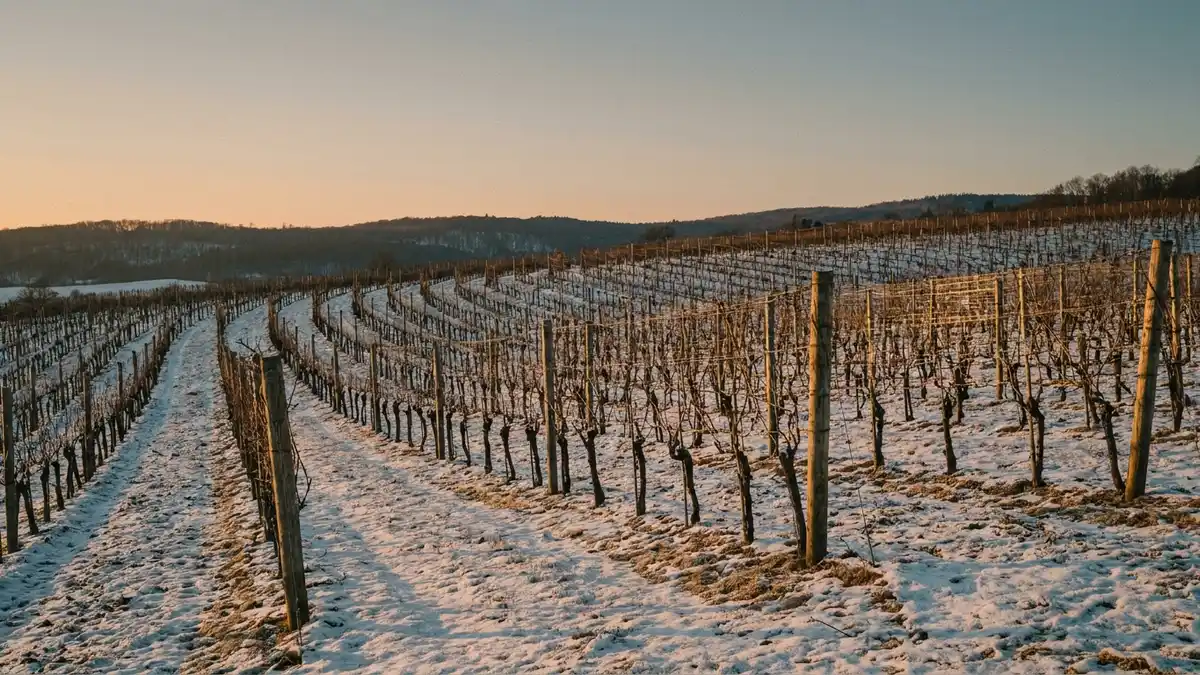
- US Midwest and Northeast — Minnesota, Iowa, Wisconsin, Vermont, New York, and Missouri lean heavily on Marquette, Frontenac, La Crescent, Norton, and Seyval Blanc.
- Canada — Ontario built a global icewine reputation on Vidal Blanc, while Quebec's brutal winters make Marquette and Frontenac essential.
- England — historically reliant on Seyval Blanc and increasingly on PIWIs as a damp, cool maritime climate rewards disease resistance.
- Scandinavia and the Baltics — emerging wine regions in Denmark, Sweden, and beyond depend almost entirely on Solaris and other cold-hardy PIWIs.
- Germany and central Europe — a growing PIWI sector driven by sustainability goals rather than pure necessity.
These regions are where the next generation of wine drinkers will first encounter grapes that are not on any classic list. Building a vocabulary for them now — alongside the six noble grapes — is one of the most future-proof things a curious drinker can do, and you can start with the structured courses at Sommy.
How to Approach Hybrid Wines as a Drinker
The practical advice is simple. Treat hybrid grape wines the way you would treat any unfamiliar variety: taste with structure, not skepticism.
- Read the back label. Cold-climate producers often state whether the wine is dry, off-dry, or a rosé, because the same grape spans all three.
- Expect bright acidity. Most cold-climate hybrids run high in acid. That makes them excellent food wines and often means a touch of residual sugar to balance.
- Anchor to a familiar grape. Use the flavor bridges above — Marquette to Pinot Noir, Traminette to Gewurztraminer — so the wine has a frame of reference.
- Judge the bottle, not the category. A foxy bulk wine and an award-winning Vidal icewine are both "hybrids." The category tells you almost nothing; the producer and the variety tell you everything.
Hybrid grapes are not a footnote to the wine world. They are how wine reaches the places vinifera cannot go, and how the industry is adapting to a warmer, wetter, more sustainability-conscious future. From Chambourcin on the East Coast to Marquette in Minnesota to Solaris in Sweden, they deserve a place on your radar — and your tasting list.
Sources
- Wine Grapes — Jancis Robinson, Julia Harding, José Vouillamoz, Allen Lane, 2012
- Cold Hardy Grapes — University of Minnesota Grape Breeding & Enology, 2024
- Hybrid and Disease-Resistant Grape Varieties — Cornell College of Agriculture and Life Sciences, 2023
- PIWI International — Fungus-Resistant Grape Varieties — PIWI International, 2024
Frequently Asked Questions
What is a hybrid grape?
A hybrid grape is a cross between European Vitis vinifera, the species behind almost all famous wine, and a tough wild species such as American Vitis labrusca or Vitis riparia. Breeders combine them to keep vinifera's wine quality while gaining cold hardiness and disease resistance. This differs from a vinifera-only crossing, where both parents are the same European species.
Why do winemakers use hybrid grapes?
Hybrid grapes survive conditions that kill European vines. Their wild American or Asian parentage gives them cold hardiness down to roughly minus 30 to minus 40 degrees Celsius and built-in resistance to mildew and phylloxera. That lets growers in Minnesota, Quebec, England, and Scandinavia produce reliable crops where Cabernet or Chardonnay would freeze or rot, often with far less spraying.
Do hybrid wines taste foxy?
Some older hybrids carry a foxy or grapey character from Vitis labrusca, the same musky note found in Concord grape juice. Modern hybrids like Marquette, Chambourcin, and Vidal Blanc were bred specifically to remove that flavor, and most taste clean, fruity, and recognizably wine-like. Foxiness today is the exception, not the rule, in serious cold-climate winemaking.
What is the most planted hybrid grape?
Vidal Blanc is among the most widely planted white hybrids, prized for icewine in Canada and Ontario because its thick skin clings to the vine through hard frost. For reds, Chambourcin is one of the most planted French-American hybrids across the eastern United States, while Marquette and Frontenac dominate the colder upper Midwest and Canadian plantings.
What is the difference between a hybrid and a vinifera crossing?
A hybrid crosses two different grape species, usually European Vitis vinifera with American or Asian wild vines, to borrow toughness from the wild parent. A crossing, by contrast, combines two grapes within the same Vitis vinifera species, like Pinotage or Muller-Thurgau. Crossings stay fully European, while hybrids are interspecific and inherit wild-vine traits such as cold and disease resistance.
What is a PIWI grape?
PIWI is a German abbreviation for pilzwiderstandsfaehig, meaning fungus-resistant. PIWI grapes are modern hybrids bred for strong resistance to downy and powdery mildew, allowing growers to spray far less and farm more sustainably. Varieties like Souvignier Gris, Solaris, and Regent lead a growing European movement that treats disease resistance as a quality and environmental advantage rather than a compromise.
Where are hybrid grapes grown?
Hybrid grapes thrive in cold or wet regions where European vines struggle. Major plantings sit across the US Midwest and Northeast, including Minnesota, New York, Missouri, and Vermont, plus Quebec and Ontario in Canada. England, Scandinavia, and parts of Germany and central Europe increasingly grow disease-resistant hybrids and PIWIs as climate and sustainability pressures push growers toward hardier vines.
Can hybrid grapes make serious wine?
Yes. Vidal Blanc icewine wins international awards, Norton produces structured age-worthy reds in Missouri and Virginia, and Marquette makes balanced dry reds comparable to many vinifera. Quality depends on the variety, the grower, and the winemaking, just as with European grapes. The old assumption that hybrids only make rustic table wine no longer holds for well-made modern examples.
Sommy Team
LinkedInFounder & Wine Educator
The Sommy Team is building the world's most approachable wine education app, helping beginners develop real tasting skills through structured courses and AI-guided practice.